
British Bats
As daylight fades and the evening sky grows darker, you might spot a small shape darting between trees, across gardens or over the surface of a pond. Bats are an important part of British wildlife, even though we may not see them as often as many of our daytime animals.
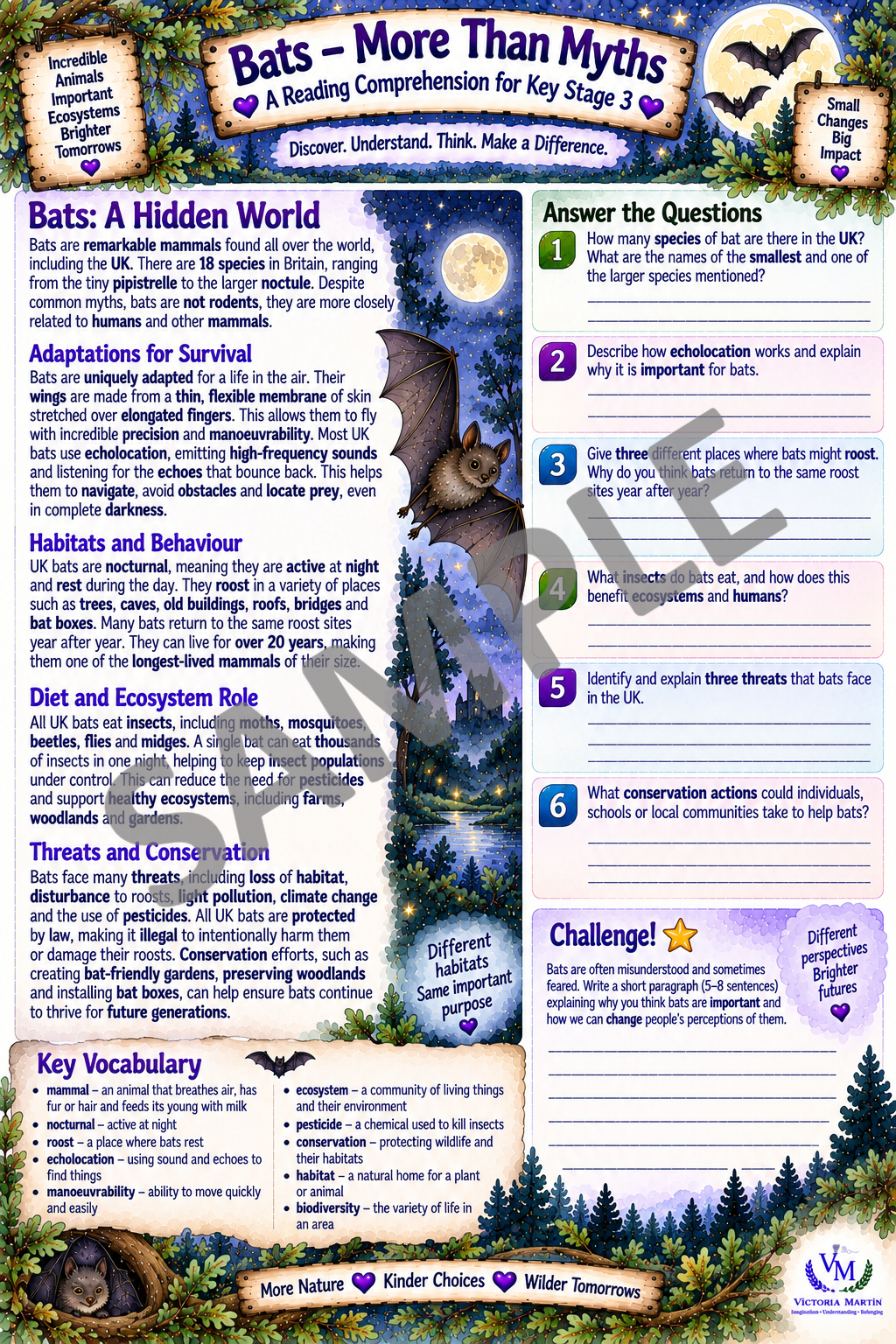
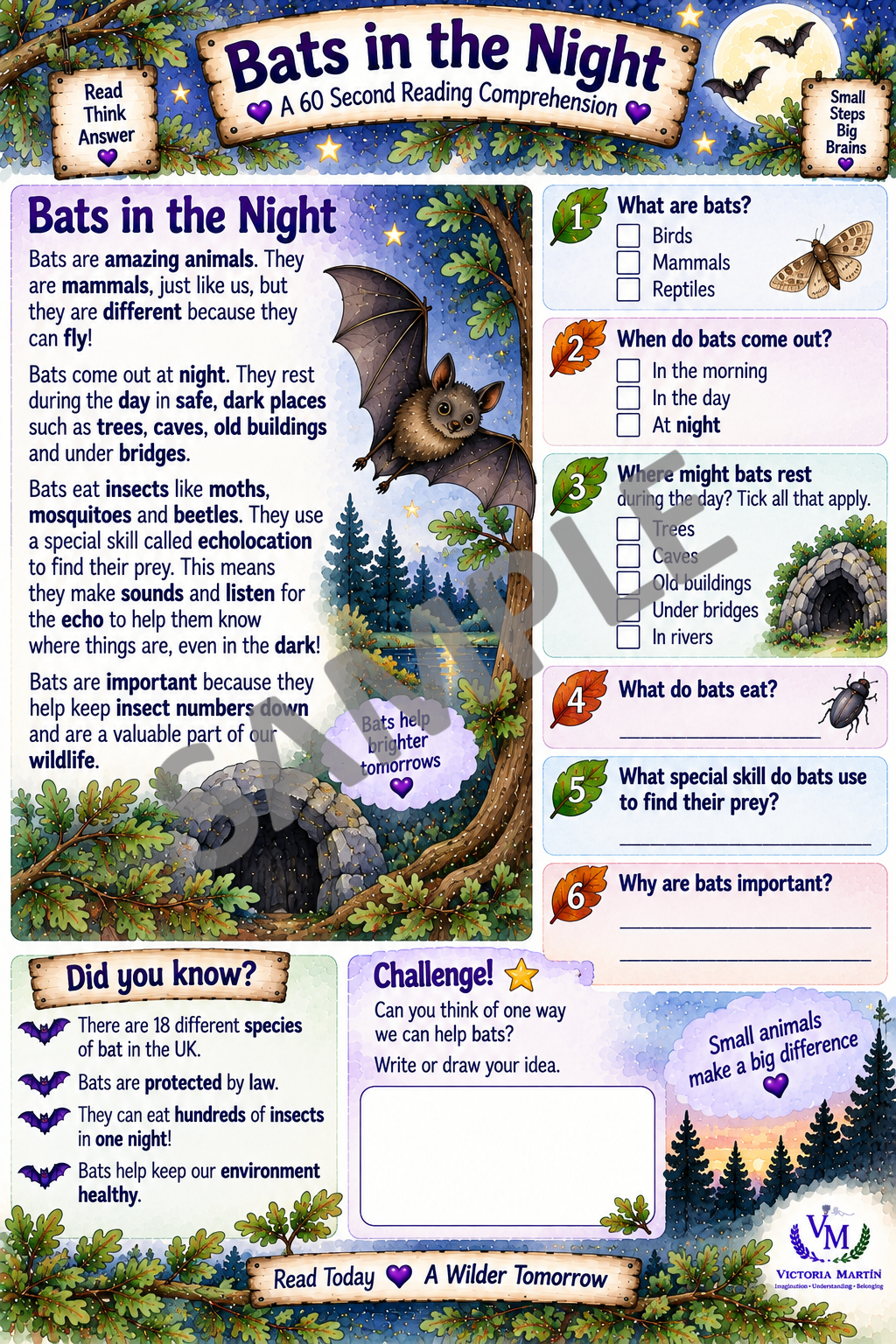
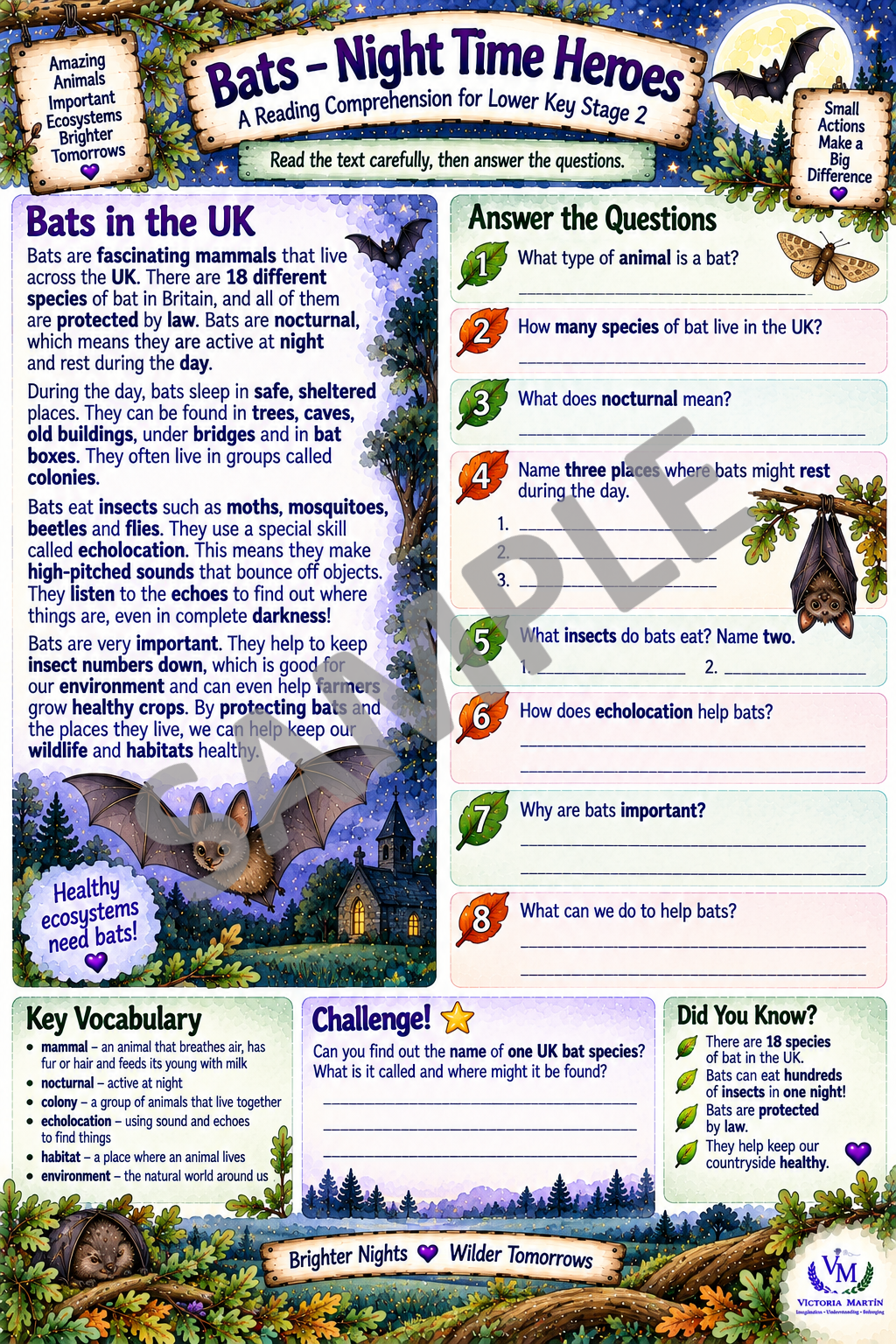
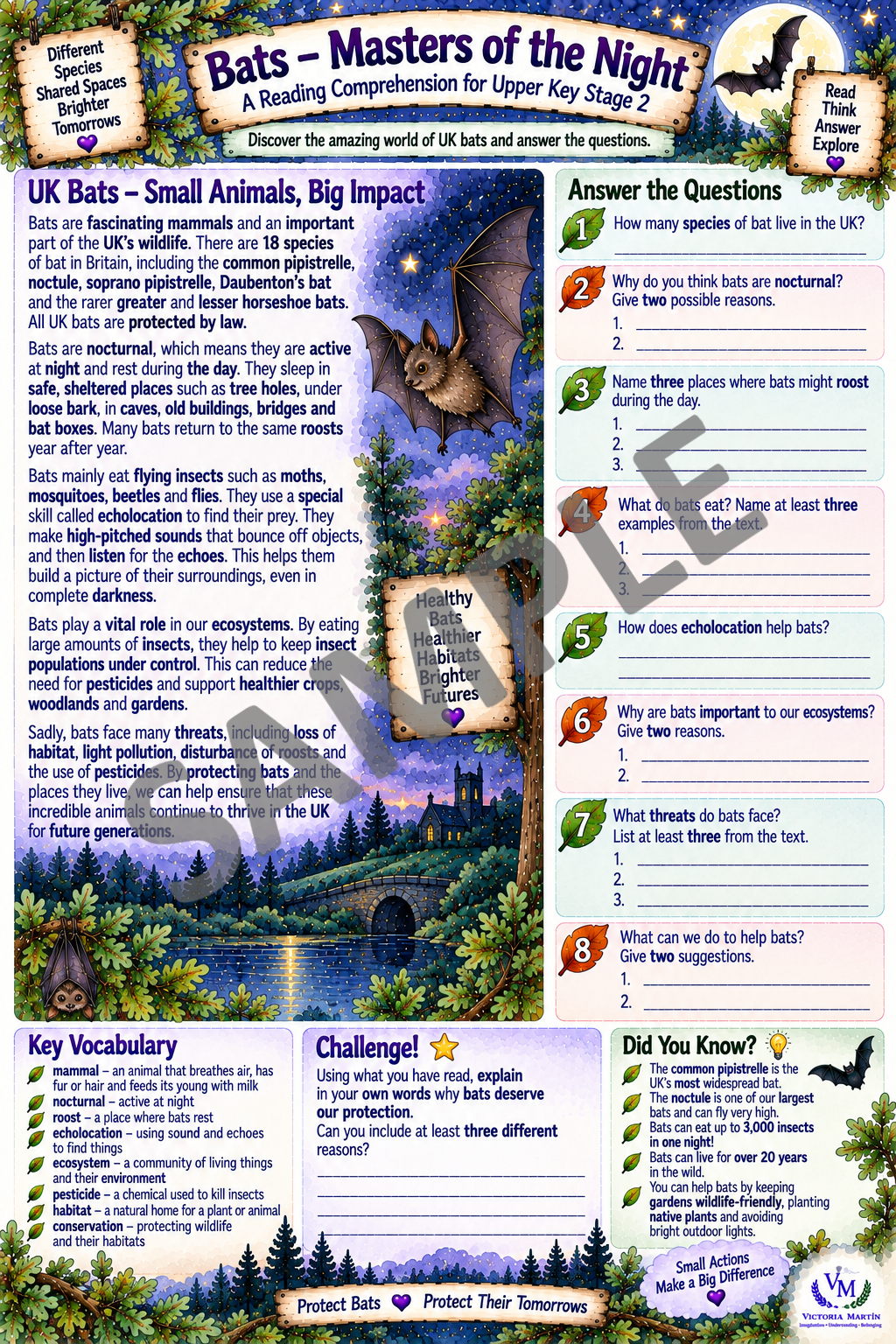
The UK is home to 18 resident species of bat, with 17 known to breed here. They can be found in woodlands and farmland, as well as wetlands, towns, villages and gardens.
Bats are mammals, just like foxes, hedgehogs and humans. However, they have one particularly remarkable ability: bats are the only mammals capable of true powered flight.
What Is a Bat?
Bats belong to a group of mammals called Chiroptera.
Their wings may look very different from our hands, but a bat's wing is formed from a highly adapted forelimb and hand, with greatly elongated finger bones supporting a thin, flexible wing membrane.
This creates a lightweight and highly manoeuvrable wing.
Like other mammals, bats are warm-blooded, have fur and feed their babies with milk.
Baby bats are known as pups. Female British bats usually give birth to a single pup each year, although this can vary between species.
British Bat Species
Britain is home to bats of many different sizes and appearances.
Some of the bat species you might encounter include:
Common pipistrelle – one of Britain's most widespread bats. It is tiny, weighing only a few grams, and is often seen flying around gardens, woodland edges and buildings.
Soprano pipistrelle – similar in appearance to the common pipistrelle but distinguished partly by its higher-frequency echolocation calls.
Brown long-eared bat – easily recognised by its extraordinarily long ears. It can listen for the tiny sounds made by insects moving on leaves and other surfaces.
Daubenton's bat – often associated with rivers, lakes and ponds. It frequently flies close to the surface of water while hunting insects.
Noctule – one of Britain's largest bats. It is a powerful flyer and can often be seen flying high in open areas.
Greater horseshoe bat – one of Britain's larger and rarer bat species, named after the distinctive horseshoe-shaped structure around its nose.
Lesser horseshoe bat – smaller than its greater horseshoe relative and also recognisable by its unusual horseshoe-shaped nose.
Barbastelle – a distinctive and relatively rare woodland bat with dark fur and broad ears.
Each species has its own preferences for food and habitat, as well as roosting places and hunting areas.
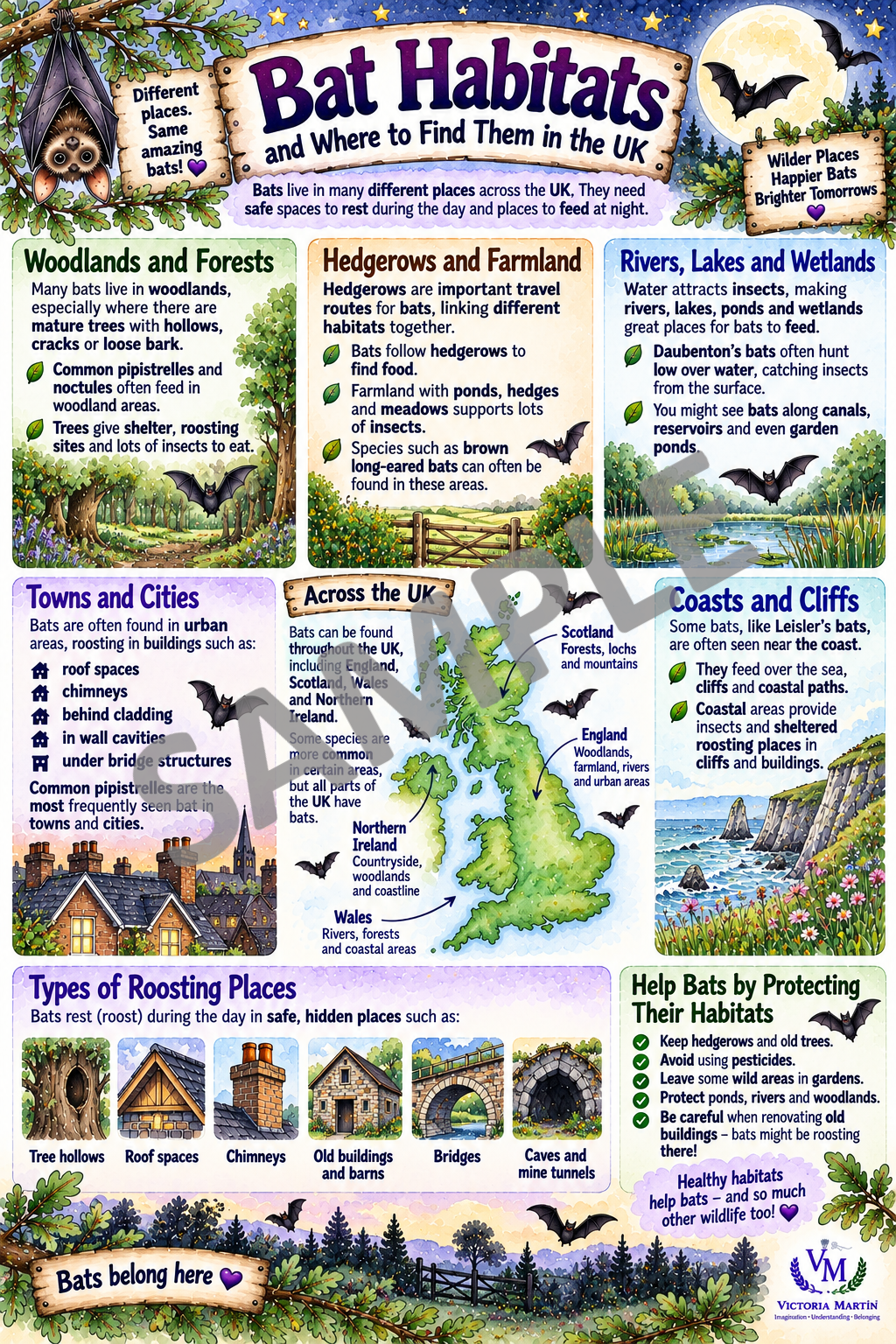
Where Do British Bats Live?
A place where a bat shelters or rests is called a roost.
British bats do not build nests. Instead, they use existing spaces where they can shelter safely.
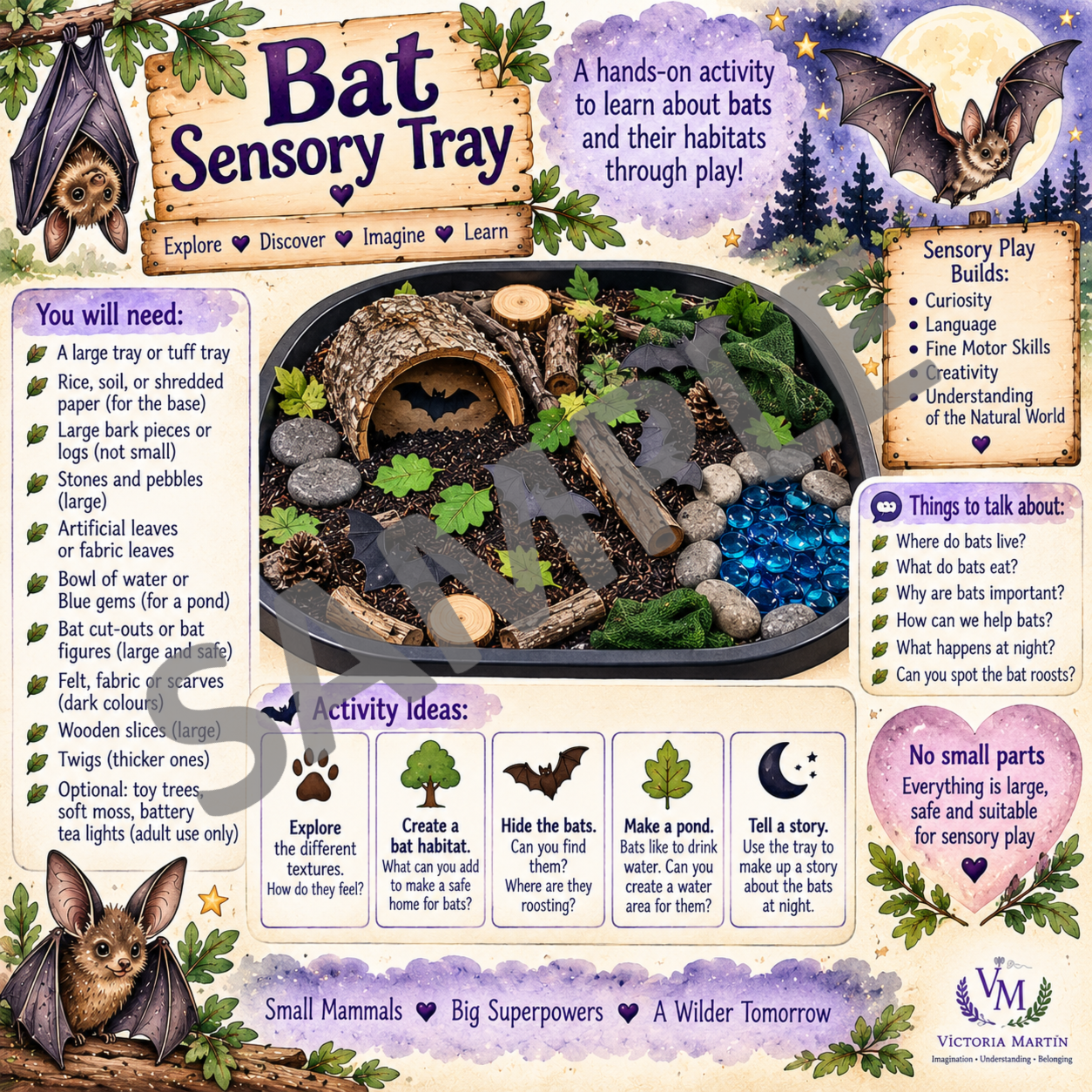
Depending on the species and the time of year, bats may roost in:
trees and woodland
roof spaces and buildings
cracks and crevices
behind tiles or boarding
caves and underground spaces
bat boxes
A single bat may use several different roosts throughout the year.
During summer, females often gather together in maternity roosts, where they give birth and raise their pups.
In winter, bats need somewhere suitable to spend periods of hibernation. Underground places such as caves, mines, tunnels and cellars can provide the cool, stable conditions needed by some species.
What Do British Bats Eat?
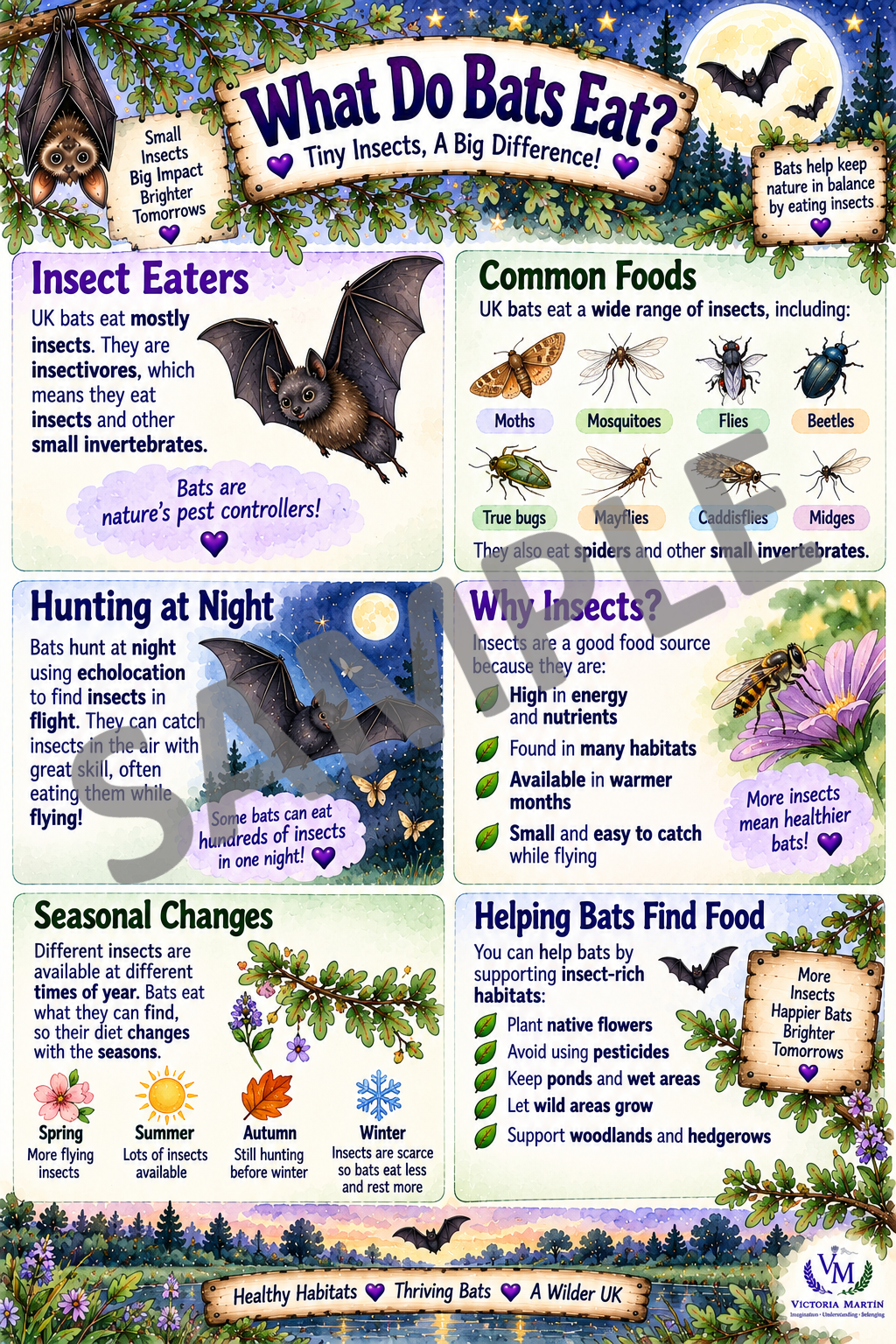
All British bat species are insectivorous, meaning their natural diet consists mainly of insects and other small invertebrates.
Depending on the species, their prey can include moths, midges, mosquitoes and flies, as well as beetles, spiders and other small invertebrates.
Different bats hunt in different ways.
Some catch insects high in the open sky. Others hunt around trees and hedgerows, while Daubenton's bats often hunt just above water.
Brown long-eared bats can even pick prey from leaves and other surfaces.
By feeding on large numbers of nocturnal insects and other small invertebrates, bats form an important part of Britain's food webs and ecosystems.
How Do Bats Find Their Way in the Dark?
Bats are not blind.
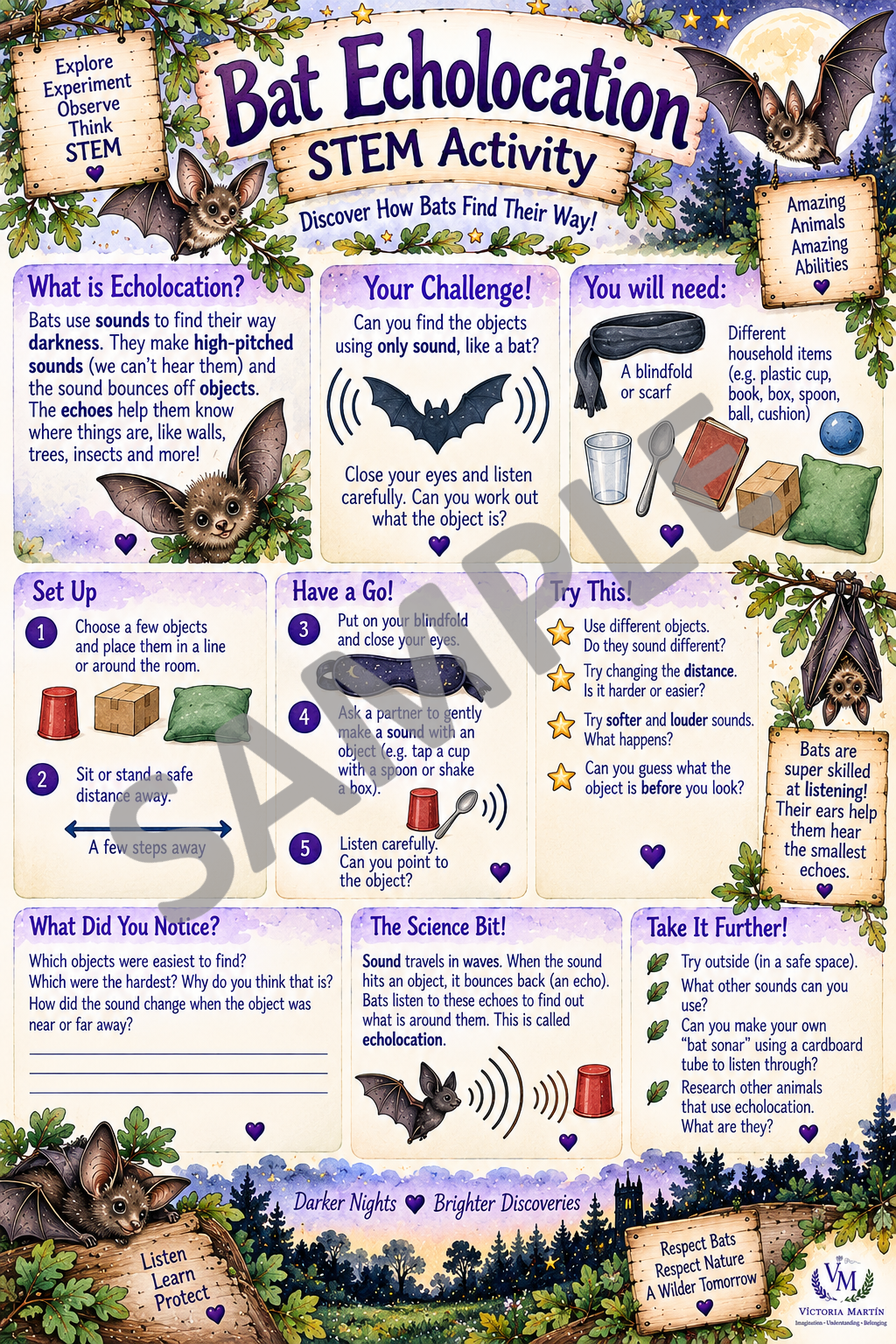
They can see, but most British bats also use an extraordinary ability called echolocation to navigate and locate prey.
A bat produces very high-frequency sounds as it flies. These sounds travel through the air and bounce back when they encounter objects.
By listening to the returning echoes, the bat can gather information about its surroundings.
This can help it determine where an object is, how far away it is and potentially whether it is something worth investigating as prey.
Many bat echolocation calls are too high-pitched for humans to hear.
Special equipment called a bat detector can convert these ultrasonic calls into frequencies we can hear, allowing people to listen for bats without needing to handle or disturb them.
Bats Through the Seasons
British bats change their behaviour throughout the year.
Spring – As temperatures rise and more insects become available, bats become increasingly active after winter.
Summer – Female bats gather in maternity roosts to give birth and care for their pups. Young bats eventually begin learning to fly and hunt for themselves.
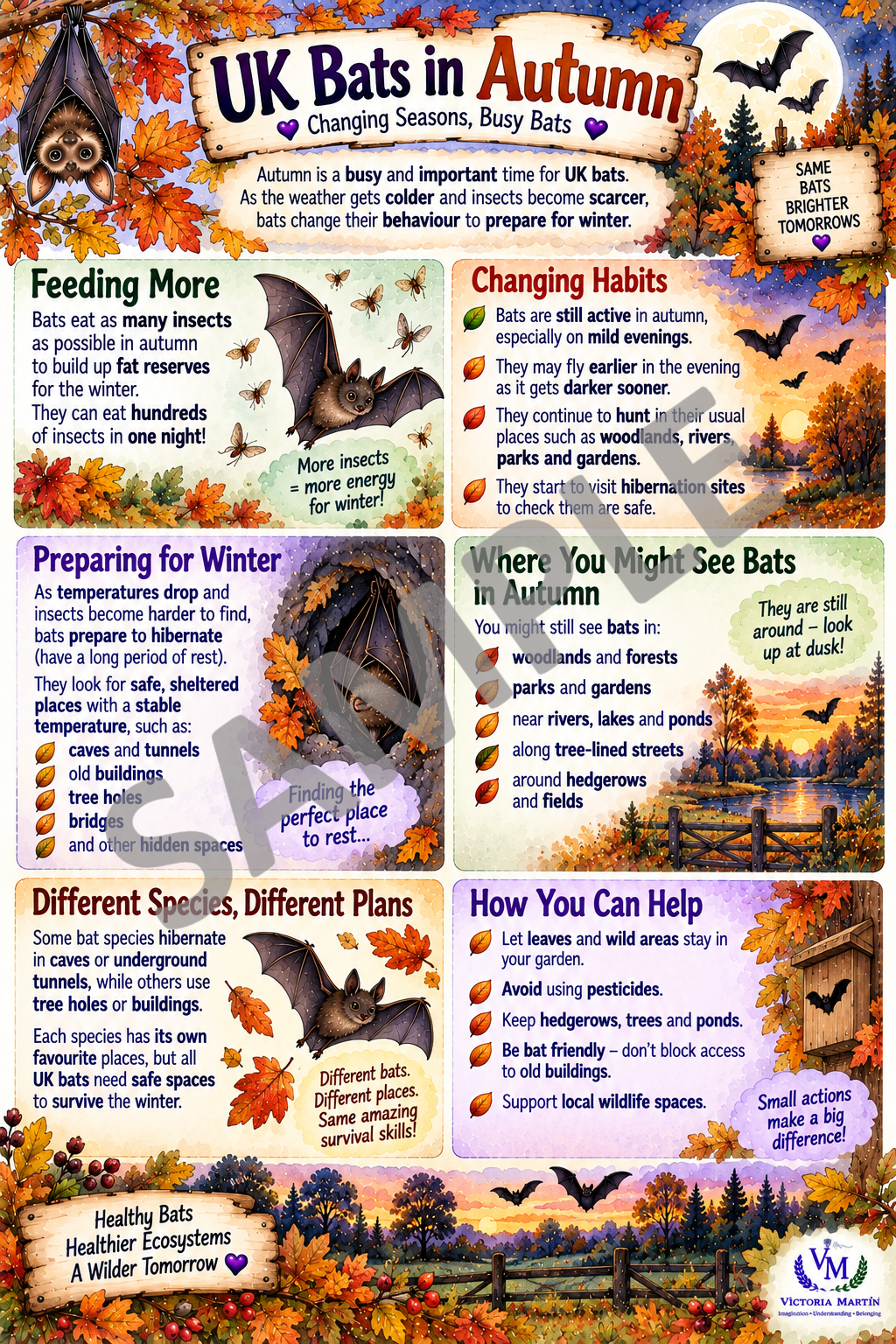
Autumn – Bats spend time feeding and building up fat reserves needed to survive winter. Autumn is also an important mating period for many British bats.
Winter – With far fewer insects available, bats conserve energy through torpor and hibernation. Their body temperature and metabolic rate decrease, allowing them to survive using stored energy.
Hibernating bats are not necessarily asleep continuously throughout the entire winter. They can occasionally wake and may move between roosting locations.
Bats in Autumn
Bats are particularly interesting animals to look for during the early part of autumn.
As the nights become longer and temperatures begin to fall, bats need to prepare for the colder months ahead.
They continue hunting insects whenever conditions allow, building the fat reserves that will help sustain them through winter.
Autumn is also an important time for mating. In several British species, mating occurs during autumn and sometimes winter.
Females of many species can store sperm over winter, with pregnancy beginning later so that their young are born when conditions and food availability are more favourable.
As winter approaches, bats begin moving towards suitable places to hibernate.
Why Are Bats Important?
Bats are an important part of British biodiversity.
Because British bats eat insects and other small invertebrates, they are predators within their ecosystems and form part of complex food webs.
They can also help scientists understand something about the health of our environment.
Bats depend upon suitable roosts and healthy insect populations, as well as clean water and connected habitats such as woodland, hedgerows and waterways. Changes affecting these habitats can therefore affect bat populations too.
Monitoring bats can help conservationists understand how Britain's wider environment is changing.
Protecting British Bats
British bat populations experienced major declines during the twentieth century. Long-term monitoring now shows increases in some monitored species and stability in others, although the overall picture remains complex and bats continue to face conservation pressures.
Today, all British bat species and their roosts are protected by law.
In England, it is illegal to deliberately capture, injure or kill bats. Their breeding sites and resting places are also protected, and it can be an offence to damage or destroy them, obstruct access to them or deliberately disturb bats in certain circumstances.
Importantly, a bat breeding site or resting place can remain legally protected even when bats are not currently present.
This means that work involving roofs, lofts, old buildings or mature trees and other potential bat habitats may sometimes require professional ecological advice.
If you discover bats living in a building, they should be left undisturbed and specialist advice sought if necessary.
Helping Bats
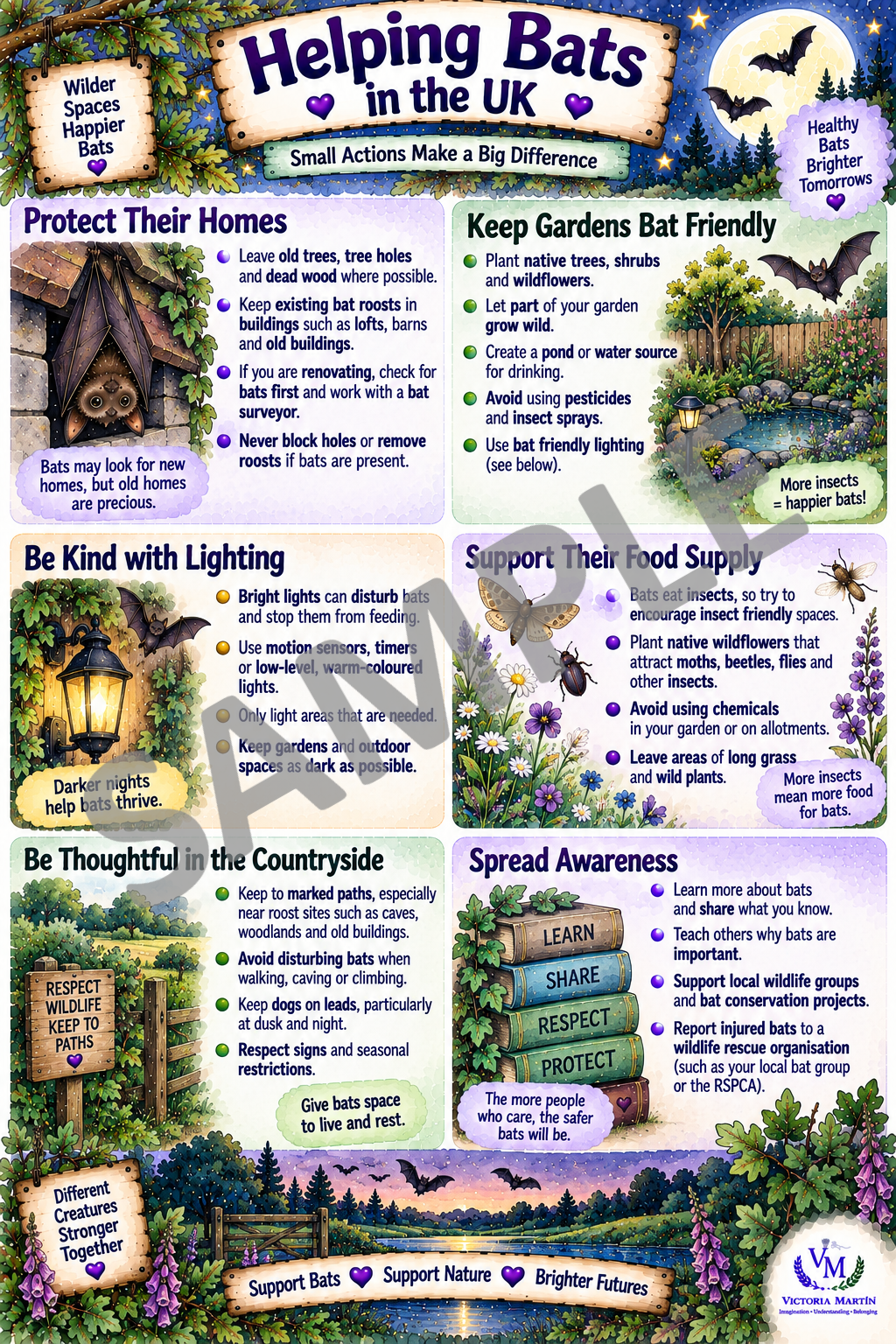
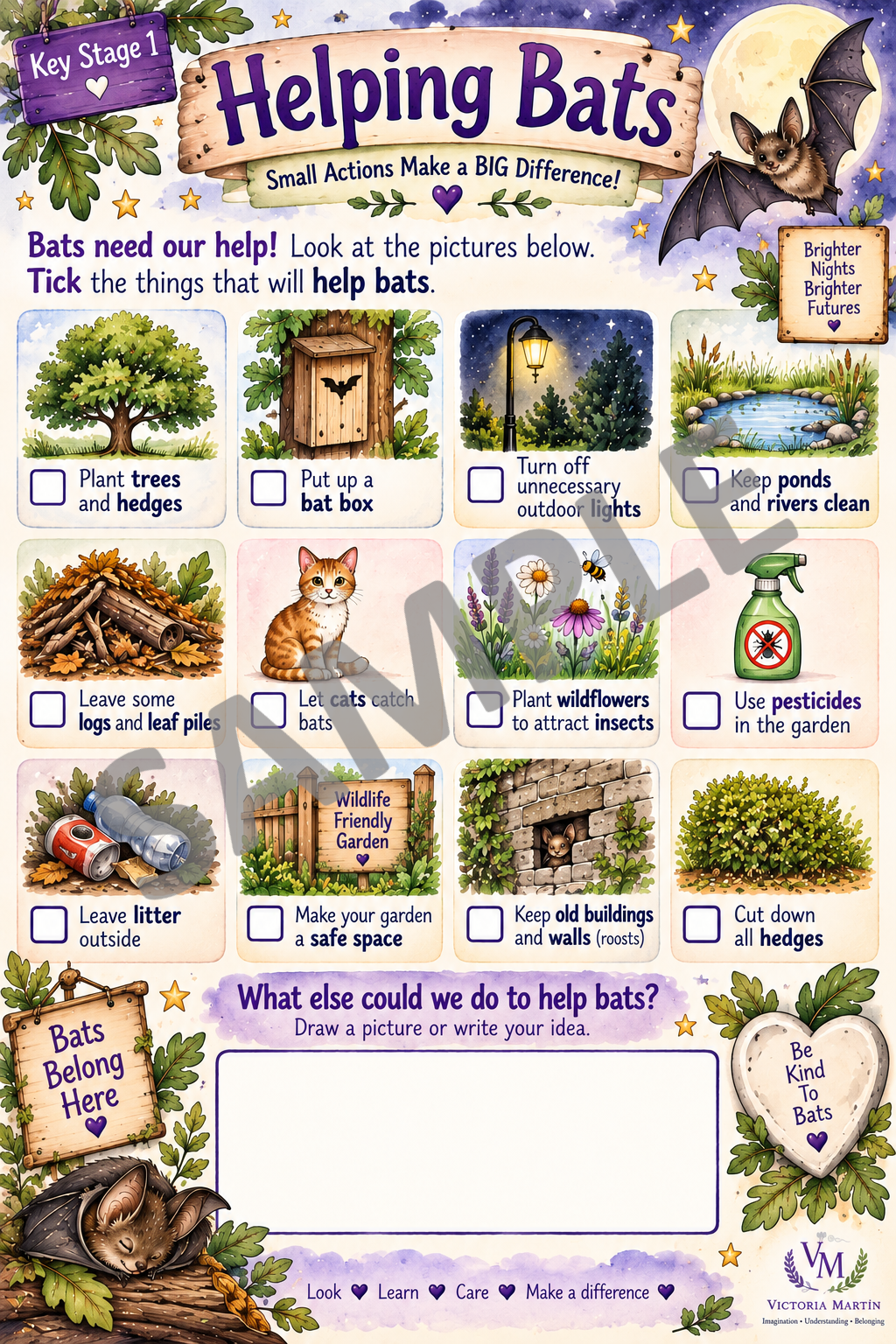
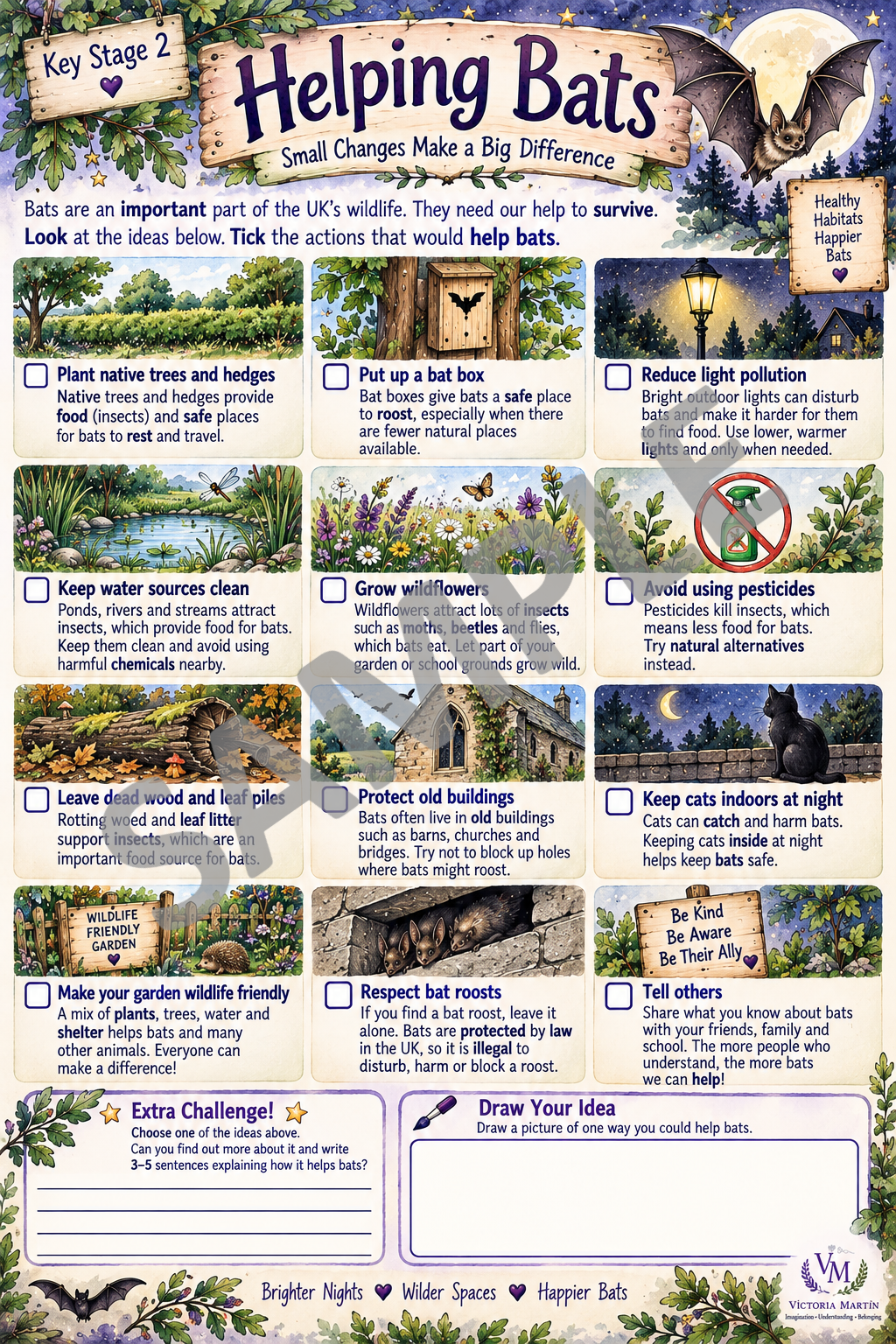
There are simple ways that gardens and outdoor spaces can become more welcoming to bats.
Growing a variety of native and insect-friendly plants can provide food and habitat for the insects bats depend upon.
Ponds can support insects and provide valuable feeding areas.
Trees, hedges and other vegetation create sheltered routes that bats can follow through the landscape.
Artificial lighting can affect bats in different ways, and many species are particularly sensitive to brightly illuminated areas. Lighting around roost entrances and feeding areas and along important flight routes can interfere with their normal behaviour.
Reducing unnecessary artificial lighting at night and retaining dark, connected areas can therefore help make outdoor spaces more suitable for bats.
Bat boxes can provide additional roosting opportunities where suitable natural spaces are limited, although they should be positioned carefully and existing natural roosts remain especially valuable.
Bat Facts
🦇 Bats are mammals, not birds.
🌙 The UK has 18 resident bat species, 17 of which are known to breed here.
🪽 Bats are the only mammals capable of true powered flight.
👶 A baby bat is called a pup.
🦟 All British bats feed on insects, with some species also eating other small invertebrates such as spiders.
👂 Bats are not blind and can see as well as use echolocation.
🔊 Many bat calls are ultrasonic, meaning their frequency is above the normal range of human hearing.
🏡 A place where a bat shelters or rests is called a roost.
🌳 British bats can roost in trees and buildings, as well as underground spaces, depending on the species and time of year.
❄️ During winter, bats can enter torpor and hibernation to conserve energy when food is scarce.
⚖️ All British bats and their roosts are legally protected.
Look Closely
As evening arrives, spend a little time looking at the sky.
Can you spot something moving quickly between the trees?
Does it fly in a straight line, or suddenly change direction?
Can you see bats hunting near a hedge, tree or pond?
Are there lots of flying insects nearby?
You do not need to touch, catch or approach a bat to investigate it. Watching quietly from a distance is one of the best ways to experience these remarkable nocturnal mammals.
Bats can be easy to overlook because much of their lives take place while we are asleep, but after sunset an entirely different side of British nature begins to wake up.
Resources and Further Information
Further Information
UK Bats - Types of bats - Bat Conservation Trust
Our guide to UK bats | National Trust
Guide to Britain's bats: species, facts, identification and where to see them | Countryfile.com
Bats in the UK: where to see them and why wetlands matter. | WWT
Bat Facts - Wildlife Aid Foundation
Bats – British Animals - Woodland Trust
Bats | Wildlife Advice - RSPCA - rspca.org.uk
BBC Blogs - Springwatch - Barmy about bats...an insight into the species found in the UK
How to see UK bats and give them a helping hand | Natural History Museum