
The Wheel of the Year
The Wheel of the Year is a beautiful way of noticing and celebrating the changing seasons. Rooted in ancient nature traditions, it follows the journey of the Earth through eight seasonal festivals, marking the changing light, the harvests, the growth of spring, the warmth of summer and the quiet reflection of winter.
You don't need to follow any particular religion or belief system to enjoy the Wheel of the Year. Many families simply use it as a gentle way to spend more time outdoors, learn about nature, celebrate the seasons and create meaningful traditions together.
Throughout the year, each festival offers opportunities to:
🌿 Explore nature and local wildlife
🌼 Learn about history and seasonal traditions
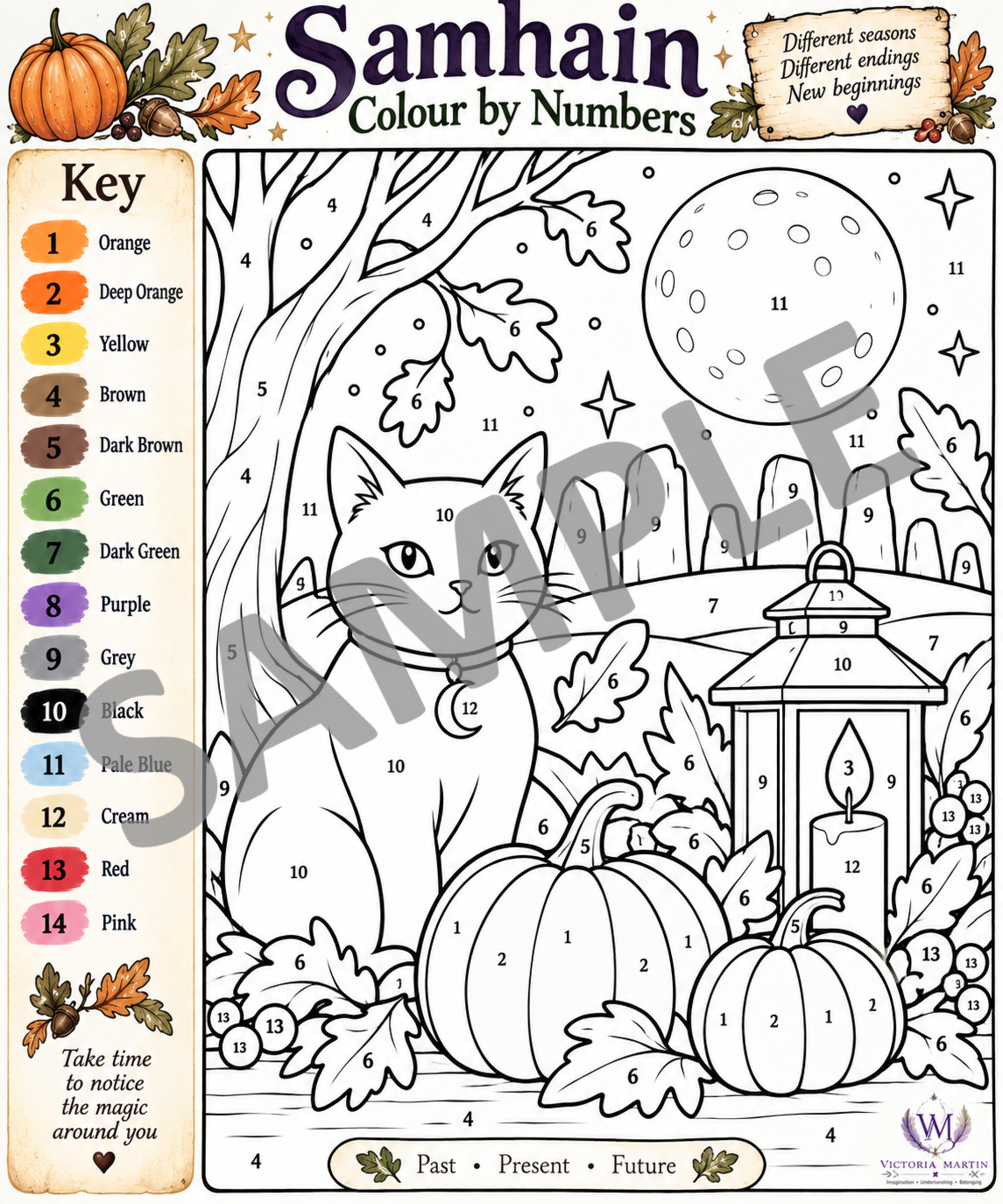
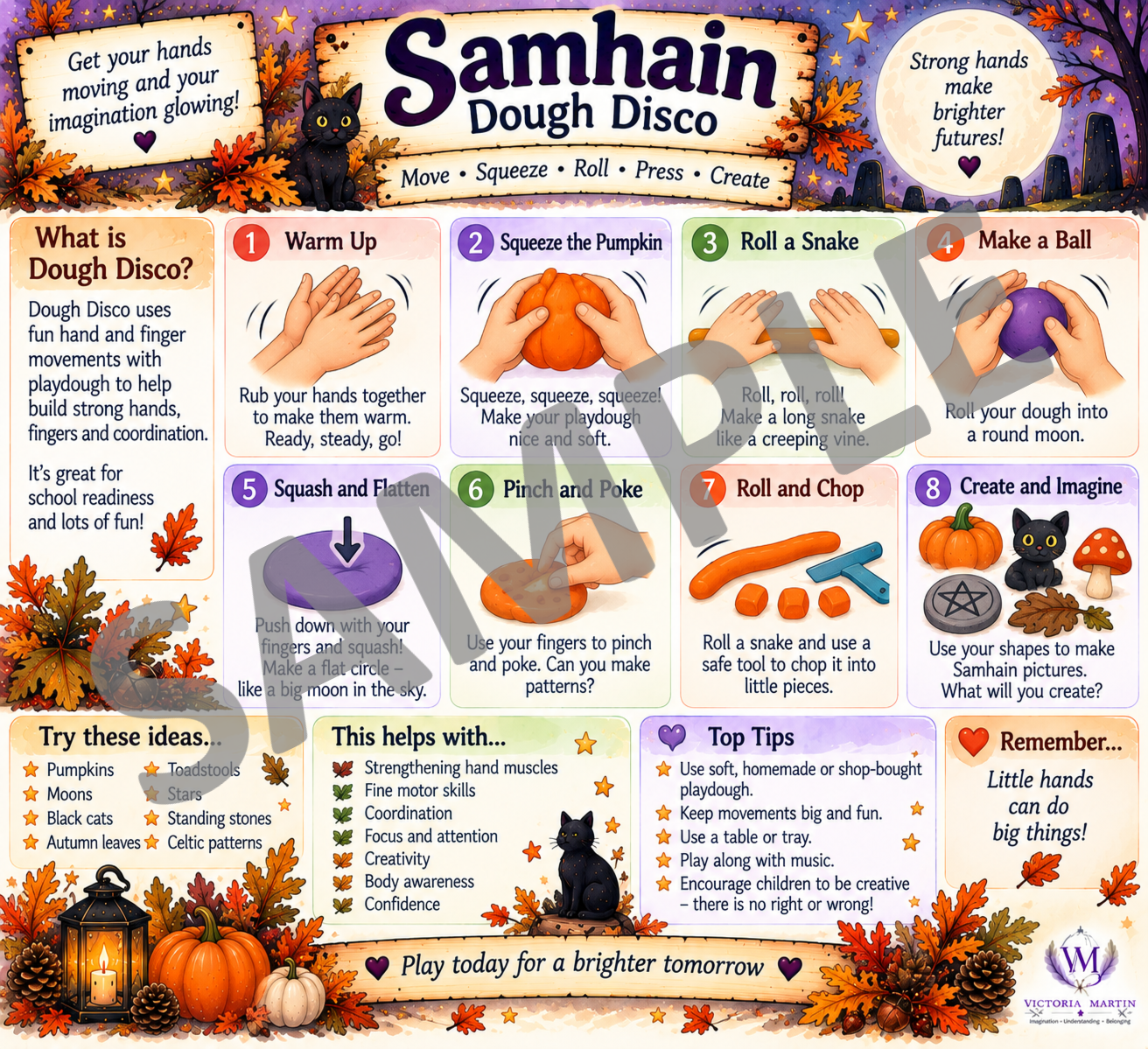
🎨 Enjoy crafts, colouring and creative activities
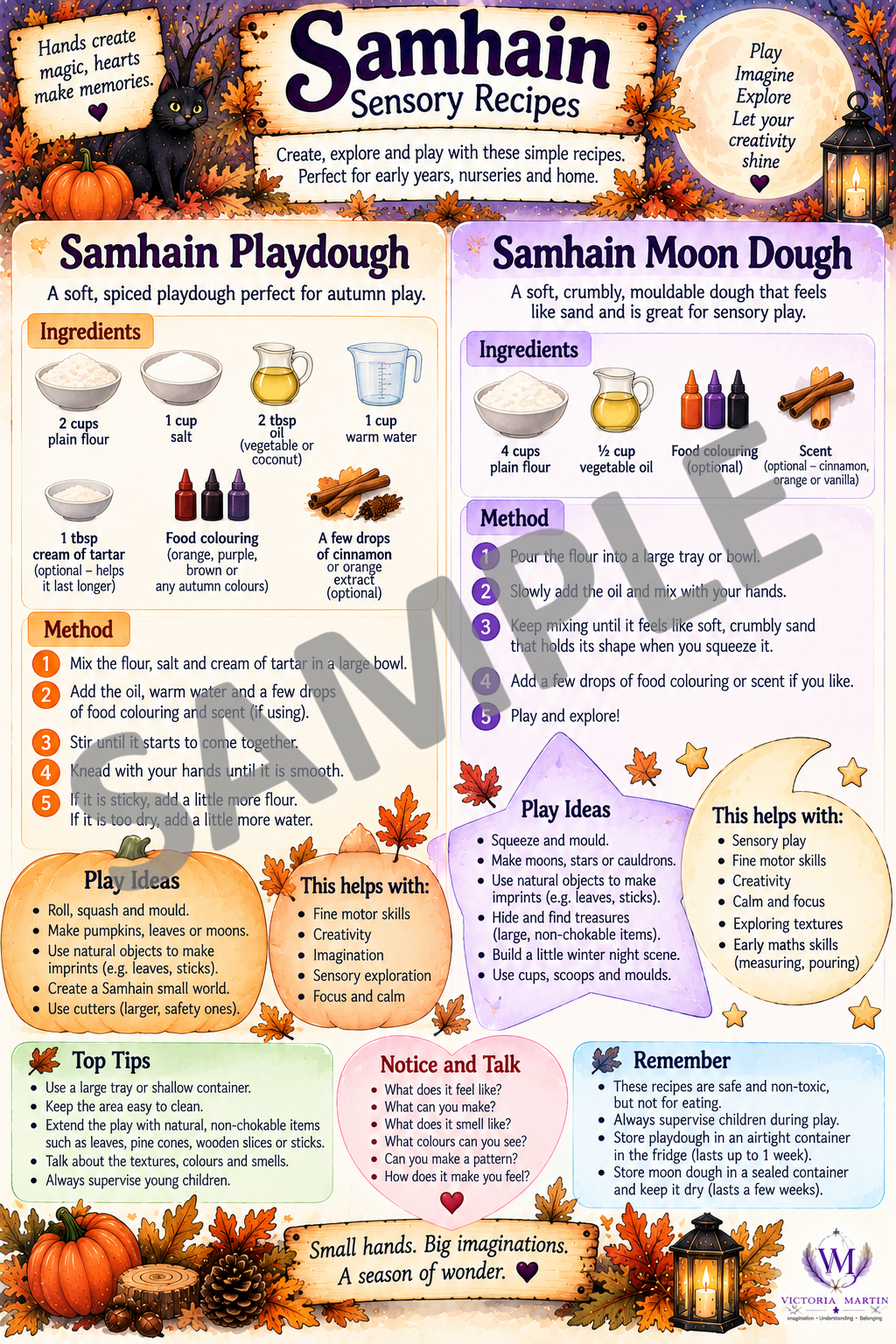
🍞 Bake, cook and celebrate seasonal foods
💜 Practise gratitude, kindness and mindfulness
📚 Encourage curiosity, learning and family time
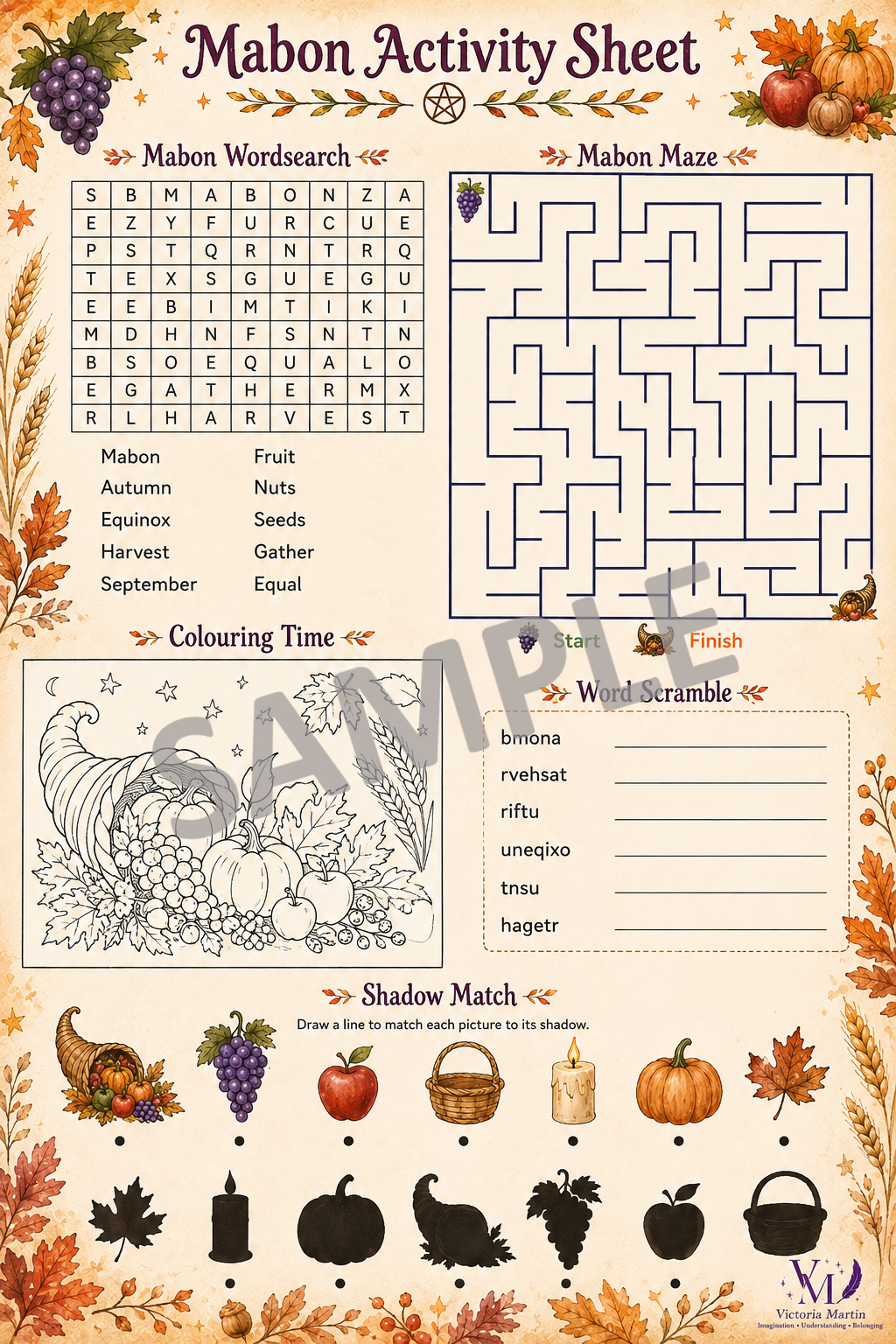
On this page you'll find a growing collection of free educational resources, including activity sheets, colouring pages, word searches, information posters, and family-friendly learning activities designed for children, parents, carers and educators.
Whether you're discovering the Wheel of the Year for the very first time or already enjoy celebrating the seasons, these resources are designed to be inclusive, welcoming and easy to enjoy, helping children build a stronger connection with nature, the world around them and themselves.
After all, every season has something to teach us.
Celebrate • Learn • Create • Reflect • Grow


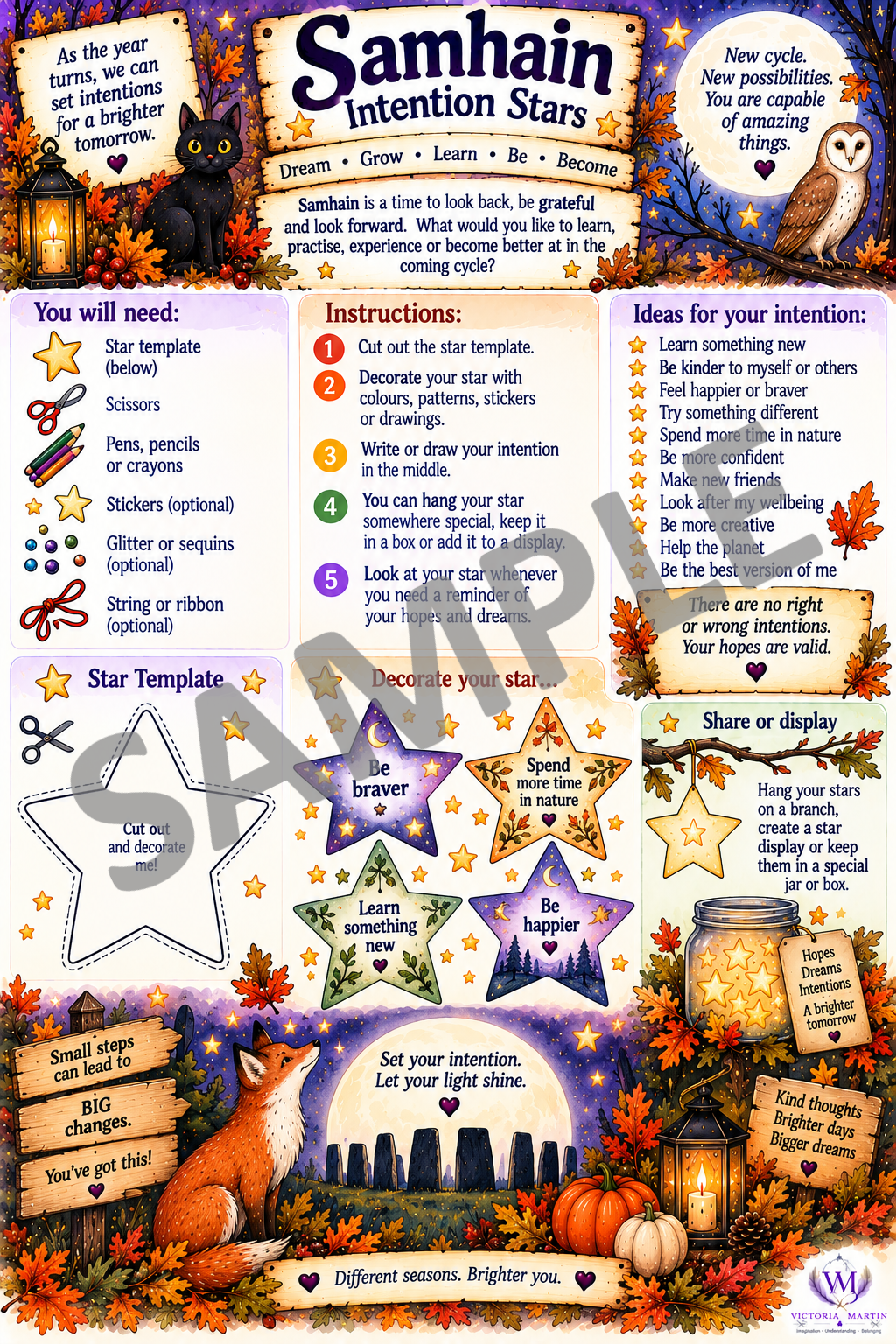
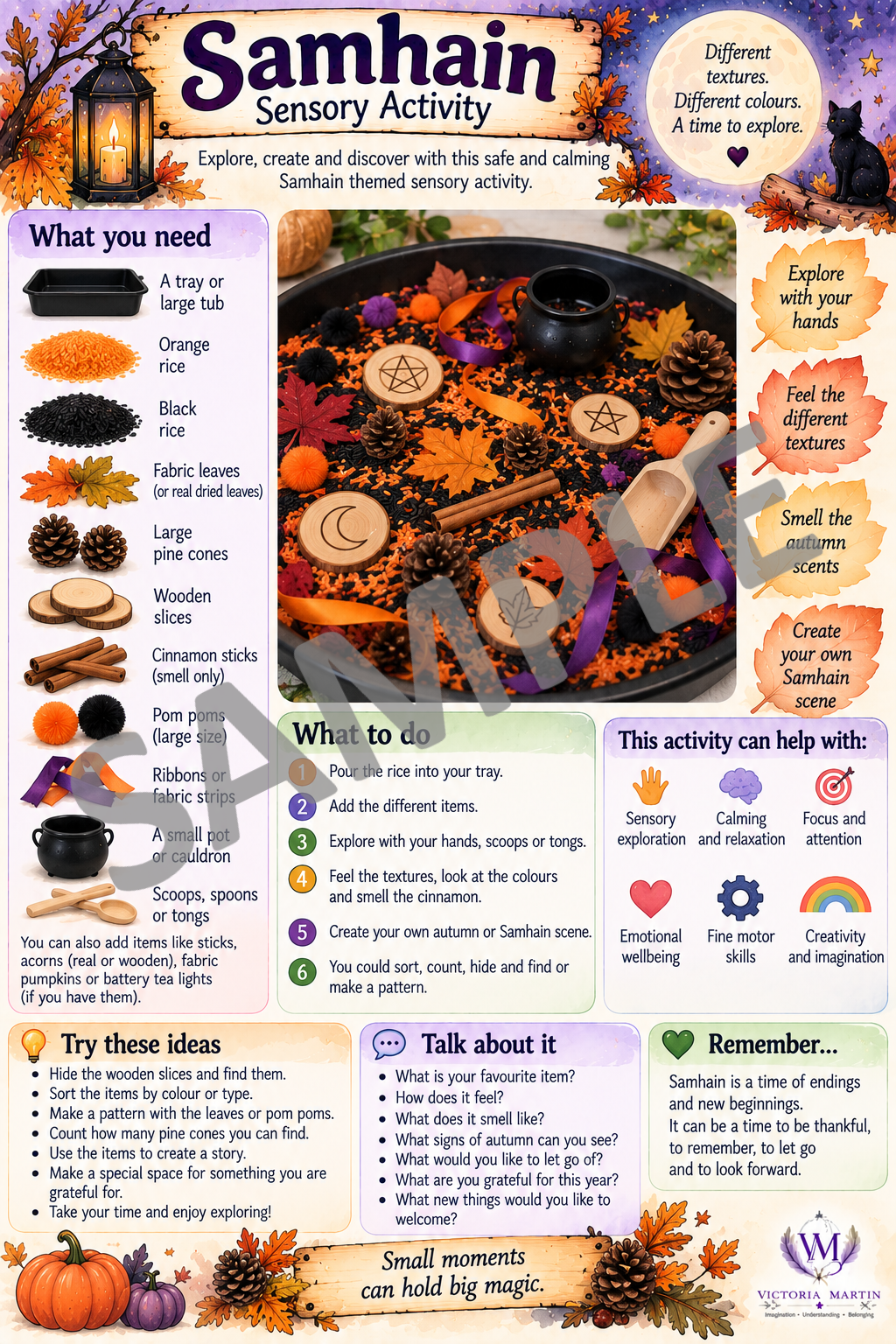
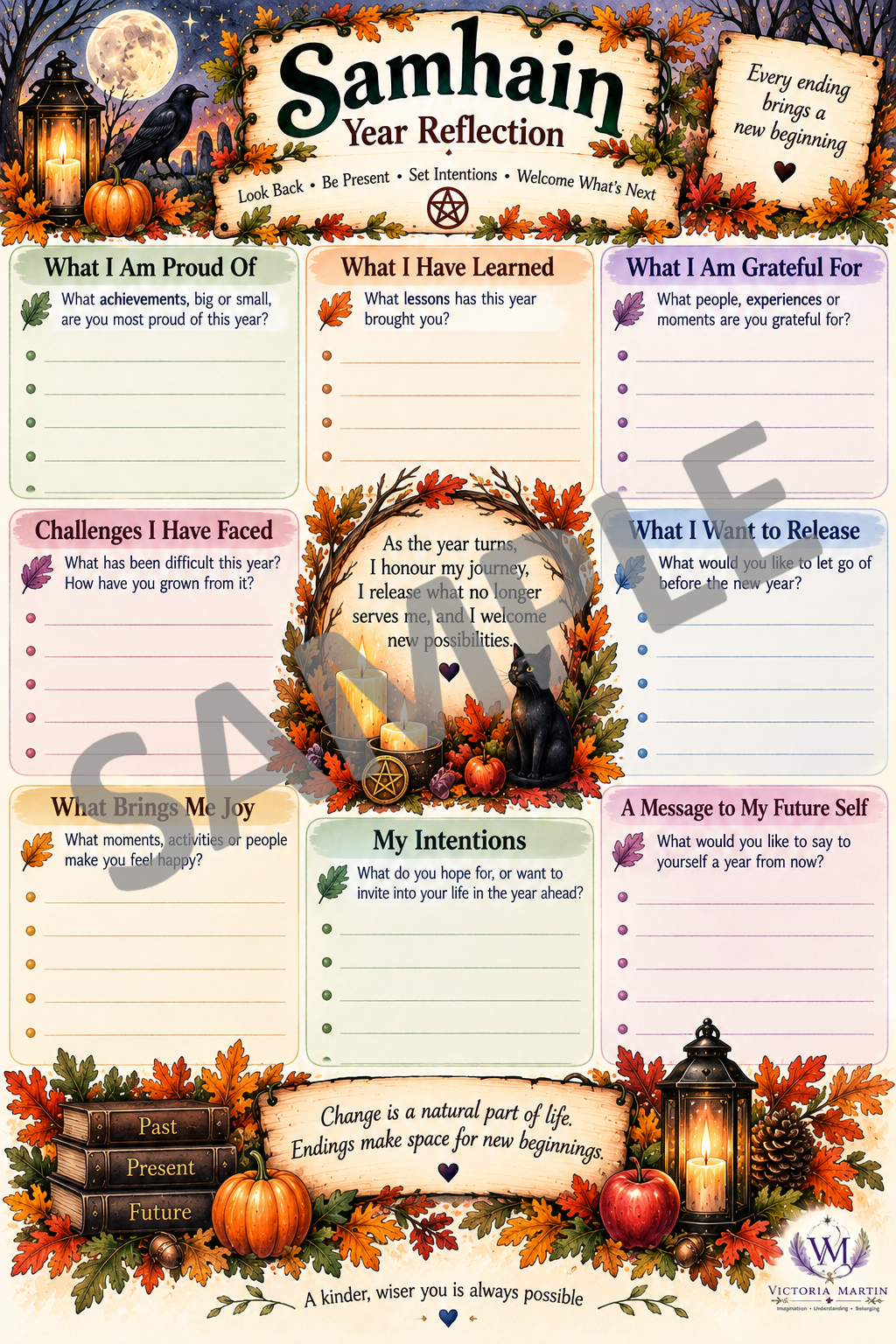
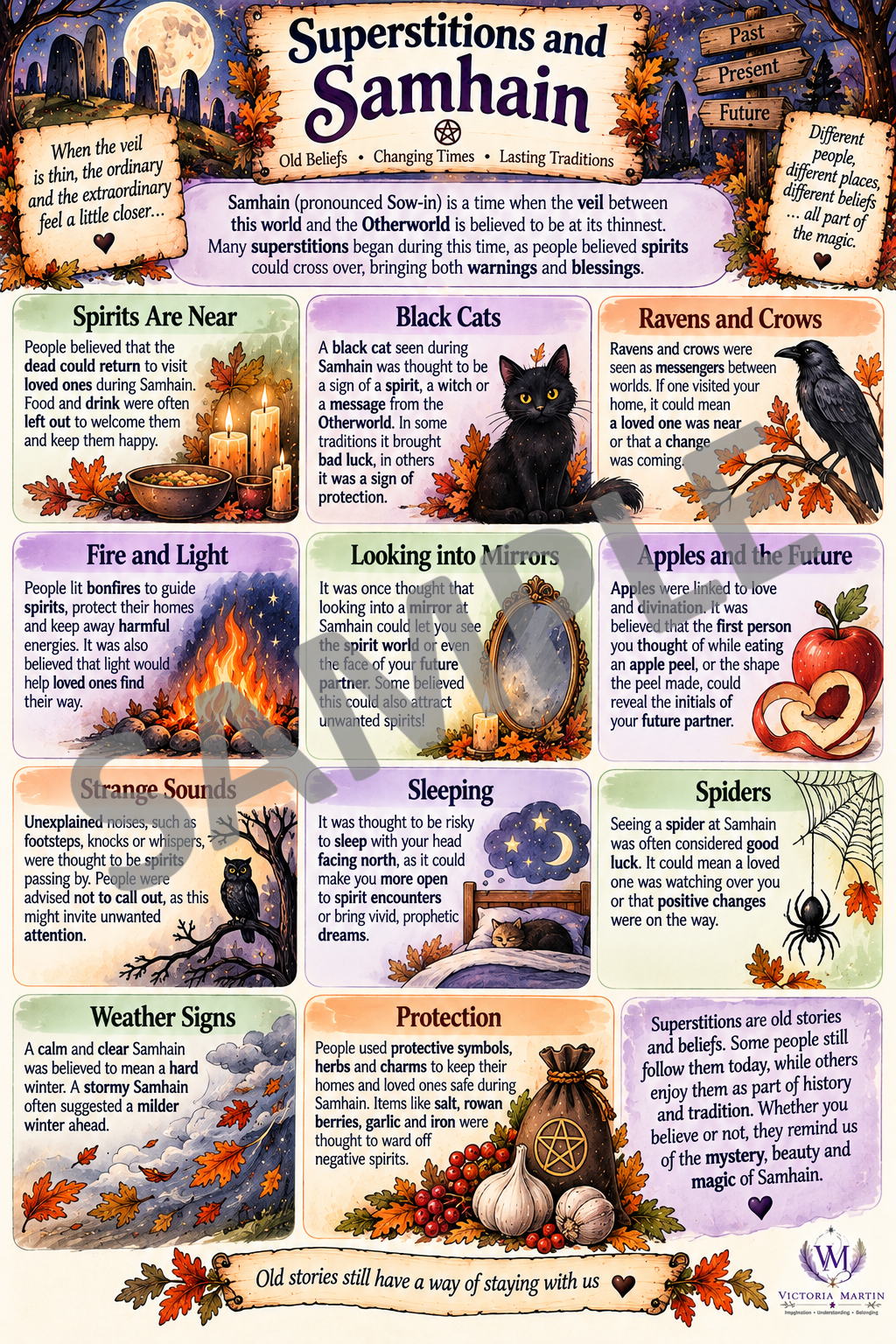
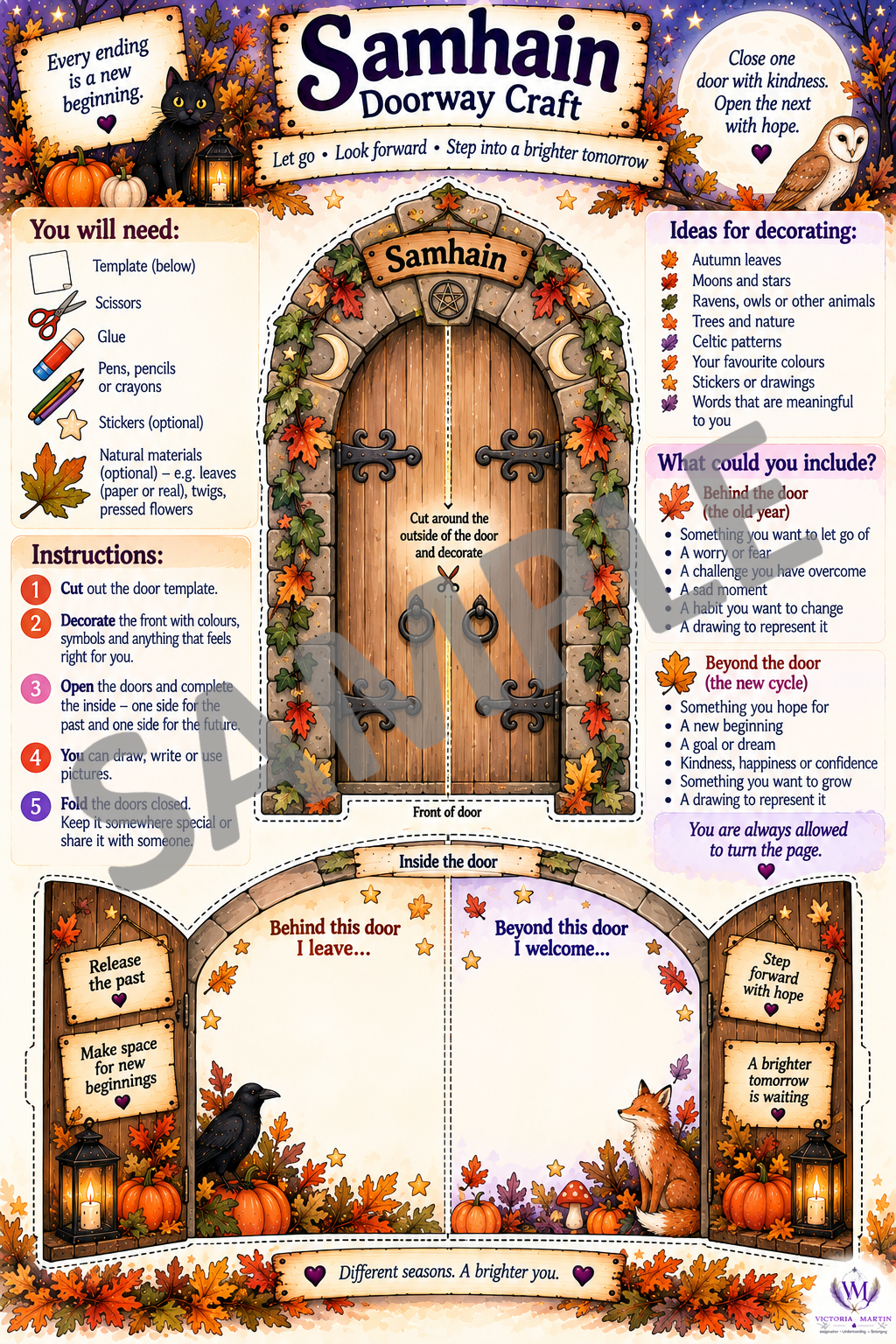
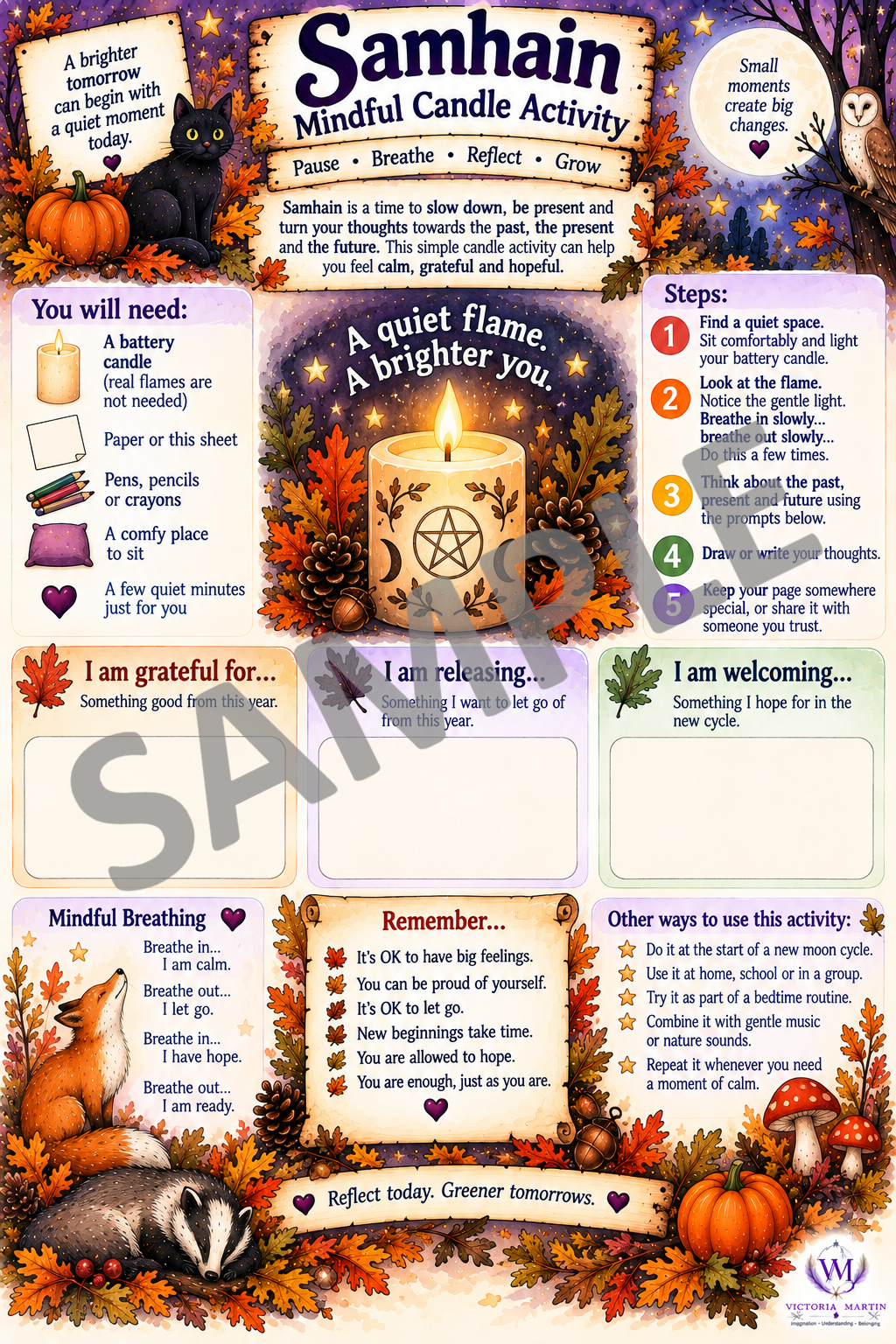
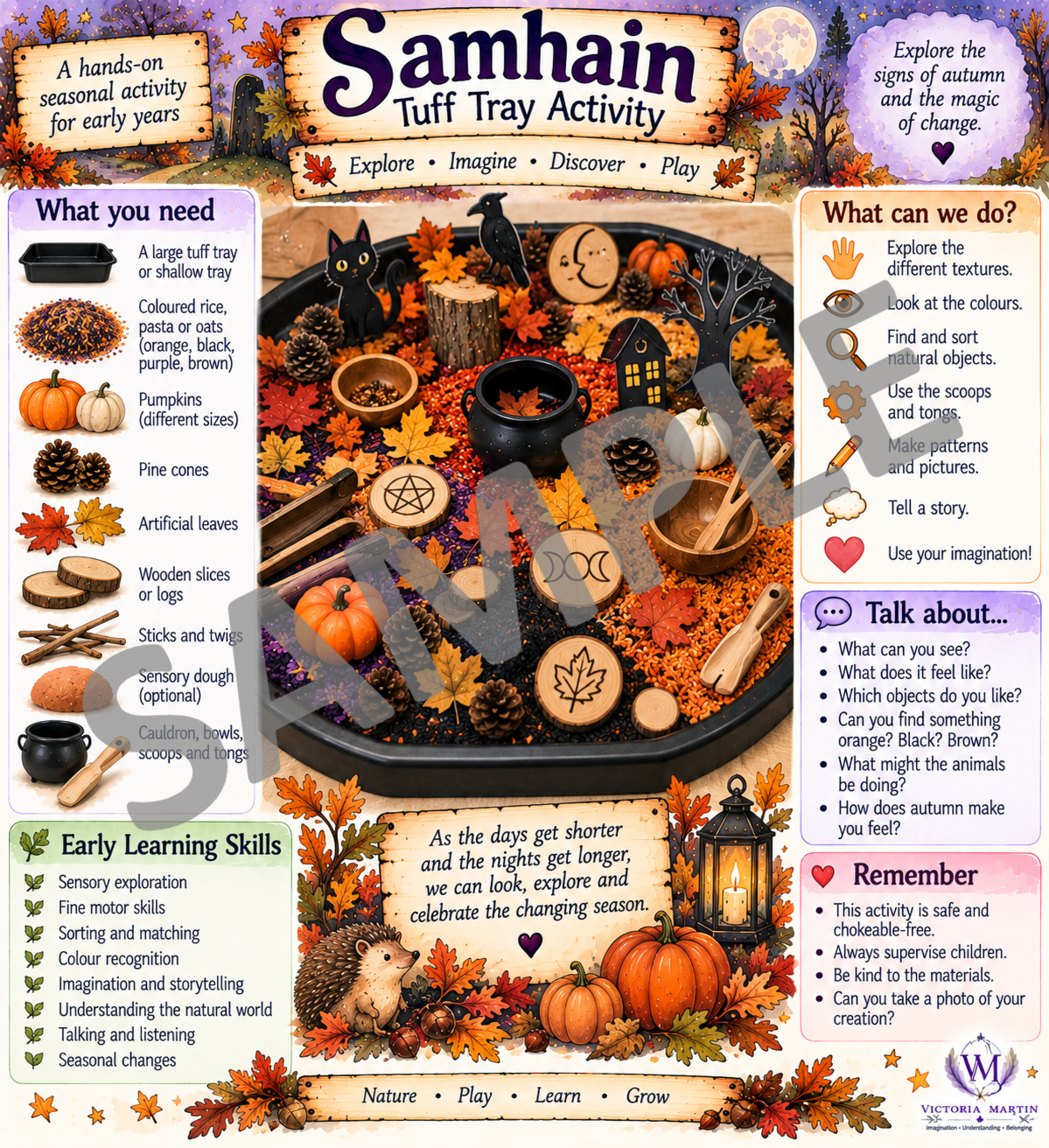
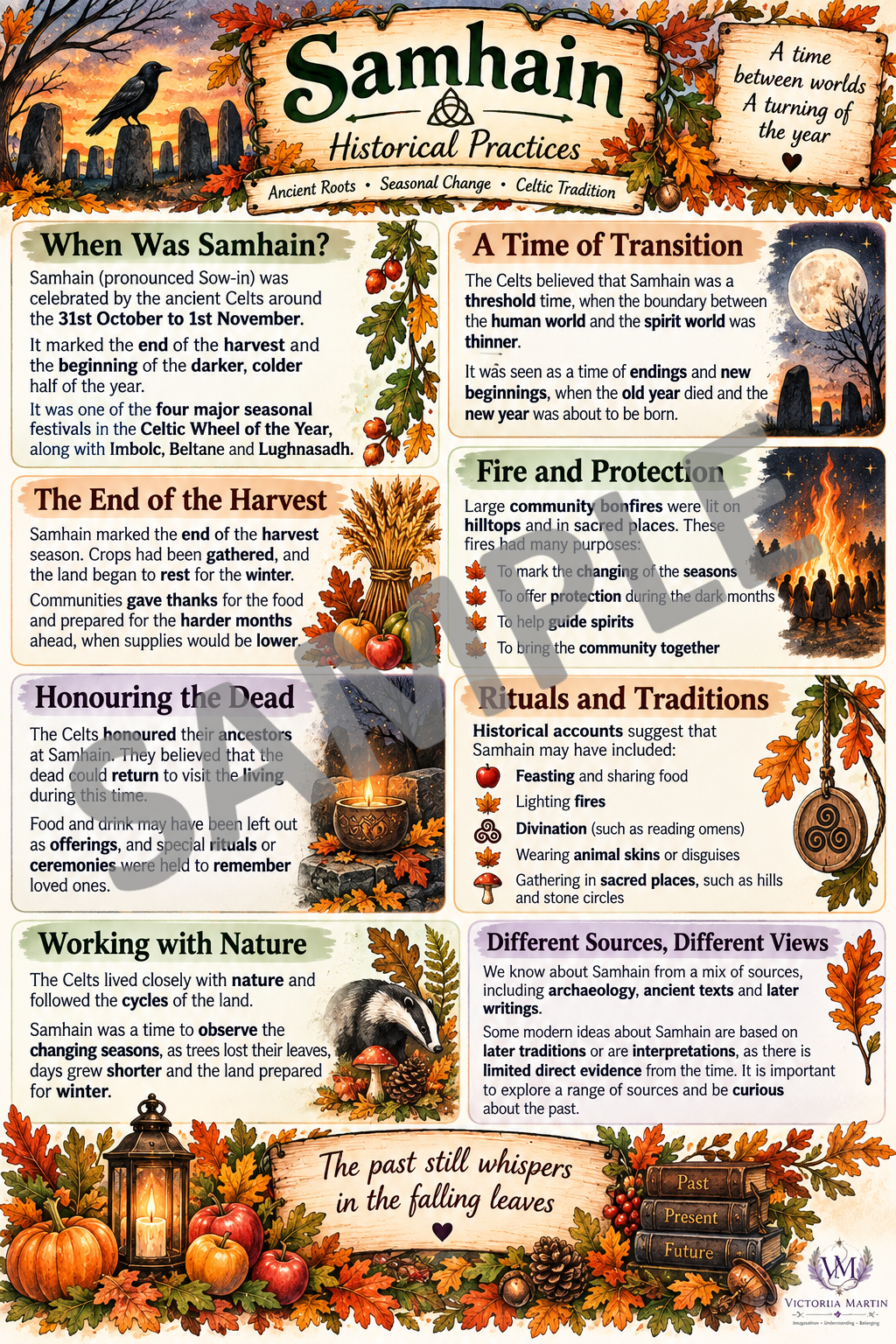
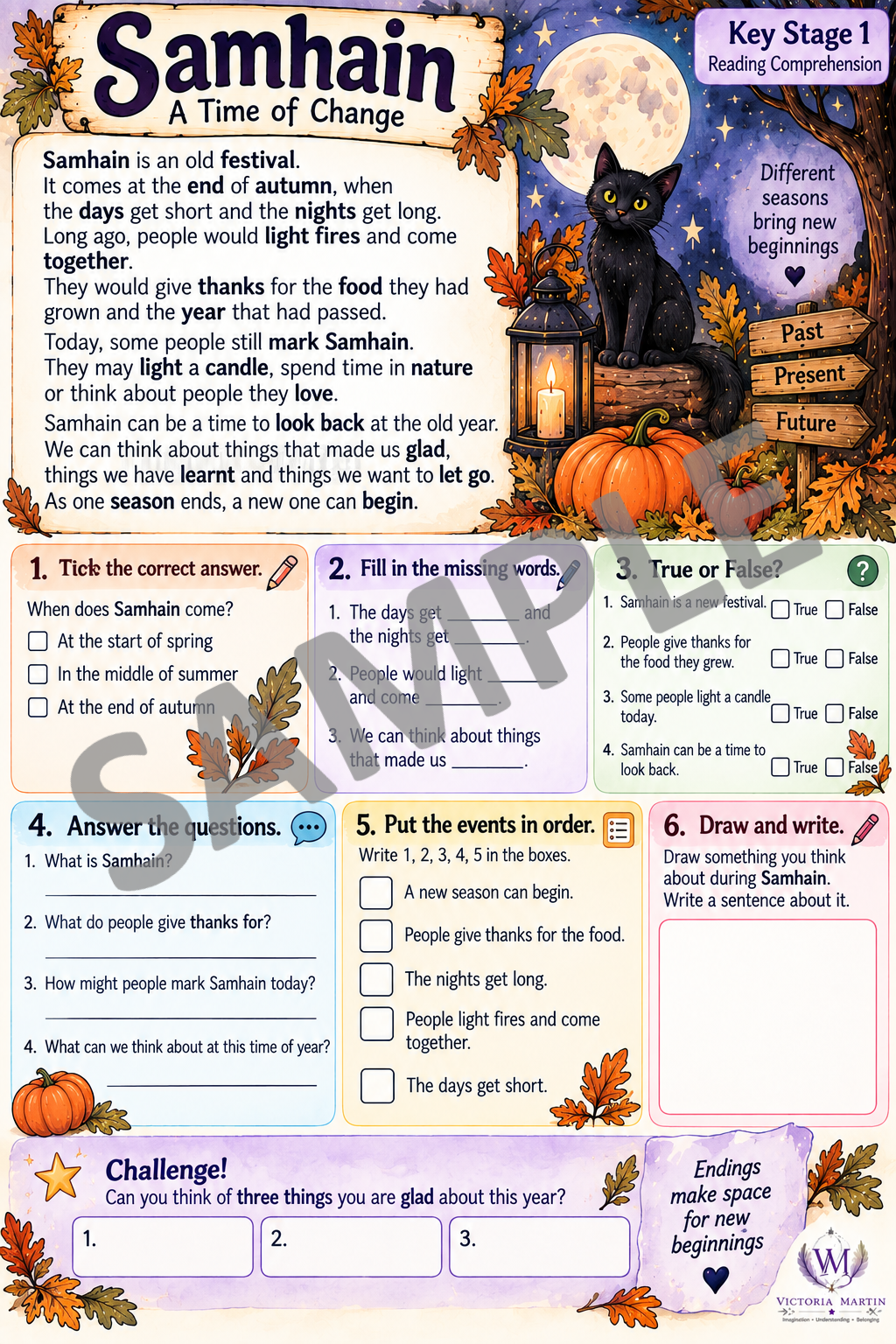
Samhain
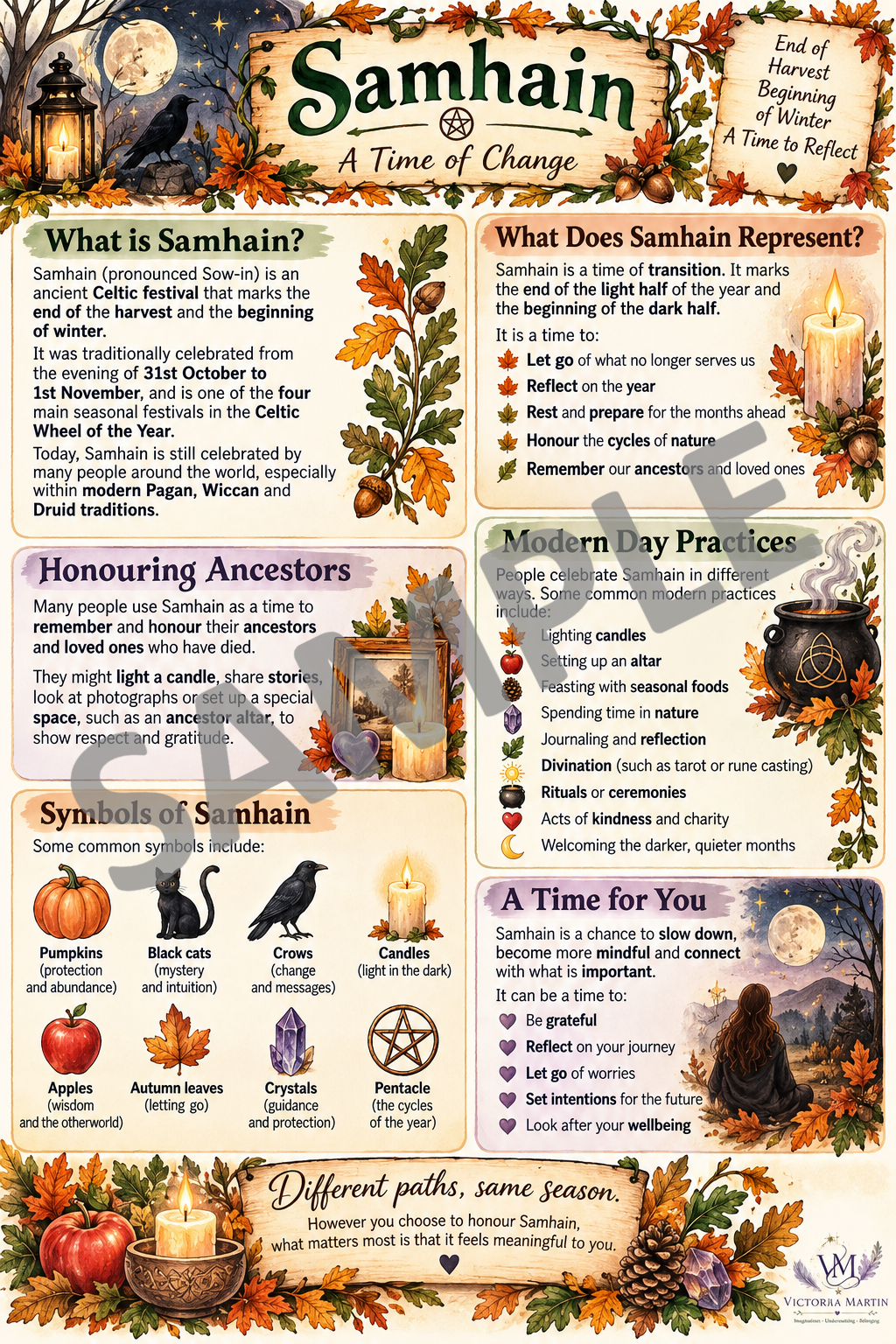
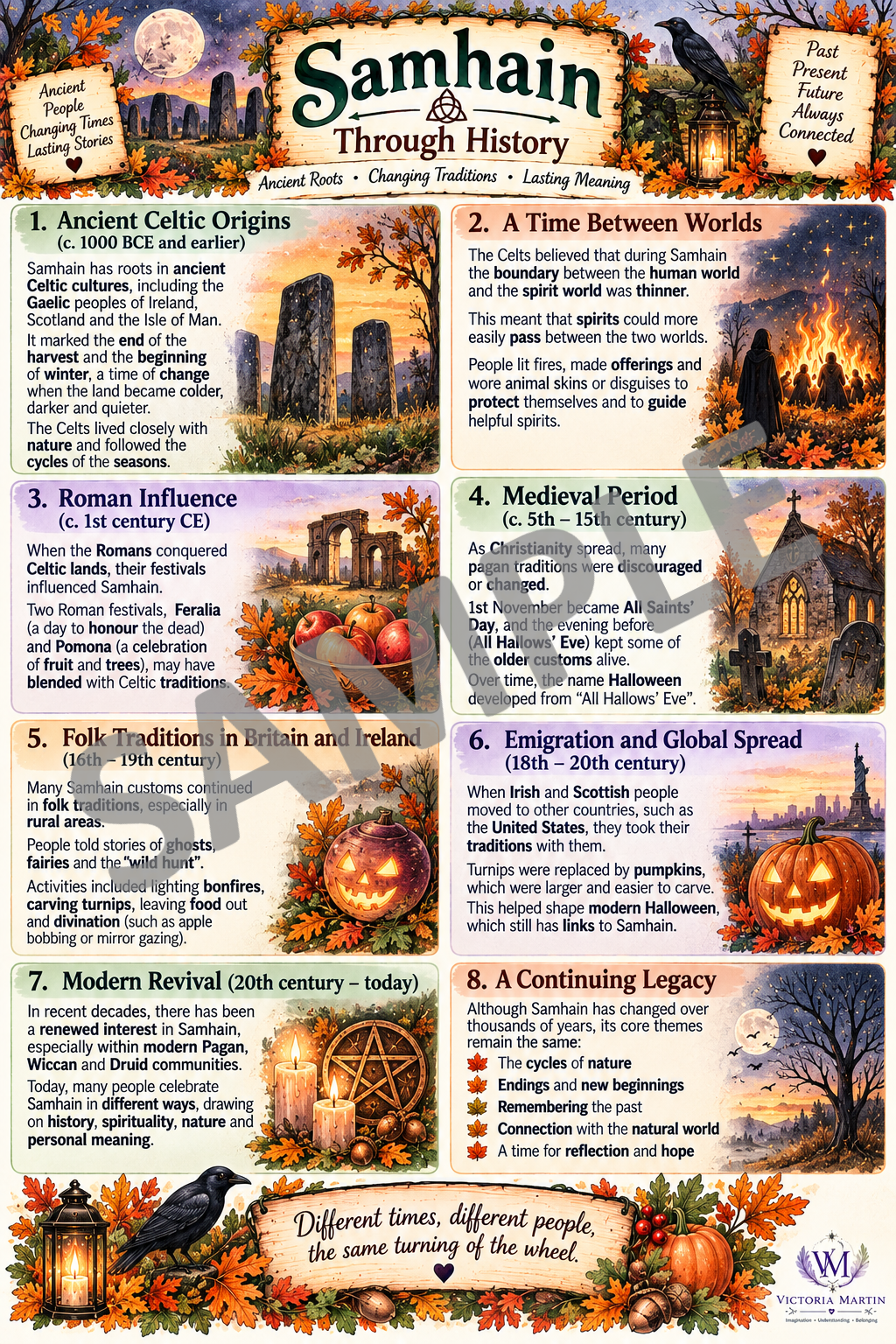
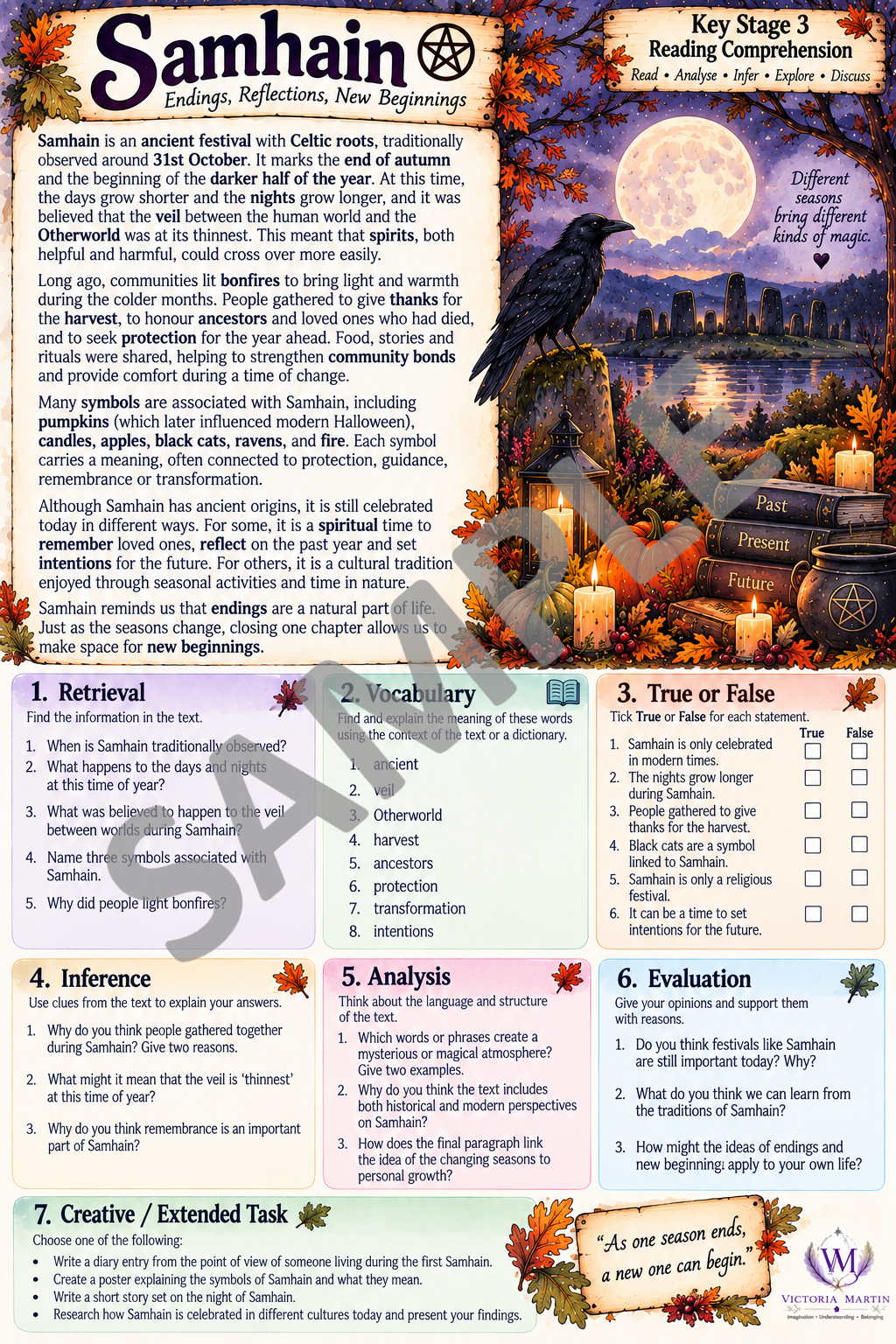
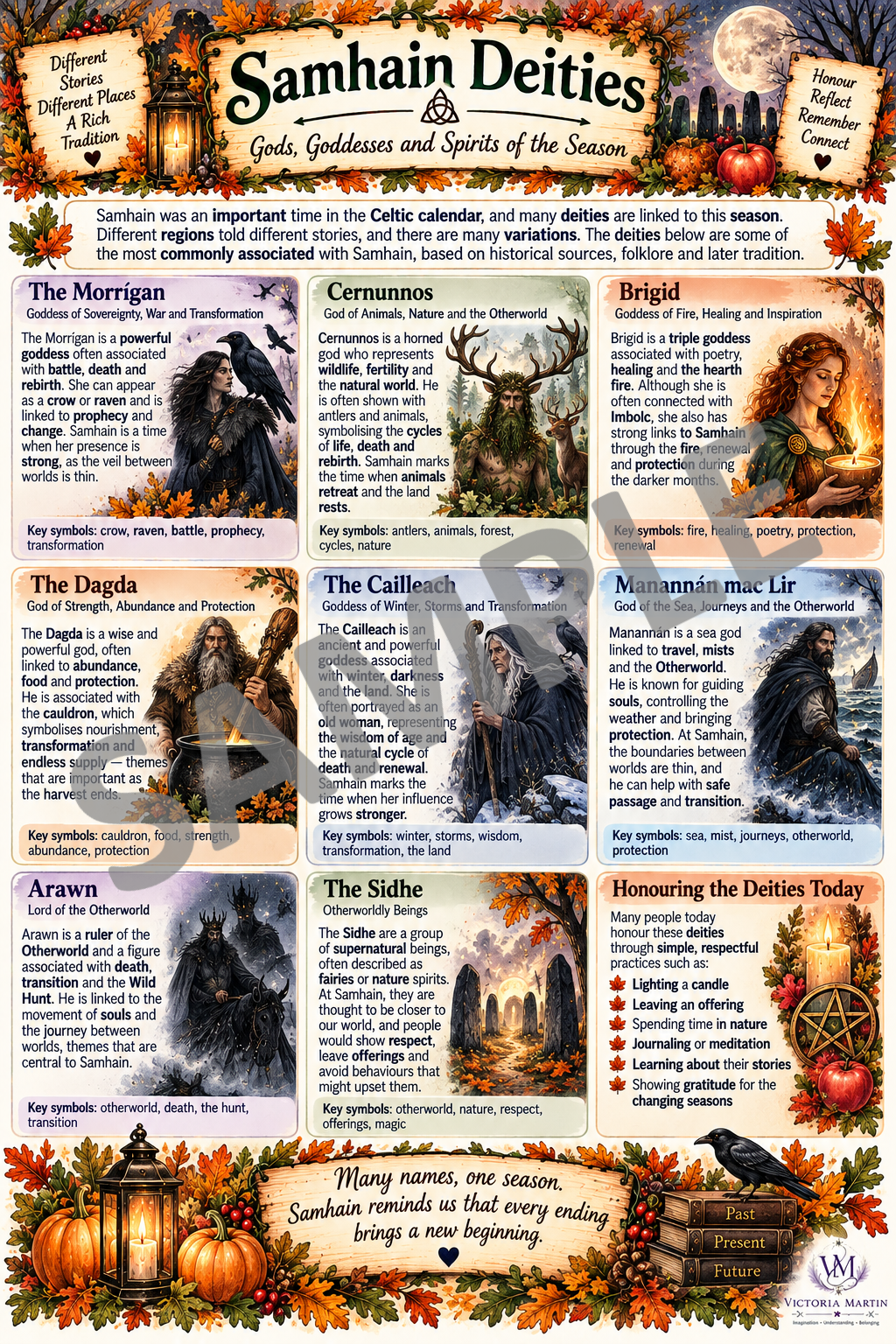
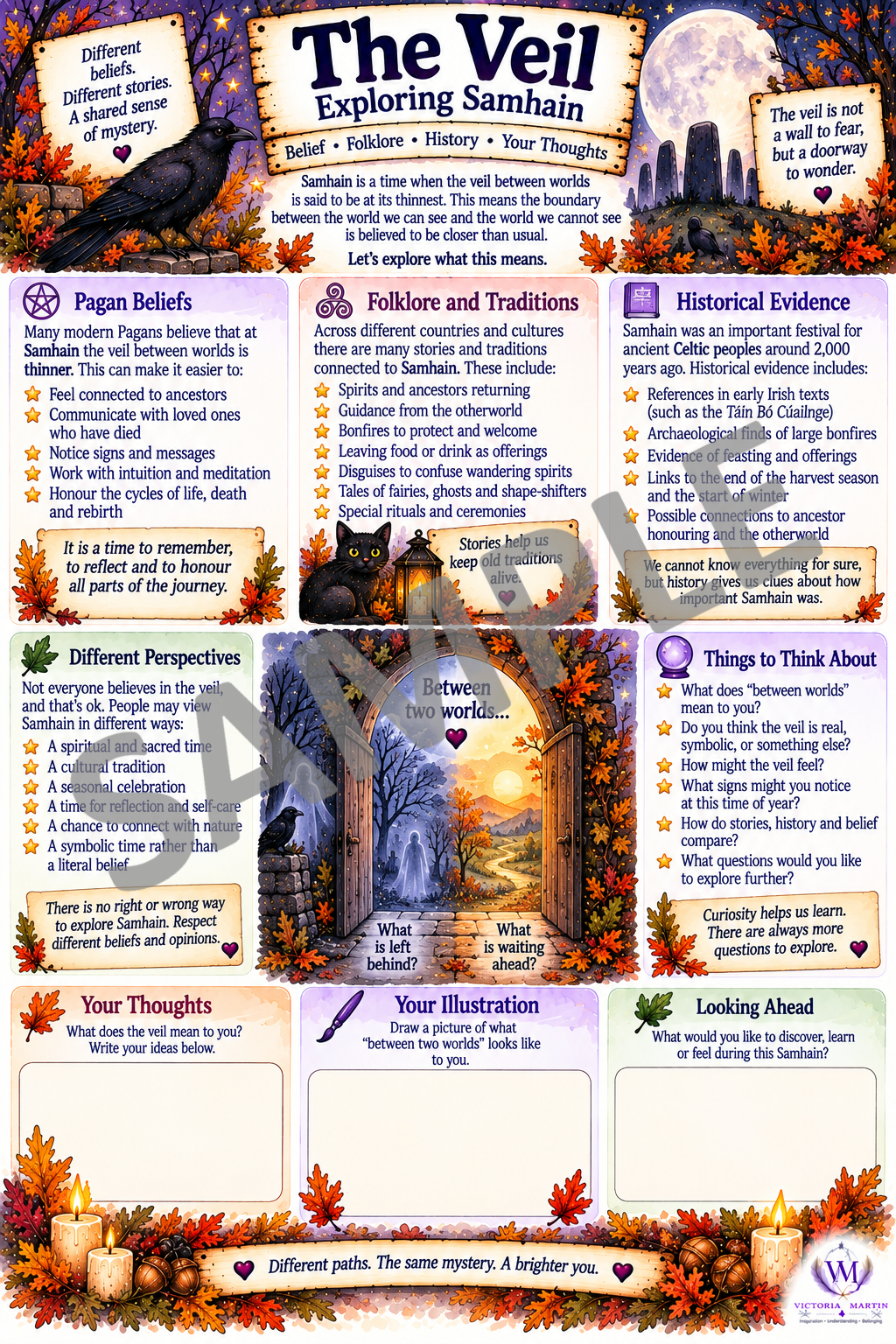
Samhain is a seasonal festival with roots in Irish and other Gaelic traditions, associated with the transition into the darker part of the year.
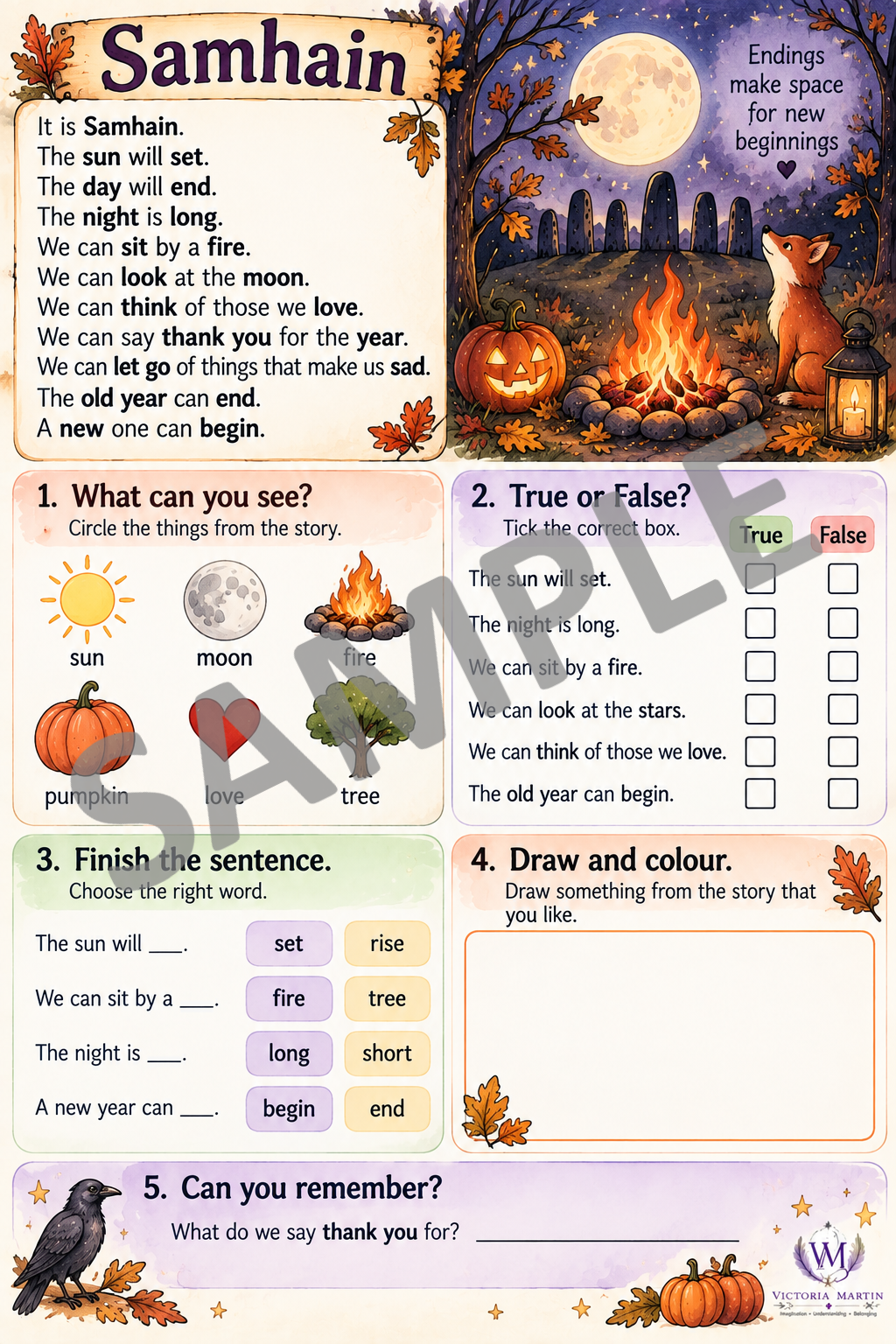
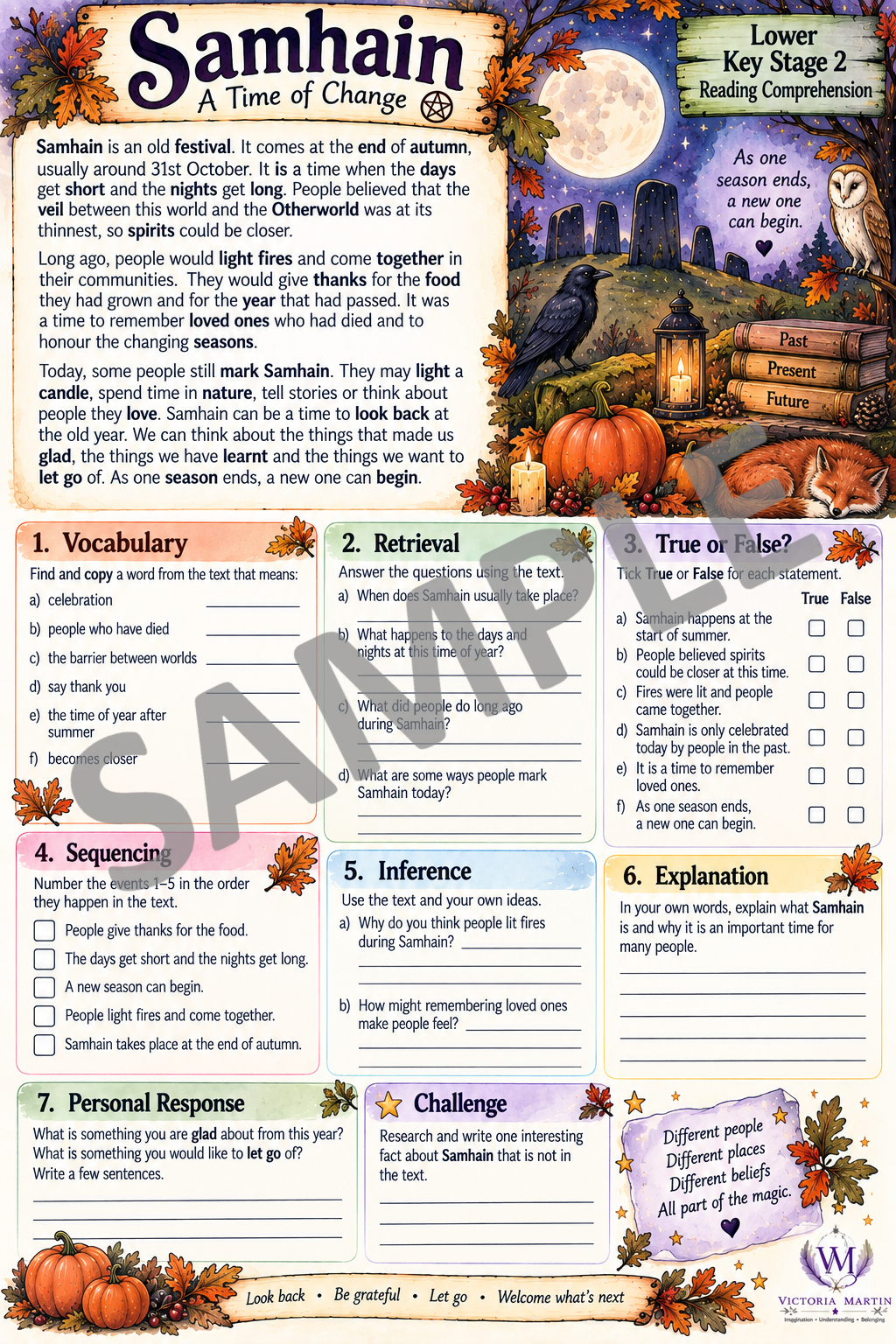
Traditionally, Samhain marked the beginning of winter on 1 November, with many of the festivities taking place on the evening before, 31 October.
Today, Samhain is also celebrated by many Pagans, Wiccans and followers of earth-based spiritual traditions, although beliefs and ways of celebrating can vary between individuals and traditions.
🍂 A Turning Point in the Year
In the traditional Irish calendar, Samhain was an important seasonal marker associated with the beginning of winter.
By this point in the year, days are becoming shorter, temperatures are falling and the natural world is changing as winter approaches.
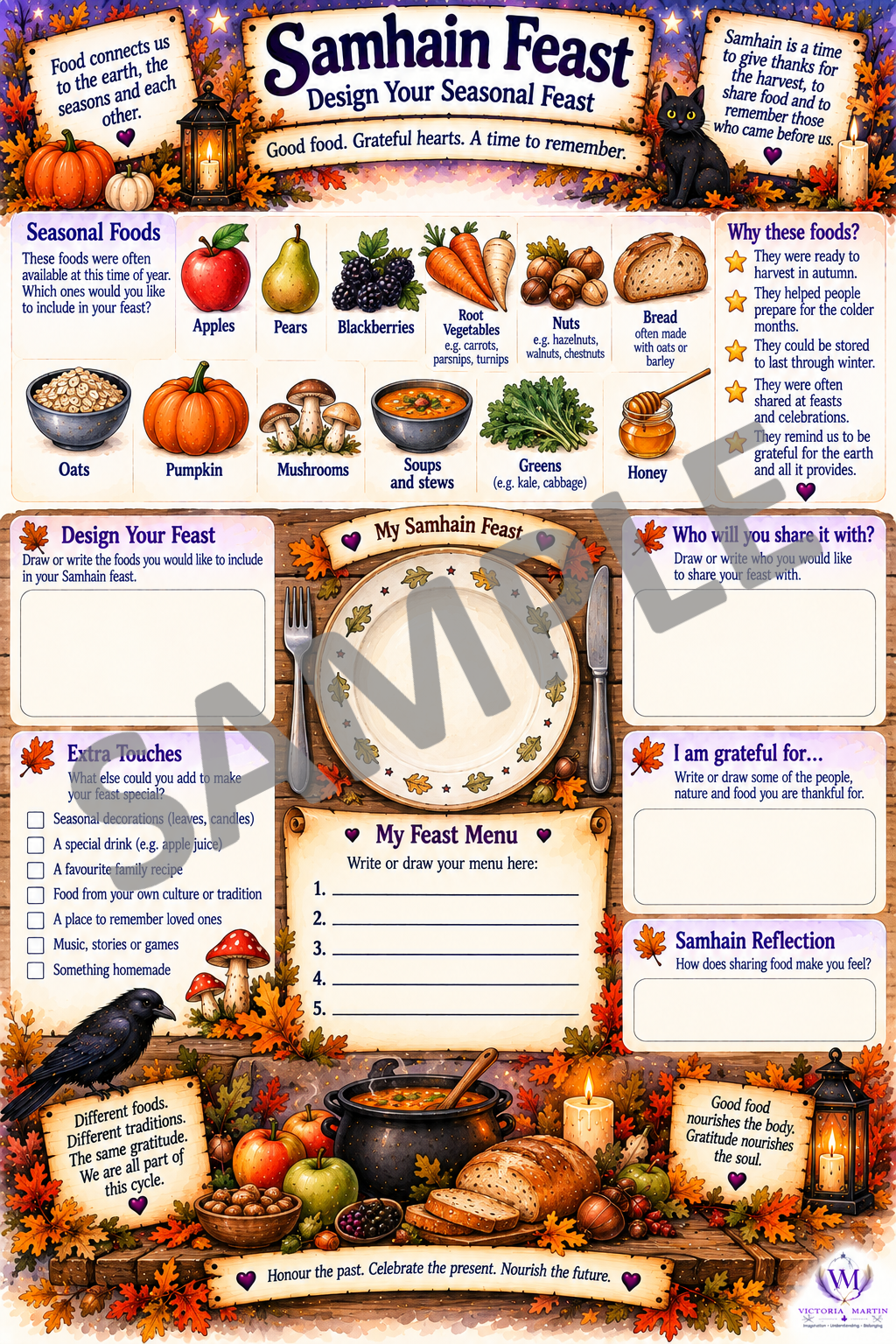
Traditional celebrations included feasting and games, with fruit and nuts gathered as part of the seasonal festivities.
For many people who follow the modern Wheel of the Year, Samhain is one of eight seasonal festivals and falls between Mabon and Yule.
🔥 Remembering Those Who Have Died
Traditions surrounding death, spirits and remembrance have long been connected with this time of year in Irish folklore.
People once believed that the spirits of the dead might return to the family home during this time, and traditions also developed around protecting homes and families.
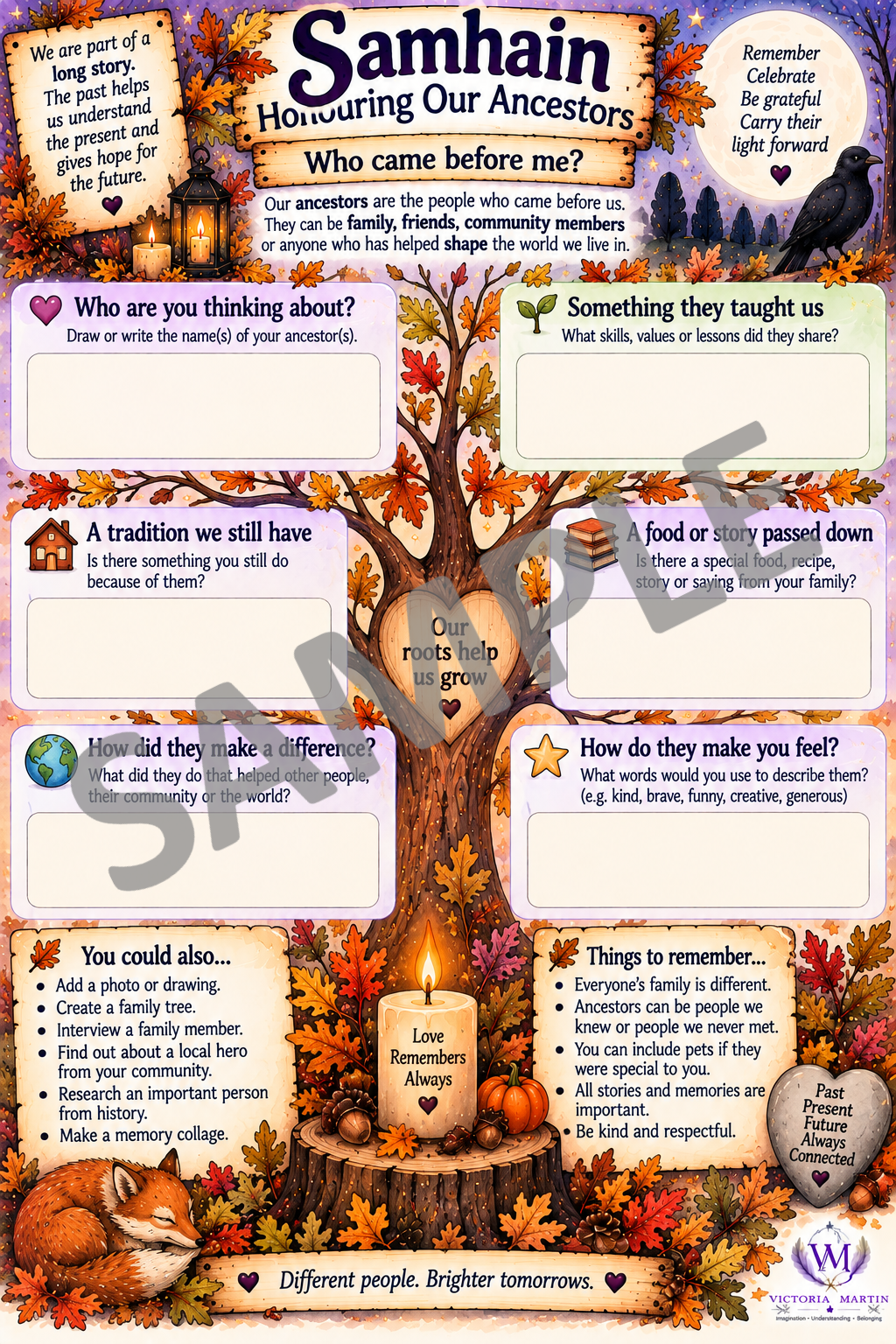
In many modern Pagan traditions, Samhain has become a time to remember ancestors and loved ones and to reflect on those who have died.
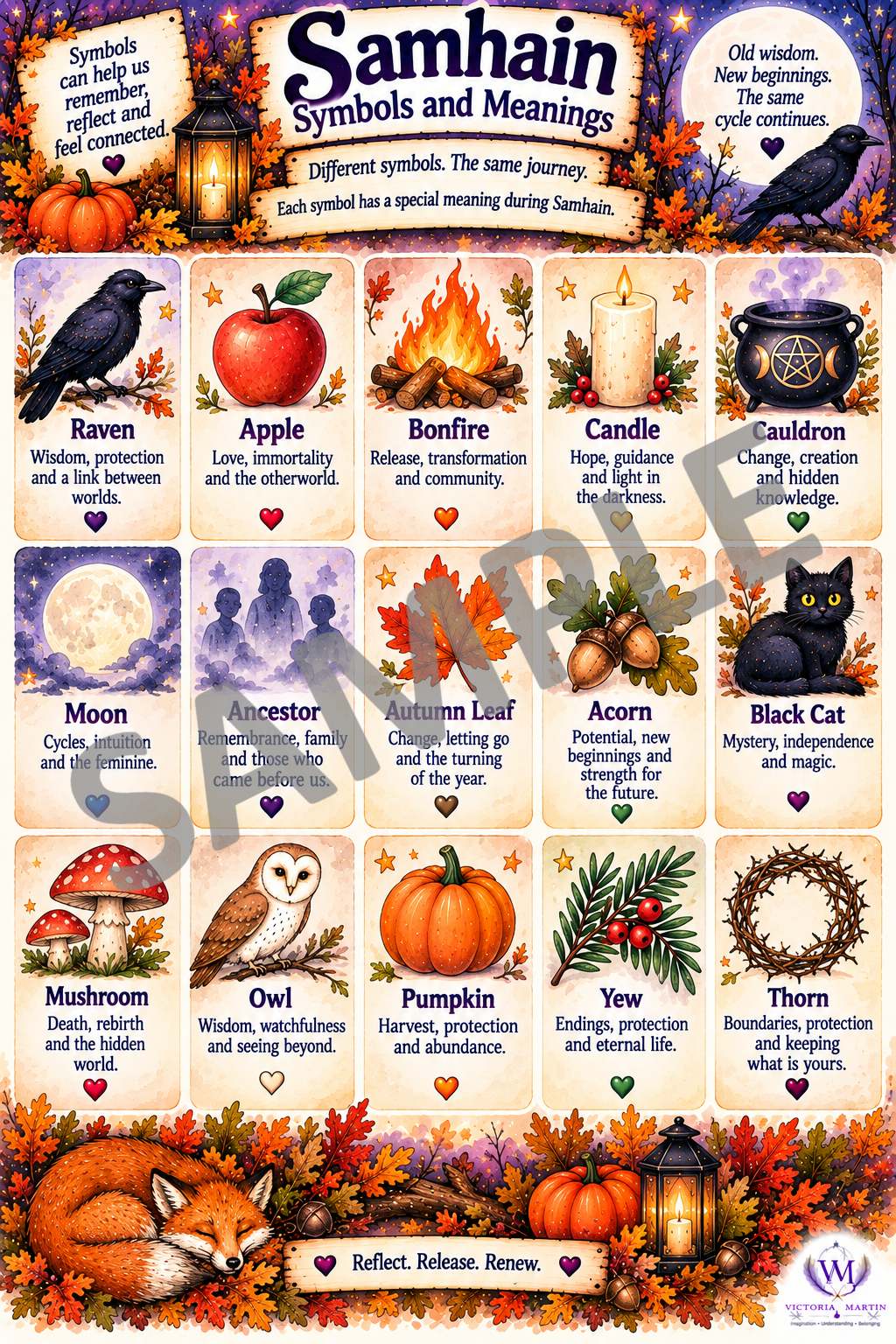
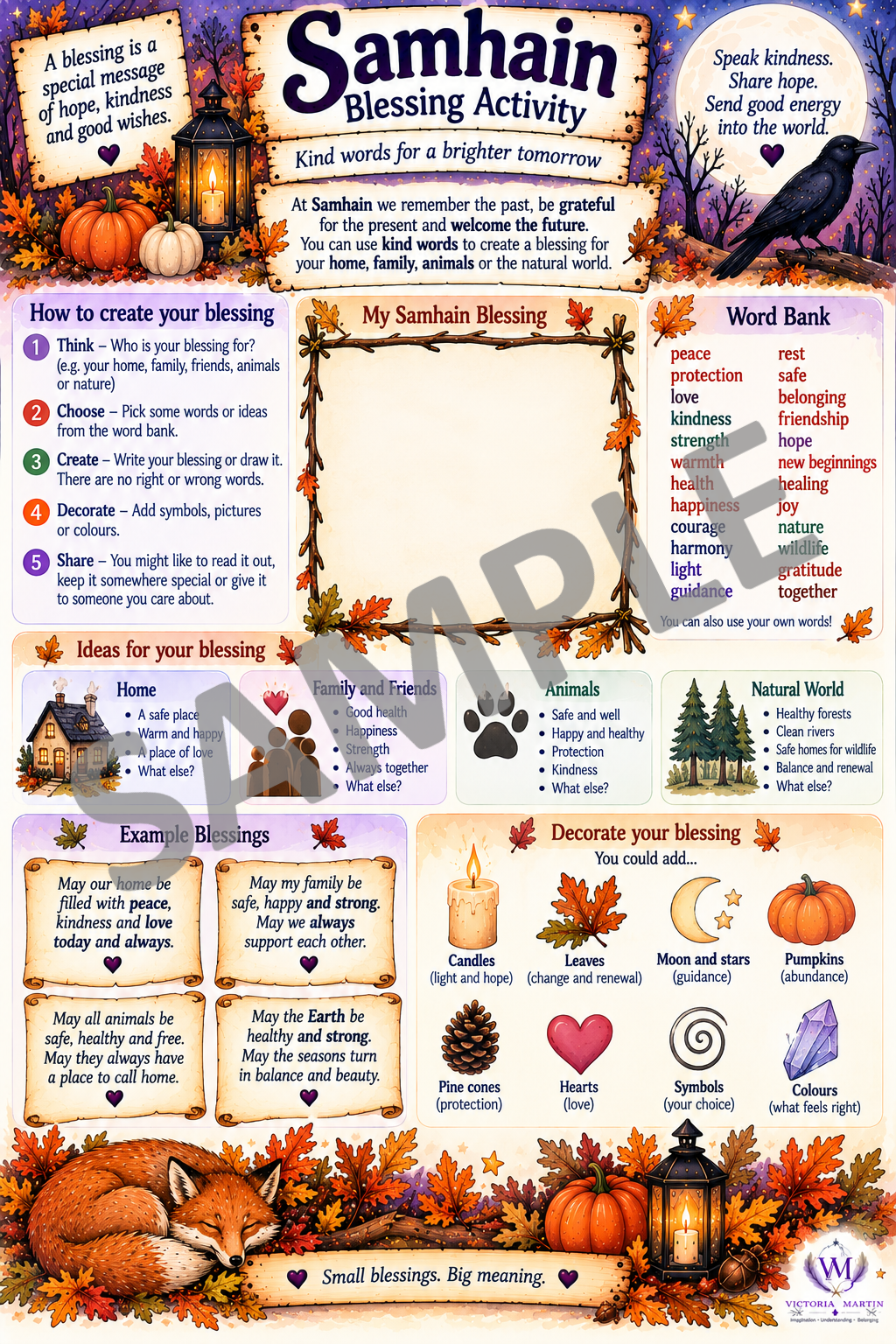
Some people may light candles, look at photographs or share memories and family stories as part of their own observance.
These modern practices can be meaningful ways of remembering, but they should not automatically be assumed to be exactly how ancient communities celebrated Samhain.
🌙 Samhain and Halloween
Samhain and Halloween are historically connected in complicated ways, but they are not simply two different names for exactly the same celebration.
The word Halloween comes from All Hallows' Eve, meaning the evening before the Christian feast of All Saints' Day on 1 November.
Halloween traditions have developed over many centuries and contain influences from Christian observances, Irish and Gaelic folklore and later cultural traditions.
Historical evidence about pre-Christian Samhain is limited, so historians are careful about claiming that every modern Halloween tradition comes directly from an ancient Celtic festival.
Today, Halloween is widely celebrated as a cultural festival, while Samhain remains a spiritual or religious observance for some modern Pagans and Wiccans.
🌿 Connecting With Nature
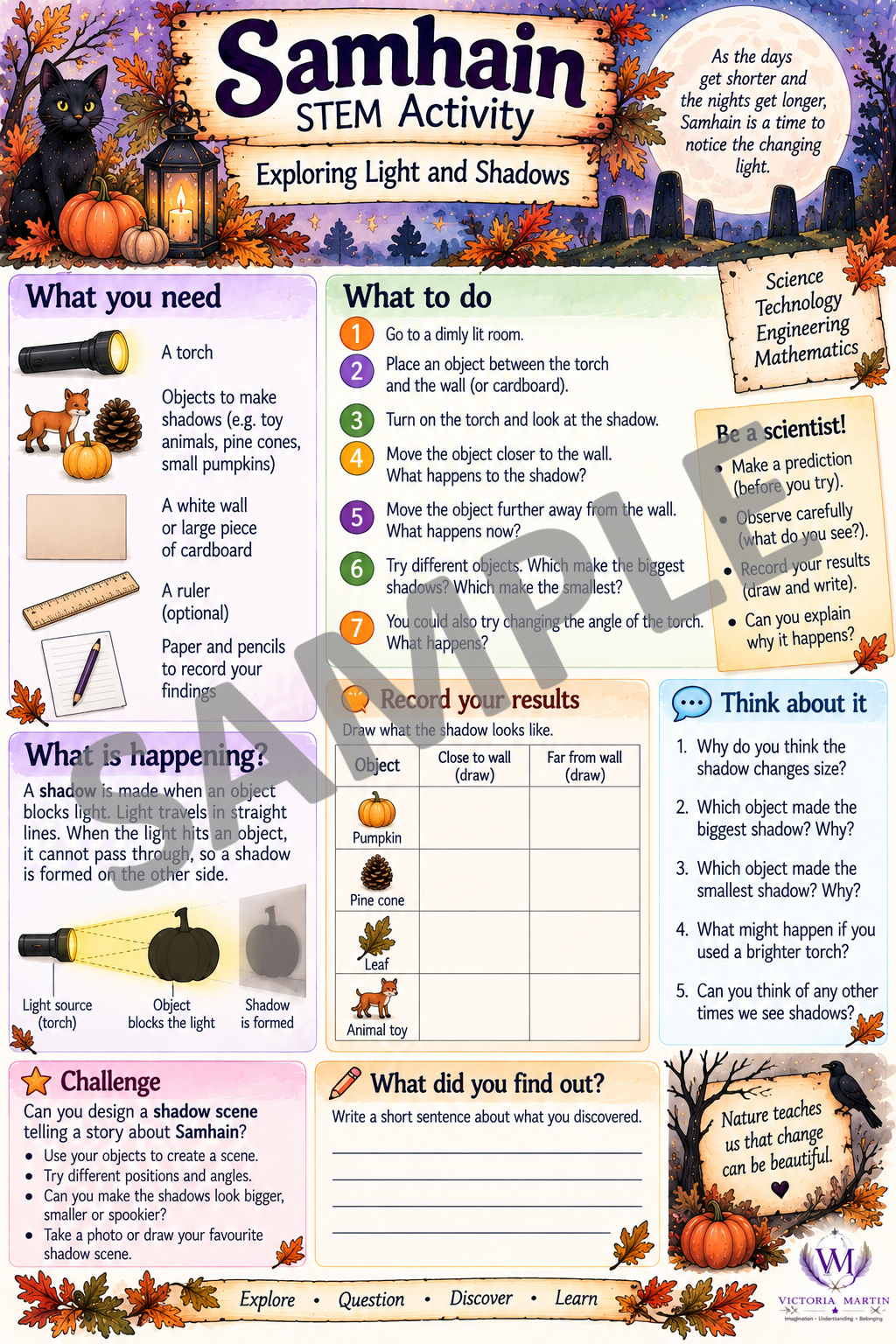
Samhain falls during a time of noticeable seasonal change, when autumn is giving way to winter and the landscape begins to look different.
You might notice fallen leaves and bare branches, colder air and earlier sunsets, or fungi, berries and changing wildlife in the world around you.
Rather than thinking of winter as a time when nature simply disappears, we can notice how plants and animals adapt and how the seasonal cycle continues.
For some modern celebrations, spending time outdoors can provide an opportunity to observe these changes, connect with the natural world and reflect on the turning seasons.
🕯️ How Is Samhain Celebrated Today?
There is no single correct way to celebrate modern Samhain, because beliefs and traditions vary between people and communities.
Some people may celebrate by lighting candles or fires, preparing seasonal foods or spending time outdoors in nature.
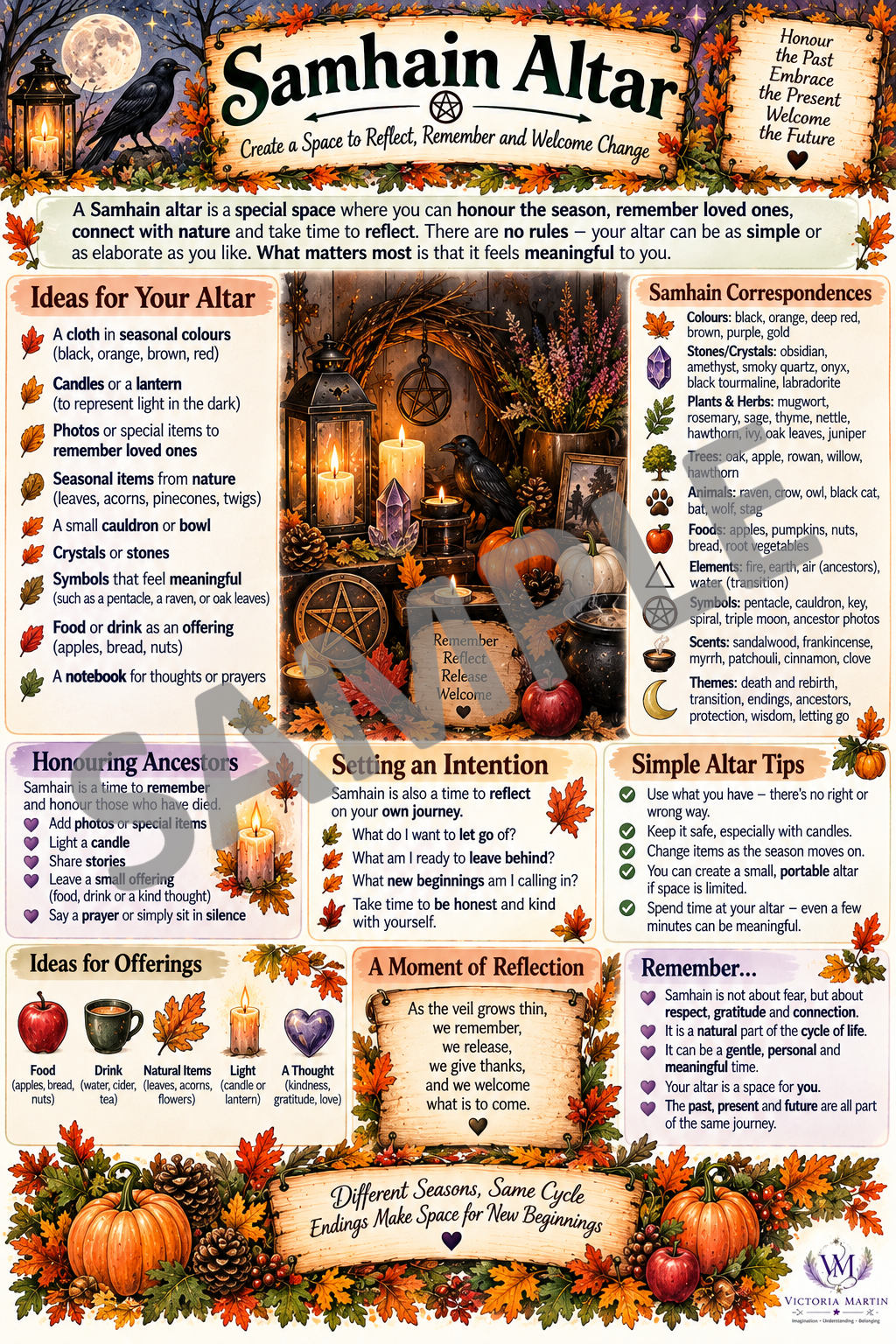
Others may choose to remember loved ones, meditate or reflect or create a seasonal altar or special space within their home.
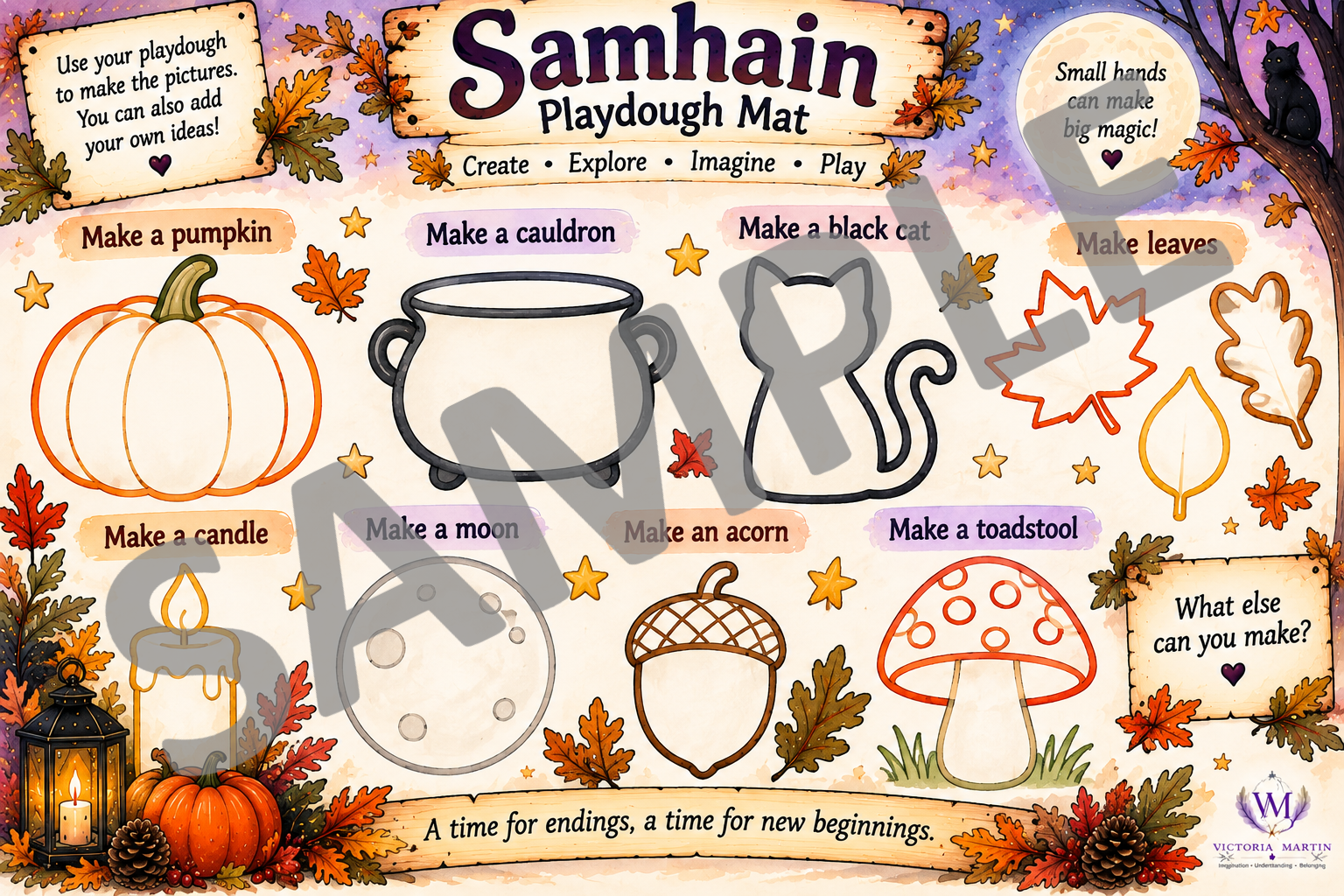
Families and children might mark the season through an autumn or woodland walk, by collecting fallen natural objects or by creating a seasonal nature table or craft.
The important thing is that celebrations can be adapted to individual beliefs, family traditions and accessibility needs, allowing everyone to participate in a way that feels comfortable.
✨ A Time for Reflection
For many modern Pagan practitioners, Samhain represents a time of endings, transition and reflection as one season moves into another.
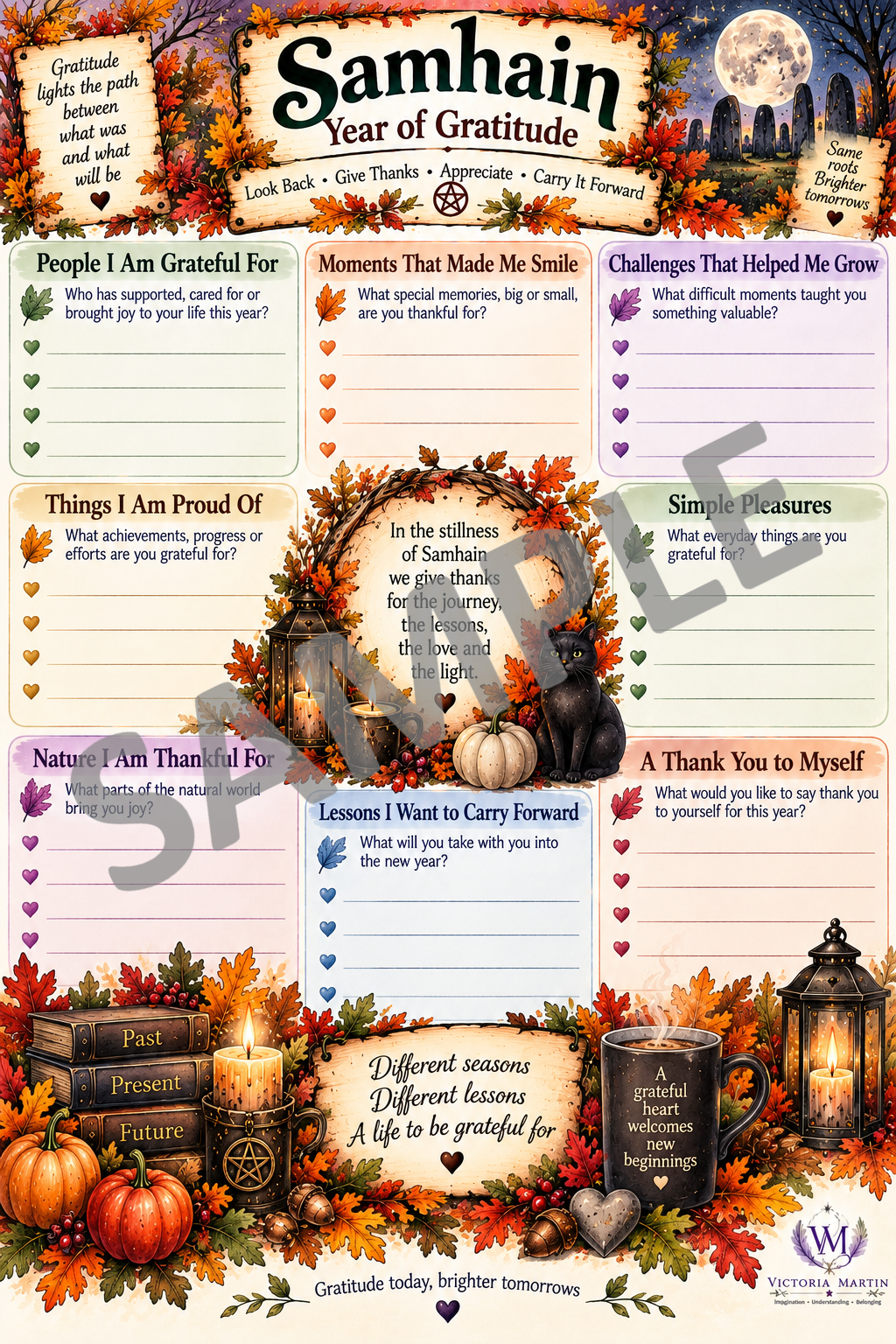
It can provide an opportunity to think about what has changed, what we have learned and what we would like to carry forward into the months ahead.
Watching the seasons change can remind us that change is part of nature, rest has an important place and new growth can follow quieter periods.
Whether Samhain is observed as a spiritual celebration, explored as part of history and culture or simply used as an opportunity to notice the changing natural world, it offers another way to explore our relationship with seasons, traditions and the past.
Resources and Further Information
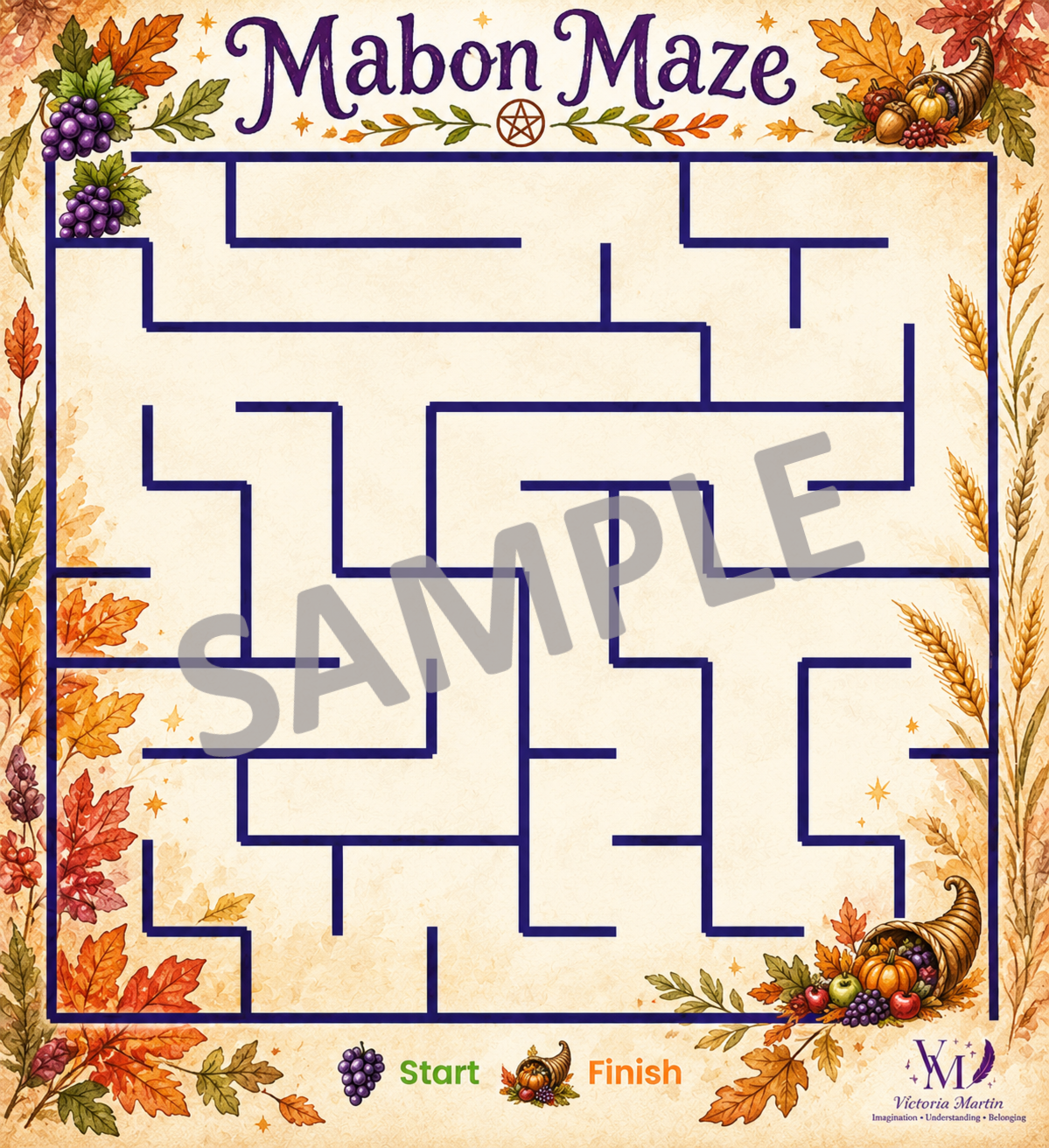
Mabon – Celebrating the Autumn Equinox
What is Mabon?
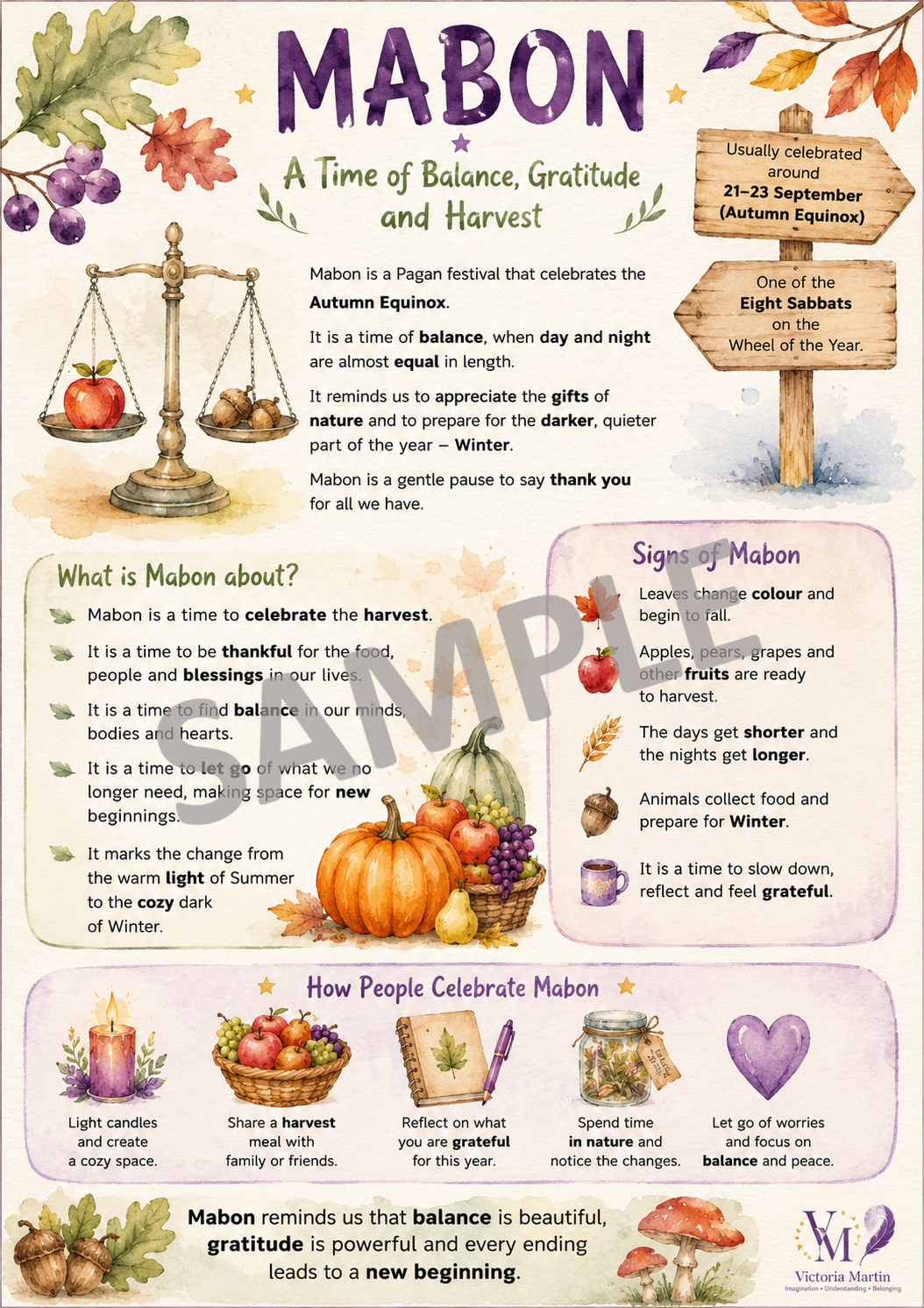
Mabon is a modern Pagan festival celebrated around the autumn equinox, usually around 22–23 September in the Northern Hemisphere.
The autumn equinox occurs when the Sun crosses the celestial equator, marking the astronomical beginning of autumn in the Northern Hemisphere. Around this time, day and night are roughly equal in length. They are not exactly equal because of factors including the way sunrise and sunset are measured and the effect of Earth's atmosphere.
After the equinox, the nights continue to grow longer as we move towards winter.
For many modern Pagans and Wiccans, Mabon is a time to celebrate the harvest, give thanks, appreciate what we have and think about balance and change.
It forms part of the modern Wheel of the Year, a cycle of eight seasonal festivals.
Is Mabon an Ancient Festival?
People have celebrated harvests and seasonal change for thousands of years, but the festival specifically called Mabon is modern.
There is no historical evidence that ancient Celtic people celebrated an autumn-equinox festival called Mabon.
The name comes from Mabon ap Modron, a figure found in medieval Welsh literature and mythology. However, this does not mean that an ancient Welsh festival called Mabon existed.
The name Mabon was applied to the modern Pagan autumn-equinox festival by Pagan writer Aidan Kelly in the 1970s. Kelly was developing names for parts of the modern Pagan seasonal calendar and chose Mabon while looking for a mythological name for the autumn equinox.
The name was later adopted more widely within modern Paganism.
Modern Mabon therefore combines contemporary Pagan practice with themes that have much older connections to harvest, autumn, seasonal change and thanksgiving.
Autumn Celebrations Through the Ages
🌾 Farming Communities
For farming communities, the harvest was incredibly important.
People depended upon crops such as wheat, barley and oats for food. A successful harvest helped provide food for the colder months ahead.
Harvesting was hard work and could involve much of the local community. In medieval England, for example, crops had to be cut, gathered, bound and transported before they could be stored.
Finishing the harvest was therefore an important occasion and could be a reason for food, celebration and community gatherings.
🍞 Harvest Home
In Britain, traditions developed around celebrating the end of the harvest.
Food, drink, music and community gatherings could mark the completion of the year's agricultural work.
These celebrations are often known as Harvest Home traditions.
Harvest customs varied considerably between different places, communities and periods of history, so there was never one single British harvest celebration.
Some customs also changed or disappeared as farming methods and communities changed.
⛪ Michaelmas
The Christian feast of Michaelmas, celebrated on 29 September, also became associated with the beginning of autumn and the traditional agricultural calendar.
It celebrates St Michael the Archangel and has historically been an important date in Britain.
The Michaelmas daisy, which flowers around this time of year, takes its name from the festival.
🍂 Modern Paganism
During the 20th century, modern Pagan traditions developed a seasonal calendar commonly called the Wheel of the Year.
It contains eight seasonal festivals, with the autumn equinox becoming one of them.
Today, Mabon celebrations can vary greatly between different Pagan traditions, groups and individuals.
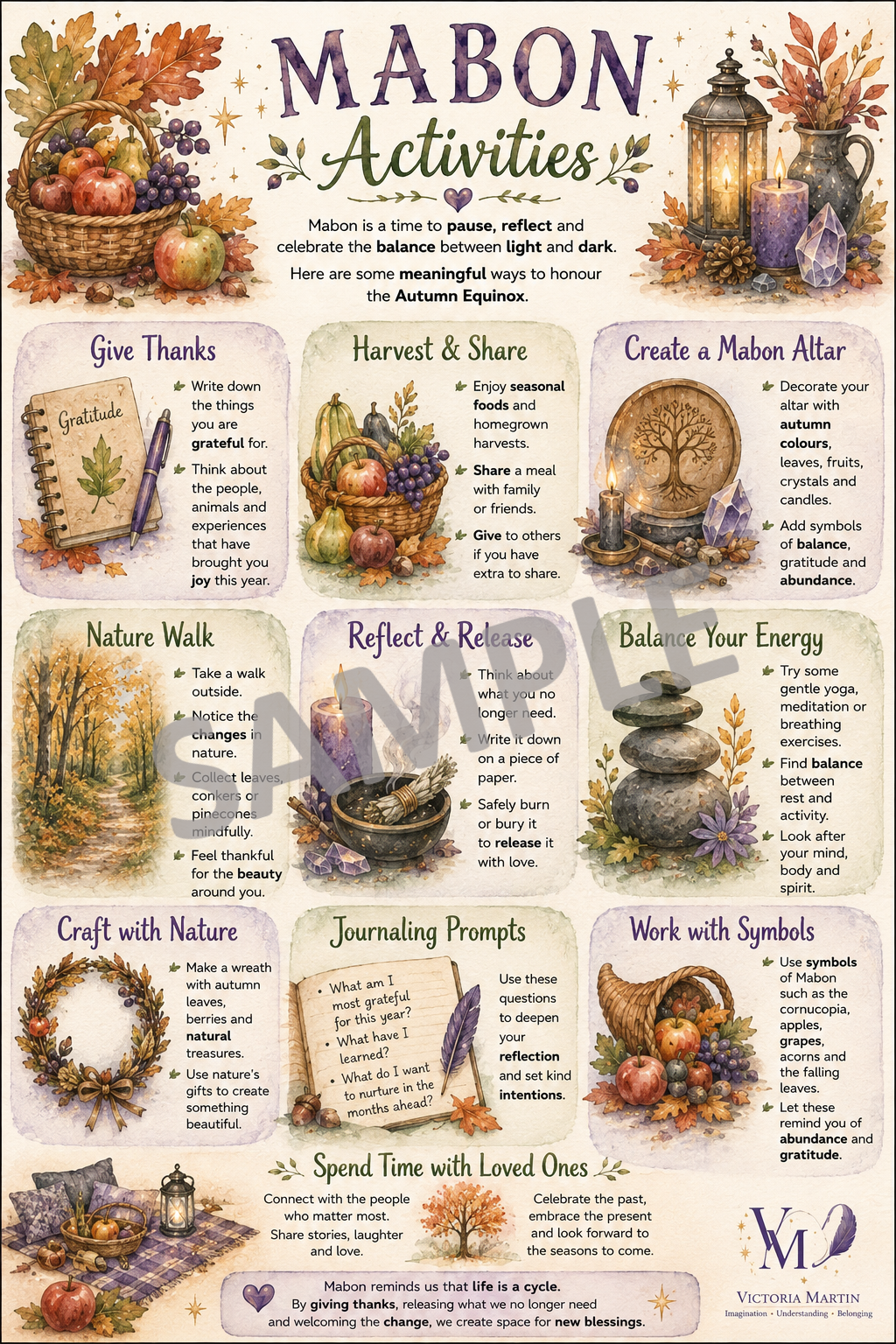
There is no single correct way to celebrate Mabon.
Modern Mabon Traditions
People who celebrate Mabon might:
🍎 gather apples, berries or seasonal foods
🌾 decorate with leaves, seeds, grains and autumn colours
🥖 bake bread or seasonal food
🍂 take an autumn nature walk
🕯️ light candles
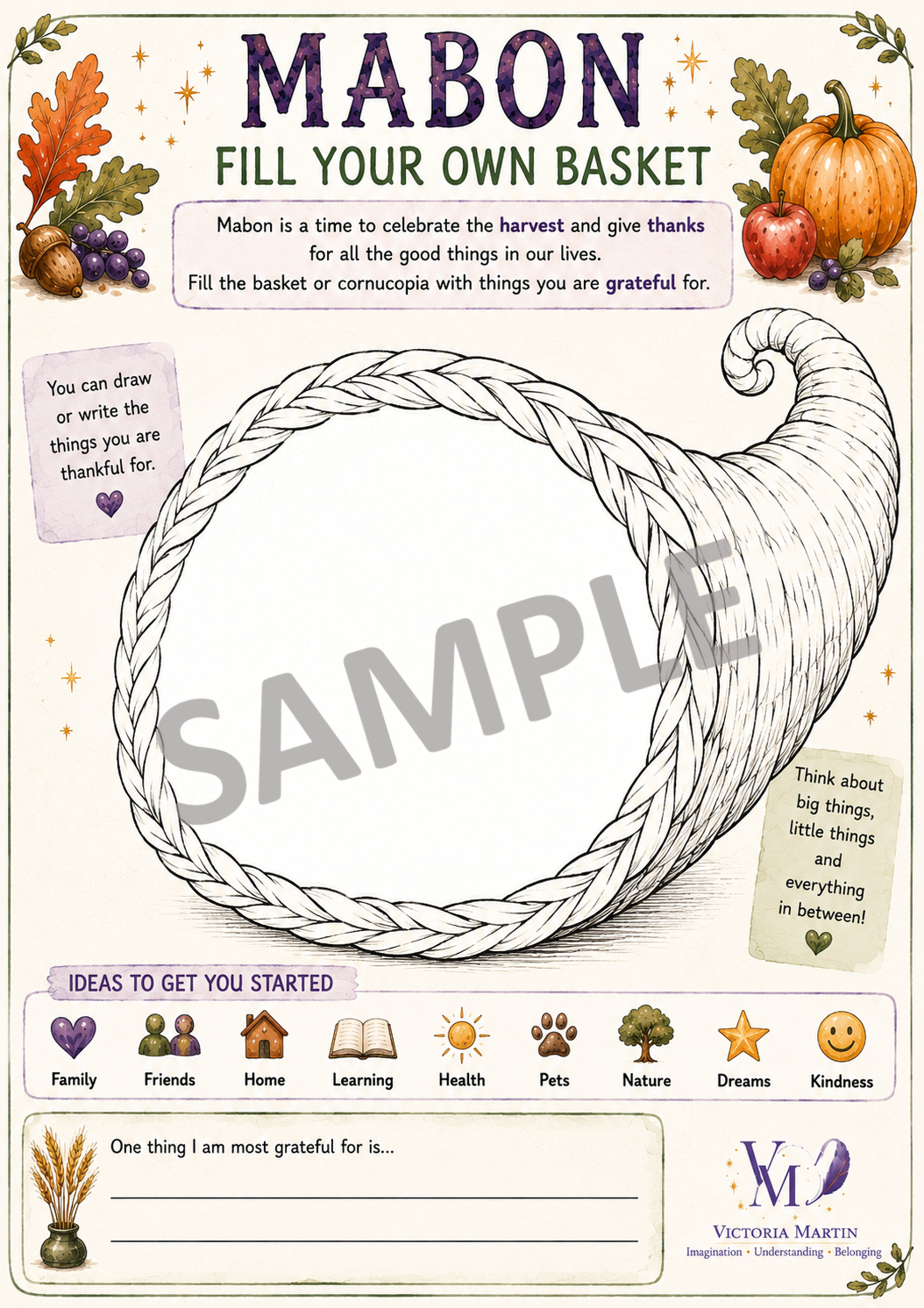
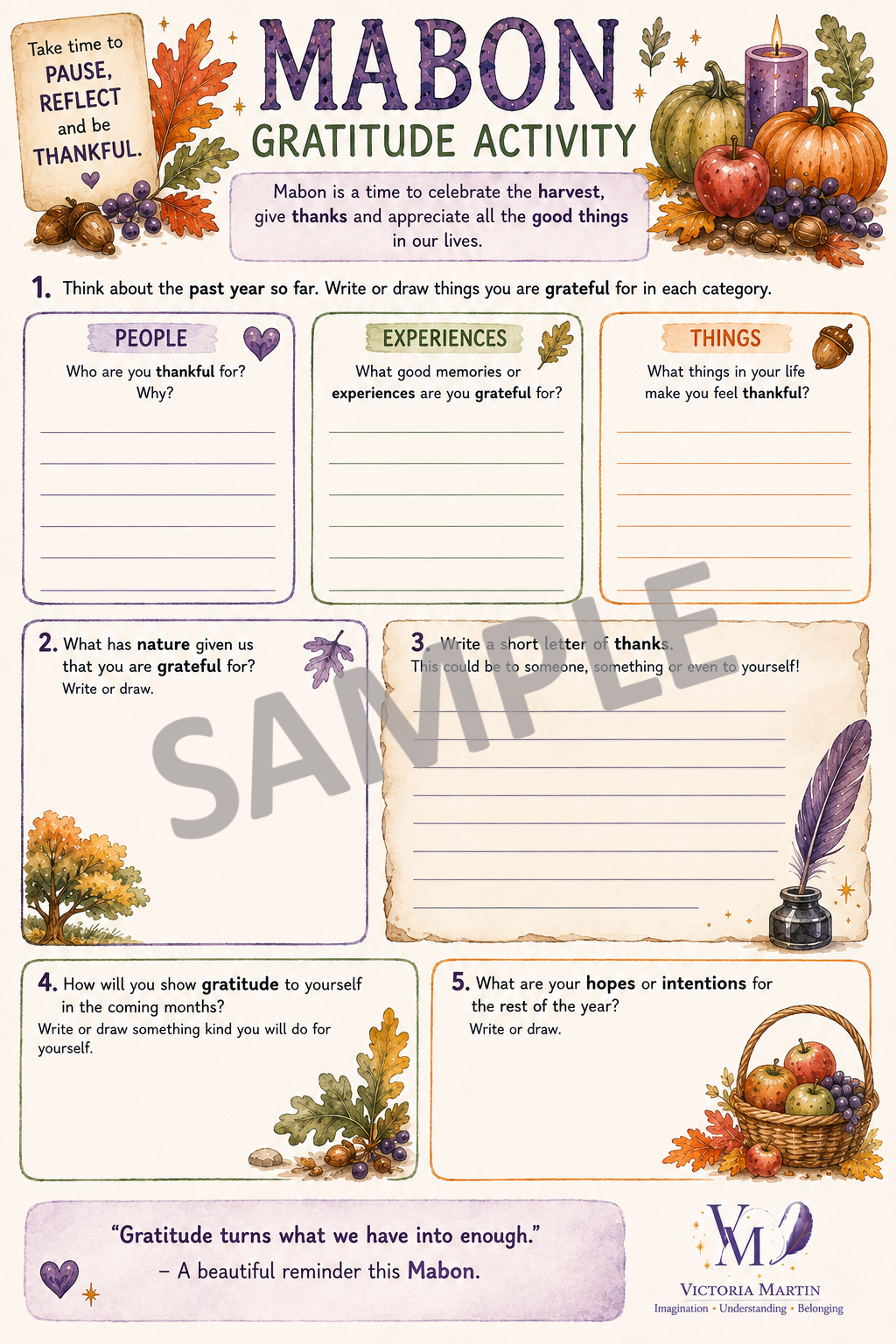
🙏 think about things they are thankful for
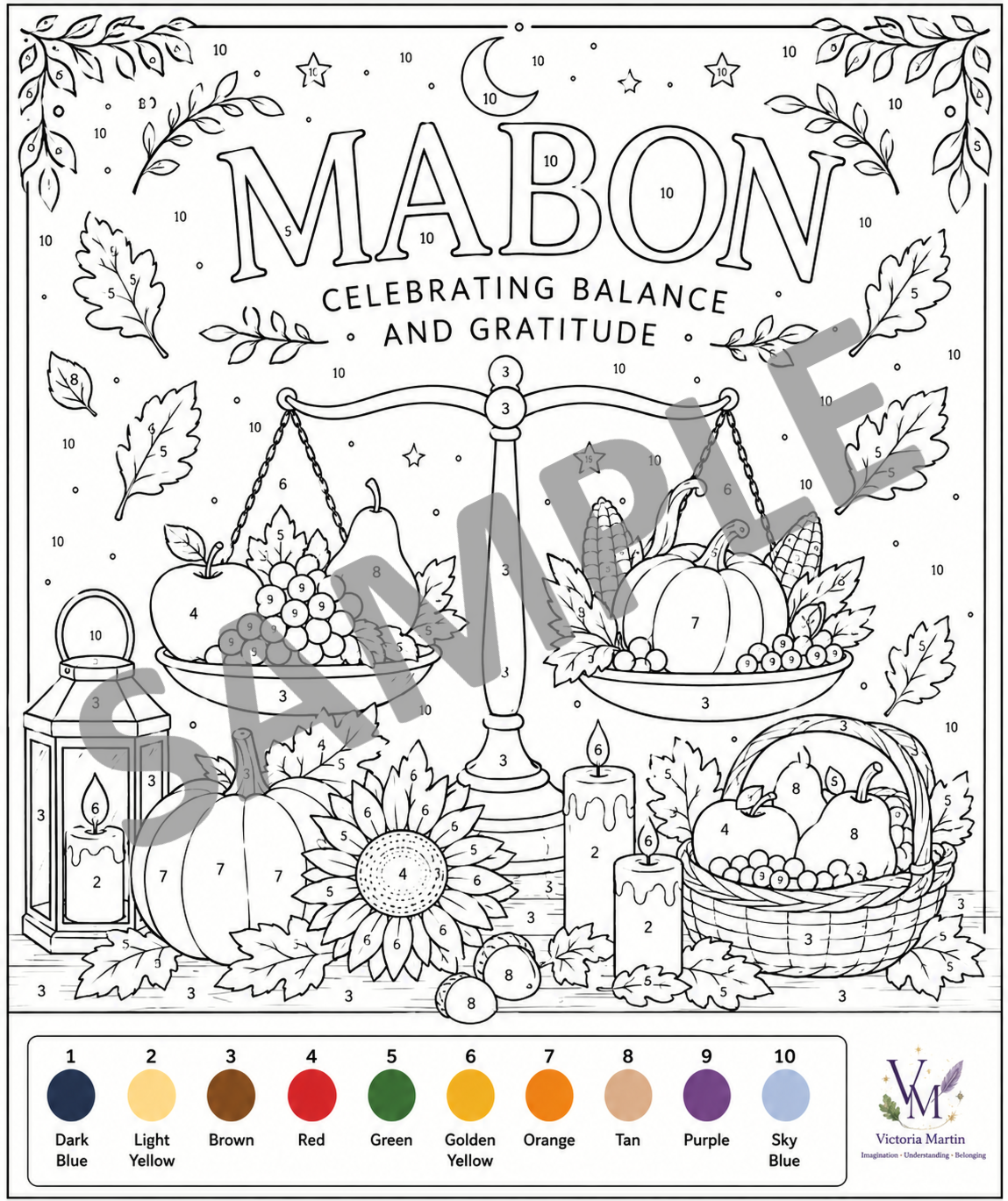
⚖️ reflect on balance in their lives
🌱 save or collect seeds
🥫 preserve seasonal food for later
🍽️ share a meal with family or friends
🎁 donate food or help people in their community
Some people may also create a seasonal altar or nature display using autumn objects.
Traditions are personal and can be different for different people and Pagan paths.
Modern Mabon Symbols and Associations
There is no single official set of Mabon symbols. However, modern celebrations often use objects connected with autumn, harvest and seasonal change.
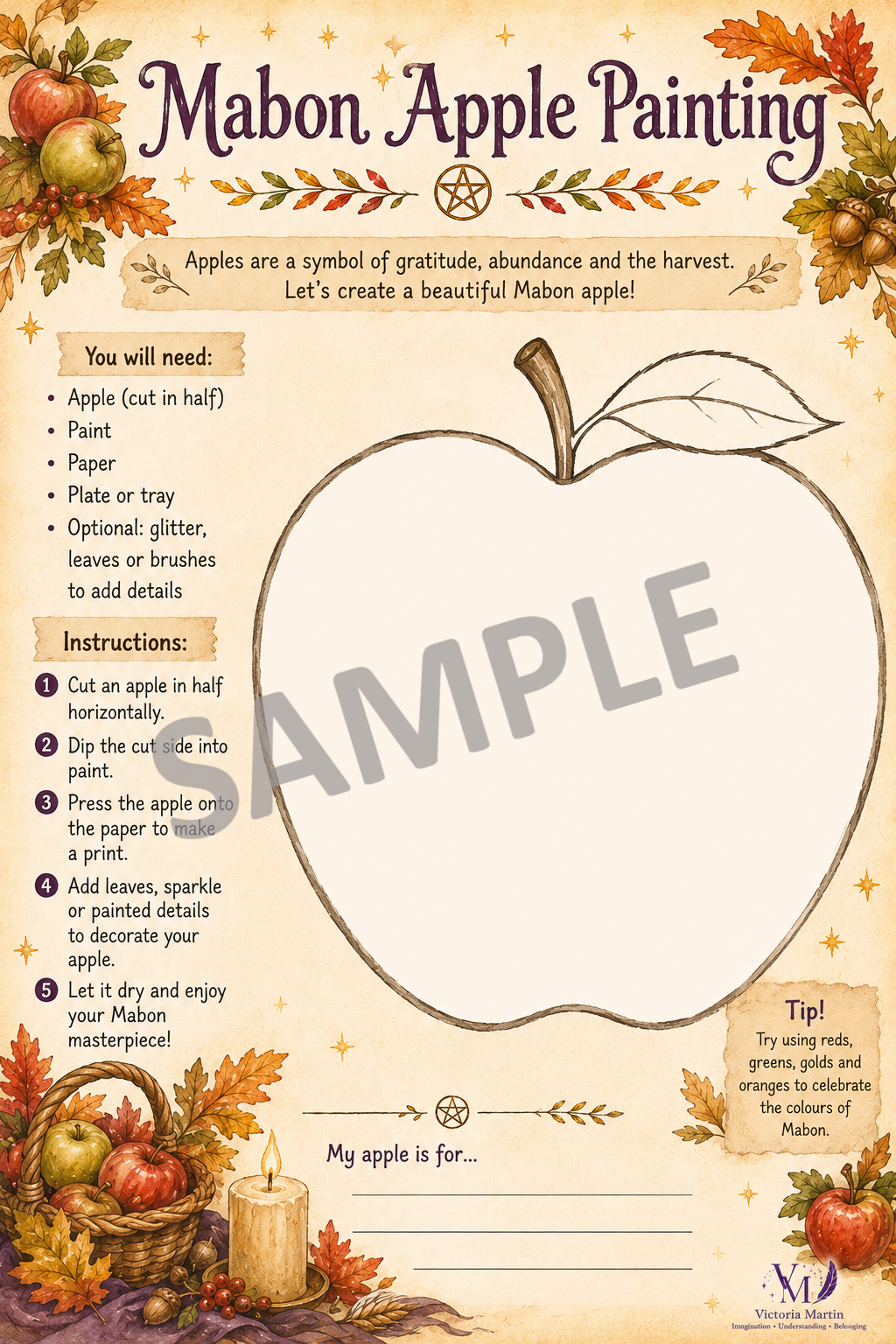
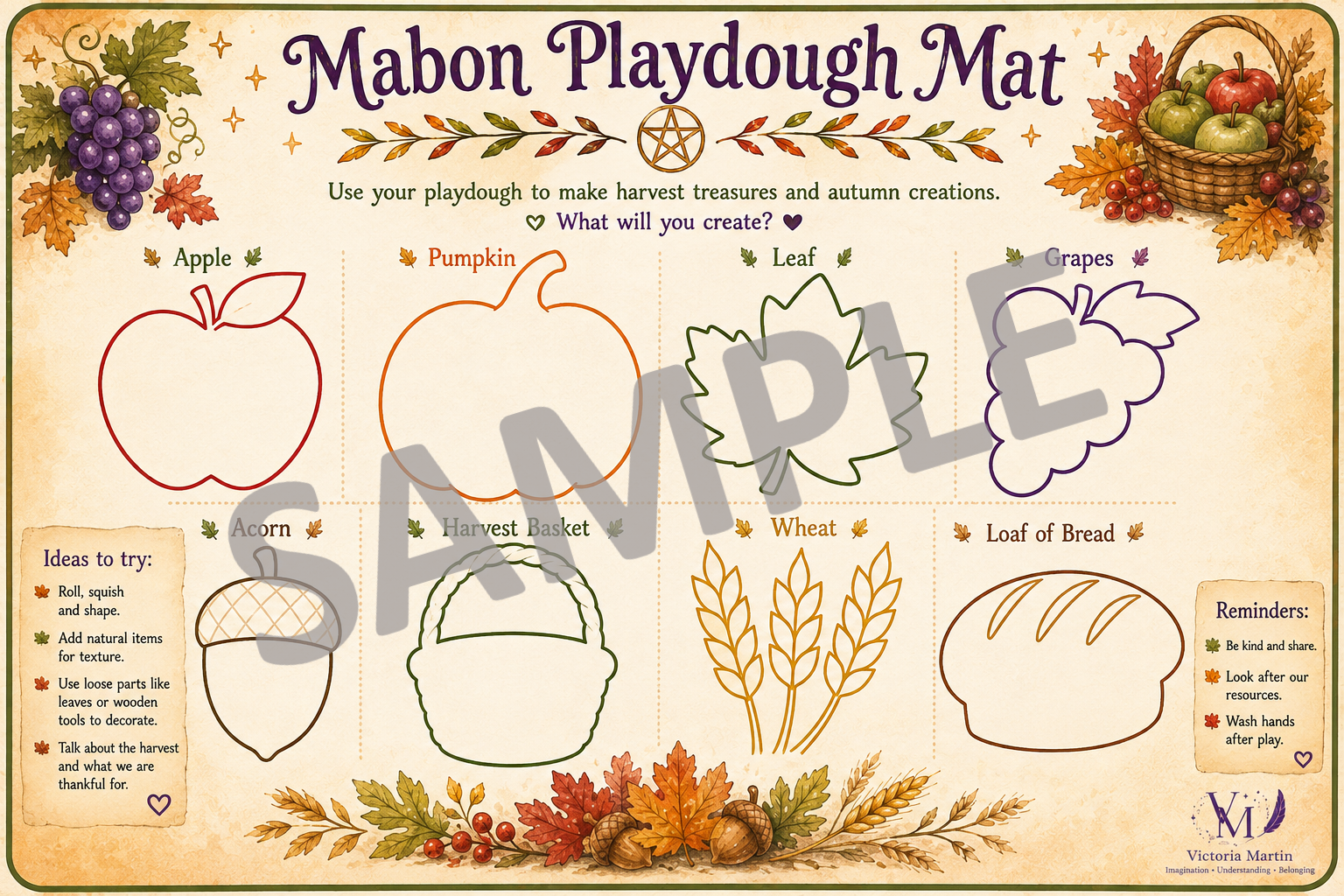
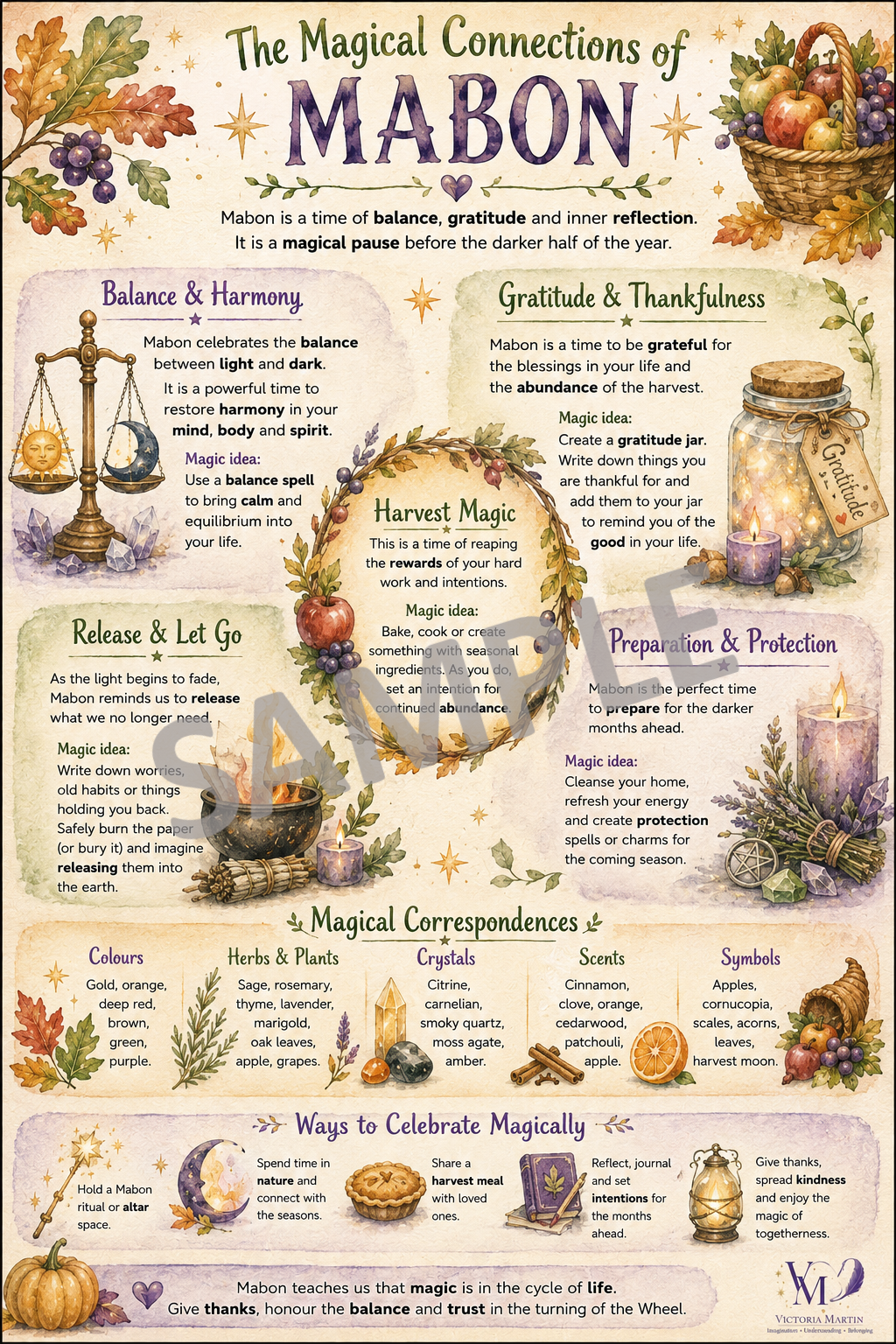
Apples – harvest, abundance and autumn
Grain – food and the harvest
Seeds – future growth and new beginnings
Leaves – change and the cycle of the seasons
Baskets – gathering and abundance
Candles – warmth and the changing light
Acorns – potential, strength and future growth
These meanings are modern associations and may vary between individuals and traditions.
A Festival of Balance
One of the strongest modern themes of Mabon is balance.
Around the equinox, daylight and darkness are close to equal.
This has made balance an important symbol within many modern Mabon celebrations.
It can be a time to think about:
What has grown?
What have we achieved?
What are we thankful for?
What might we need to let go of?
What do we want to carry with us into winter?
You do not need to follow a Pagan religion to explore these ideas.
Mabon can also provide an opportunity to learn about seasons, history, nature, harvest traditions and different beliefs.
Did You Know?
🍂 Mabon is modern, but harvest celebrations are ancient.
Humans have celebrated harvests and seasonal change for thousands of years, and different cultures have developed their own traditions connected with gathering food, giving thanks and preparing for colder seasons.
Modern Mabon should therefore not be described as an ancient Celtic festival.
Instead, it is best understood as one modern Pagan tradition within a much bigger human story of autumn, harvest and seasonal change.
Resources




Lughnasadh / Lammas
Lughnasadh (pronounced LOO-nas-ah)—also known as Lammas—is the first festival of the harvest season and is traditionally celebrated on 1st August in the Northern Hemisphere.
Its roots stretch back over 2,000 years to ancient Celtic communities, who gathered to celebrate the beginning of the grain harvest and give thanks for the abundance that nature had provided. The festival is named after Lugh, a Celtic god associated with craftsmanship, skill, creativity and leadership. Over time, Lughnasadh also became known as Lammas, an Old English word meaning "Loaf Mass," when the first loaf baked from the new harvest was traditionally blessed.
Today, many people celebrate Lughnasadh in different ways. Some follow Pagan or Druid traditions, while others simply enjoy it as a seasonal celebration of nature, gratitude and the changing year. There is no single "right" way to celebrate—many families choose activities that help them connect with the outdoors and appreciate the world around them.
Lughnasadh is a wonderful opportunity to:
🌾 Learn about farming, harvests and where our food comes from.
🍞 Bake bread or enjoy seasonal fruits and vegetables together.
🌻 Spend time outdoors noticing the first signs of late summer.
💜 Practise gratitude by reflecting on achievements and happy moments.
🎨 Get creative with seasonal crafts, colouring and nature activities.
🌿 Appreciate the abundance of nature and the changing seasons.
Whether you're celebrating the festival itself or simply looking for fun seasonal activities, these resources are designed to encourage curiosity, creativity, learning and a deeper connection with nature.
Give Thanks • Celebrate • Create • Reflect • Share


