
🎆 The History of Bonfire Night
From the Gunpowder Plot of 1605 to Modern Celebrations
Every year, on 5 November, people across the United Kingdom mark Bonfire Night, a tradition that began more than 400 years ago.
Also known as Guy Fawkes Night or Fireworks Night, this annual occasion remembers a dramatic event in British history known as the Gunpowder Plot.
Today, the evening is often filled with colourful fireworks, glowing bonfires, community gatherings and seasonal activities, but its origins tell a very different story.
🏰 England in 1605: A Time of Religious Conflict
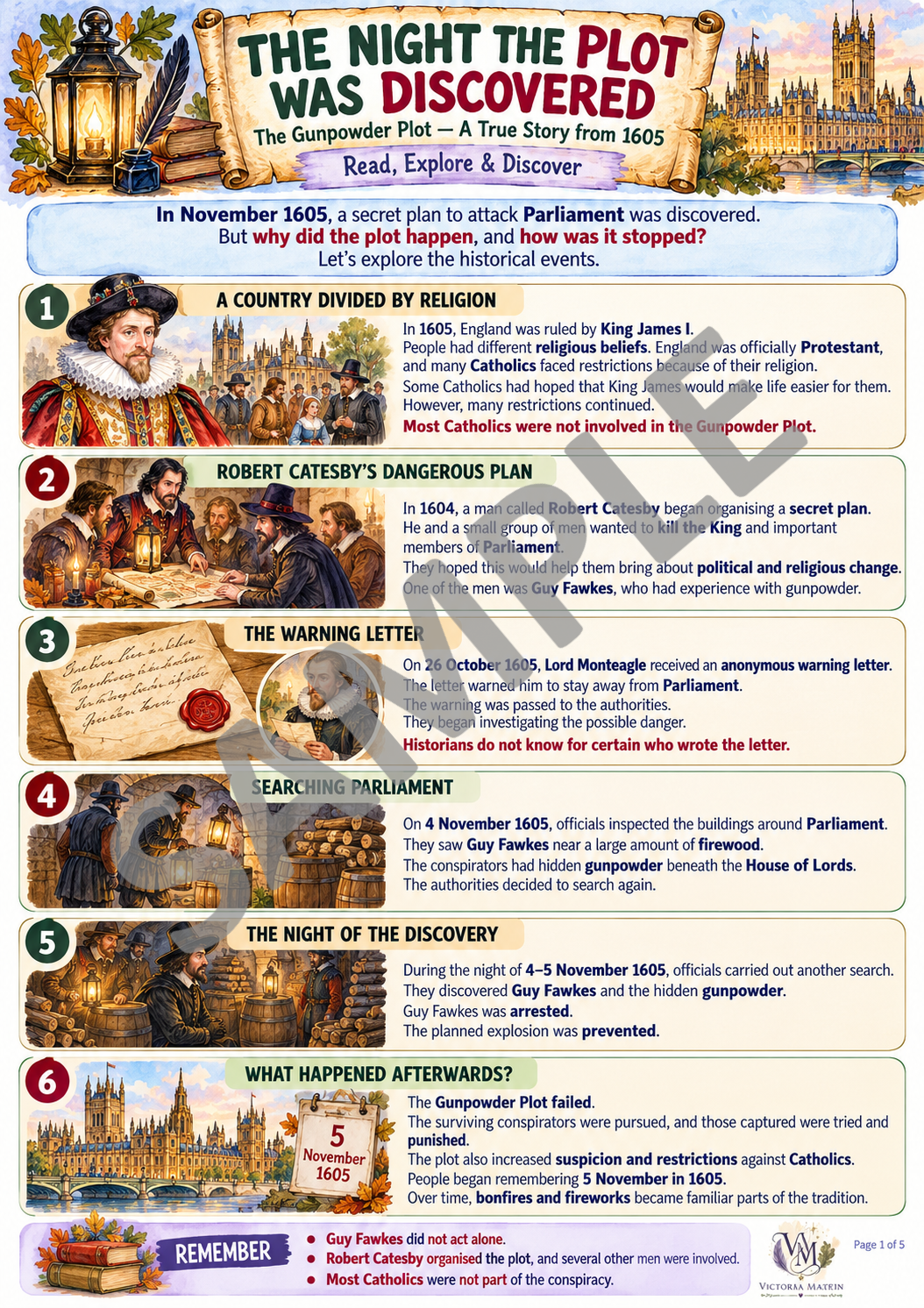
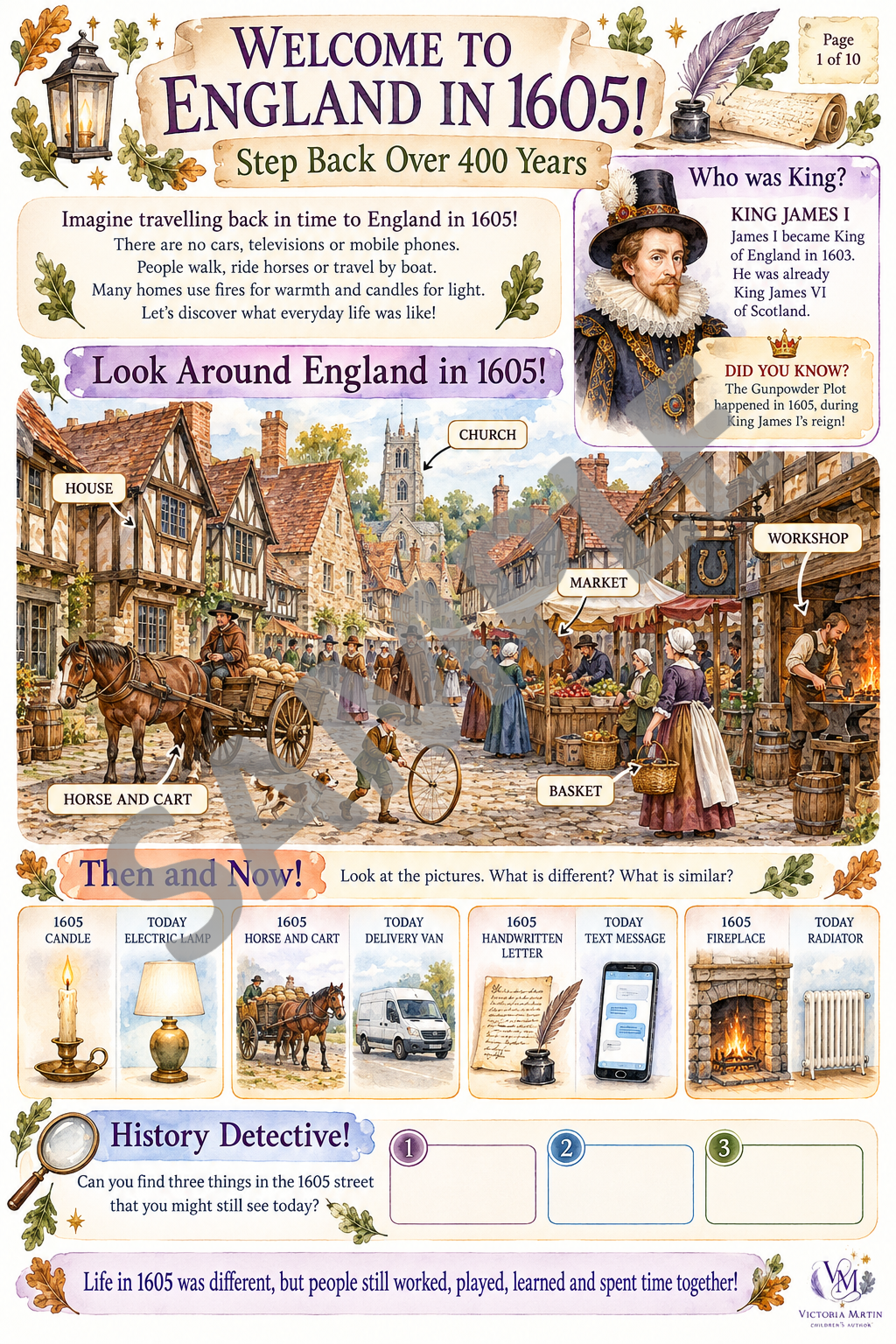
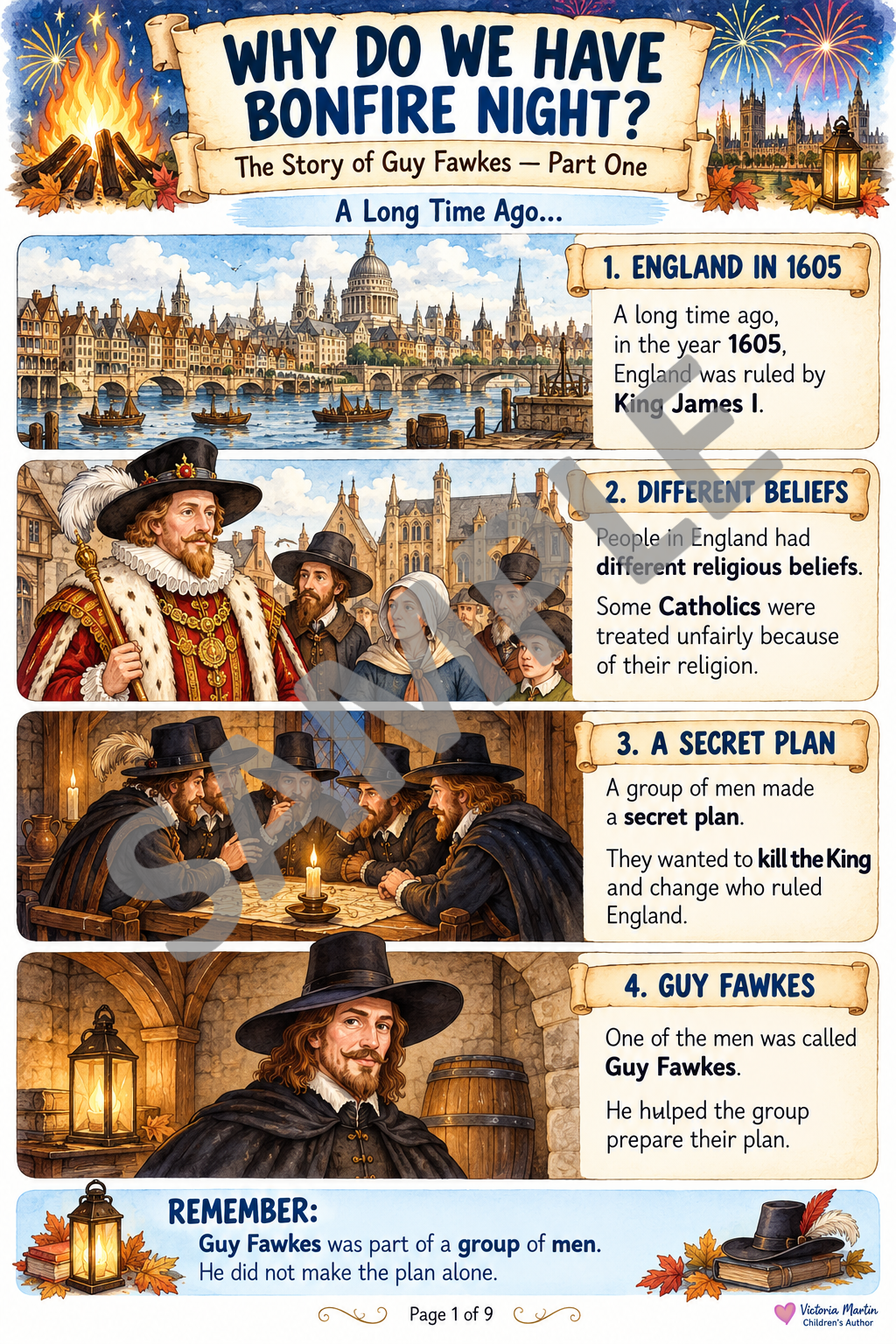
In 1605, England was ruled by King James I, and the country was experiencing significant religious tensions between Protestants and Catholics.
At the time, Catholics faced restrictions on practising their religion, including heavy fines, religious persecution and the possibility of imprisonment.
When King James I came to the throne in 1603, some Catholics hoped he would introduce greater religious freedom and fairer treatment.
However, when the new king continued many of the existing restrictions, a small group of Catholic conspirators decided to take violent action.
Their plan was to destroy Parliament, kill King James I and leading political figures, and attempt to establish a new government that would be more favourable to Catholics.
The conspirators also hoped to seize Princess Elizabeth, the king's young daughter, and use her as a figurehead for their plans, although exactly how their new government would operate remained uncertain.
It is important to remember that not all Catholics supported the Gunpowder Plot, and many people continued to practise their religious beliefs peacefully despite the difficulties they faced.
💥 The Gunpowder Plot
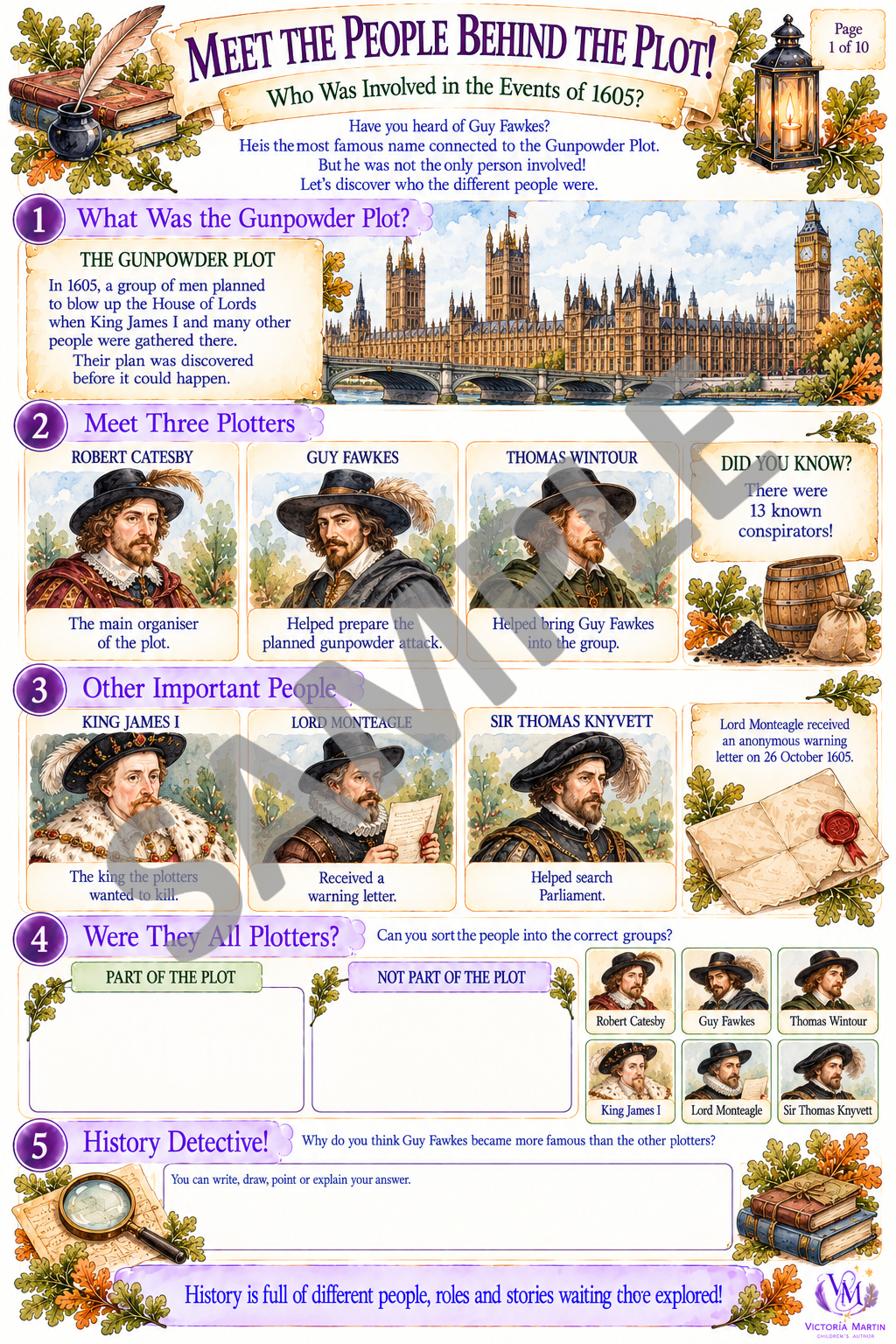
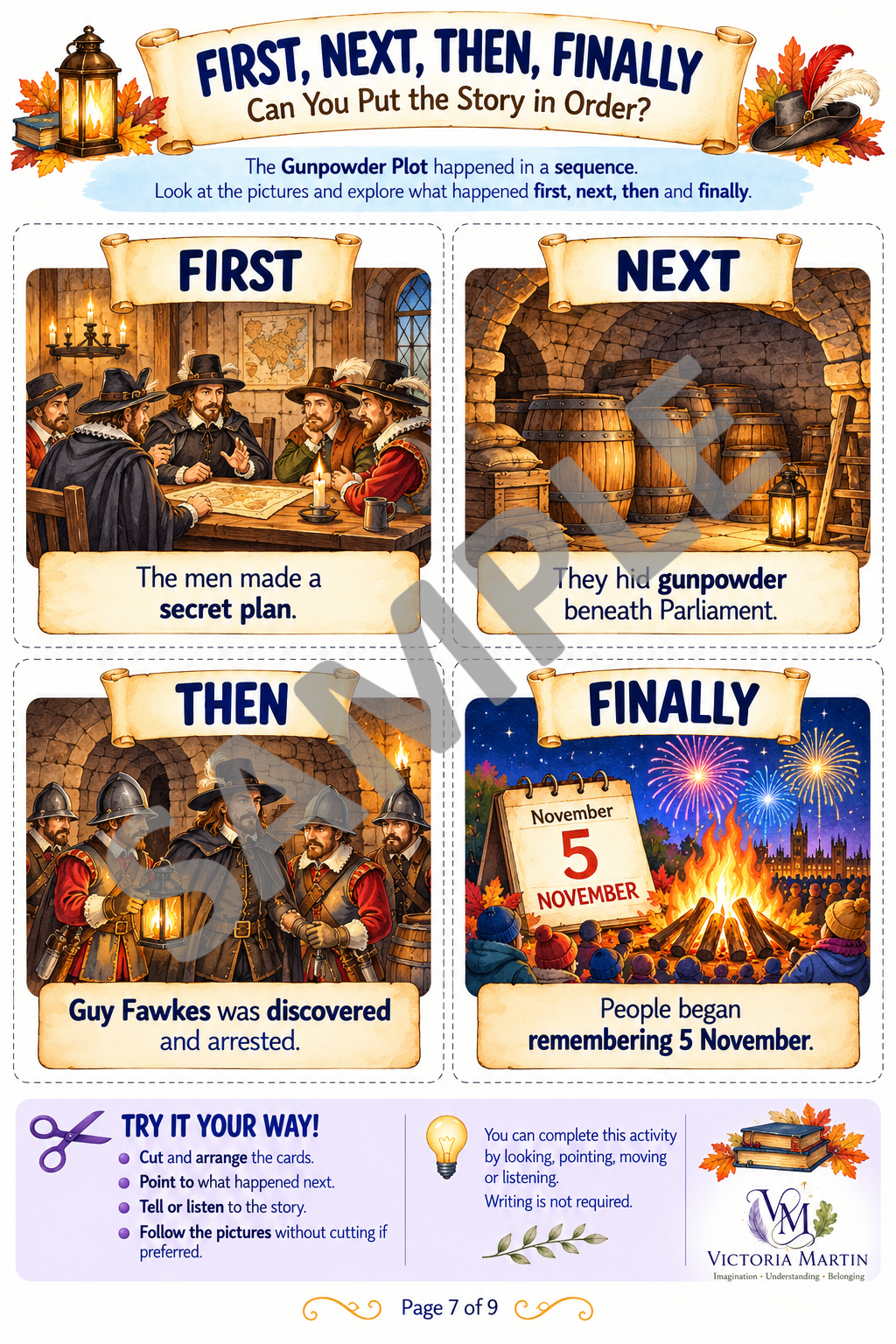
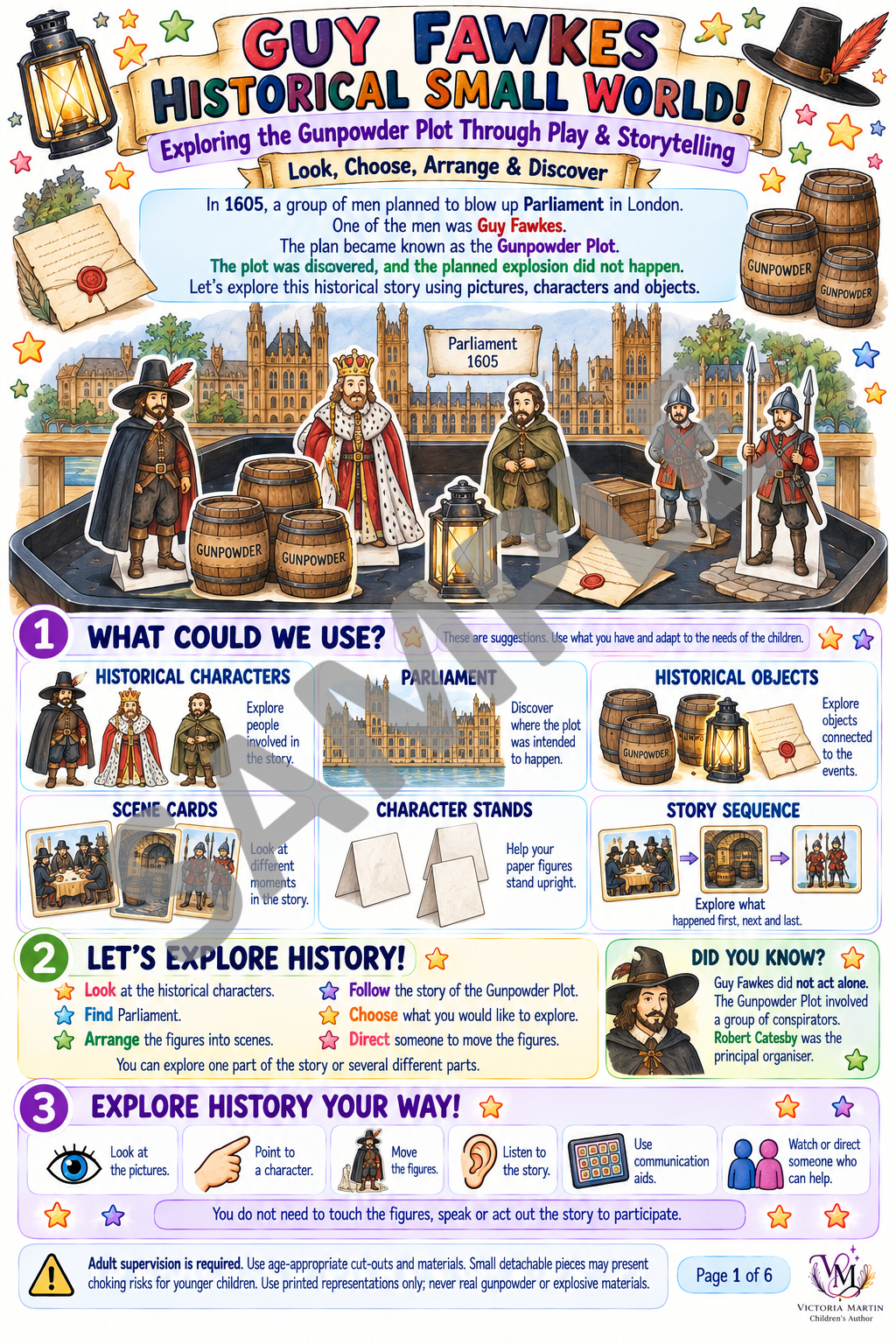
The plan became known as the Gunpowder Plot, and it was organised by Robert Catesby, who was the principal leader of the conspirators.
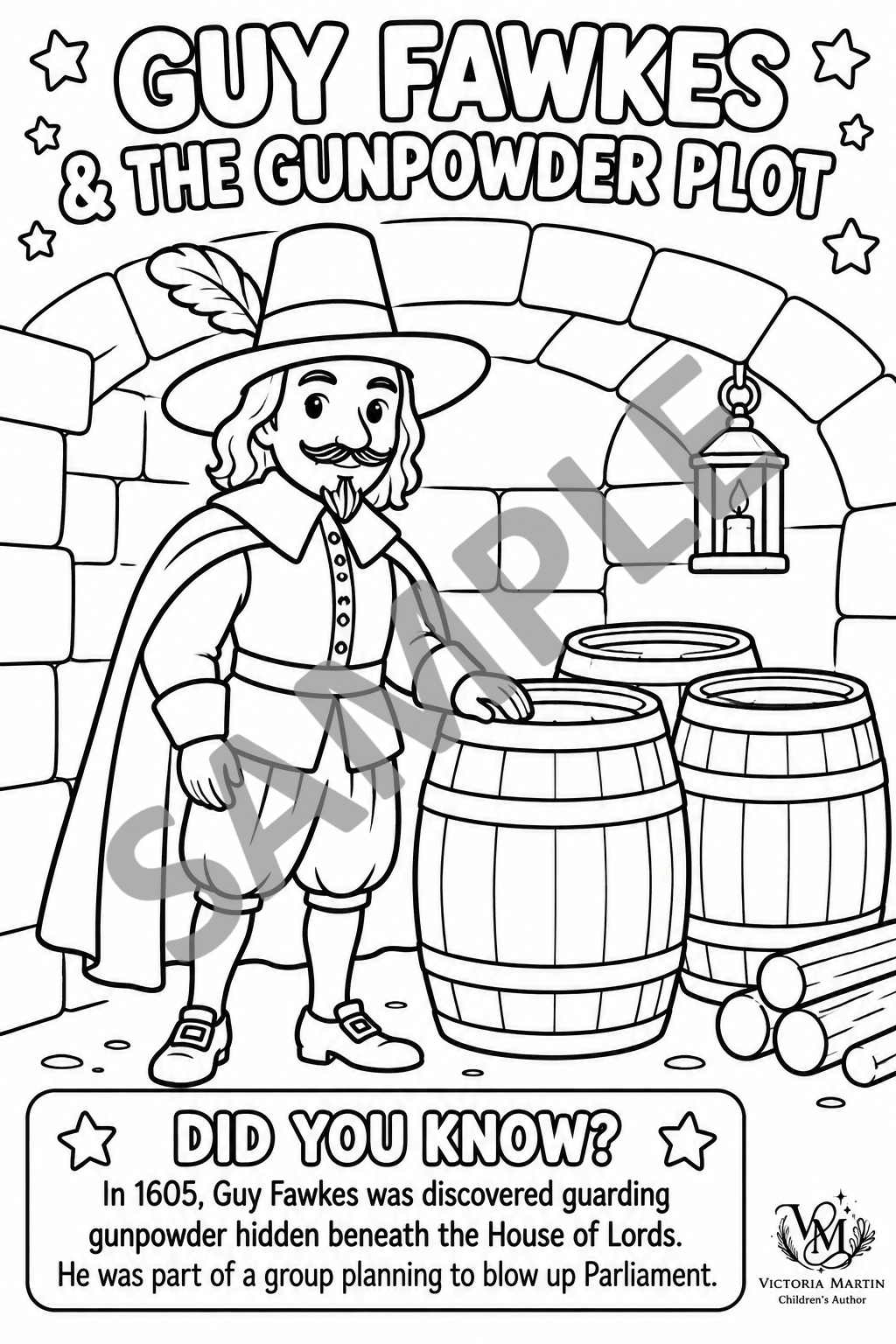
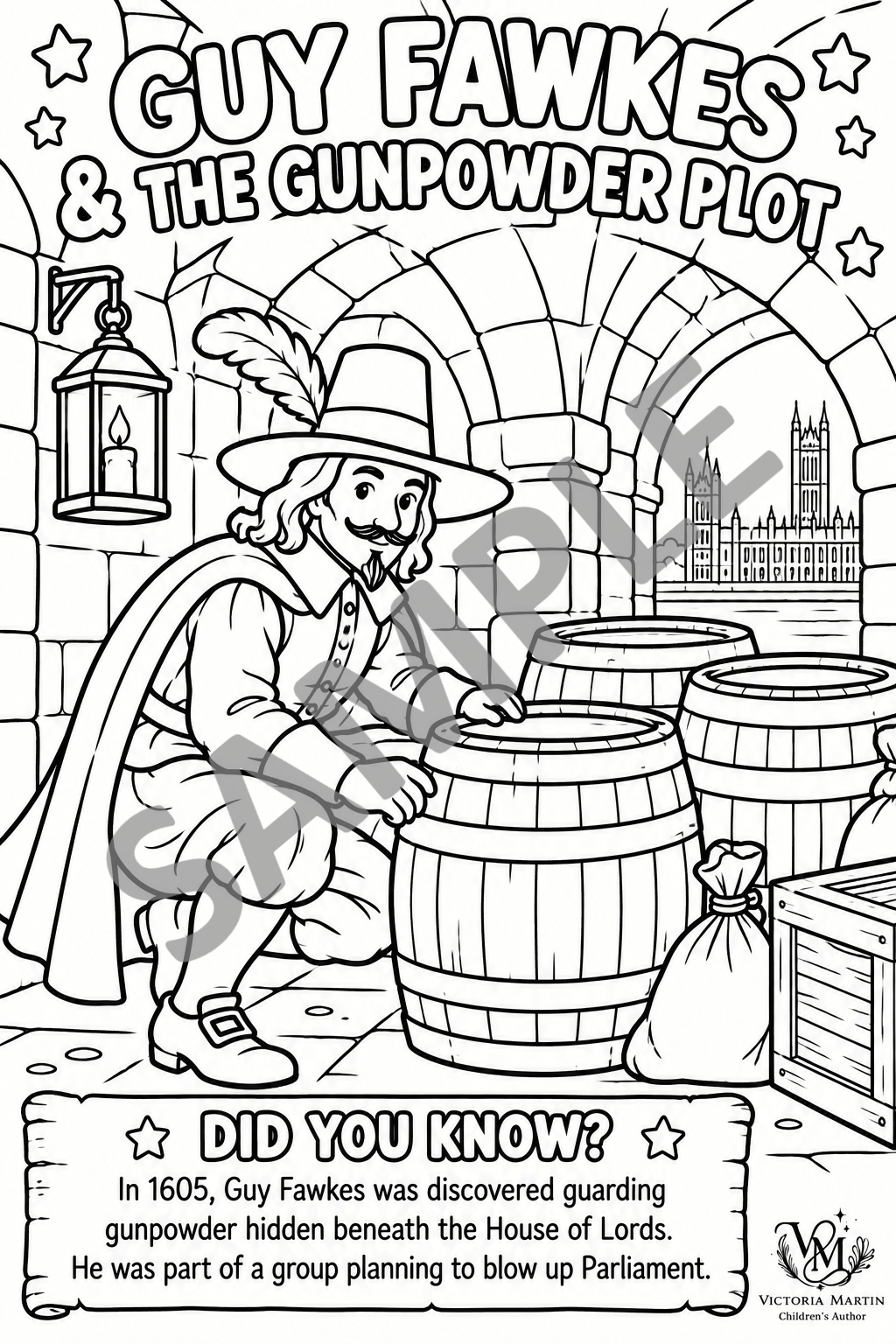
One of the group's most well-known members was Guy Fawkes, a man with military experience who was responsible for preparing and guarding the gunpowder.
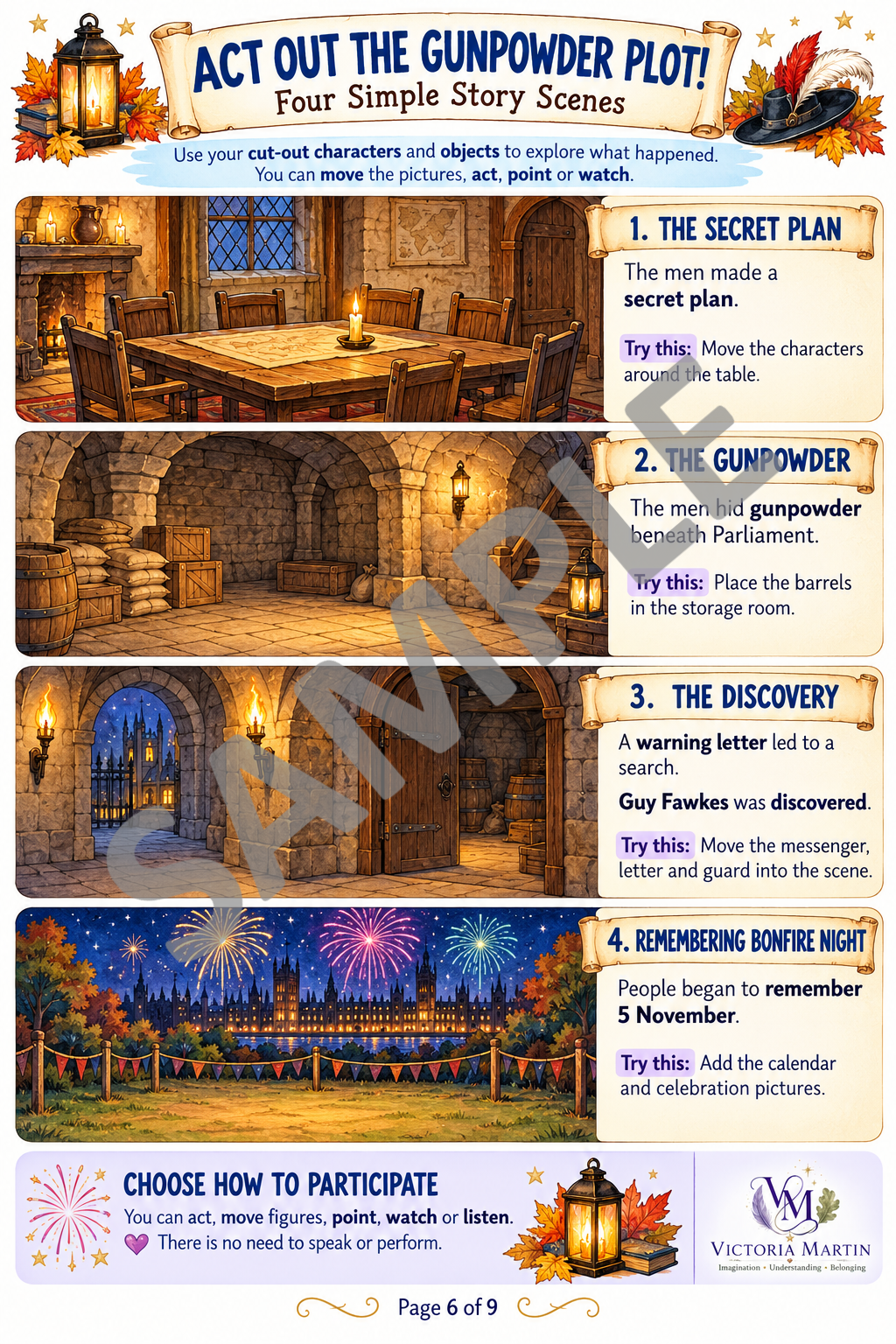
The conspirators secretly stored 36 barrels of gunpowder in a rented storeroom, known as an undercroft, beneath the House of Lords.
The explosion was planned for 5 November 1605, during the State Opening of Parliament, when King James I and many important political figures would be gathered together.
The conspirators believed that destroying Parliament and removing the king would create an opportunity to change the government and improve the position of Catholics in England.
However, the dangerous plan was discovered before the gunpowder could explode, preventing what could have been a devastating event.
✉️ The Mysterious Warning Letter
On 26 October 1605, a man called Lord Monteagle received an anonymous letter warning him not to attend the opening of Parliament.
The mysterious writer suggested that something terrible was going to happen, but the letter did not clearly explain who was responsible or what was planned.
The identity of the writer remains uncertain today, making the warning letter one of the most intriguing mysteries surrounding the Gunpowder Plot.
Lord Monteagle passed the warning letter to the king's advisers, who began investigating the possibility of a dangerous conspiracy.
During the night of 4 November 1605, officials searched the buildings around Parliament and discovered Guy Fawkes guarding the hidden barrels of gunpowder.
Guy Fawkes was arrested, the Gunpowder Plot was stopped, and the authorities began searching for the other conspirators.
Following the discovery, Robert Catesby and several other conspirators fled London, hoping to gather support for an uprising against the government.
However, the attempted rebellion failed, and Catesby was killed during a confrontation with the authorities on 8 November 1605.
The surviving conspirators who were captured were eventually put on trial, found guilty of treason and sentenced to death in 1606.
🔥 How Bonfire Night Began
After the Gunpowder Plot failed, people in London lit bonfires to celebrate the survival of King James I.
In 1606, Parliament passed the Thanksgiving Act, establishing an annual religious service on 5 November to give thanks for the failure of the plot and the king's survival.
Over the following centuries, bonfires, church bells, fireworks and public gatherings became part of the developing commemorative tradition.
Interestingly, fireworks were included in some of the earliest celebrations, meaning they have been connected with Bonfire Night for hundreds of years.
Some historical celebrations also involved burning effigies, which were figures made to represent people associated with the religious and political conflicts of the time.
In earlier centuries, these figures sometimes represented the Pope, reflecting the anti-Catholic attitudes and religious divisions that existed in England.
In later traditions, Guy Fawkes became the more familiar figure represented by effigies placed on bonfires, leading to the popular expression burning the Guy.
However, the early celebrations were not always peaceful or welcoming, as some included religious hostility, anti-Catholic messages and displays of political anger.
As British society changed, the meaning of Bonfire Night gradually shifted, becoming more closely associated with community celebrations and firework displays.
🎇 How Do We Celebrate Bonfire Night Today?
Today, Bonfire Night is celebrated in many parts of the United Kingdom, usually on 5 November or the nearest weekend.
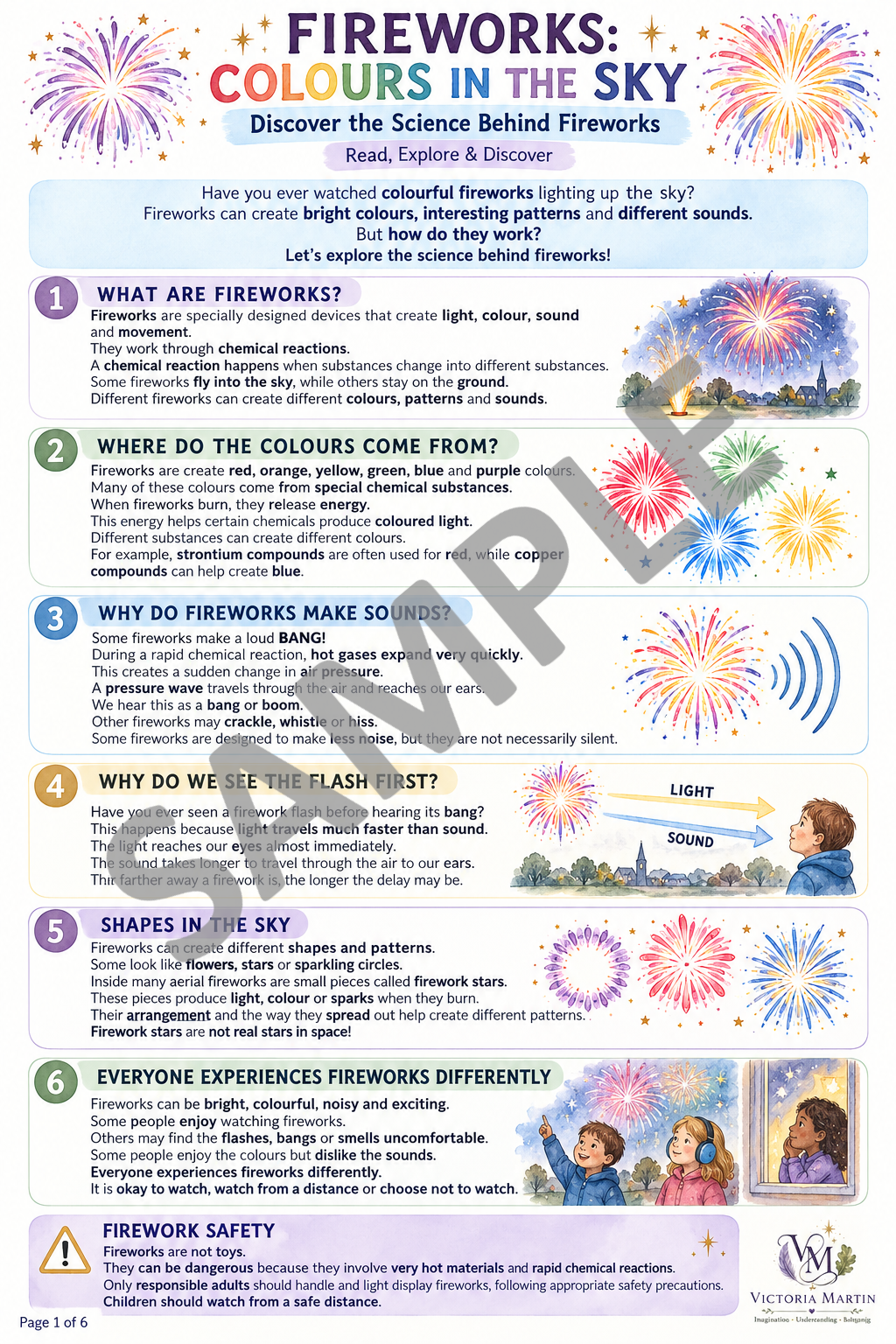
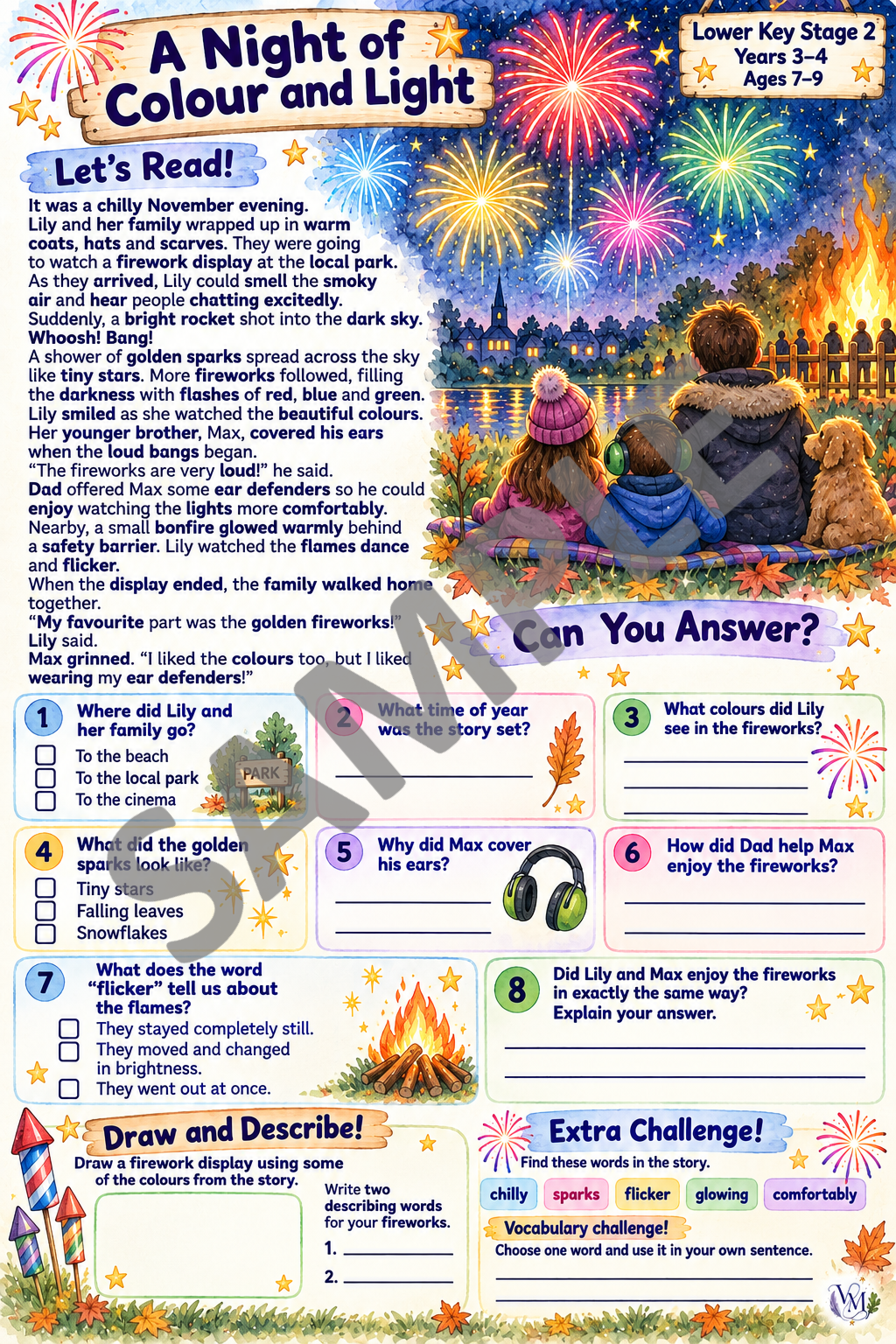
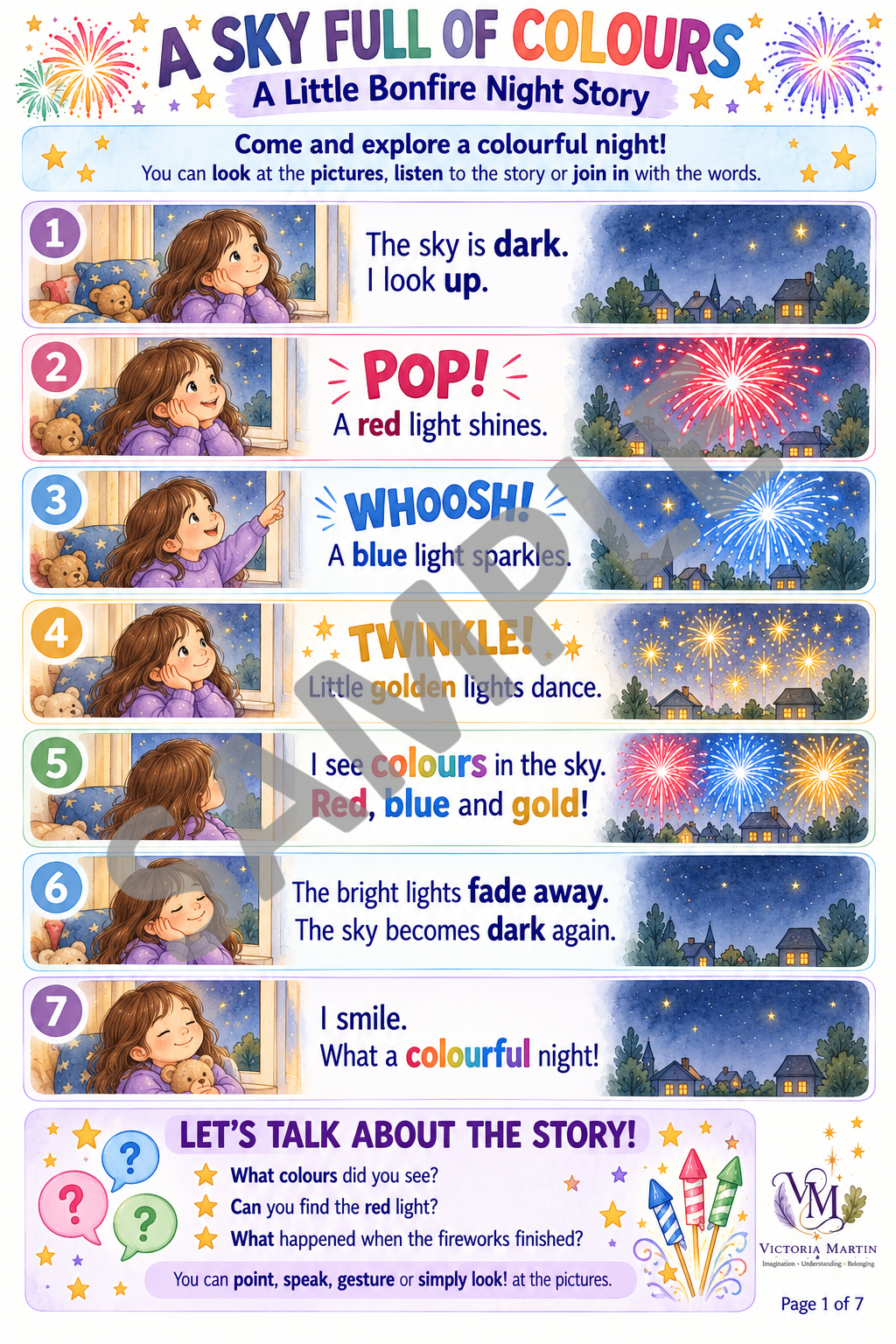
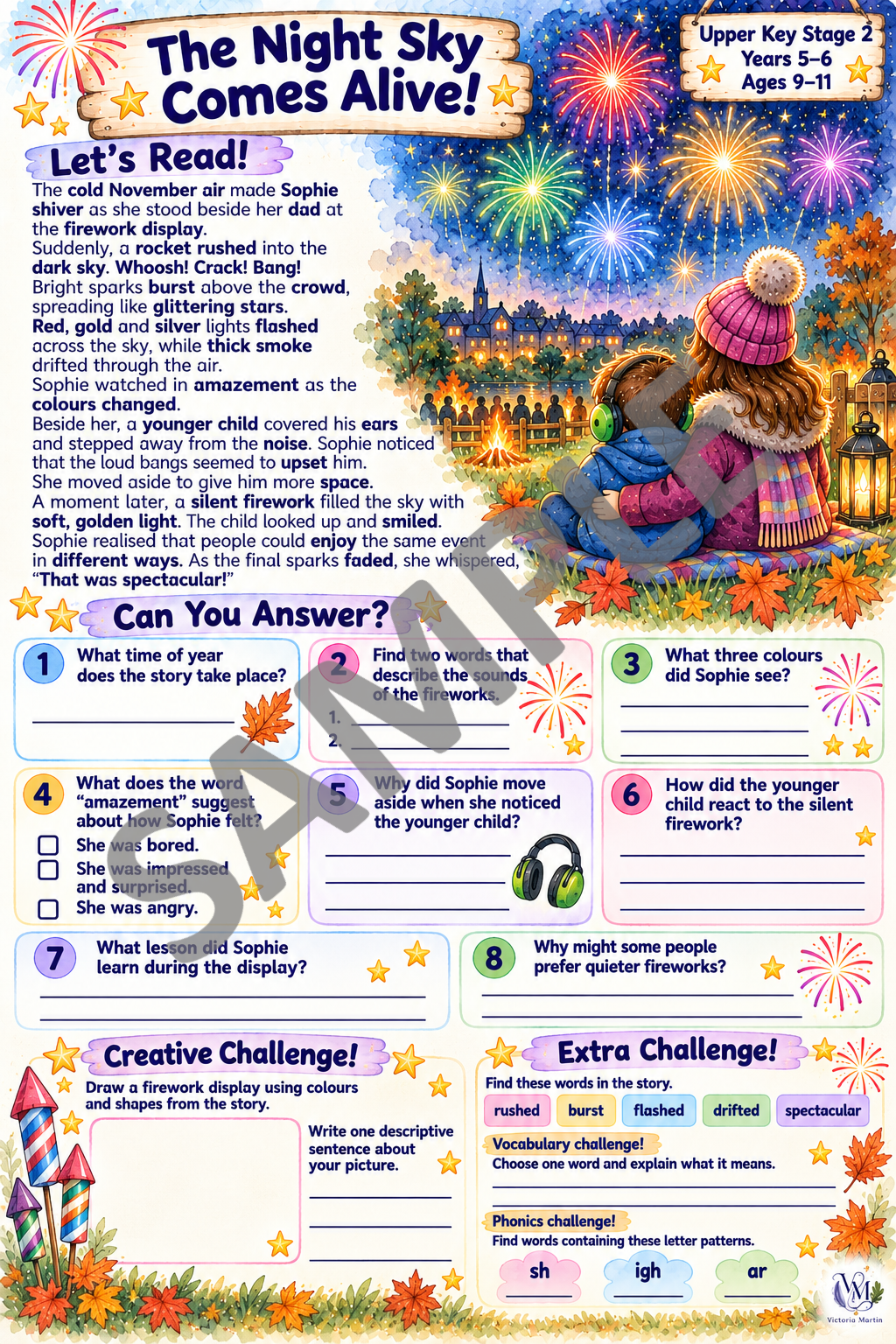
Many towns and communities organise public firework displays, where families can watch colourful explosions, sparkling patterns and bright lights illuminate the night sky.
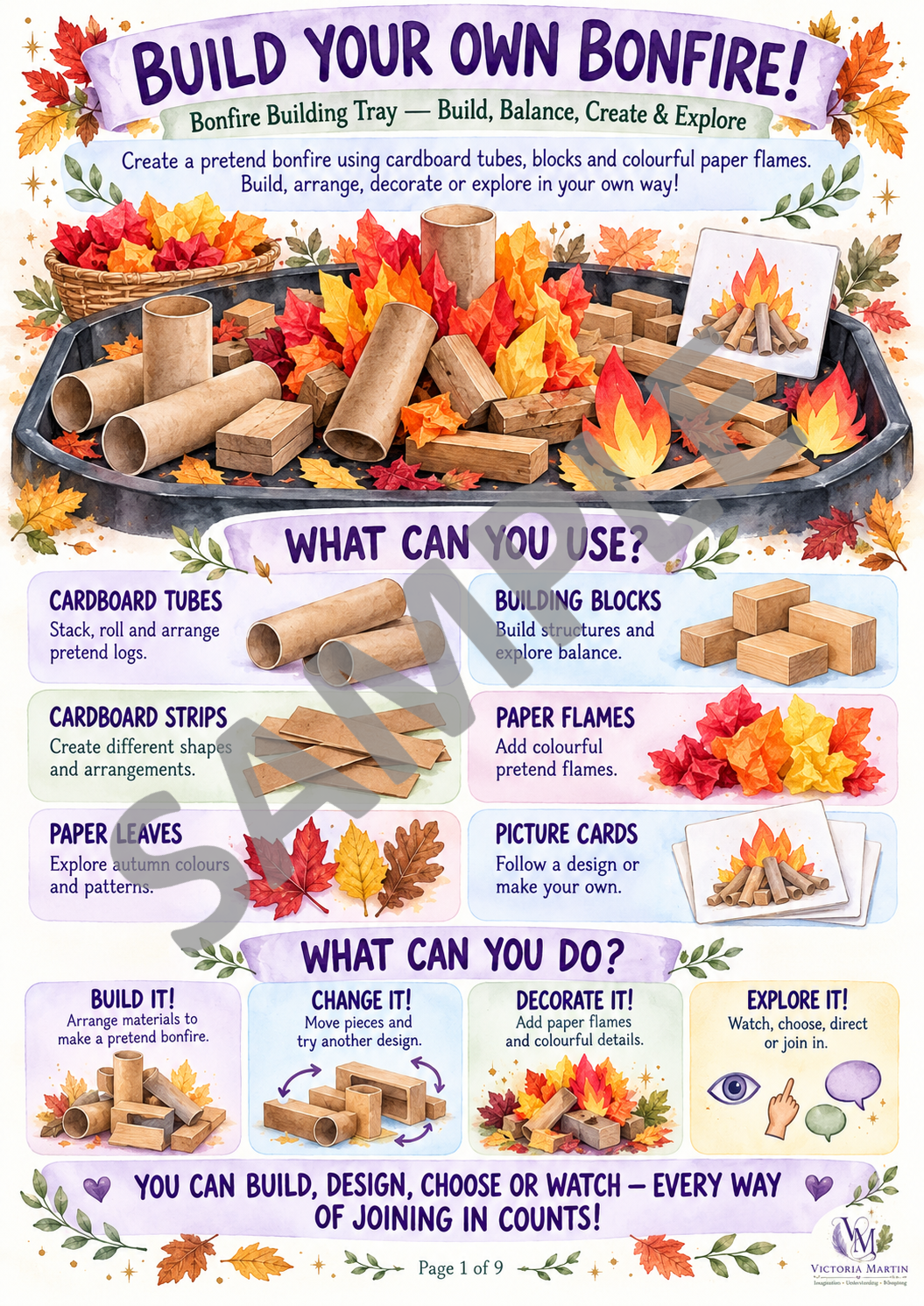
Some celebrations include large bonfires, fairground attractions, music, food stalls and opportunities for friends and families to spend time together.
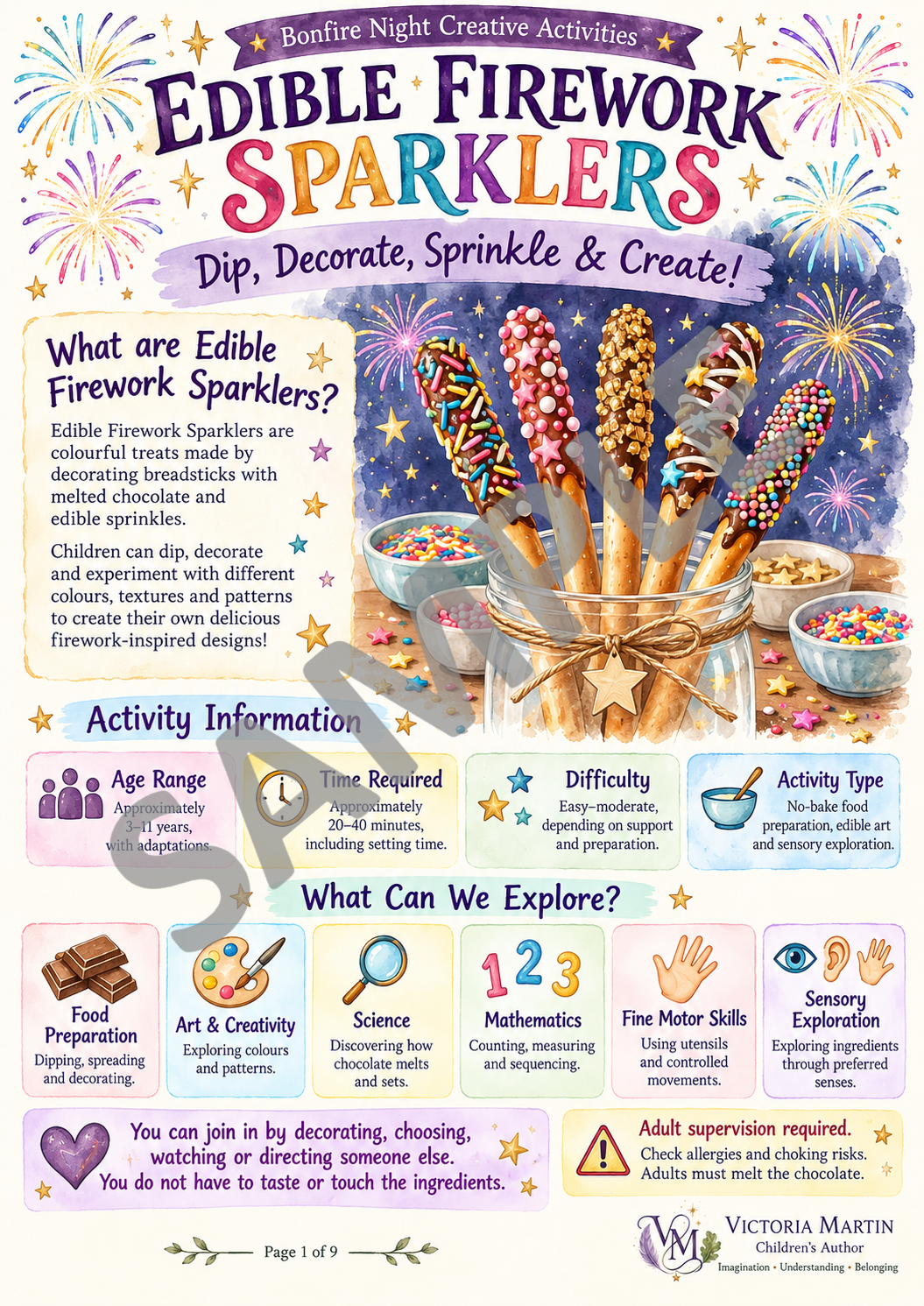
Traditional autumn treats might include toffee apples, jacket potatoes, hot chocolate and other warming seasonal foods.
In some areas, communities continue the tradition of making Guy Fawkes effigies, while others focus entirely on fireworks, bonfires and family entertainment.
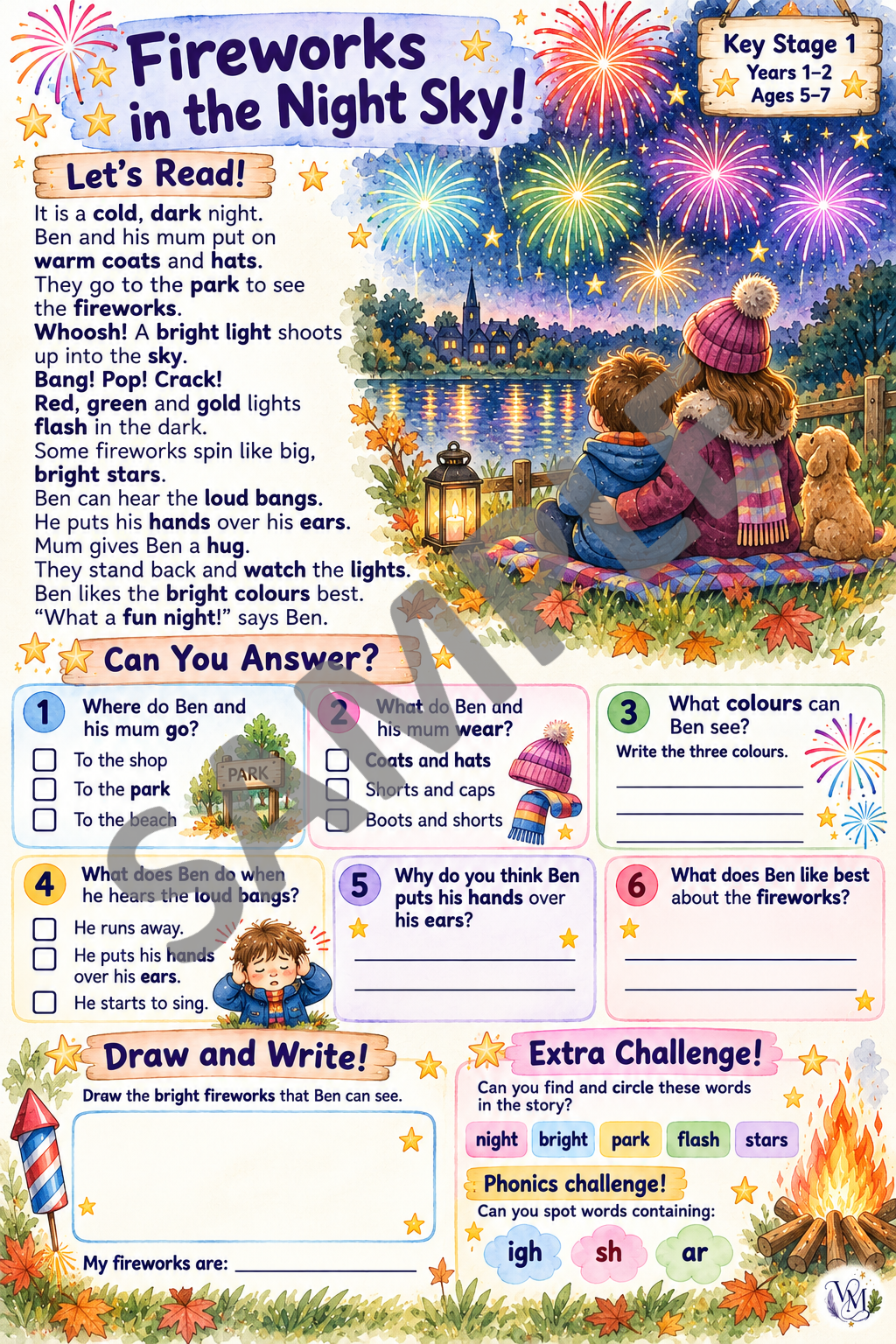
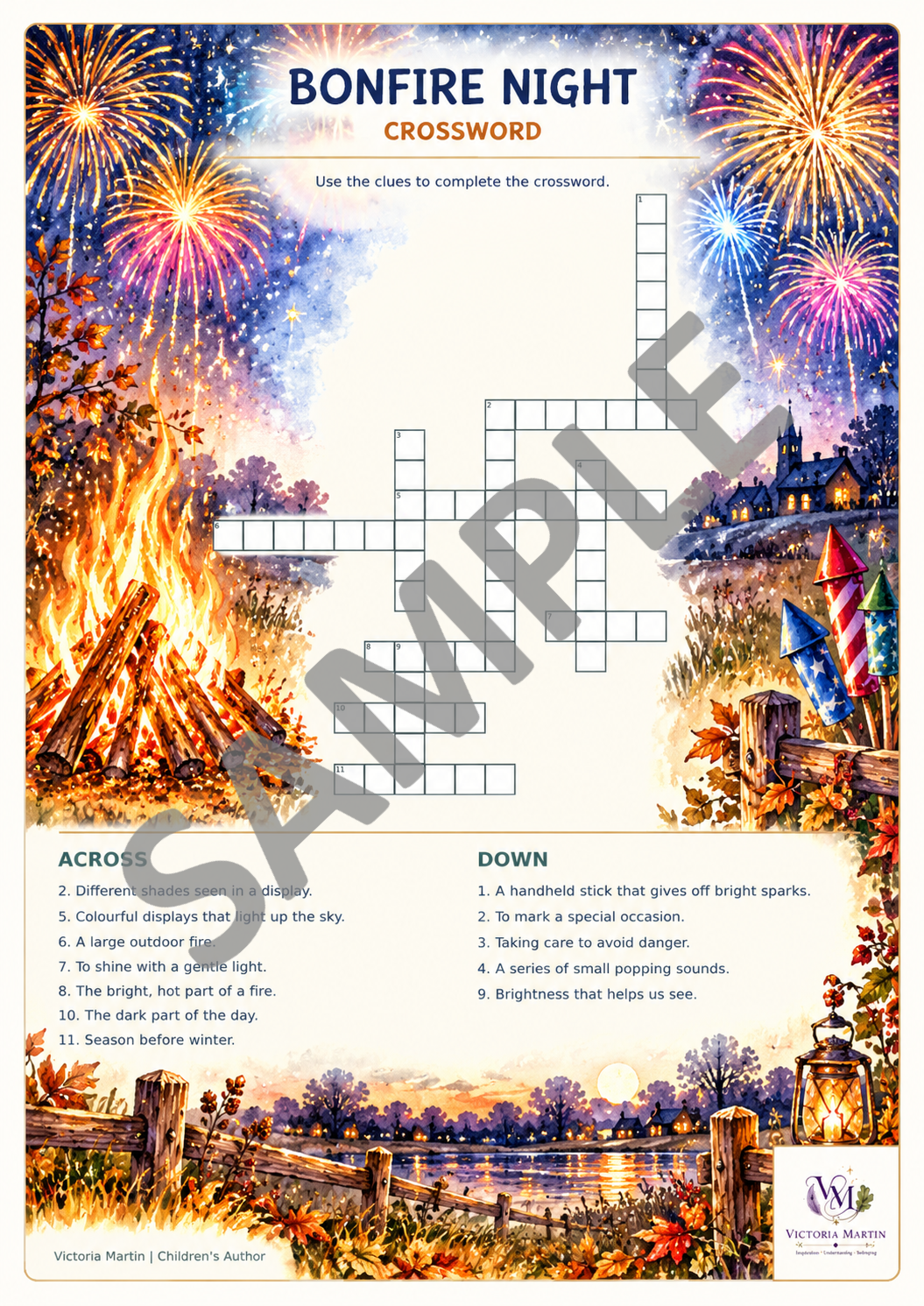
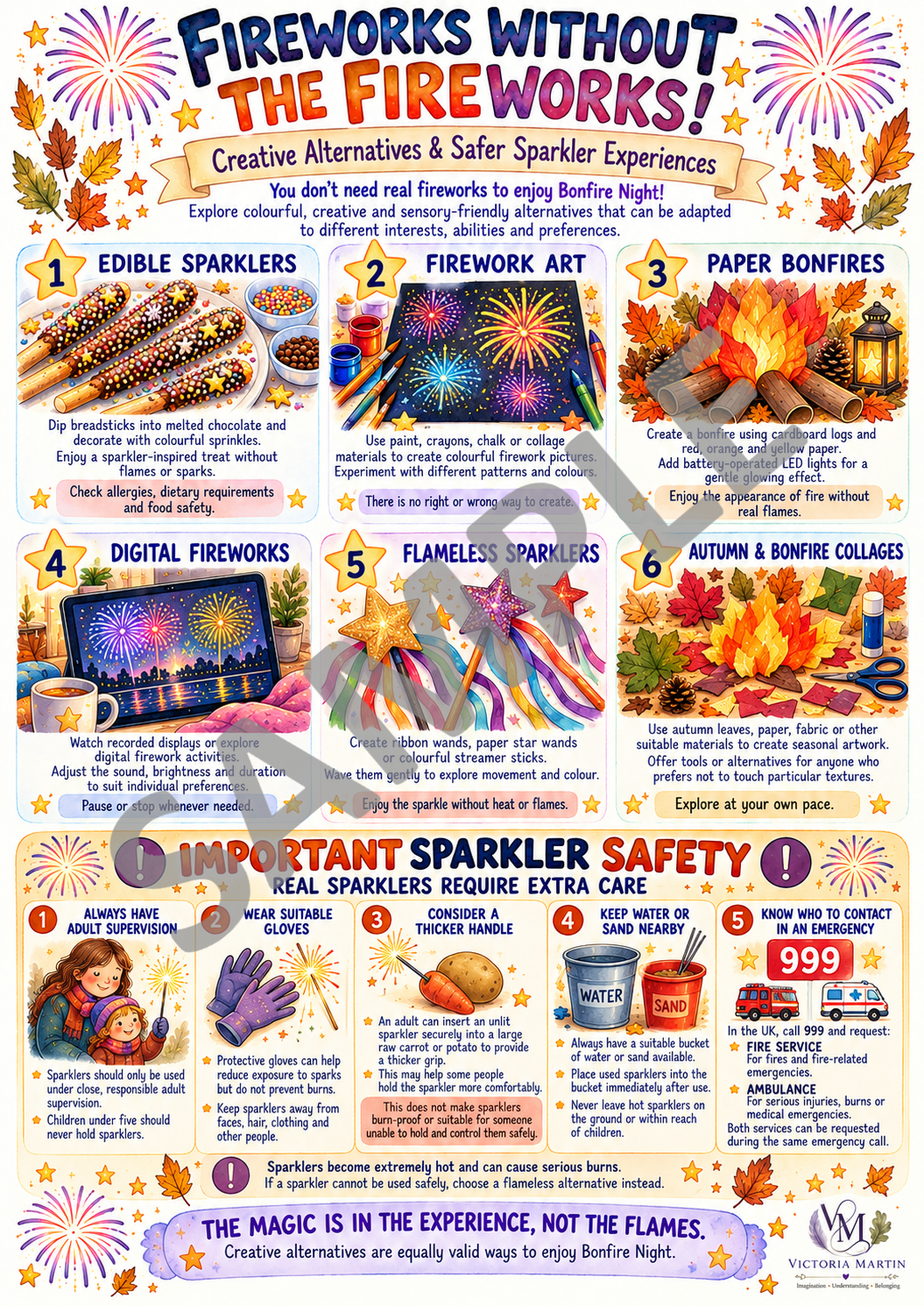
Children may also explore Bonfire Night traditions through history lessons, creative activities, firework artwork and sensory play.
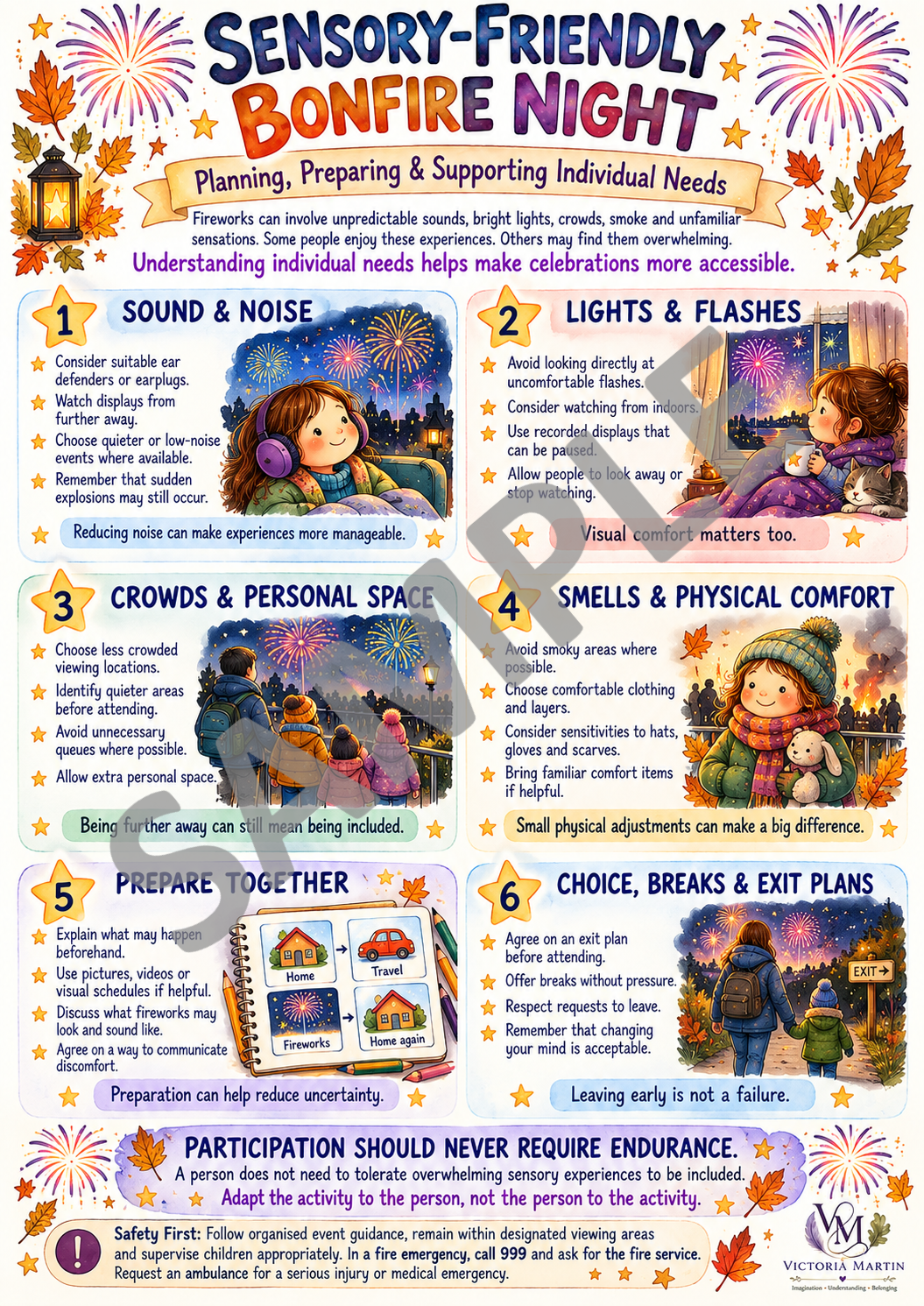
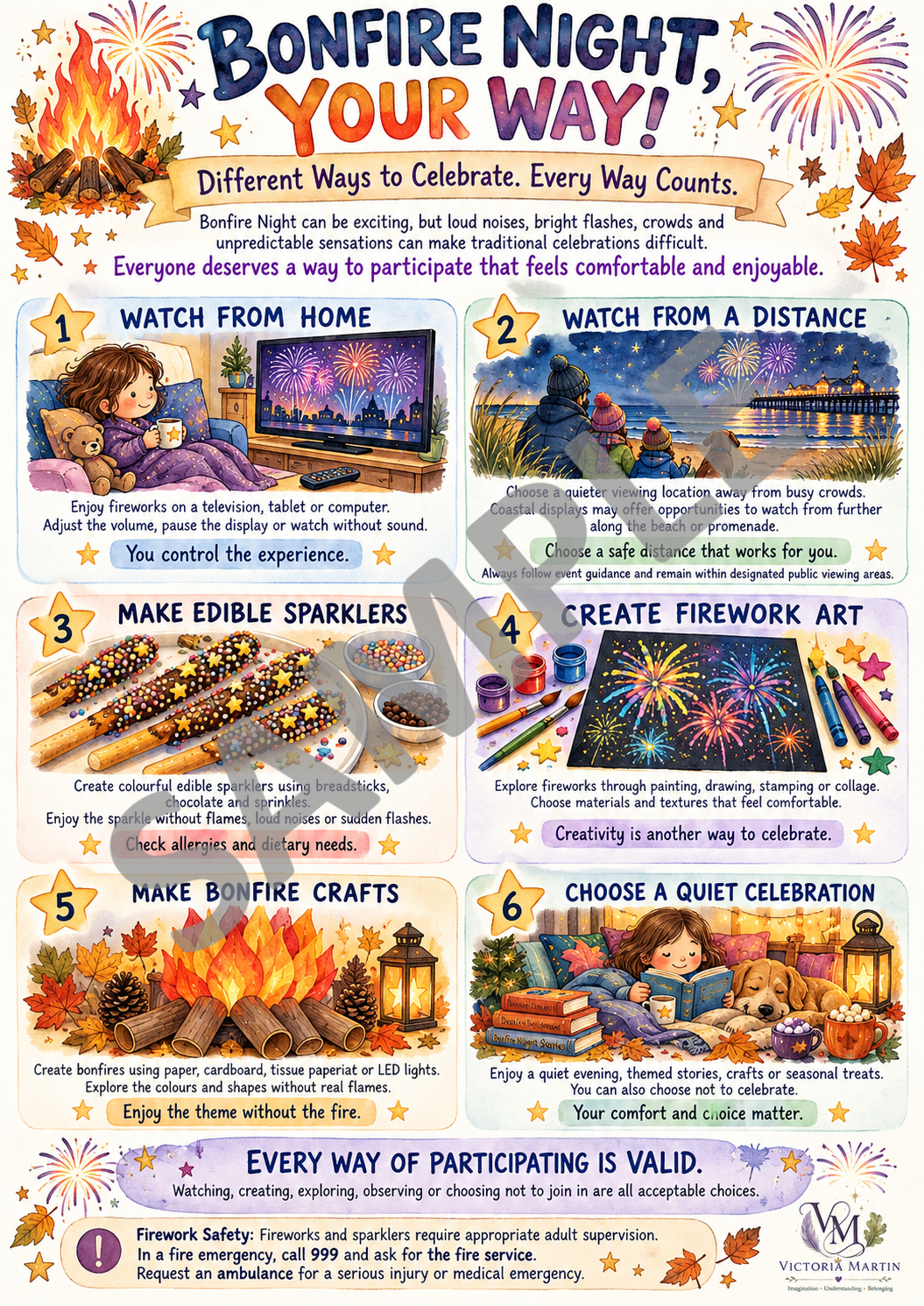
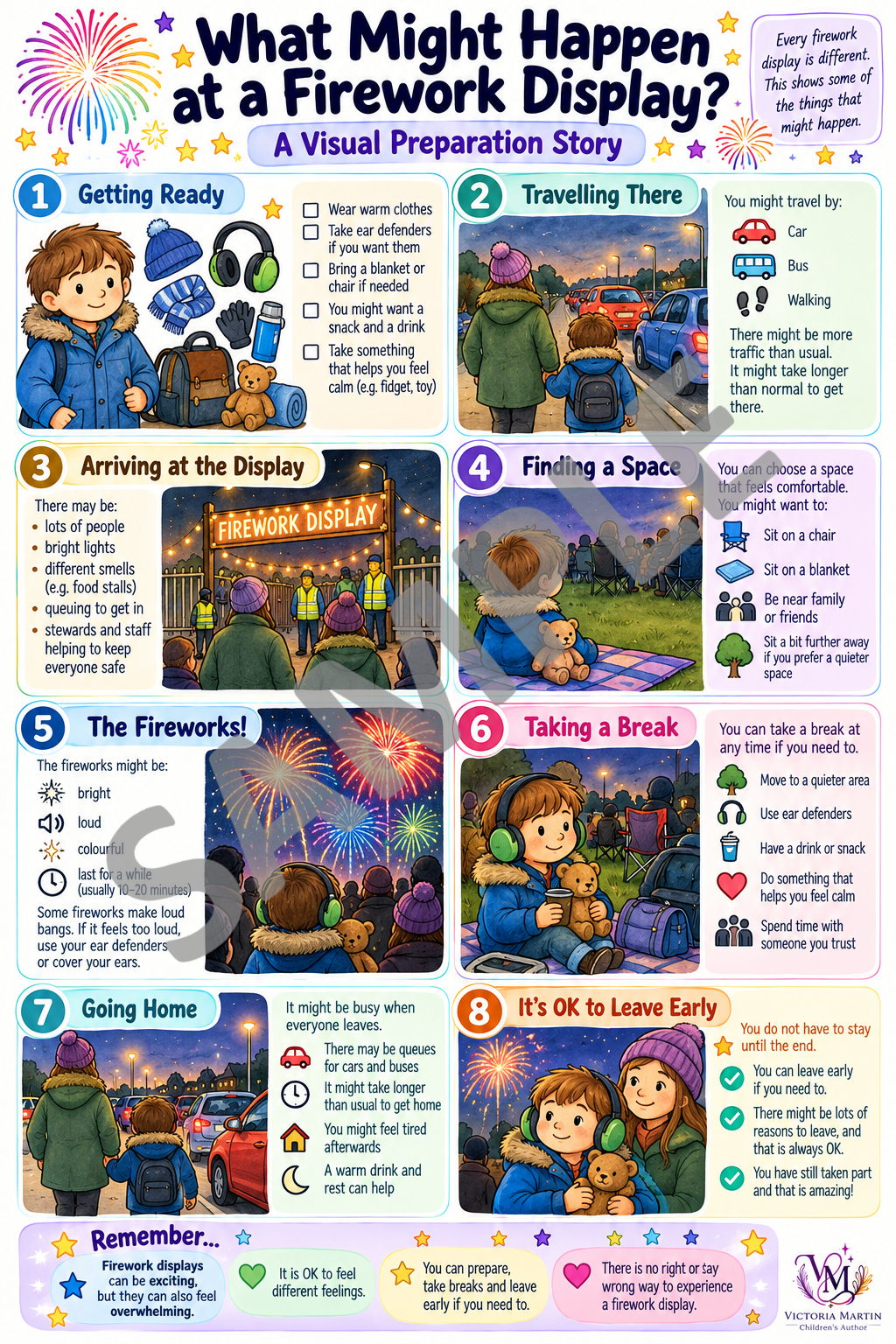
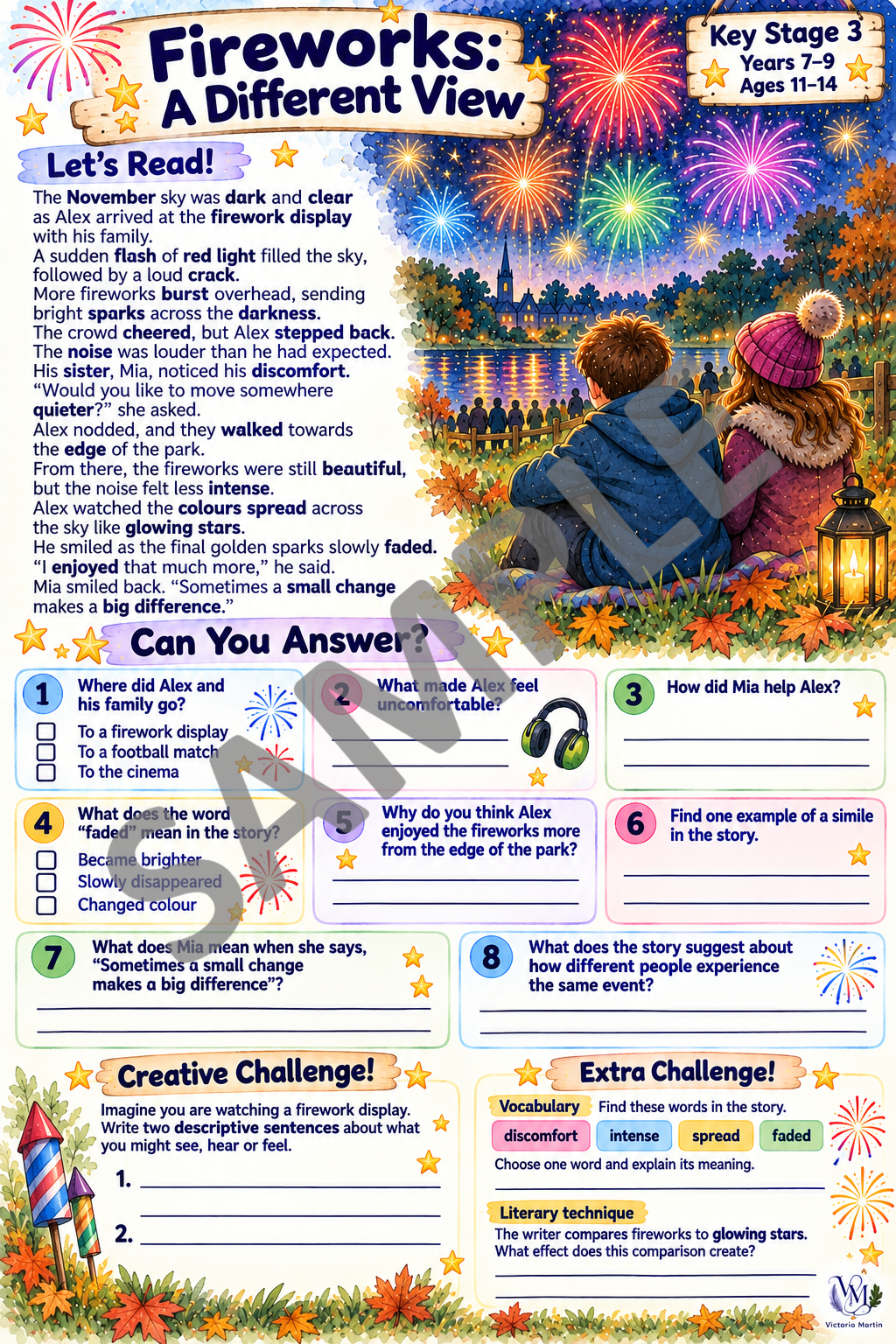
Not everyone enjoys loud fireworks or busy celebrations, so some families prefer quieter activities, visual displays or celebrating at home.
Modern celebrations also encourage people to consider firework safety, animal welfare, environmental effects and the needs of people who may find sudden loud noises distressing.
Some communities now explore quieter fireworks, organised public displays or alternative light shows to create more inclusive celebrations for different audiences.
🌟 Why Do We Remember Bonfire Night?
Although Bonfire Night is now widely associated with fireworks and celebrations, its history reminds us of a time when religious differences caused significant conflict and division.
Learning about the Gunpowder Plot helps us explore British history, understand how traditions develop and consider the importance of religious tolerance.
The story also encourages us to think about peaceful ways of resolving disagreements, respecting different beliefs and understanding the consequences of violence.
More than 400 years later, the story of Guy Fawkes, Robert Catesby and the failed Gunpowder Plot remains an important part of Britain's historical heritage.
Whether we celebrate with colourful fireworks, enjoy creative activities, explore historical stories or simply admire the autumn night sky, Bonfire Night offers opportunities for learning, reflection and community connection.
Resources and Further Information








Further Information
The Real Story of Bonfire Night | English Heritage
Bonfire Night Traditions, Food & Rituals: The Ultimate UK Guide
Bonfire Night: What is the story behind it? - BBC Newsround
Is bonfire night on the brink of burning itself out? - BBC News
Guy Fawkes: Why do bonfires still burn 400 years on? - BBC Teach
History of Bonfire Night | Sky HISTORY TV Channel
Britain's bonfire night events worth travelling for | National Geographic
Guy Fawkes Day | History, Rhyme, & Facts | Britannica
Bonfire Night | Age 5-7 | KS1 Topic Pack - BBC Bitesize
Games
Horrible Histories Quiz: Guy Fawkes & The Gunpowder Plot - CBBC
BBC - History - British History in depth: Gunpowder Plot Game
YouTube
Ask Oliver | What is Bonfire Night?
Bonfire Night Explained: The Gunpowder Plot! 🎆 | Newsround | News For Kids
Bonfire Night | School Assemblies | PSHE | BBC Teach
Super Loud Colourful Fireworks! | My First Bonfire Night | CBeebies
Guy Fawkes and The Gunpowder Plot | History KS1| BBC Teach
All About the Gunpowder Plot | Horrible Histories
Gunpowder Plot – Stories from Parliament (Part 2 of 2) (this is part 1)
Gunpowder Plot – Stories from Parliament (Part 2 of 2)
Guy Fawkes and the Gunpowder Plot | The REAL Story
Food
Bonfire Night recipes - BBC Food
Bonfire Night Recipes | Good Food
Bonfire night treats - BBC Food
Bonfire Night dinner - BBC Food
Crafts
28 brilliant Bonfire Night craft ideas for toddlers and kids of all ages - Netmums