
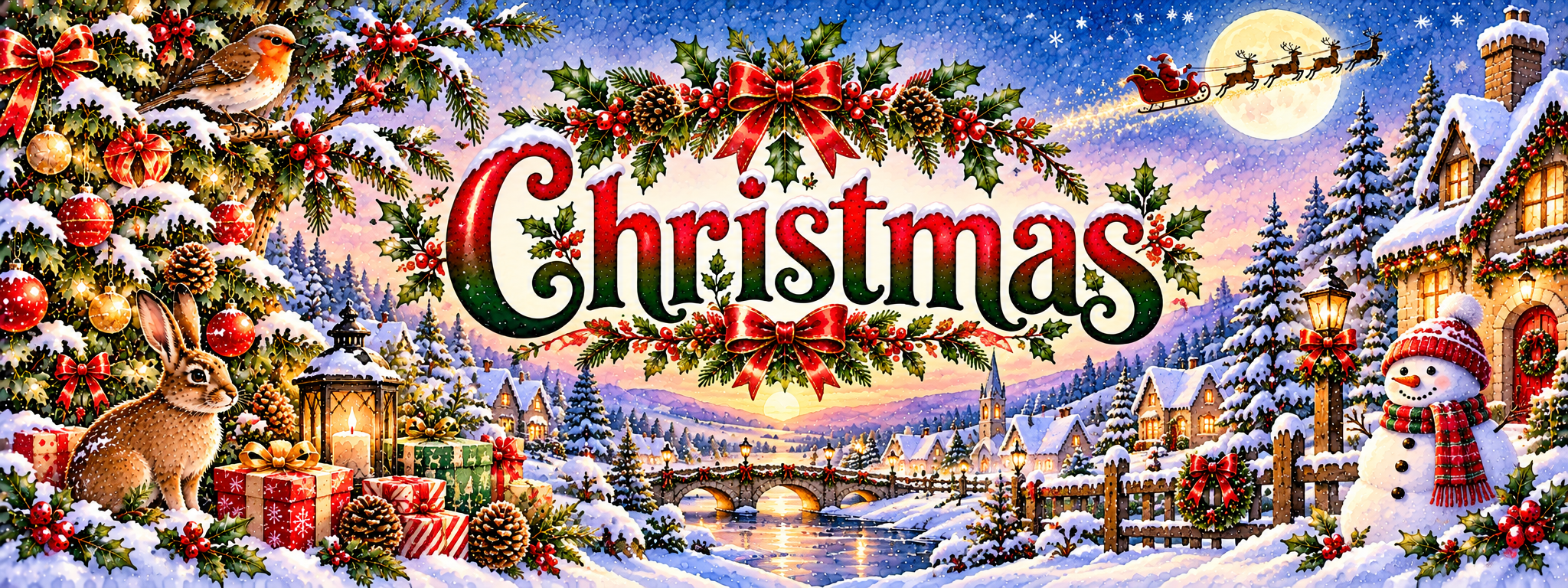
🎄 Christmas — Traditions, Celebrations & Togetherness
Discover the History, Meaning and Traditions of Christmas
Have you ever noticed twinkling Christmas lights, colourful decorations or festive music playing as December approaches?
For many people, Christmas is a time of celebration, family traditions and spending time together.
Christmas is an important Christian festival, but it is also celebrated in cultural and non-religious ways by people around the world.
Different families may celebrate through religious services, special meals, gift-giving or quiet traditions at home.
Others may choose not to celebrate Christmas, following different religious traditions, personal beliefs or family preferences.
⭐ What Is Christmas?
Christmas Day is celebrated on 25 December each year by many Christians and communities around the world.
For Christians, Christmas celebrates the birth of Jesus Christ, whose life and teachings are central to the Christian faith.
The Christmas story describes Mary and Joseph, the birth of Jesus and visitors who came to honour him.
Many Christians mark Christmas through church services, prayer, carol singing and acts of kindness.
However, Christmas is also widely observed as a cultural celebration, with traditions involving decorations, food and family activities.
Although many Christians celebrate Christmas on 25 December, some Orthodox churches follow the Julian calendar, meaning their Christmas Day currently falls on 7 January in the Gregorian calendar.
Other Orthodox churches celebrate on 25 December according to the civil calendar, reflecting different church calendars and different religious traditions.
📖 What Is the Christmas Story?
The traditional Christmas story is told in the Christian Bible, particularly in the Gospels of Matthew and Luke.
According to the Gospel of Luke, Mary and Joseph travelled to Bethlehem, where Jesus was born.
The story describes Jesus being placed in a manger, a feeding container for animals, because there was no suitable guest space available.
Nearby shepherds were told about the birth by angels and travelled to see the baby Jesus.
The Gospel of Matthew describes wise men, sometimes called Magi, who followed a star and brought gifts of gold, frankincense and myrrh.
Although the Magi brought three named gifts, the Bible does not specify that there were exactly three wise men.
Although nativity plays often show the shepherds and wise men arriving together, the biblical accounts describe different events, and they do not establish that everyone visited on the same night.
For Christians, the story represents hope, love and the significance of Jesus' birth.
📅 Why Is Christmas Celebrated on 25 December?
The Bible does not provide an exact calendar date for the birth of Jesus, so 25 December is a traditional date rather than a historically confirmed birthday.
The celebration of Jesus' birth on 25 December is documented in fourth-century Rome, before becoming established in other Christian communities over time.
Historians have suggested different explanations for the date, including early Christian calculations and possible connections with existing Roman winter festivals.
However, the precise reasons for choosing 25 December remain historically debated, and there is no single explanation accepted by everyone.
Today, Christmas is celebrated on different dates by some Christian communities because they follow different church calendars.
🎄 Where Did Christmas Trees Come From?
Decorating evergreen trees is one of the most recognisable Christmas traditions in many countries.
The modern decorated Christmas tree developed particularly in German-speaking parts of Europe, becoming increasingly popular during the early modern period.
Evergreen plants have also been used in winter celebrations for many centuries because they remain green during colder months.
Queen Charlotte, the German-born wife of King George III, helped introduce the decorated Christmas tree tradition to the British royal household.
Later, Queen Victoria and Prince Albert helped make Christmas trees increasingly popular across Britain, particularly after an illustration of their decorated tree and family appeared in 1848.
Today, families may decorate real trees, artificial trees or alternative displays using lights, ornaments and handmade decorations.
Some people enjoy traditional decorations, while others prefer simple arrangements or sensory-friendly alternatives.
🎅 Who Is Father Christmas?
Father Christmas is a familiar figure associated with Christmas celebrations in the United Kingdom.
Historically, Father Christmas developed from English traditions that personified festivity, hospitality and seasonal enjoyment.
Over time, his image became closely connected with Santa Claus, whose traditions were influenced by Saint Nicholas and other European customs.
Saint Nicholas was an early Christian bishop remembered through traditions involving generosity, charitable giving and helping others.
The modern image of Santa Claus developed through several European and American traditions, rather than coming from one historical figure or story.
Modern stories often describe Father Christmas wearing a red suit, travelling in a sleigh pulled by reindeer and delivering presents on Christmas Eve.
These are festive stories and traditions, and families may choose different ways to enjoy them.
🎁 Why Do People Give Christmas Presents?
Giving gifts has become an important part of Christmas traditions, although different families approach gift-giving in different ways.
For some Christians, presents can symbolise the gifts brought by the Magi, as well as generosity and kindness.
Gift-giving traditions have also developed through European winter customs, family celebrations and changing social practices.
Some families exchange wrapped presents, while others prefer handmade gifts, shared experiences or acts of kindness.
Christmas does not have to involve expensive presents, large celebrations or spending more money than a family can afford.
💌 Where Did Christmas Cards Come From?
Sending Christmas cards became popular in Britain during the Victorian period.
The first commercially produced Christmas card is widely credited to Sir Henry Cole, who commissioned a design by John Callcott Horsley in 1843.
As printing methods improved and postal services expanded, Christmas cards became increasingly affordable and widely exchanged.
Today, people may send traditional cards, handmade designs or digital greetings to friends and relatives.
Creating a card can also be a thoughtful way to share kind messages, festive artwork and personal creativity.
🍽️ What Foods Are Traditionally Eaten at Christmas?
Christmas meals vary between countries, cultures and individual households, so there is no single meal that everyone eats.
In the UK, some families enjoy roast turkey, roast potatoes, vegetables and stuffing on Christmas Day.
Other traditional foods include mince pies, Christmas pudding, Christmas cake and festive biscuits.
Some families prepare vegetarian meals, foods from their cultural traditions or familiar dishes that everyone enjoys.
Food traditions can also be adapted for allergies, sensory preferences and different dietary needs.
The most important part of a shared meal is not following a particular menu, but creating opportunities for comfort, connection and enjoyment.
🎶 Why Do People Sing Christmas Carols?
Christmas carols are songs traditionally associated with the Christmas season, particularly within Christian celebrations.
Some carols tell stories about the birth of Jesus, while others express themes of joy, peace and hope.
Carolling traditions developed over many centuries, with some familiar songs becoming popular during the Victorian era and later periods.
Today, people may hear Christmas music at church services, school performances, community events and festive gatherings.
Some families enjoy singing together, while others prefer listening quietly or celebrating without music.
🕯️ What Is Advent?
Advent is a season of preparation and anticipation in the Christian calendar before Christmas.
In many Western Christian traditions, Advent begins on the fourth Sunday before Christmas Day, although practices differ between churches.
Some Christians mark Advent by lighting candles, attending special services or reflecting on hope, peace, joy and love.
Advent calendars have also become popular as a cultural tradition, with small pictures, treats or daily activities.
Although many commercial Advent calendars begin on 1 December, the Christian season of Advent does not always begin on that date.
In 2026, the Christian season of Advent begins on Sunday 29 November in Western traditions that follow this calendar, although many Advent calendars begin on 1 December.
⭐ What Are the Twelve Days of Christmas?
The Twelve Days of Christmas traditionally begin on 25 December, celebrating Christmas Day and the days leading towards Epiphany.
In many Western Christian traditions, Epiphany is observed on 6 January, remembering the revelation of Jesus Christ and, particularly in Western traditions, the visit of the Magi.
Different churches have different calendars, different celebrations and different ways of marking the Christmas season.
The familiar song The Twelve Days of Christmas is associated with this period, although its gifts and verses are part of a traditional cumulative song rather than a straightforward account of Christian teachings.
🎄 How Is Christmas Celebrated in the UK?
Across the United Kingdom, Christmas may involve decorated homes, community events and seasonal traditions.
Some families visit Christmas markets, attend church services or enjoy school performances and nativity plays.
Others celebrate with family meals, winter walks, festive films or quiet time at home.
Many communities organise charity collections, food donations and volunteering opportunities to support people during the winter months.
Christmas Day is a bank holiday throughout the UK, although some people continue working in essential services, hospitality and other sectors.
Families may also celebrate Christmas on different days because of work commitments, family arrangements or personal traditions.
🎁 What Is Boxing Day?
Boxing Day takes place on 26 December, the day after Christmas Day.
Its name is traditionally associated with Christmas boxes, which were gifts or payments given to servants, workers and people in need.
The exact development of the name has several historical explanations, reflecting different customs over time.
Boxing Day always falls on 26 December, although the associated bank holiday may move to another date when it falls on a weekend.
In 2026, Boxing Day falls on Saturday 26 December, with a substitute bank holiday on Monday 28 December in England and Wales.
Some families spend the day visiting relatives, enjoying leftovers or resting after Christmas celebrations.
Others take part in sporting events, winter walks or community activities.
🌍 Does Everyone Celebrate Christmas?
Although Christmas is celebrated in many countries, not everyone observes it, and different communities have different religious and cultural traditions.
Some people celebrate Christmas primarily as a religious festival, while others enjoy it as a cultural or family occasion.
Certain Christian communities celebrate on different dates, and some Christians do not observe Christmas as a religious holiday.
Families who follow other religions, non-religious beliefs or different cultural traditions may choose not to celebrate Christmas.
Schools and communities can help everyone feel included by respecting different beliefs, avoiding assumptions and offering choices about participation.
💜 Making Christmas Accessible for Everyone
Christmas can be an exciting time, but changes in routine, busy environments and sensory experiences may also feel overwhelming.
Some children may find flashing lights, loud music or crowded celebrations uncomfortable or distressing.
Others may struggle with unexpected visitors, unfamiliar foods or pressure to participate in particular activities.
Families and educators can help by providing predictable routines, clear explanations and opportunities for choice.
Visual schedules, quiet spaces, sensory-friendly decorations and flexible activities can make celebrations more accessible.
Children should not be expected to hug relatives, sit on Father Christmas's lap or take part in performances if they feel uncomfortable.
Some children may prefer familiar foods, smaller gatherings or opening presents gradually rather than all at once.
Meaningful participation does not require speaking, singing, socialising in large groups or following every traditional activity.
Schools and community groups can make celebrations more accessible by offering free or low-cost activities, avoiding unnecessary expenses and ensuring that every child can participate without needing special purchases.
Christmas can be adapted to reflect individual needs, family preferences and different ways of experiencing joy.
✨ Did You Know?
The exact date of Jesus' birth is not recorded in the Bible, although 25 December became a traditional date for Christmas celebrations.
The Bible names three gifts brought by the Magi, but it does not specify that there were exactly three wise men.
The modern Christmas tree tradition developed particularly in German-speaking Europe before becoming popular in Victorian Britain.
Queen Charlotte helped introduce decorated Christmas trees to the British royal household, before Queen Victoria and Prince Albert helped popularise them.
The first commercially produced Christmas card was commissioned in 1843 by Sir Henry Cole.
Father Christmas and Santa Claus developed through different historical traditions before becoming closely connected.
In 2026, the Western Christian season of Advent begins on 29 November, although many Advent calendars begin on 1 December.
The Twelve Days of Christmas begin on 25 December, leading towards Epiphany on 6 January in many Western Christian traditions.
Boxing Day takes place on 26 December and has historical connections with gift-giving and charitable customs.
🎄 Explore, Create and Celebrate!
Christmas offers opportunities to explore history, cultural traditions and creative activities in many different ways.
You could design handmade Christmas cards, create paper decorations or explore evergreen plants used in winter traditions.
Try investigating Christmas celebrations around the world, discovering how traditions have changed or learning about the origins of familiar festive symbols.
Children might enjoy festive counting games, winter sensory activities or creative storytelling inspired by Christmas traditions.
Remember that celebrations can be quiet or lively, religious or non-religious, and different for every family.
Whether you celebrate Christmas or simply enjoy learning about it, exploring different traditions, respecting individual choices and understanding cultural history can help us appreciate the many ways people mark this time of year.