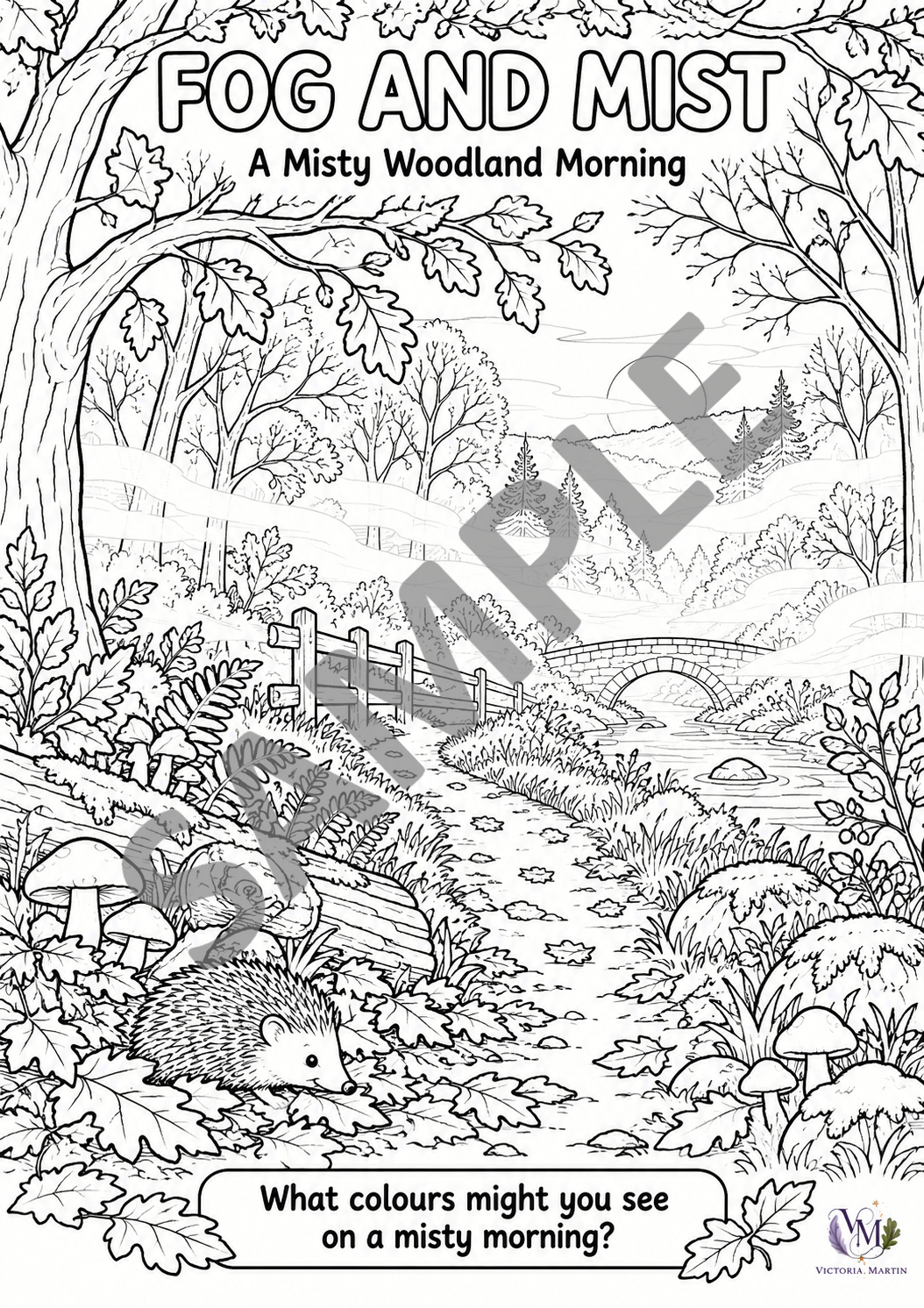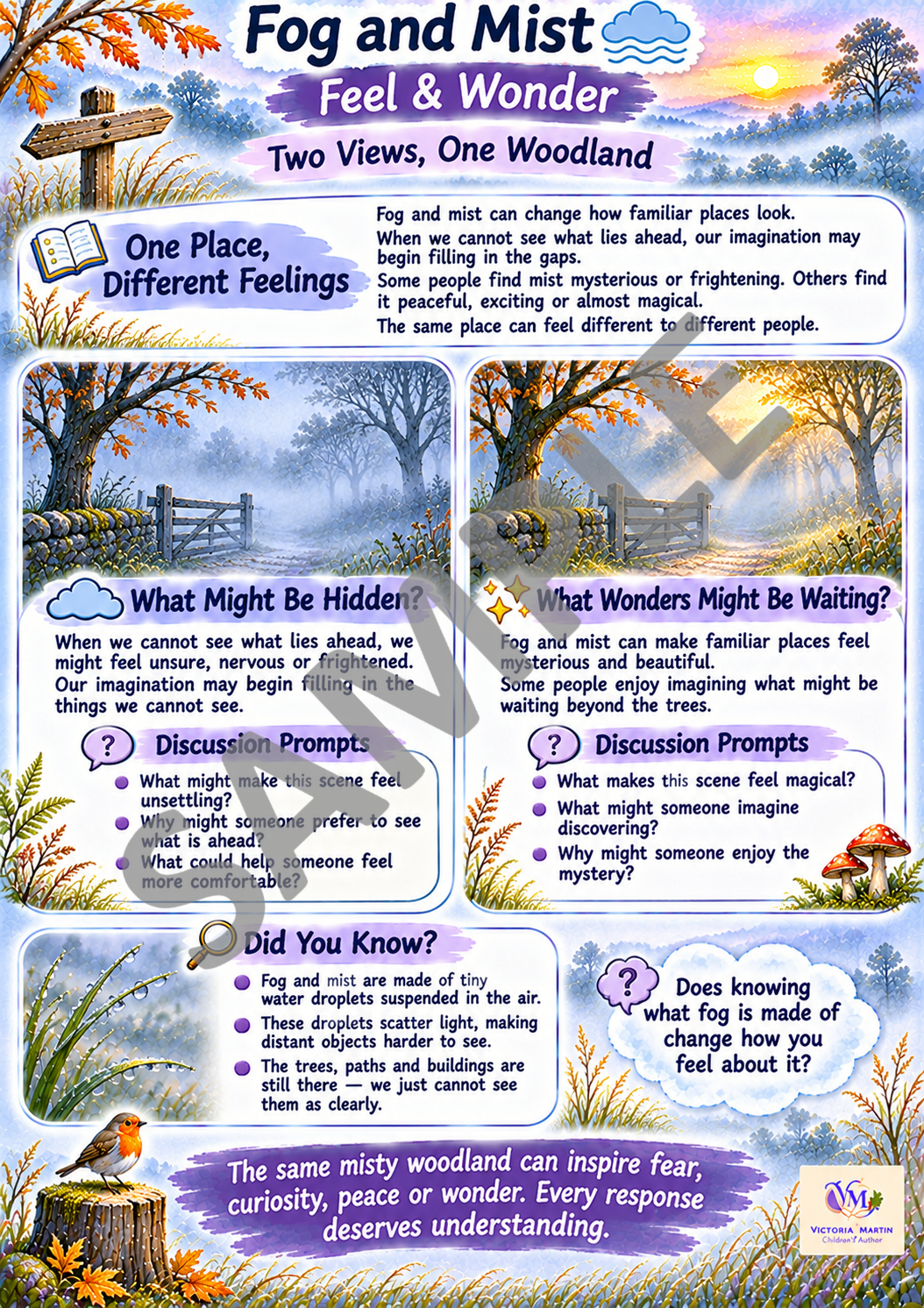
🌫️ Fog & Mist — Clouds Close to the Ground
Discover the Science Behind Britain's Misty Mornings
Have you ever looked outside to discover trees disappearing into grey air, fields covered in a pale white blanket or buildings hidden behind swirling mist?
These beautiful weather conditions are known as fog and mist, and they can transform familiar places into quiet, mysterious landscapes.
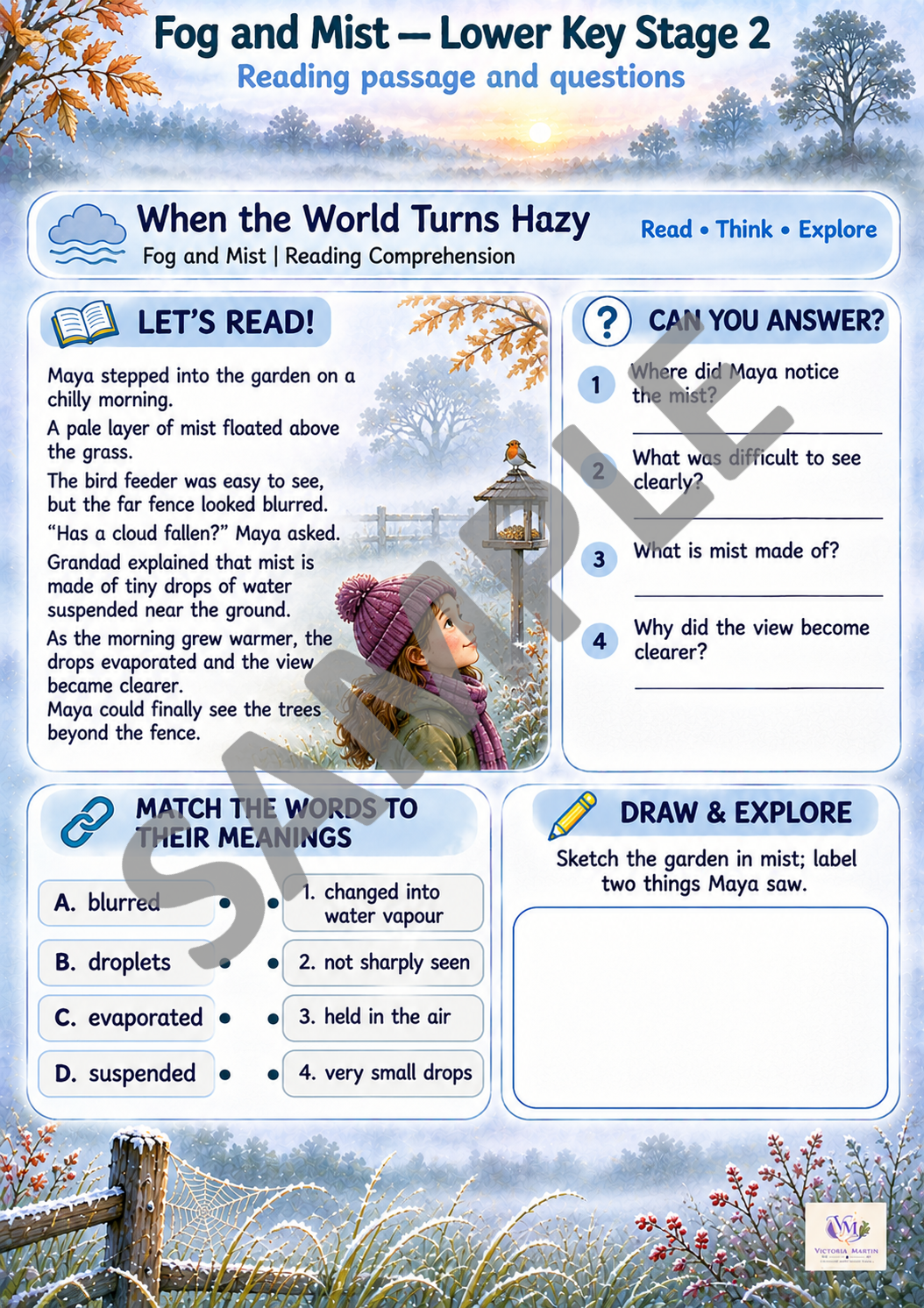
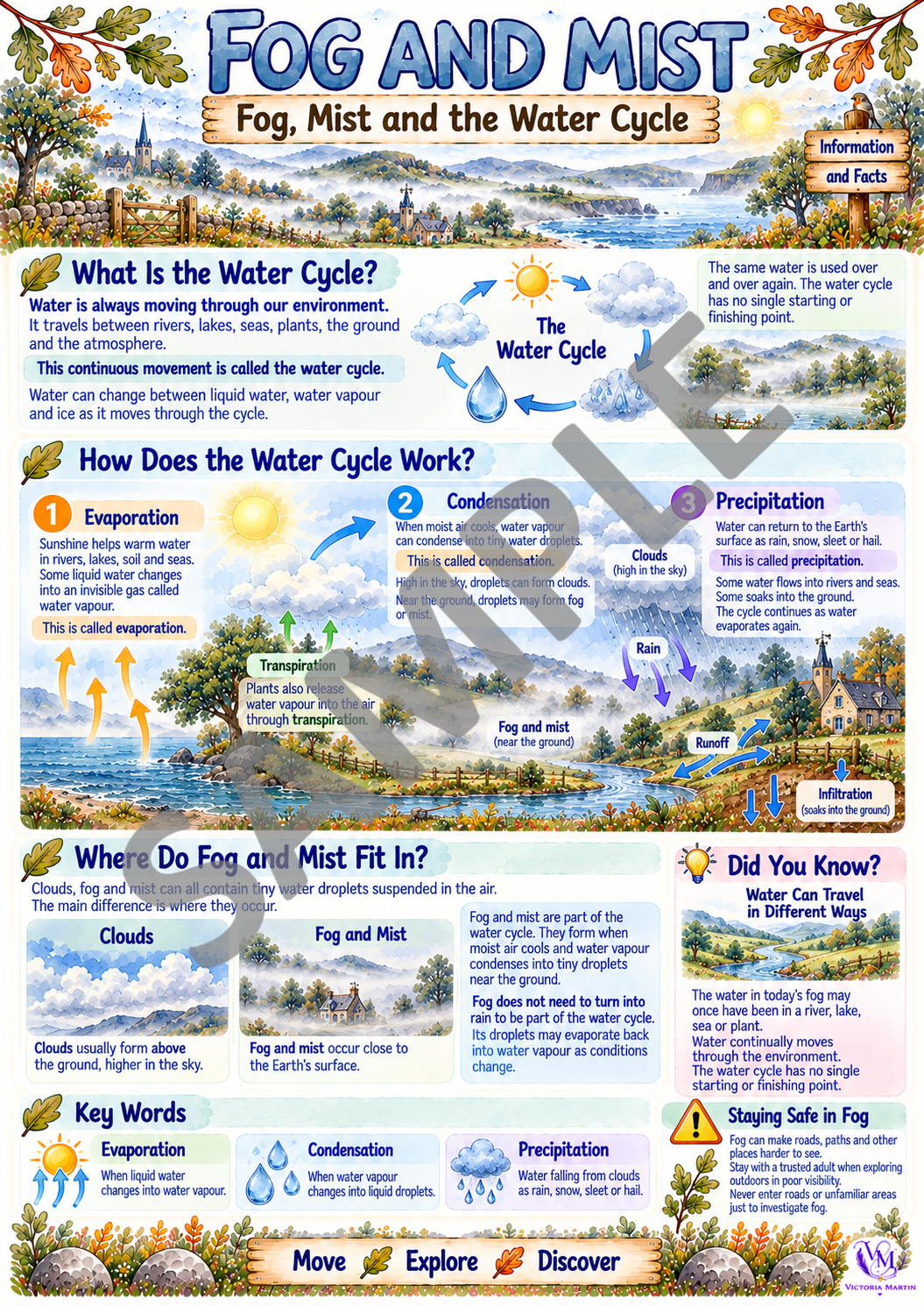
Although fog and mist may look different, they are both usually made from tiny water droplets, suspended in the air and close to the ground.
🌫️ What Are Fog and Mist?
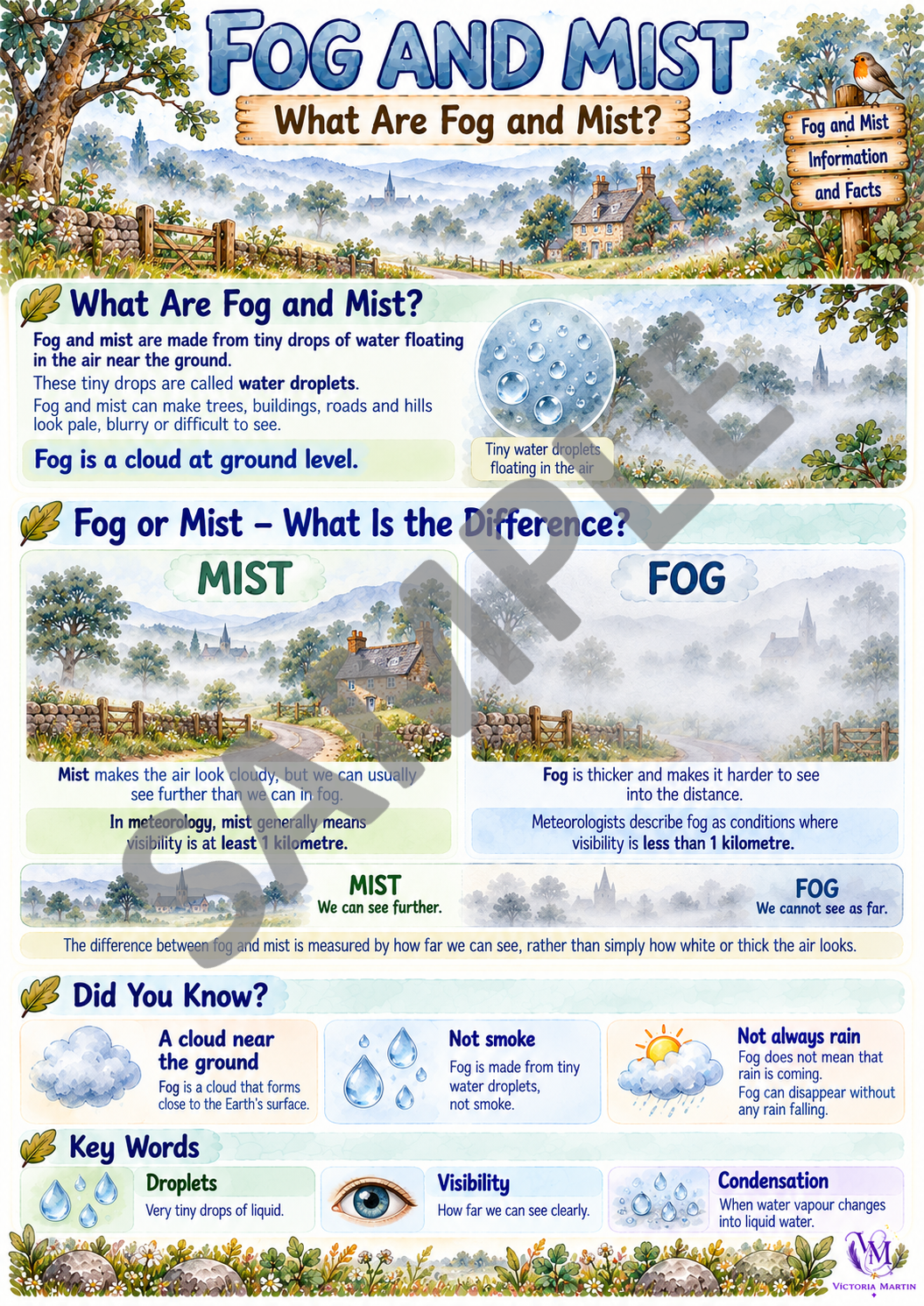
Fog and mist develop when tiny water droplets remain suspended in the air near the ground.
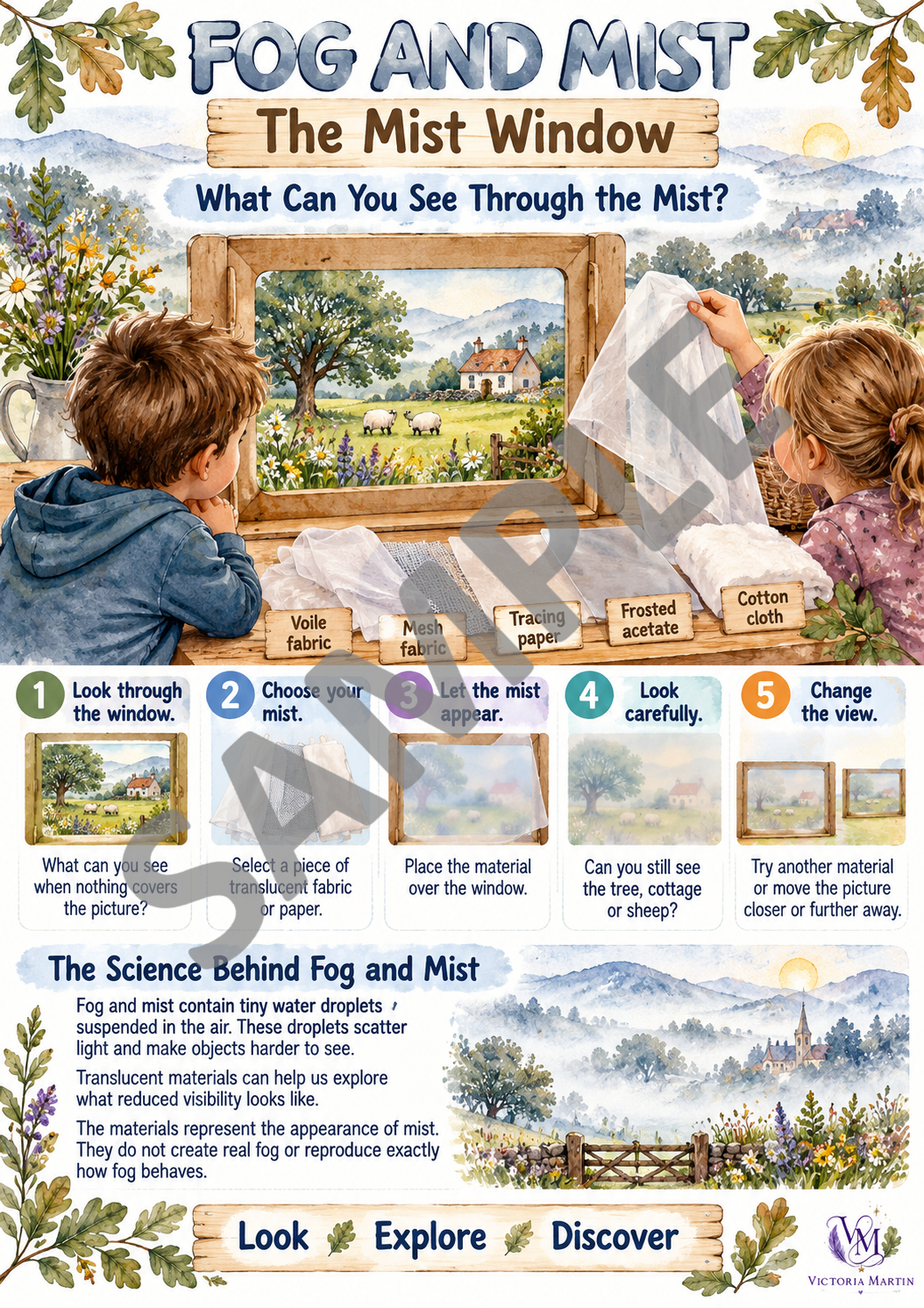
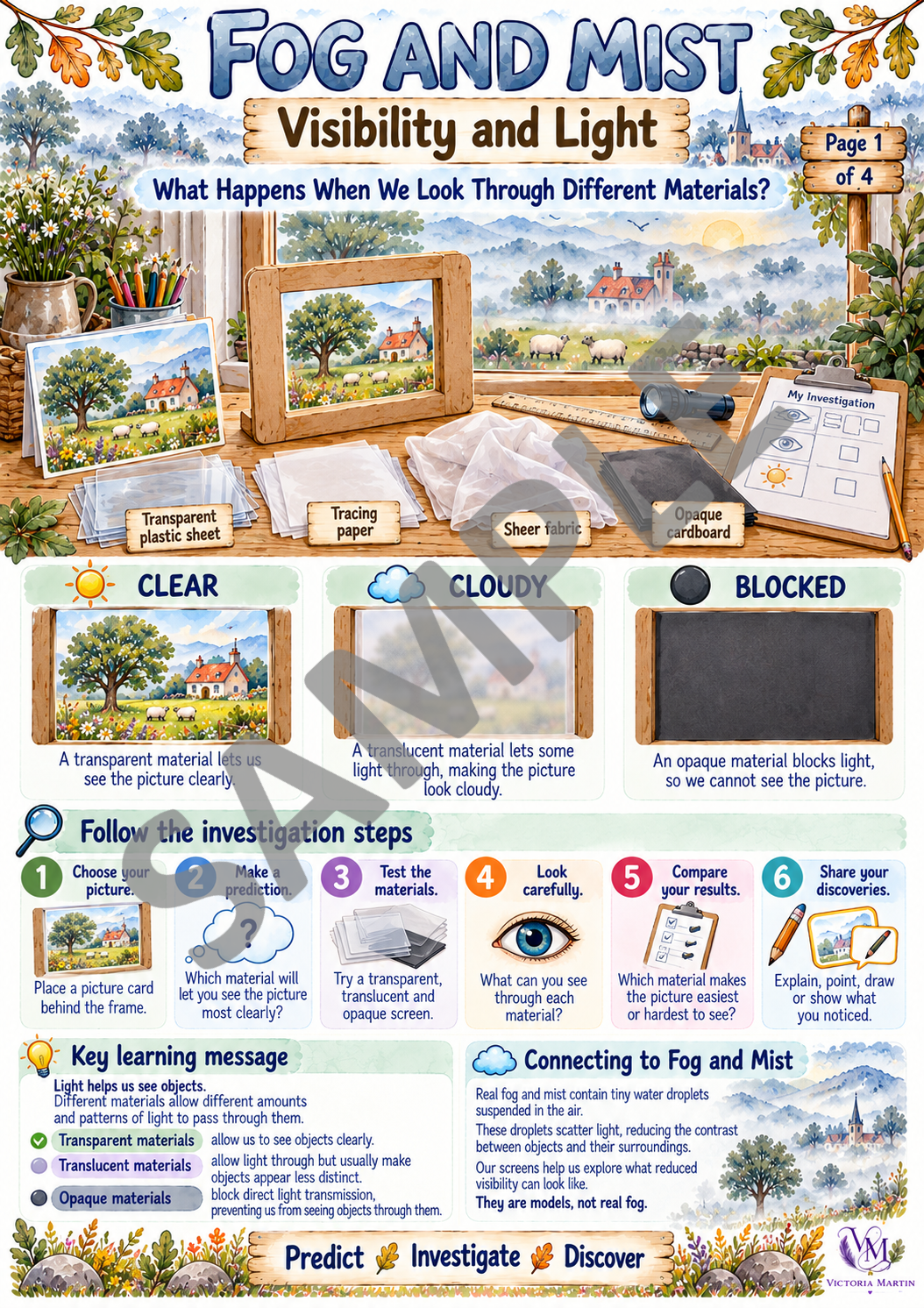
These droplets are usually too small to see individually, but together they create a cloudy appearance that makes distant objects harder to see.
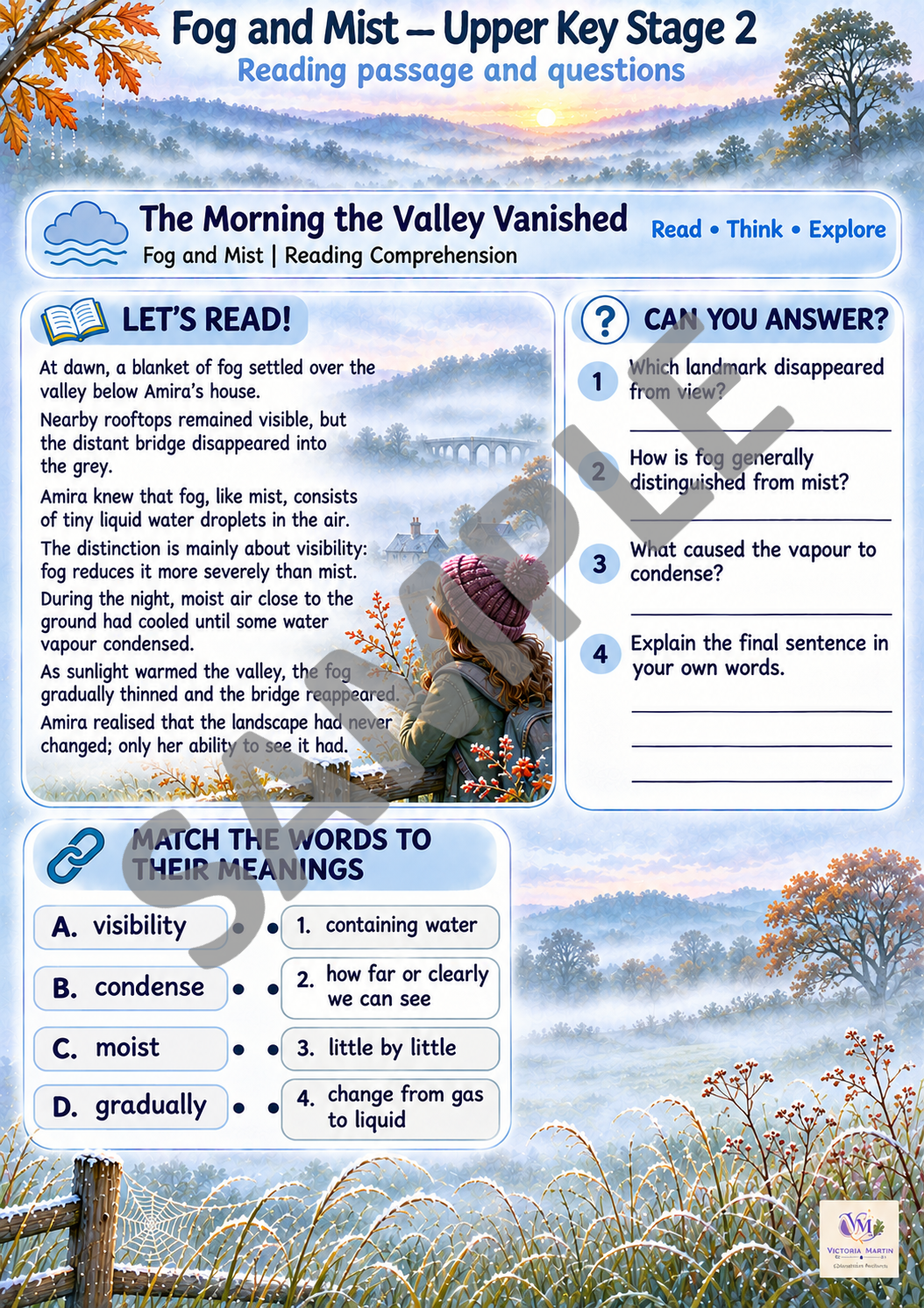
The main difference between fog and mist is how much they reduce visibility, or how far you can see.
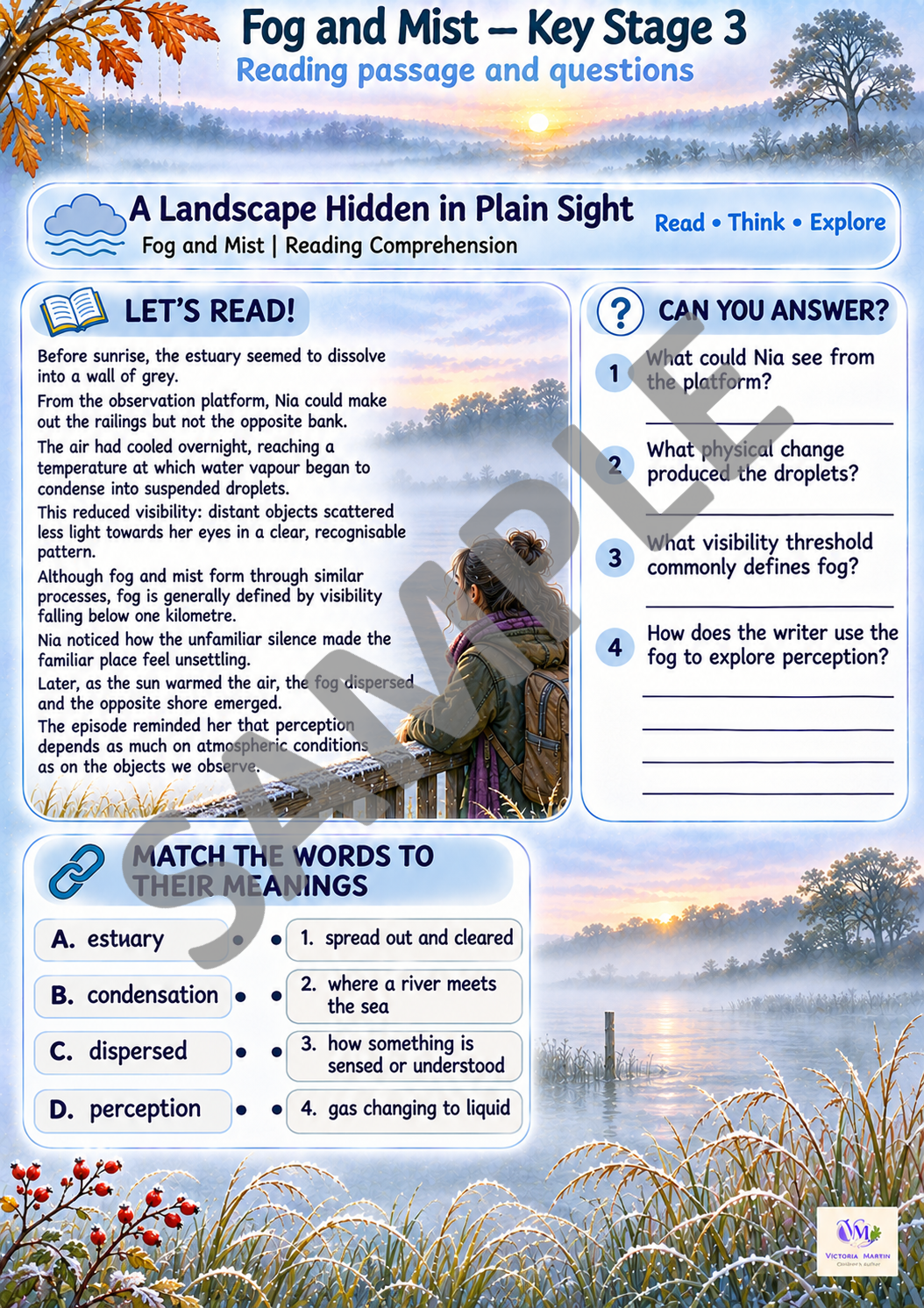
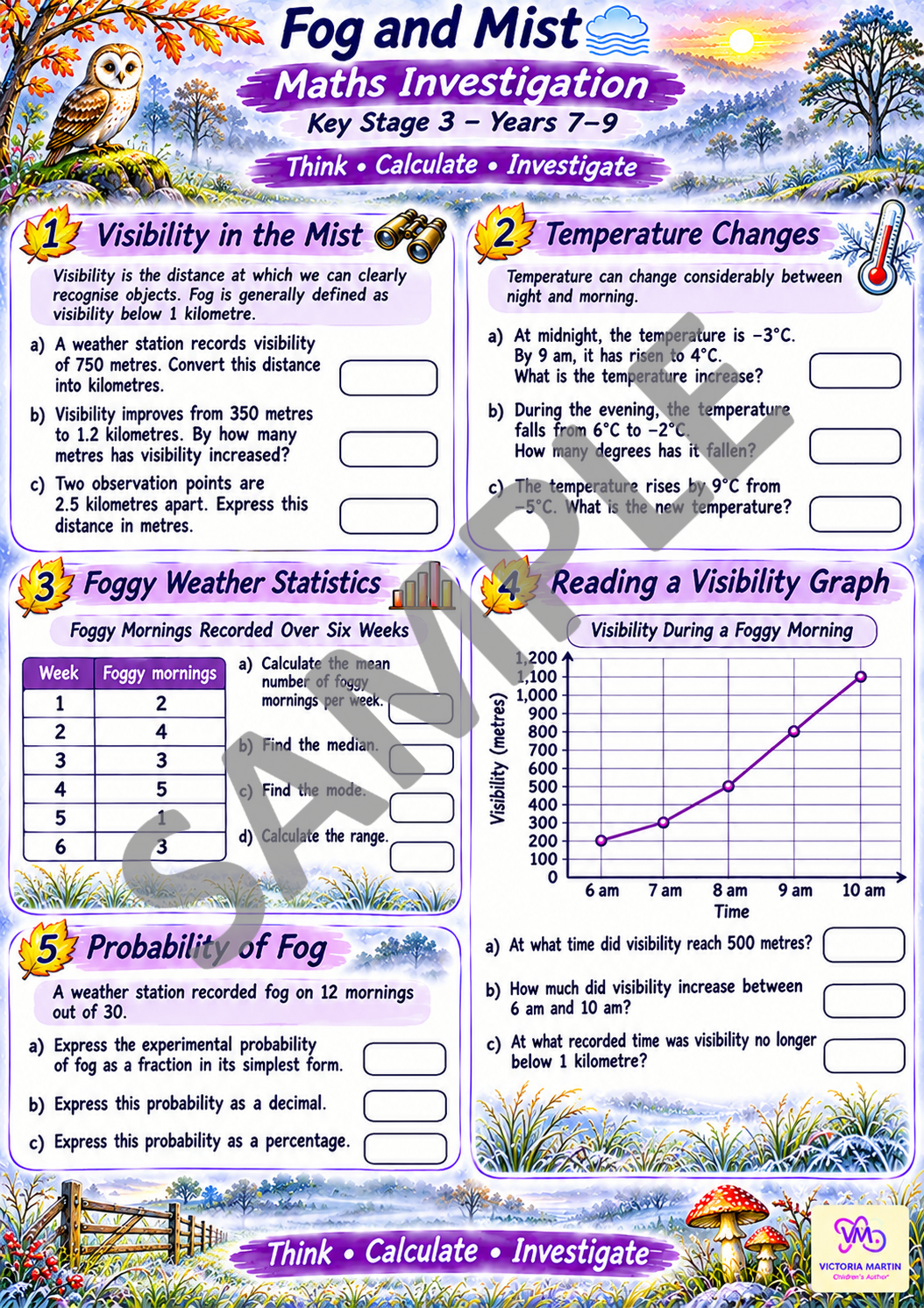
In the UK, weather observers generally describe conditions as fog when visibility falls below 1,000 metres.
When visibility is 1,000 metres or more, but the air is still noticeably obscured by tiny suspended droplets, the condition is usually described as mist.
Imagine looking towards a tree standing 1,000 metres away across a large, open field.
If tiny water droplets make it impossible to see the tree clearly, the conditions may be described as fog rather than mist, depending on the measured visibility.
Both conditions can make roads, fields and buildings appear blurred or partially hidden.
💧 How Do Fog and Mist Form?
Fog and mist often form when moist air cools, water vapour condenses and tiny droplets develop close to the ground.
Water vapour is an invisible gas that is naturally present in the air around us.
As moist air cools, it approaches a temperature called the dew point, when condensation becomes possible.
If conditions are suitable, invisible water vapour changes into tiny liquid droplets, often forming around microscopic particles in the air.
These particles can include dust, sea salt and other tiny airborne materials.
When enough droplets gather, they create the cloudy appearance we recognise as fog or mist.
However, fog does not always form through cooling alone, because additional moisture can also enter the air and encourage condensation.
For example, steam fog can develop when cold air passes over warmer water, allowing water vapour from the surface to mix with and condense in the cooler air.
🍂 Why Are Foggy Mornings Common in Autumn?
Autumn often brings cooler nights, longer periods of darkness and moist ground conditions across Britain.
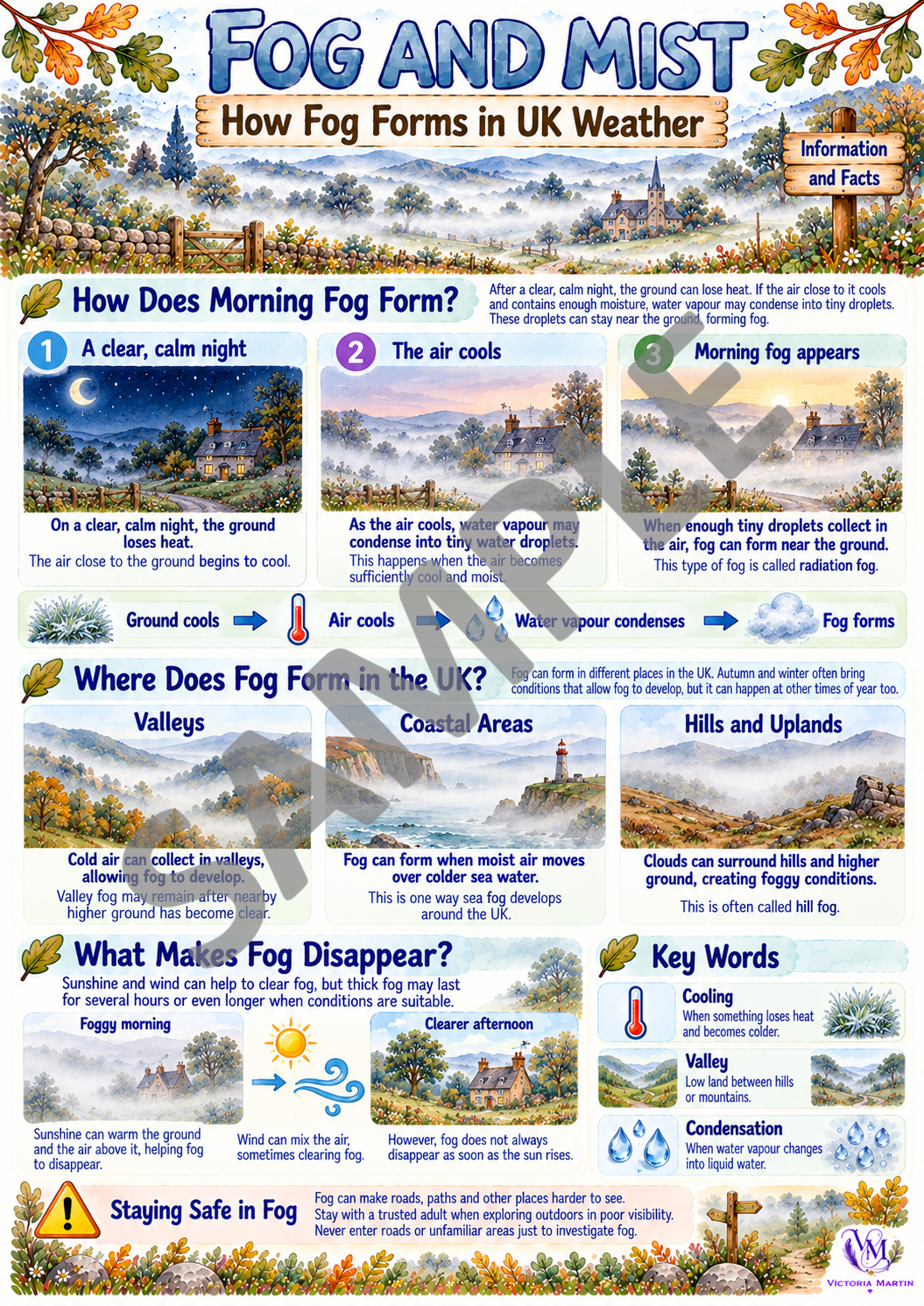
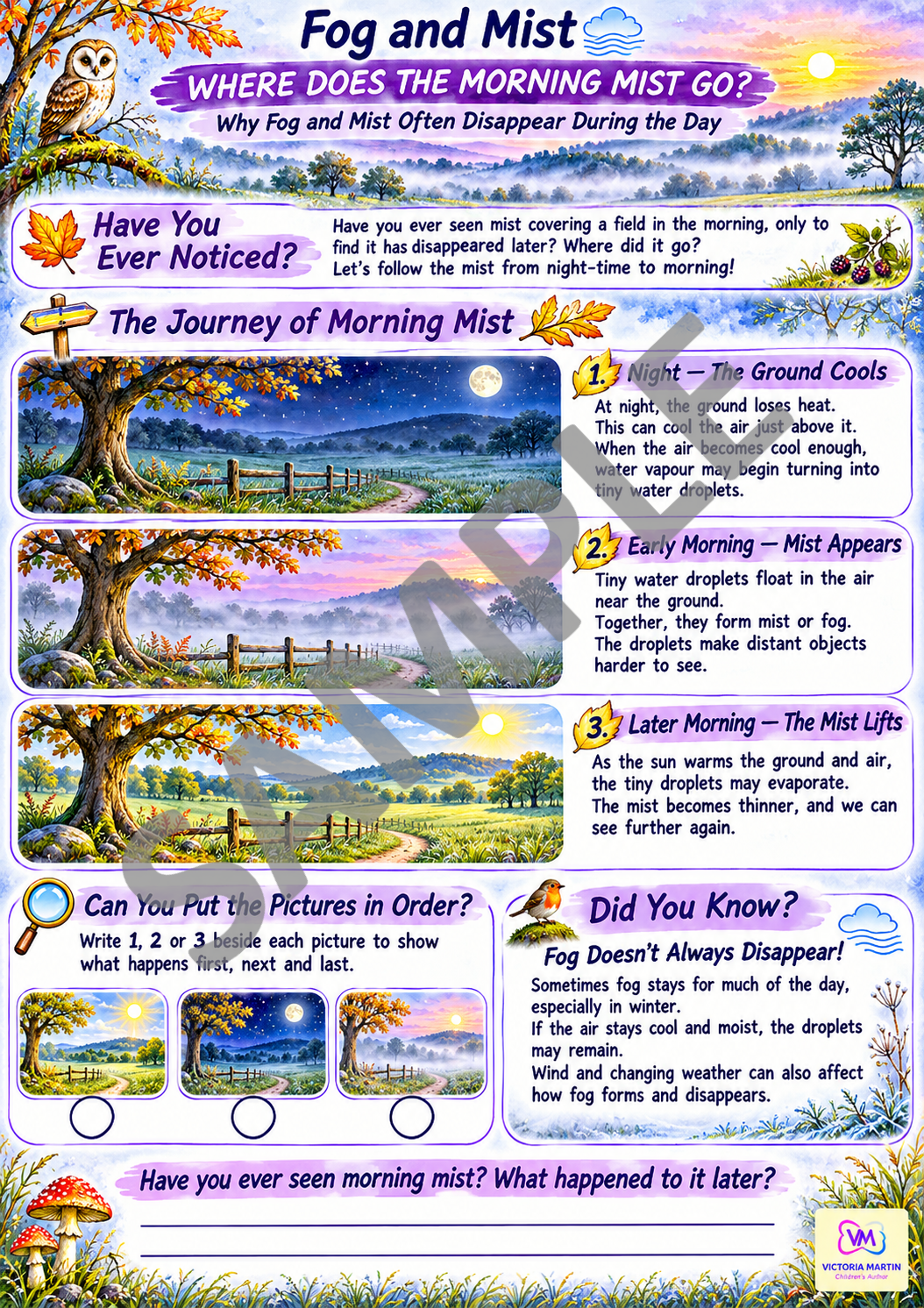
During clear nights, the ground loses heat, causing the air immediately above it to cool.
If the air contains enough moisture, this cooling can lead to condensation, mist formation and sometimes thick fog.
Fog is particularly likely when conditions are calm, humid and cool enough for water droplets to develop.
As the morning sun rises, the ground and surrounding air may warm gradually, causing fog to thin or disappear.
However, some fog can remain for many hours, throughout the day or even longer periods when conditions stay suitable.
🌁 Are There Different Types of Fog?
Although fog may look similar in different places, it can form through several different processes, depending on temperature, moisture and air movement.
🌙 Radiation Fog
Radiation fog often forms during clear, calm nights when the ground cools rapidly.
It is particularly common in autumn and winter, especially over fields, valleys and low-lying areas.
🌊 Advection Fog
Advection fog forms when warm, moist air moves across a colder surface, causing the air to cool and condense.
This type of fog can develop near coastlines, cool seas and other cold surfaces.
⛰️ Hill Fog
Hill fog occurs when low cloud surrounds hills, slopes or higher ground.
People walking through hill fog may find themselves inside a cloud, with reduced visibility and damp conditions.
🌿 Valley Fog
Valley fog can develop when cool, moist air collects in low-lying valleys during calm conditions.
It may appear as a white blanket, filling the valley floor while higher ground remains clear.
❄️ Freezing Fog
Freezing fog occurs when tiny water droplets remain liquid in air below 0°C.
These droplets are called supercooled water droplets, meaning they remain liquid despite temperatures below freezing.
When the droplets touch sufficiently cold surfaces, they can freeze into ice, sometimes creating white, feathery deposits called rime.
Although freezing fog can create beautiful winter scenery, it may also cause slippery surfaces and hazardous travelling conditions.
☁️ Is Fog the Same as a Cloud?
Fog is essentially a cloud at ground level, made from tiny suspended water droplets or, occasionally, ice crystals.
The main difference is that most clouds form higher in the atmosphere, while fog develops close to the ground.
Both clouds and fog form through processes involving moisture, cooling and condensation.
This means that walking through thick fog can feel like walking through a cloud, surrounded by tiny floating droplets.
Sometimes, fog fills a valley while nearby hills remain above it, creating the appearance of a white sea beneath the landscape.
🌳 How Does Fog Affect Plants and Wildlife?
Fog can influence plants, animals and local habitats, particularly during cooler seasons.
Tiny water droplets may collect on leaves, spiderwebs and other surfaces, creating visible beads of moisture.
In some environments, fog droplets can collect on leaves and other surfaces, providing small amounts of additional moisture.
The importance of this moisture varies depending on local weather, plant species and habitat conditions.
Fog may also reduce visibility, making it more difficult for some animals to spot movement or detect distant objects.
Many animals rely on hearing, smell and other senses, which can help them navigate when visibility is reduced.
However, fog does not affect every animal in the same way, and different species have different adaptations for changing weather conditions.
🕸️ Why Do Spiderwebs Look Beautiful in Fog?
On misty mornings, you might notice spiderwebs covered in droplets, tiny beads of water and delicate sparkling patterns.
This happens when water condenses onto silk strands or fog droplets collect on the web.
The droplets make the normally thin, difficult-to-see threads appear much more visible.
Spiderwebs can reveal intricate shapes, carefully arranged strands and fascinating natural patterns when covered in moisture.
🚗 Why Can Fog Be Dangerous?
Fog can make it difficult to see roads, vehicles and people until they are much closer than usual.
When visibility is reduced, drivers may have less time to react, judge distances or notice hazards.
In the UK, drivers must use their headlights when visibility is seriously reduced, generally when they cannot see more than 100 metres ahead.
Front and rear fog lights may be used when visibility is seriously reduced, but they must be switched off when visibility improves to avoid dazzling other road users.
Drivers should also reduce their speed, leave extra space between vehicles and make sure they can stop safely within the distance they can see.
The 1,000-metre definition of fog is different from the approximately 100-metre threshold used for seriously reduced visibility in road safety guidance.
This means drivers can experience meteorological fog without conditions necessarily being severe enough to justify using fog lights.
Pedestrians and cyclists should also take extra care, particularly near roads, crossings and poorly lit areas.
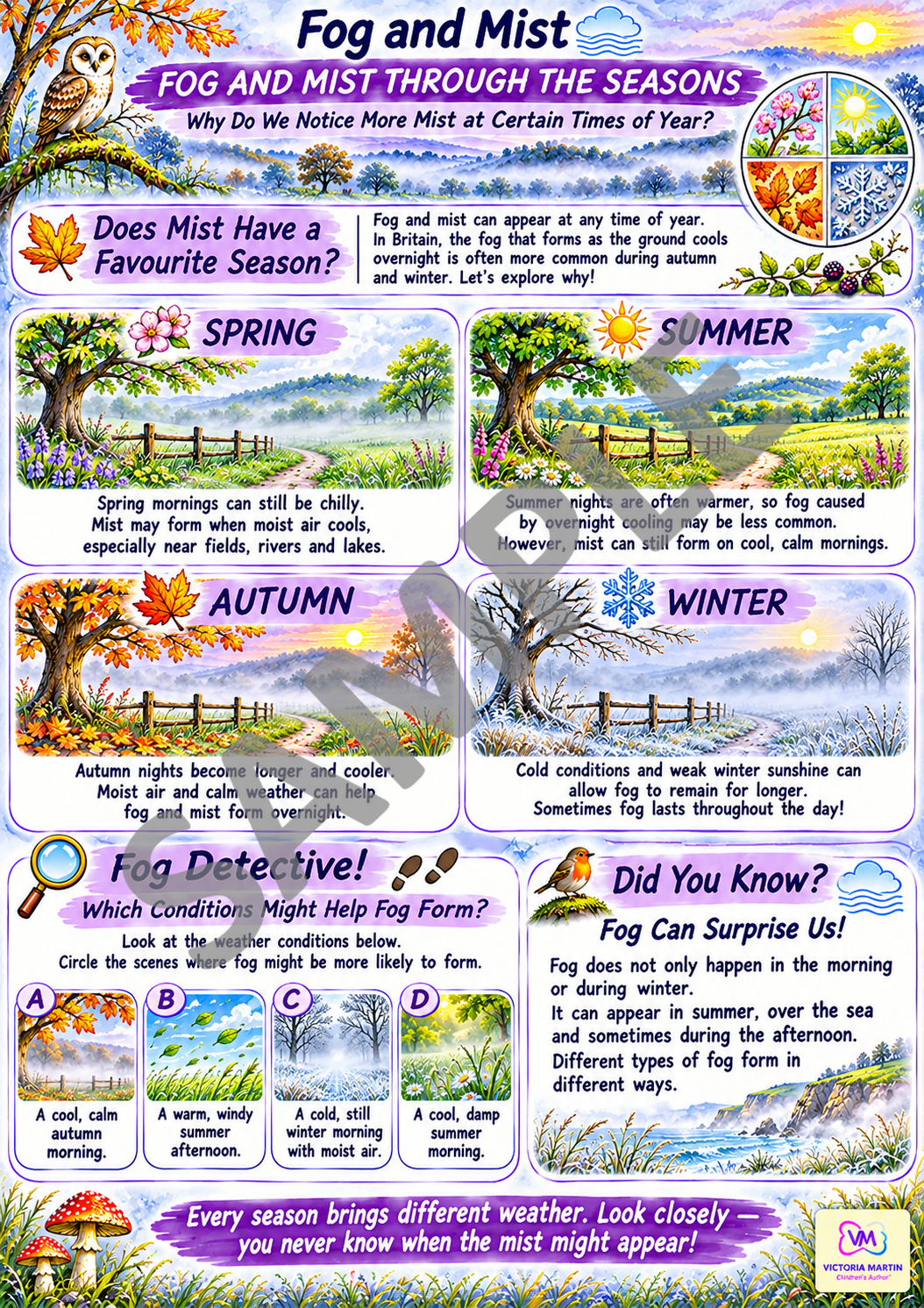
❄️ Fog and Mist Through the Seasons
Spring: Fog may form during cool mornings, particularly when moist air settles over fields and valleys.
Summer: Coastal fog can develop when warm, moist air moves across cooler sea surfaces.
Autumn: Longer nights, cooling ground temperatures and moist conditions can encourage misty mornings and radiation fog.
Winter: Fog may persist during cold, calm conditions, while freezing fog can develop when temperatures fall below 0°C.
✨ Did You Know?
Fog and mist are both usually made from tiny water droplets, but fog reduces visibility more severely.
A thick layer of fog can form when the air near the ground becomes cool enough for condensation.
Some fog forms when warm, moist air travels across cold land or sea surfaces.
Freezing fog can contain supercooled water droplets that freeze when they touch sufficiently cold surfaces.
Fog can make ordinary landscapes appear completely different, even though the trees and buildings have not moved.
The tiny droplets in fog can collect on spiderwebs, leaves and grass, creating beautiful patterns of moisture.
🌫️ Look, Notice and Explore!
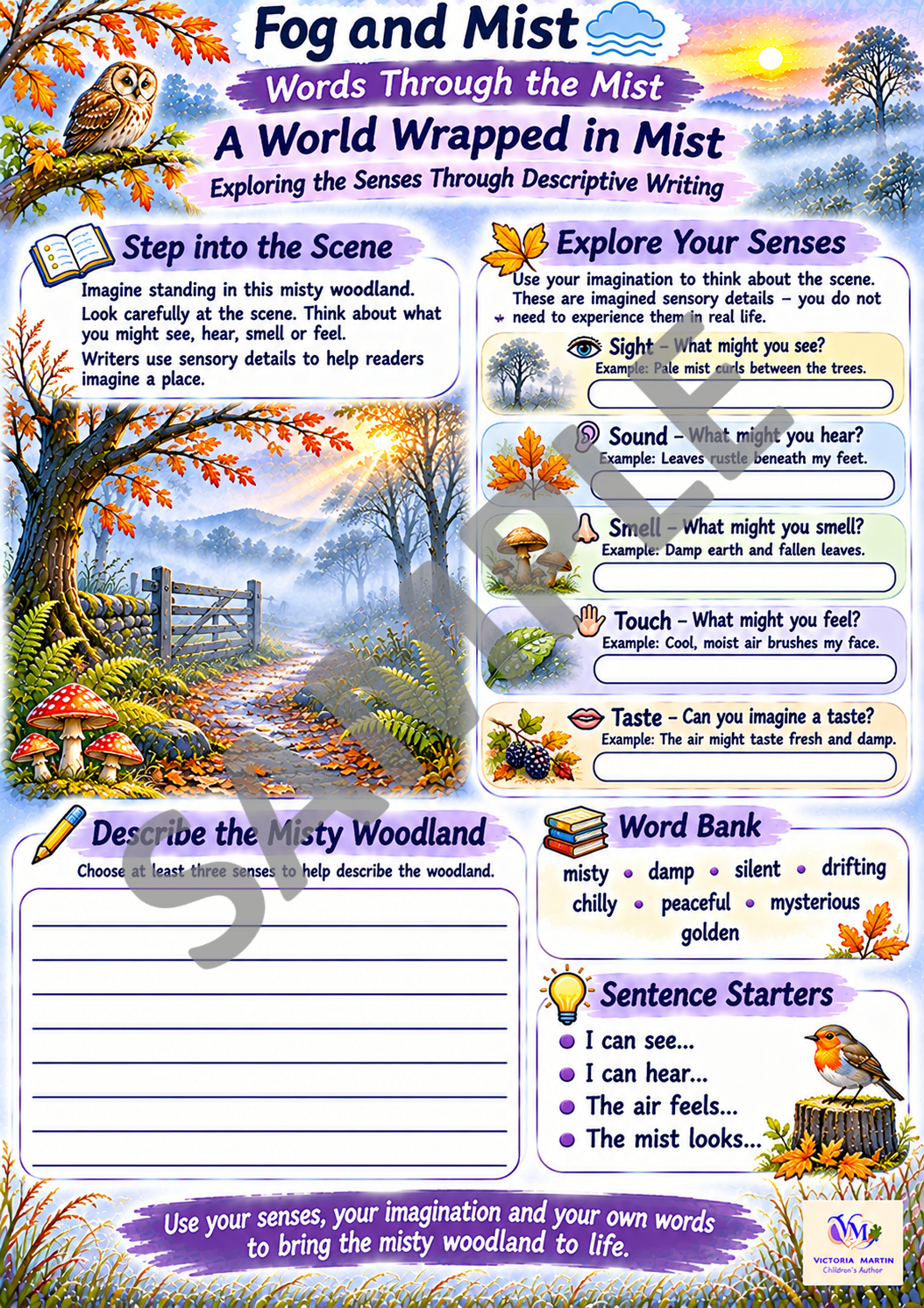
Next time you wake up to a foggy morning, misty garden or cloud-covered landscape, take a moment to observe the weather.
Can you see distant trees disappearing, tiny droplets on leaves or spiderwebs sparkling with moisture?
Notice whether the fog becomes thinner, thicker or moves across the landscape as the morning continues.
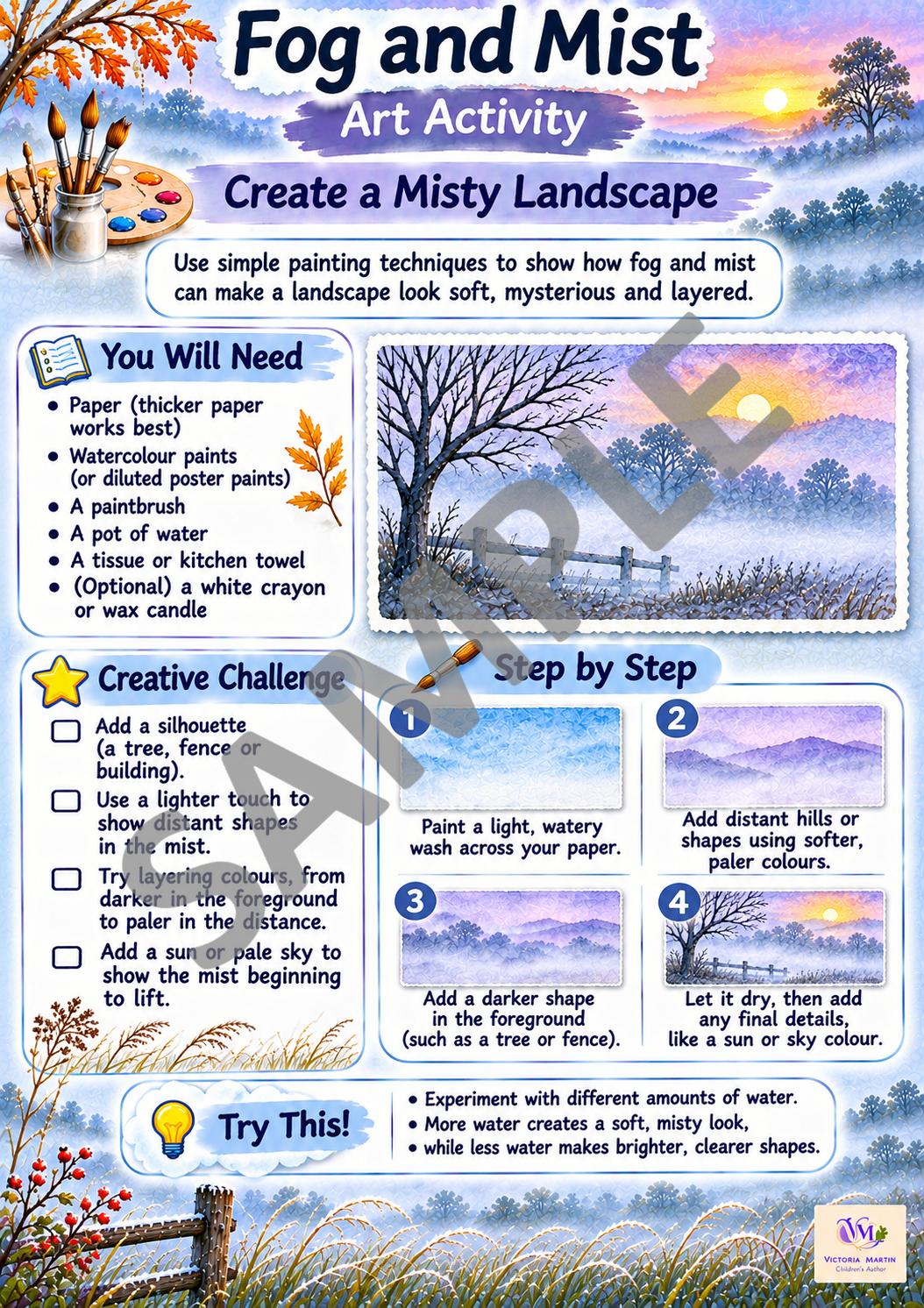
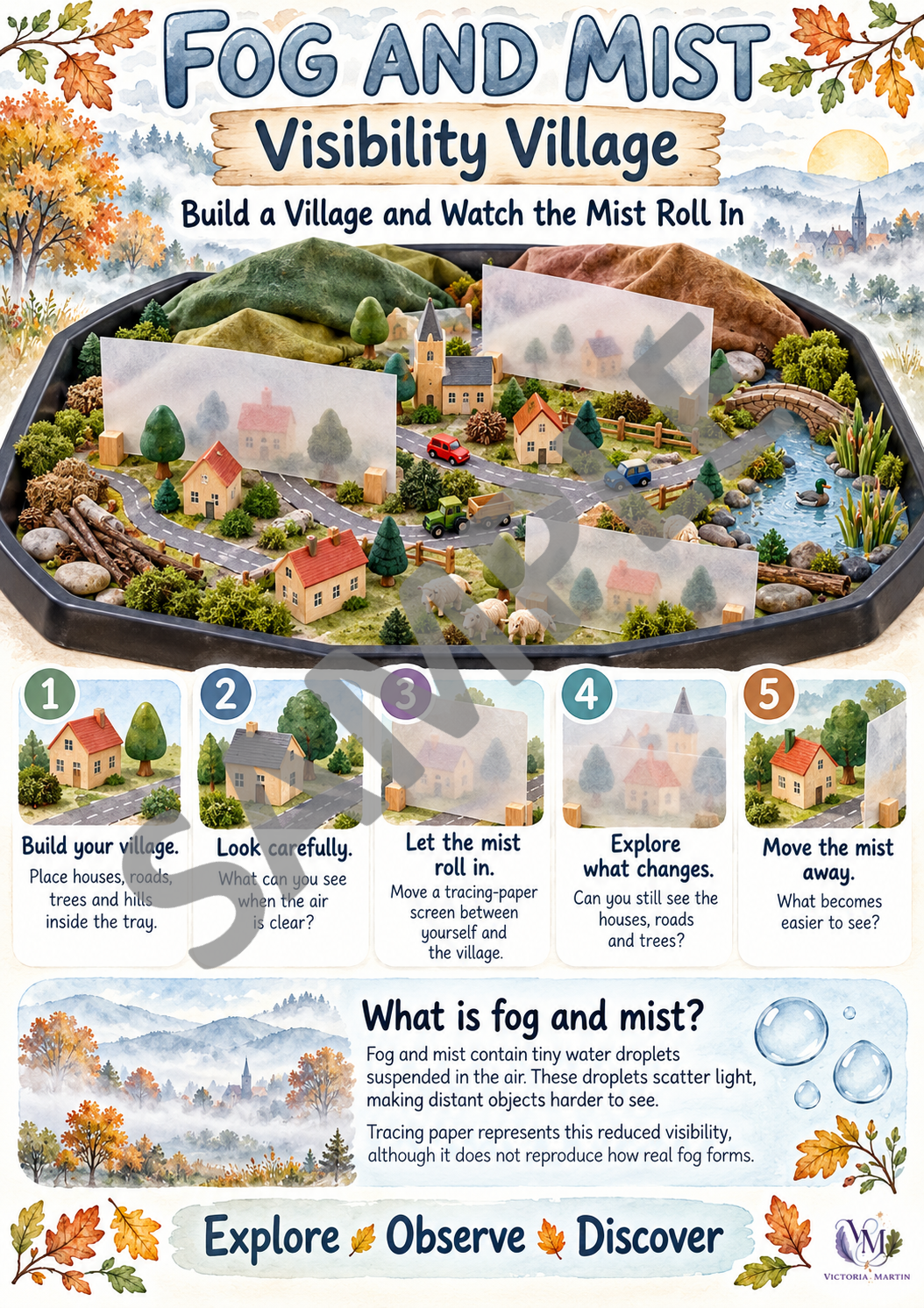
You could create a foggy landscape painting, explore condensation using a supervised experiment or record daily weather observations.
Remember to stay somewhere safe, keep away from roads and remain with a trusted adult when exploring foggy conditions.
Nature is full of fascinating changes, and even a quiet, misty morning can reveal wonderful scientific discoveries!