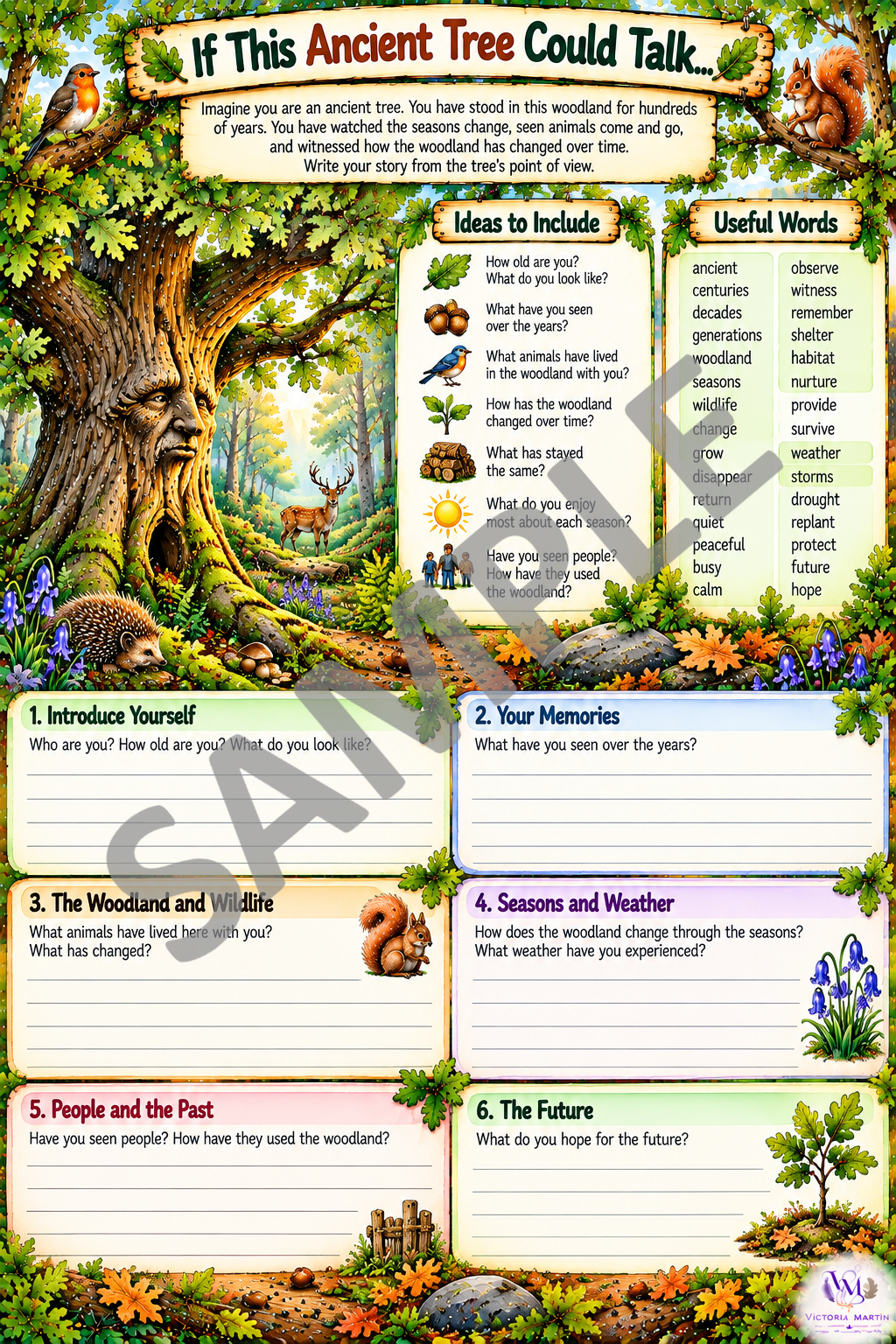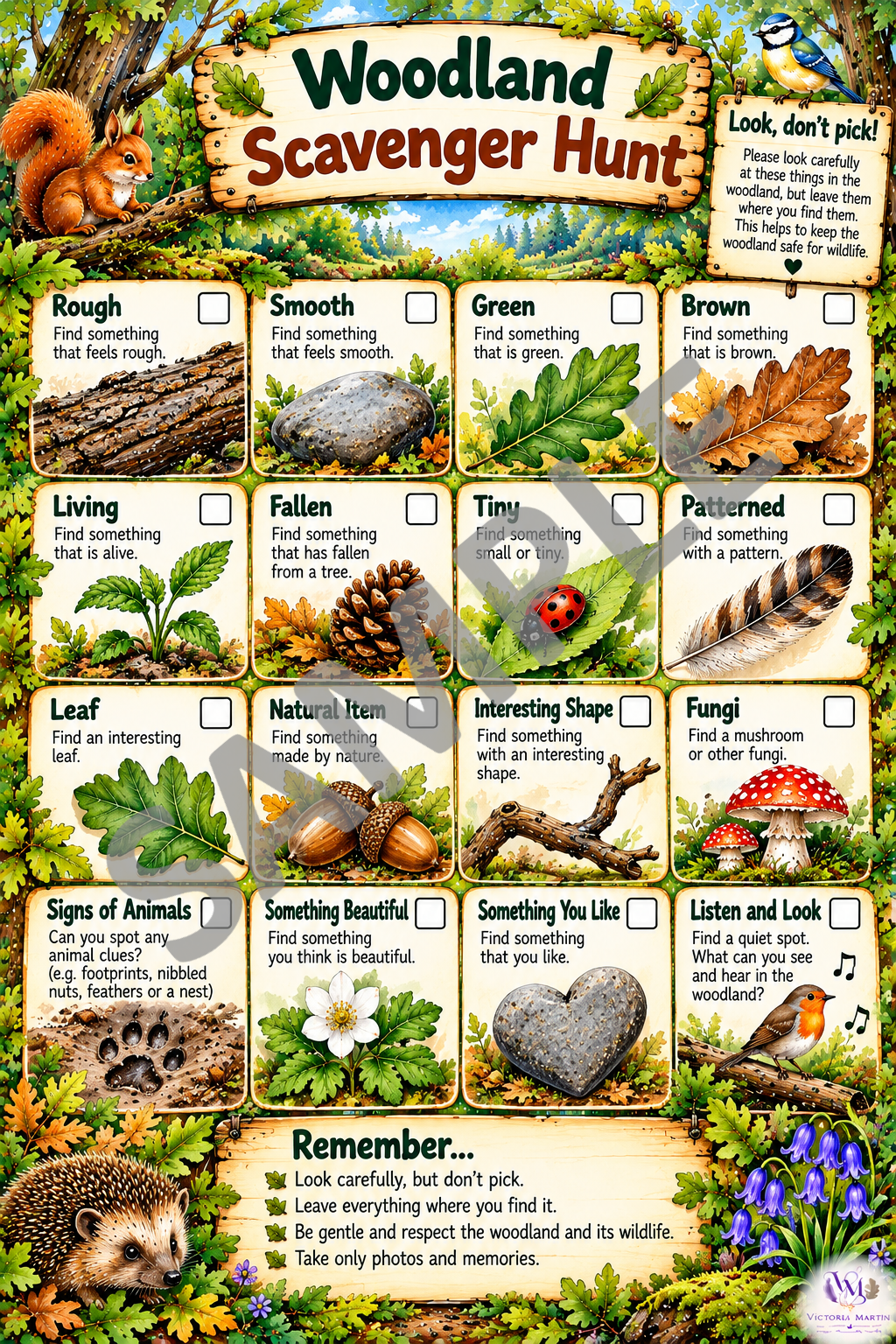
Forests & Woodlands
Discover the Fascinating World of British Woodland Habitats
Forests and woodlands are some of Britain's most important natural environments, providing homes for wildlife and supporting fascinating ecosystems.
From towering trees and colourful woodland plants to tiny fungi growing beneath fallen leaves, there's an incredible world waiting to be discovered.
🌲 What's the Difference Between a Forest and a Woodland?
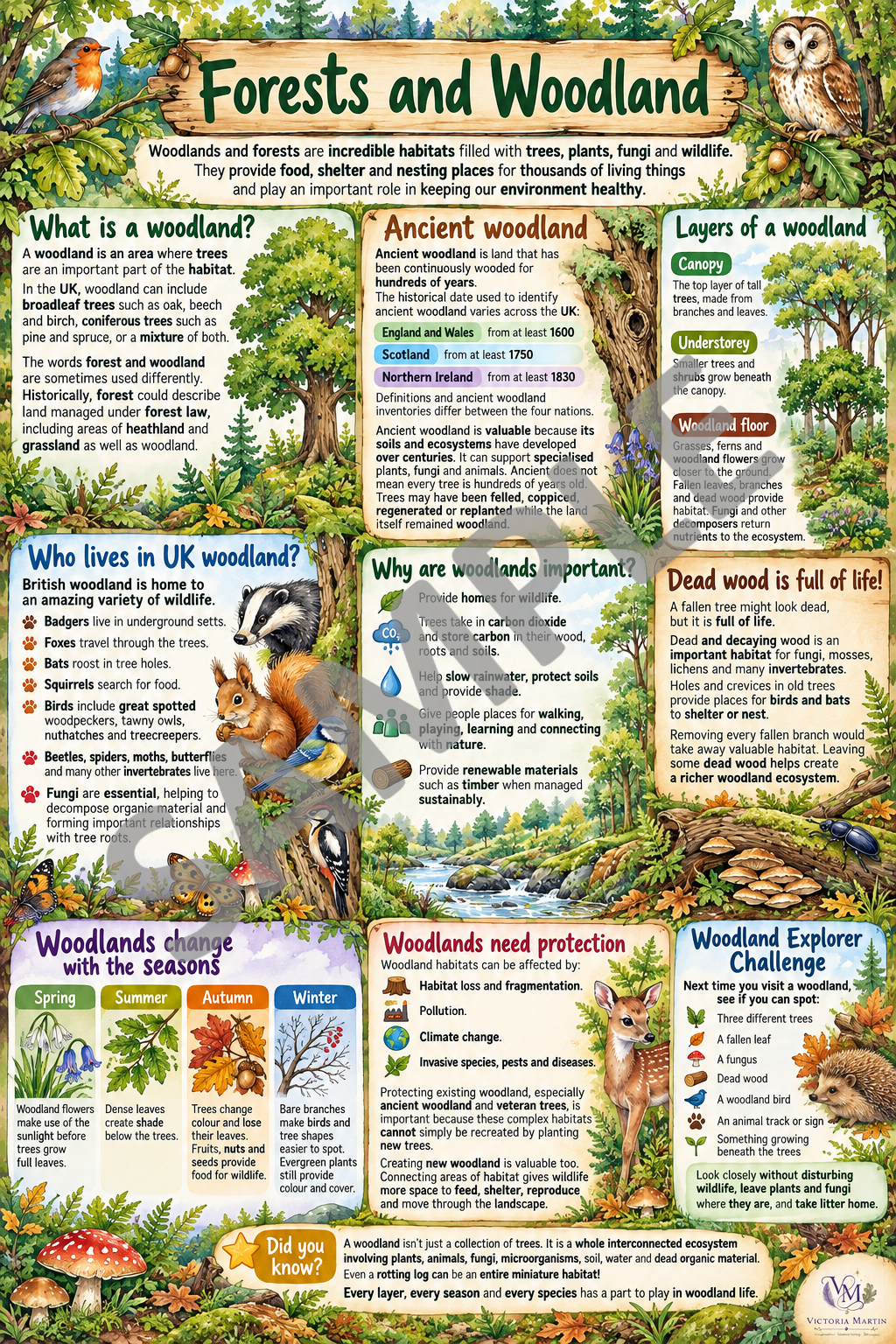
The words forest and woodland are often used to describe areas of land where trees grow together.
A woodland may contain trees with open spaces between them, allowing sunlight to reach the ground.
A forest is generally thought of as a larger wooded area, although the exact definitions can vary.
There isn't one universal rule separating forests from woodlands, and the terms can have different meanings depending on location and land use.
Interestingly, Britain's historic royal forests weren't necessarily completely covered in trees. They could include woodland, open grassland and heathland.
🌳 Types of British Woodland
Britain has several different types of woodland, each supporting a variety of plants and wildlife.
🌳 Broadleaved woodland: Contains trees such as oak, beech, ash and birch. Many lose their leaves during autumn.
🌲 Coniferous woodland: Contains trees such as pine, spruce and fir. Many remain green throughout the year.
🌿 Mixed woodland: Contains both broadleaved and coniferous trees, creating a variety of woodland habitats.
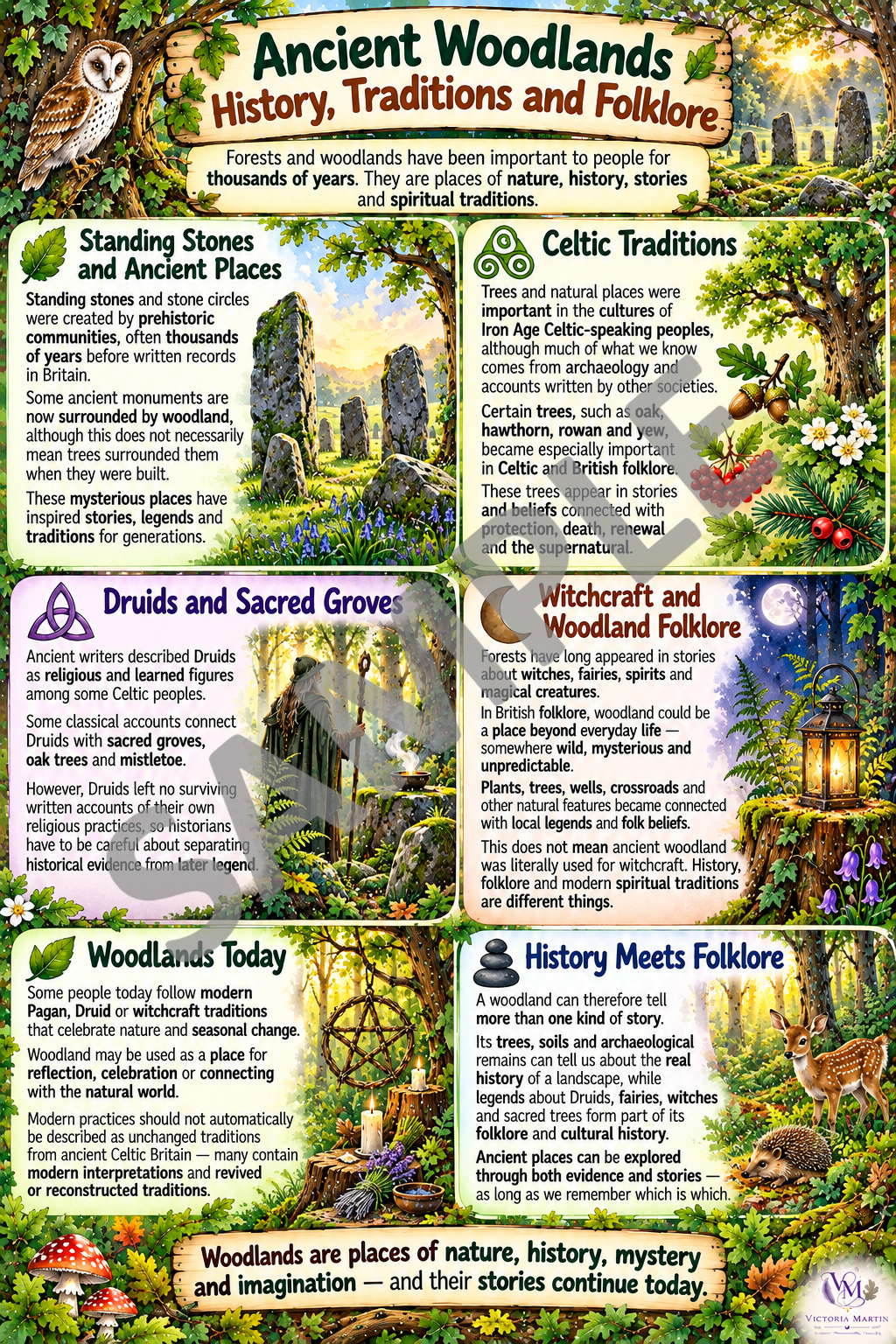
🌳 Ancient woodland: Land that has remained continuously wooded since at least 1600 in England and Wales.
Ancient woodland doesn't mean every tree is hundreds of years old. Instead, it means the woodland habitat itself has existed for centuries.
🦊 Who Lives in British Woodlands?
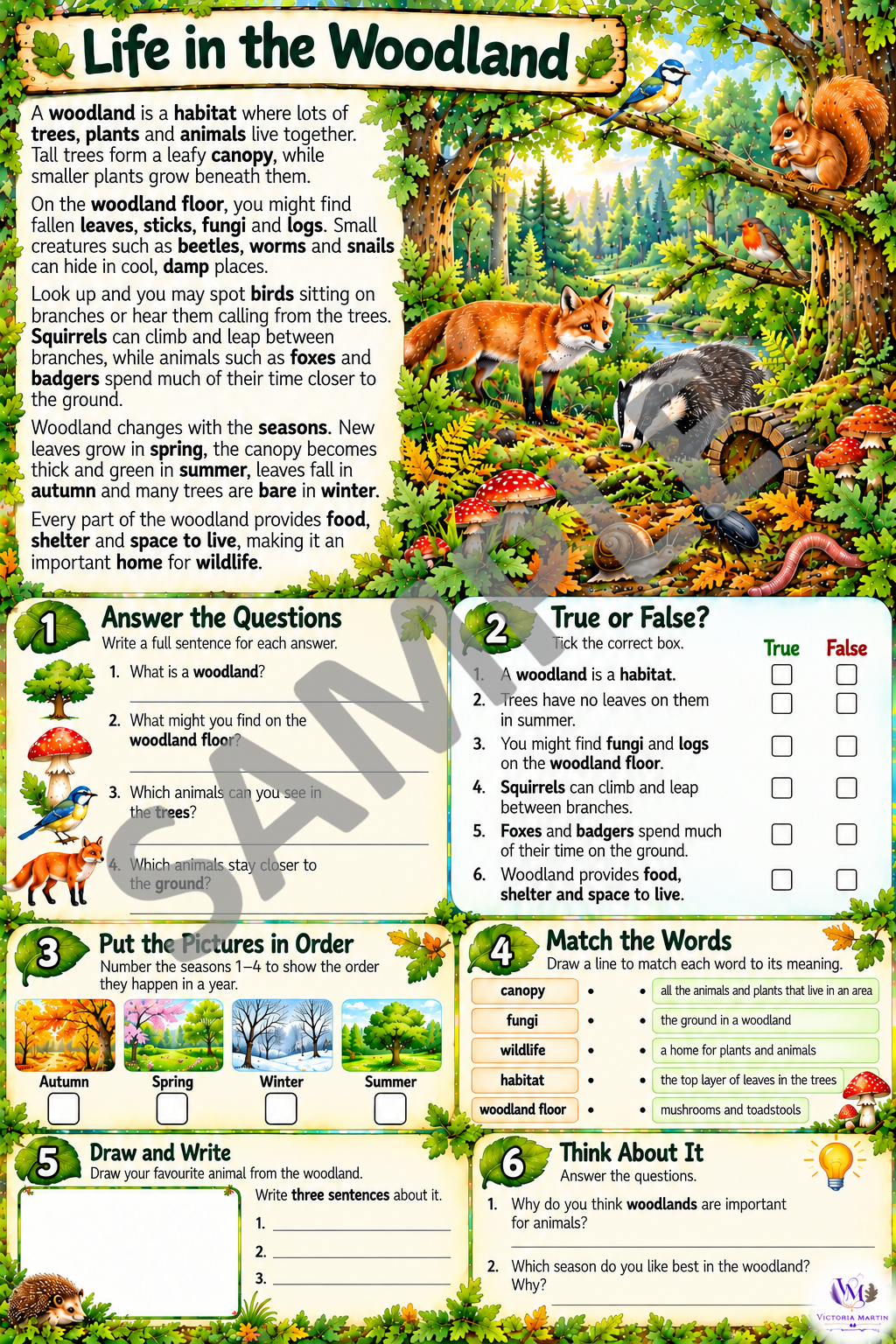
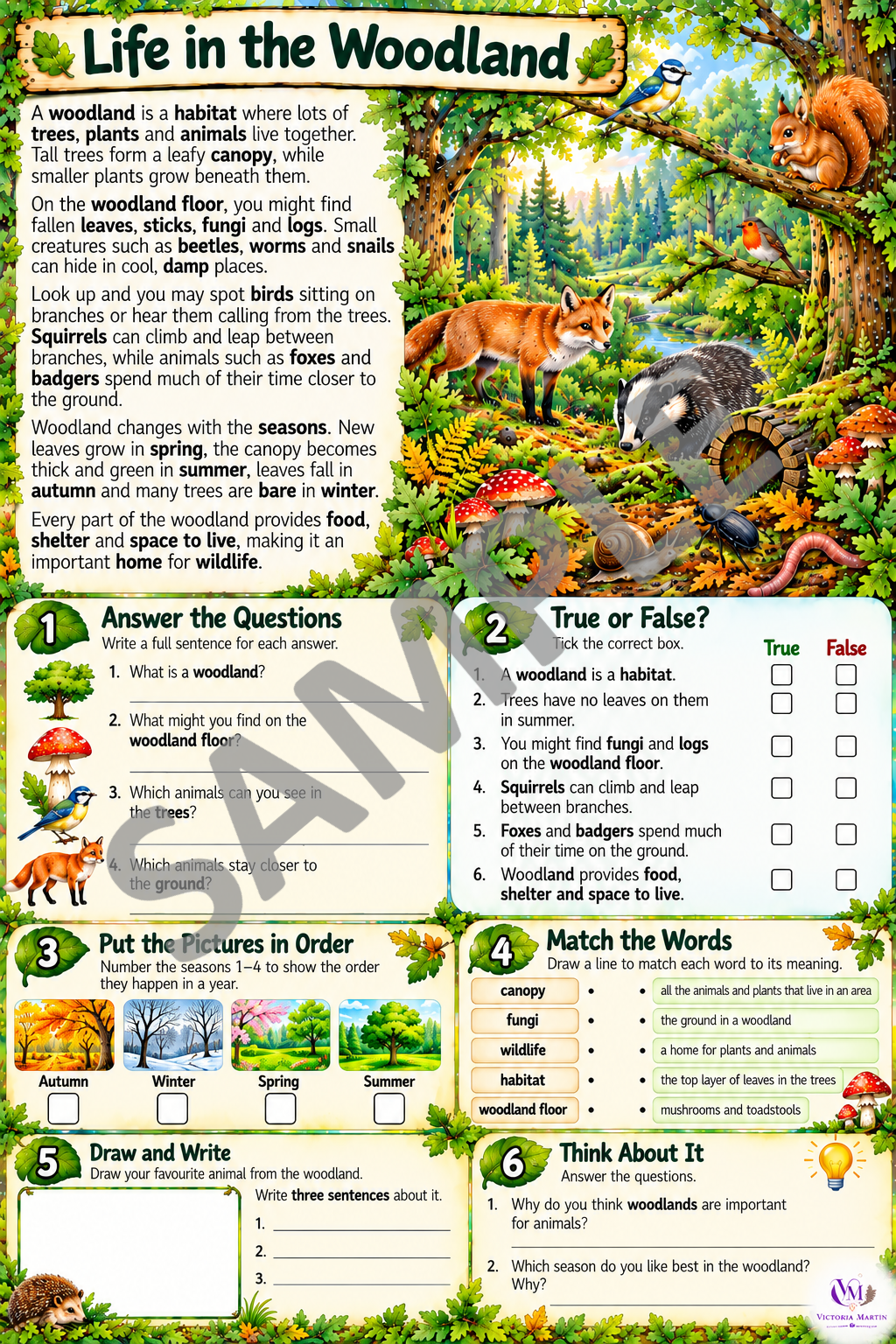
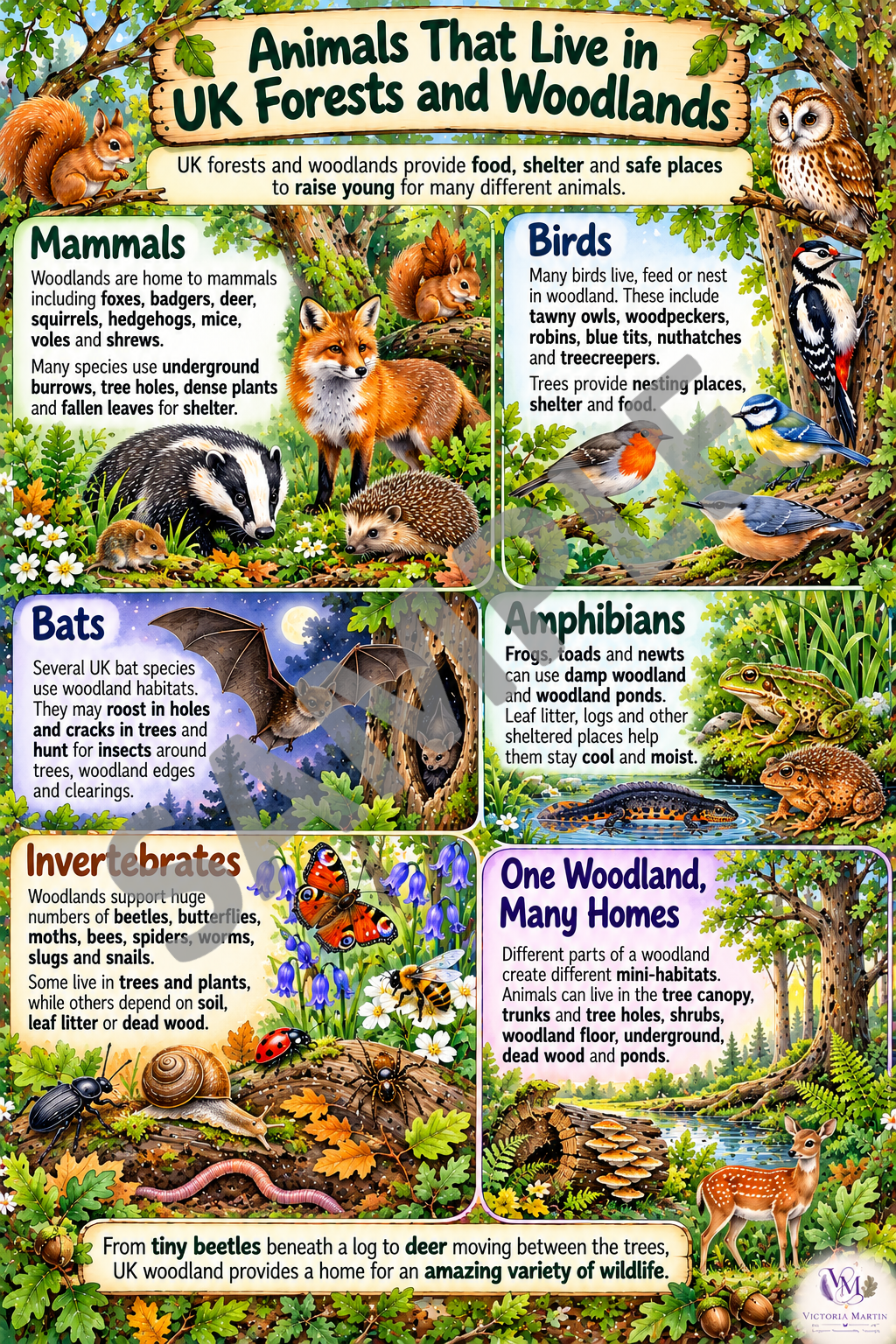
Woodlands provide food, shelter and breeding habitats for many different animals.
You might discover:
🦊 Foxes – Often resting in sheltered places before becoming more active around dusk.
🦡 Badgers – Living in underground tunnel systems called setts.
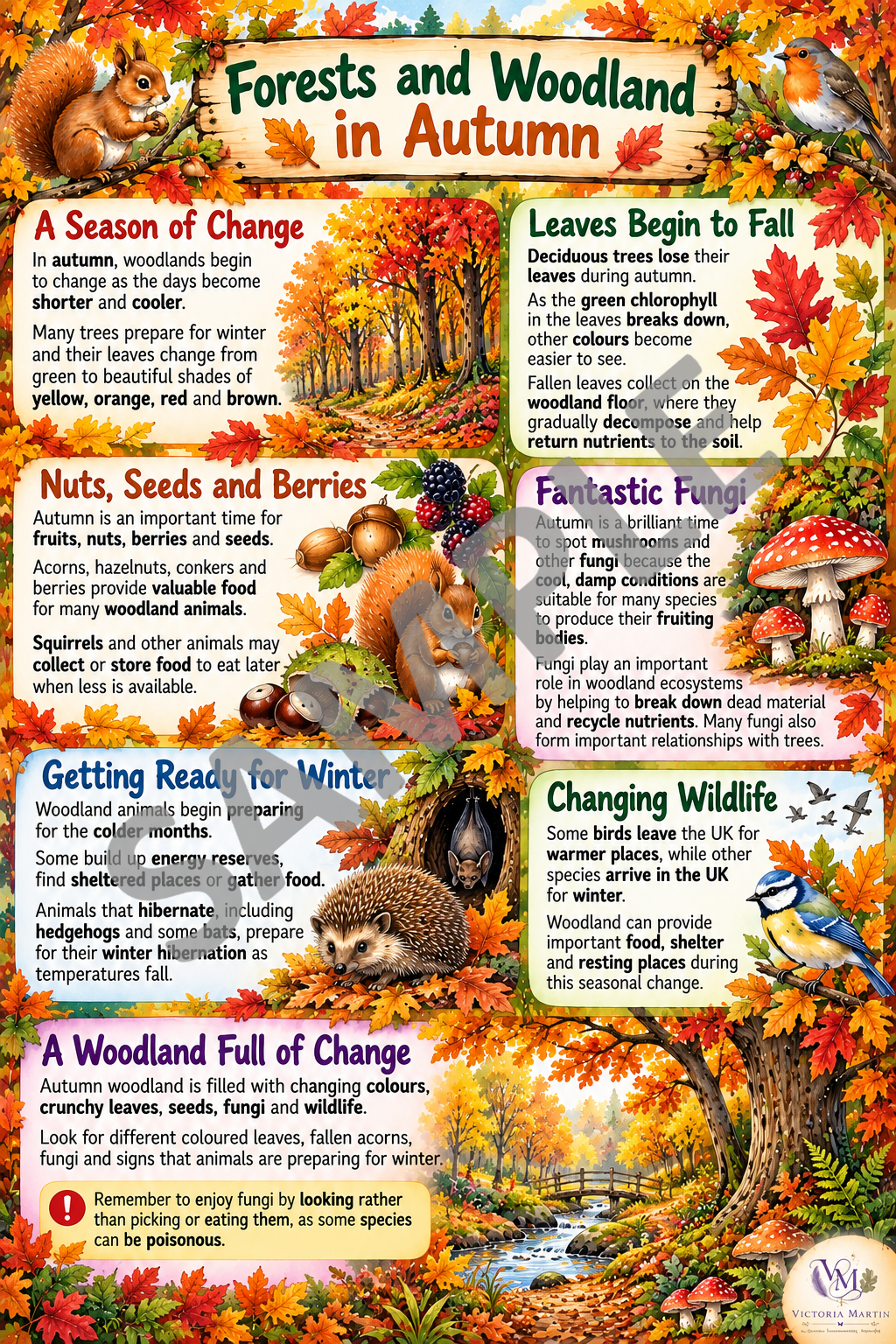
🐿️ Squirrels – Climbing trees, searching for food and burying nuts.
🦉 Owls – Hunting small mammals and using trees for shelter or nesting.
🦇 Bats – Feeding on insects and sometimes roosting in tree cavities.
🐞 Insects and invertebrates – Including beetles, butterflies, spiders, worms and woodlice.
Woodlands also support many different birds, plants, fungi and microorganisms.
🌟 Did You Know?
A mature oak tree can support hundreds of different wildlife species, making it an incredibly valuable part of a woodland ecosystem.
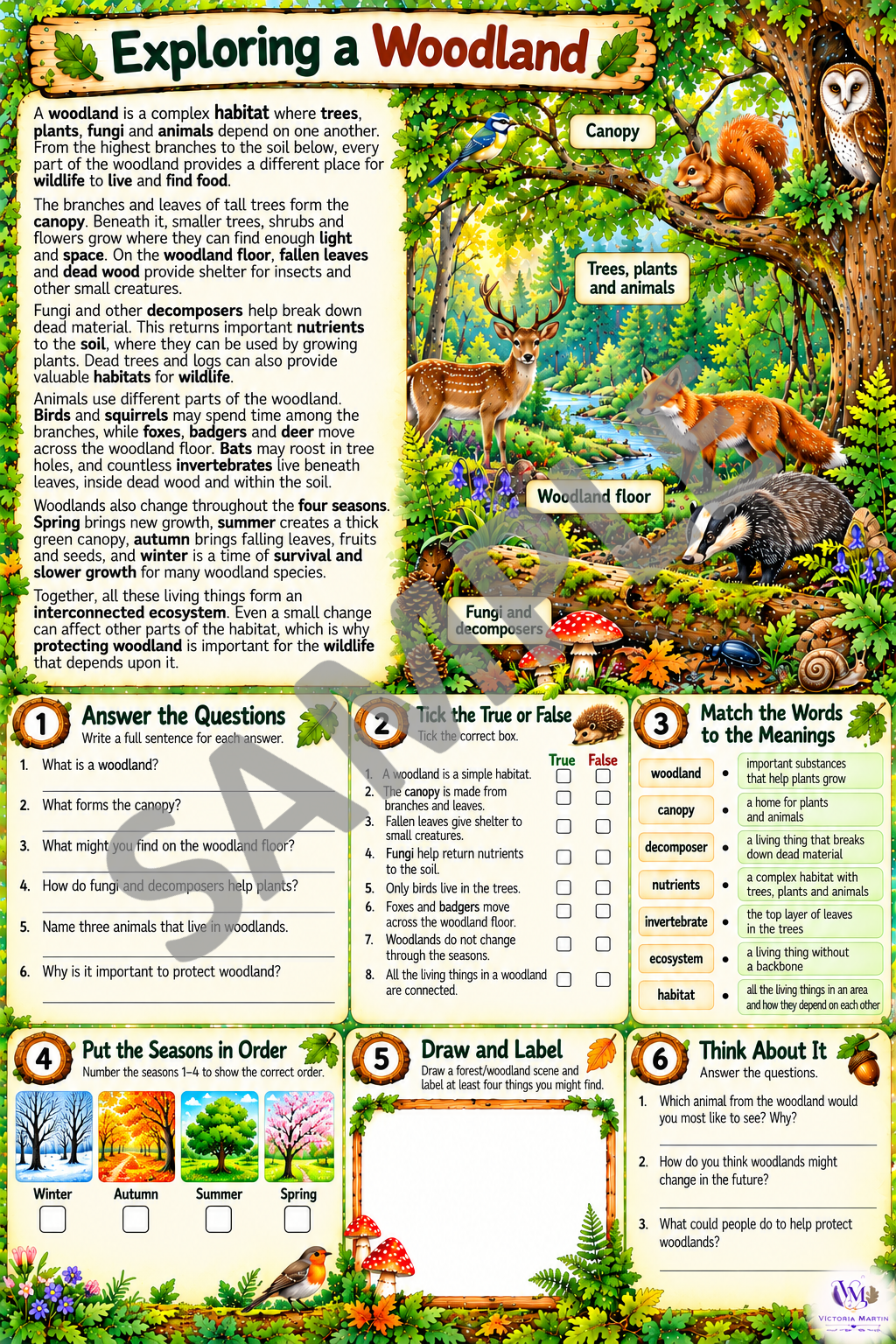
🌿 Woodland Layers
Woodlands contain different layers that support different living things.
🌳 Canopy: The upper branches and leaves of trees, providing shelter for birds and insects.
🌿 Understorey: Smaller trees and shrubs growing beneath the canopy.
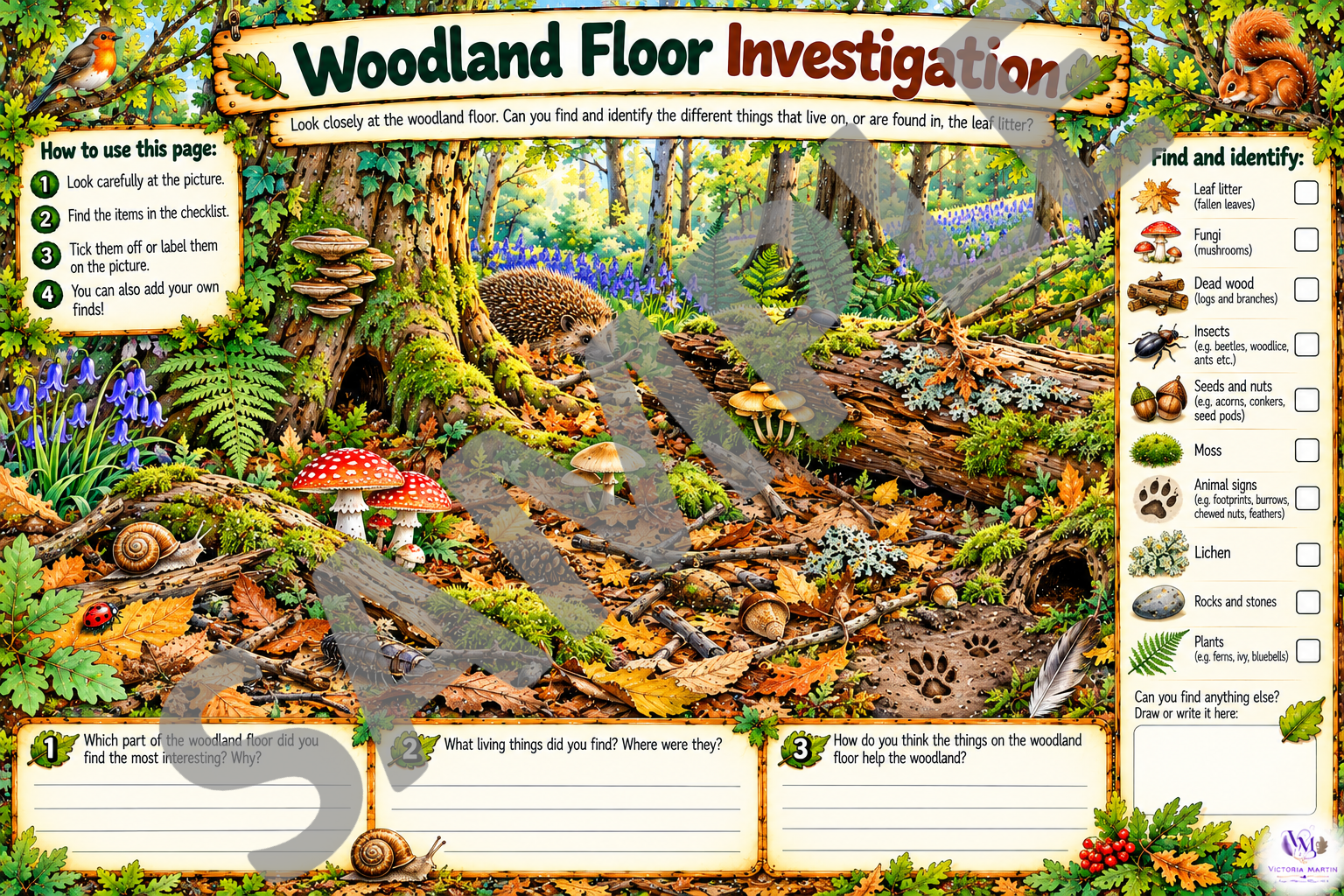
🌱 Ground layer: Mosses, ferns, flowers, seedlings and fallen leaves.
🍄 Soil layer: Roots, fungi, bacteria and invertebrates that help recycle nutrients.
Together, these layers create a complex network of habitats and wildlife.
🍄 The Secret World of Woodland Fungi
Fungi play an essential role in healthy woodland ecosystems.
Many help break down dead leaves, fallen branches and decaying wood, returning nutrients to the soil.
Some fungi also form partnerships with tree roots, helping trees obtain water and nutrients.
The mushrooms we see above ground are often just the visible reproductive structures of fungi, while networks of fine threads grow through soil or wood.
Never eat unidentified wild mushrooms, as some poisonous species closely resemble edible ones.
Observing and photographing fungi is a wonderful way to explore their fascinating variety.
🕸️ Woodland Food Chains
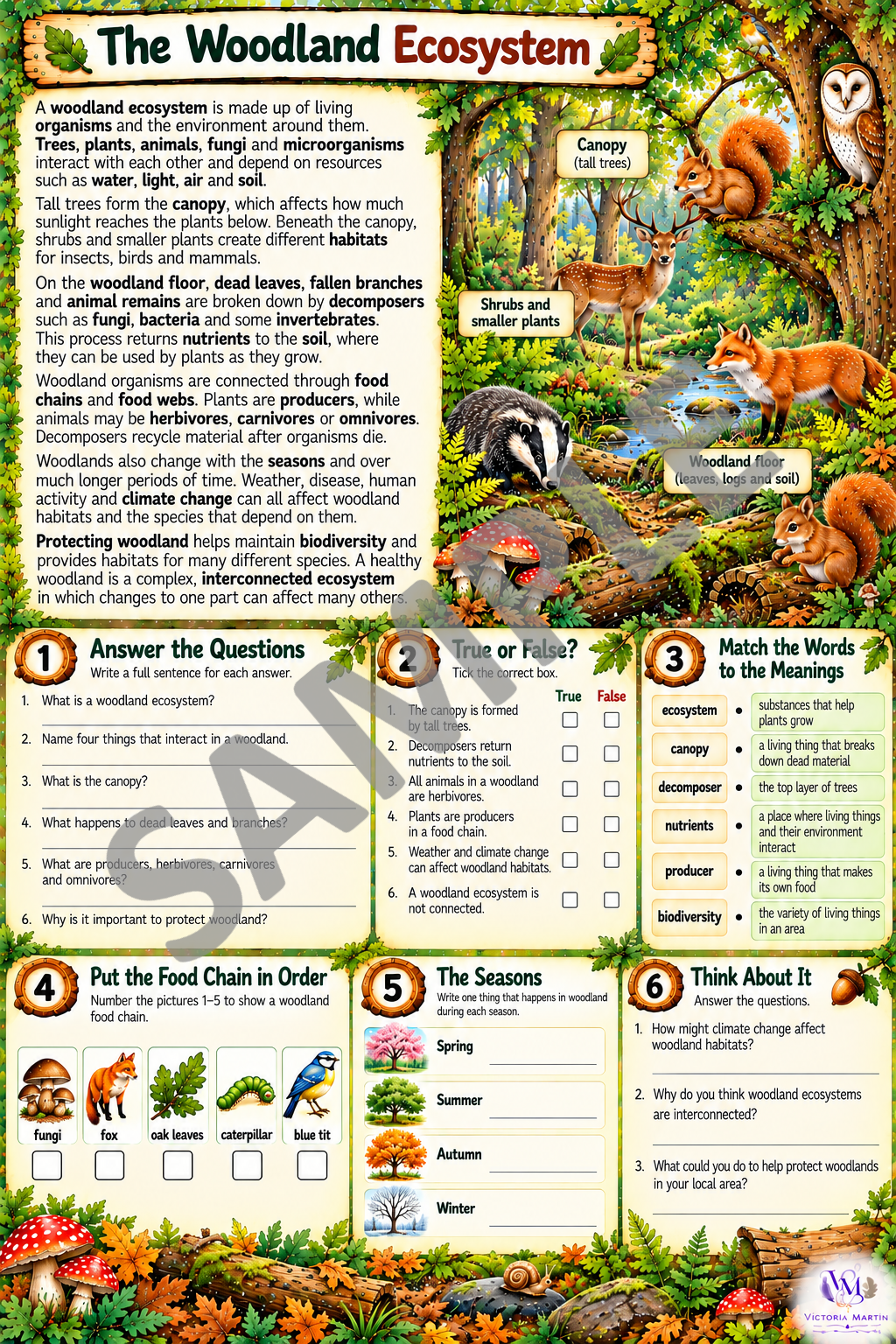
Woodland plants and animals are connected through feeding relationships called food chains.
For example:
🌳 Oak tree → 🐛 Caterpillar → 🐦 Blue tit → 🦅 Sparrowhawk
The caterpillar eats oak leaves, the blue tit eats the caterpillar, and the sparrowhawk may hunt the blue tit.
The arrows show how energy passes from one organism to another.
When several food chains connect, they form a food web showing feeding relationships within an ecosystem.
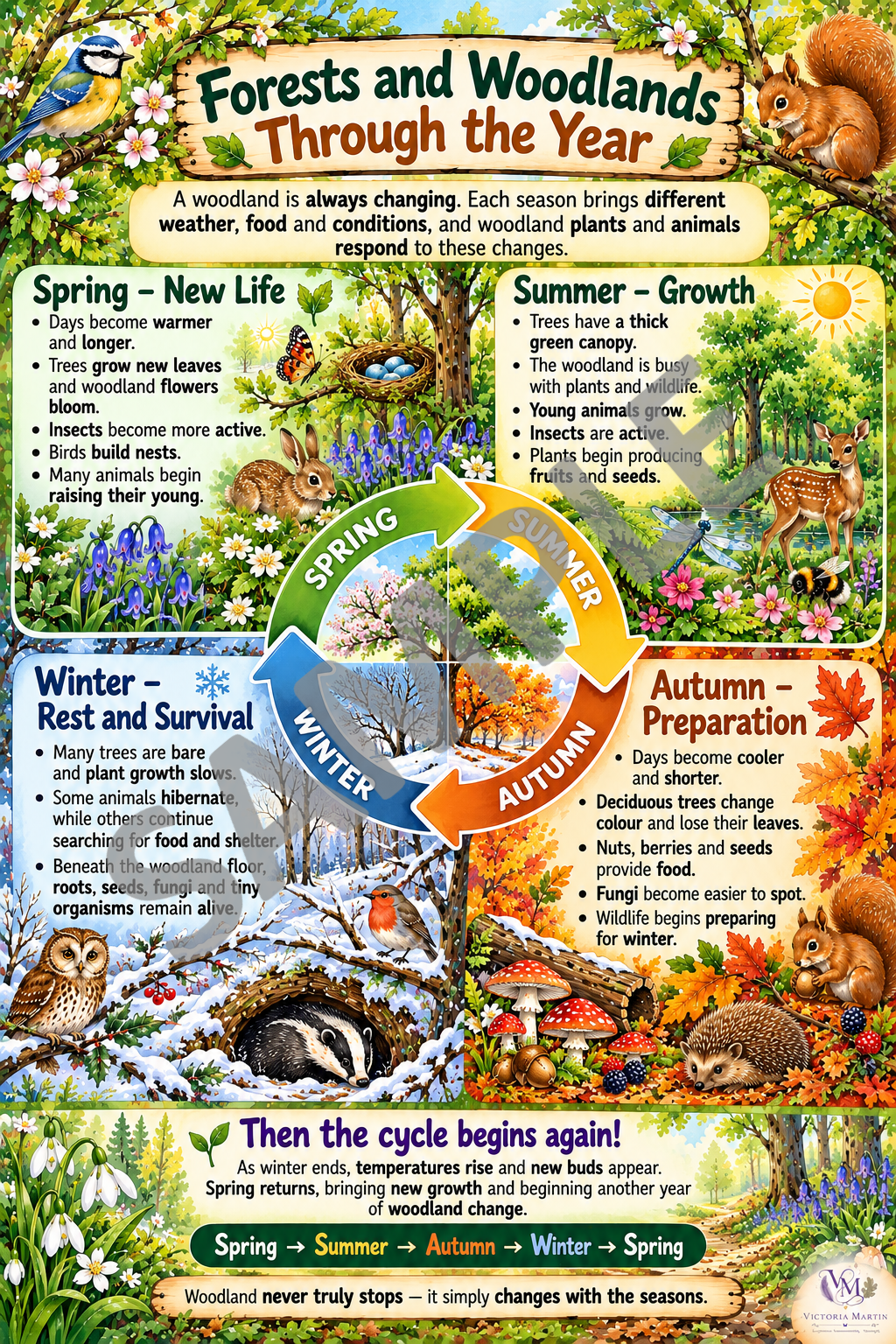
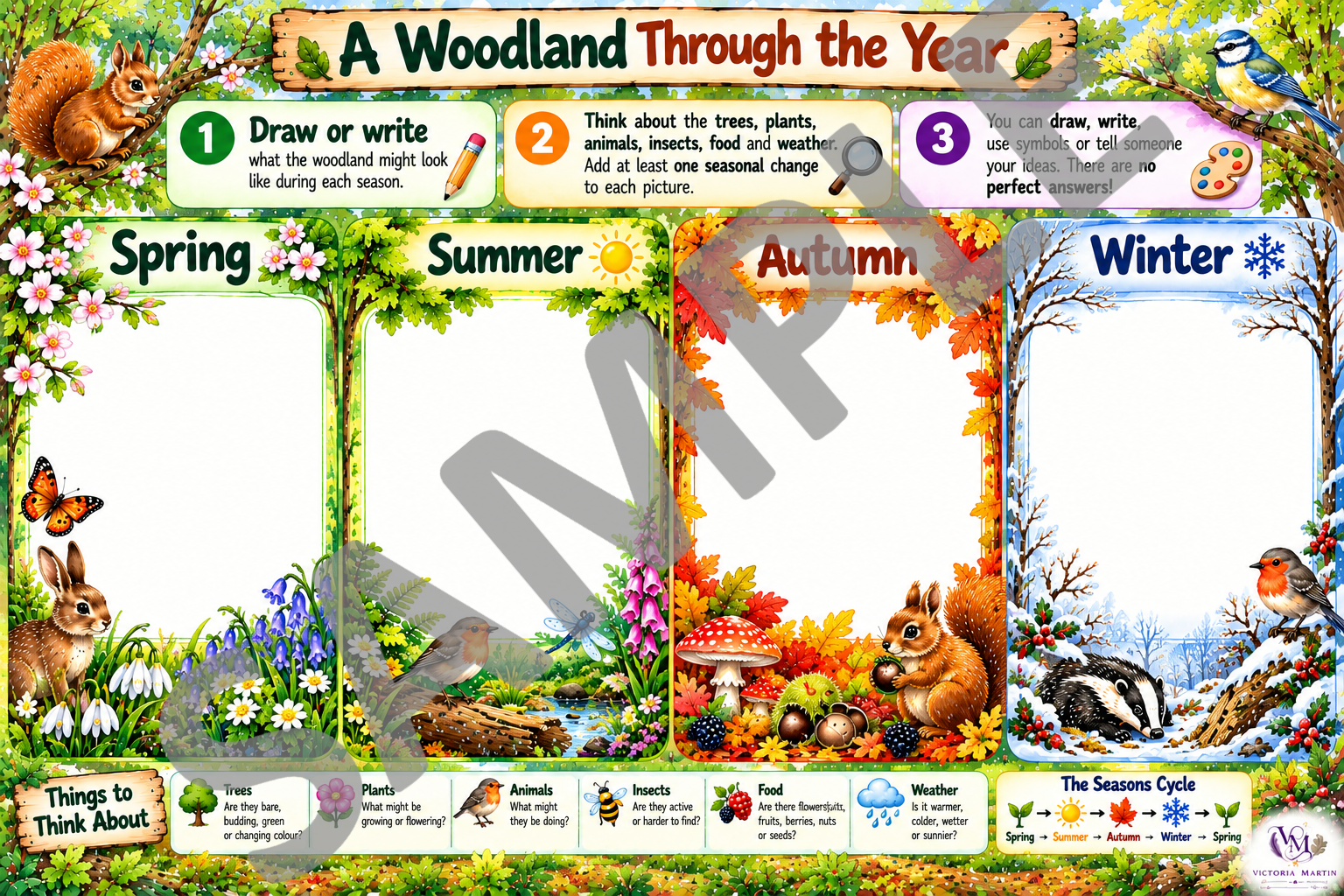
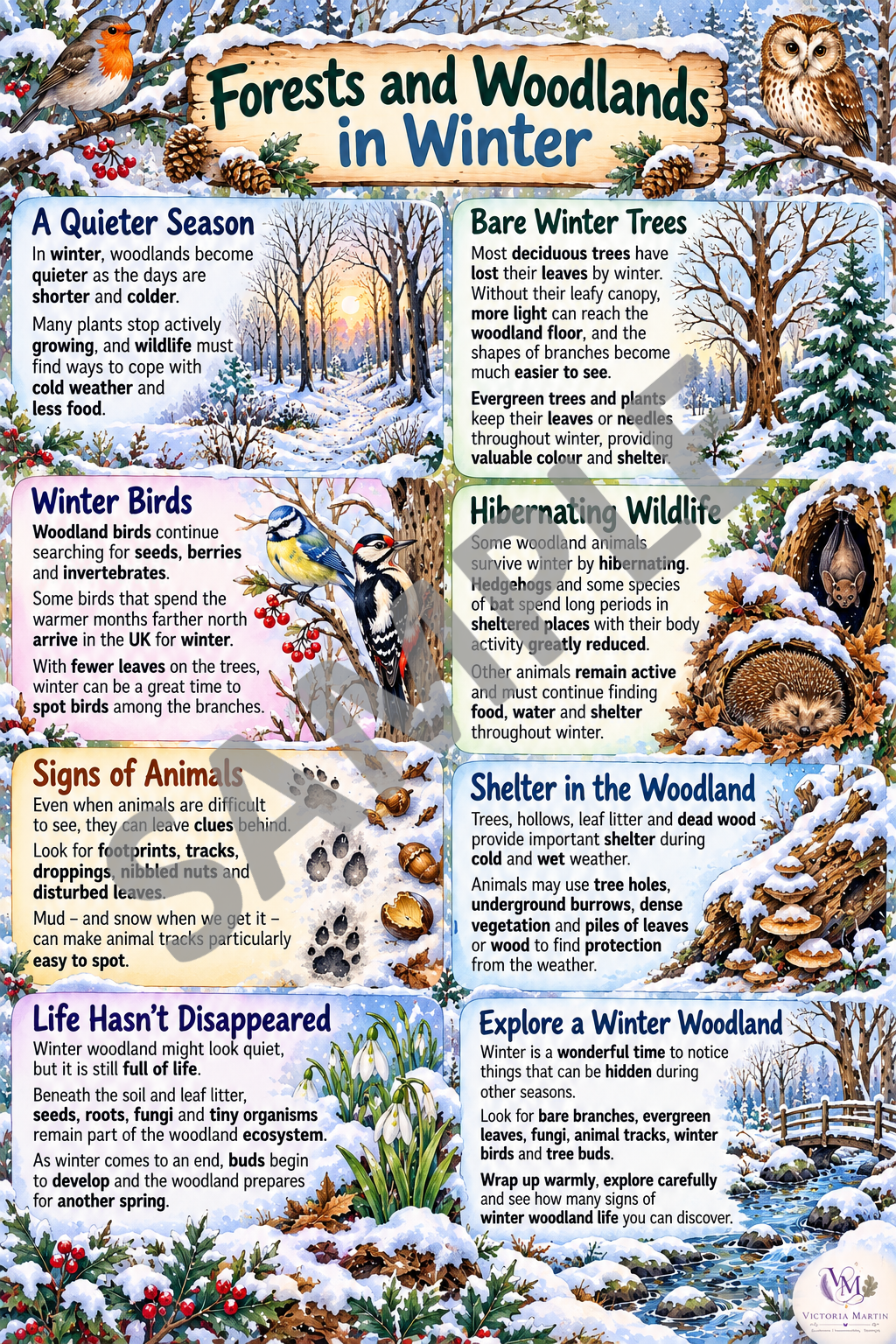
🍁 Woodlands Through the Seasons
Woodlands are constantly changing throughout the year.
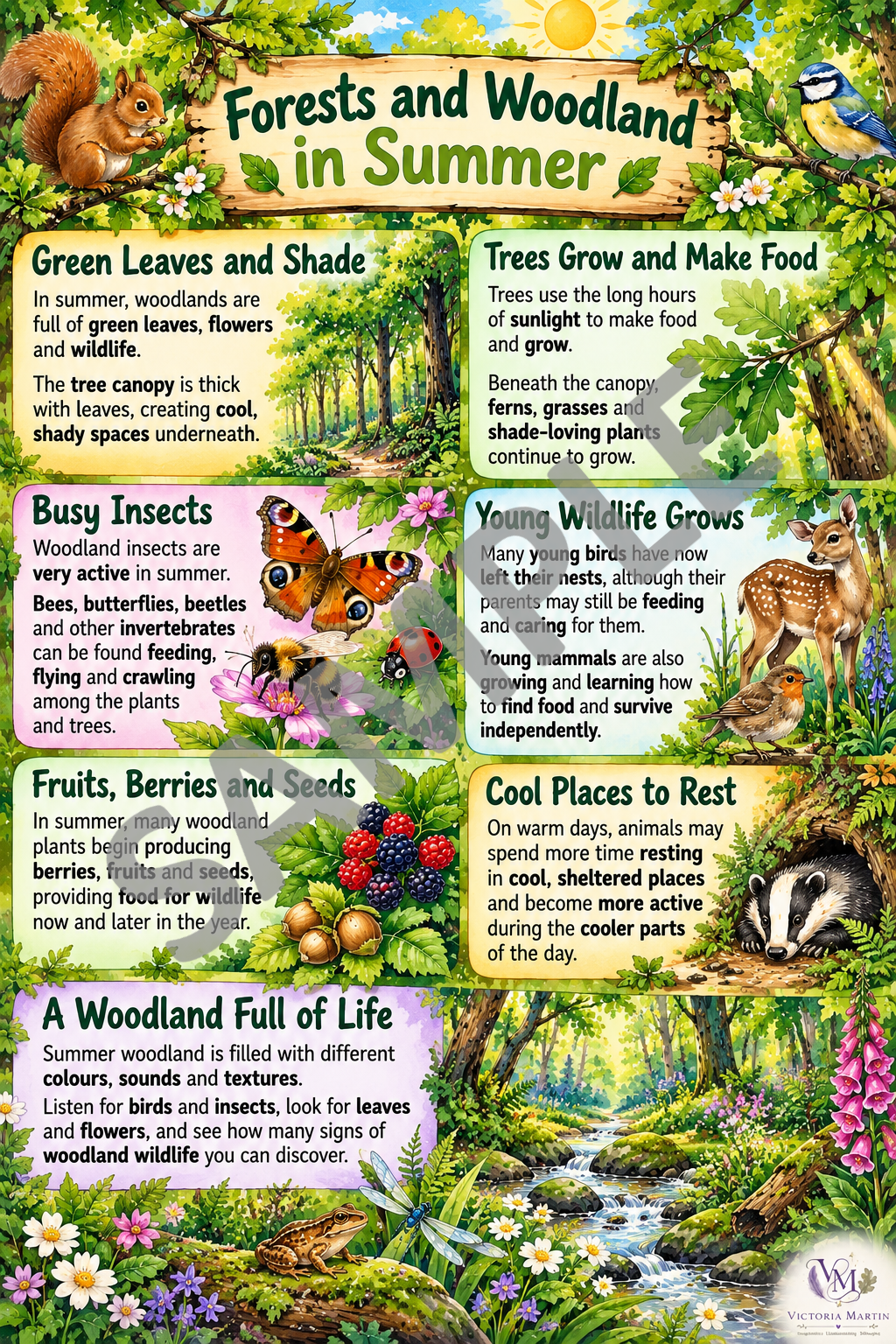
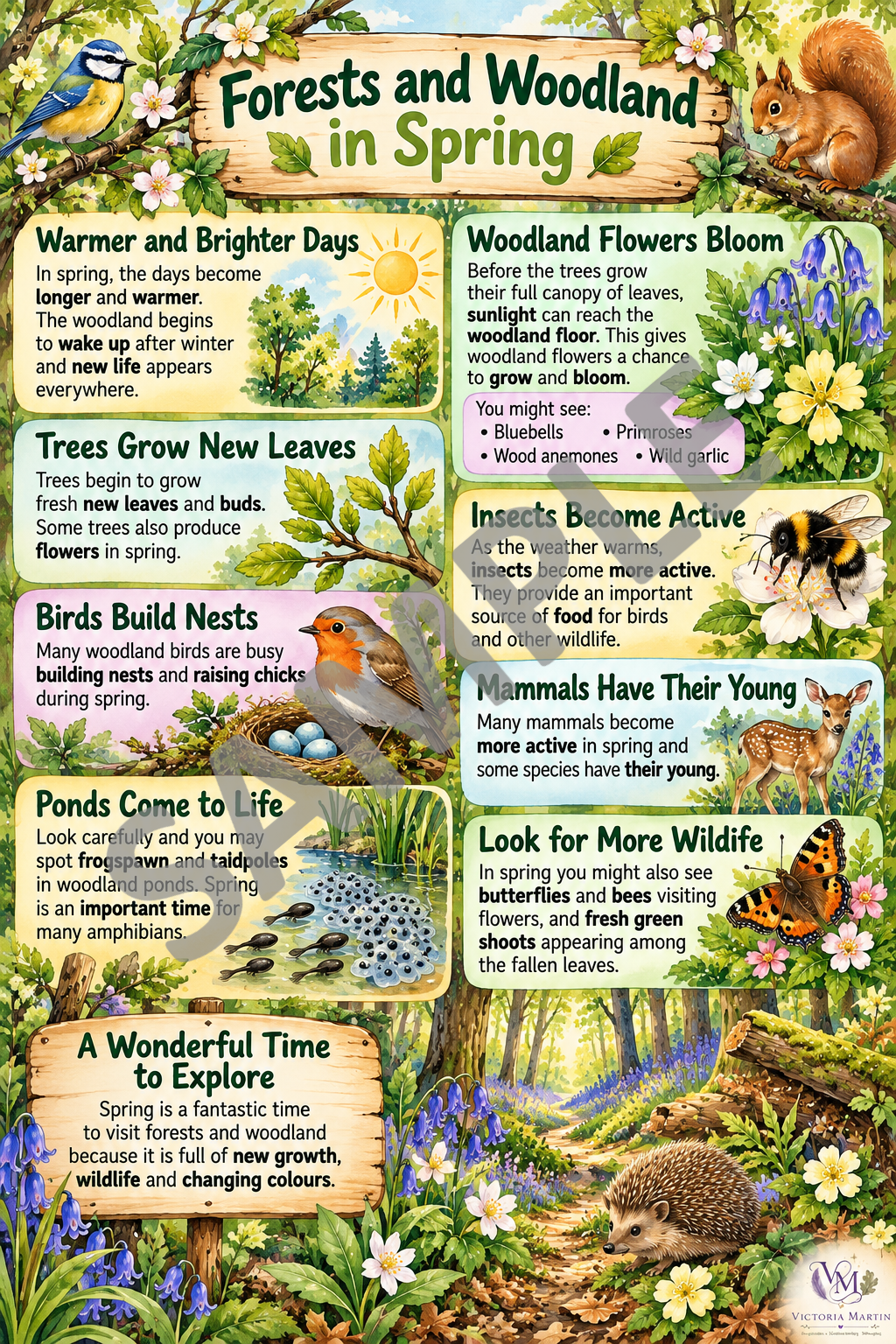
🌸 Spring: New leaves appear, flowers bloom and birds begin nesting.
☀️ Summer: Trees provide shade, and woodland habitats are full of activity.
🍂 Autumn: Leaves change colour, fungi become more noticeable and animals prepare for winter.
❄️ Winter: Deciduous trees lose their leaves, revealing branches and woodland structures.
Each season provides different opportunities to observe woodland wildlife and habitats.
🌍 Why Are Woodlands Important?
Forests and woodlands provide valuable benefits for people, wildlife and the environment.
🌬️ Trees absorb carbon dioxide during photosynthesis and store carbon in their tissues.
🐾 Woodlands provide habitats for many species, supporting biodiversity.
💧 Tree roots help stabilise soil, while woodland vegetation can slow rainwater runoff.
🌡️ Trees provide shade and cooling, creating sheltered environments during warmer weather.
🌱 Fungi and microorganisms recycle nutrients, helping maintain healthy woodland soils.
🌱 Protecting Our Woodlands
Woodlands face pressures from pollution, habitat loss, climate change and disease.
We can help protect them by:
🌳 Respecting trees, plants and natural habitats.
🦊 Observing wildlife without disturbing animals.
🍄 Leaving unfamiliar fungi where they grow.
🗑️ Taking litter home and disposing of it responsibly.
🚶 Following woodland paths and local guidance.
🌿 Supporting woodland conservation projects.
Even small actions can make a positive difference to the natural world.
📚 Explore Our Forests & Woodlands Resources
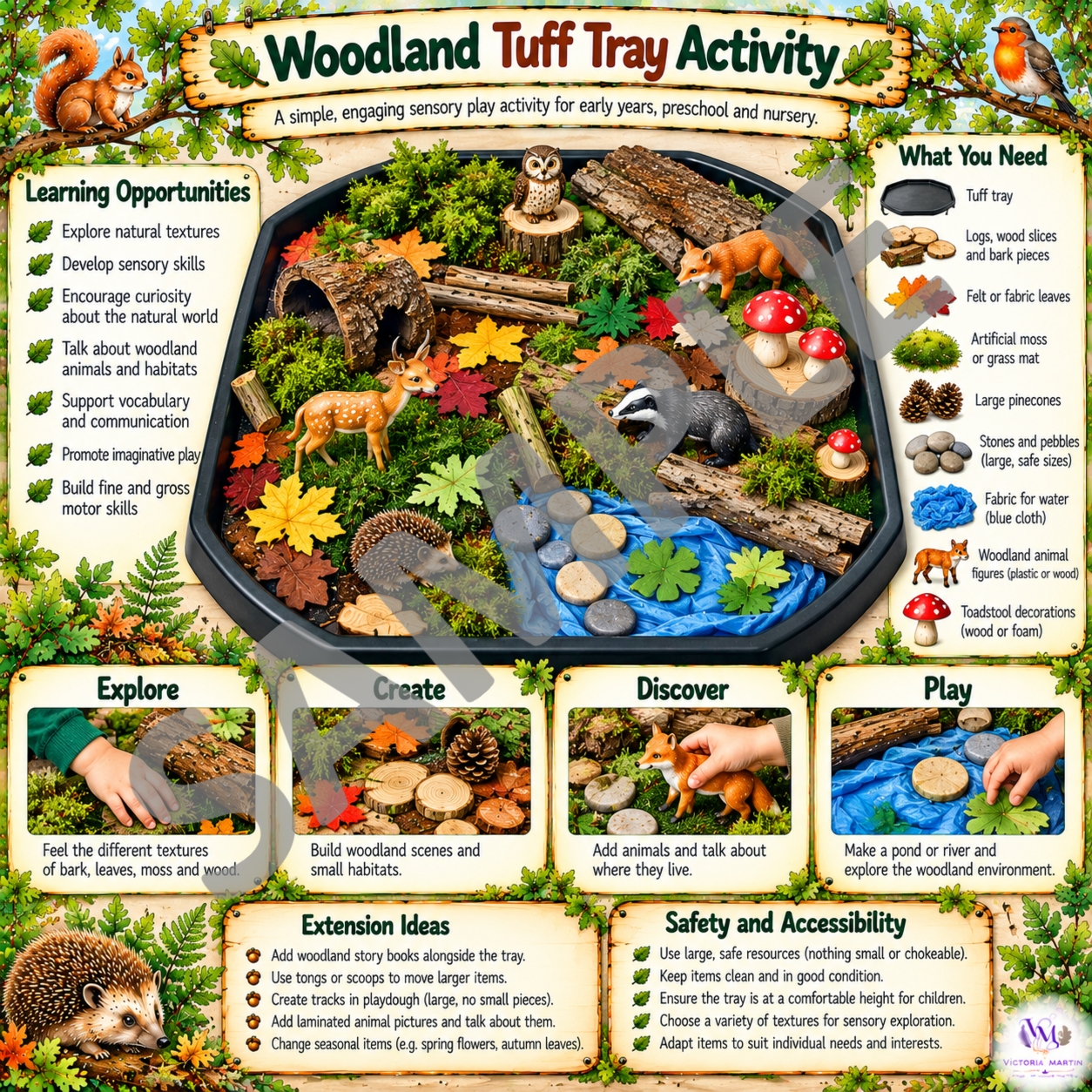
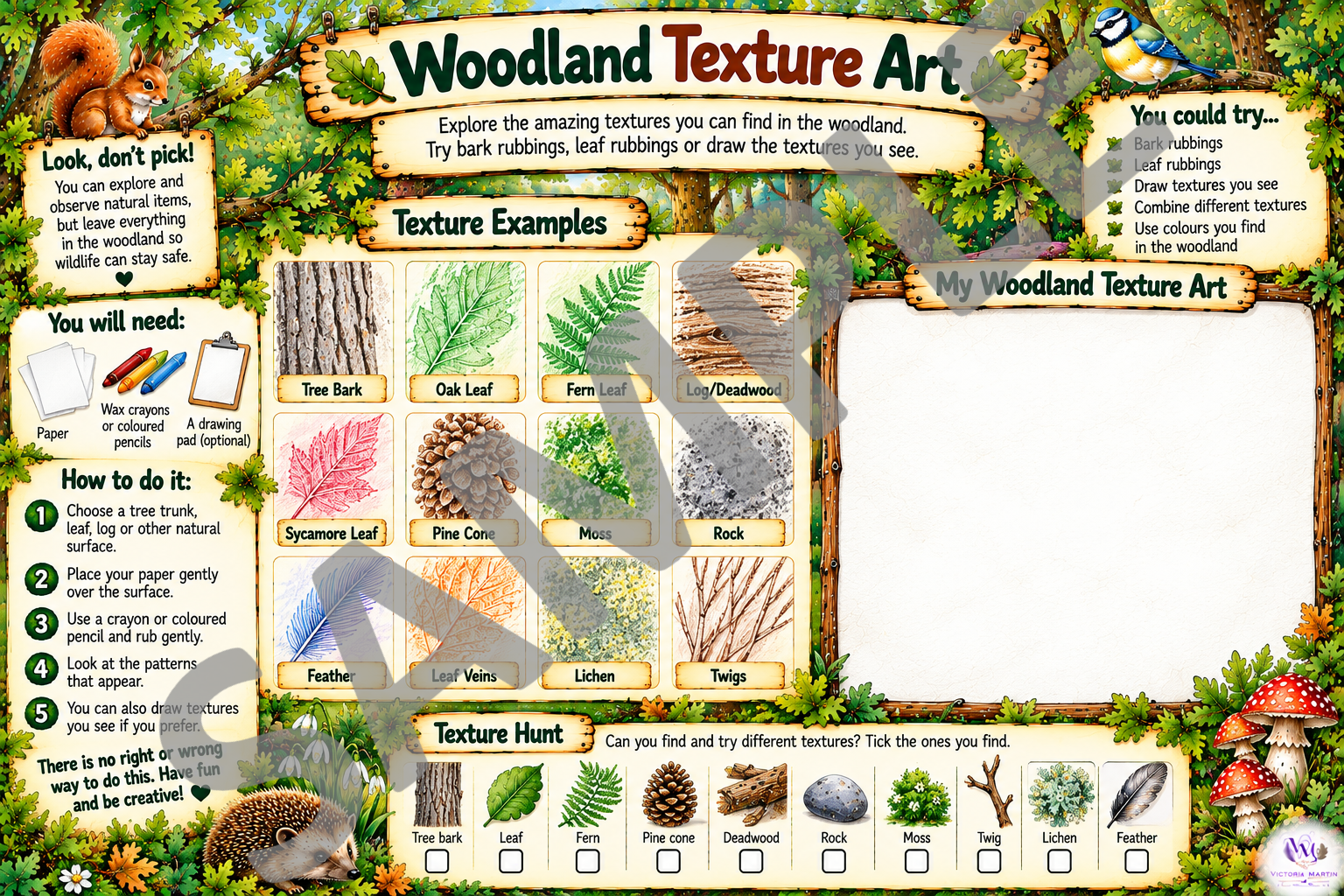
Discover educational activities inspired by British forests and woodlands, designed for children, families and educators.
Our resources include:
🌳 Woodland habitats and tree identification
🦊 British woodland wildlife
🕸️ Food chains and food webs
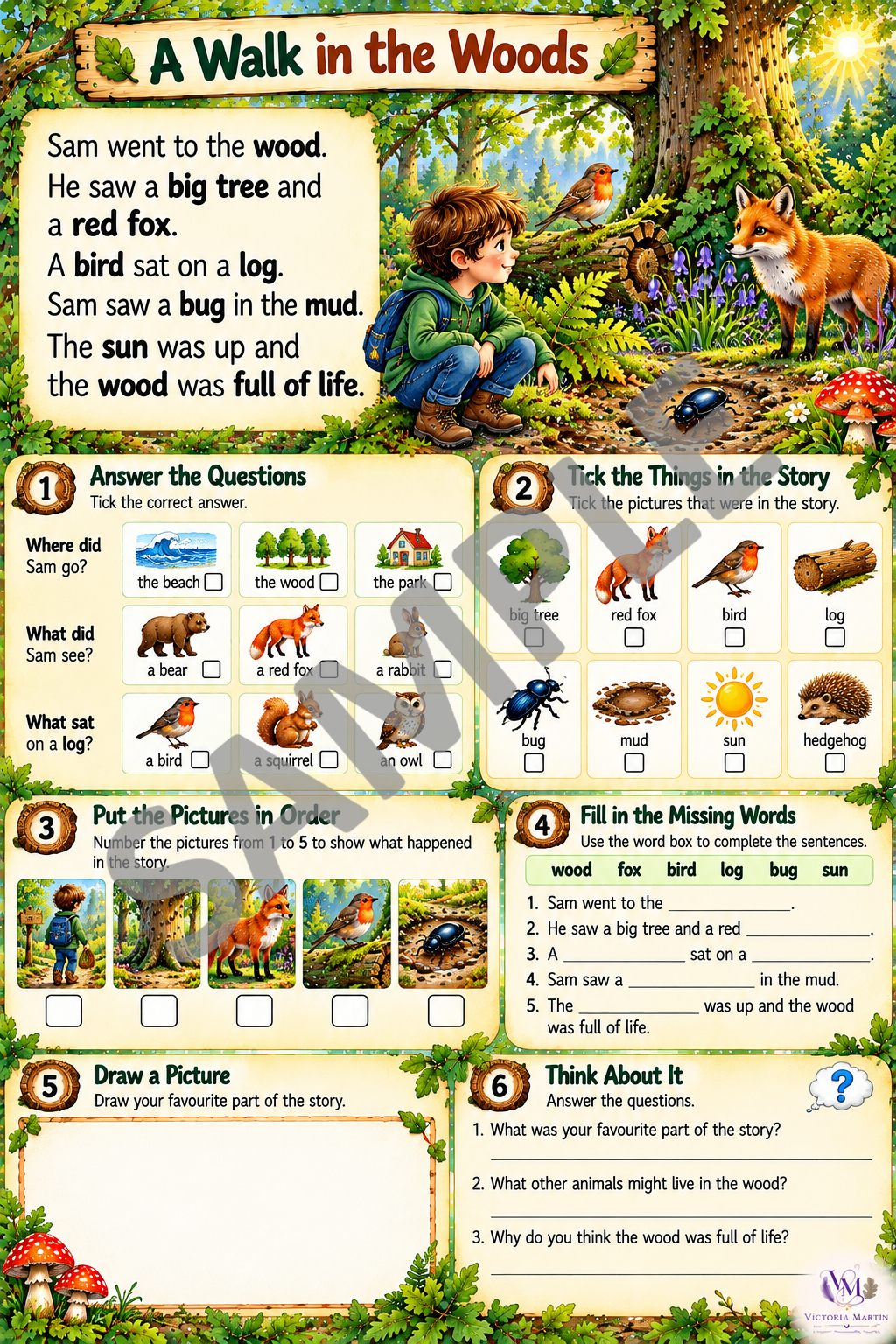
📖 Reading comprehension and literacy activities
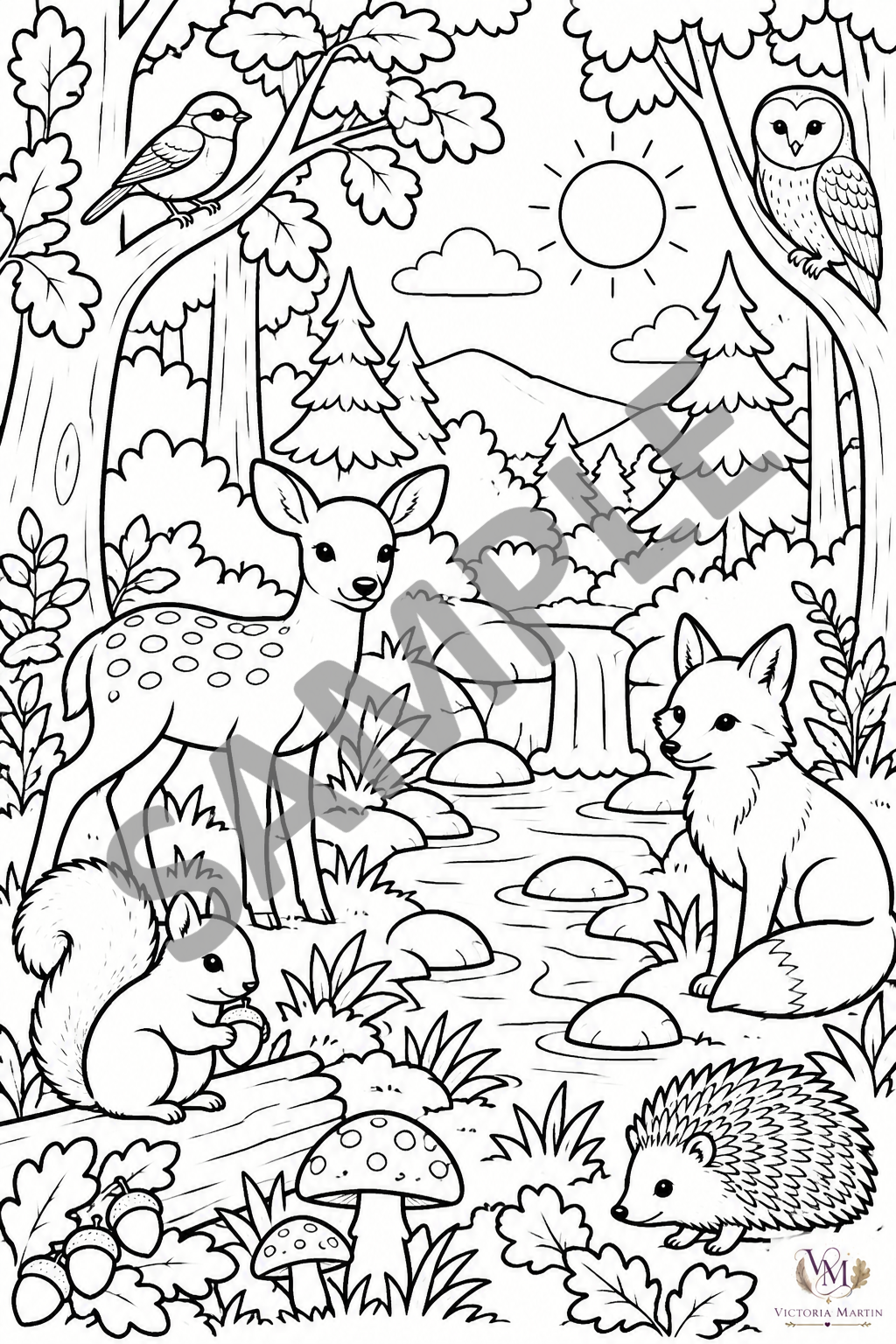
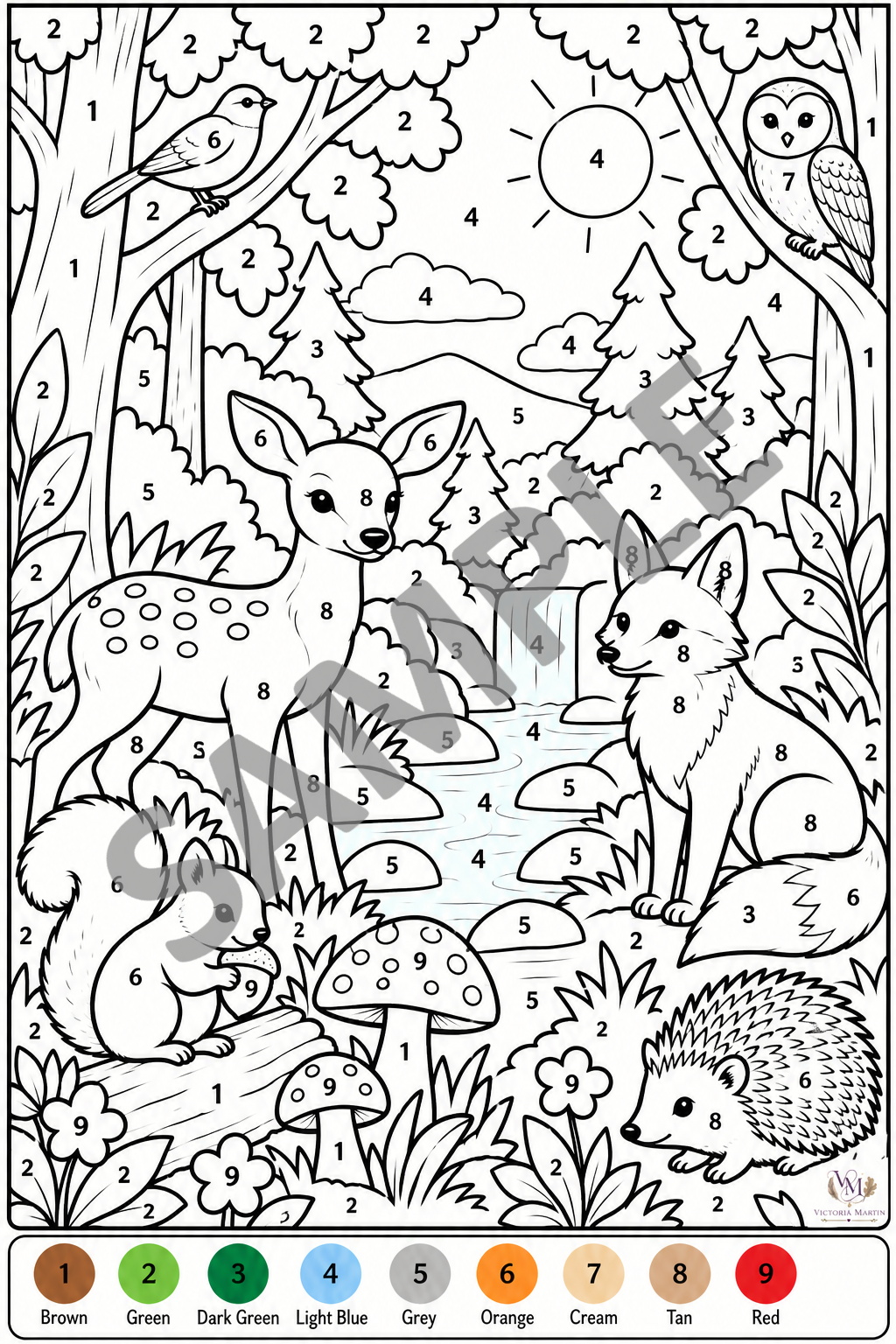
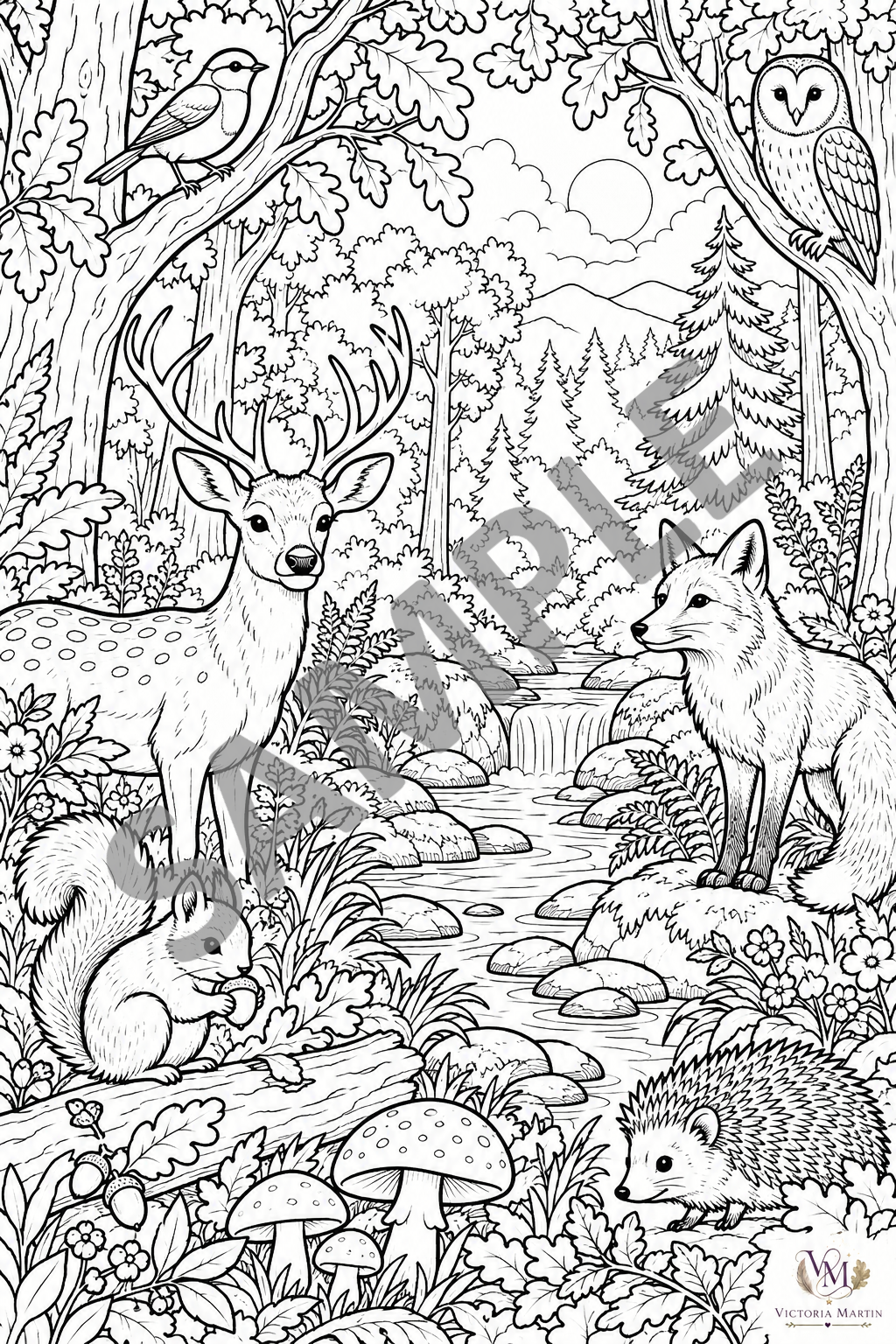
🎨 Colouring pages and creative activities
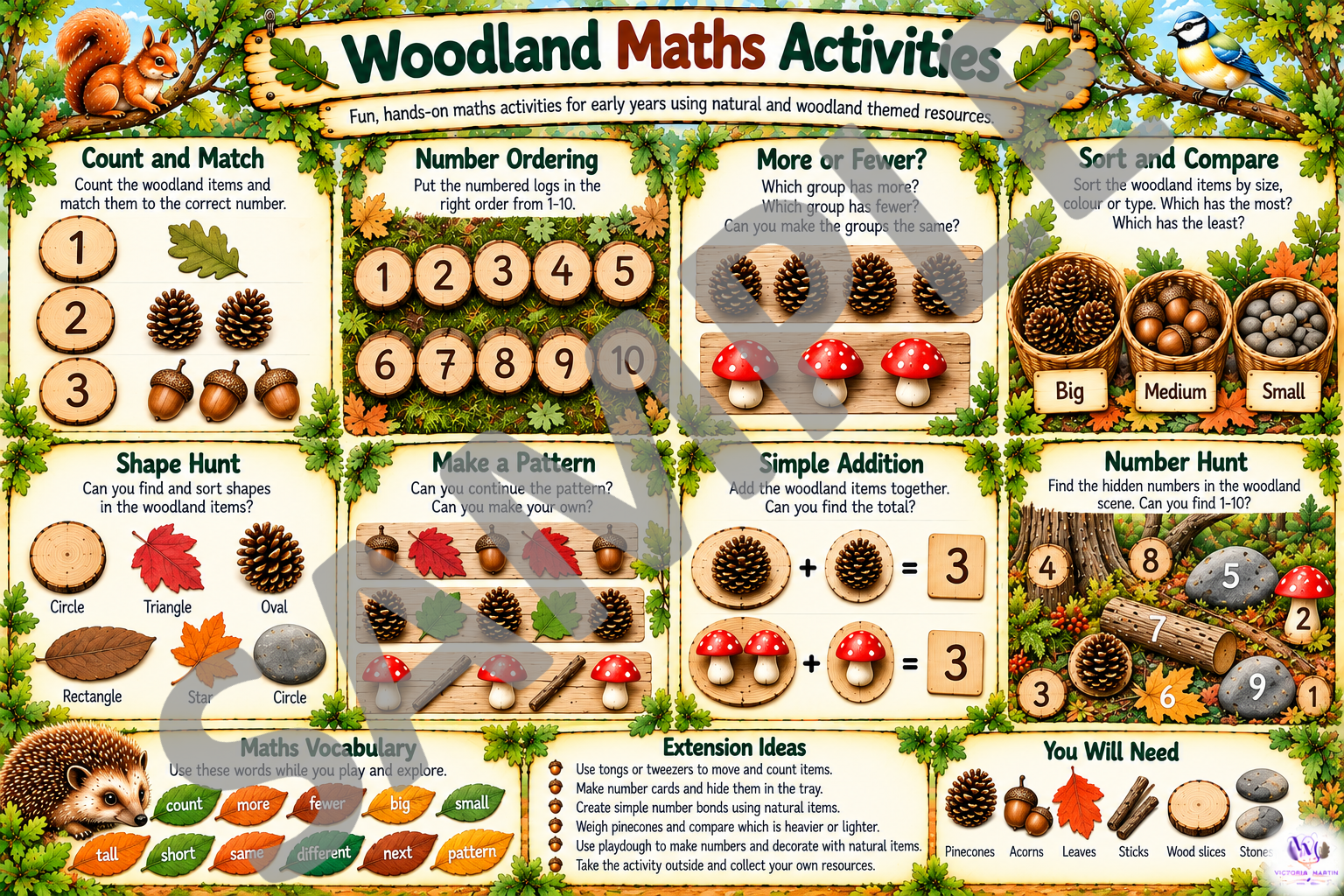
🧩 Puzzles and woodland-themed learning
Whether you're exploring outdoors, learning at home or planning classroom activities, there's something for every curious nature explorer.
The more we discover about our natural world, the more we can understand and appreciate it.
Happy exploring! 🌳🍄🦊