
British Fungi and Mushrooms
Walk through a British woodland in autumn and you may notice an extraordinary variety of mushrooms and other fungi appearing among fallen leaves, beside trees and across the woodland floor. Some are tiny and delicate, while others form large brackets, colourful cups or familiar umbrella-shaped mushrooms.
Fungi are an essential part of British ecosystems, helping to break down dead material, recycle nutrients and form important relationships with trees and other plants.
Although autumn is particularly famous for fungi, fungal organisms are present throughout the year. Much of the fungus may remain hidden from view, with the visible mushrooms appearing only when conditions are suitable.
What Is a Fungus?
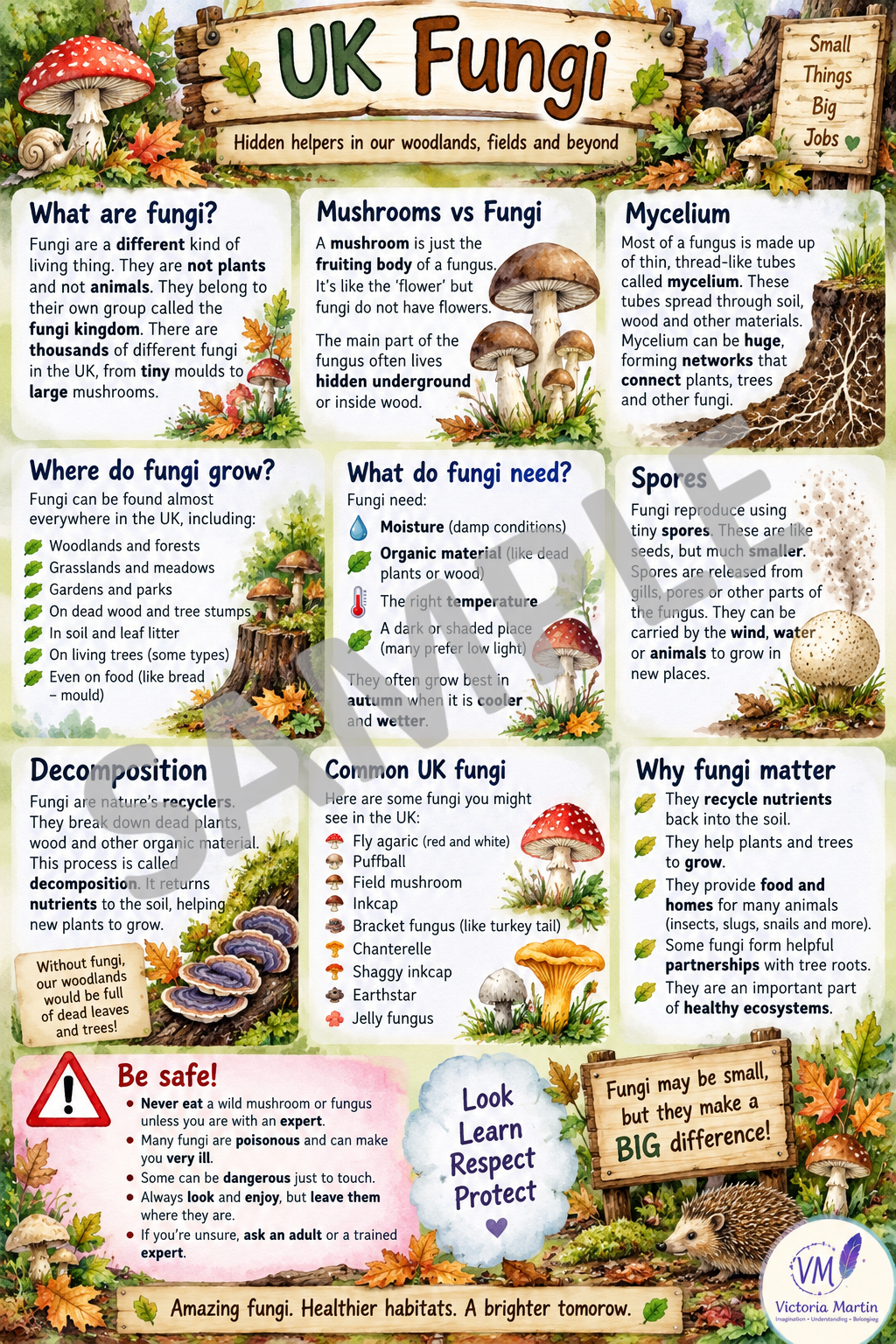
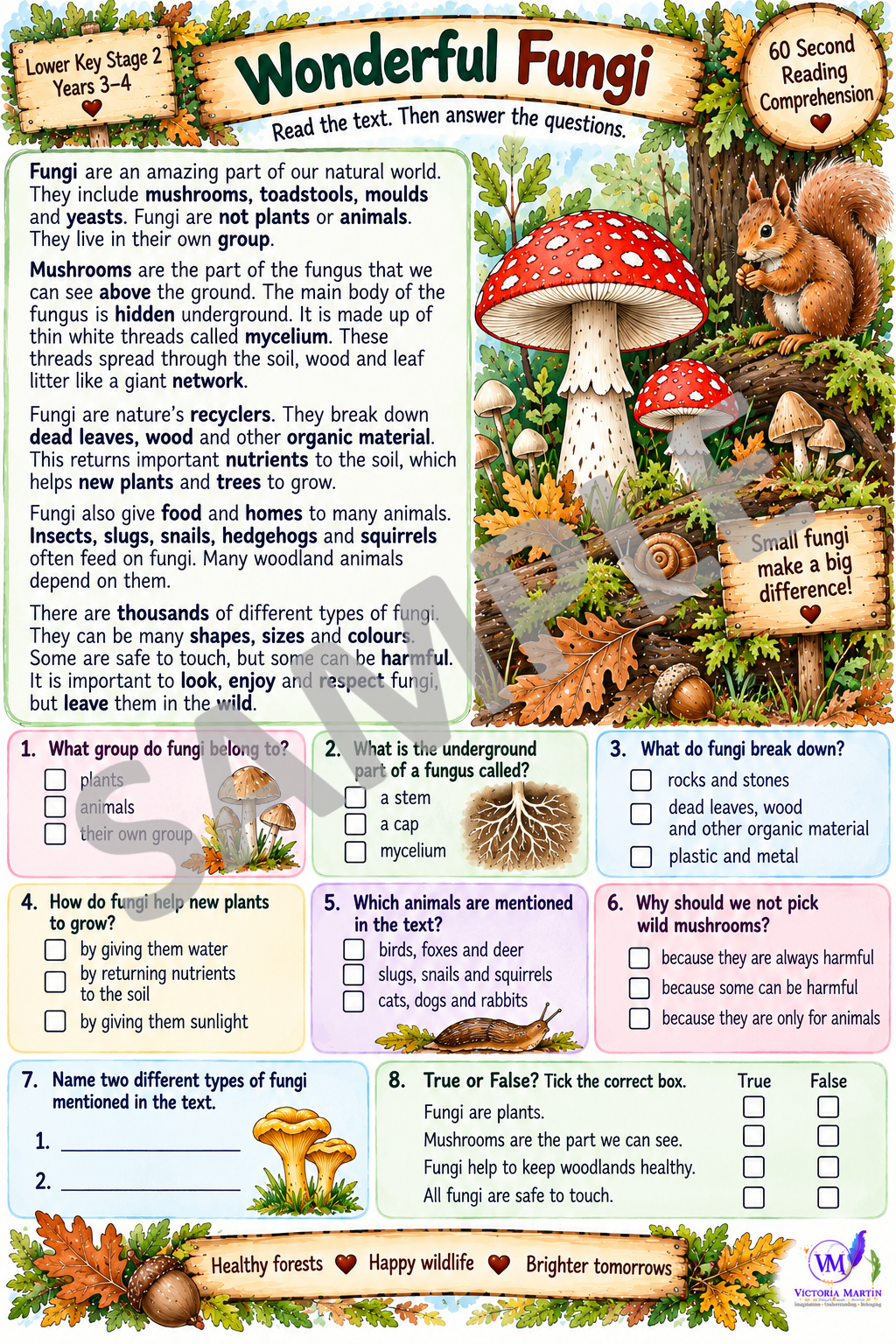
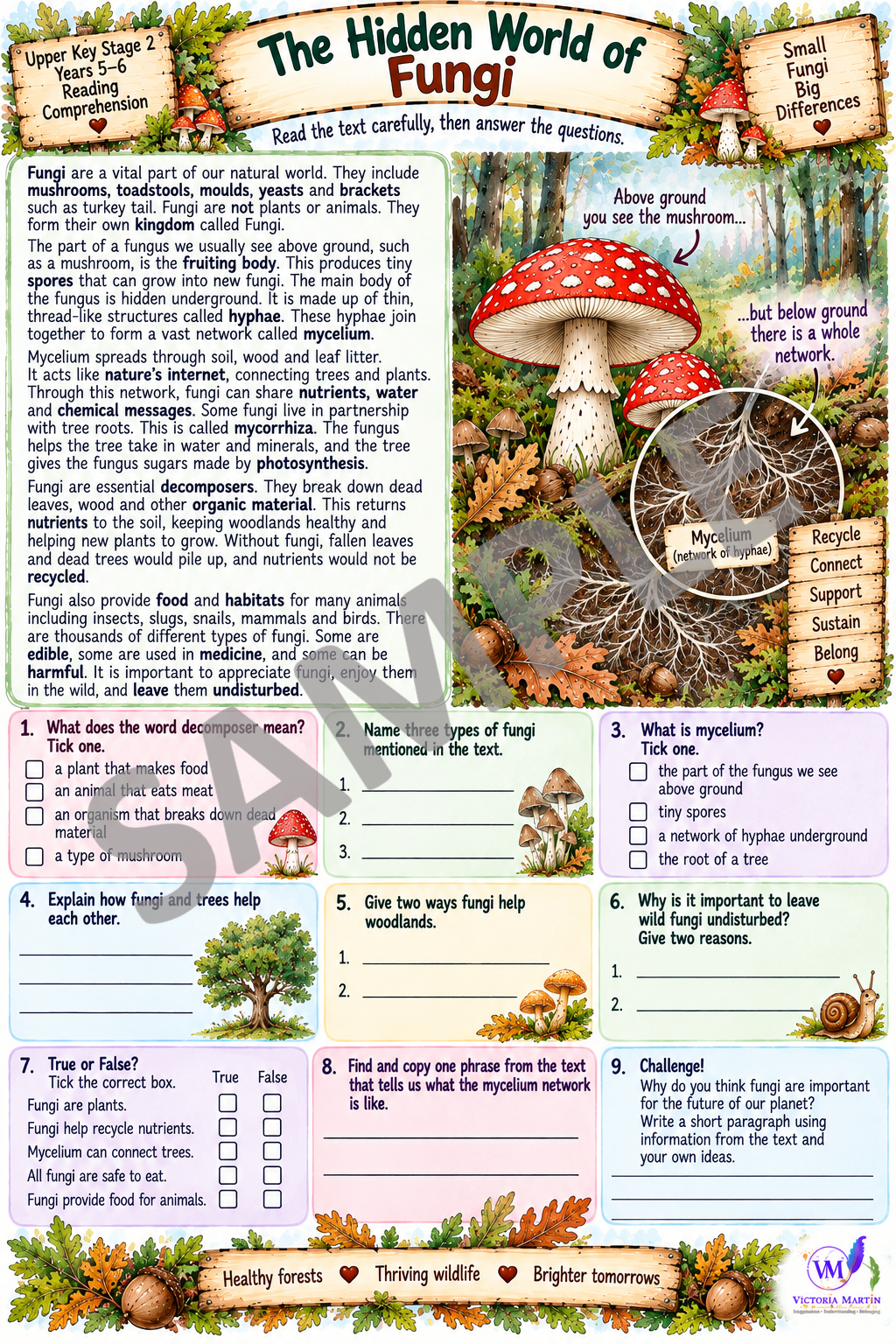
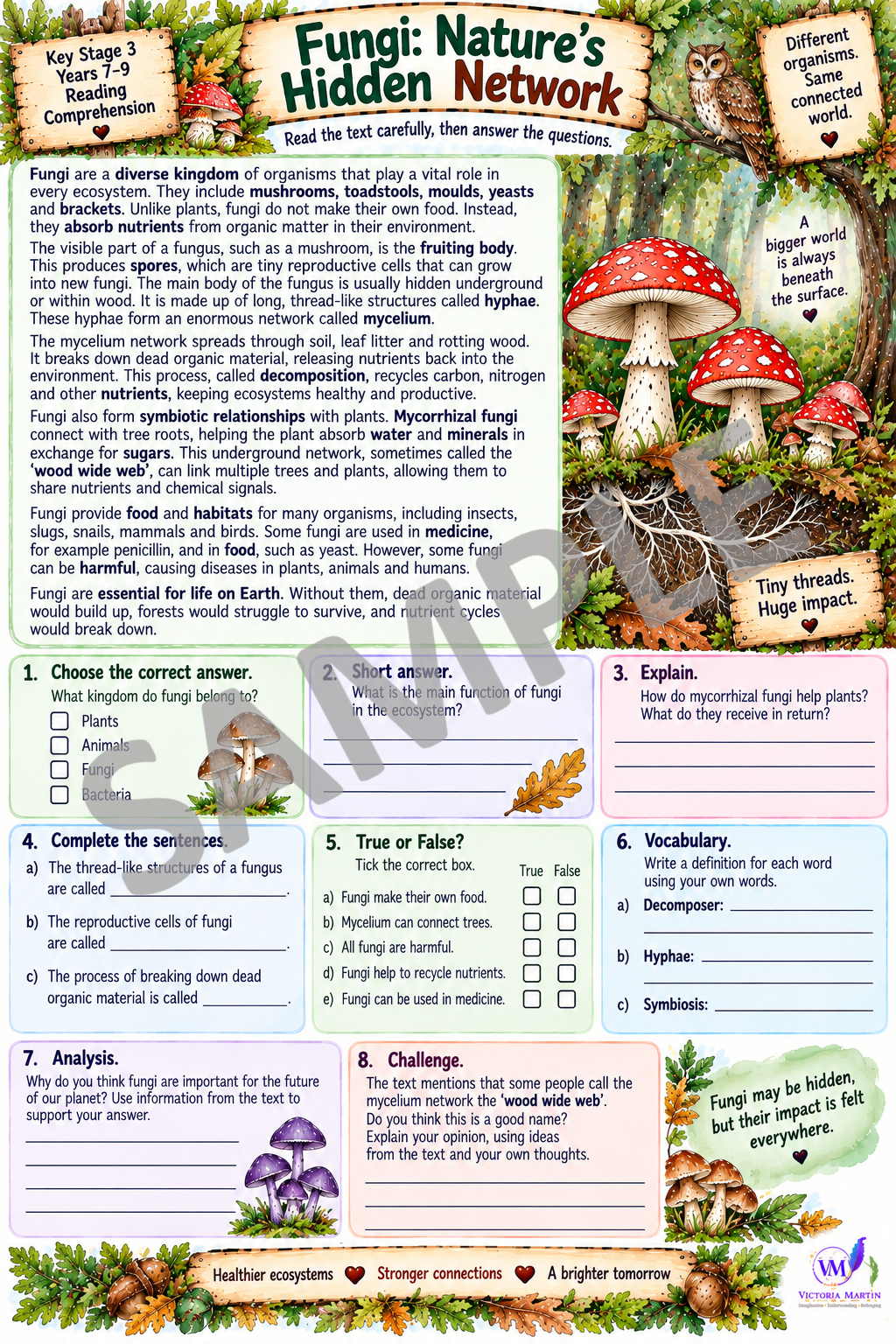
Fungi belong to their own biological kingdom, called Fungi, and are neither plants nor animals.
Unlike green plants, fungi do not contain chlorophyll and cannot make food through photosynthesis. Instead, they obtain nutrients by absorbing them from their surroundings.
The word fungus describes the whole organism, while a mushroom is a type of spore-producing fruiting body produced by some fungi. This means that the mushroom we see above ground may be only one visible part of a much larger fungal organism.
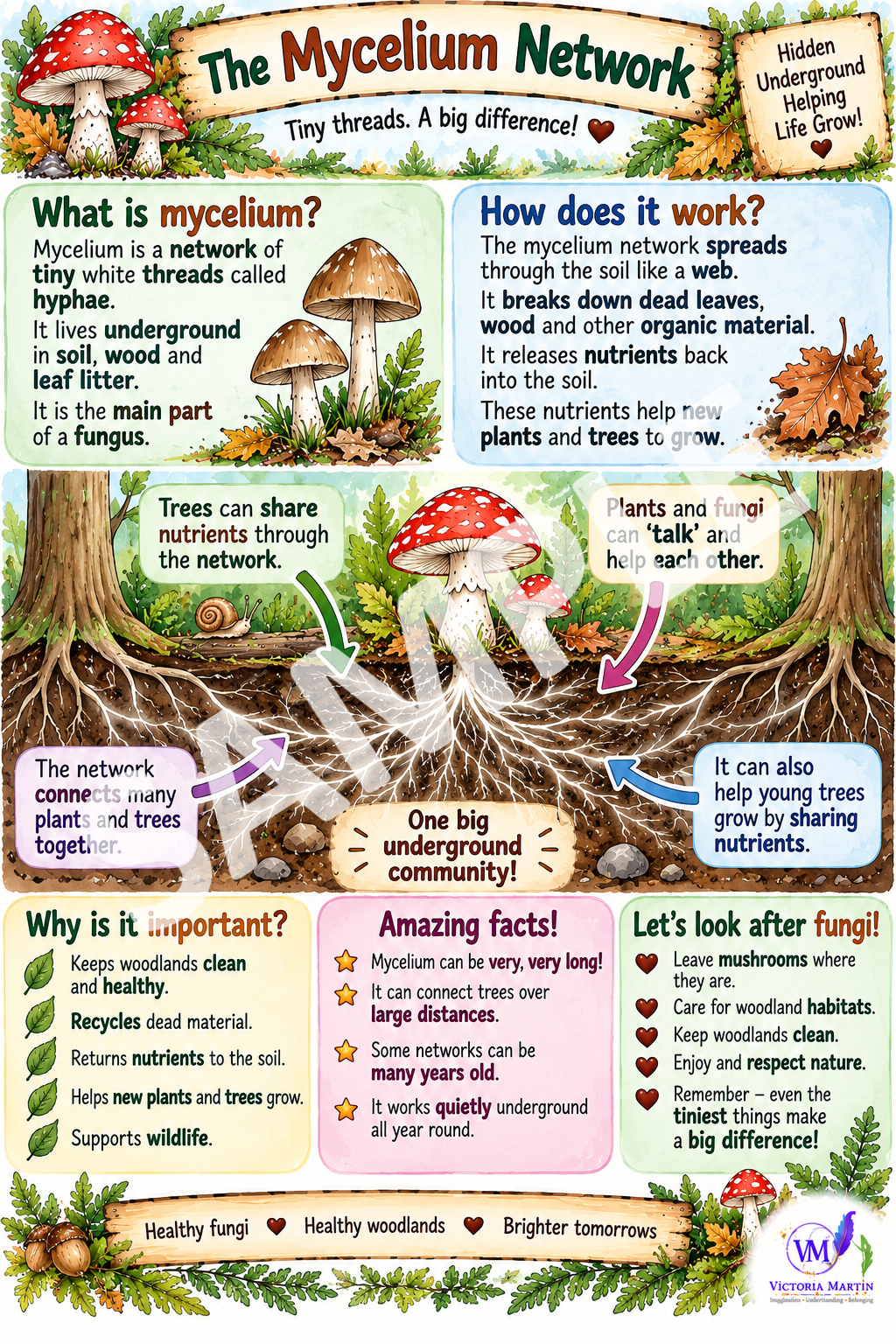
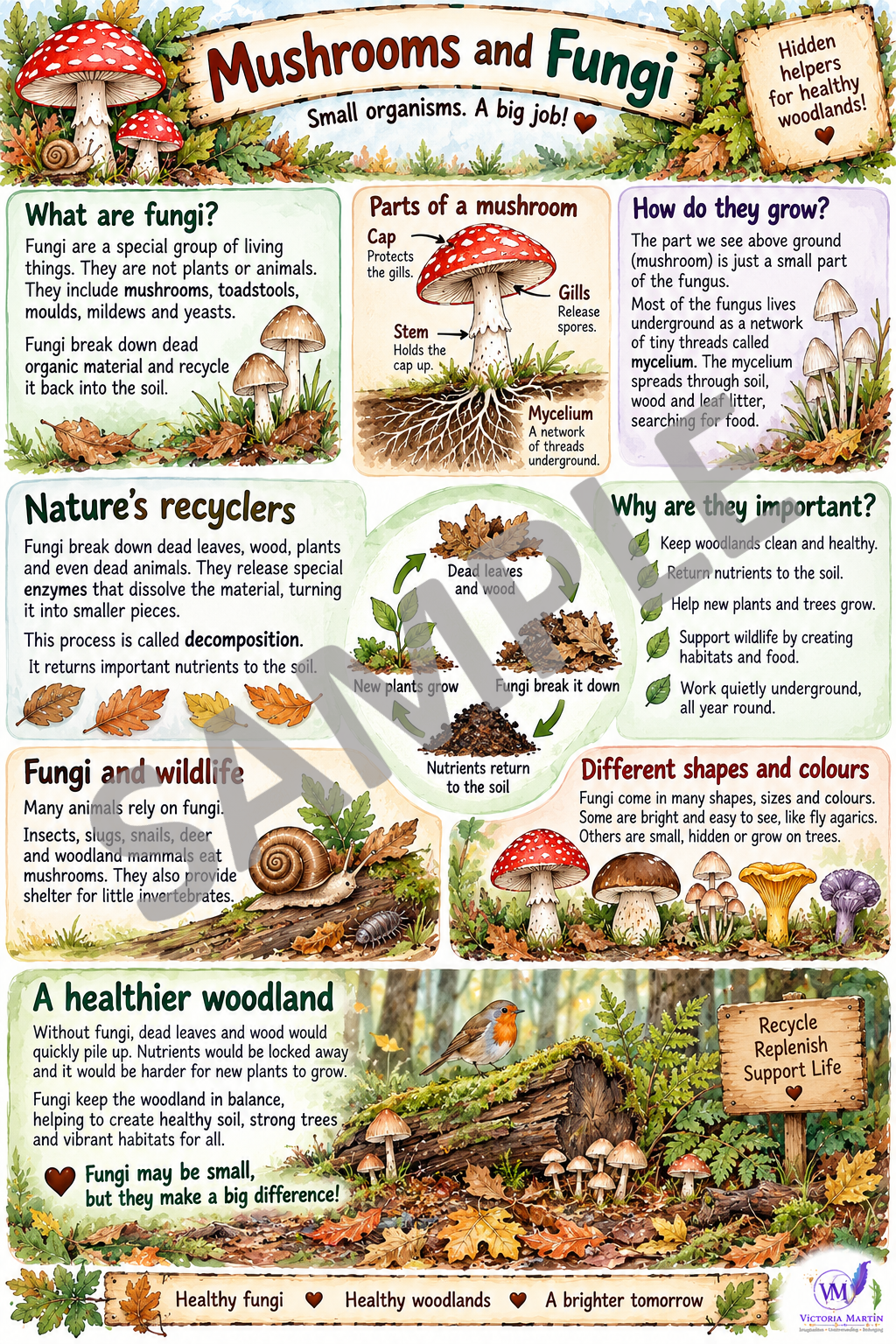
Many fungi grow as networks of microscopic, thread-like structures called hyphae. Together, these threads form a network known as a mycelium.
Mycelium can grow through soil, wood or other organic material, often remaining completely hidden from human sight.
Mushrooms and Other Fungi
Not every fungus produces something that looks like a traditional mushroom, and fungi occur in an enormous variety of shapes, colours and sizes.
Some produce familiar mushrooms with caps and stems, while others form brackets, balls, cups, crusts or other unusual structures.
Fungi you might encounter in Britain include:
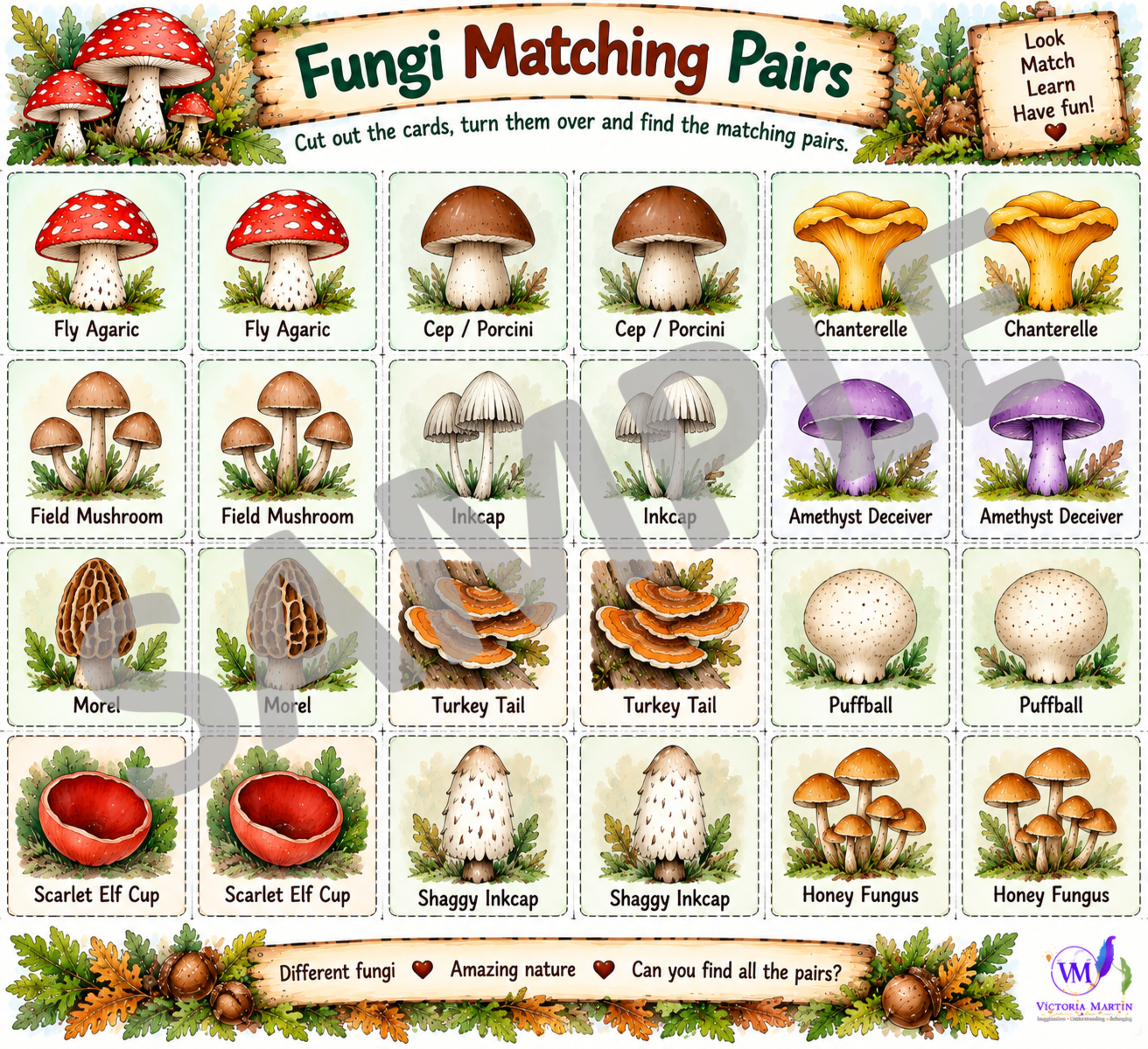
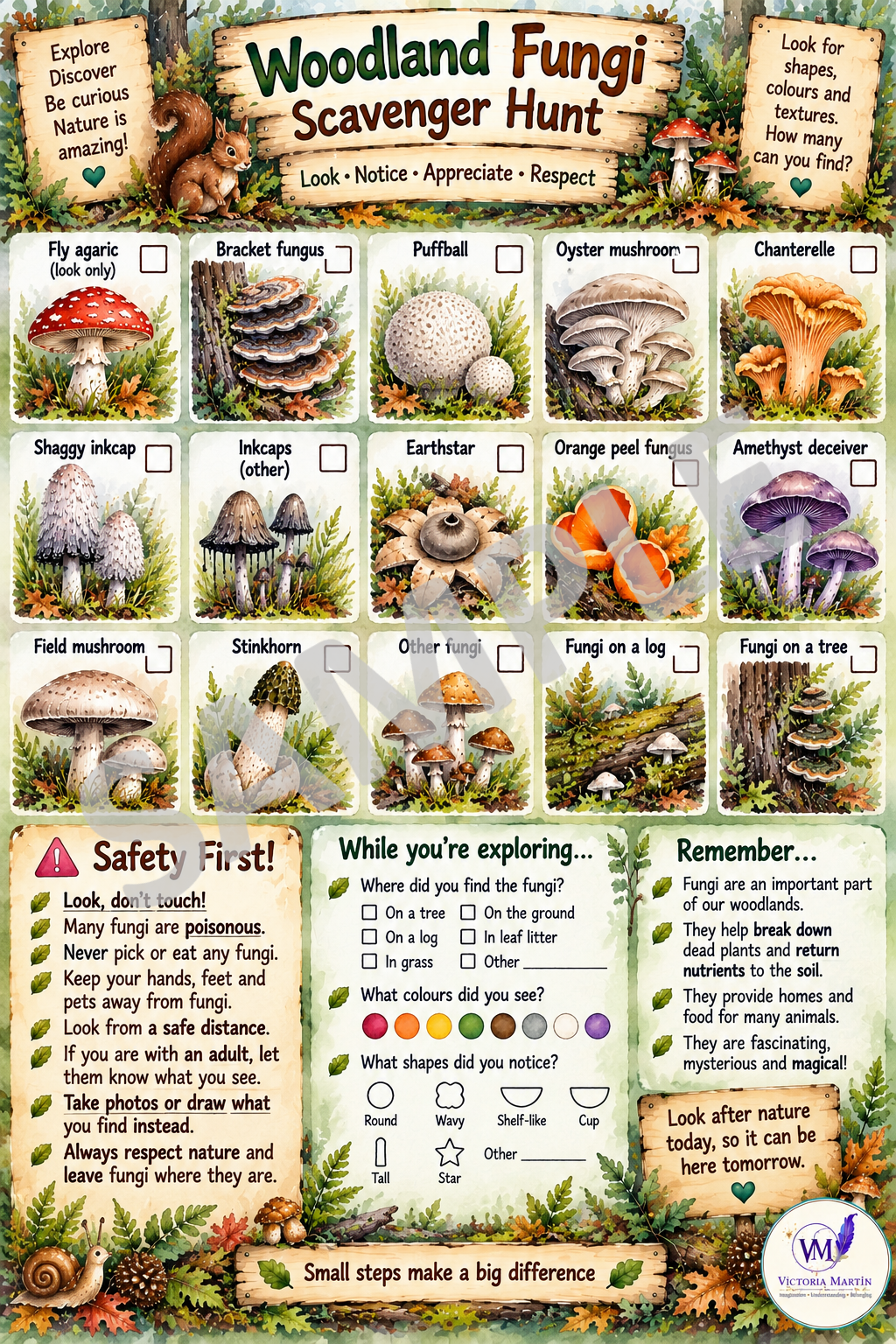
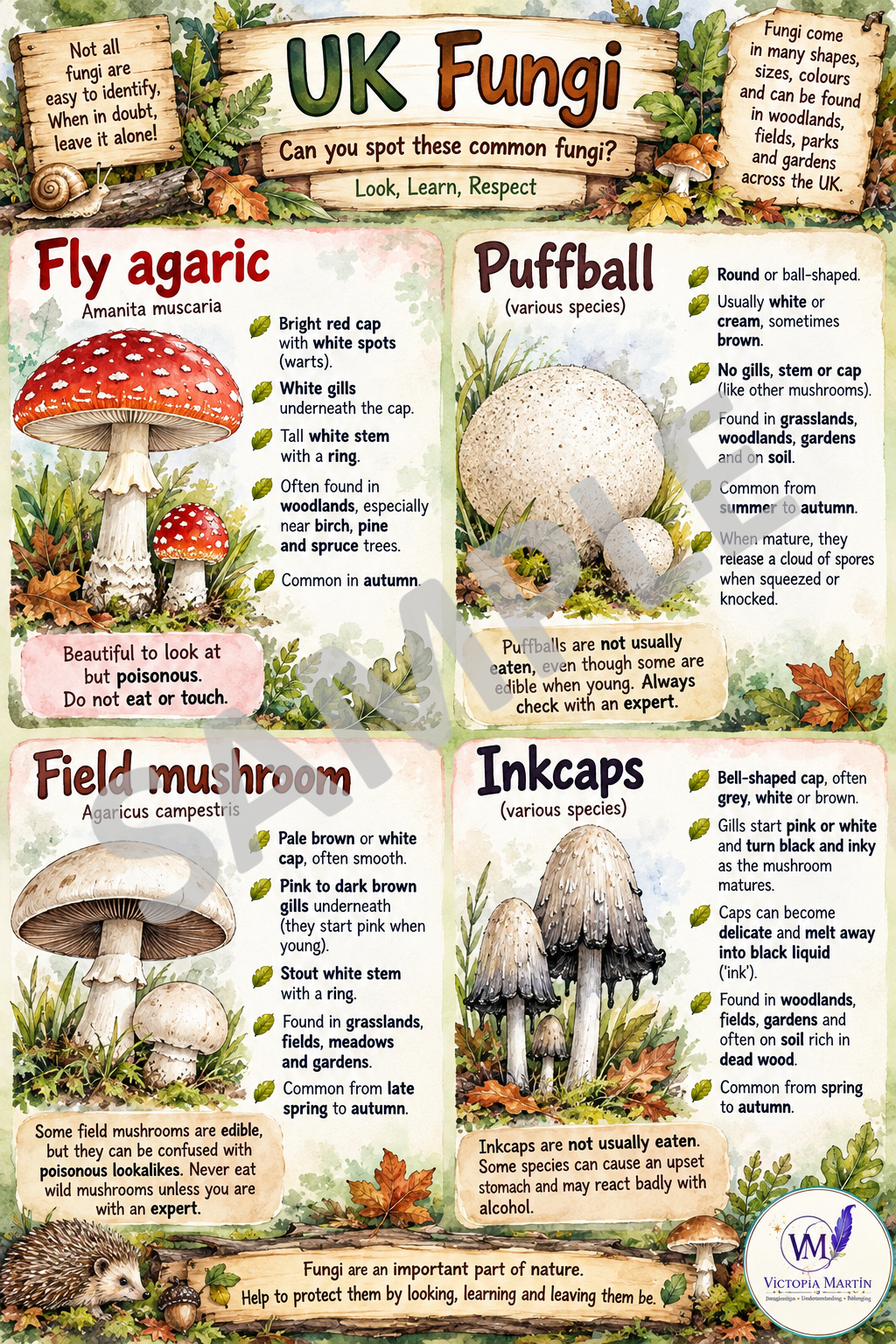
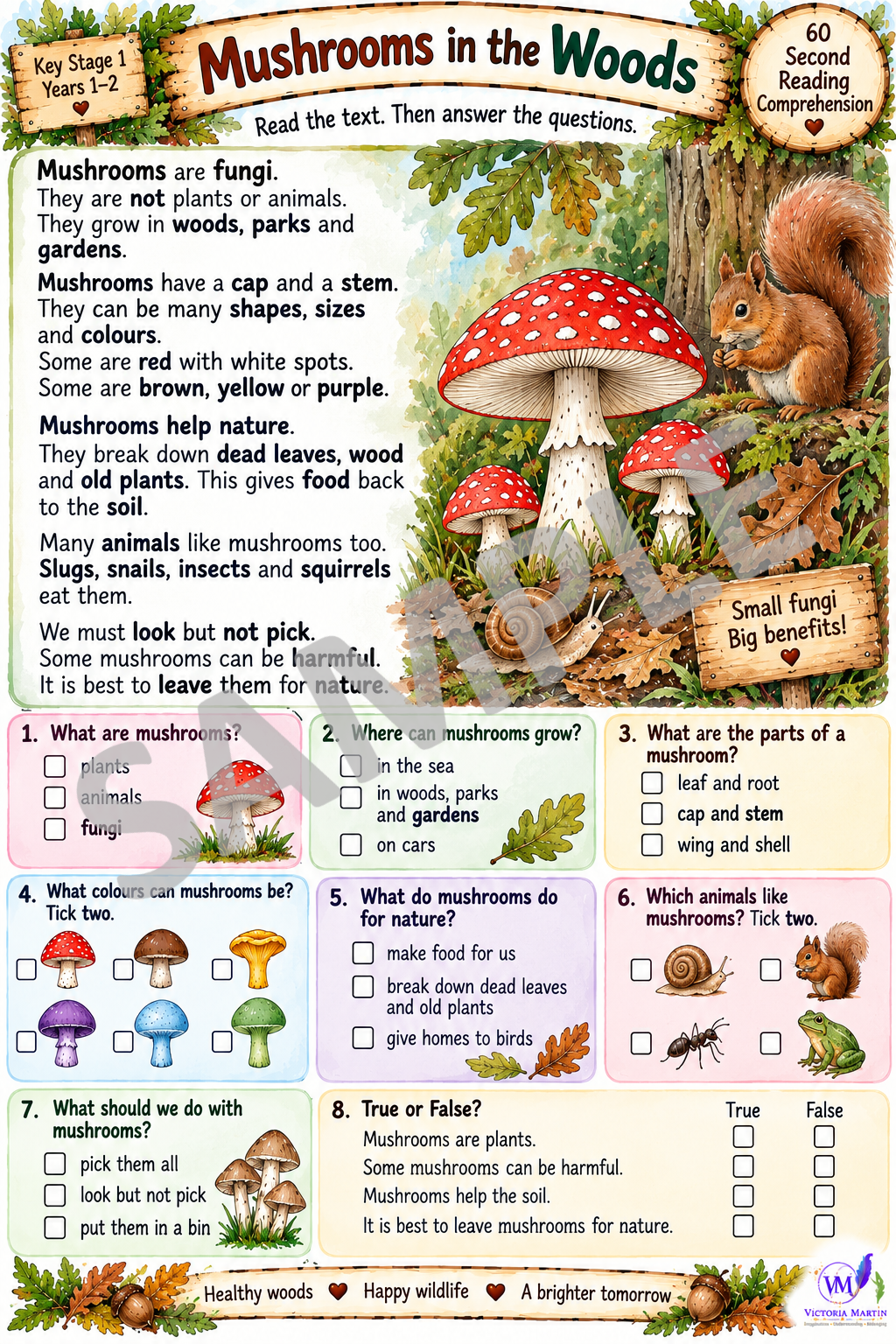
Fly agaric (Amanita muscaria) – one of Britain's most recognisable fungi, famous for its bright red cap and white spots. It is associated with several kinds of trees and is poisonous if eaten.
Shaggy inkcap (Coprinus comatus) – a distinctive fungus with a tall, shaggy white cap. As it matures, the cap begins to break down into a dark, ink-like liquid.
Puffballs – fungi that release clouds of powdery spores when their mature fruiting bodies are disturbed.
Turkeytail (Trametes versicolor) – a bracket fungus forming thin, colourful, fan-shaped fruiting bodies, often growing on dead wood.
Scarlet elf cup (Sarcoscypha species) – striking fungi producing bright red or scarlet cup-shaped fruiting bodies, often found on fallen woody material.
Jelly ear (Auricularia auricula-judae) – a distinctive brown, ear-shaped fungus commonly associated with elder wood.
Stinkhorn (Phallus impudicus) – a fungus famous for its powerful smell, which attracts insects that can help disperse its spores.
These are only a small selection because Britain supports thousands of species of fungi, many of which are extremely small or easily overlooked.
Where Do British Fungi Grow?
Fungi can be found in an enormous range of British habitats, wherever suitable food, moisture and environmental conditions are available.
They can occur in:
woodlands and forests
grasslands and meadows
parks and gardens
hedgerows
wetlands and bogs
dead and decaying wood
soil and leaf litter
living trees and plants
Some fungi grow directly from soil, while others appear on fallen branches, tree trunks, stumps or buried wood.
Different fungi have different requirements, which means a habitat containing old trees, dead wood and undisturbed soil can support an extraordinary diversity of fungal life.
Why Are There So Many Mushrooms in Autumn?
Autumn is particularly associated with mushrooms because cooler temperatures and increased moisture provide favourable fruiting conditions for many British fungi.
During warm or dry periods, the fungus itself may still be present as mycelium hidden within soil or wood, even when no mushrooms can be seen.
After periods of autumn rain, fungal fruiting bodies can sometimes seem to appear remarkably quickly.
The mushroom's purpose is primarily reproduction and spore dispersal, rather than being the entire fungal organism.
This means that the mushrooms appearing across an autumn woodland are often evidence of a much larger hidden fungal world beneath our feet and inside wood.
How Do Fungi Reproduce?
Many fungi reproduce by producing microscopic reproductive cells called spores, which can spread through the surrounding environment.
Depending on the species, spores may be carried by air, water or animals, allowing fungi to reach new places.
A mature mushroom can produce enormous numbers of spores, although only a small proportion will encounter conditions suitable for growth.
When spores reach suitable conditions, they can germinate and produce new fungal hyphae and mycelium. In many fungi, compatible fungal structures can also join as part of sexual reproduction.
Different groups of fungi reproduce in different and sometimes complex ways, so mushrooms represent only one part of the remarkable variety found within the fungal kingdom.
Fungi and Trees
Some of the most important relationships in a woodland are happening underground and out of sight.
Many fungi form partnerships with the roots of trees and other plants. These relationships are known as mycorrhizae.
The fungus can help the plant obtain water and mineral nutrients, while the plant provides the fungus with carbon compounds produced through photosynthesis.
These partnerships can be extremely important to the growth and health of plants, and many woodland fungi are closely associated with particular trees or groups of trees.
Not every fungus forms a mycorrhizal partnership, however. Other fungi obtain nutrients by decomposing dead material, while some live as parasites or pathogens on living organisms.
Nature's Recyclers
One of the most important jobs performed by fungi is decomposition.
Woodlands continually produce dead organic material, including fallen leaves, branches, dead trees and other matter.
Decomposer fungi release substances called enzymes that break complex organic material into forms from which the fungi can absorb nutrients.
This process also helps return nutrients to the surrounding ecosystem, where they can eventually be used by other organisms.
Without decomposers such as fungi and bacteria, dead organic material would accumulate and nutrient cycling would be severely disrupted.
Fungi are therefore some of nature's most important recyclers.
Fungi and Wildlife
Fungi are not only important to plants and soil; they also provide food and habitat for wildlife.
Many insects and other invertebrates feed upon fungal fruiting bodies or fungal tissue, while some animals eat mushrooms as part of their diet.
Fruiting bodies and decaying wood containing fungi can also provide valuable habitat for beetles, flies and other small creatures.
In turn, animals can sometimes help fungi by moving and dispersing spores to new locations.
Fungi therefore form an important part of the complex relationships within British ecosystems.
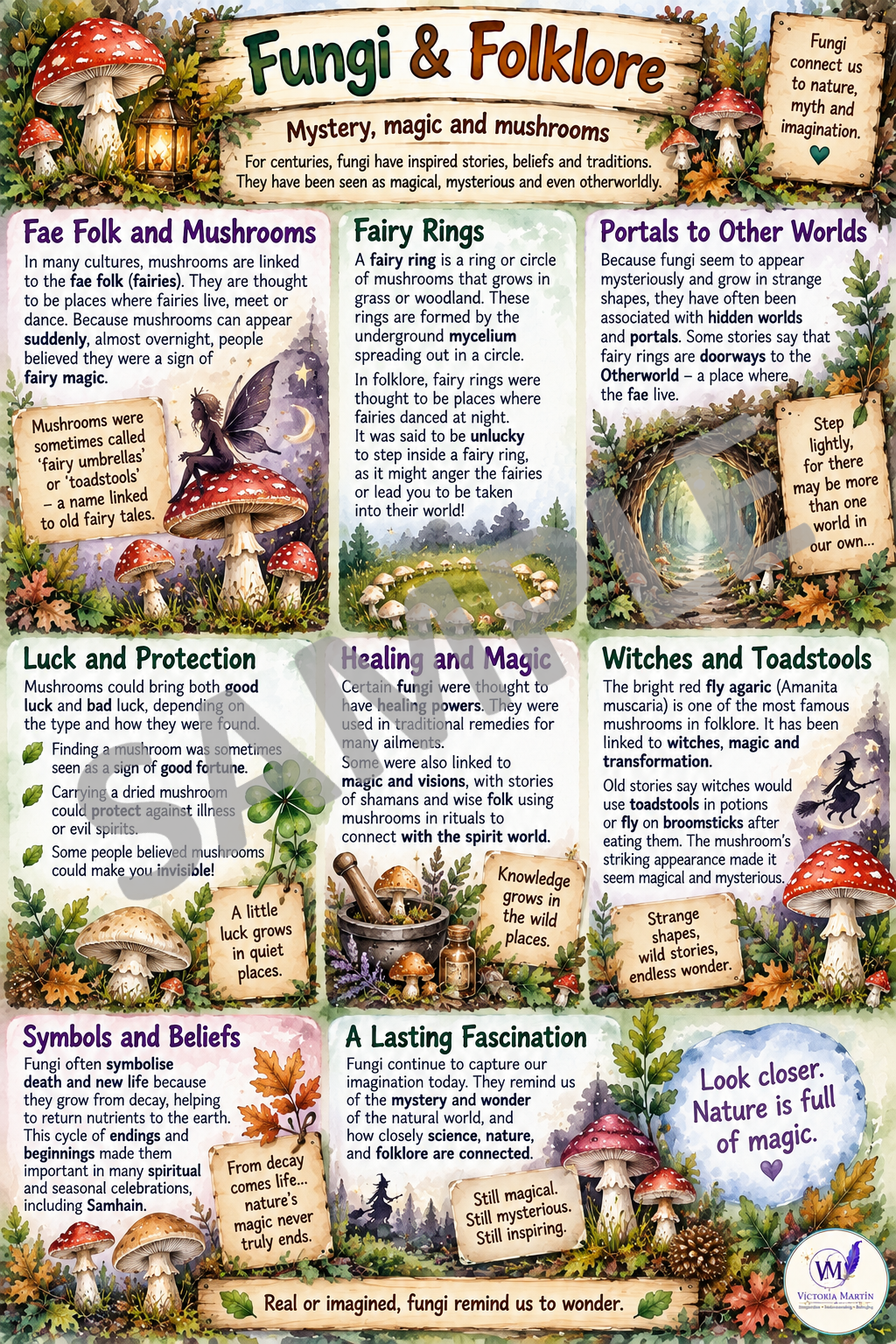
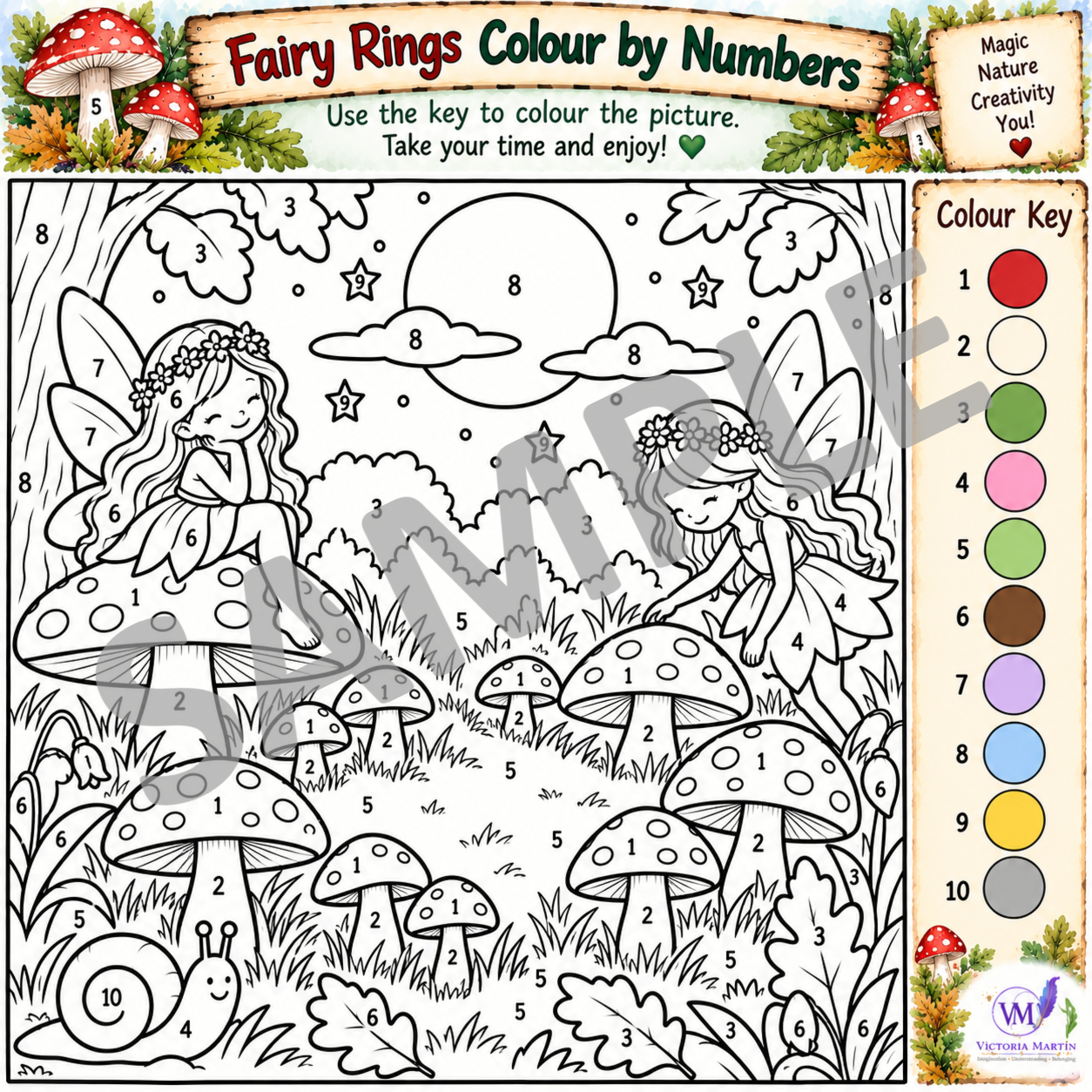
Fairy Rings
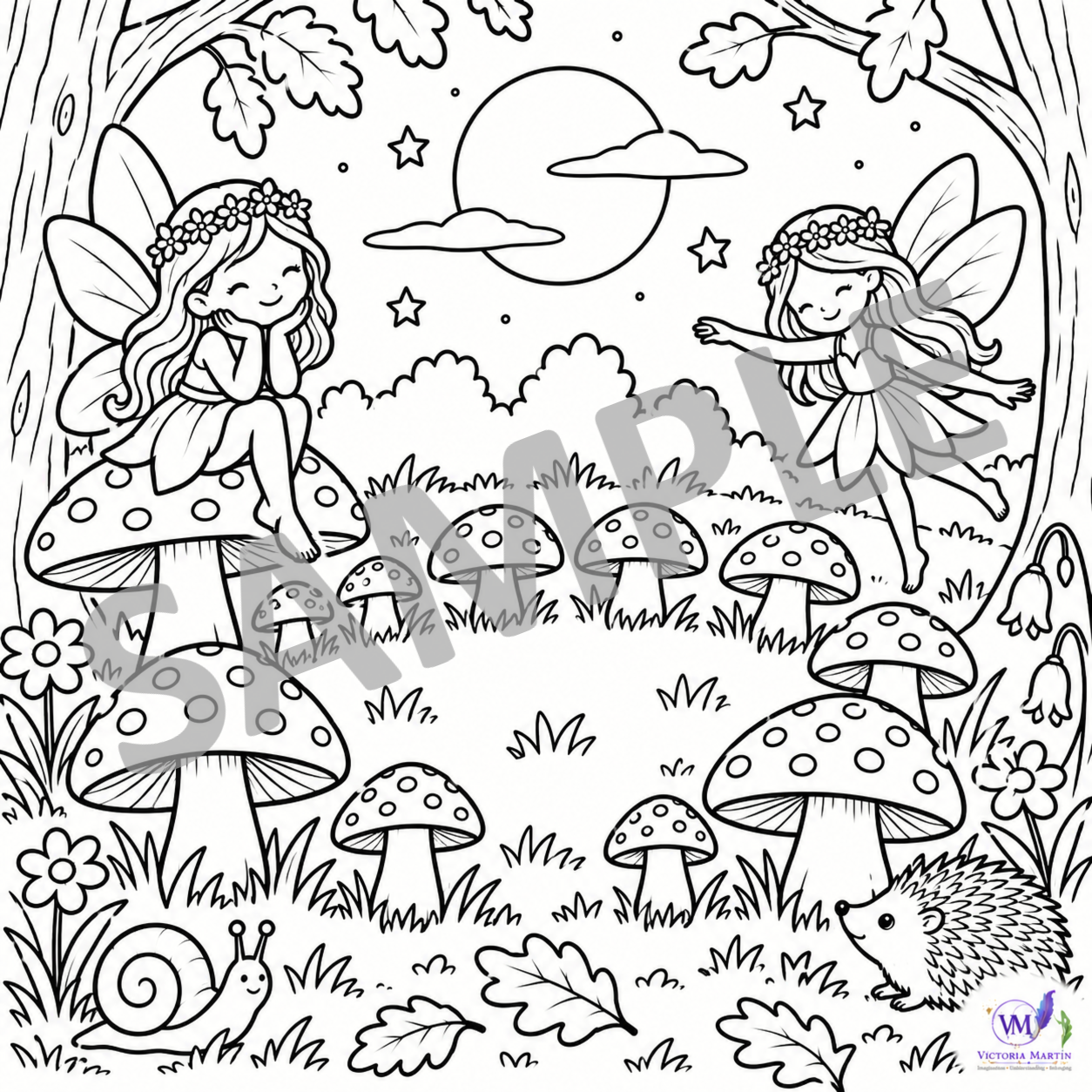
Sometimes mushrooms appear in a circle or curved line across grassland, lawns or woodland.
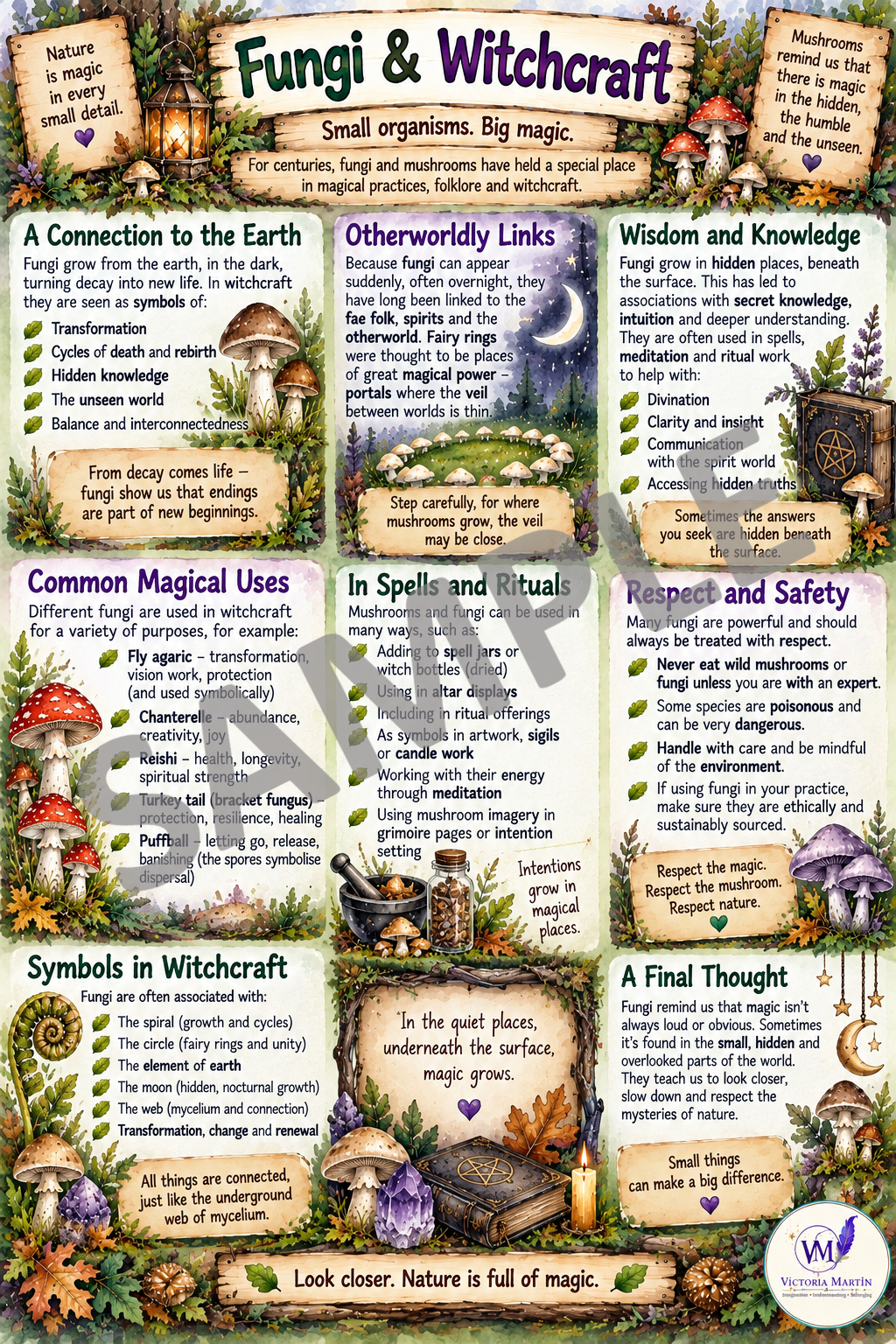
These formations are commonly called fairy rings, a name connected with centuries of British and European folklore.
The real explanation lies beneath the ground, where fungal mycelium can spread outwards through the soil.
Under suitable conditions, mushrooms may appear around the expanding edge of the fungal mycelium, producing the characteristic ring.
Over time, some fairy rings can become larger and larger as the fungus continues to grow.
Their mysterious appearance inspired stories involving fairies, magic and supernatural gatherings, but the rings themselves are a fascinating example of fungal growth.
Fungi in British Folklore
Fungi have long inspired stories, superstition and folklore, partly because they can appear suddenly and often have strange shapes, colours and smells.
Fairy rings became associated with fairies and other supernatural beings, and entering one was sometimes considered dangerous in traditional stories.
The striking red-and-white fly agaric has also become strongly associated with fairy-tale and magical imagery, appearing frequently in illustrations, stories and popular culture.
Old names for fungi sometimes reflect these connections, with words such as fairy, elf and witch appearing in traditional or common names.
These stories are part of Britain's cultural relationship with the natural world, rather than scientific explanations for how fungi grow.
Are British Mushrooms Safe to Eat?
Some British fungi are edible, while others can cause serious illness, and some are dangerously poisonous or potentially fatal.
Identifying mushrooms safely can be extremely difficult because different species can look remarkably similar, particularly to an inexperienced observer.
Colour alone is not a reliable identification method, and photographs or identification apps should not be relied upon to determine whether a wild mushroom is safe to eat.
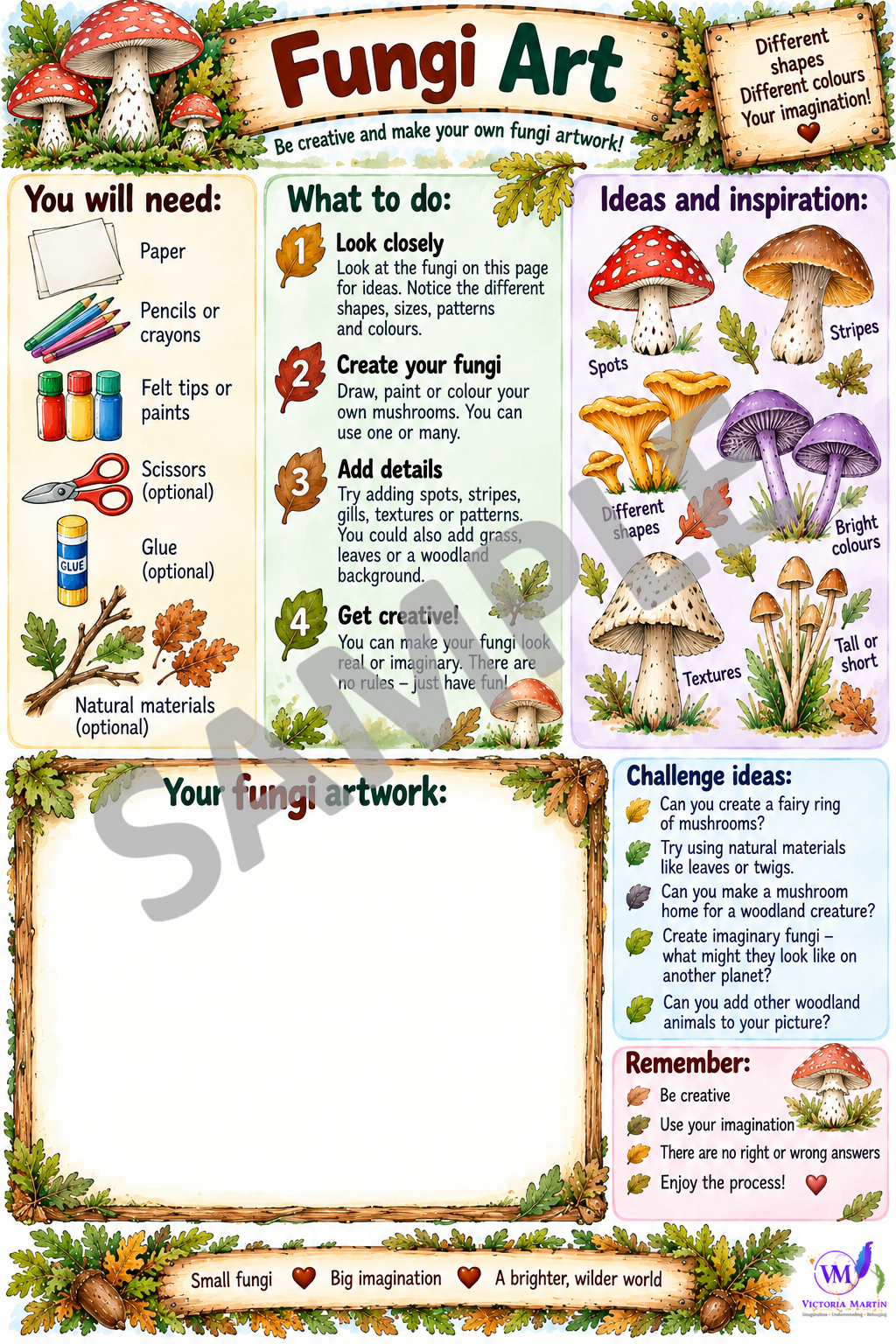
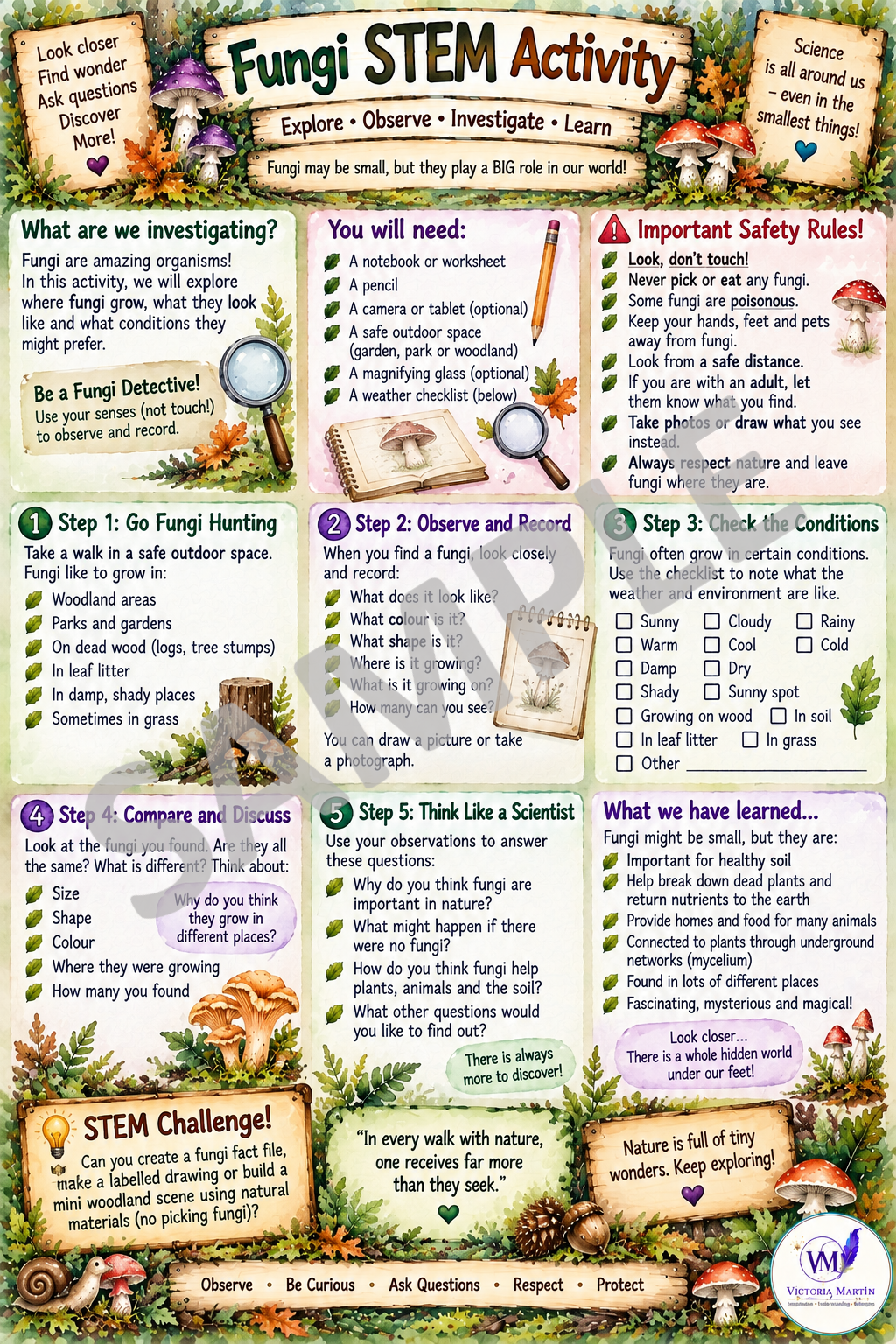
For a children's nature activity, the safest rule is simple: look, photograph and observe, but do not pick fungi for eating.
Wild mushrooms should never be eaten unless their identity and safety are known with certainty. Children should never eat wild fungi they find outdoors, and photographs or identification apps should not be relied upon to decide whether a mushroom is safe to eat.
If someone may have eaten an unidentified or potentially poisonous mushroom, seek medical advice promptly rather than waiting for symptoms to appear.
Looking After Fungi
Fungi are often overlooked when people think about wildlife and conservation, but they are essential components of healthy ecosystems.
Leaving some dead wood in suitable places can provide valuable habitat for fungi and the many other organisms that depend upon decaying wood.
Protecting ancient trees and woodland soils, as well as established habitats, can also protect fungal communities that may have developed over many years.
When exploring woodland, it is usually best to observe fungi carefully without unnecessarily damaging the fruiting bodies or the habitat surrounding them.
Remember that even when no mushrooms are visible, an extensive fungal organism may still be living beneath the soil or within wood.
Fungi Facts
🍄 Fungi belong to their own biological kingdom and are neither plants nor animals.
🌱 A mushroom is a type of spore-producing fruiting body produced by some fungi, rather than the whole fungal organism.
🕸️ Many fungi consist of tiny threads called hyphae, which together can form a network called mycelium.
🌳 Many woodland fungi form mycorrhizal relationships with plants, exchanging nutrients and carbon compounds.
🍂 Fungi play an essential role in breaking down dead organic material and recycling nutrients through ecosystems.
🌧️ Many mushrooms become particularly noticeable during damp autumn weather, although the fungus itself may be present throughout the year.
💨 Many fungi reproduce and spread using microscopic spores, which can travel through air, water or with animals.
⭕ A fairy ring can form as fungal mycelium grows outwards through the soil.
🪰 Some fungi use animals to help spread their spores; the smell of a stinkhorn attracts insects, which can carry sticky spores away from the fungus.
🔴 Fly agaric is one of Britain's most recognisable mushrooms, but it is poisonous and should not be eaten.
⚠️ Some British mushrooms are dangerously poisonous, and identifying edible fungi requires specialist knowledge and great care.
🔬 Scientists who study fungi are called mycologists, while the scientific study of fungi is known as mycology.
Look Closely
During a damp autumn walk, look carefully around trees, fallen branches and leaf litter.
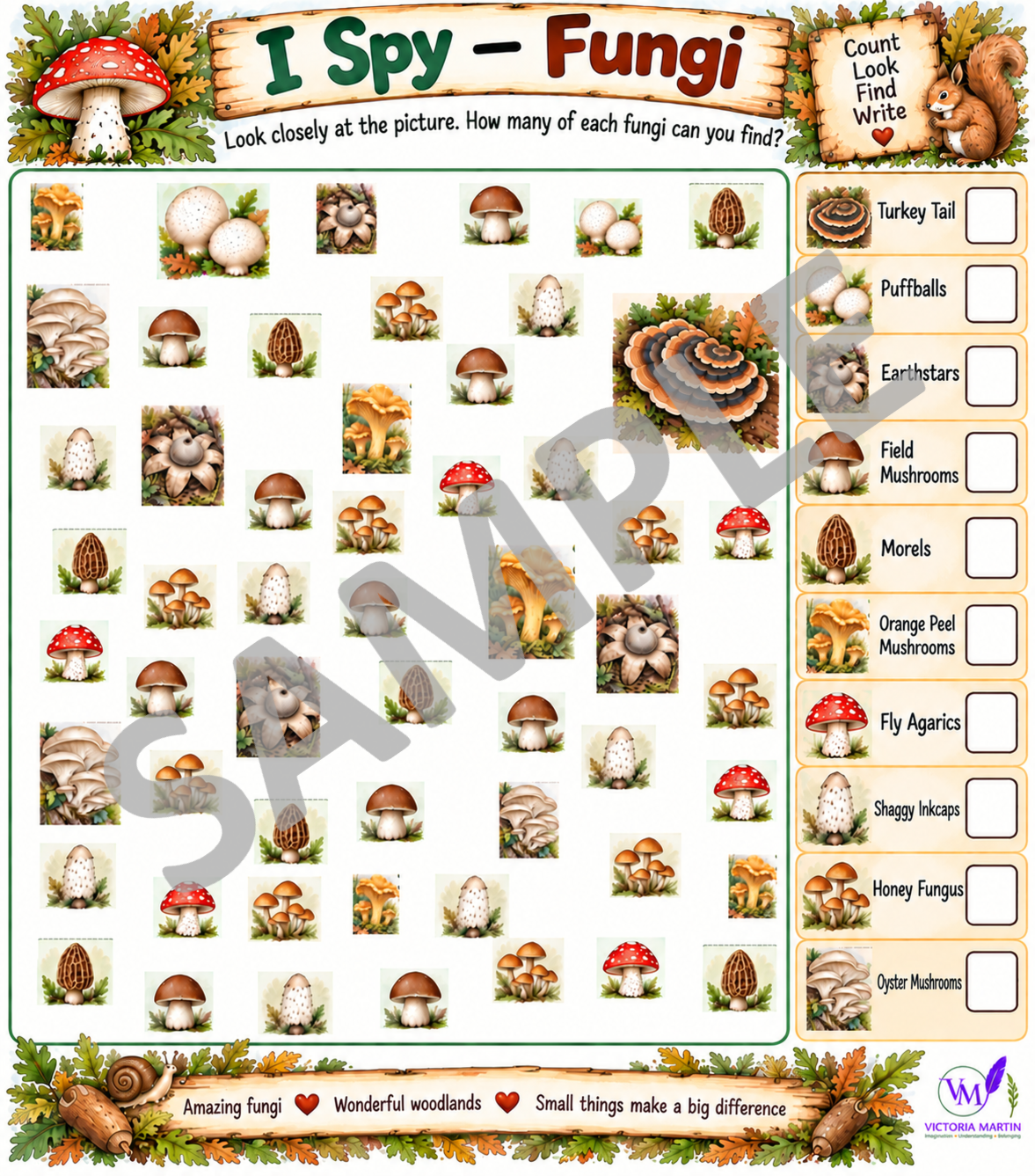
Can you find fungi with different shapes and colours, such as caps, brackets, cups or balls?
Can you see mushrooms growing from soil or leaf litter, or are they emerging from dead wood?
Look underneath a mushroom without picking it if you can see it safely; can you spot gills, pores or another surface where spores may be produced?
Can you find several mushrooms growing together in a group, or perhaps forming part of a circle or fairy ring?
Remember that you should never taste an unidentified wild mushroom, and children should be taught to observe fungi without putting them in their mouths.
The mushrooms we notice above ground are only a small part of the story. Beneath the soil, inside fallen branches and throughout woodland habitats, fungi are quietly recycling nutrients, forming partnerships and supporting British ecosystems.
Resources
Further Information
Facts about fungi | National Trust | National Trust
British wild mushroom and fungi guide: how to identify and where to find | Countryfile.com
Types Of UK Mushrooms: Identification Guide - Woodland Trust
The NHBS Guide to Fungi Identification
Home: British Mycological Society
UK fungi at work | Grow Wild | Kew
The secret life of fungi: Ten fascinating facts - BBC News
How to identify fungi | London Wildlife Trust
Unlocking the genetic secrets of the UK's fungi - BBC News
Biodiversity: Fungi are 'underloved and understudied' - BBC News
Fungi and Lichens - Woodland Trust
Hidden kingdom: a beginner’s guide to fungi | The Wildlife Trusts