Halloween in the UK
As October draws to an end and the autumn evenings become darker, pumpkins appear in windows, costumes emerge from cupboards and houses begin to fill with ghosts, witches, bats and cobwebs. On 31 October, people across the UK celebrate Halloween.
Modern Halloween combines centuries of traditions and influences. Some customs have connections with older seasonal festivals and Christian observances, while others developed much more recently through British, Irish, European and North American culture.
Today, Halloween in the UK is usually a secular celebration, particularly popular with children and families, involving costumes, pumpkin lanterns, parties, games and trick-or-treating.
When Is Halloween?
Halloween is celebrated each year on 31 October, the evening before All Saints' Day on 1 November.
The name Halloween developed from All Hallows' Eve, with hallow being an older word associated with a holy person or saint.
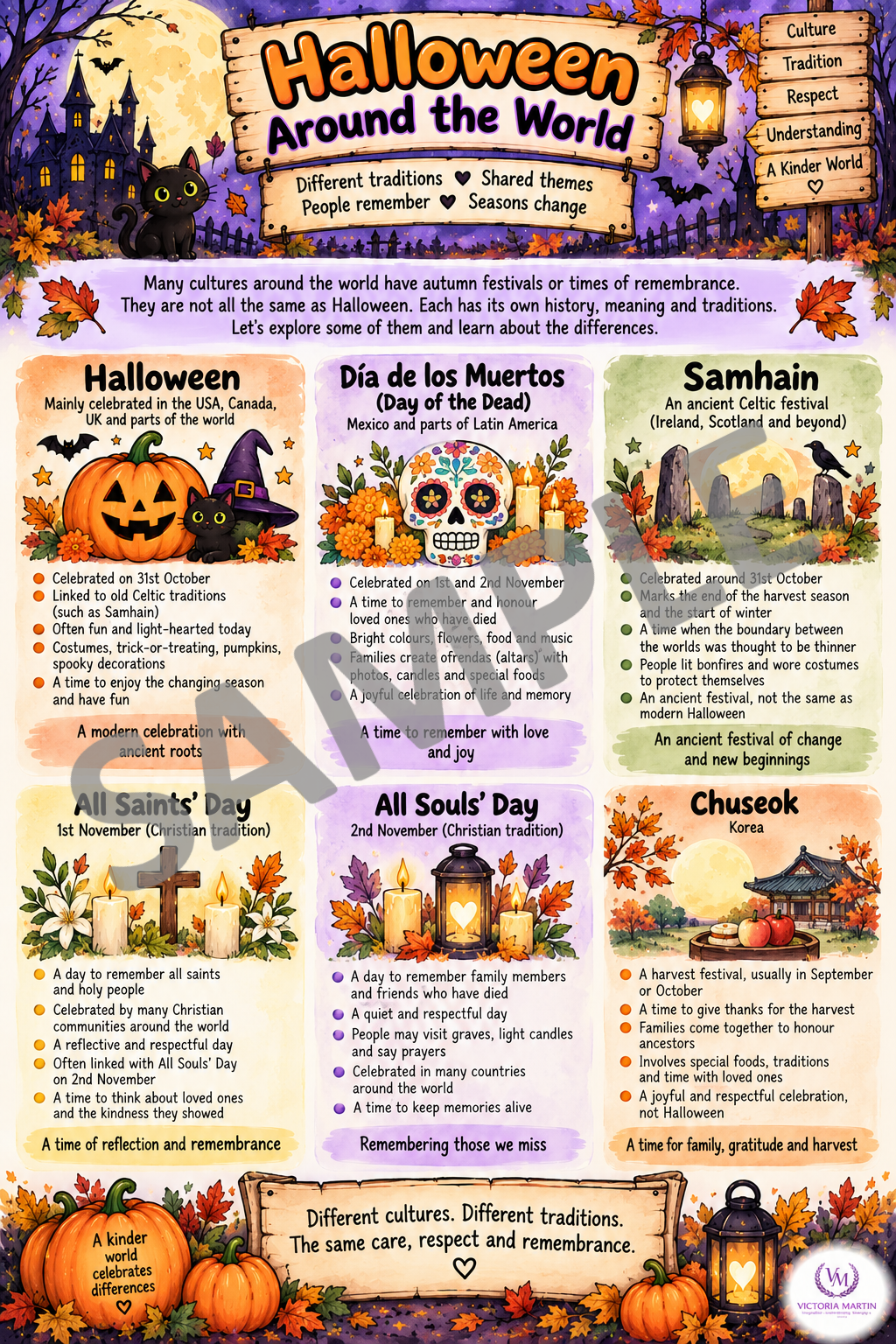
In the Christian calendar, All Saints' Day traditionally commemorates saints, while All Souls' Day on 2 November became associated with remembering the dead.
Over many centuries, customs surrounding these dates became intertwined with older seasonal traditions, folklore and popular celebrations, eventually contributing to the Halloween recognised today.
Ancient Autumn Traditions
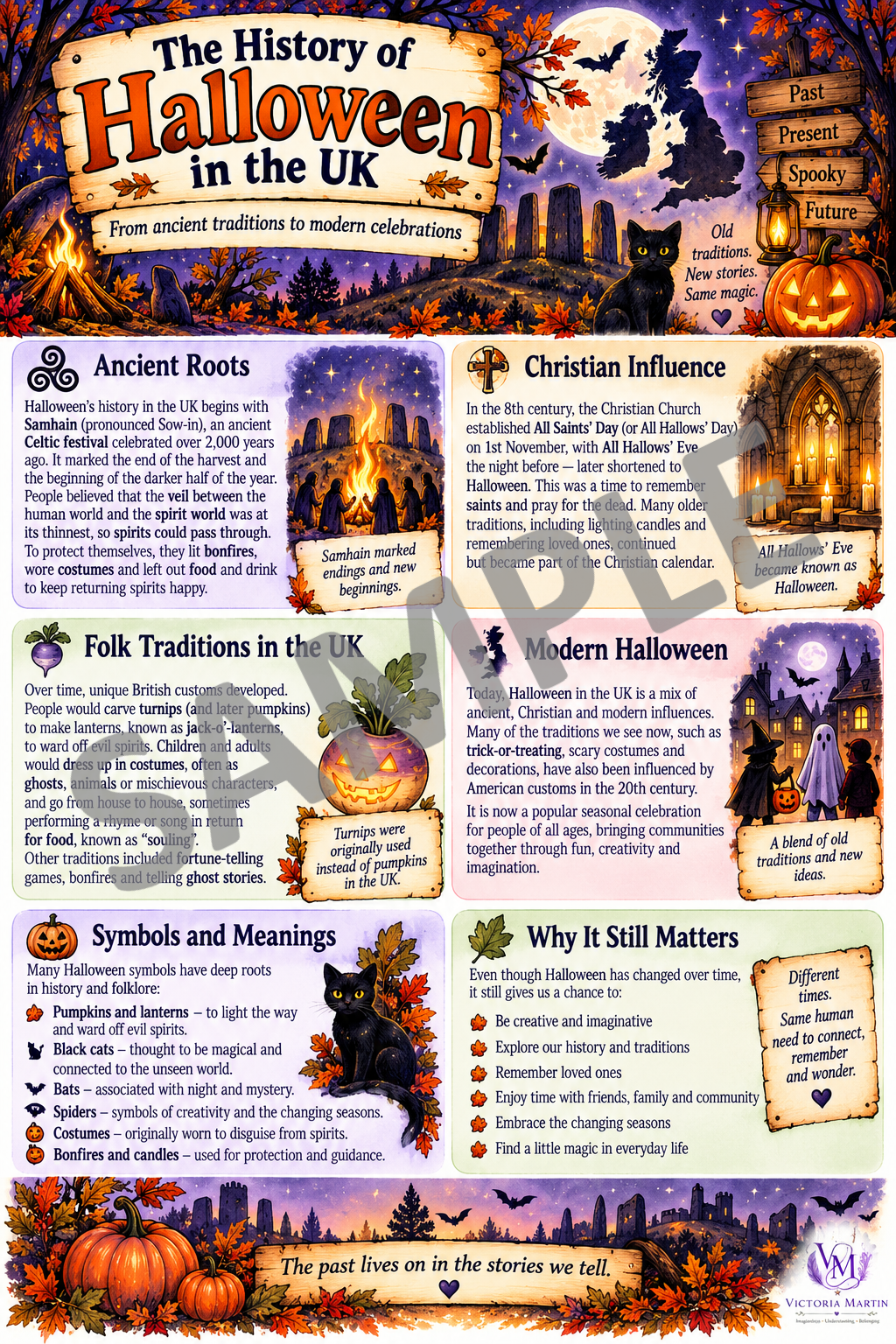
Halloween is frequently connected with Samhain, a seasonal festival found in the traditions of Gaelic Ireland and Scotland.
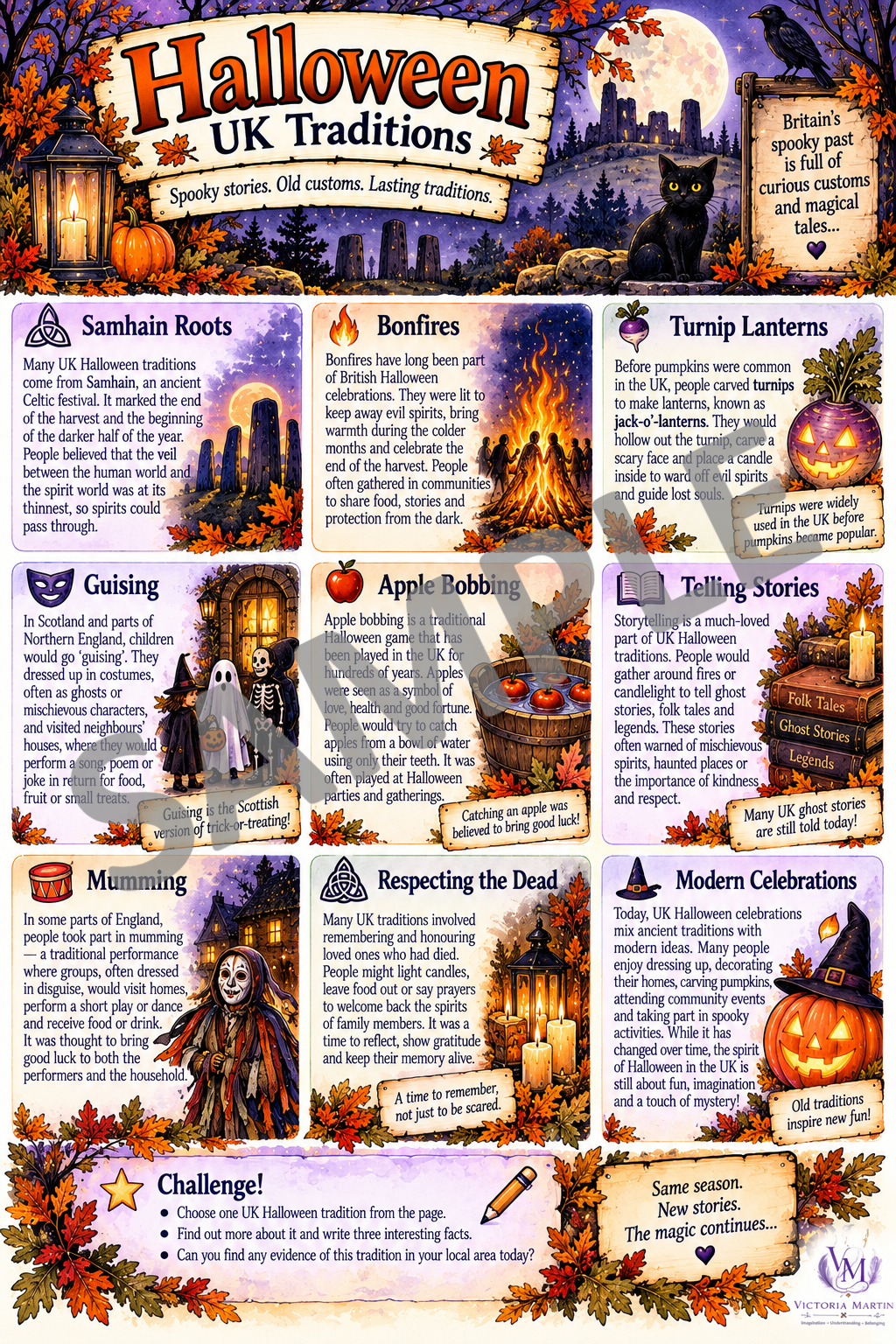
Samhain marked an important point in the traditional Gaelic calendar, associated with the beginning of winter and the movement from the lighter part of the year into the darker season.
Historical sources describe Samhain as an important seasonal gathering and festival, while later traditions and folklore also associated this time of year with supernatural beings and beliefs.
However, modern Halloween should not simply be described as “the Celtic festival of Samhain renamed”. Halloween developed over a very long period and has been influenced by Christian observances, folk customs and later popular culture, as well as traditions associated with Samhain.
The relationship between ancient seasonal festivals and modern Halloween is therefore fascinating but also more complicated than a single origin story.
All Hallows' Eve
Christian traditions also played an important part in the development of Halloween's history and name.
The evening before All Saints' Day became known as All Hallows' Eve, eventually shortened to Halloween or Hallowe'en.
During the medieval and early modern periods, communities across Britain and Ireland developed customs associated with remembering the dead, praying, food and seasonal gatherings.
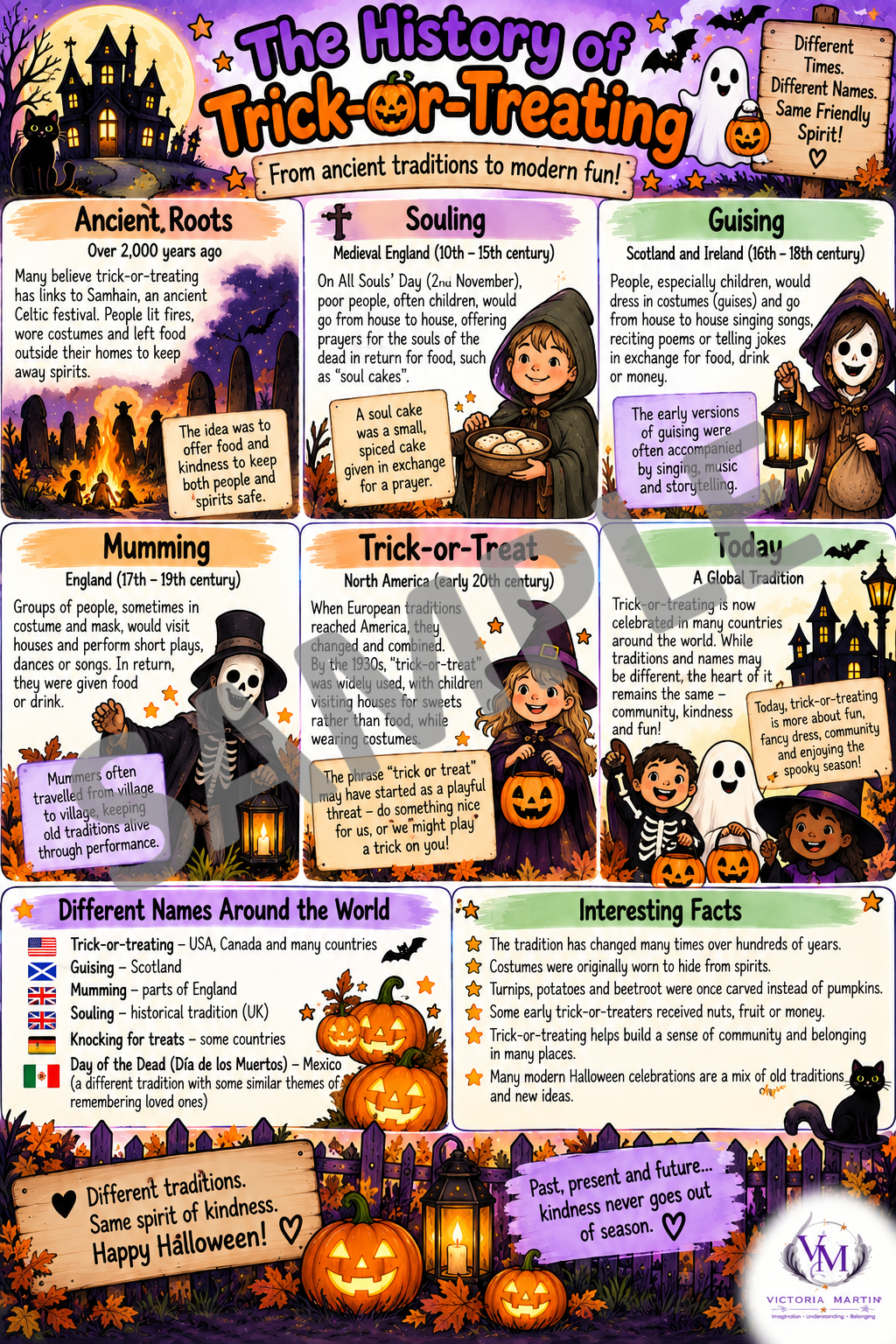
One tradition sometimes linked with this period is souling, when people travelled from house to house and received food, including small cakes sometimes called soul cakes, in connection with prayers for the dead.
Although souling is sometimes presented as the direct origin of modern trick-or-treating, the history is more complicated, with several different customs contributing to later Halloween traditions.
Guising
Long before modern trick-or-treating became widespread in Britain, parts of Scotland and Ireland had traditions involving people visiting houses in disguise.
In Scotland, this became particularly associated with guising, in which children or young people dressed in costume and visited neighbouring homes.
Traditionally, guisers might perform a song, rhyme, joke or another small performance before receiving food, nuts, fruit, sweets or coins.
The practice shares obvious similarities with modern trick-or-treating, although the traditions are not completely identical.
Costumes and disguises also appear throughout older European seasonal traditions, sometimes connected with spirits, supernatural beings and community celebrations.
Trick-or-Treating
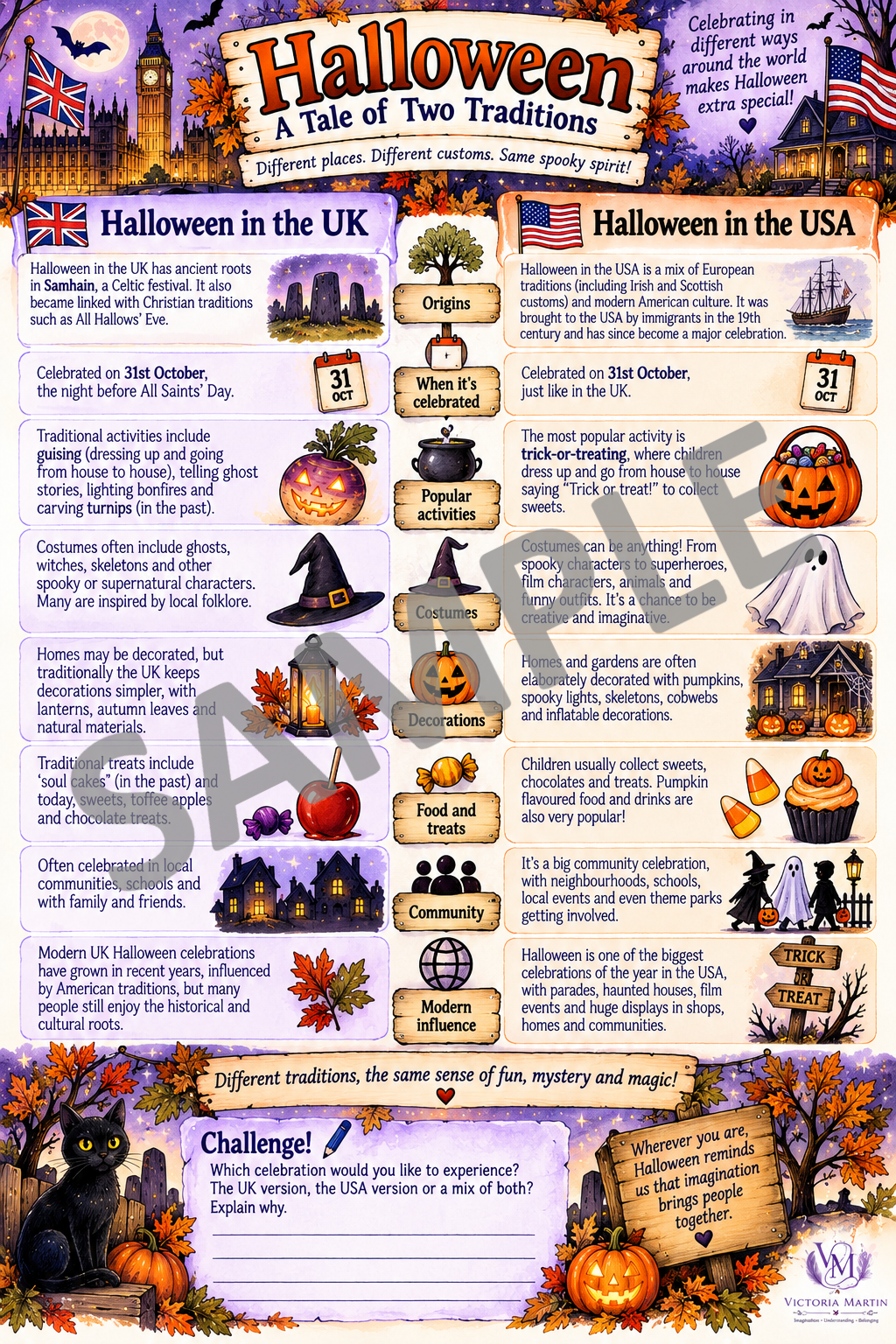
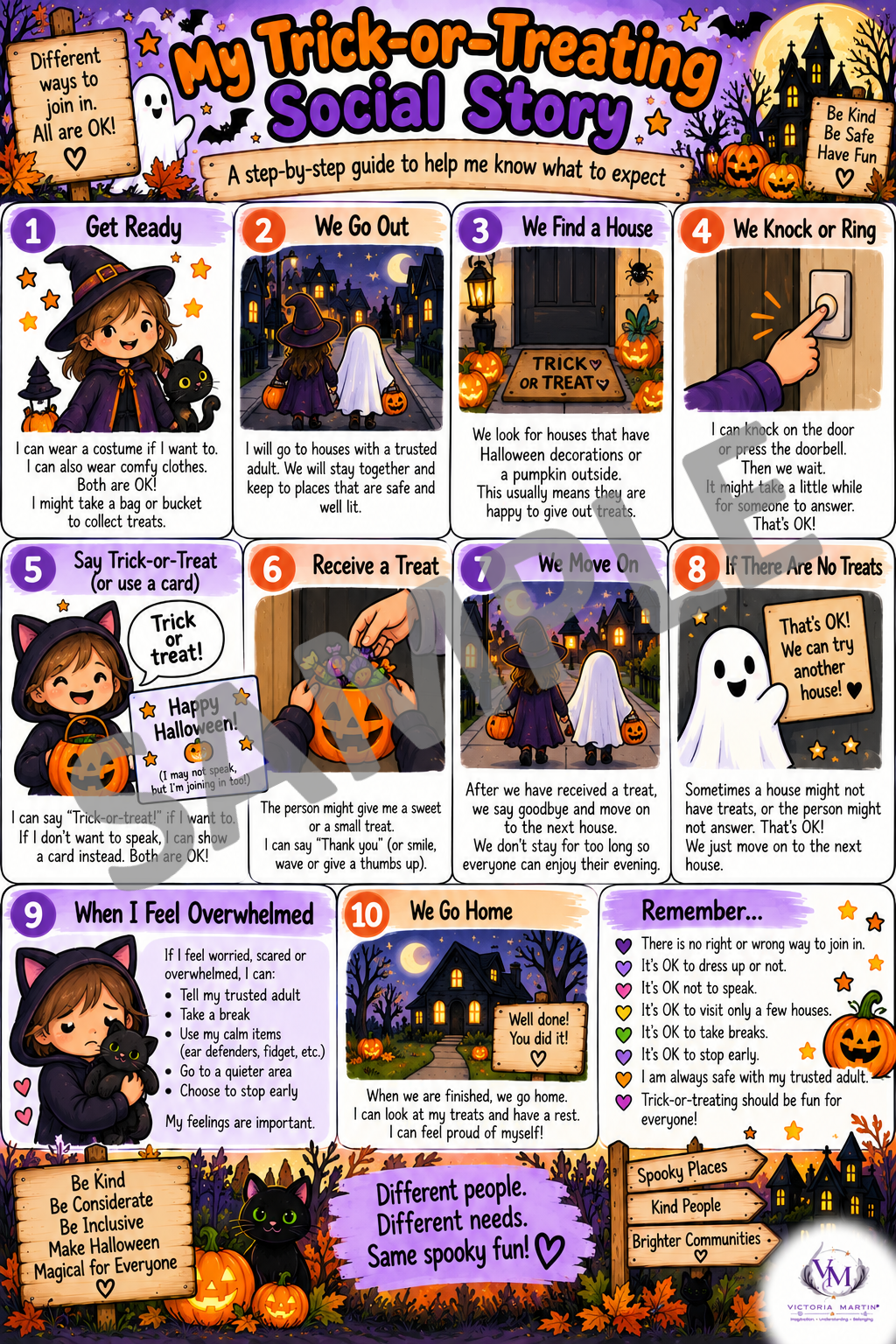
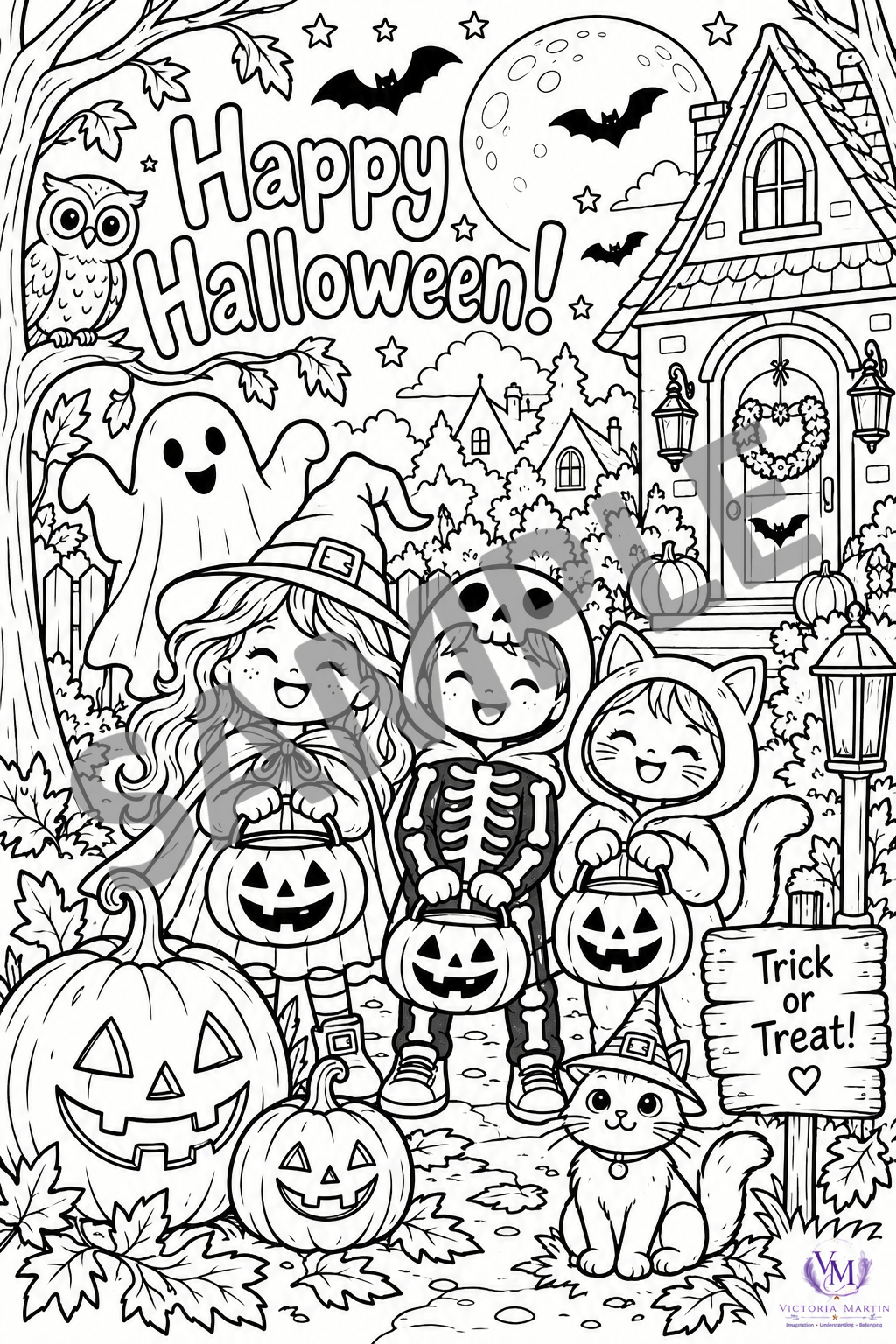
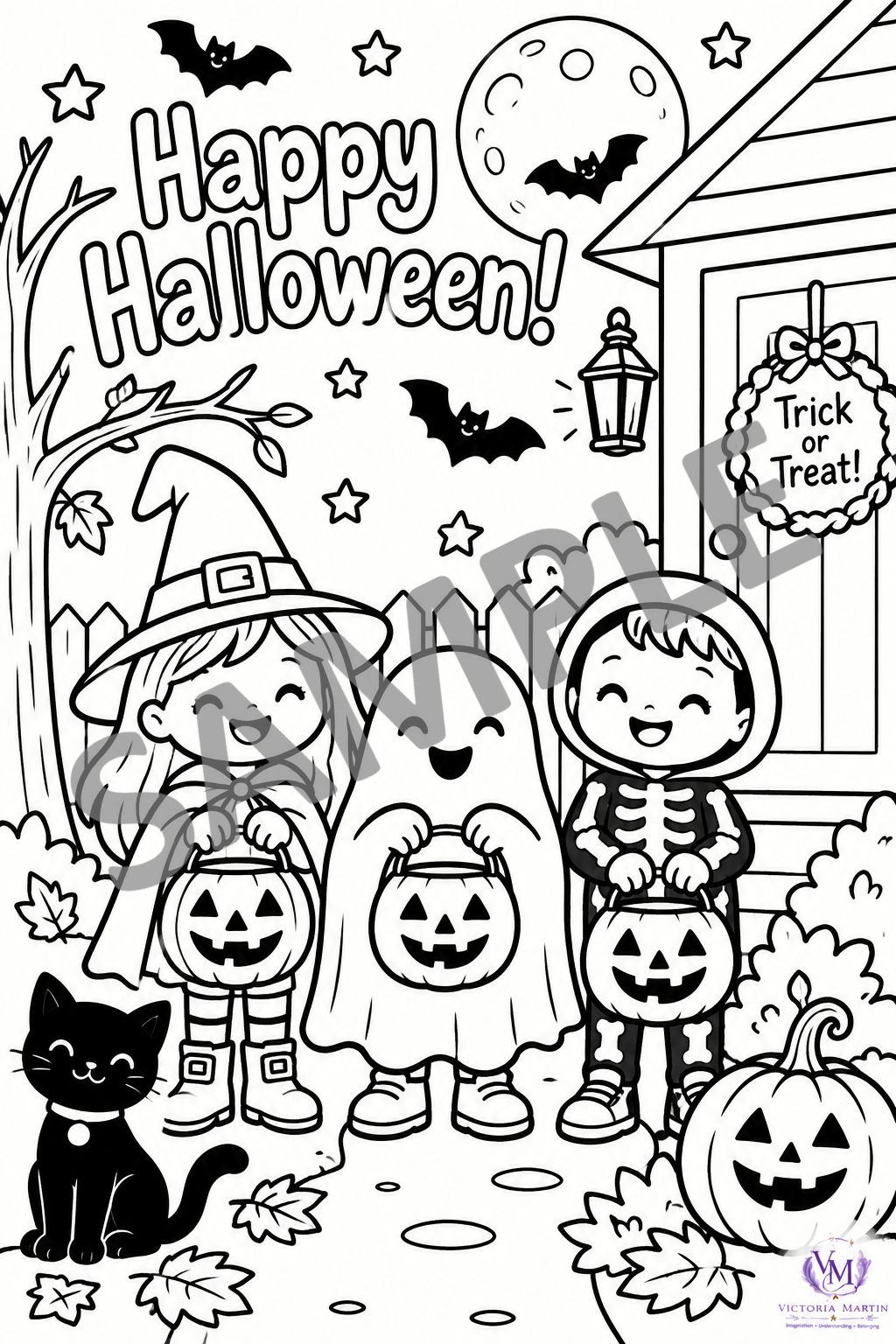
Today, trick-or-treating is one of the most familiar Halloween activities in the UK.
Children dress in costumes and visit participating houses, traditionally calling “trick or treat?” before receiving sweets or other treats.
The modern form of trick-or-treating became especially prominent in North America during the twentieth century and subsequently became increasingly popular in Britain.
However, visiting houses at this time of year was not entirely new to Britain and Ireland, because customs such as guising and souling had existed much earlier.
Modern British trick-or-treating therefore sits within a much longer history of seasonal visiting traditions, while also showing strong influence from modern North American Halloween culture.
Halloween Lanterns
One of the most recognisable Halloween traditions is making a lantern with a carved face.
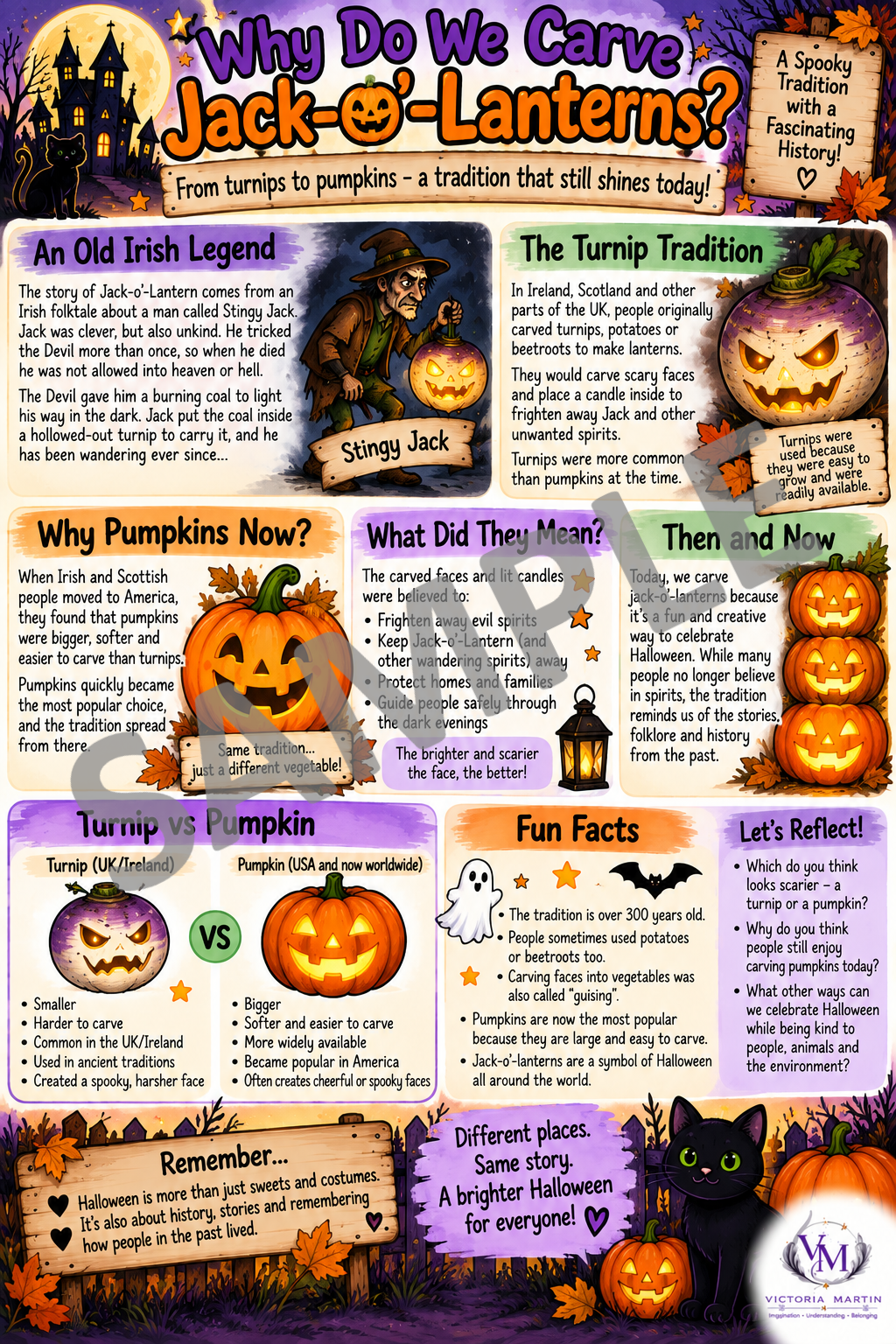
Today these are usually made from pumpkins, but pumpkins are native to the Americas and were not the traditional lantern vegetable of Britain and Ireland.
In parts of Britain and Ireland, people historically carved turnips and other root vegetables into lanterns.
These could be given strange or frightening faces and illuminated from inside.
Immigrants from Ireland and elsewhere in the British Isles carried related traditions to North America, where native pumpkins were larger and easier to hollow and carve than many traditional root vegetables.
Pumpkin lanterns eventually became one of the world's most recognisable symbols of Halloween, and the custom later became increasingly popular in the UK.
Jack-o'-Lanterns
Carved Halloween lanterns are commonly known as jack-o'-lanterns.
The name Jack-o'-lantern existed before modern pumpkin carving and was historically used for mysterious lights seen outdoors, particularly the phenomenon also known as will-o'-the-wisp.
Folklore later connected the name with stories involving a character often called Stingy Jack, although versions of these stories vary and should be understood as folklore rather than historical fact.
Today, jack-o'-lantern usually means a carved pumpkin lantern, particularly one with a face illuminated from inside.
In Britain, however, the pumpkin is a relatively recent replacement for the older tradition of carving root vegetables.
Halloween Costumes
Halloween costumes can include almost anything today, from witches, ghosts and vampires to superheroes, animals and characters from films or books.
Historically, disguises and costumes appeared in several seasonal and folk traditions, including Scottish and Irish guising.
Ideas about ghosts, spirits and supernatural creatures also became increasingly associated with Halloween through folklore, literature and popular entertainment.
During the twentieth and twenty-first centuries, Halloween costumes expanded far beyond traditional supernatural characters.
Modern Halloween dressing-up is therefore another example of a tradition that combines older customs with constantly changing popular culture.
Witches and Halloween
The image of a witch with a pointed hat, broomstick and black cat has become one of Halloween's most familiar symbols.
Belief in witchcraft has a long and complicated history in Britain, including periods when people accused of witchcraft faced persecution, imprisonment and execution.
The cheerful cartoon witch commonly seen at Halloween is therefore a modern cultural image rather than an accurate representation of historical beliefs or people accused of witchcraft.
Broomsticks, cauldrons, black cats and pointed hats became strongly established in folklore, literature, illustration and popular culture, eventually becoming part of modern Halloween imagery.
Today, witches can appear in Halloween celebrations as anything from frightening supernatural characters to friendly or humorous figures.
Ghosts and the Supernatural
Stories about ghosts and supernatural beings have existed in Britain for centuries.
Old castles, ruined abbeys, ancient houses, forests and lonely roads have all inspired local ghost stories and legends.
Halloween's position at the beginning of the darker part of the year made supernatural stories particularly appropriate for autumn evenings.
Over time, ghost stories, Gothic literature and later films and television helped strengthen the connection between Halloween and haunted places.
Whether someone believes in ghosts or simply enjoys the stories, supernatural folklore forms an important part of Britain's storytelling traditions.
Bats, Owls and Other Halloween Animals
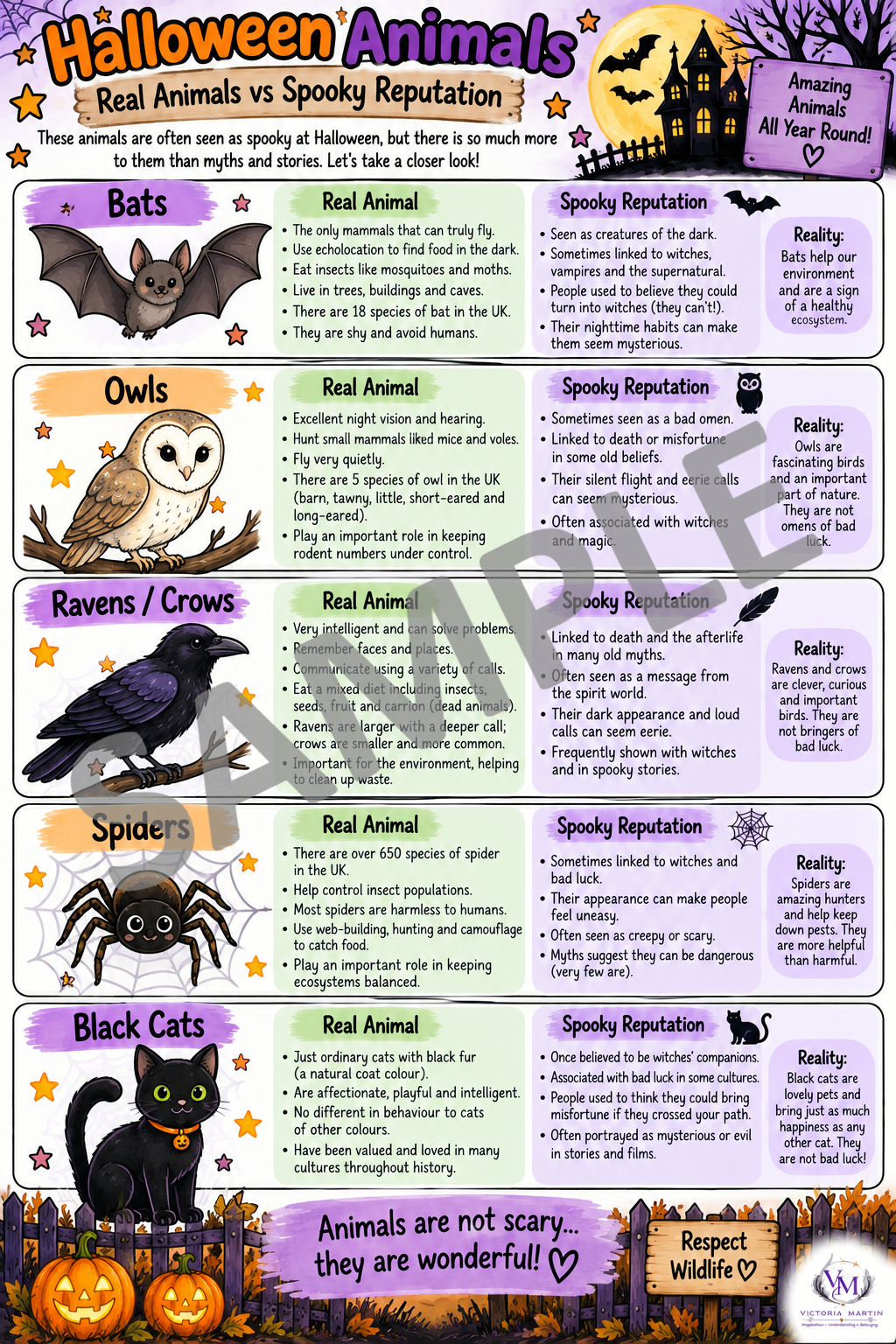
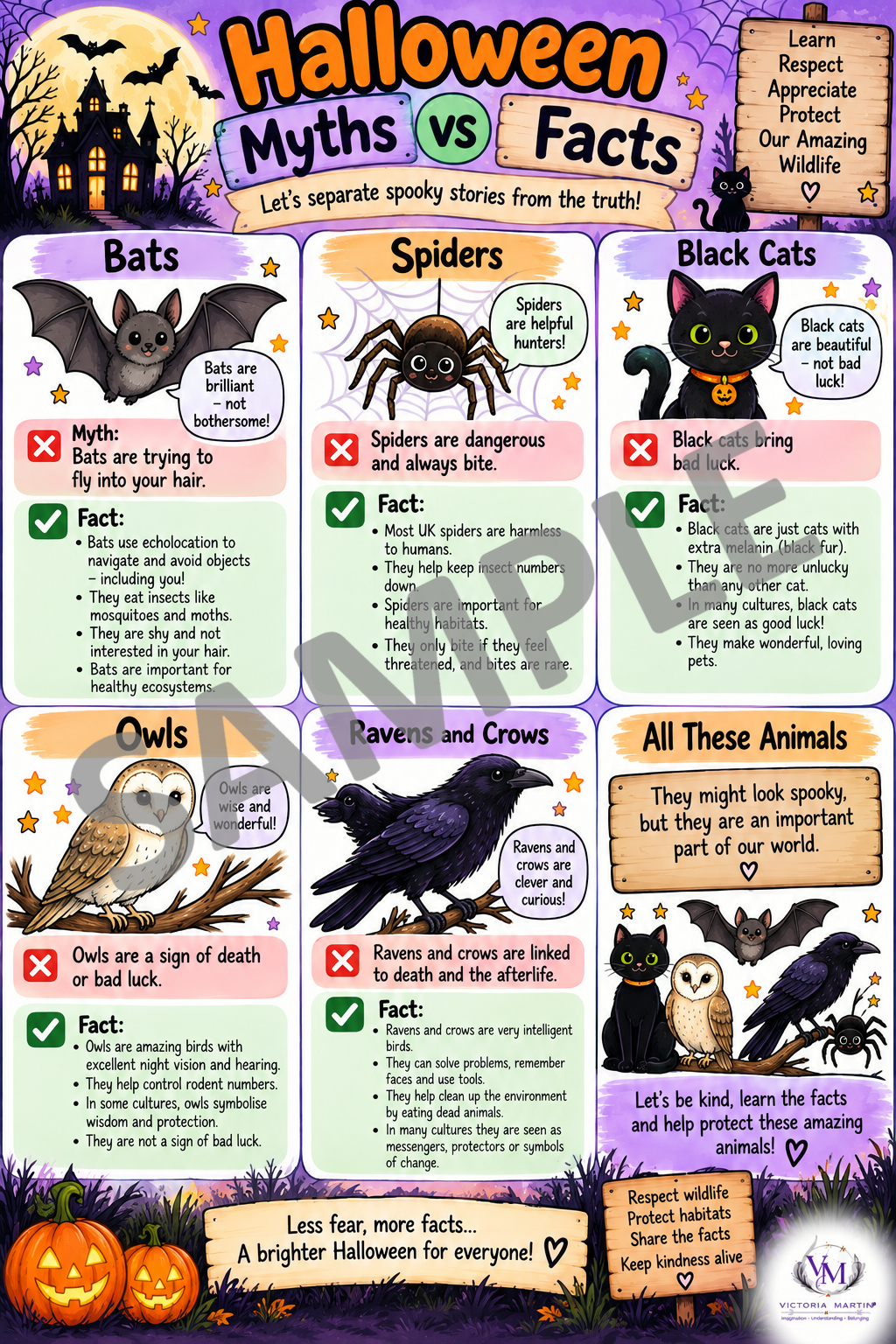
Several real animals have become associated with Halloween imagery, particularly bats, owls, spiders, ravens and black cats.
Bats are naturally associated with darkness and nighttime activity, although British bats are insect-eaters rather than the frightening creatures sometimes shown in Halloween stories.
Owls are also frequently linked with night, mystery and folklore, while spiders and their webs contribute to the eerie appearance of traditional Halloween decorations.
Black cats have been associated with different beliefs and superstitions over time, and their meaning has varied considerably between cultures and historical periods.
Behind the spooky imagery, these are real animals with important ecological roles, making Halloween a good opportunity to learn more about the wildlife sharing our autumn landscape.
Traditional Halloween Games
Halloween celebrations have included many games and activities over the years.
Apple bobbing involves trying to pick up floating apples using only the mouth and has connections with older autumn celebrations and divination customs.
Apples, nuts and other seasonal foods frequently appeared in traditional autumn games, particularly before modern packaged sweets became widely available.
Some older games attempted to predict a person's future marriage, luck or fortune, reflecting the importance of divination in some historical seasonal customs.
Today, Halloween games are generally played simply for fun and entertainment, particularly at children's parties.
Halloween Food
Modern Halloween celebrations are famous for sweets and chocolate, but older autumn celebrations used foods that were seasonally available.
Apples, nuts and root vegetables were particularly common ingredients in autumn traditions.
In different parts of Britain and Ireland, Halloween and the surrounding season developed their own regional foods and recipes.
Today, families might make pumpkin soup, decorated biscuits, cakes or spooky-themed food, while trick-or-treaters are usually offered sweets or chocolates.
Halloween food therefore reflects both older harvest traditions and modern celebration culture.
Halloween Across the UK
Halloween traditions have never been exactly the same everywhere in the UK.
Scotland has a particularly strong history of guising, while parts of England, Wales and Northern Ireland developed their own local customs and seasonal traditions.
Some communities historically placed greater emphasis on Halloween, while others focused more strongly on nearby celebrations such as Bonfire Night on 5 November.
Modern television, films, shops and social media have made Halloween celebrations more recognisable across the UK, but families and communities still celebrate in many different ways.
Some people organise large parties or trick-or-treating trips, while others simply carve a pumpkin, watch a film or choose not to celebrate at all.
Halloween and Bonfire Night
In the UK, Halloween is quickly followed by Bonfire Night on 5 November.
The two celebrations have different historical origins, even though their close position in the calendar means that modern autumn events sometimes combine elements of both.
Halloween is celebrated on 31 October, while Bonfire Night commemorates the failure of the Gunpowder Plot of 1605.
Historically, Bonfire Night became a particularly prominent autumn celebration in many parts of Britain.
Today, October and early November can therefore include a mixture of Halloween decorations, pumpkins, bonfires and fireworks, although each tradition has its own history and meaning.
Staying Safe at Halloween
Halloween can be exciting, but dark evenings, costumes and candles create some additional risks.
Children trick-or-treating should be accompanied or supervised in a way that is appropriate for their age, and everyone should take extra care when crossing roads in the dark.
Children's fancy-dress costumes are regulated as toys rather than ordinary clothing, so families should take particular care around fire.
Costumes should be kept well away from candles, fires and other naked flames, and adults should check safety information and appropriate UKCA or CE markings when buying costumes.
Battery-operated lights provide a safer alternative to candles inside pumpkins, particularly around children and pets.
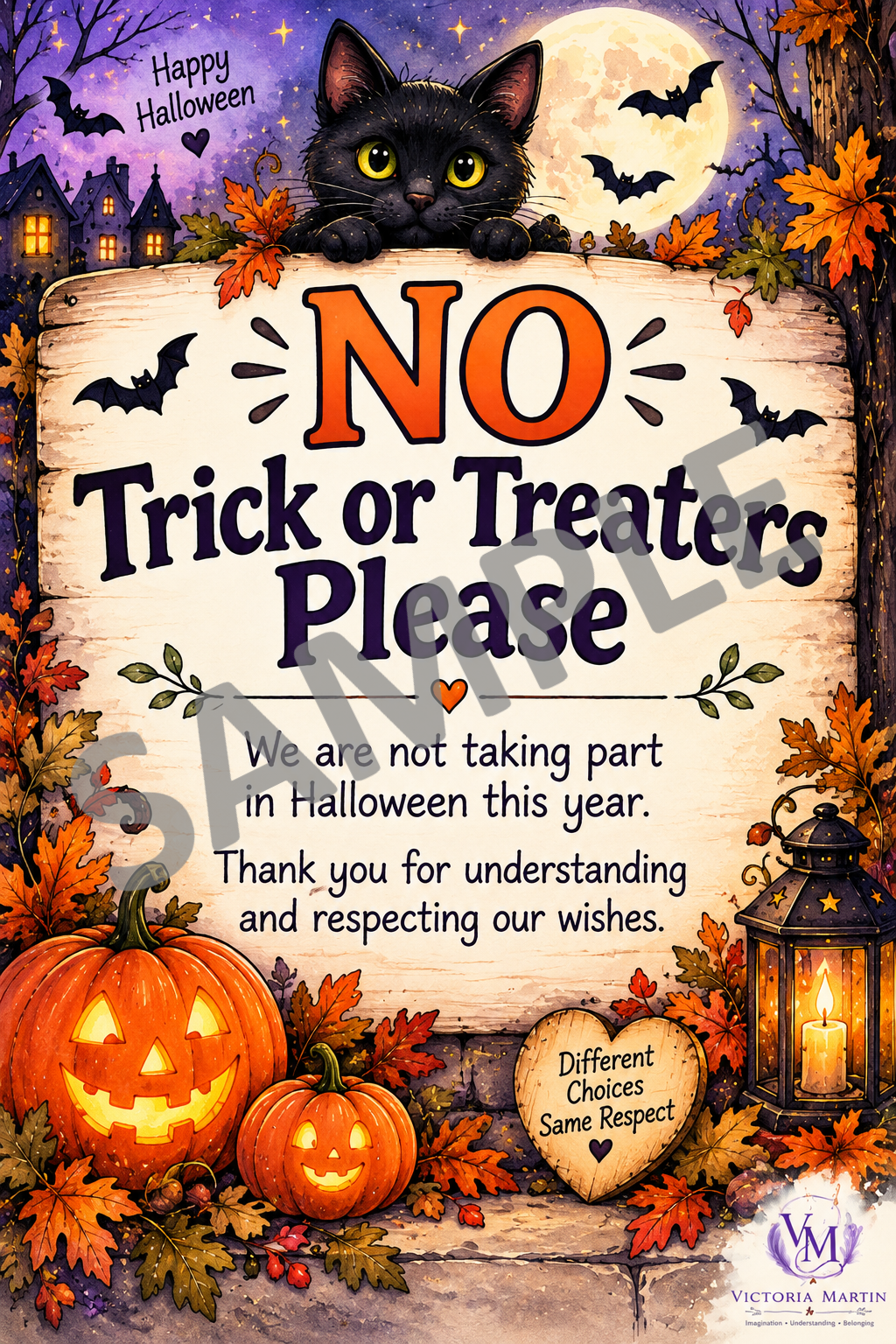
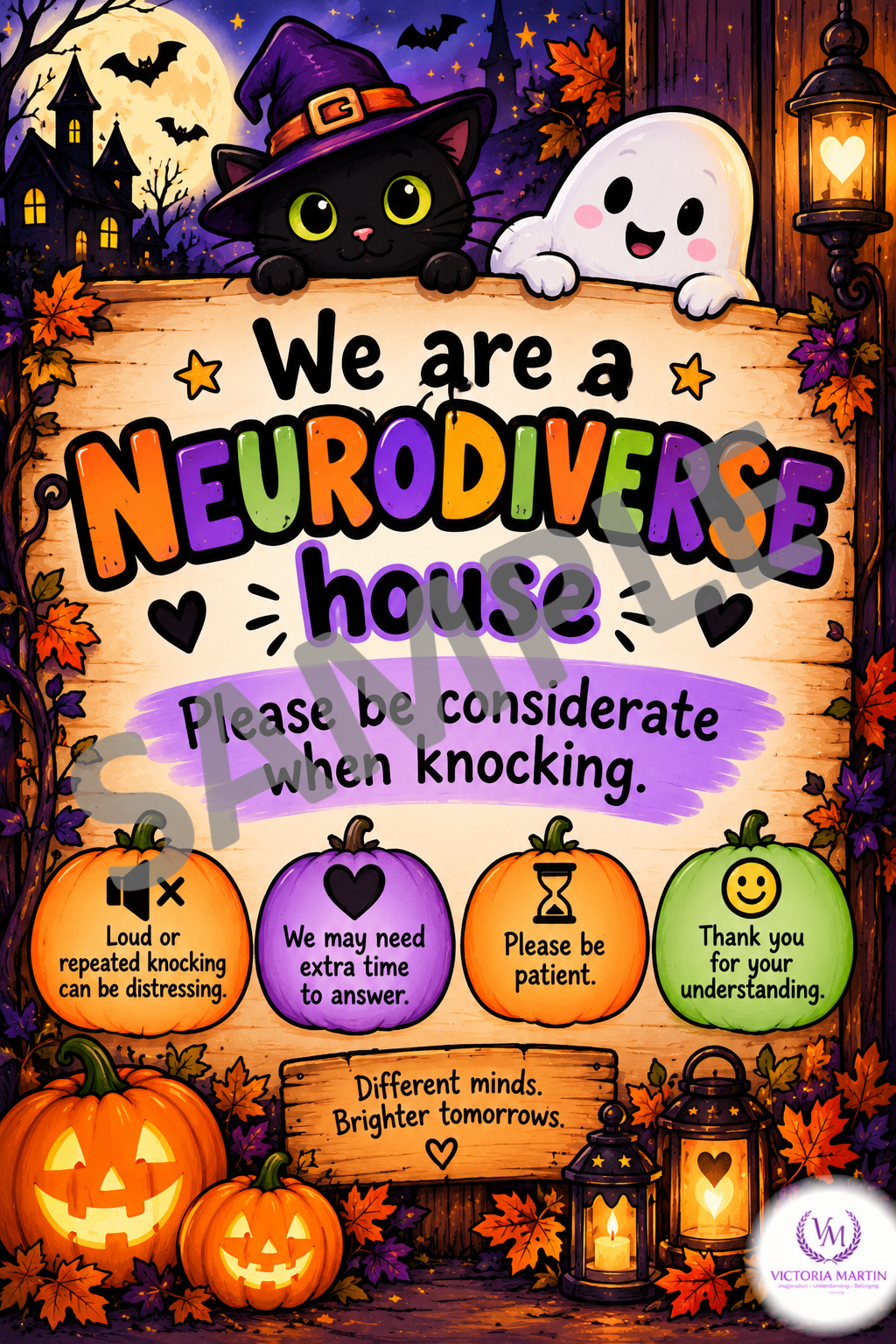
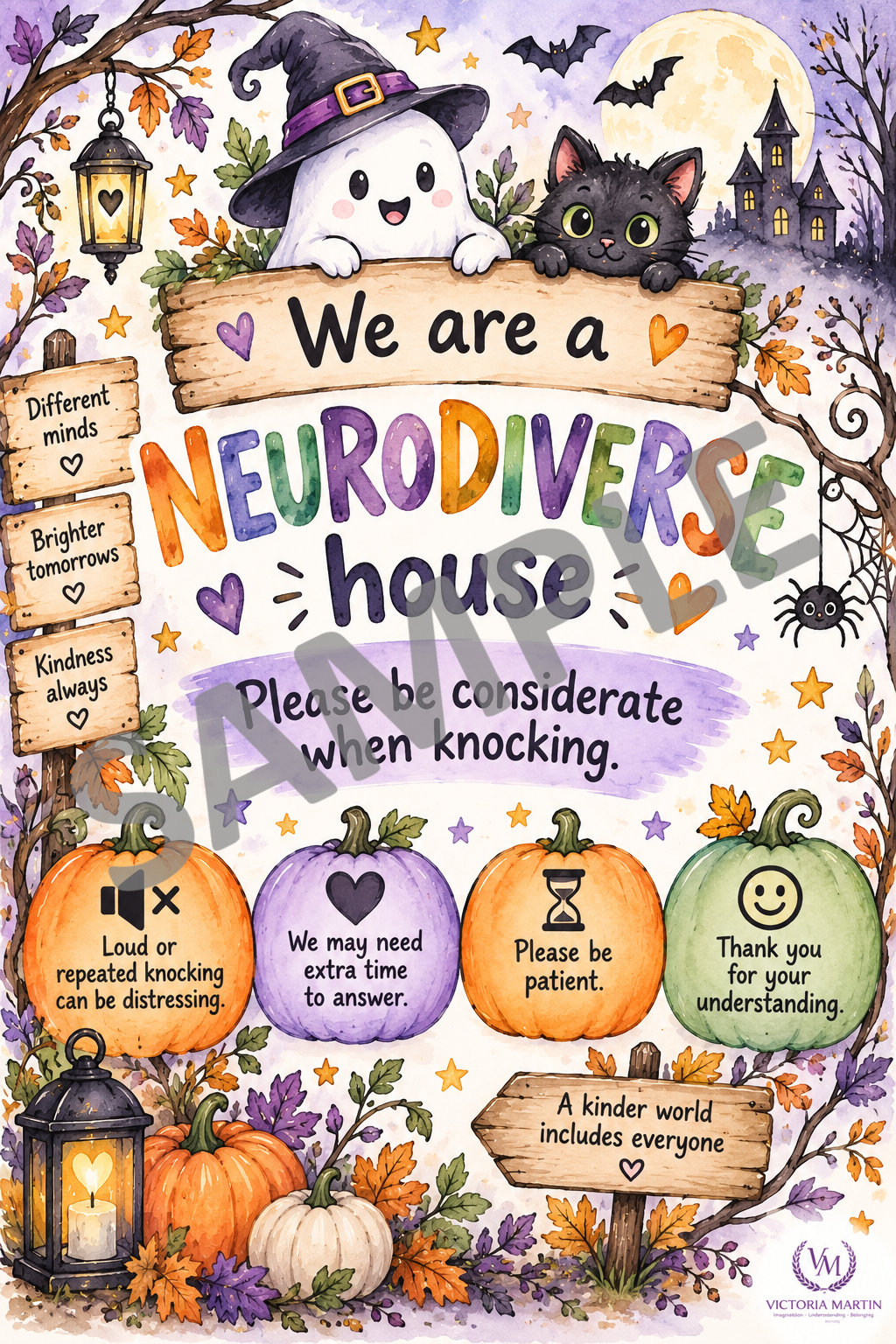
Children should also understand that not every household participates in Halloween, and houses that are clearly not taking part should be left undisturbed.
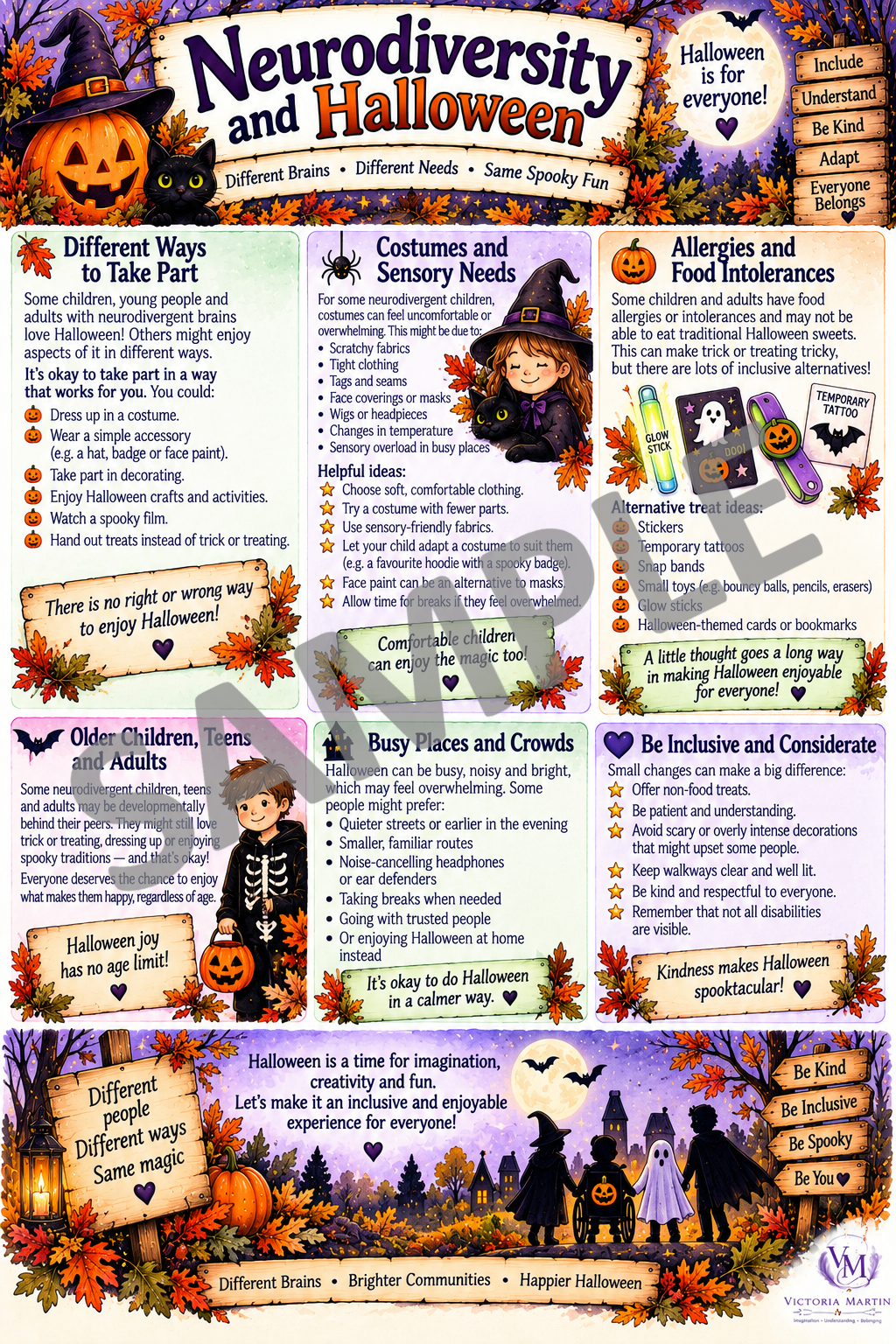
Treats should be appropriate for the child receiving them, with adults considering allergies, choking risks and dietary requirements.
Halloween and Pets
Halloween can be confusing or stressful for pets, particularly when doorbells ring repeatedly and unfamiliar people arrive wearing costumes.
Cats and dogs may benefit from having a quiet, secure space away from the front door and visitors.
Chocolate and sweets containing ingredients such as xylitol, also called birch sugar, can be dangerous to dogs, so Halloween treats should always be kept safely away from pets.
Candles, decorations and electrical wires can also present hazards if an animal knocks them over or chews them.
Keeping pets safely indoors or appropriately supervised during busy Halloween evenings can help protect them from traffic, frightening activity and accidental escape.
If a pet eats something that may be toxic or dangerous, contact a veterinary professional promptly for advice.
Looking After Wildlife
Halloween celebrations can be enjoyed while still looking after wildlife and natural habitats.
Outdoor Halloween decorations should be positioned and secured carefully so they do not become litter or create unnecessary hazards for wildlife.
Decorations should be removed promptly after Halloween rather than being left outdoors in natural habitats.
Pumpkins should not simply be abandoned in woodlands or nature reserves, because dumping food can affect habitats and wildlife.
If you want to use leftover pumpkin, consider cooking suitable edible parts, composting them or following advice from your local waste service.
Celebrating Halloween responsibly means making sure decorations and leftover materials do not become a problem for wildlife or the environment.
Halloween Facts
🎃 Halloween is celebrated every year on 31 October, immediately before All Saints' Day on 1 November.
👻 The word Halloween developed from All Hallows' Eve, the evening before All Hallows' or All Saints' Day.
🔥 Samhain was an important seasonal festival in Gaelic Ireland and Scotland, but modern Halloween developed through several different historical and cultural influences.
🥸 Guising has a long history in Scotland and Ireland and involved people visiting homes while wearing disguises or costumes.
🍬 Modern trick-or-treating was strongly shaped by twentieth-century North American Halloween traditions, although Britain and Ireland already had older house-visiting customs.
🥕 Before pumpkins became popular, people in parts of Britain and Ireland carved turnips and other root vegetables into lanterns.
🎃 Pumpkins originated in the Americas, where they proved particularly suitable for making large carved lanterns.
🕯️ The name jack-o'-lantern originally had associations with mysterious outdoor lights before becoming strongly associated with carved Halloween lanterns.
🦇 Real British bats are insect-eating mammals, despite their long association with spooky Halloween imagery.
🦉 Owls became associated with Halloween through their night-time behaviour, calls and folklore, although they are simply wild birds adapted to their environments.
🍎 Apple games have appeared in traditional autumn celebrations for centuries and were sometimes associated with fortune-telling and divination.
🔥 Halloween and Bonfire Night occur only a few days apart in the UK, but they have different historical origins.
Look Closely
As Halloween approaches, look around your neighbourhood and see how many different traditions and symbols you can spot.
Can you find a carved pumpkin lantern, and can you imagine how much harder it might have been to carve a traditional turnip lantern?
How many real animals can you find among the decorations? Look for bats, owls, spiders, ravens and black cats.
Can you identify which Halloween traditions have older British or Irish connections and which became popular through more recent culture?
Look at the changing natural world too. Are the leaves changing colour, are the evenings becoming noticeably darker, and can you spot fungi, berries or other signs of late autumn?
Halloween has changed enormously over the centuries. What we celebrate today is not one ancient tradition preserved unchanged, but a fascinating mixture of seasonal customs, Christian observances, folklore, migration and modern popular culture.
Whether you celebrate by carving a pumpkin, dressing up, telling ghost stories or simply enjoying an autumn evening, Halloween offers an opportunity to explore the history, folklore and natural world hidden behind some very familiar spooky traditions.