
🌿 Holly — The Evergreen Protector
Discover the Secrets of Britain's Holly Trees
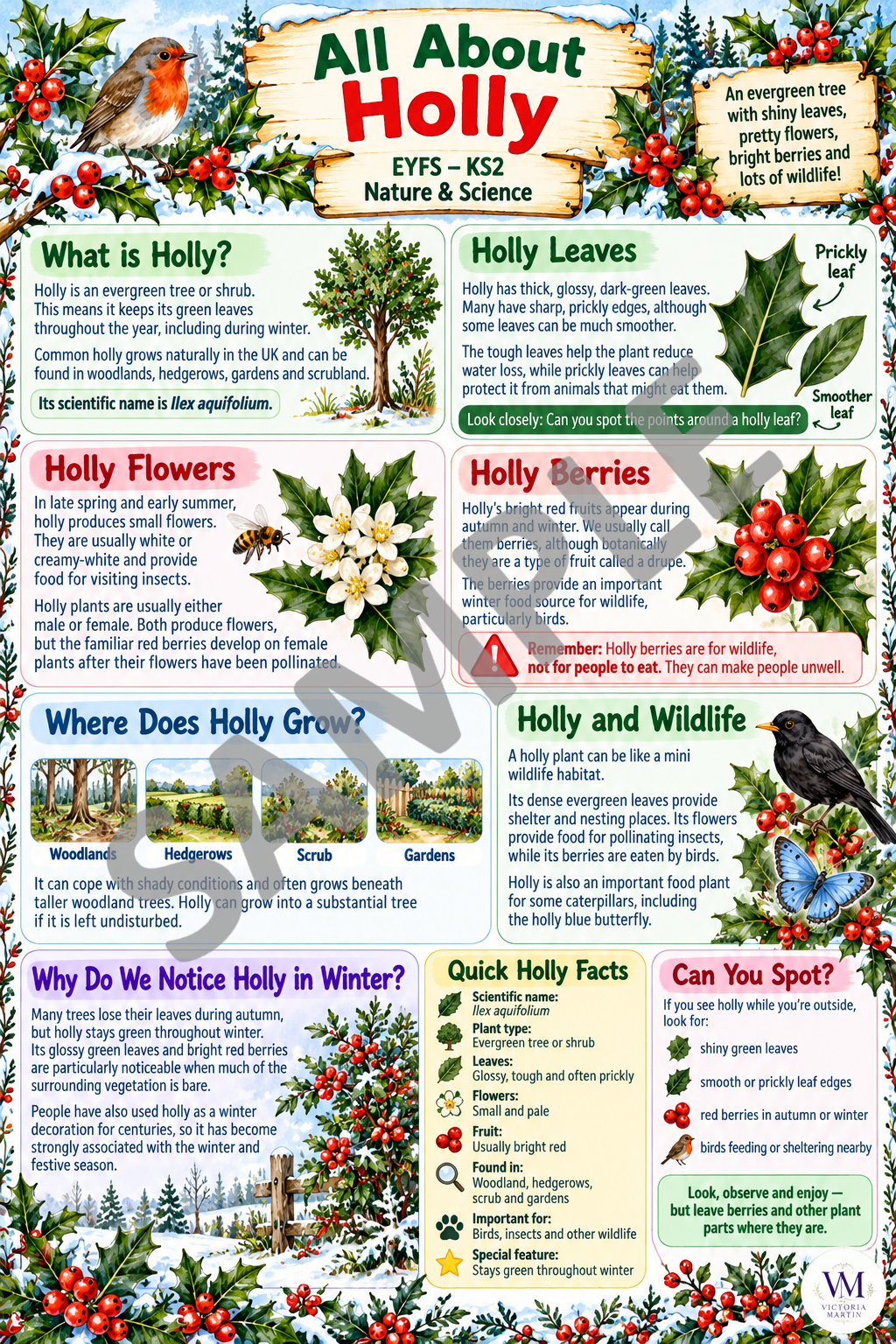
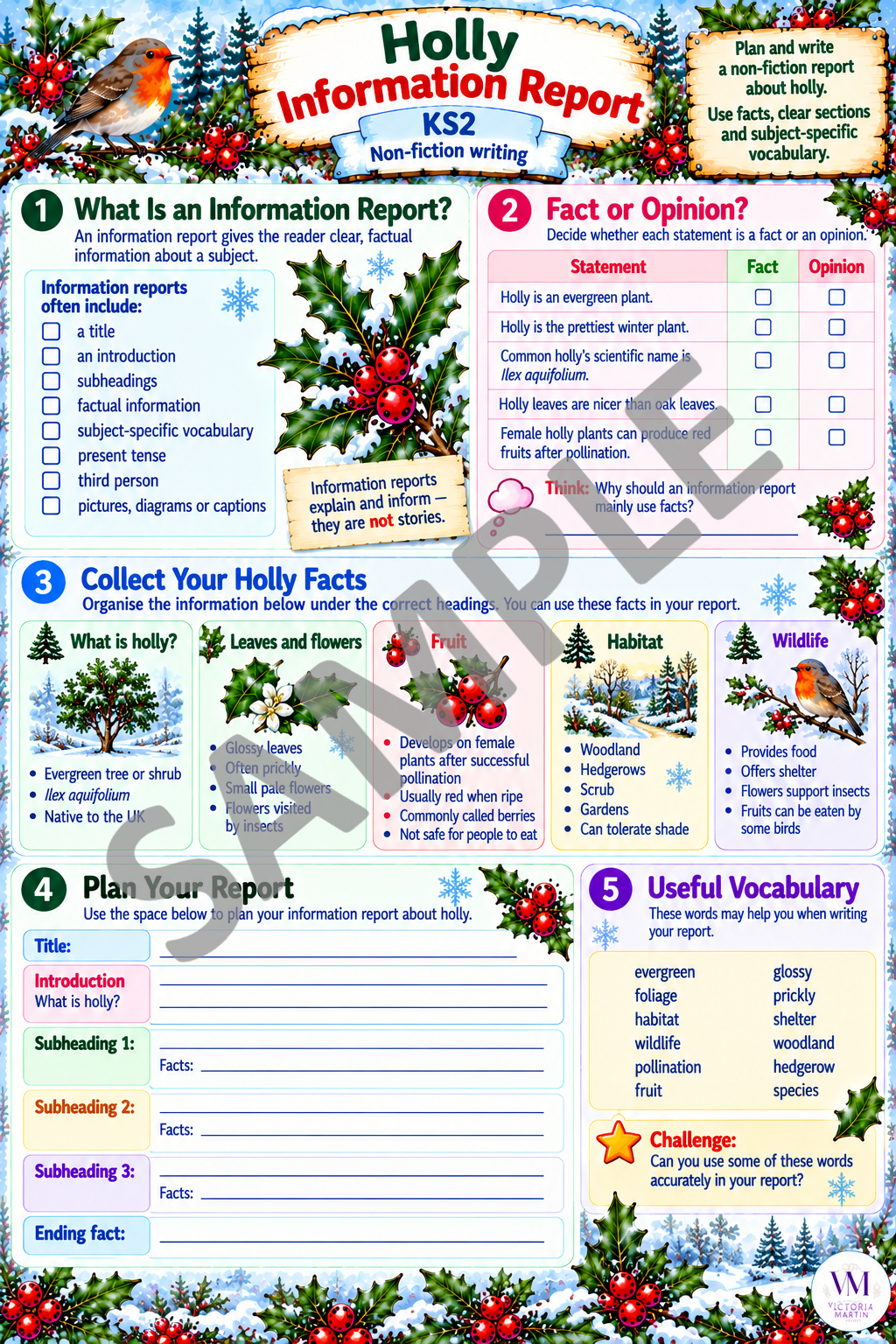
Holly is one of Britain's most recognisable, beautiful and hardy evergreen plants. With its glossy green leaves, bright red berries and prickly edges, holly brings colour to our woodlands throughout the year.
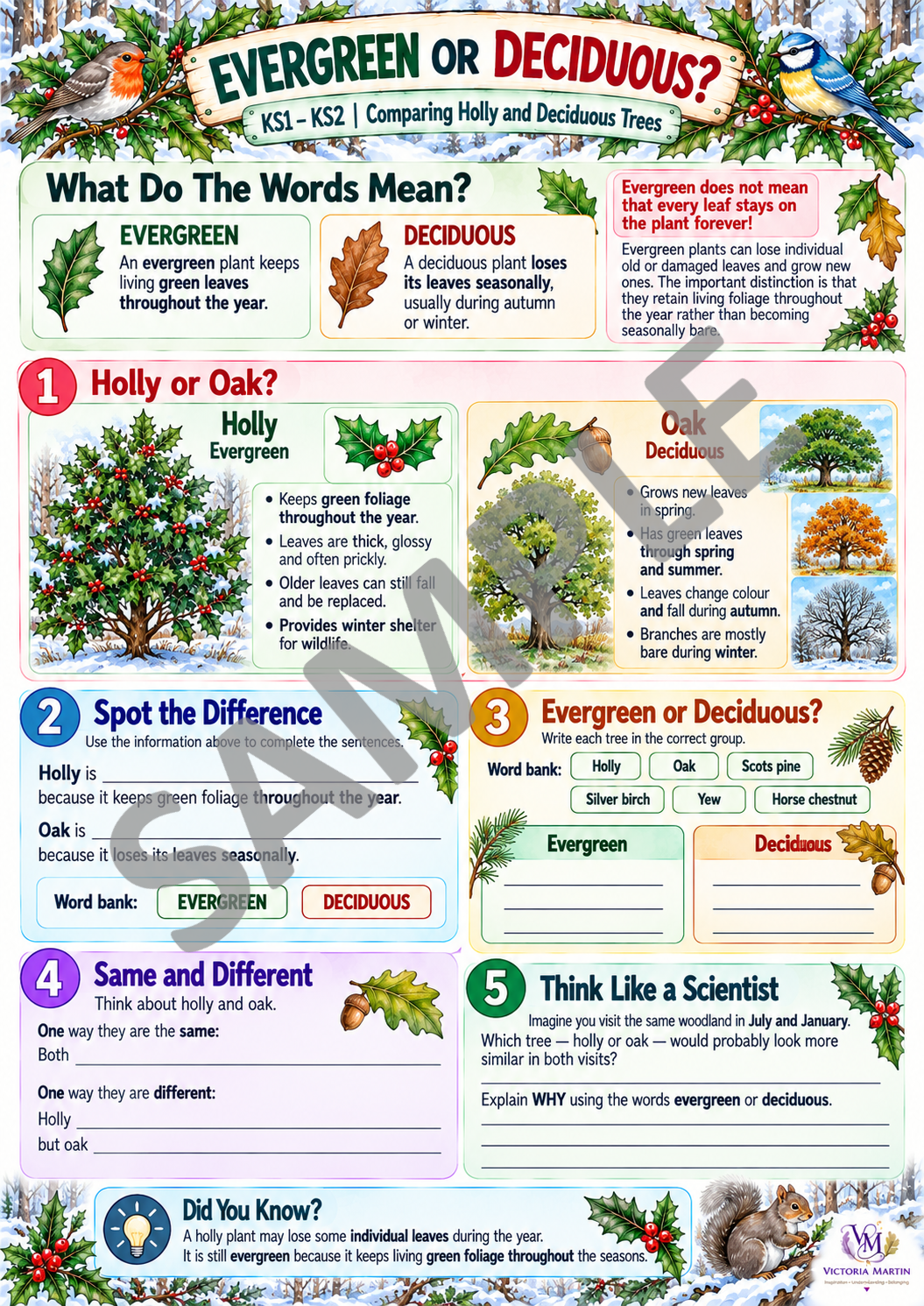
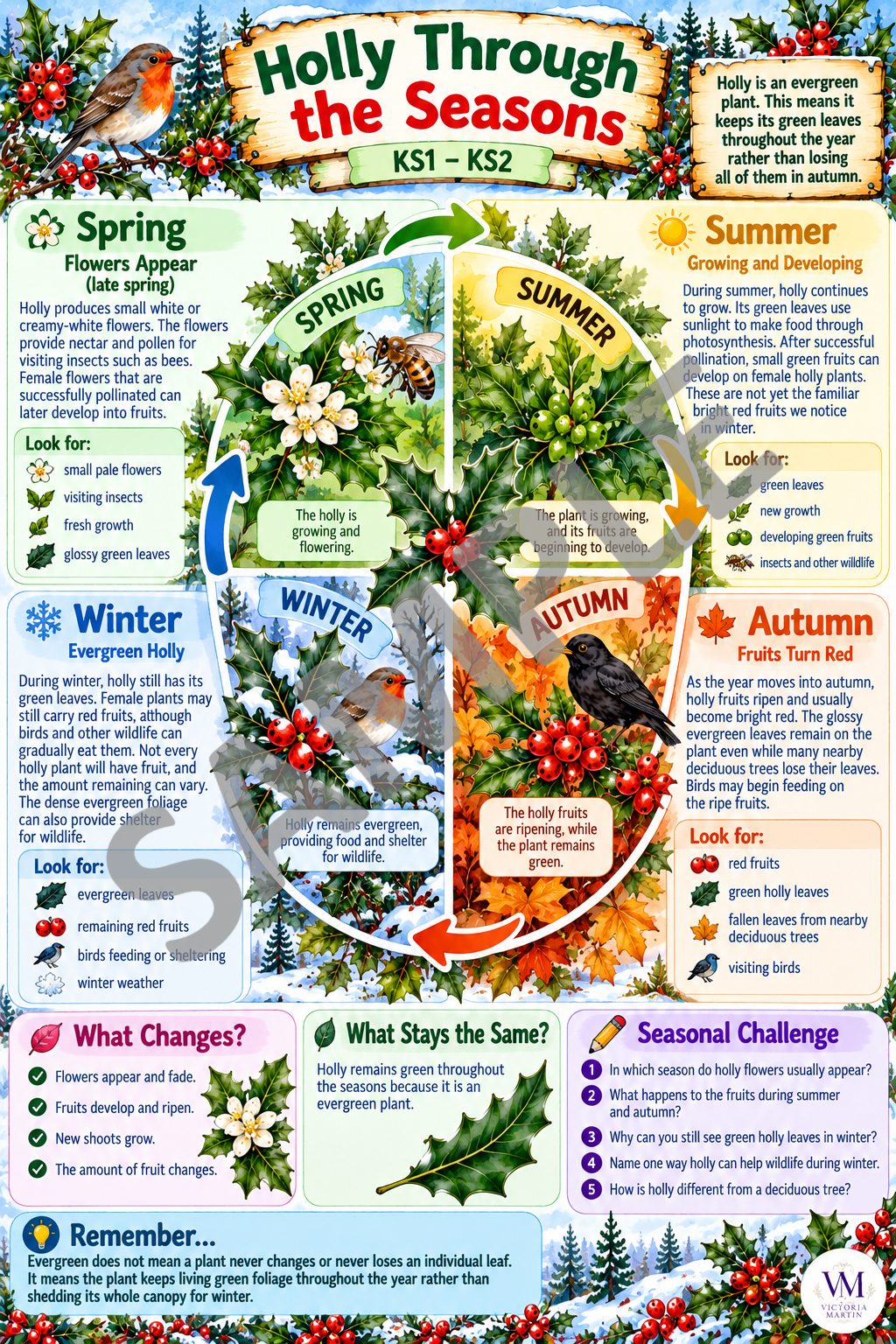
Unlike many trees that lose their leaves during autumn and winter, holly is evergreen, meaning it stays green all year round.
However, being evergreen doesn't mean holly keeps the same leaves forever; older leaves are gradually replaced by new ones.
🌳 What Is Holly?
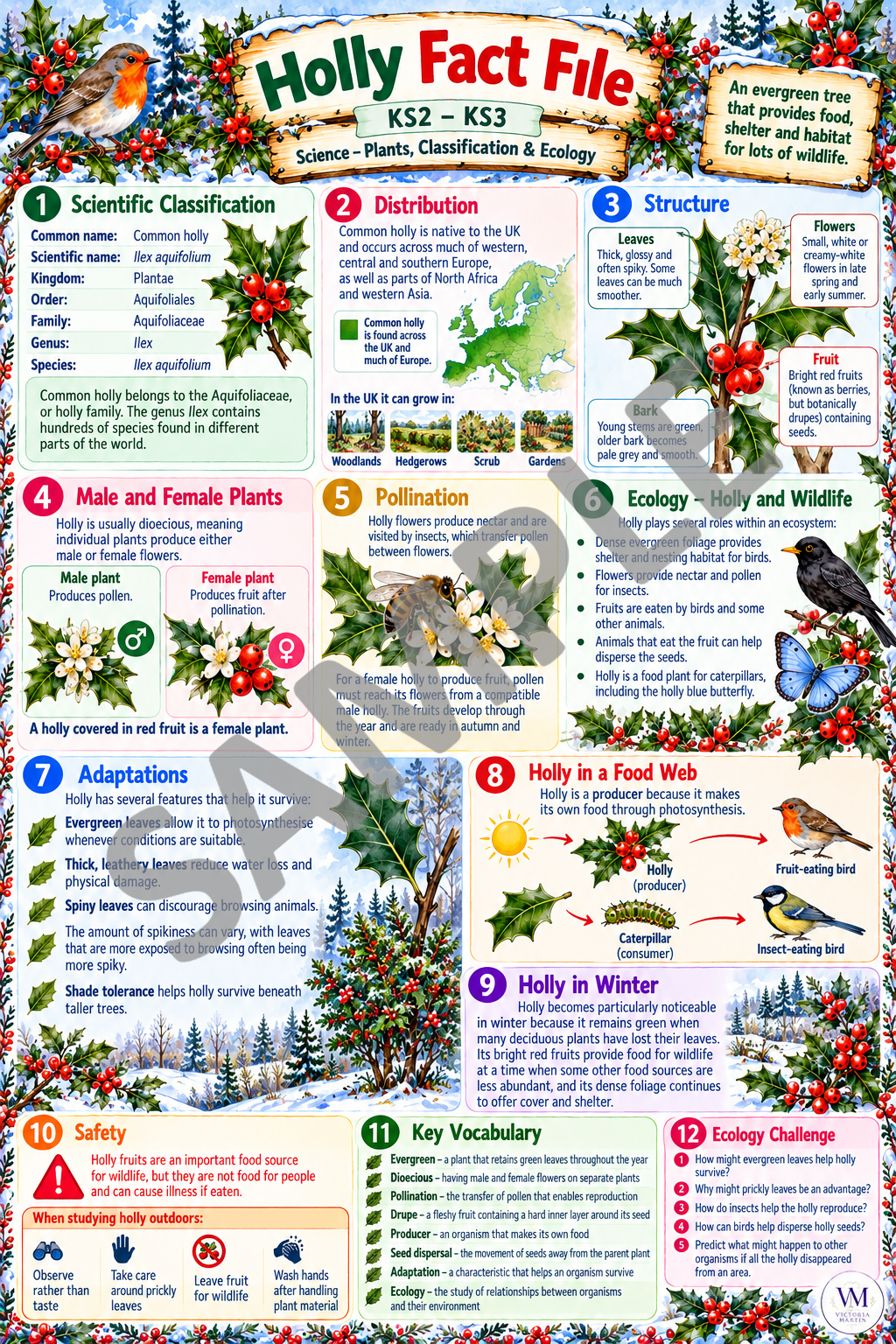
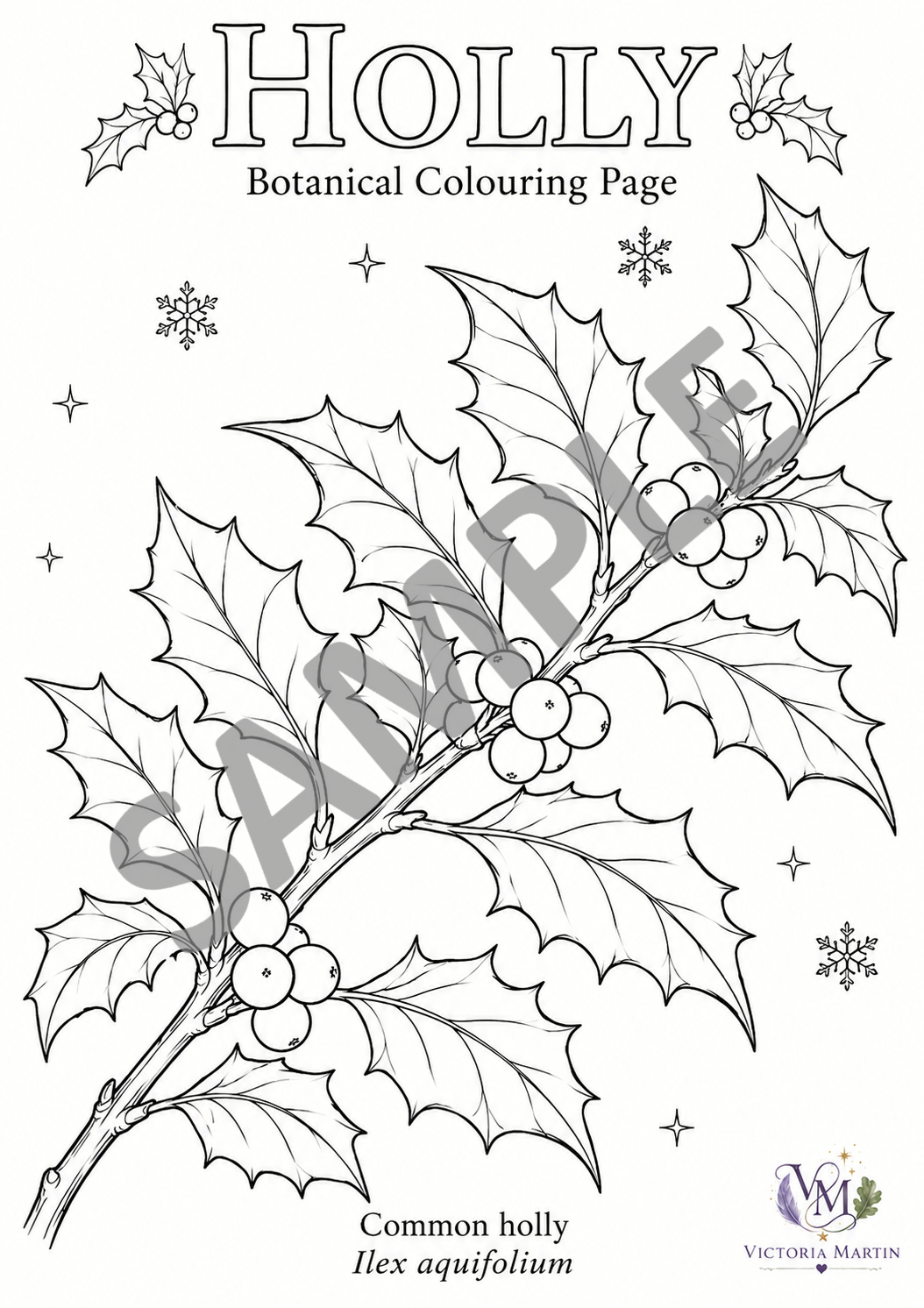
The scientific name for common holly is Ilex aquifolium, and it belongs to the Aquifoliaceae plant family.
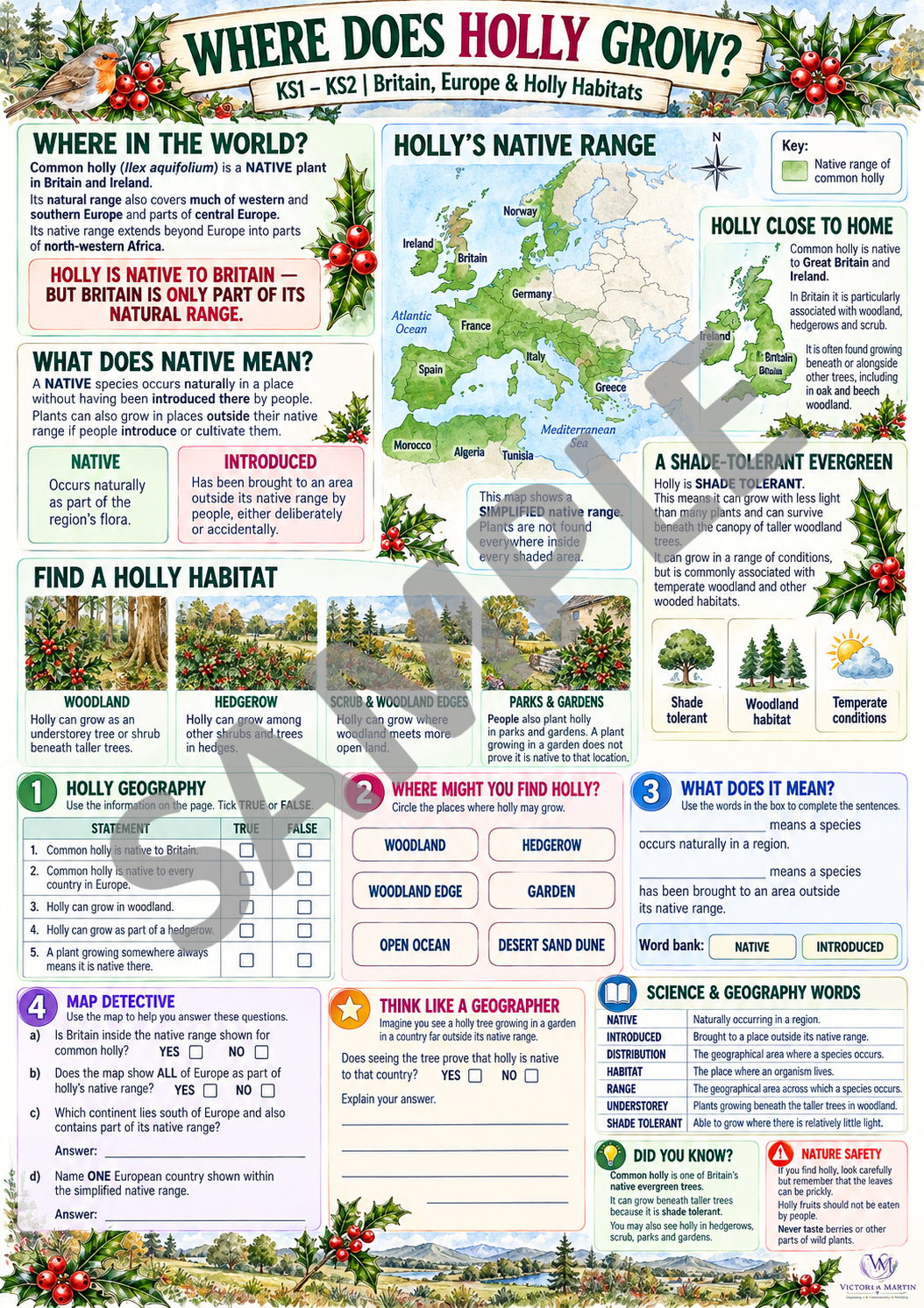
Holly is native to Britain and can grow as a small bush, a thick hedge or a large tree reaching approximately 15 metres tall.
Some holly trees can live for hundreds of years, making them an important part of our natural woodlands.
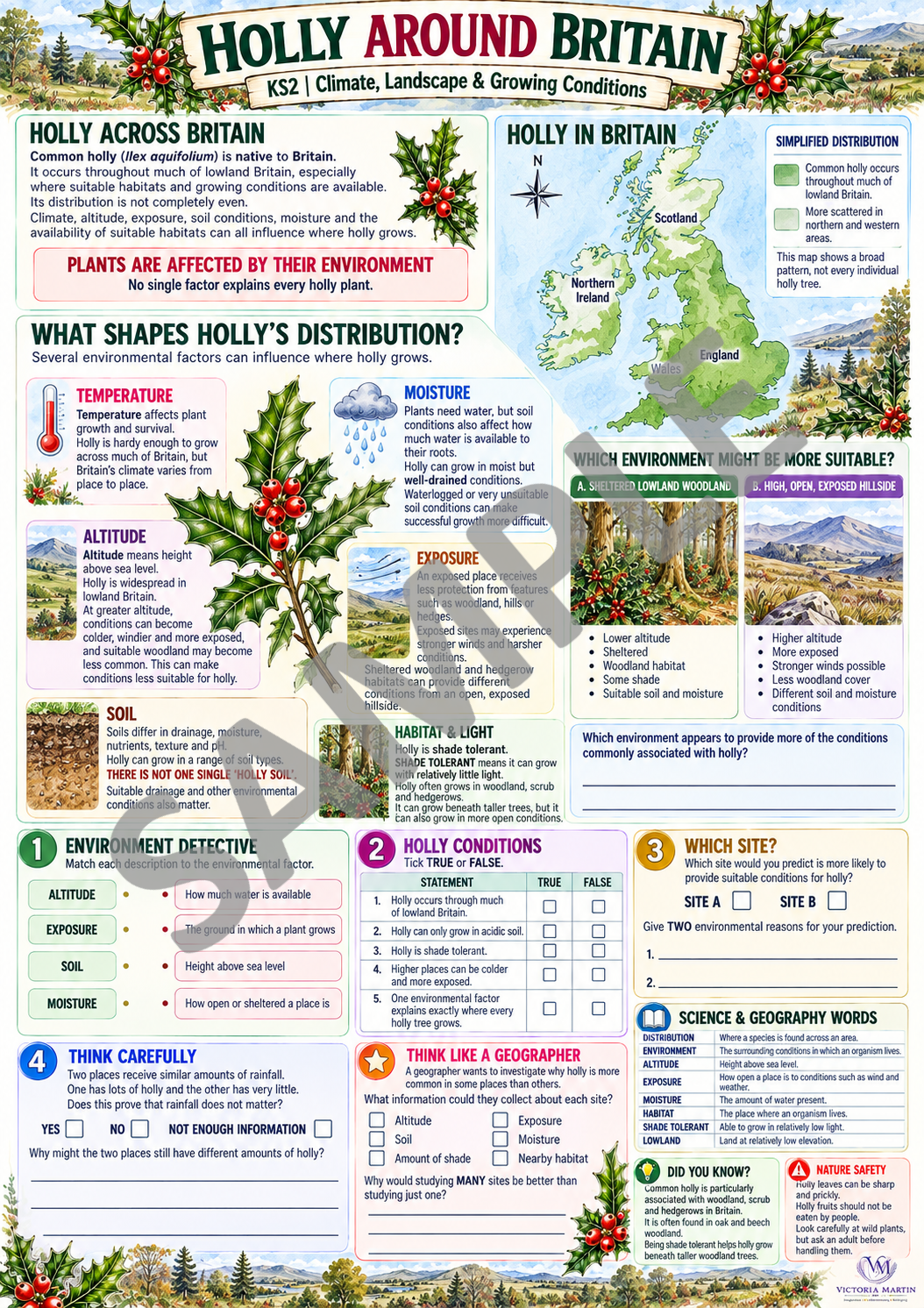
🌱 Where Does Holly Grow?
Holly grows naturally in woodlands, hedgerows and gardens throughout Britain.
It grows particularly well in moist, well-drained soil, sheltered woodland environments and areas with partial shade, although it can tolerate many different growing conditions.
Holly can grow in sunny locations, partial shade and even deep woodland shade, making it a remarkably adaptable plant.
You might discover holly growing beneath oak trees, beech trees or alongside other woodland plants.
🌿 Holly's Clever Self-Defence!
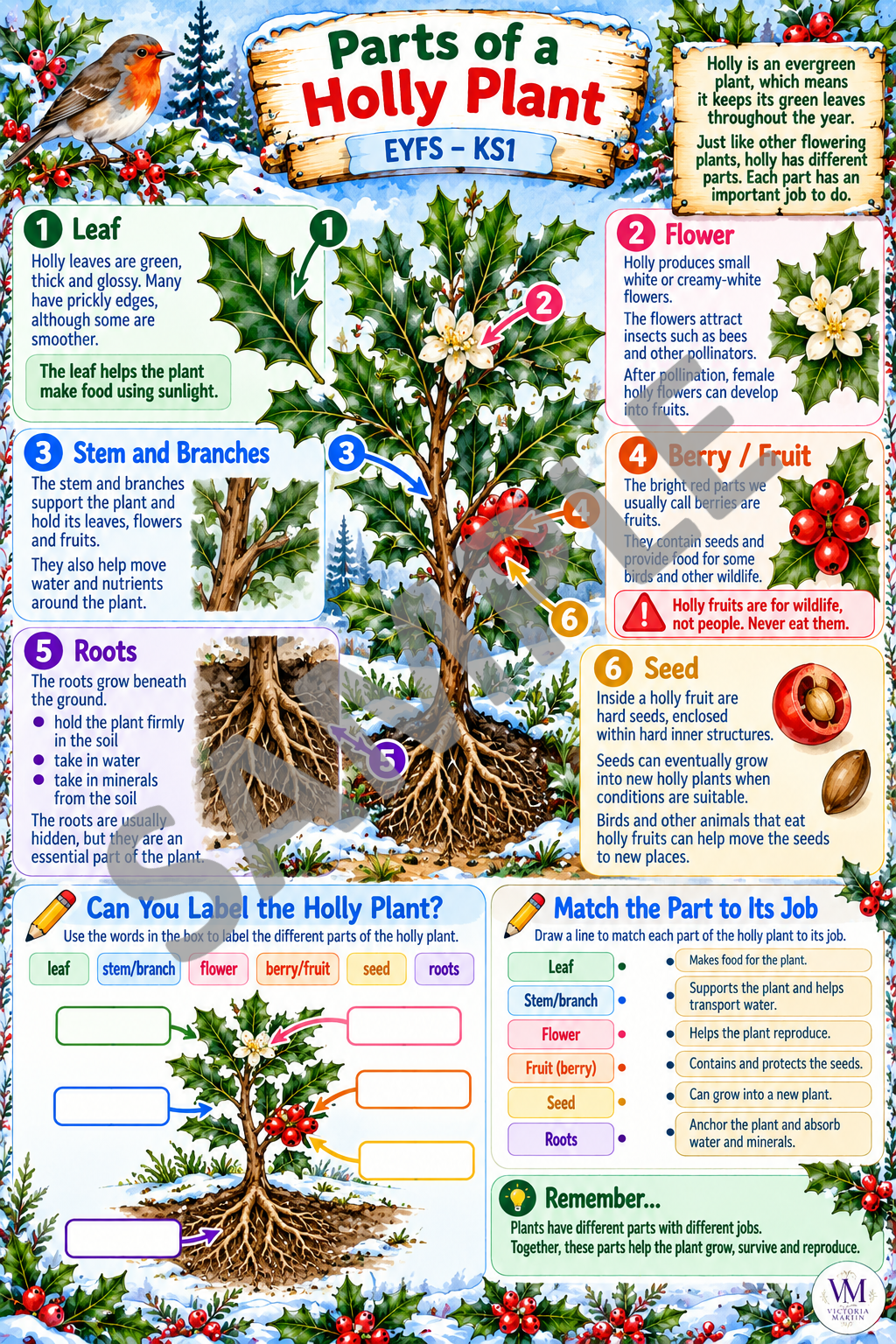
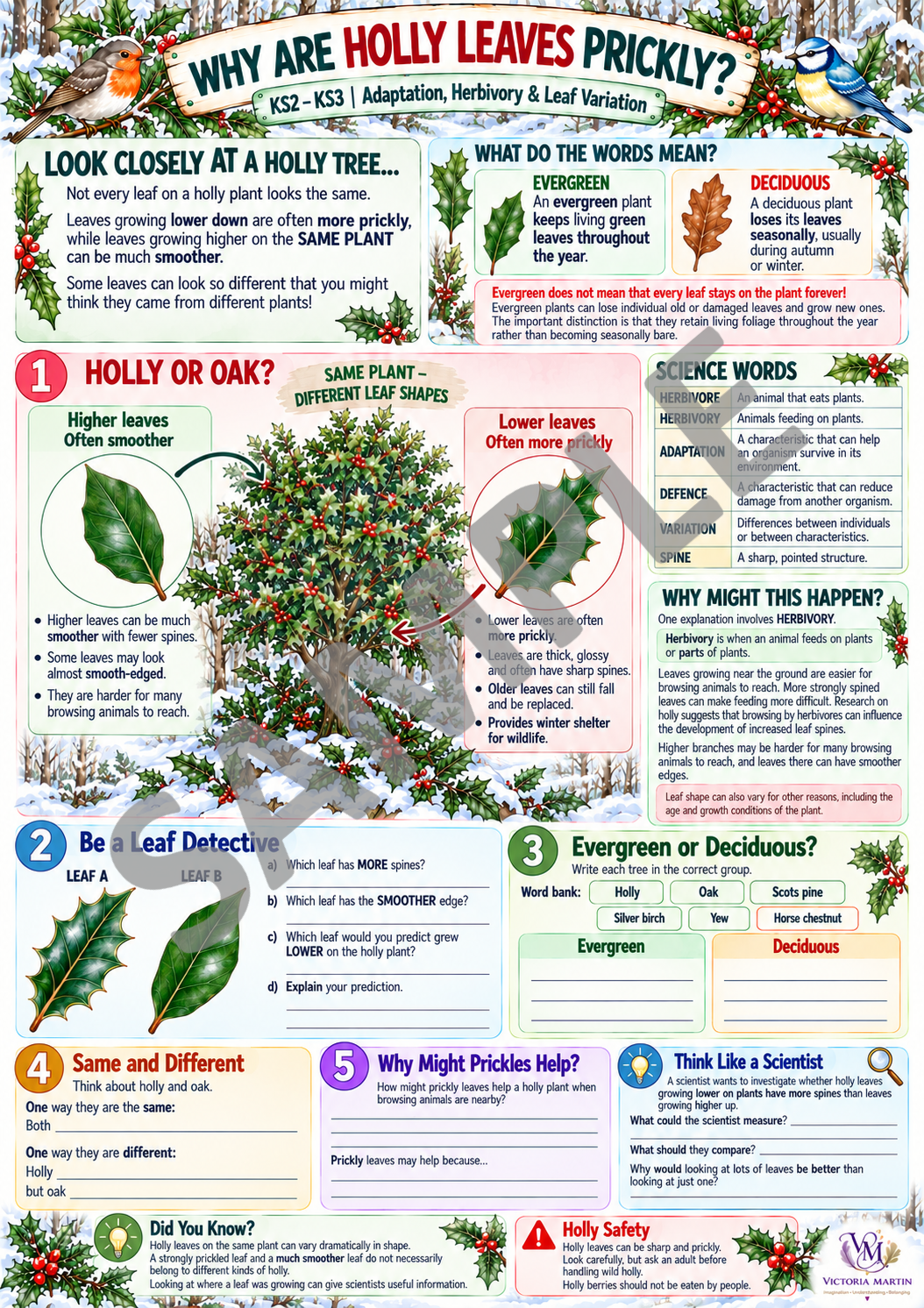
Have you ever noticed that some holly leaves are extremely sharp and prickly, while others are almost completely smooth?
This is one of holly's most fascinating features and an example of natural plant defence.
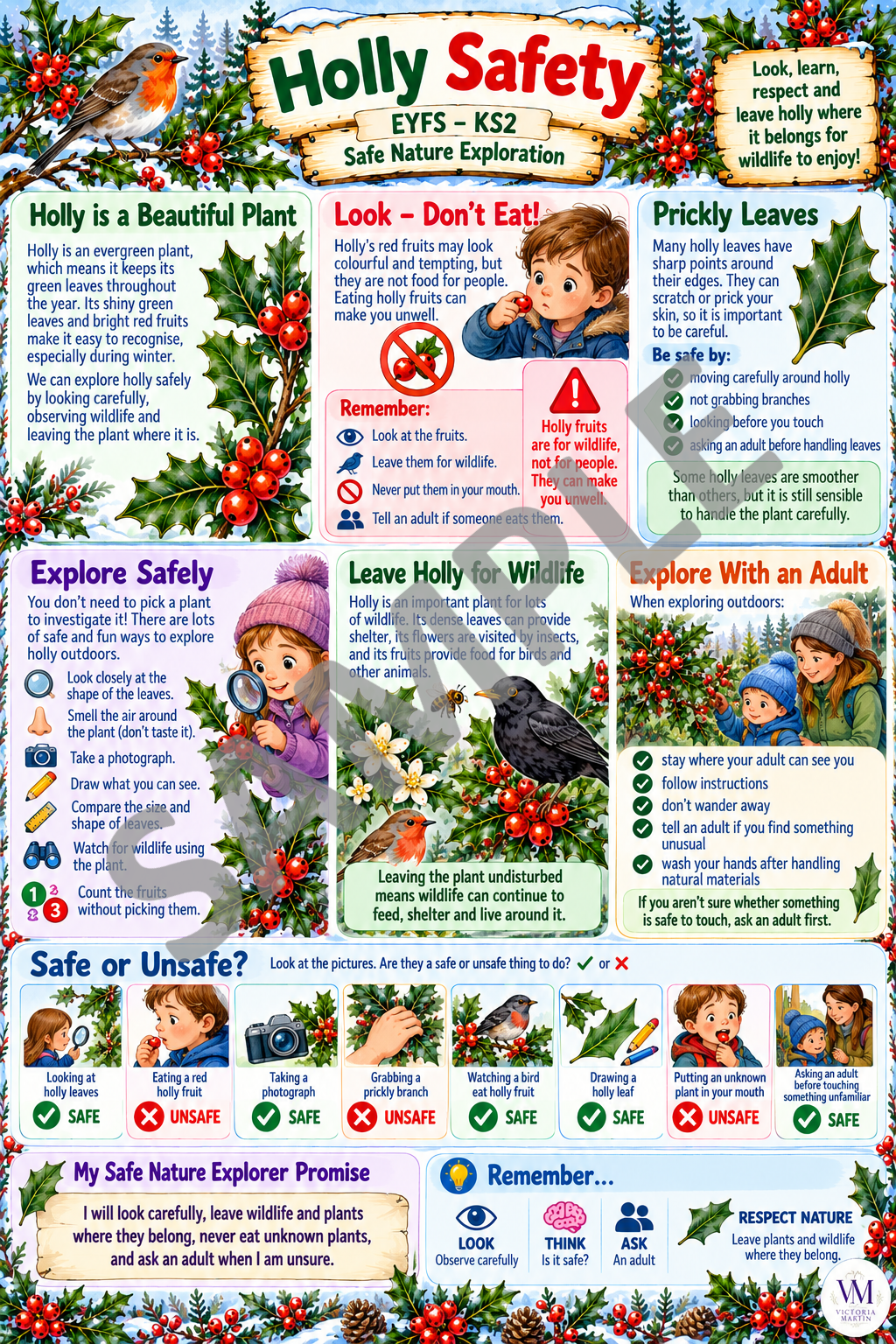
The leaves growing closer to the ground often have sharp spikes that help protect the plant from hungry animals, including deer.
However, leaves growing higher up, beyond the reach of many grazing animals, are often smoother and have fewer spikes.
Holly can even respond to animals eating its leaves by changing how prickly some of its new growth becomes.
This clever adaptation helps the plant protect itself, reduce damage and continue growing.
🔴 What About Holly Berries?
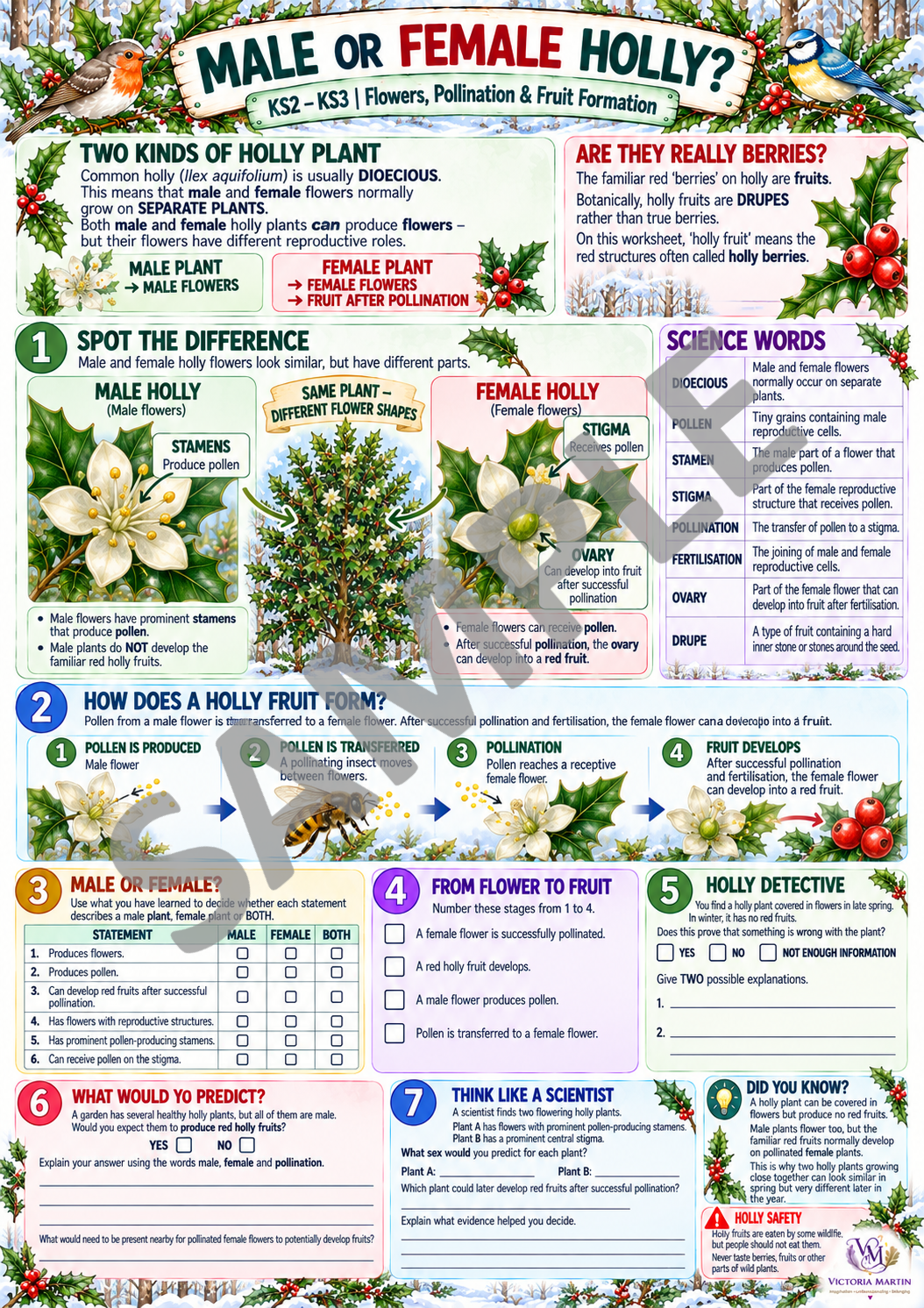
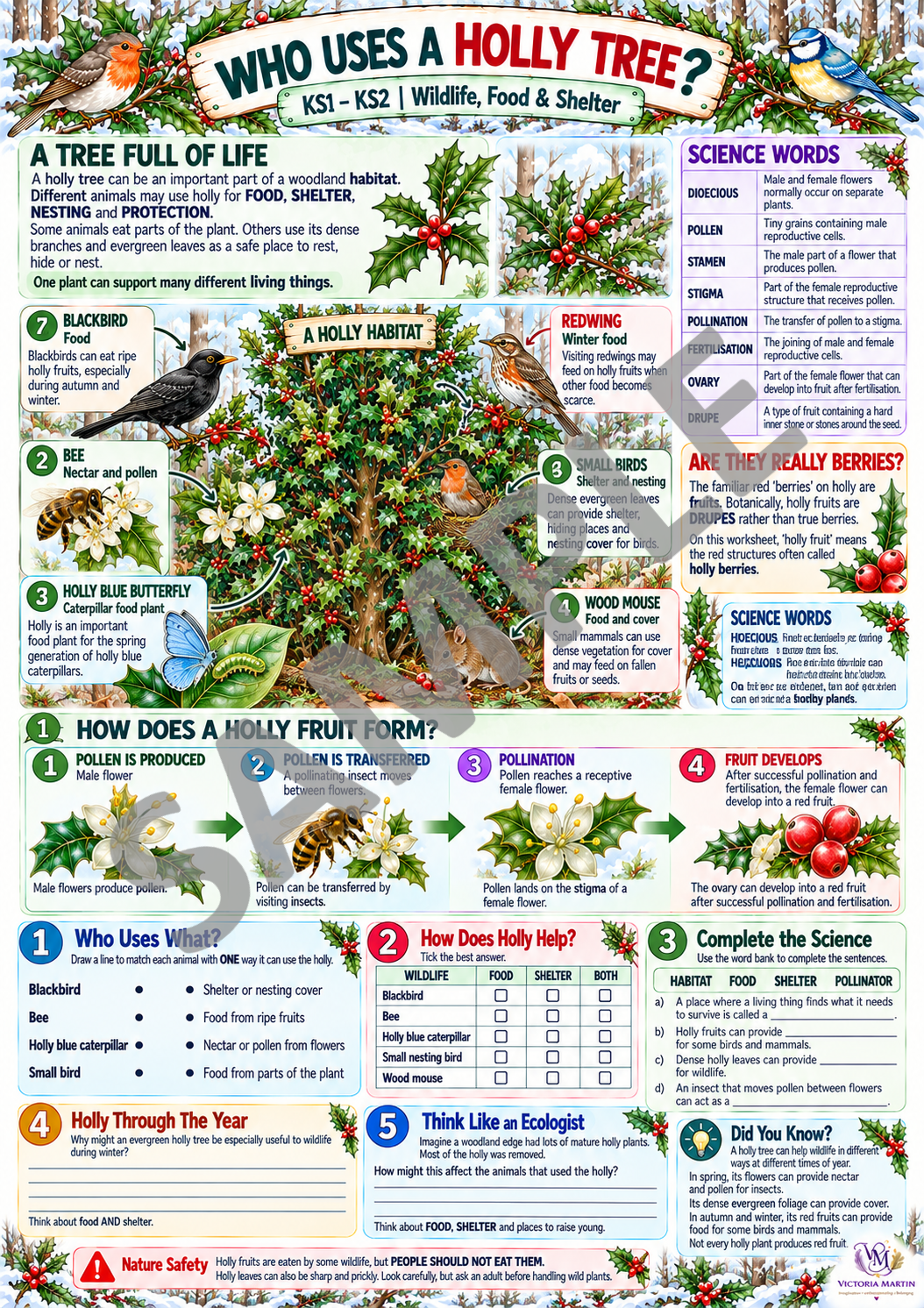
During spring and early summer, holly produces small white flowers that provide food for bees and other pollinating insects.
Most holly plants are either male or female, and it is usually the female plants that produce berries after their flowers have been pollinated.
These berries develop during autumn, becoming bright red and often remaining on the branches throughout winter.
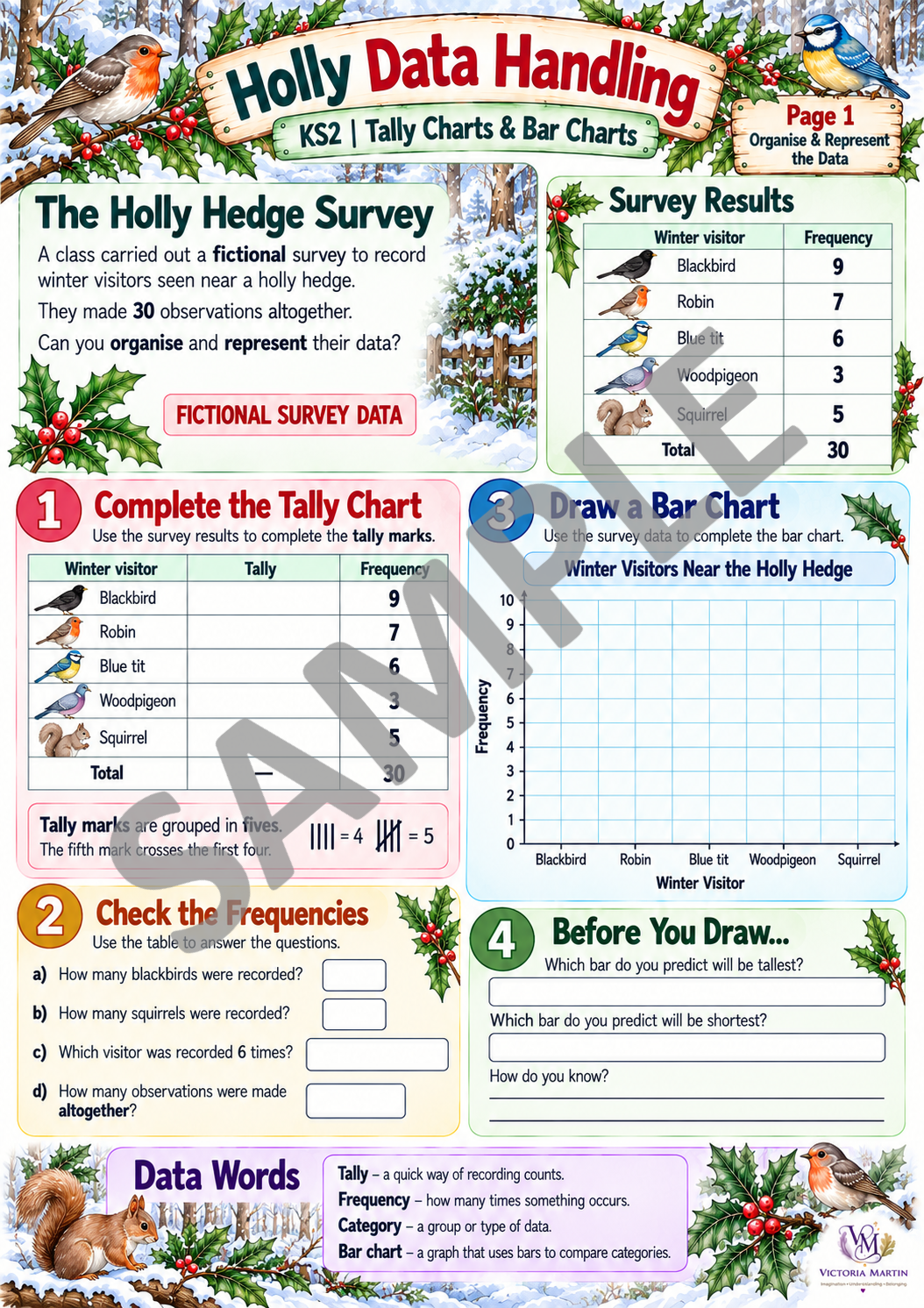
Holly berries provide an important winter food source for wild birds, including blackbirds, thrushes and redwings.
Although many wild birds can safely eat holly berries, they are mildly poisonous to humans and may cause vomiting, diarrhoea and stomach discomfort if swallowed.
Never eat holly berries, and remember that beautiful natural objects are not always safe to taste.
🐦 Why Is Holly Important for Wildlife?
Holly provides much more than beautiful leaves, colourful berries and winter greenery.
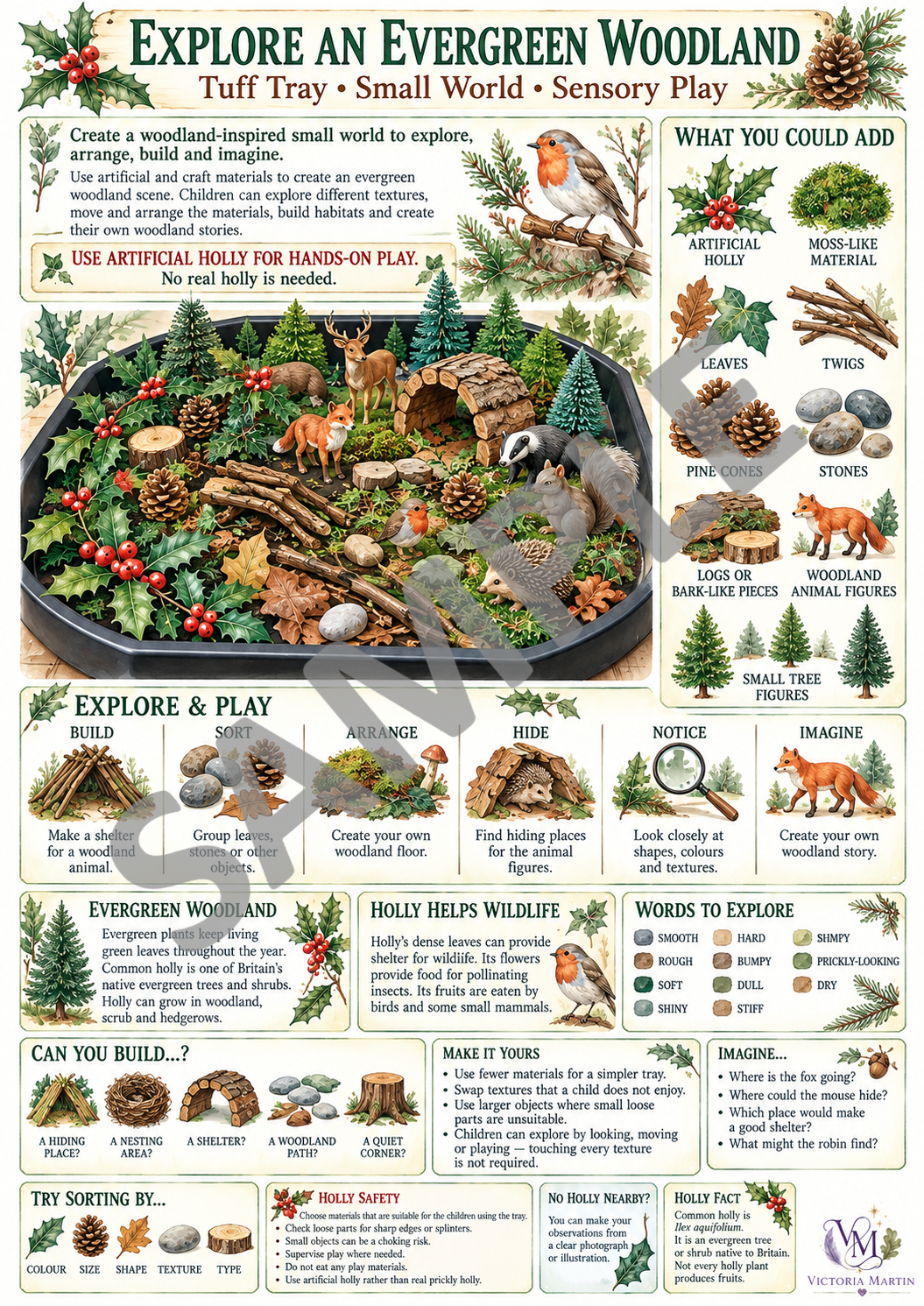
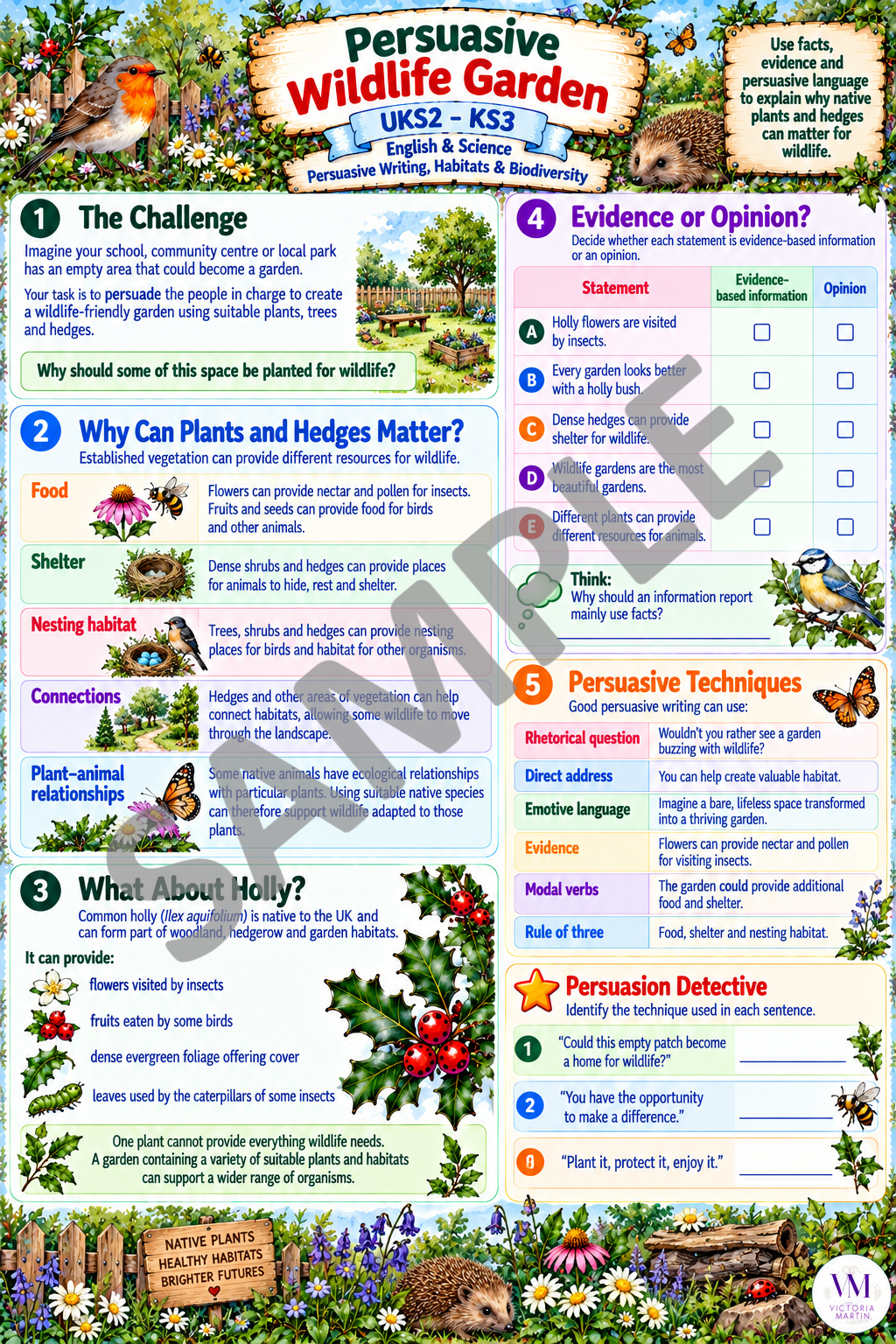
Its thick evergreen branches offer shelter, nesting spaces and protection from bad weather for many birds.
The spiky leaves can also help protect small birds from some hungry predators.
Holly flowers support pollinating insects, while its leaves provide food for holly blue butterfly caterpillars and certain moths.
Beneath the plant, deep layers of fallen leaves may provide shelter and hibernation spaces for hedgehogs and other small mammals.
❄️ Holly Through the Seasons
Spring: Small white flowers appear, attracting bees and pollinating insects.
Summer: The glossy green leaves provide shade and shelter for woodland wildlife.
Autumn: The berries begin ripening, bringing bright splashes of colour to the branches.
Winter: Holly remains green and leafy, providing valuable food and shelter when many other plants are bare.
✨ Did You Know?
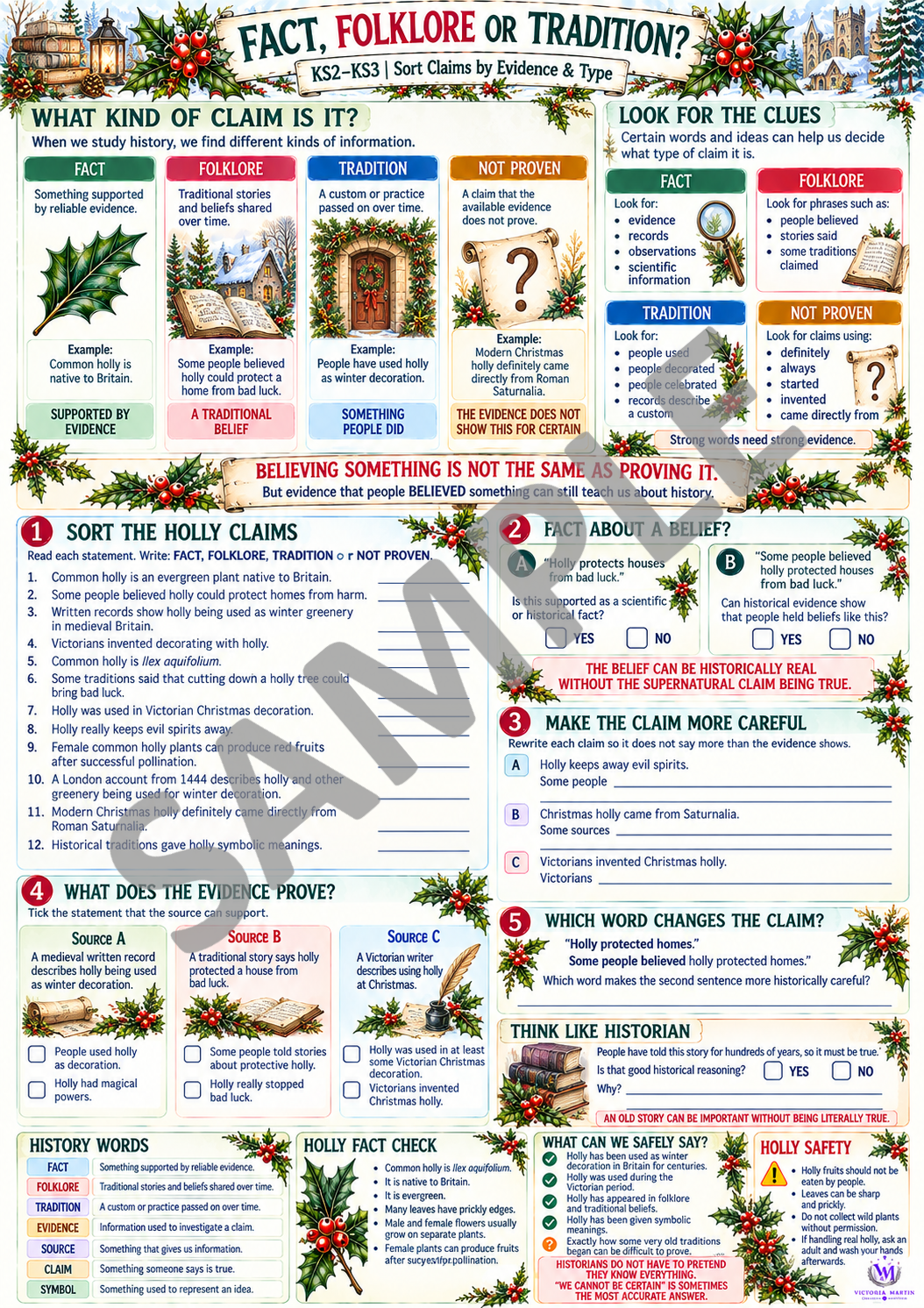
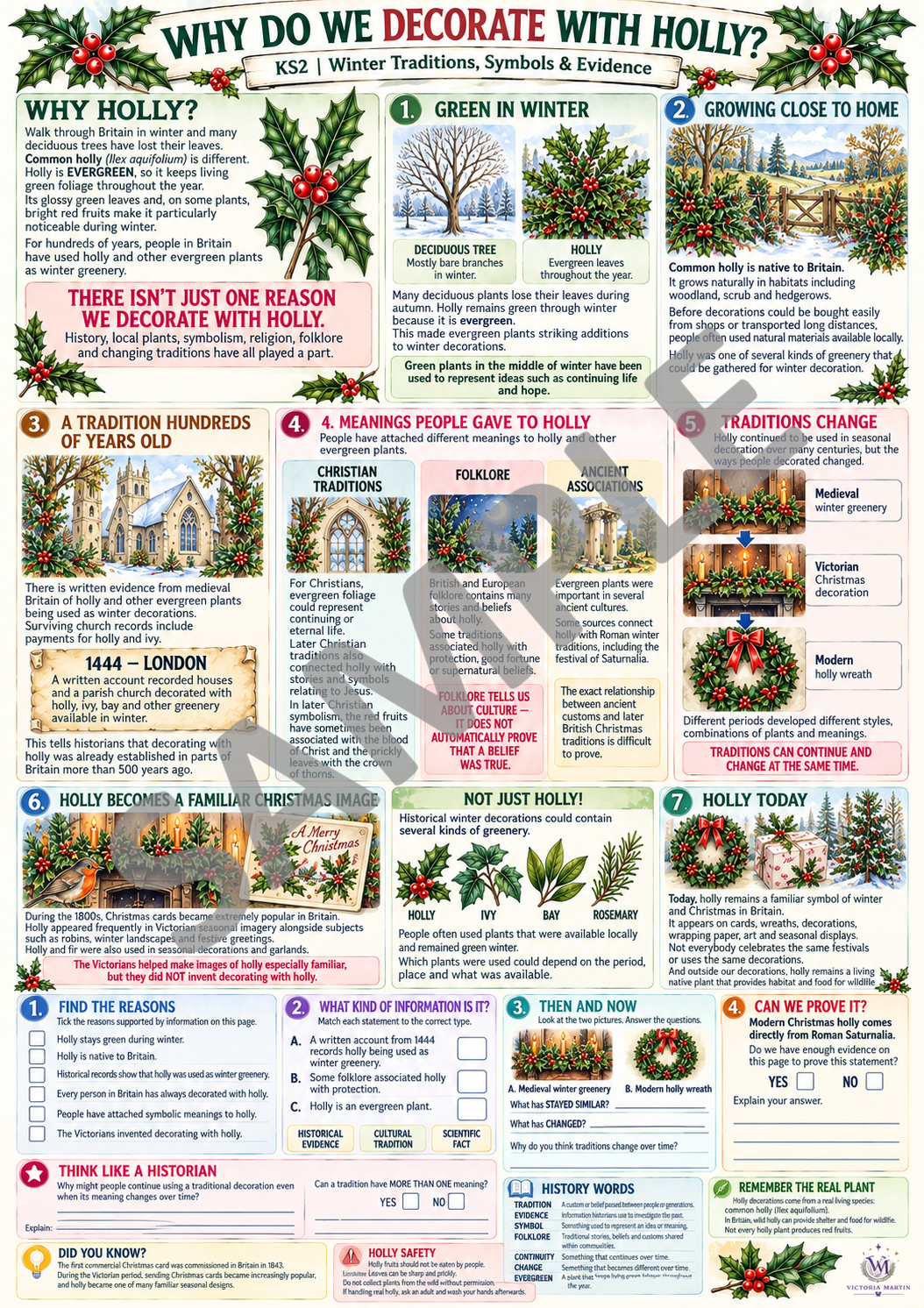
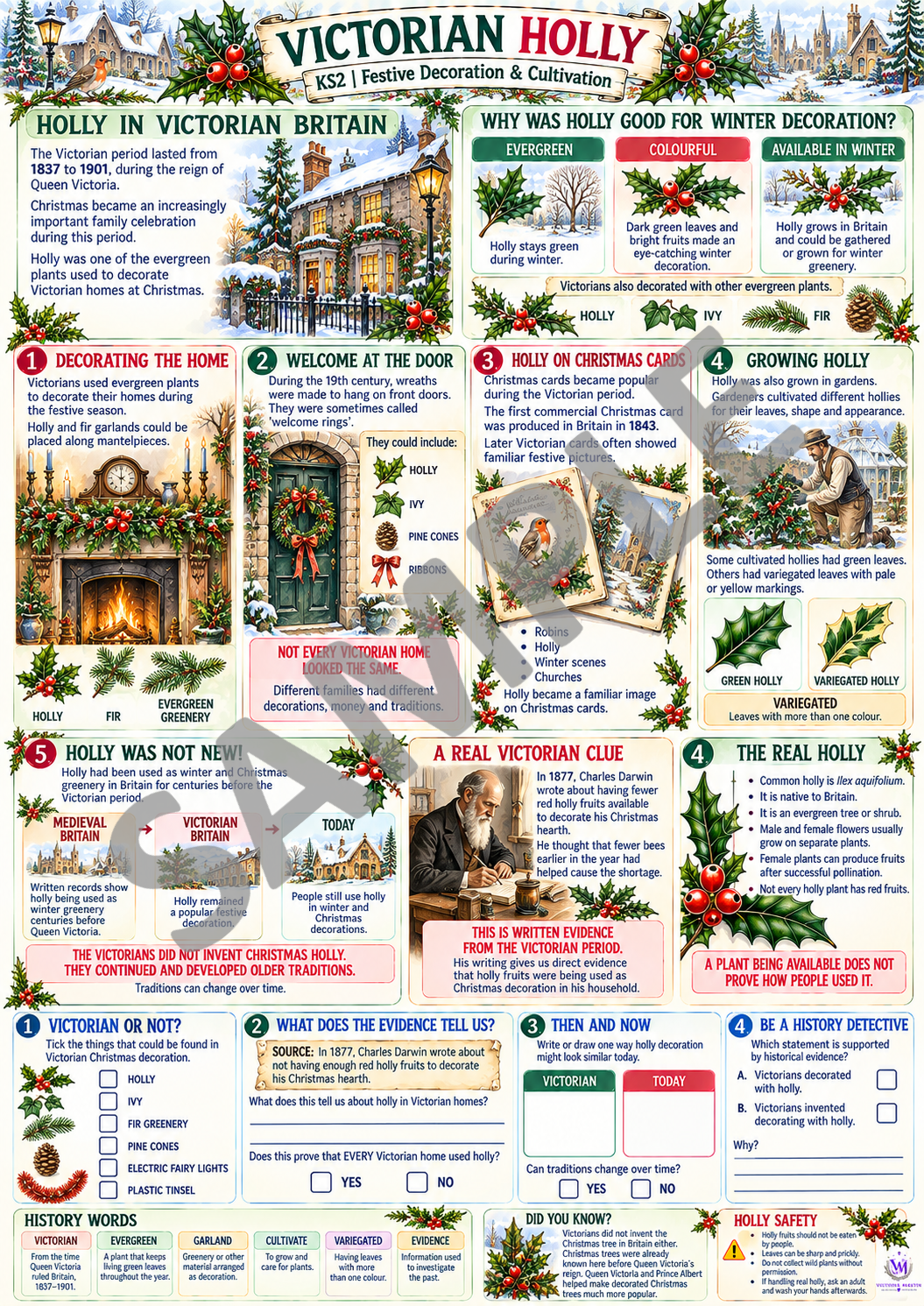
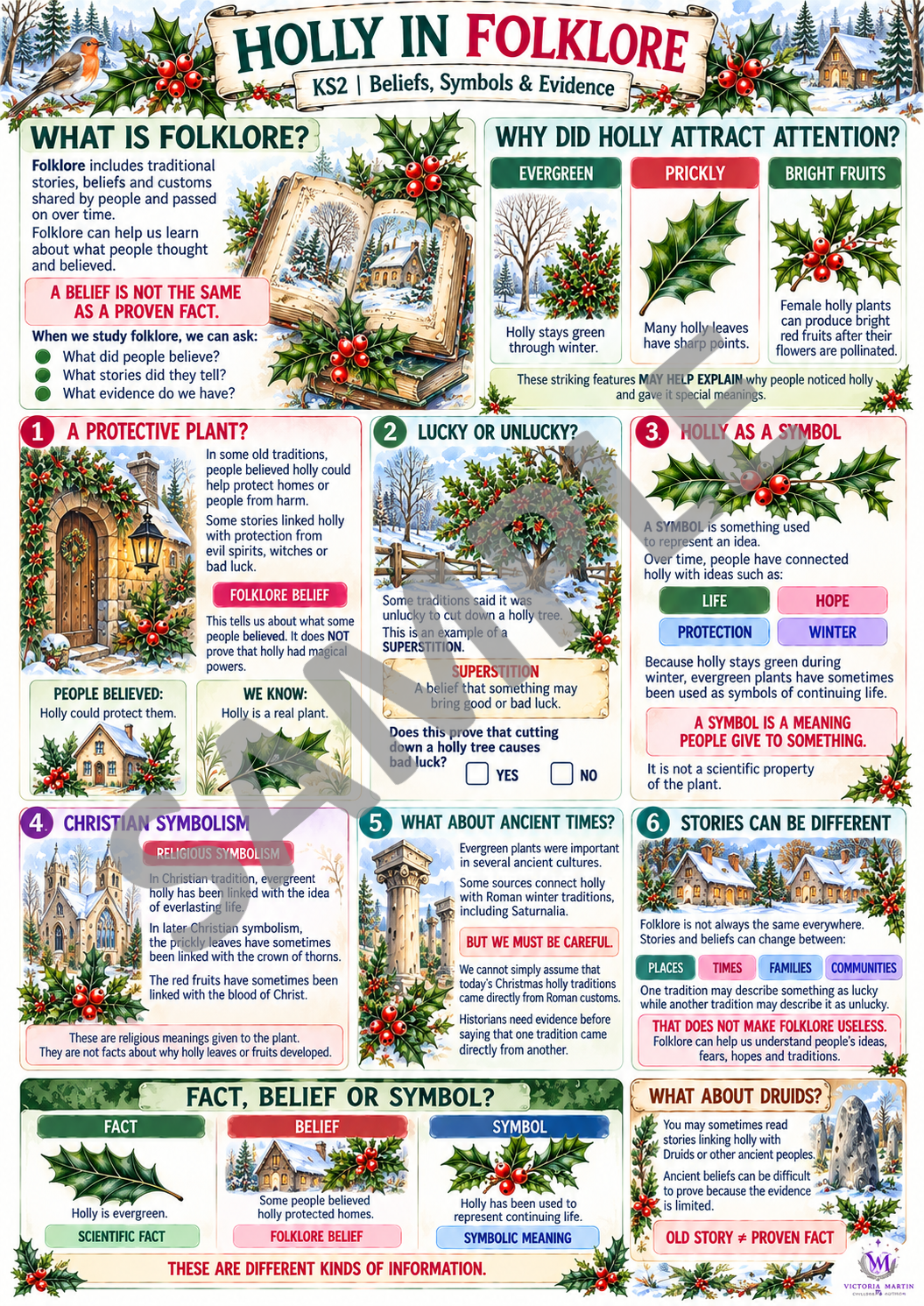
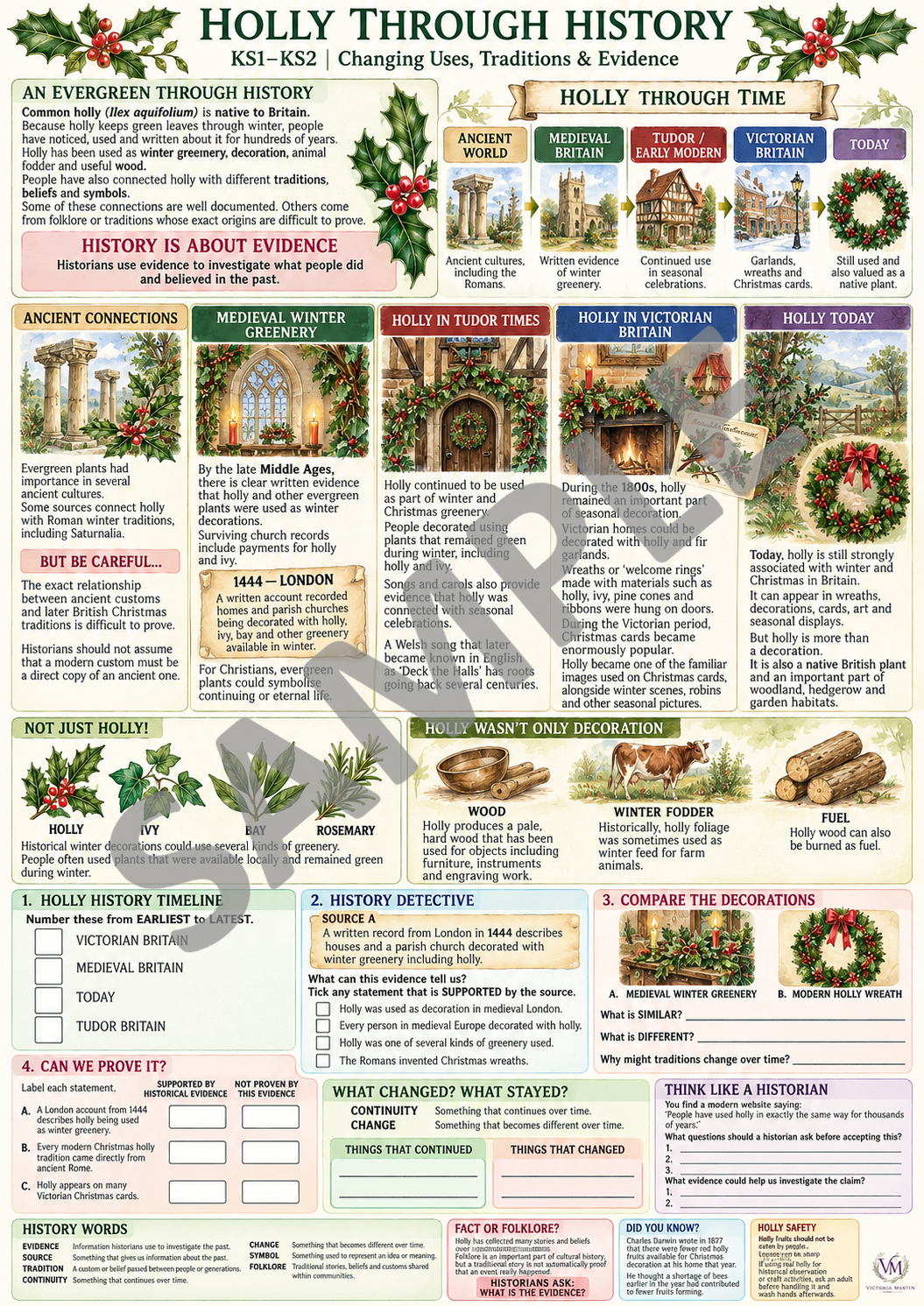
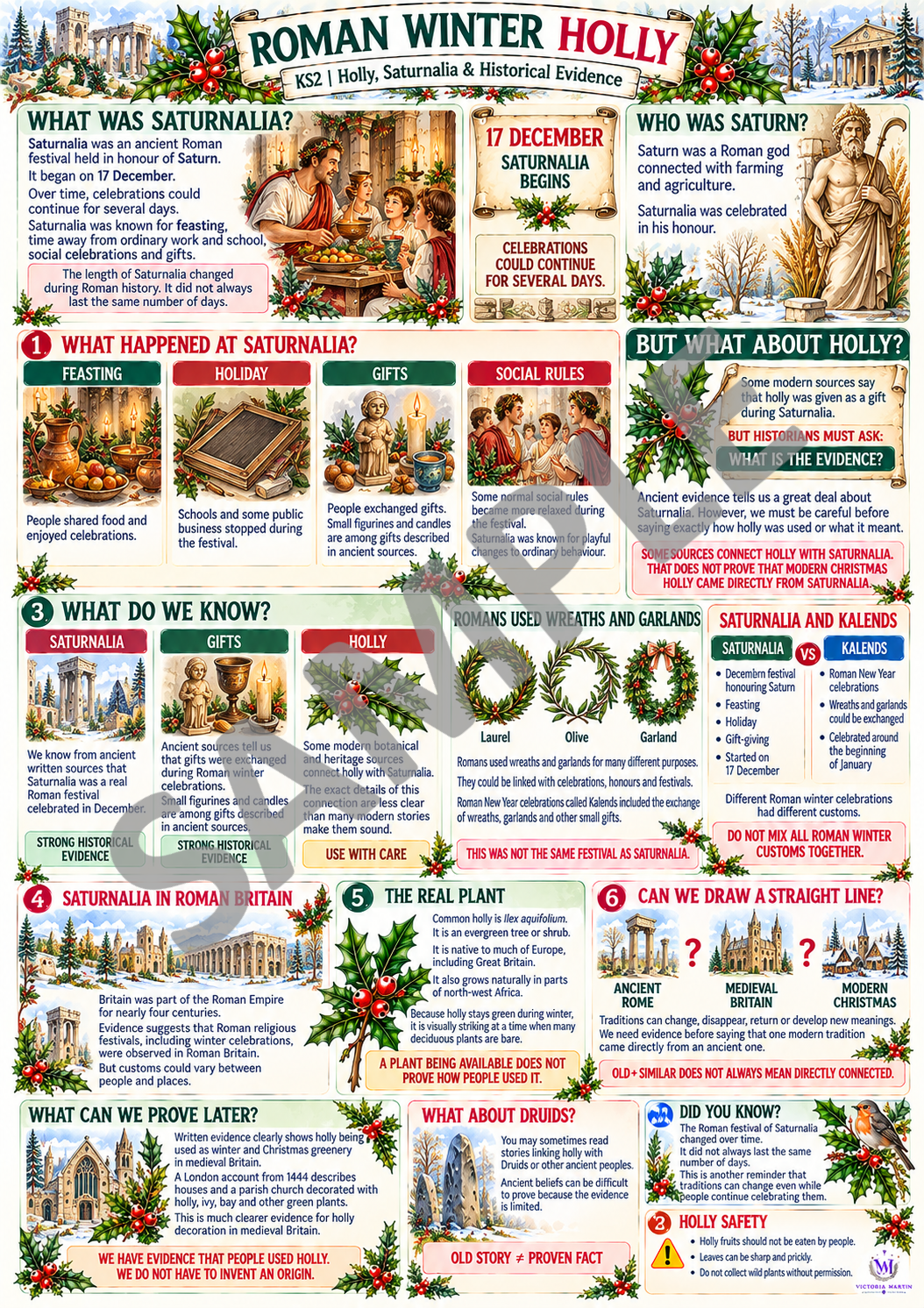
Holly has been associated with winter celebrations, protection and everlasting life for hundreds of years.
Its ability to remain green, even during the coldest months, made it an important symbol in traditional winter folklore.
Today, holly remains a familiar part of Christmas decorations, winter wreaths and our beautiful British countryside.
🍃 Look, Notice and Explore!
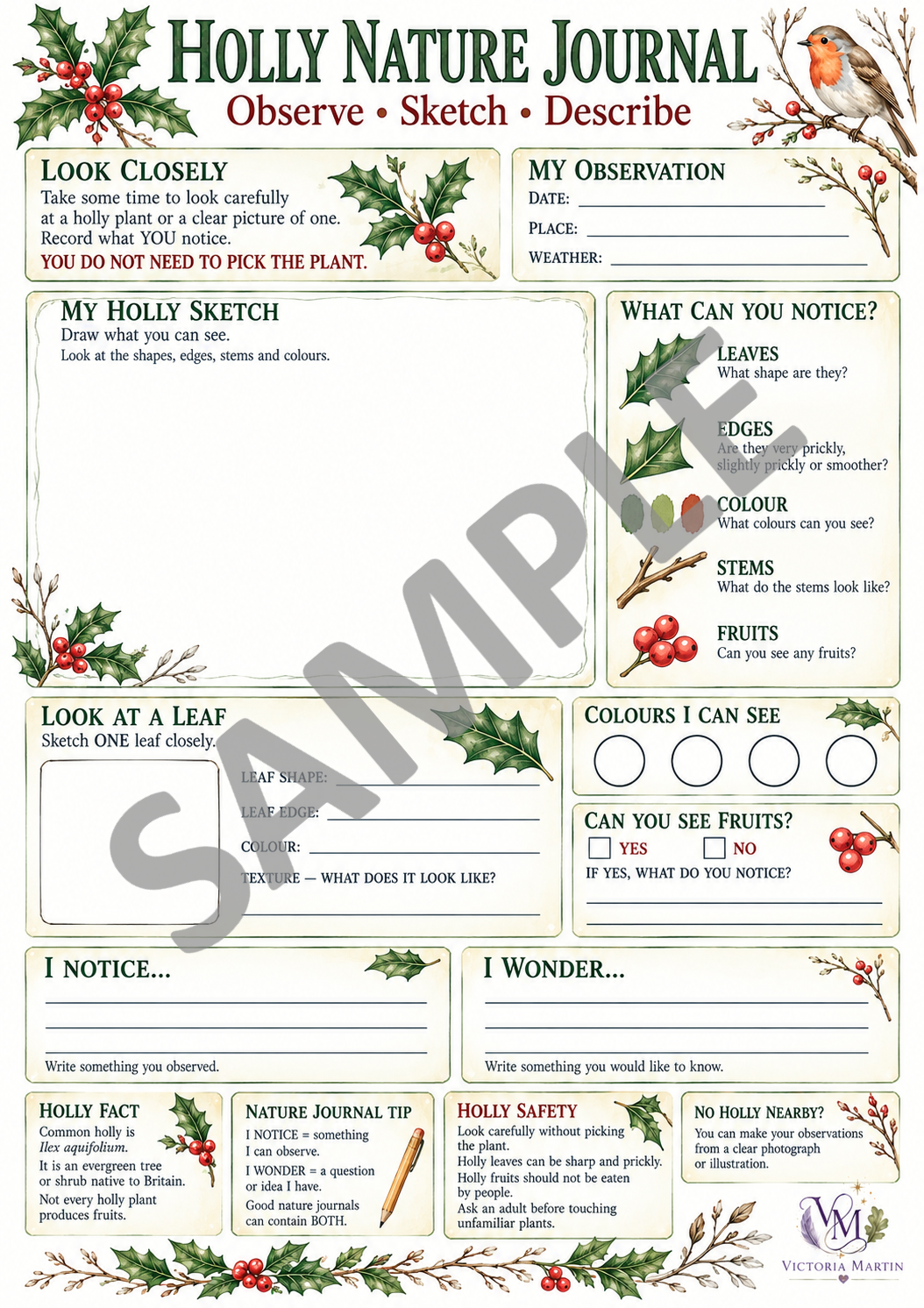
Next time you visit a woodland, park or garden, see whether you can spot some holly.
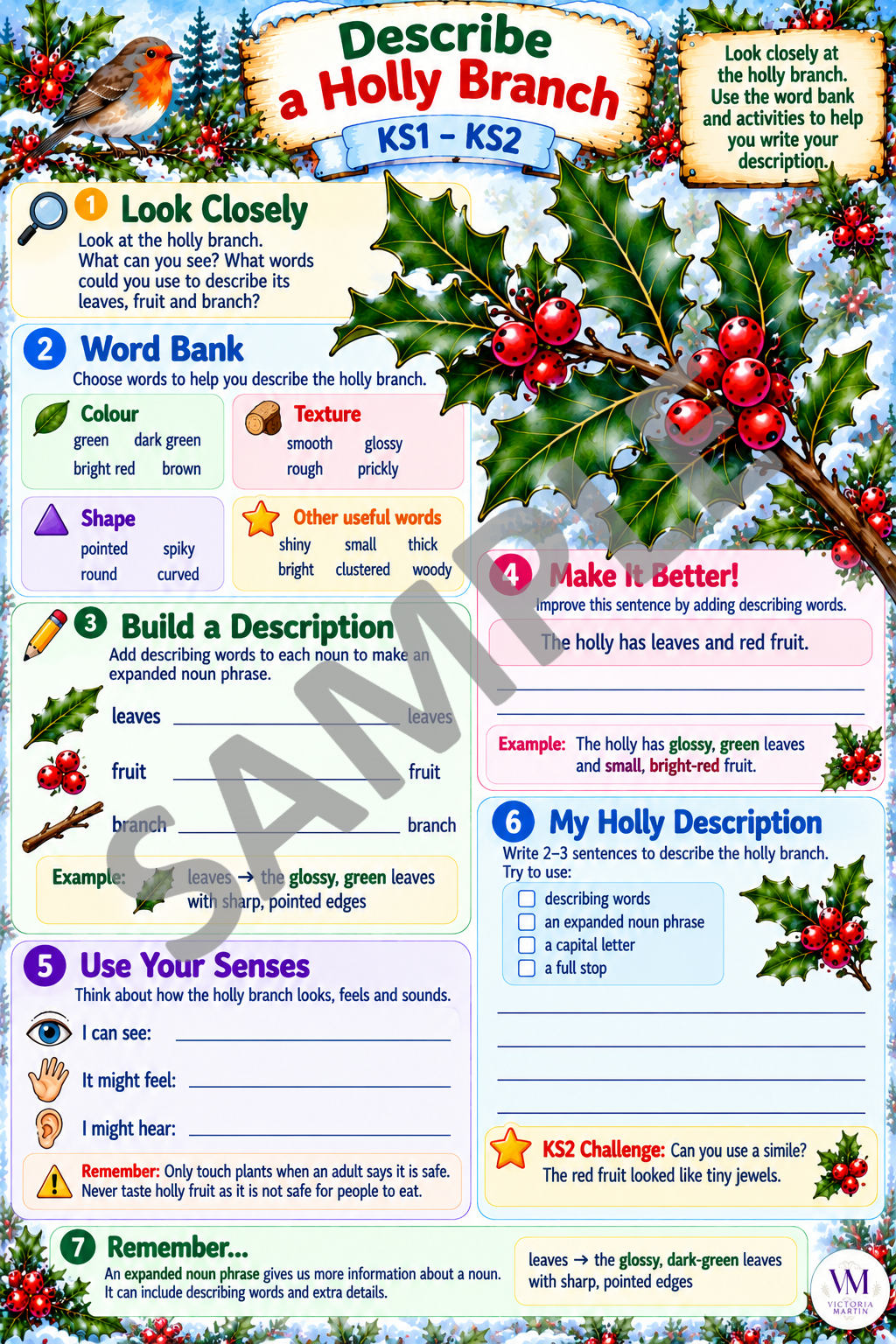
Look carefully at its leaf shapes, different textures and bright berries, remembering to leave them growing for wildlife.
Can you find spiky leaves, smooth leaves or signs that birds have been feeding?
Nature is full of surprises, and sometimes the smallest discoveries reveal the cleverest adaptations!
Resources and Further Information
Further Information
Holly (Ilex aquifolium) - British Trees - Woodland Trust
Christmas holly facts and traditions | National Trust
Holly - Ilex aquilfolium | Kew
Ilex aquifolium | common holly
https://www.countryfile.com/wildlife/trees-plants/holly
Holly | Scottish Wildlife Trust
Holly tree mythology and folklore | Trees for Life
Holly: Folklore, Spiritual & Magical Uses