
🌿 Mosses & Lichens — The Tiny Worlds Beneath Our Feet
Discover the Hidden Wonders of Britain's Woodlands
Have you ever noticed the soft green carpets, colourful patches and tiny leafy cushions growing across woodland floors, rocks and tree trunks?
These fascinating organisms are often overlooked, stepped over or mistaken for one another, but they play an important role in our natural environment.
Although mosses and lichens may look similar, they are actually very different forms of living organisms.
🌱 What Are Mosses?
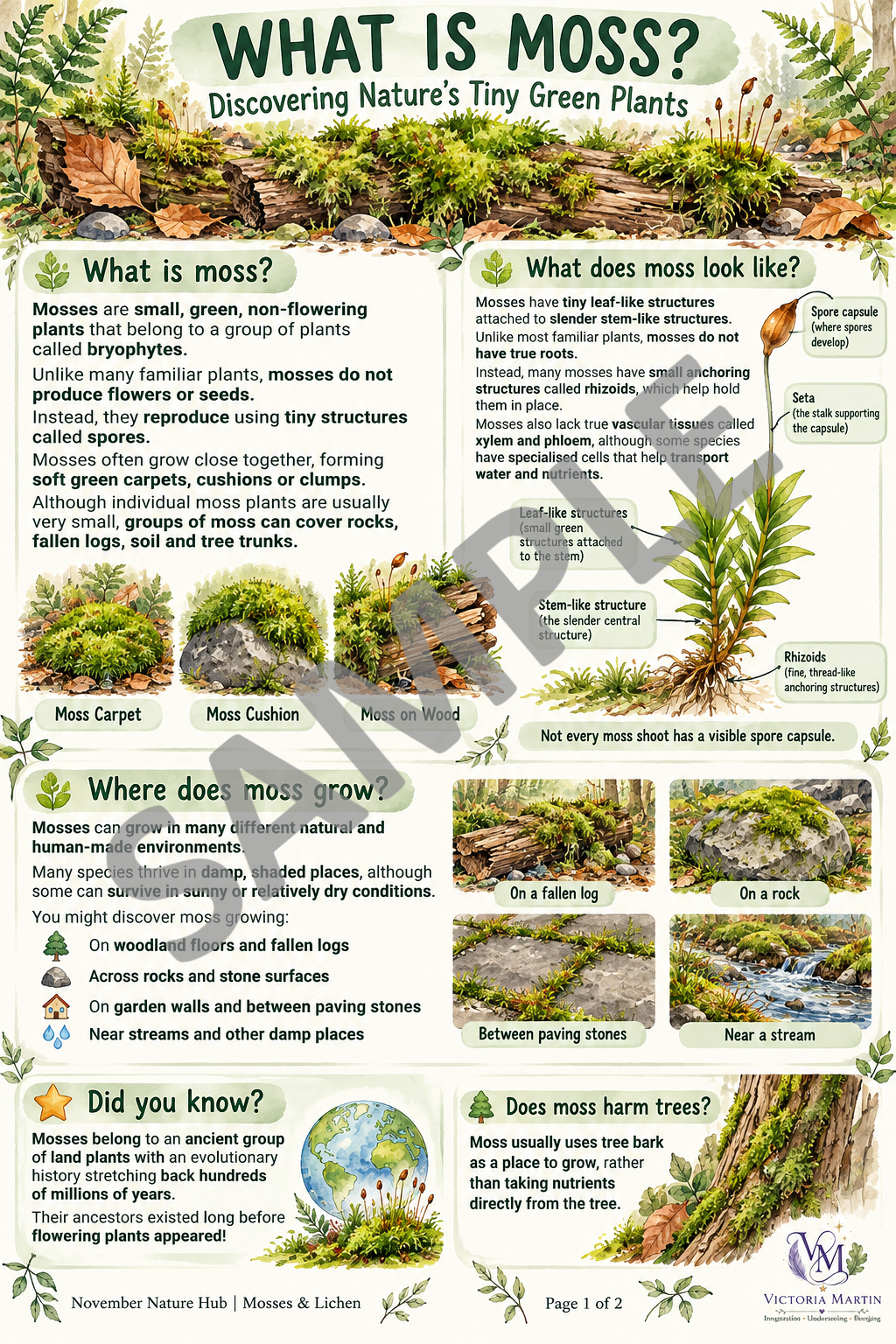
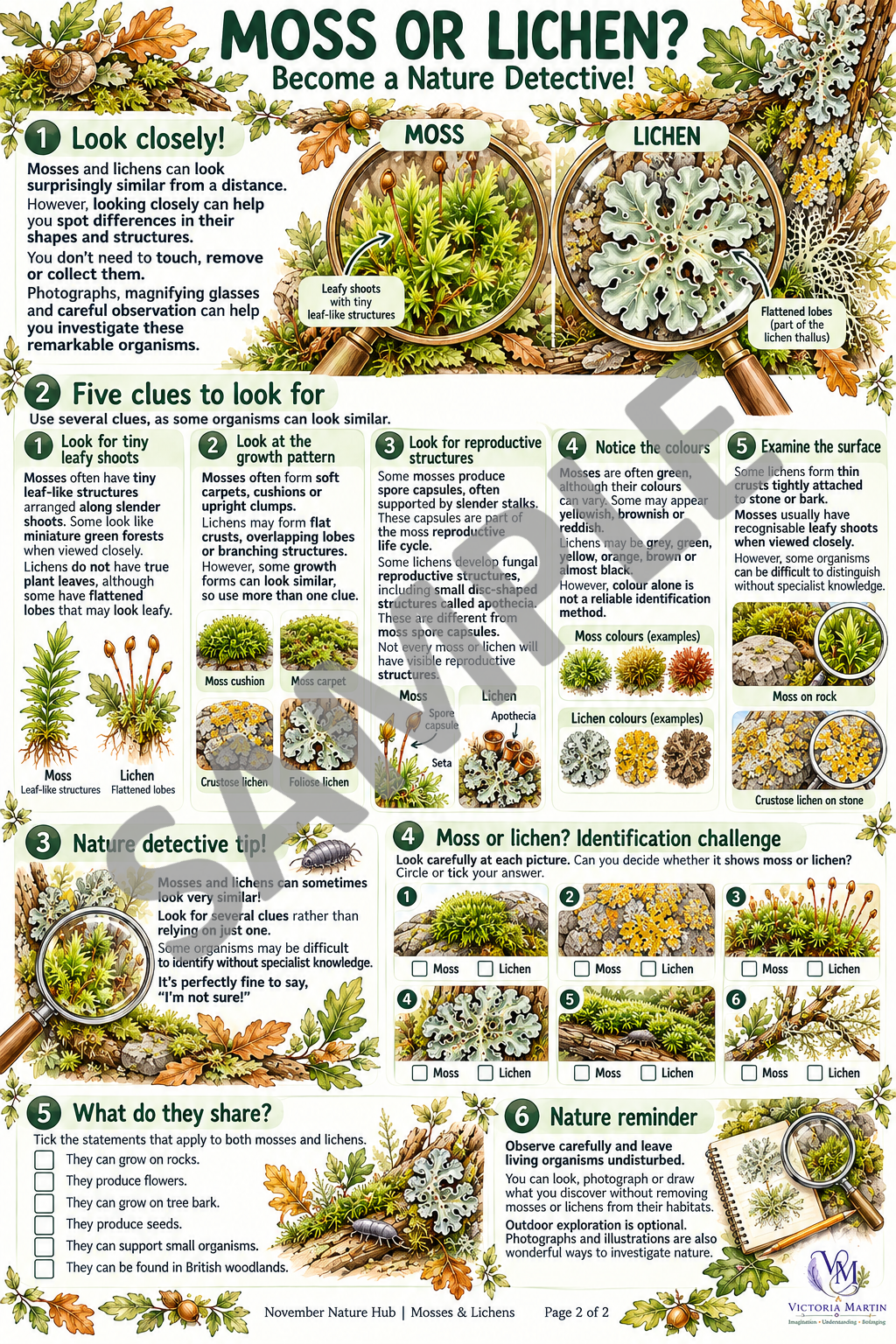
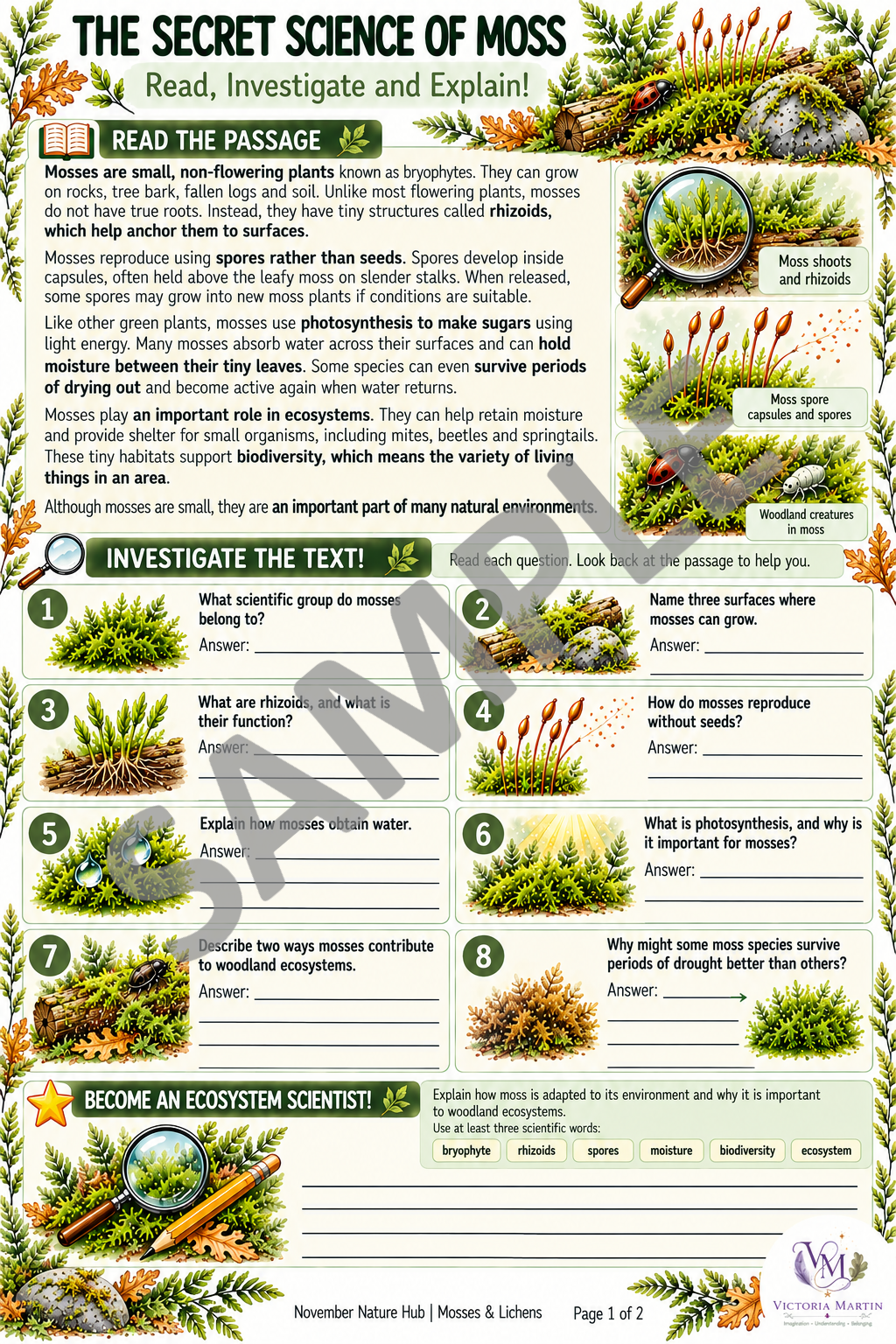
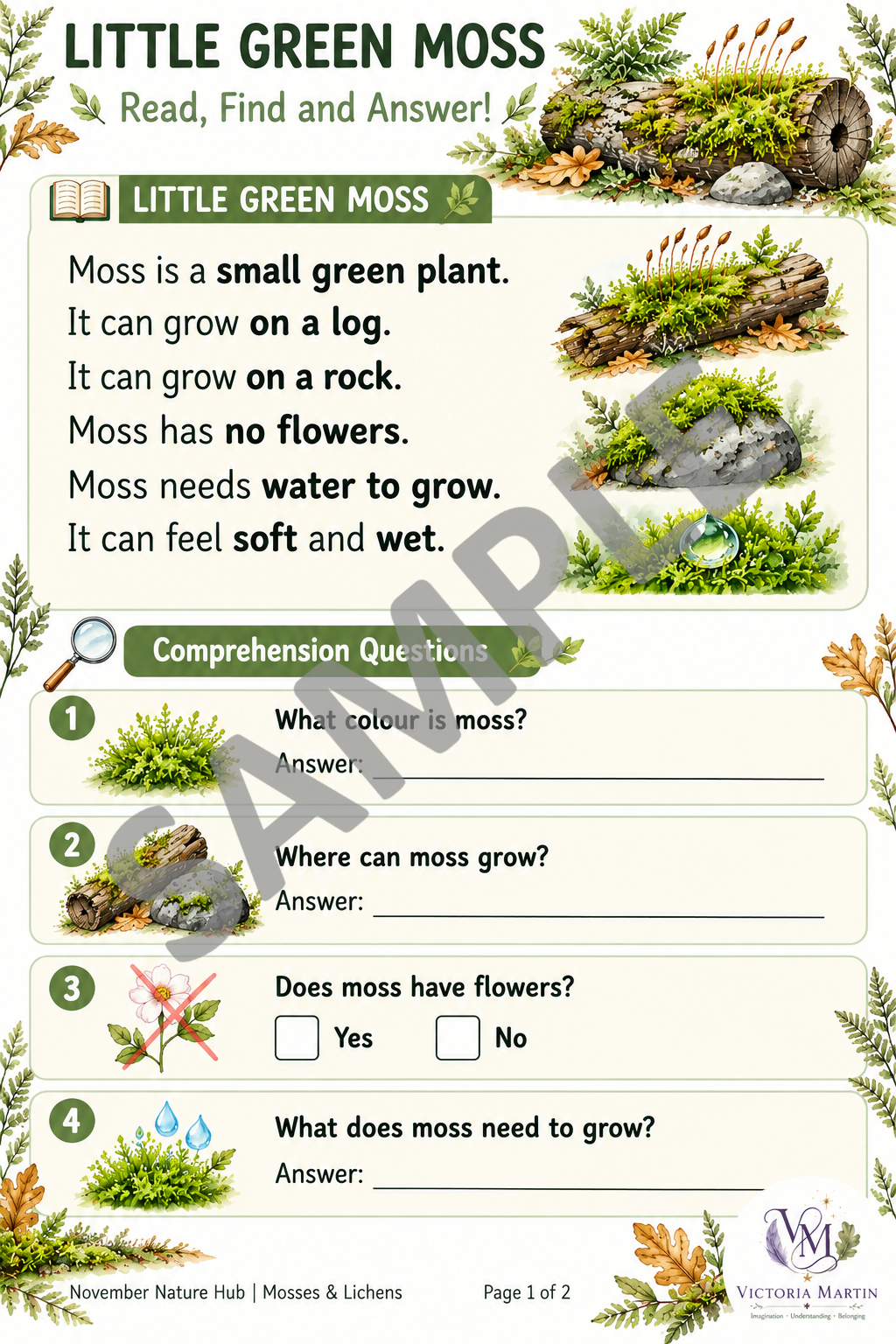
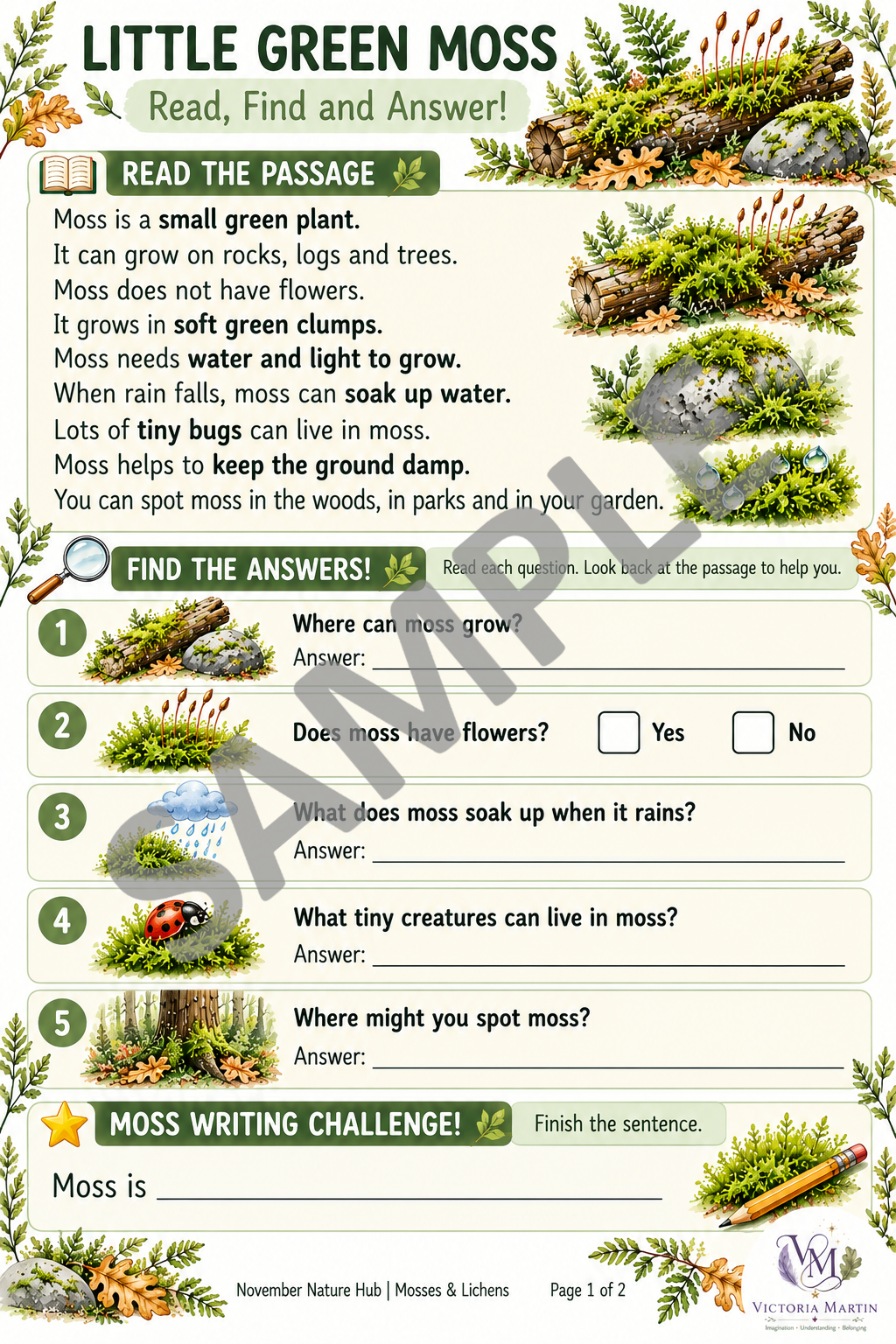
Mosses are small, ancient plants belonging to a group called bryophytes, which also includes liverworts and hornworts.
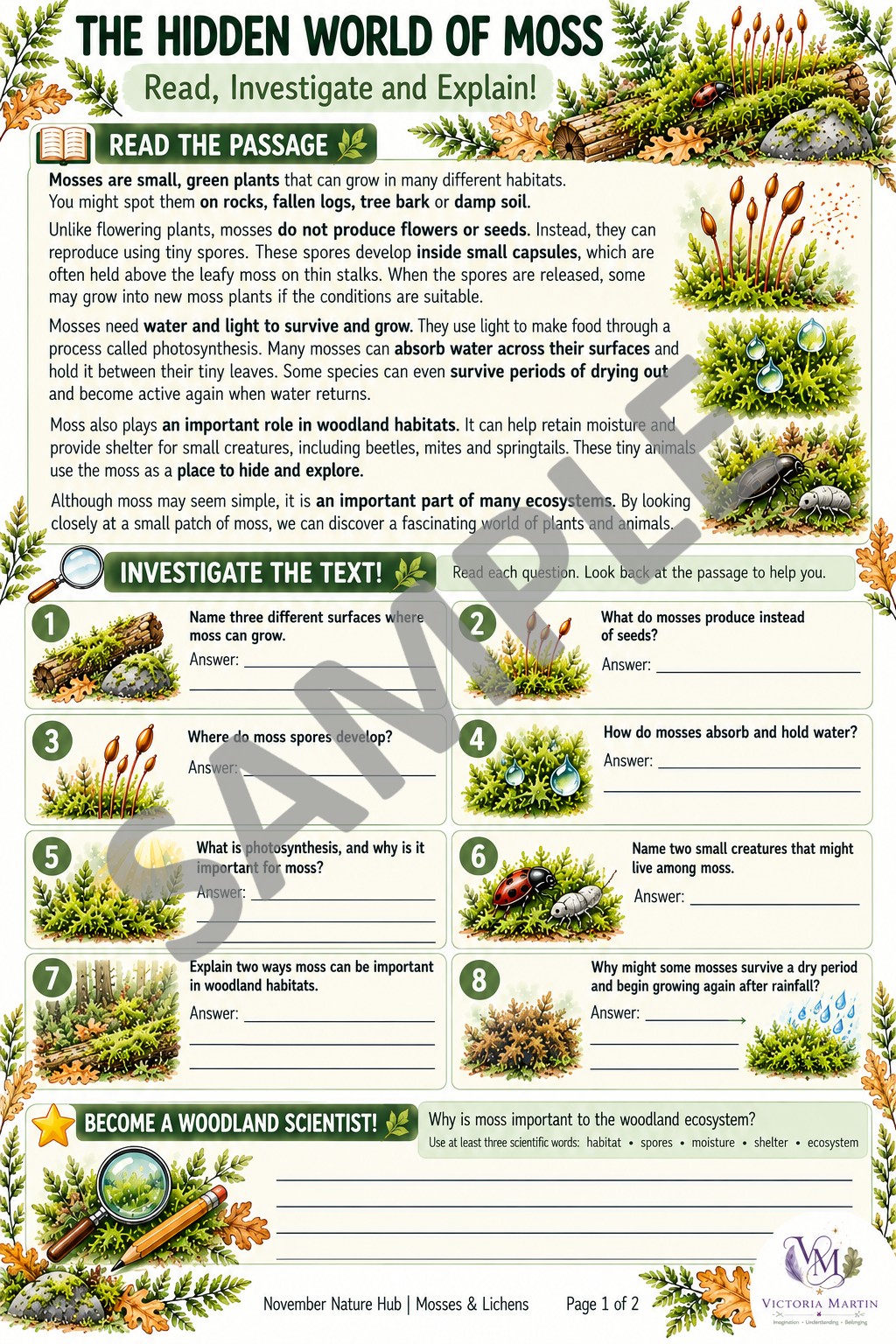
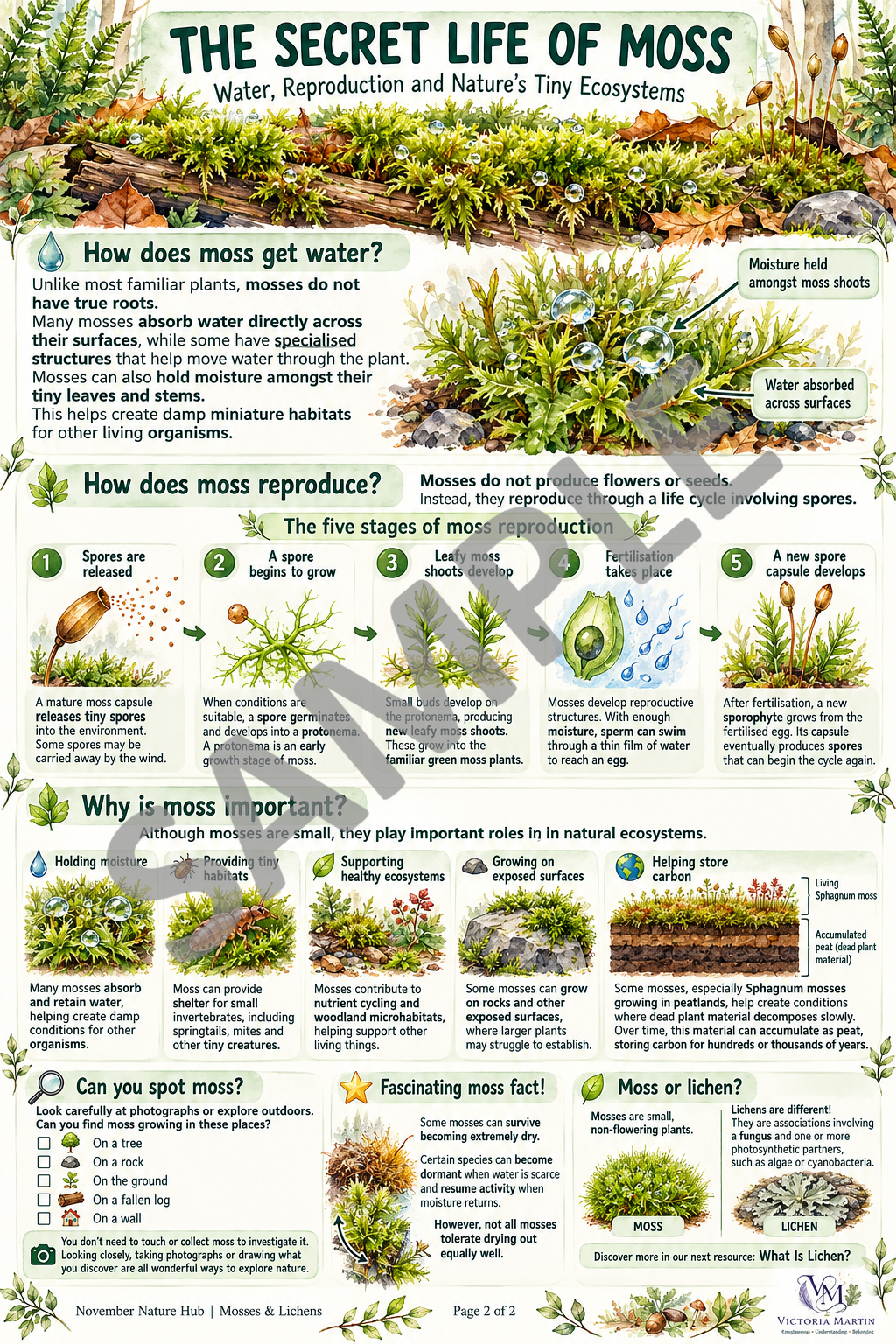
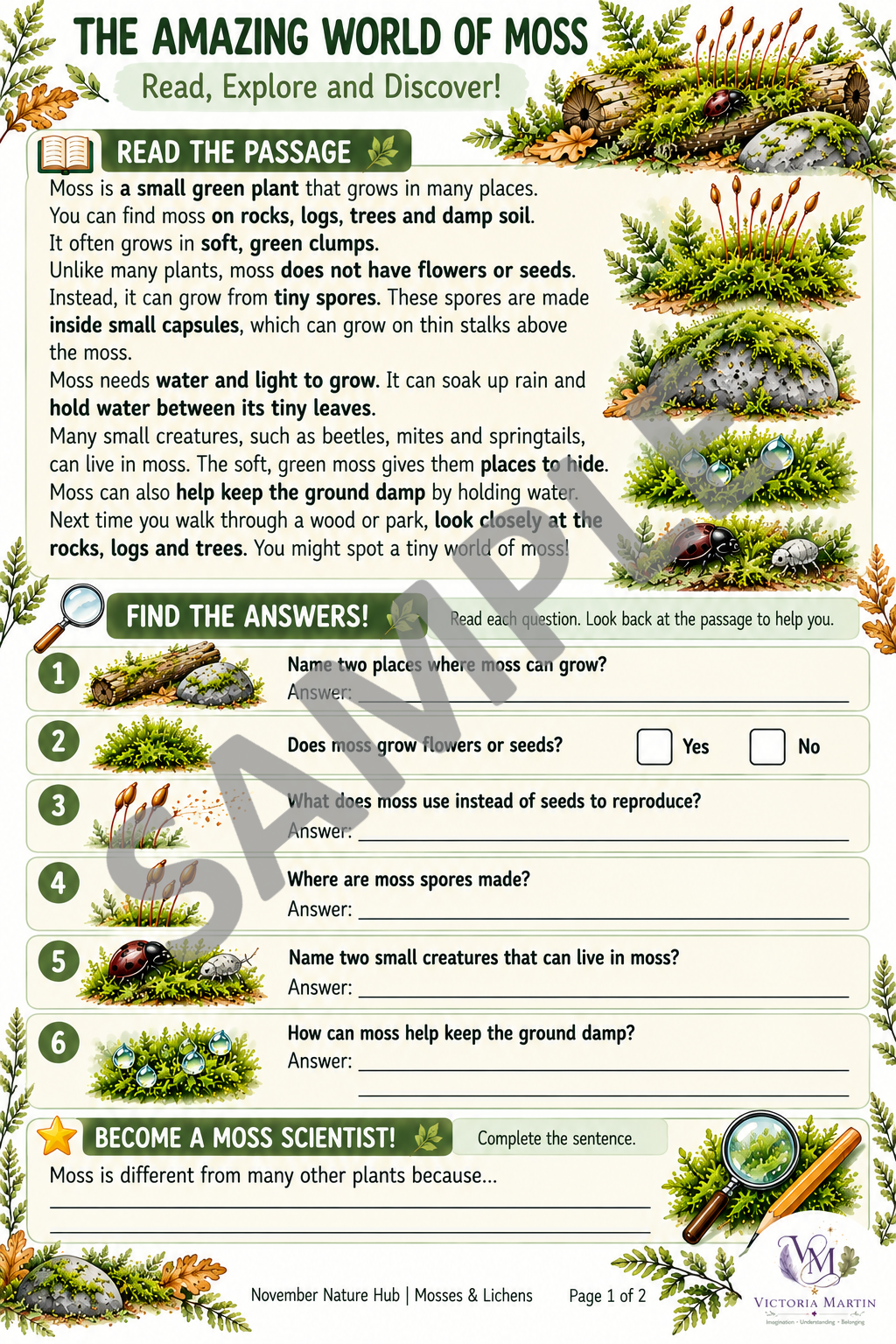
Unlike most familiar plants, mosses do not produce flowers, fruits or seeds.
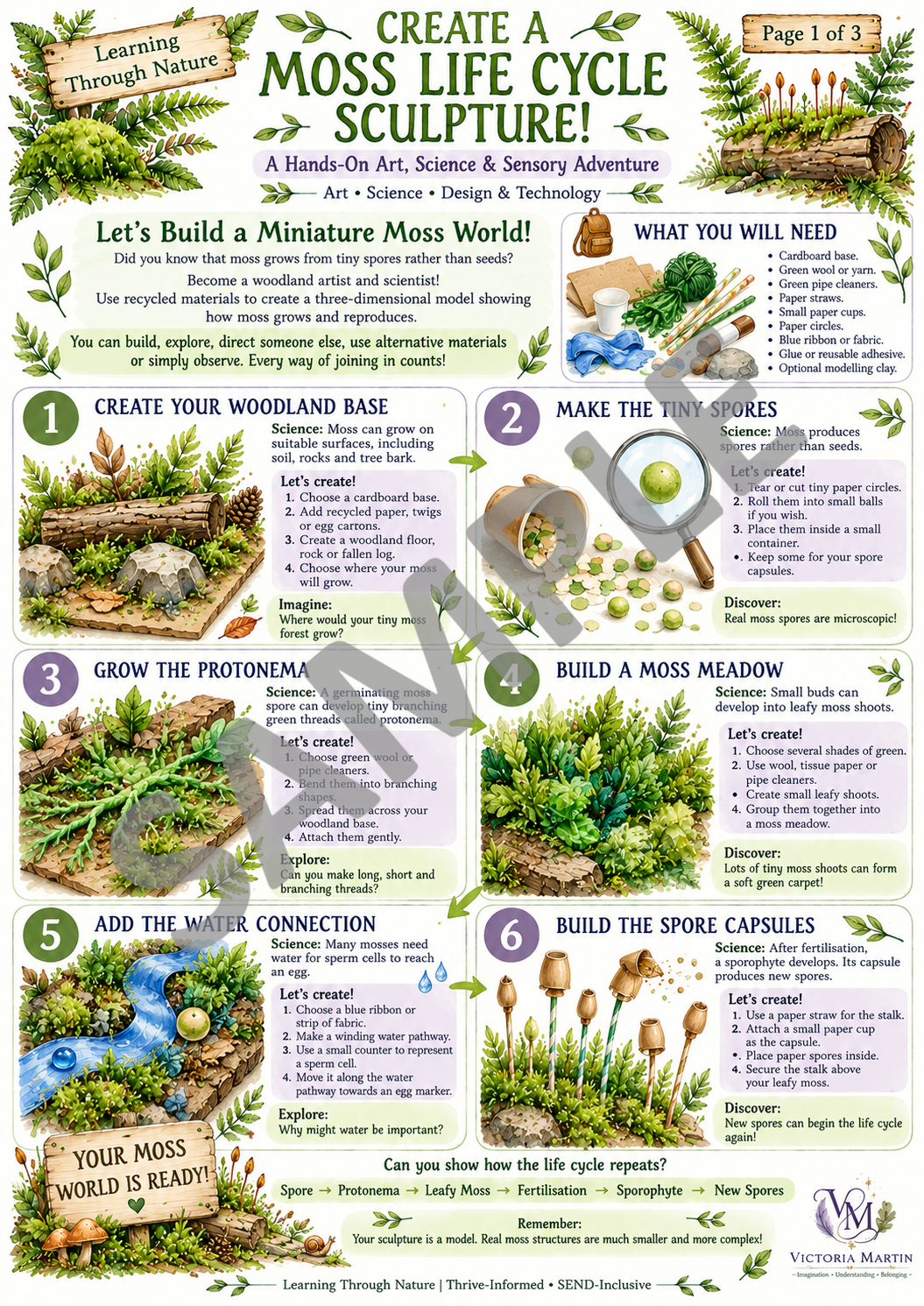
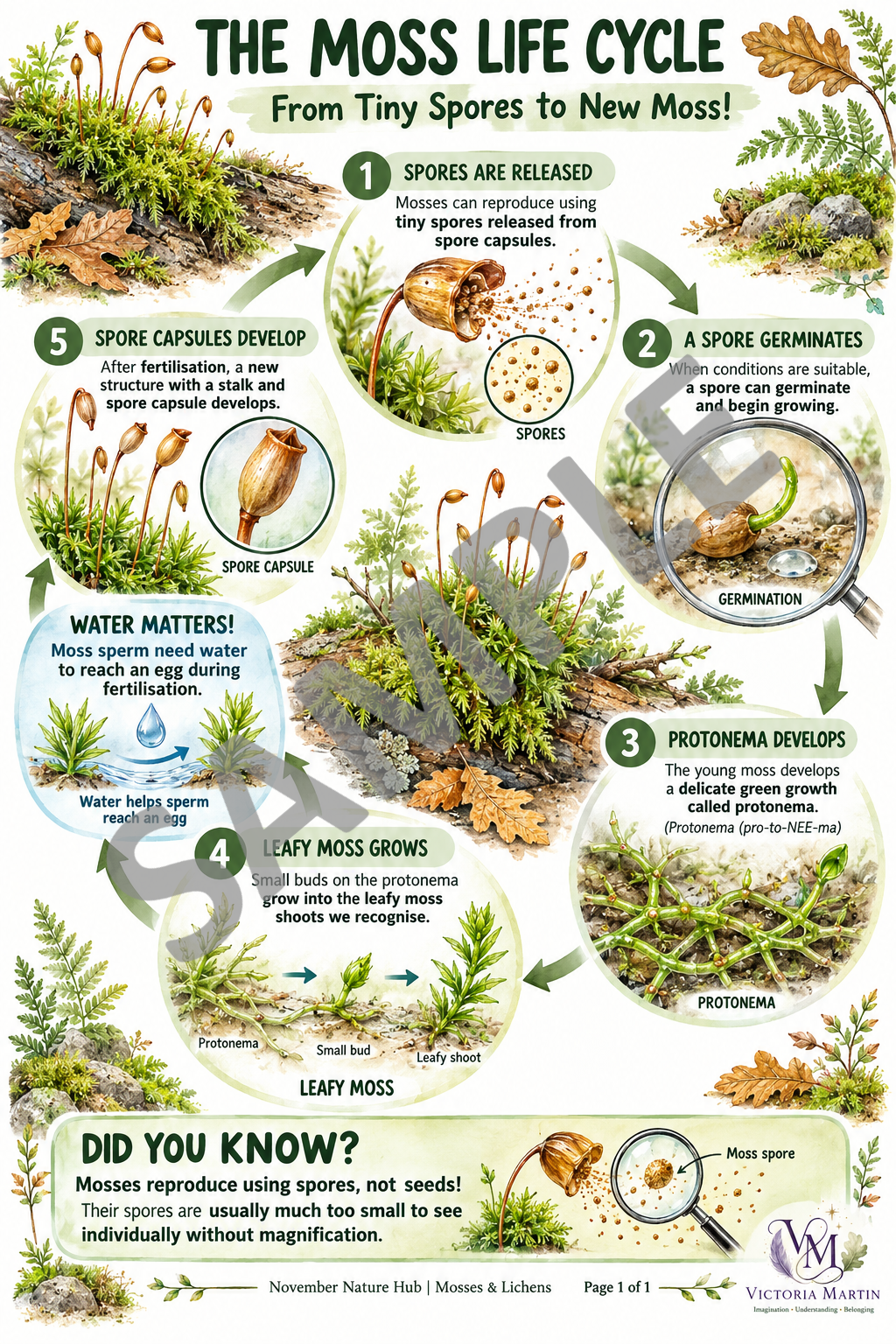
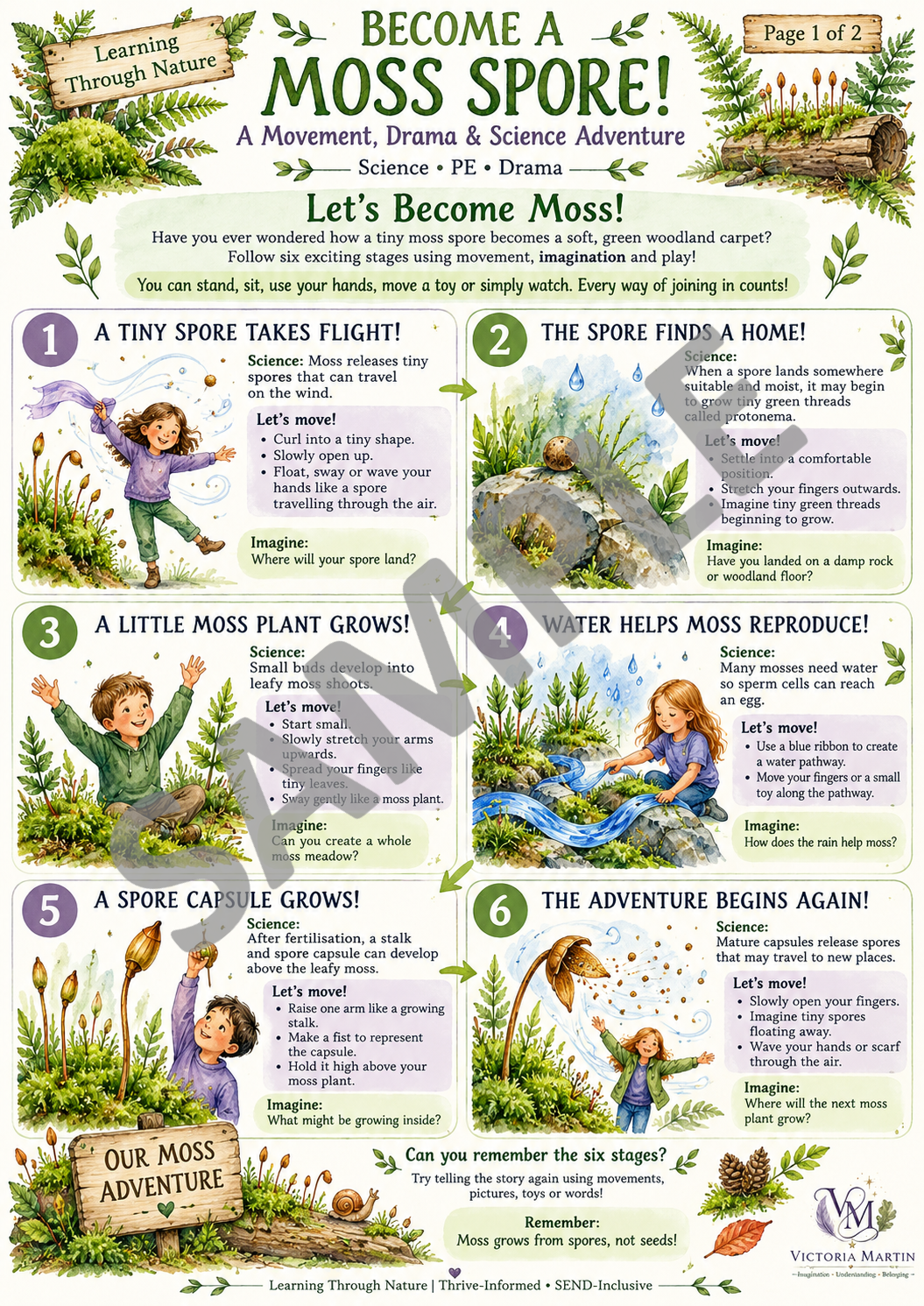
Instead, they reproduce using tiny structures called spores, which can travel through the air and grow into new moss plants when conditions are suitable.
Although moss spores can travel through the air, mosses also need water during sexual reproduction, allowing tiny male reproductive cells to swim towards female reproductive cells.
Mosses have tiny leaves and simple stems, but they do not have the same type of roots as larger plants.
Instead, they use small, hair-like structures called rhizoids to help them attach to soil, rocks and other surfaces.
There are more than 700 species of moss growing across the United Kingdom, each with its own shape, texture and growing preferences.
🌳 Where Do Mosses Grow?
Many mosses thrive in damp, shady and sheltered environments, particularly where moisture remains available.
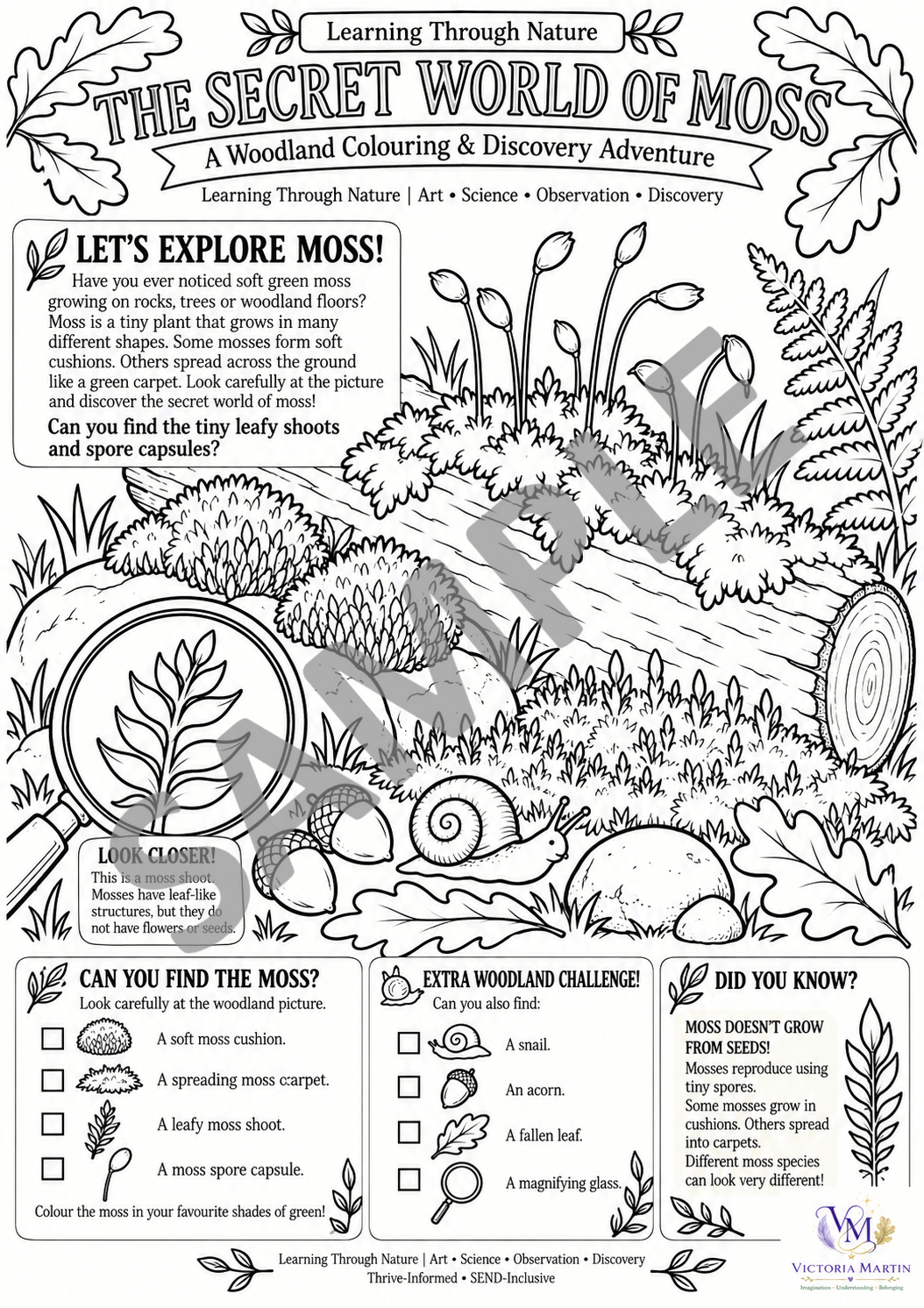
You might discover moss growing on woodland floors, fallen logs, tree trunks, rocks and even garden walls.
However, not all mosses need constant shade, wet soil or woodland conditions to survive.
Some species can tolerate sunny places, periods of dryness and exposed environments, making mosses surprisingly adaptable.
💧 Mosses — Nature's Tiny Sponges!
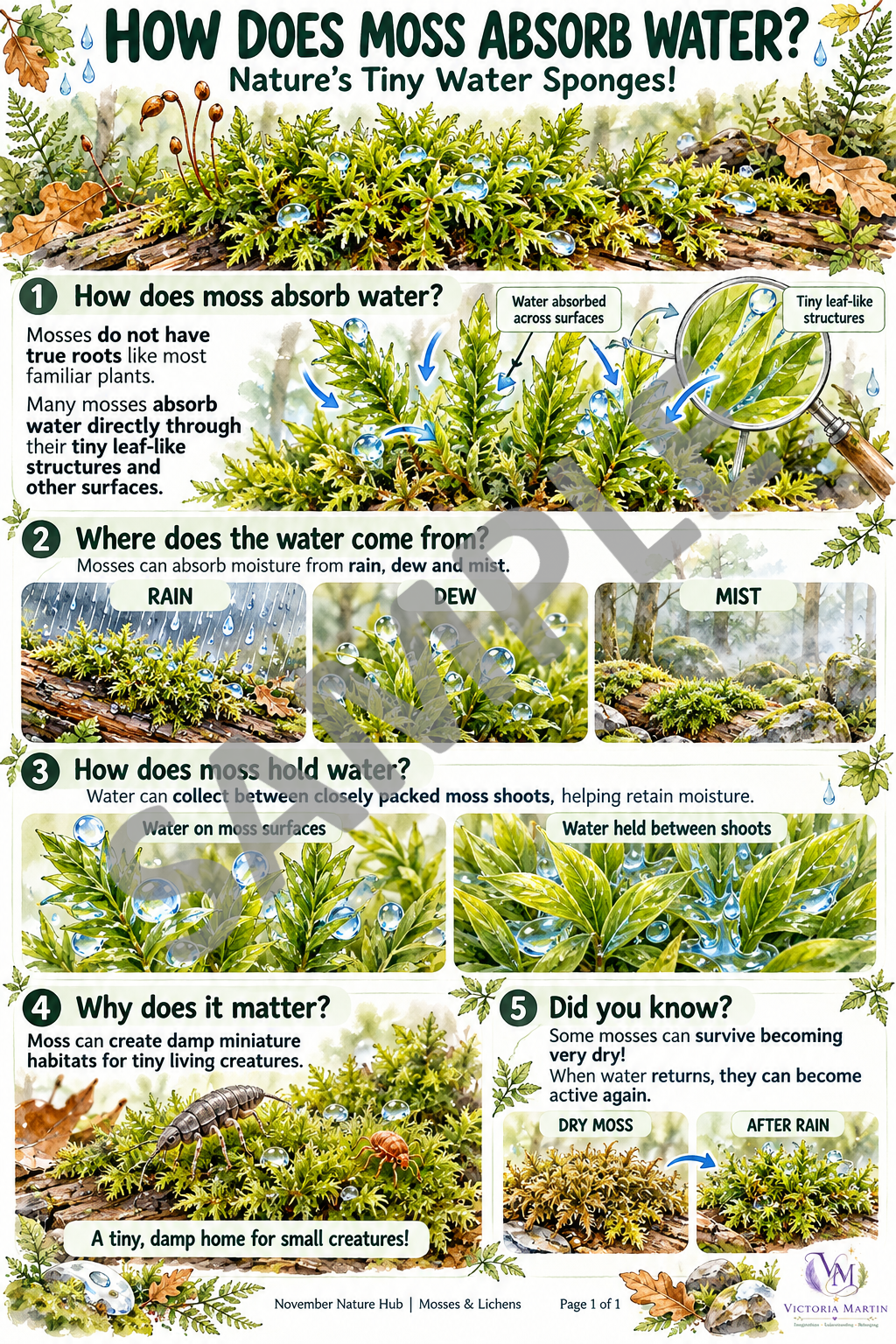
One of the most fascinating things about moss is its ability to absorb, hold and release water.
Many mosses can absorb and retain rainwater, collect moisture from their surroundings and remain hydrated when suitable conditions are available.
Dense carpets of moss can also help slow water movement, reduce soil erosion and maintain moisture in their immediate surroundings.
When conditions become too dry, some mosses can lose much of their water, slow their activity and survive until moisture returns.
After rainfall, these remarkable plants can absorb water again, resume their activity and return to their familiar soft green appearance.
🍄 What Are Lichens?
Lichens might look like tiny plants, colourful moss or unusual patches of fungus, but they are something quite different.
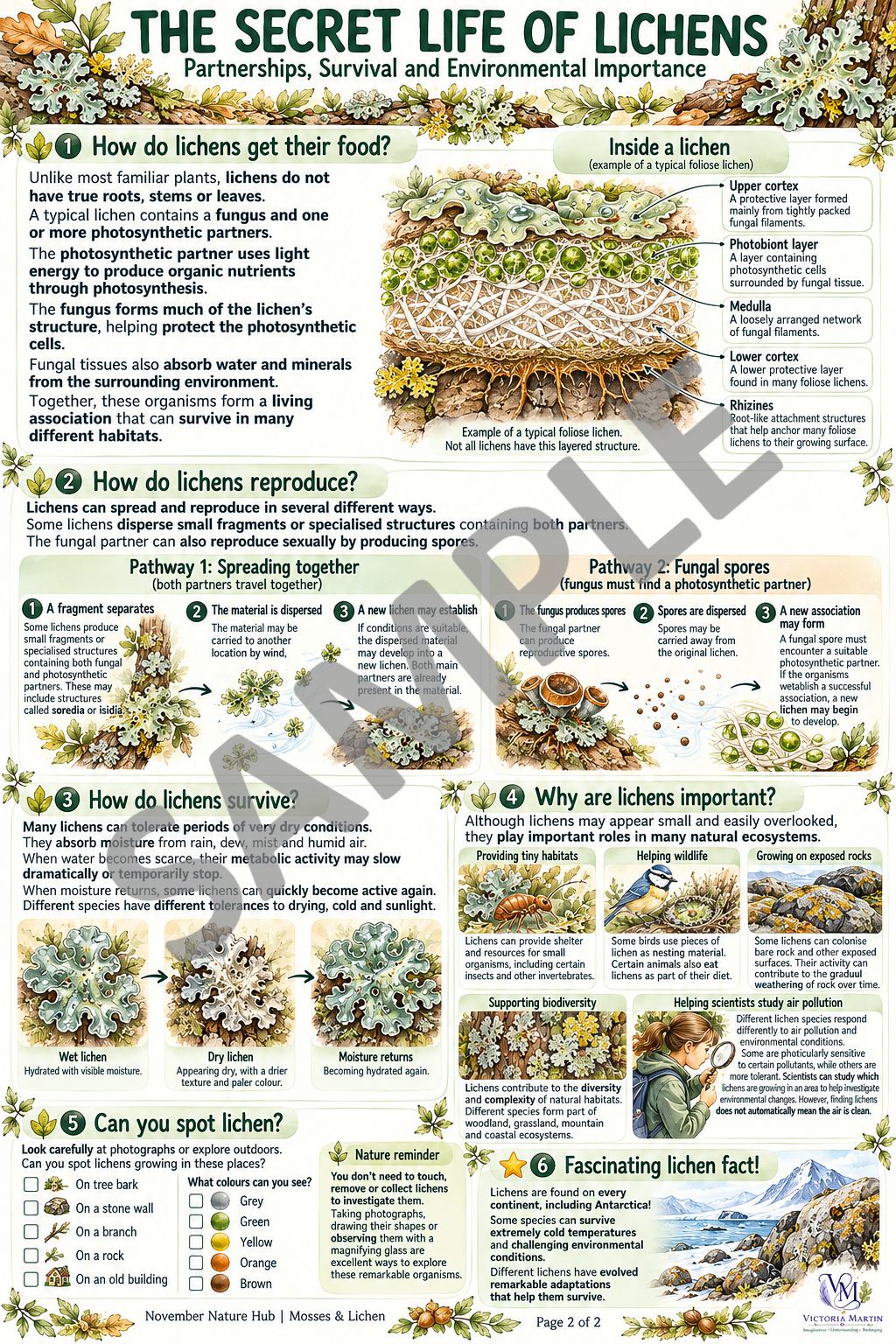
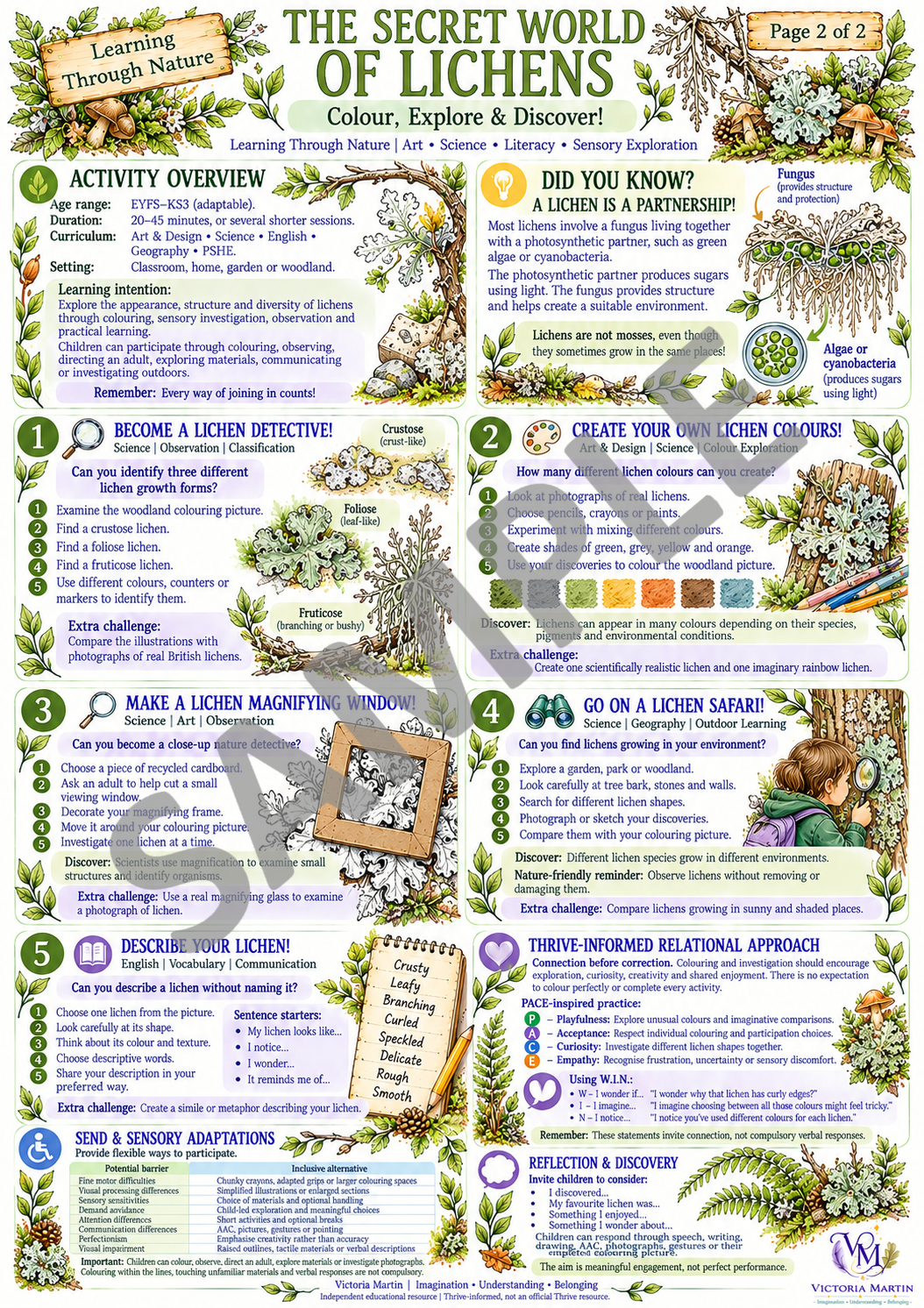
A lichen is formed through a close partnership between a fungus and one or more photosynthetic partners, usually algae or cyanobacteria.
The fungus provides structure and helps create a protective environment, while the algae or cyanobacteria use sunlight to produce food through photosynthesis.
This relationship is called symbiosis, where different organisms live closely together and form a lasting biological association.
Together, these partners create the fascinating colours, unusual shapes and distinctive textures we recognise as lichens.
🌈 What Do Lichens Look Like?
Lichens appear in many different colours, shapes and textures, making them wonderful organisms to explore.
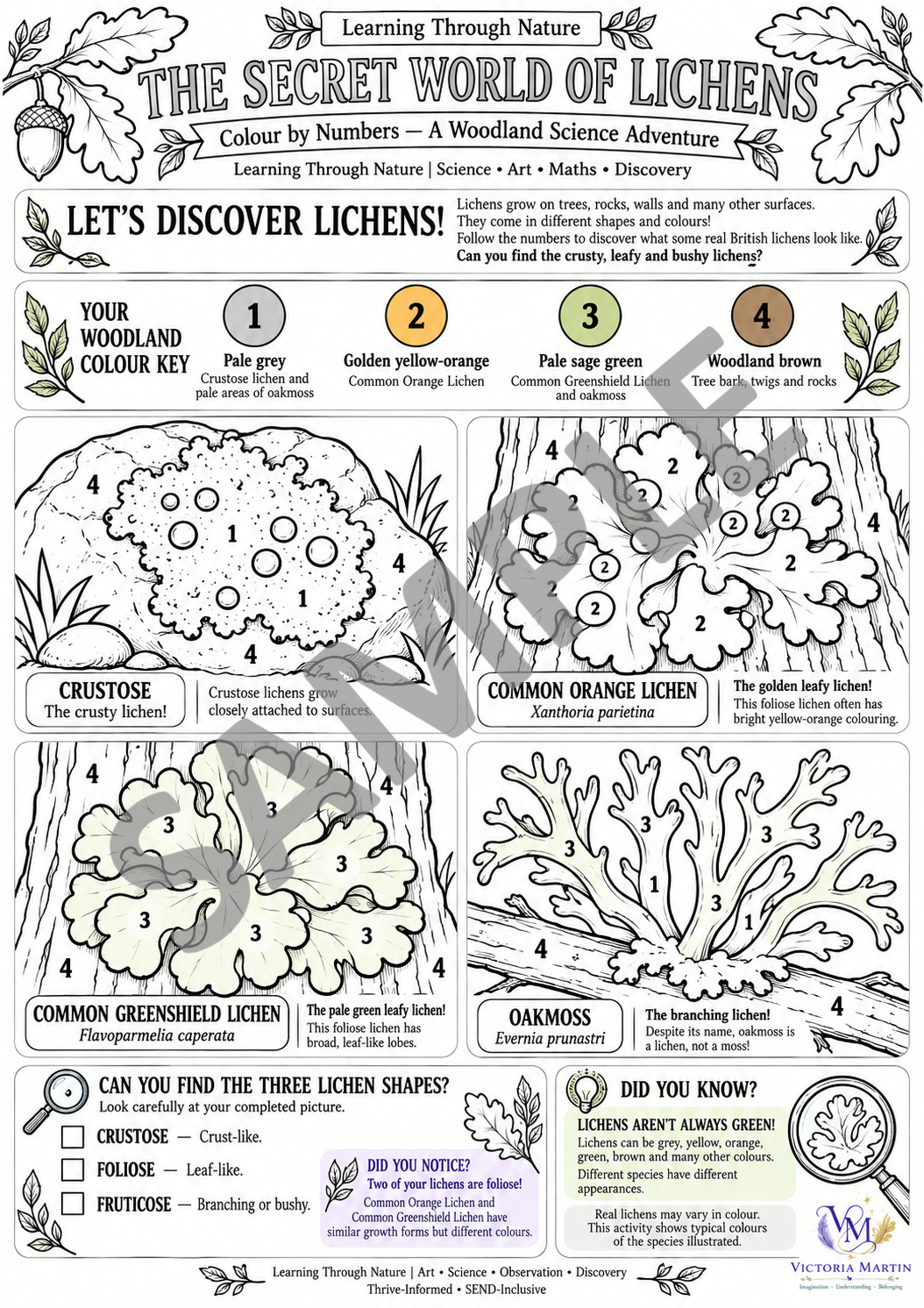
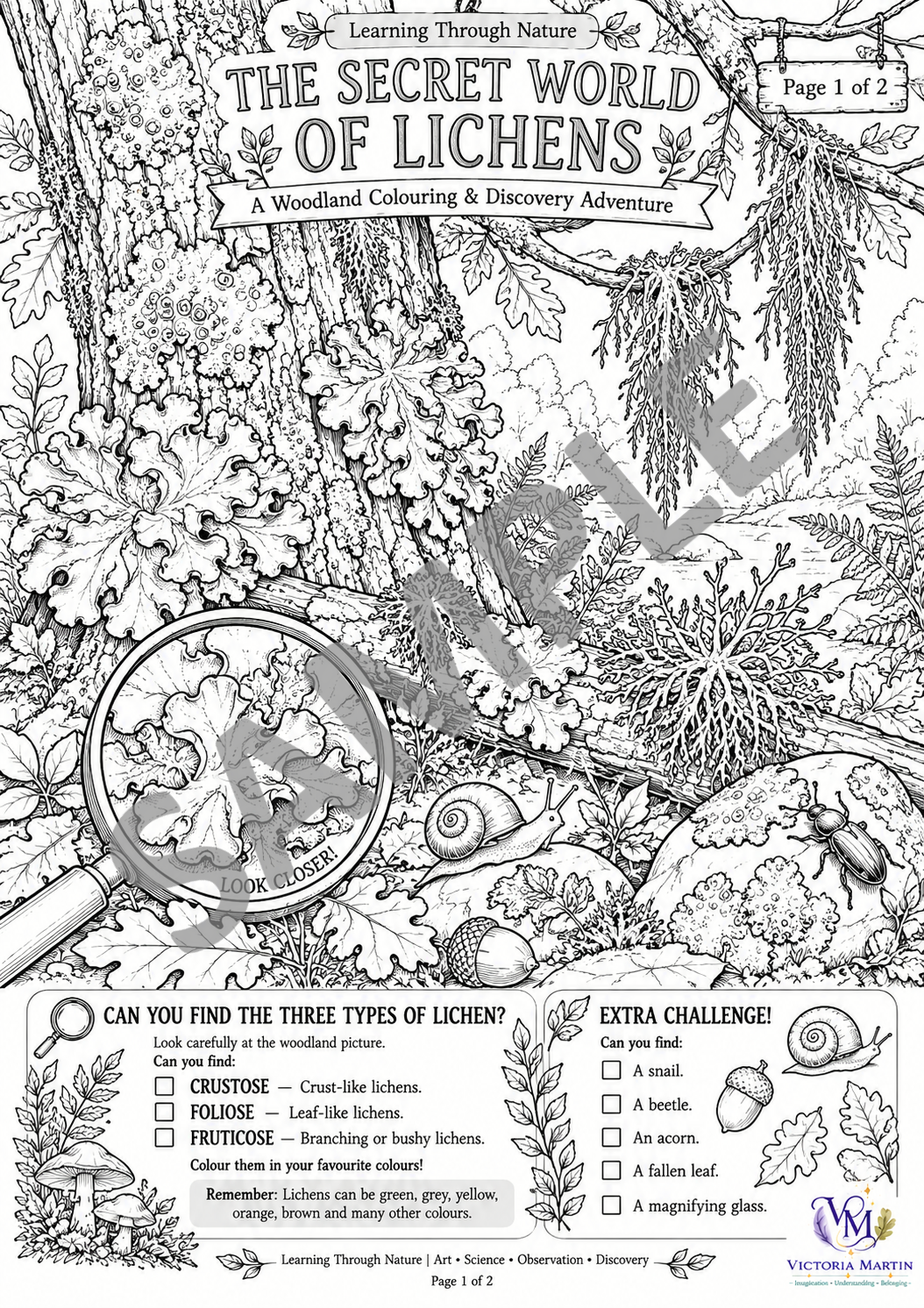
Some form flat, crusty patches that appear almost painted onto rocks or tree bark.
Others develop leaf-like shapes, ruffled edges and overlapping layers that spread across surfaces.
Some lichens even grow into tiny branching structures, bushy tufts or hanging strands that resemble miniature forests.
Their colours can include pale green, silver-grey, yellow, orange and even darker shades.
🪨 Where Do Lichens Grow?
Lichens can grow on tree bark, rocks, stone walls, rooftops and many other surfaces.
Some species prefer sunny, exposed locations, while others thrive in cool, sheltered woodland environments.
Unlike ordinary plants, lichens do not have true roots that absorb water and nutrients from the ground.
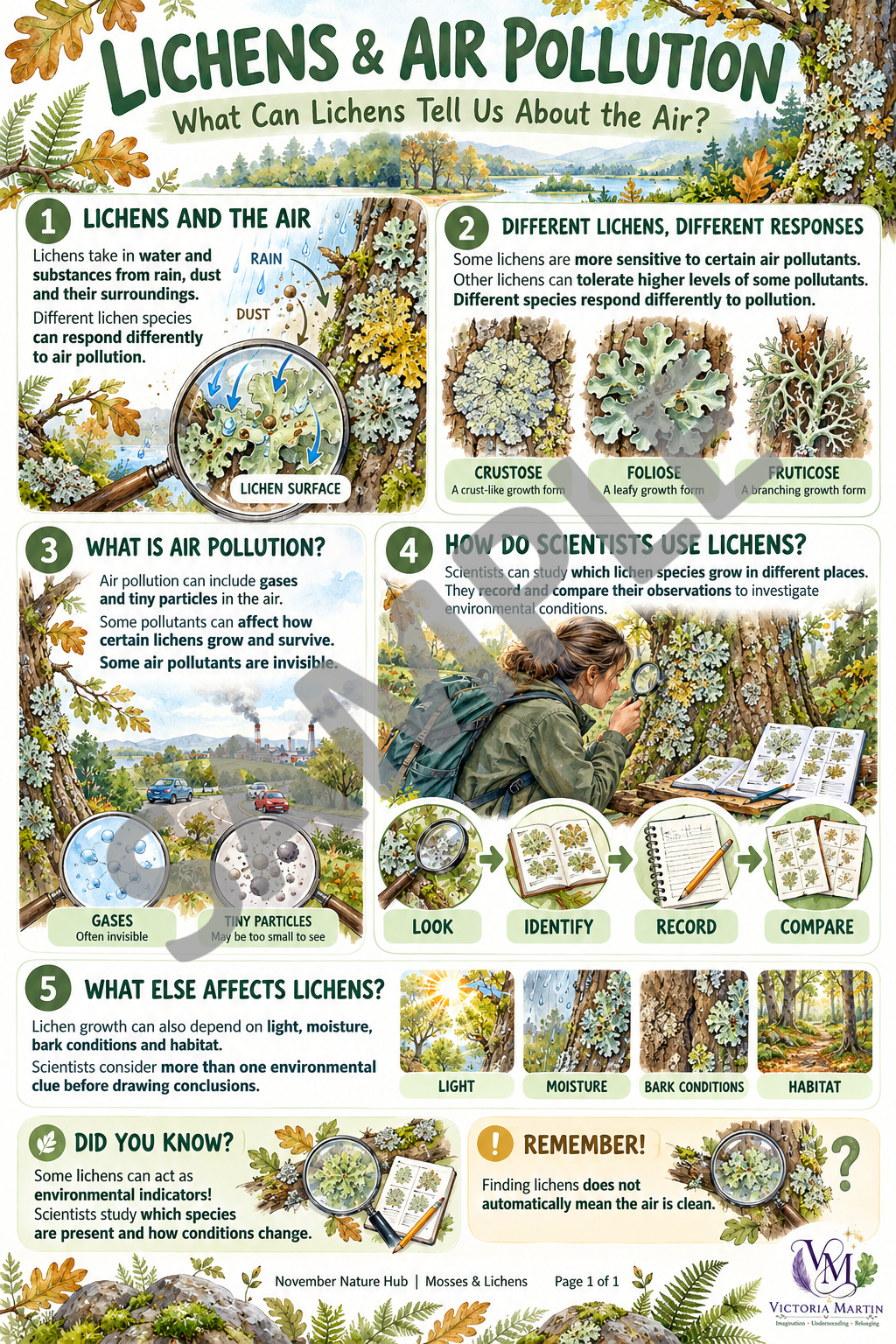
Instead, they absorb moisture and nutrients from rainwater, dust and the surrounding atmosphere.
Many lichens grow extremely slowly, sometimes increasing in size by only a few millimetres, or even less, over an entire year.
🌬️ Lichens — Nature's Air Quality Detectives!
Did you know that some lichens can help scientists understand air pollution, environmental changes and the health of local habitats?
Because lichens absorb substances from the surrounding atmosphere, many species are particularly sensitive to pollution.
Certain lichens struggle to survive where air pollution levels are high, while others are more tolerant of polluted conditions.
By studying which lichens are present, missing or changing in abundance, scientists can gather useful information about local air quality.
However, finding lichens does not automatically mean the air is completely clean, because different species respond differently to different pollutants.
🐞 Why Are Mosses and Lichens Important?
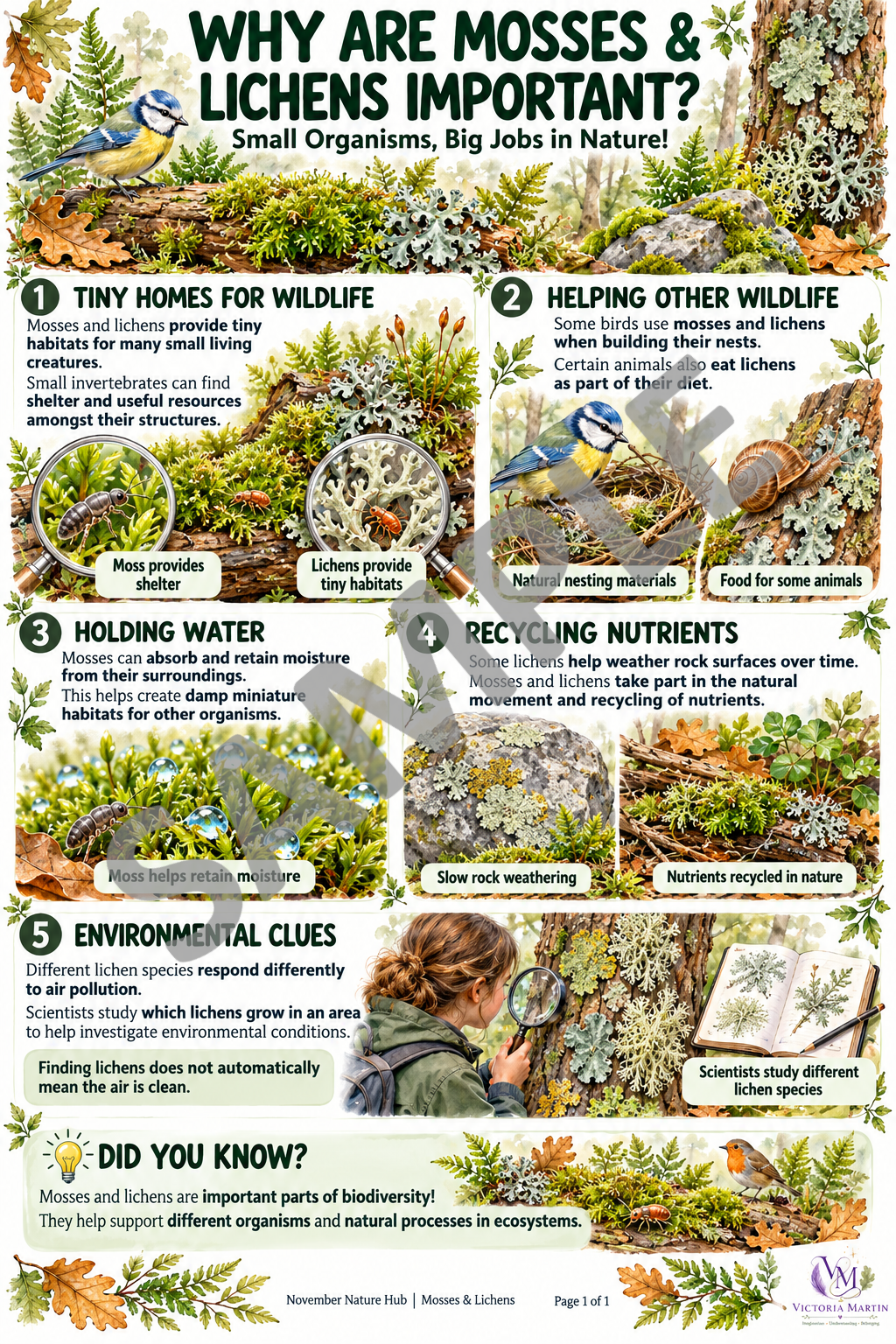
Although they are often small, quietly growing and easily overlooked, mosses and lichens provide important benefits for wildlife.
Mosses create tiny sheltered habitats where insects, spiders and other small creatures can live.
Some birds collect soft moss, small pieces of lichen and other natural materials to help build and line their nests.
Lichens can provide food, shelter and camouflage for certain insects and other small organisms.
Together, mosses and lichens contribute to the rich biodiversity, natural beauty and ecological balance of our woodlands.
❄️ Mosses and Lichens Through the Seasons
Spring: Increasing daylight, milder temperatures and regular rainfall create favourable growing conditions for many species.
Summer: Some mosses and lichens may become dry, less active or temporarily dormant during hot weather.
Autumn: Cooler temperatures and frequent rainfall can help mosses become hydrated, greener and more noticeable.
Winter: Many mosses and lichens remain visible, colourful and active when conditions allow, even while surrounding plants lose their leaves.
✨ Did You Know?
Mosses belong to an ancient group of plants whose ancestors existed hundreds of millions of years before humans appeared.
Some lichens can survive in extremely cold environments, dry landscapes and places where many other organisms struggle to grow.
The United Kingdom is home to more than 2,000 species of lichen, making our woodlands, coastlines and rocky landscapes important places for these fascinating organisms.
Despite their delicate appearance, mosses and lichens can be remarkably resilient, adaptable and important to nature.
🍃 Look, Notice and Explore!
Next time you visit a woodland, park or garden, take a moment to look for mosses and lichens.
Can you spot soft green cushions, tiny leafy stems or colourful patches growing on nearby surfaces?
Look closely at their different shapes, interesting patterns and beautiful natural colours.
Remember to observe gently, avoid pulling them away and leave these tiny habitats undisturbed for the wildlife that depends on them.
Nature is full of hidden wonders, and sometimes the smallest living things have the biggest stories to tell!
Resources and Further Resources
Further Information
Algae, Lichens, Liverworts & Mosses in Gardens | RHS Advice
The benefits of mosses, liverworts and lichen – Forestry Commission
https://www.wildlifetrusts.org/wildlife-explorer/mosses-lichens-and-liverworts
Algae and Moss on Trees: Are They Harmful? | RHS Advice
Types of Moss: Everything You Need to Know - Woodland Trust
Mosses – British Plants - Woodland Trust
Guide to Britain's lichens: what they are, where to find them and how to identify | Countryfile.com
Welcome to the British Lichen Society | The British Lichen Society
Ordinary moss | The Wildlife Trusts
Marsh hair moss | The Wildlife Trusts
A Field Guide to Bryophytes | NHBS Field Guides & Natural History