
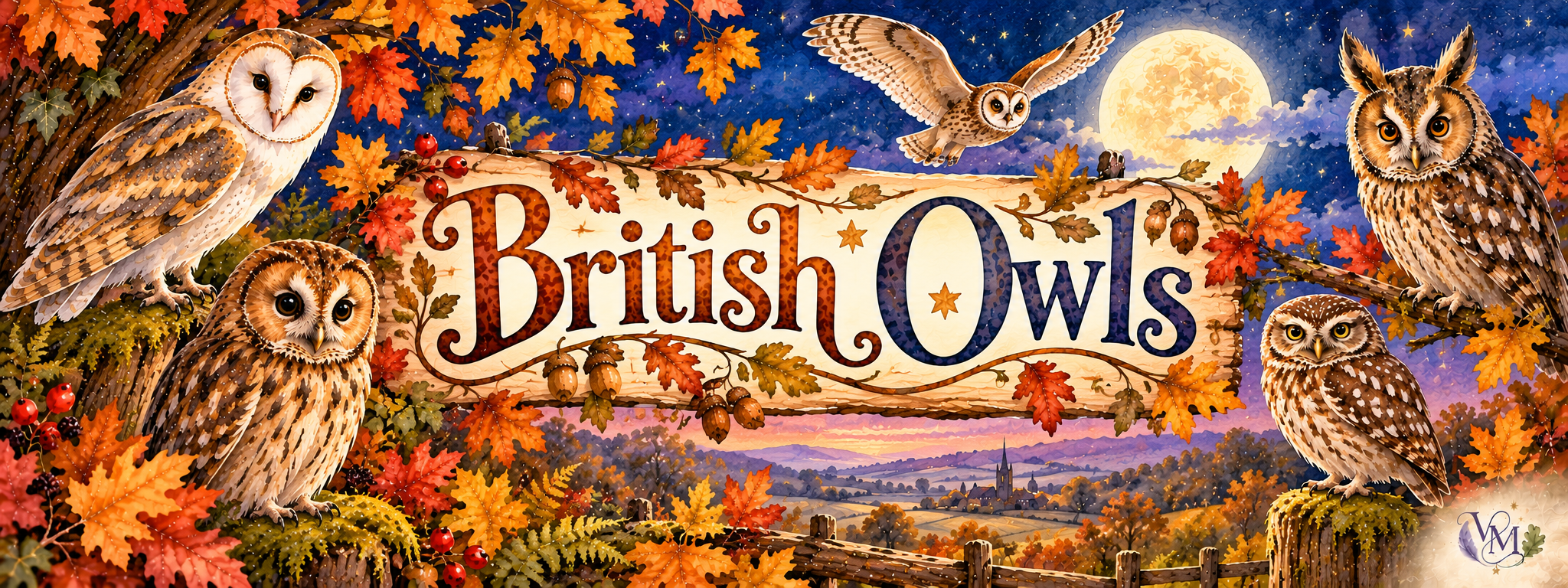
British Owls
As daylight fades and the evening becomes quieter, you may hear a call from a woodland, see a pale shape crossing a field or glimpse a bird sitting silently on a fence post. Owls are among Britain's most recognisable birds of prey, with remarkable adaptations that help them find and capture prey.
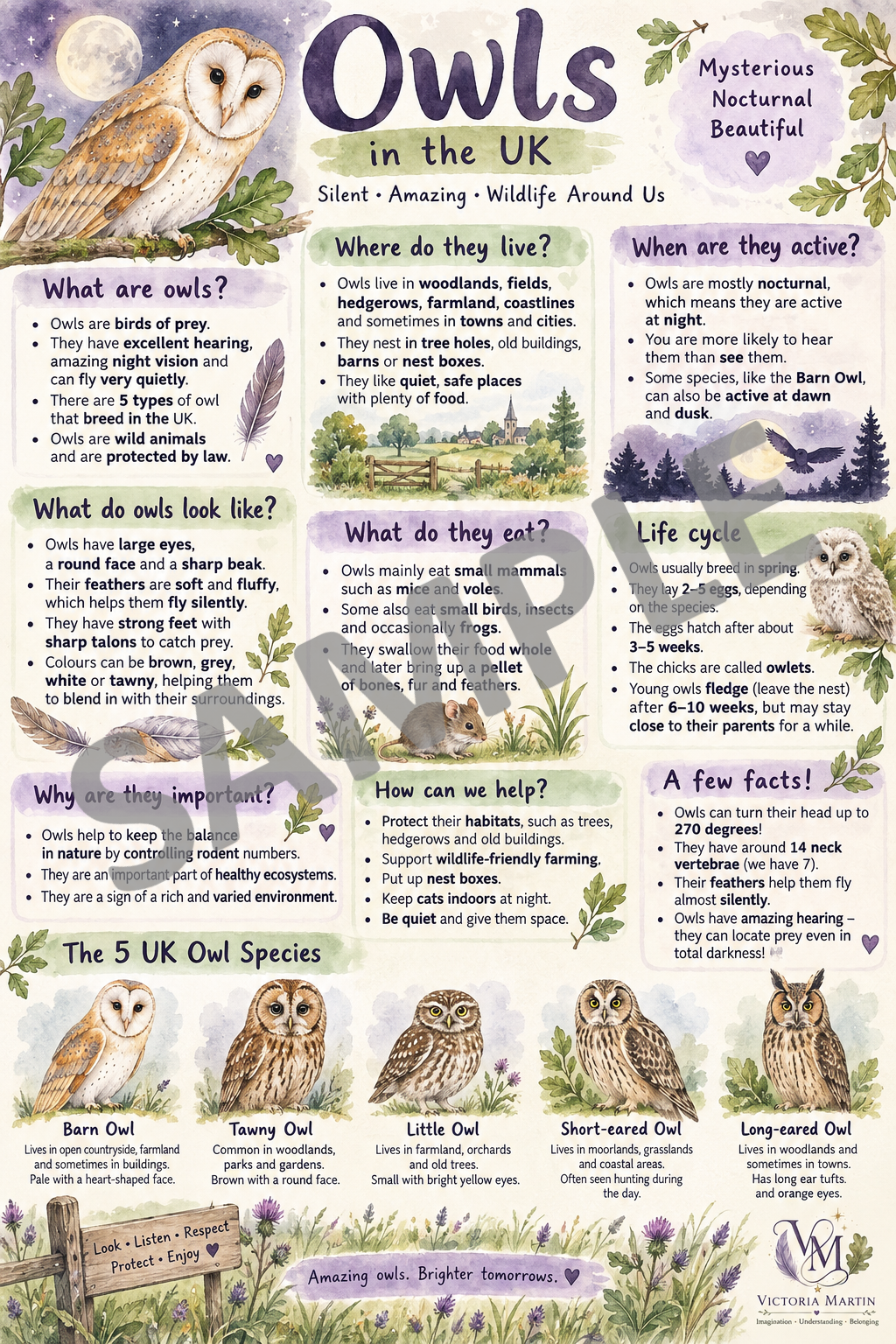
Five species of owl are regularly found breeding in Britain: the barn owl, tawny owl, little owl, long-eared owl and short-eared owl. Some are widespread and familiar, while others are far more secretive and can be difficult to spot.
Although owls are often associated with darkness, not every British owl is strictly nocturnal. Different species can be active during the day, twilight or night, depending on the species, season and conditions.
What Is an Owl?
Owls are birds of prey, sometimes also called raptors, belonging to the order Strigiformes.
They have strong feet and sharp talons for catching prey, while their hooked bills help them tear food into manageable pieces.
An owl's large eyes face forwards, providing excellent binocular vision and depth perception. Their eyes are relatively fixed within their sockets, so owls compensate by having an extremely flexible neck.
An owl cannot turn its head all the way around, despite a popular myth. It can, however, rotate its head by up to about 270 degrees, giving it an impressive range of movement.
Many owls also have a facial disc, an arrangement of feathers around the face that helps direct sound towards the ears.
British Owl Species
Britain has five regularly breeding owl species, each with its own appearance, behaviour and preferred habitats.
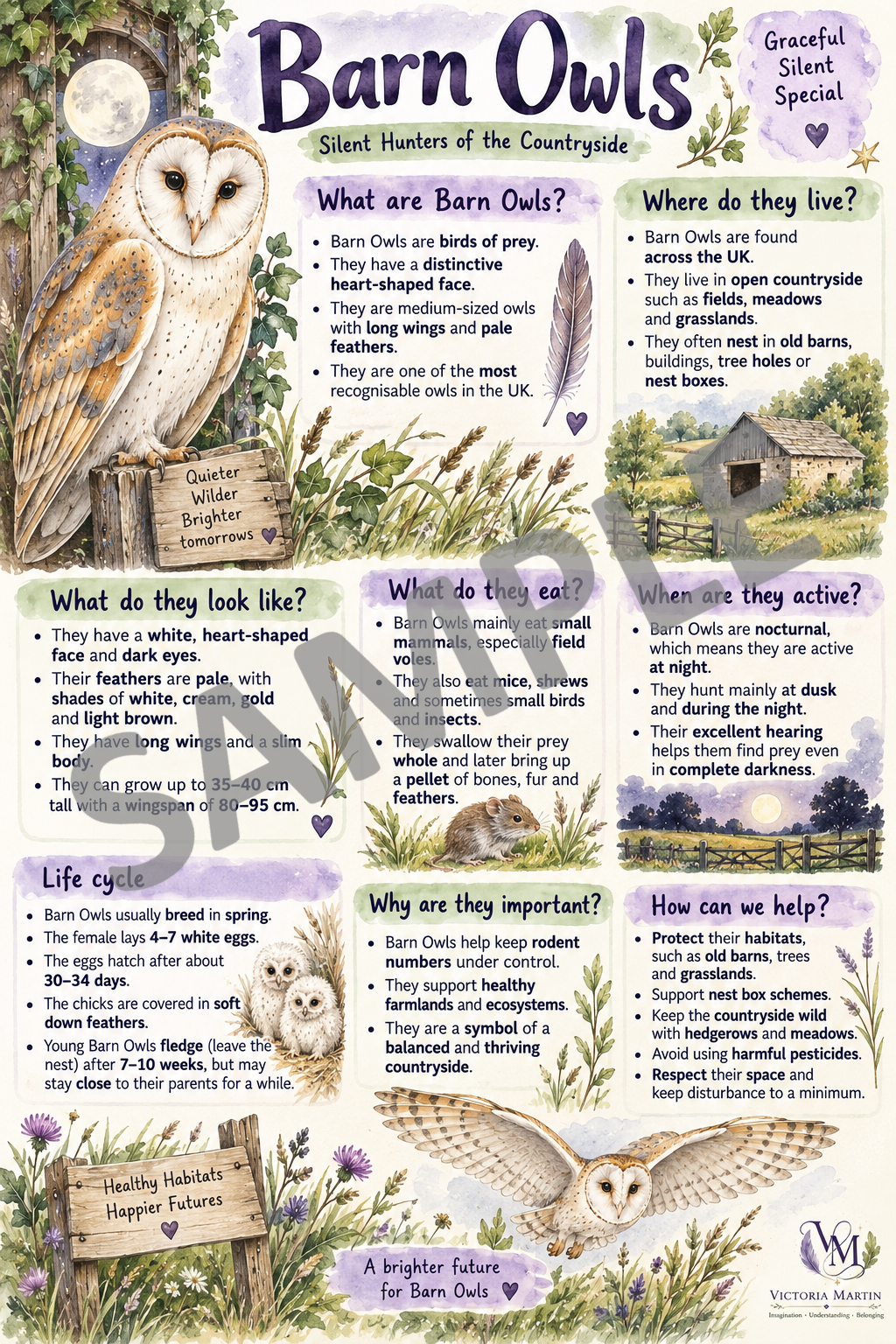
Barn owl (Tyto alba) – easily recognised by its pale plumage and heart-shaped face. Barn owls often hunt over rough grassland, field margins and farmland, searching mainly for small mammals.
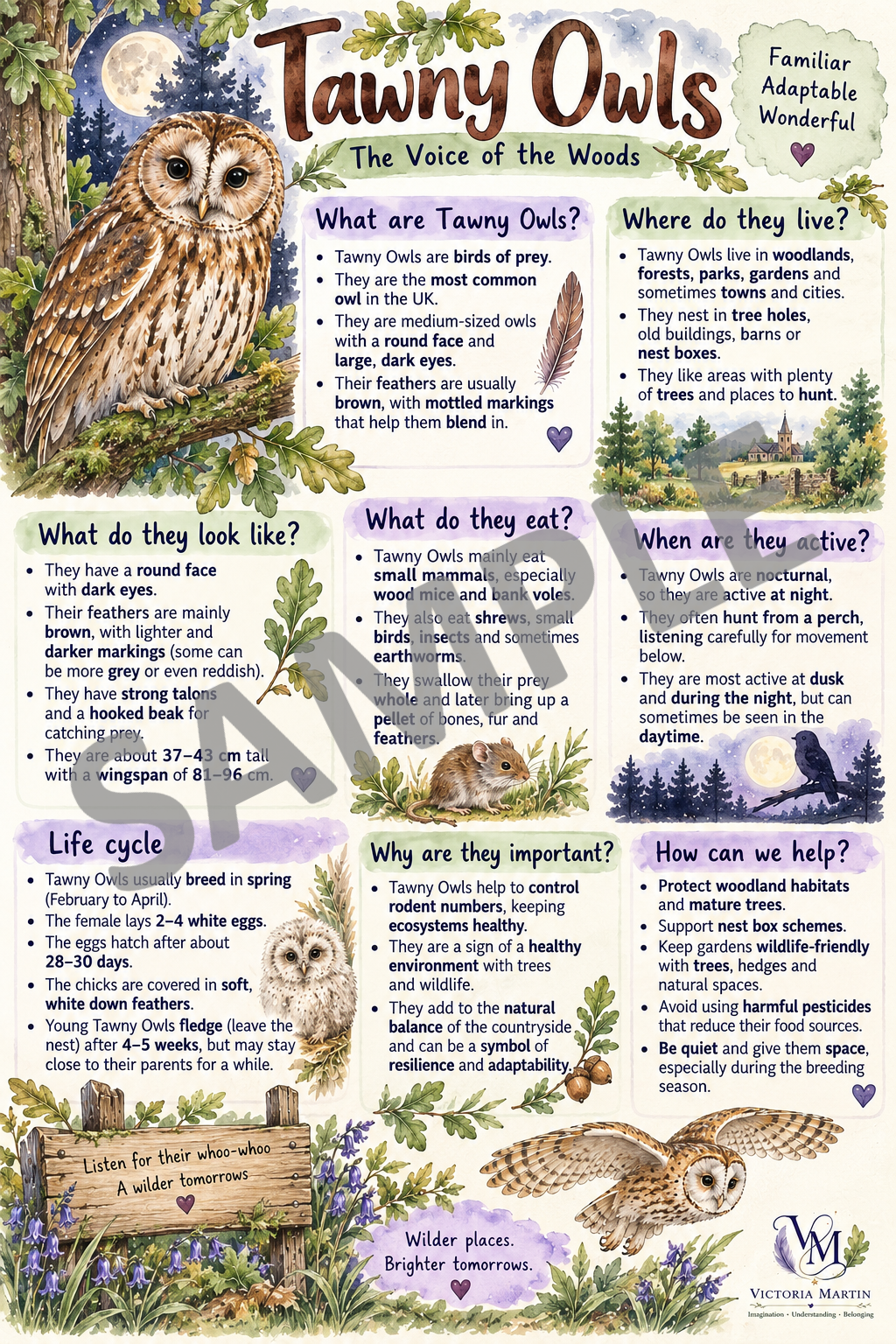
Tawny owl (Strix aluco) – a widespread woodland owl with rounded wings and dark eyes. Tawny owls are responsible for the familiar hooting calls often associated with owls in stories and films.
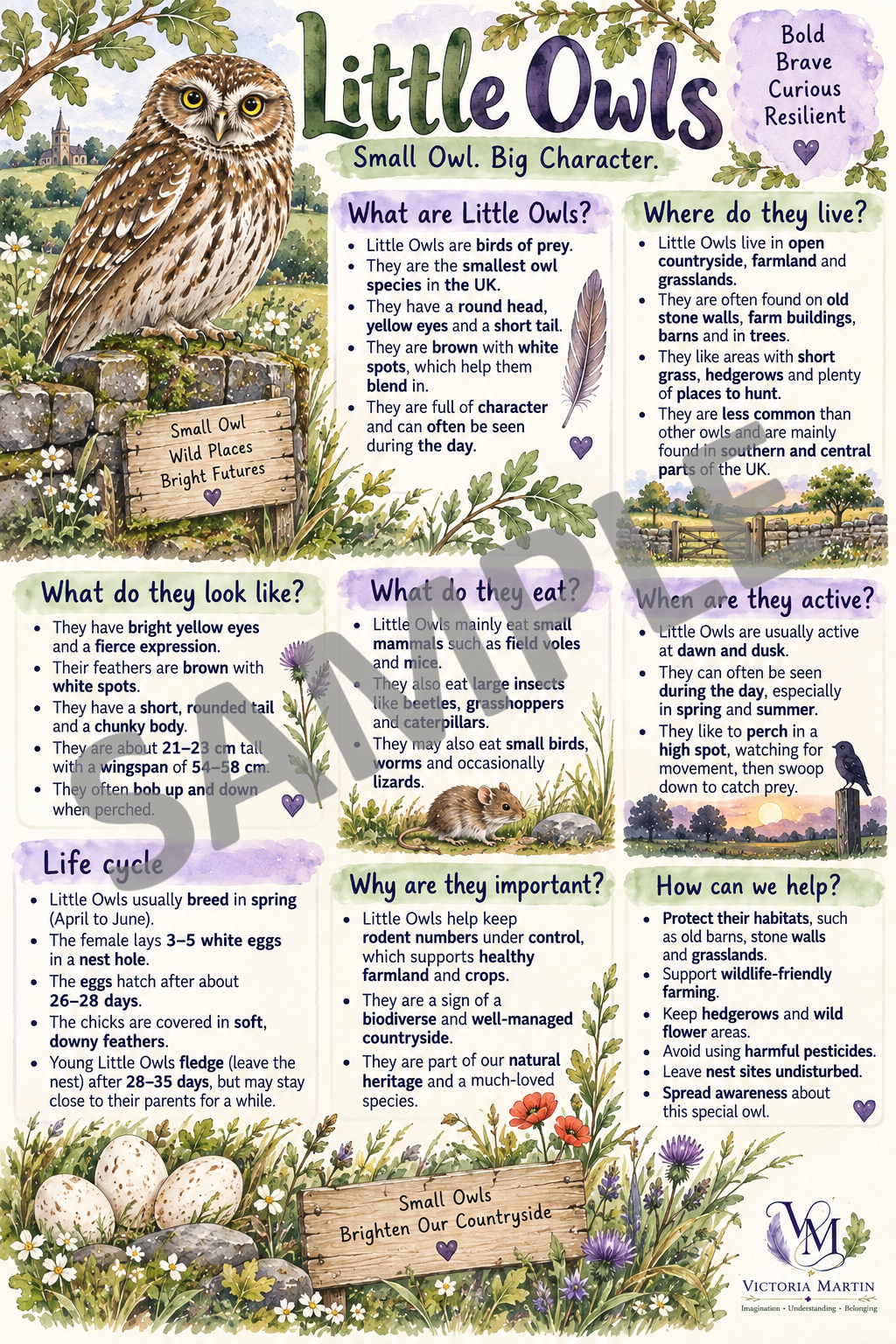
Little owl (Athene noctua) – Britain's smallest regularly breeding owl, often seen perched during daylight on branches, posts or buildings. Little owls were introduced to Britain during the nineteenth century and subsequently became established.
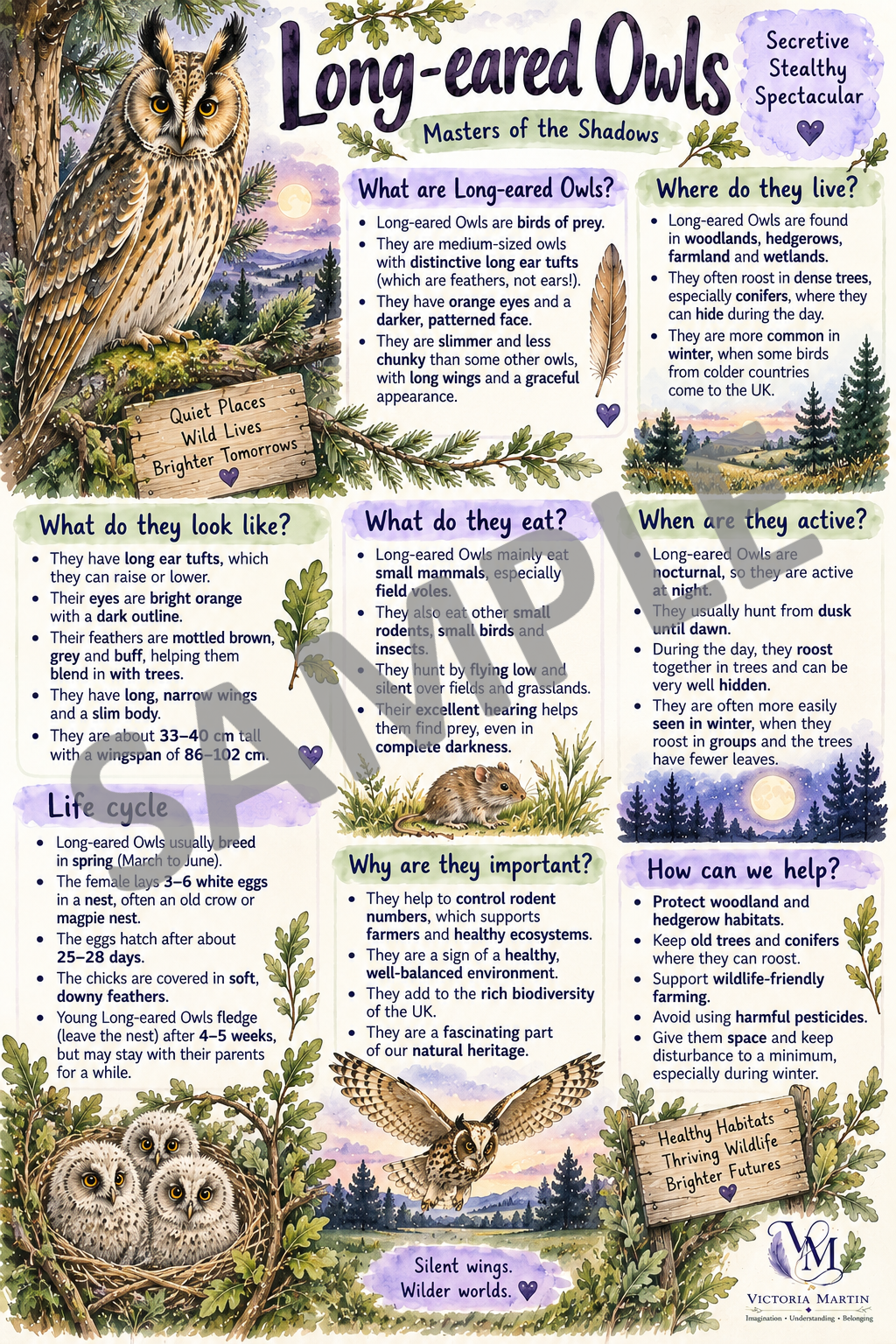
Long-eared owl (Asio otus) – a secretive owl with prominent feather tufts on its head. Despite their appearance, these tufts are not the owl's ears.
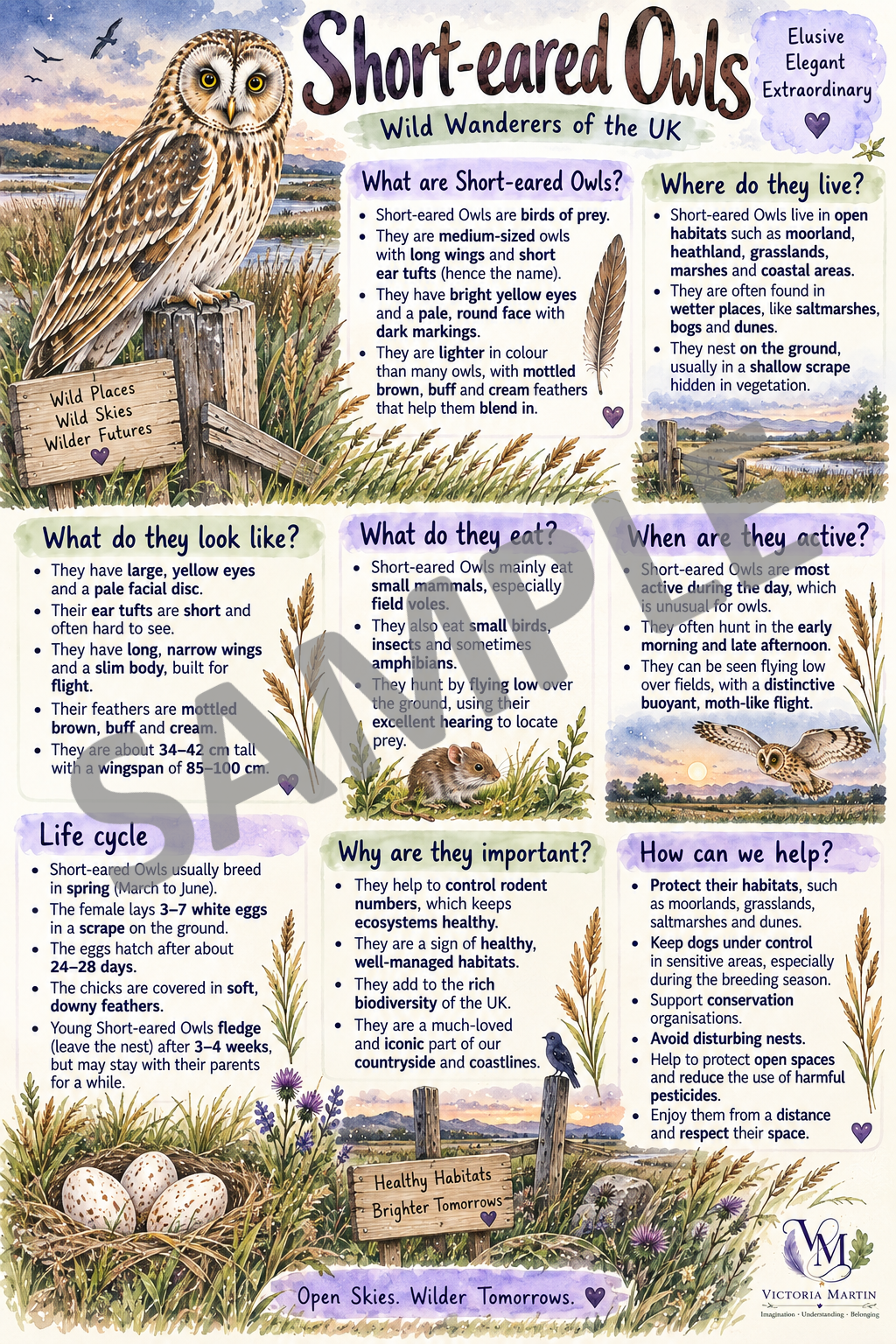
Short-eared owl (Asio flammeus) – an owl of open habitats such as moorland, marshes and rough grassland. It is often active during daylight and around dusk, making it one of Britain's more visible owls in suitable places.
Other owl species can occasionally reach Britain as rare visitors, but these five make up Britain's regular breeding owl fauna.
Where Do British Owls Live?
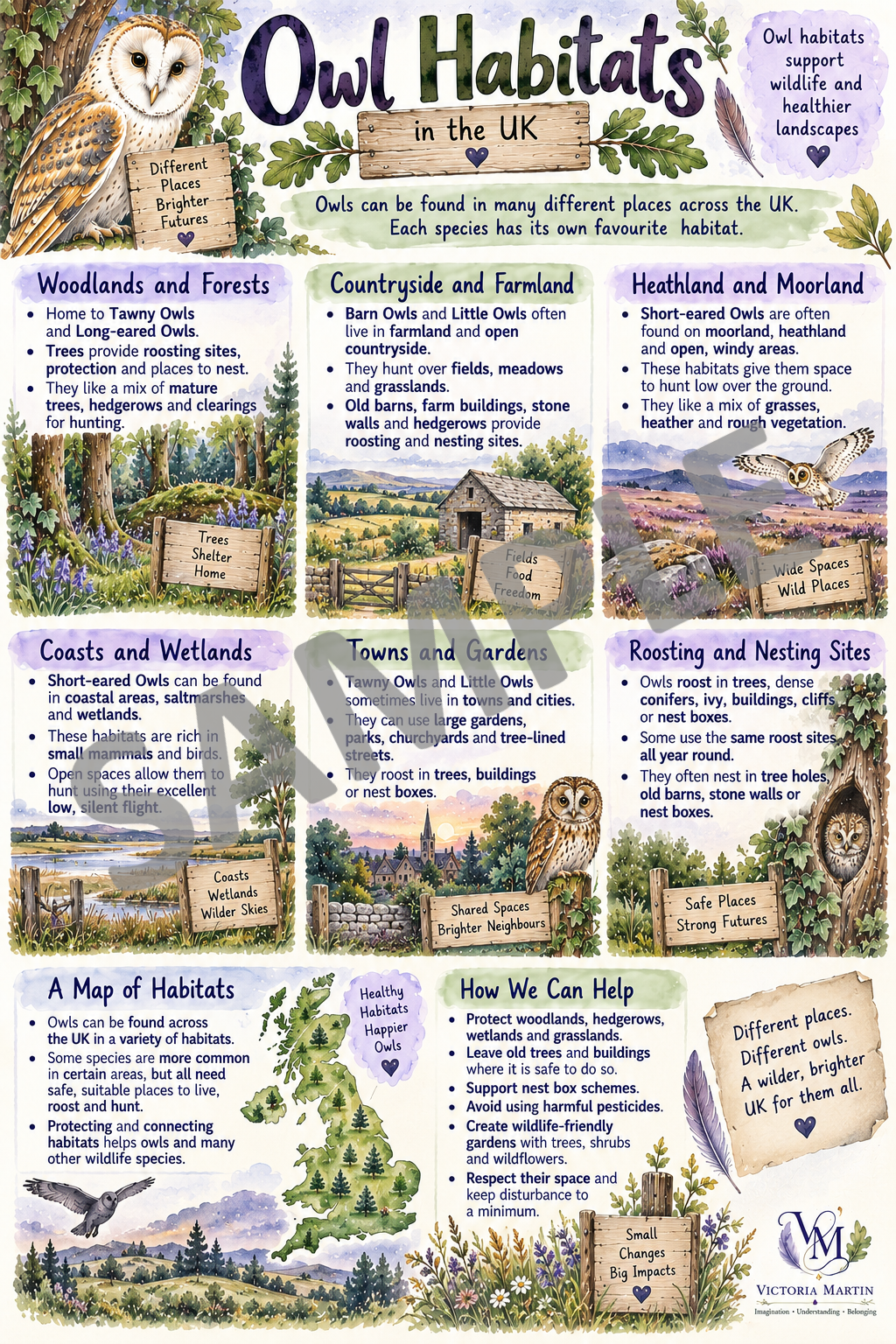
Different owl species need different habitats, but suitable places must provide food, shelter and nesting sites.
British owls can be found in:
woodlands and forests
farmland and field margins
rough grassland
moorland and heathland
marshes and wetlands
parks and large gardens
farms and rural buildings
Barn owls are strongly associated with open countryside and rough grassland, while tawny owls are particularly associated with woodland and wooded landscapes.
Short-eared owls favour open country, whereas long-eared owls often use areas containing woodland or dense trees alongside open hunting habitat.
The little owl can live around farmland, orchards, parkland and villages, particularly where suitable cavities and hunting areas are available.
What Do British Owls Eat?
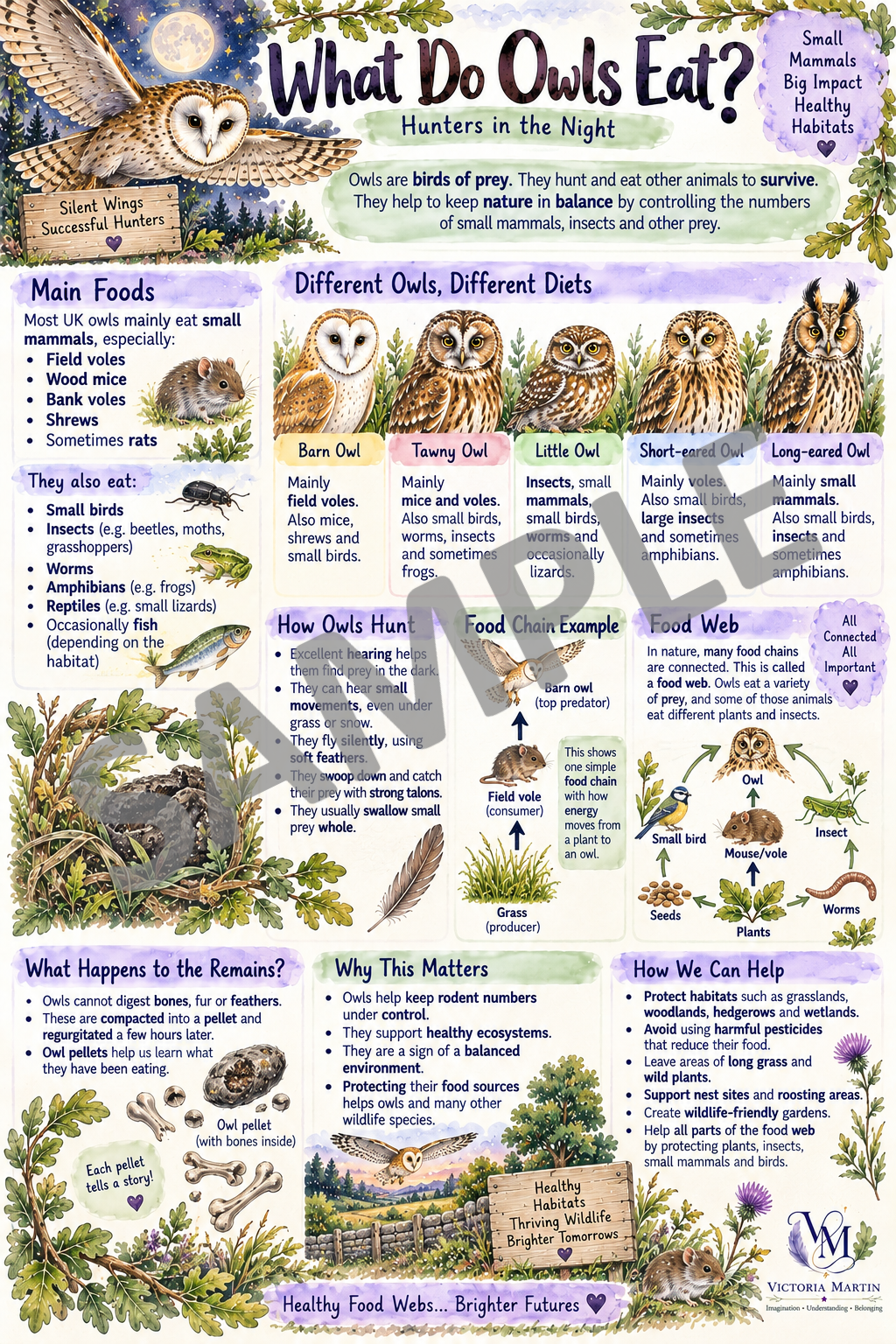
British owls are predators, and their diets vary according to species and available prey.
Small mammals such as voles, mice and shrews form an important part of the diet of several British owl species.
Some owls also eat small birds, insects and other invertebrates, while larger prey may occasionally be taken depending on the owl species.
Barn owls are particularly important predators of small mammals, with field voles, mice and shrews making up much of their diet.
Little owls have a more varied diet and frequently take insects and other invertebrates, as well as small vertebrates.
The availability of suitable prey can strongly influence where owls live and how successfully they can breed and raise young.
How Do Owls Hunt?
Owls have several remarkable adaptations that help them locate and capture prey.
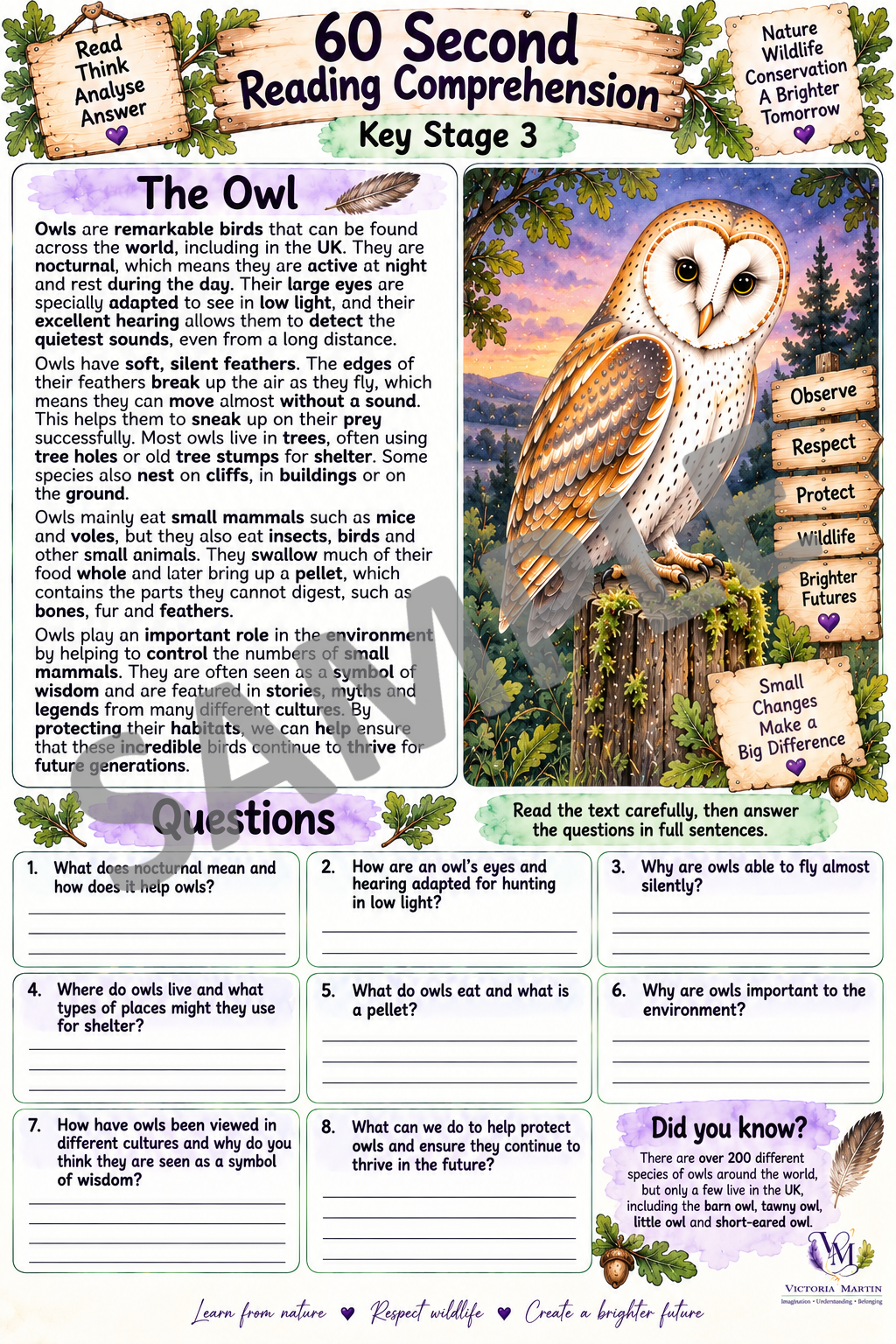
Their large eyes provide excellent vision in relatively low-light conditions, although owls are not able to see in complete darkness.
Hearing is extremely important to many owl species. The facial disc helps collect and direct sound, allowing an owl to locate noises made by potential prey.
In some species, including the barn owl, the ear openings are positioned asymmetrically on the head. This helps the owl judge the direction and position of sounds with remarkable accuracy.
Owls also have specialised wing and feather structures that help reduce the sound produced during flight. This allows many owls to approach prey extremely quietly.
Once prey has been located, an owl can swoop down and capture it using its powerful feet and sharp talons.
Do Owls Really Fly Silently?
Owls are famous for their quiet flight, and there is good science behind this ability.
Specialised structures along parts of their wing feathers help reduce aerodynamic noise, while soft feather surfaces can further dampen sound during flight.
This does not mean an owl produces absolutely no sound at all, but compared with many other birds its flight can be remarkably quiet.
Quiet flight may help an owl approach prey without being detected and can also make it easier for the owl to continue listening while flying.
Owl Pellets
Owls often swallow small prey whole or in large pieces, including material that cannot be digested.
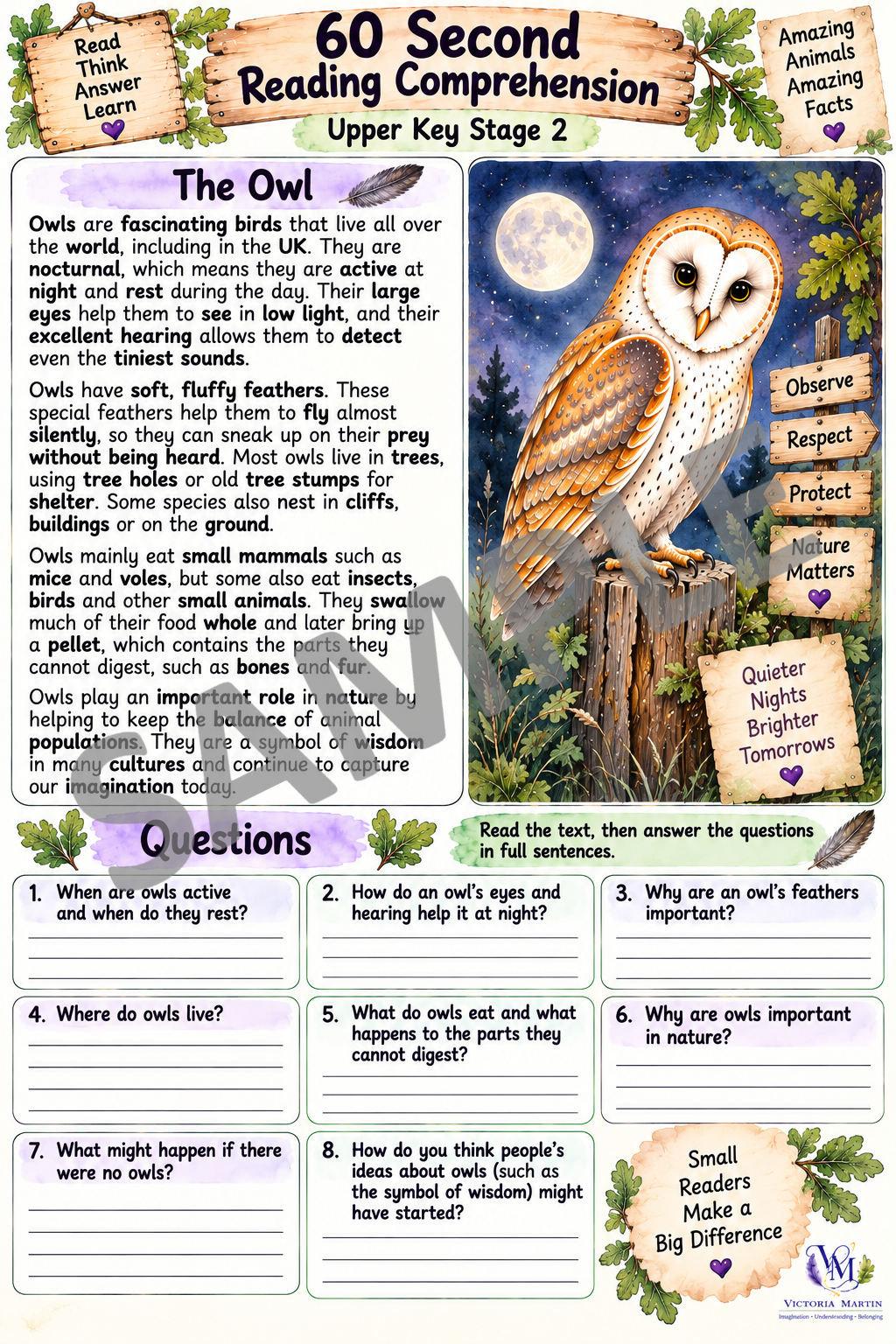
Bones, teeth, fur and feathers may remain in the stomach and are compressed into a small mass called a pellet.
The owl later regurgitates the pellet, rather than passing all of this indigestible material through its digestive system.
Scientists can carefully examine owl pellets to discover what an owl has been eating.
Finding tiny bones and skulls inside pellets can therefore provide valuable information about both the owl and the small mammals living nearby.
Owl Calls
Different British owls make very different sounds, and not all owls make the traditional “hoot” people often imagine.
The tawny owl produces Britain's most familiar owl calls. The classic twit-twoo is not usually one owl making a single call but can represent an exchange between male and female tawny owls.
Barn owls are quite different and often produce harsh screeches or hissing sounds rather than a traditional hoot.
Little owls make a variety of sharp, yelping or mewing calls, while long-eared and short-eared owls also have their own distinctive vocalisations.
Learning owl calls can sometimes be an easier way to discover which species are nearby than trying to see these secretive birds.
Owl Families
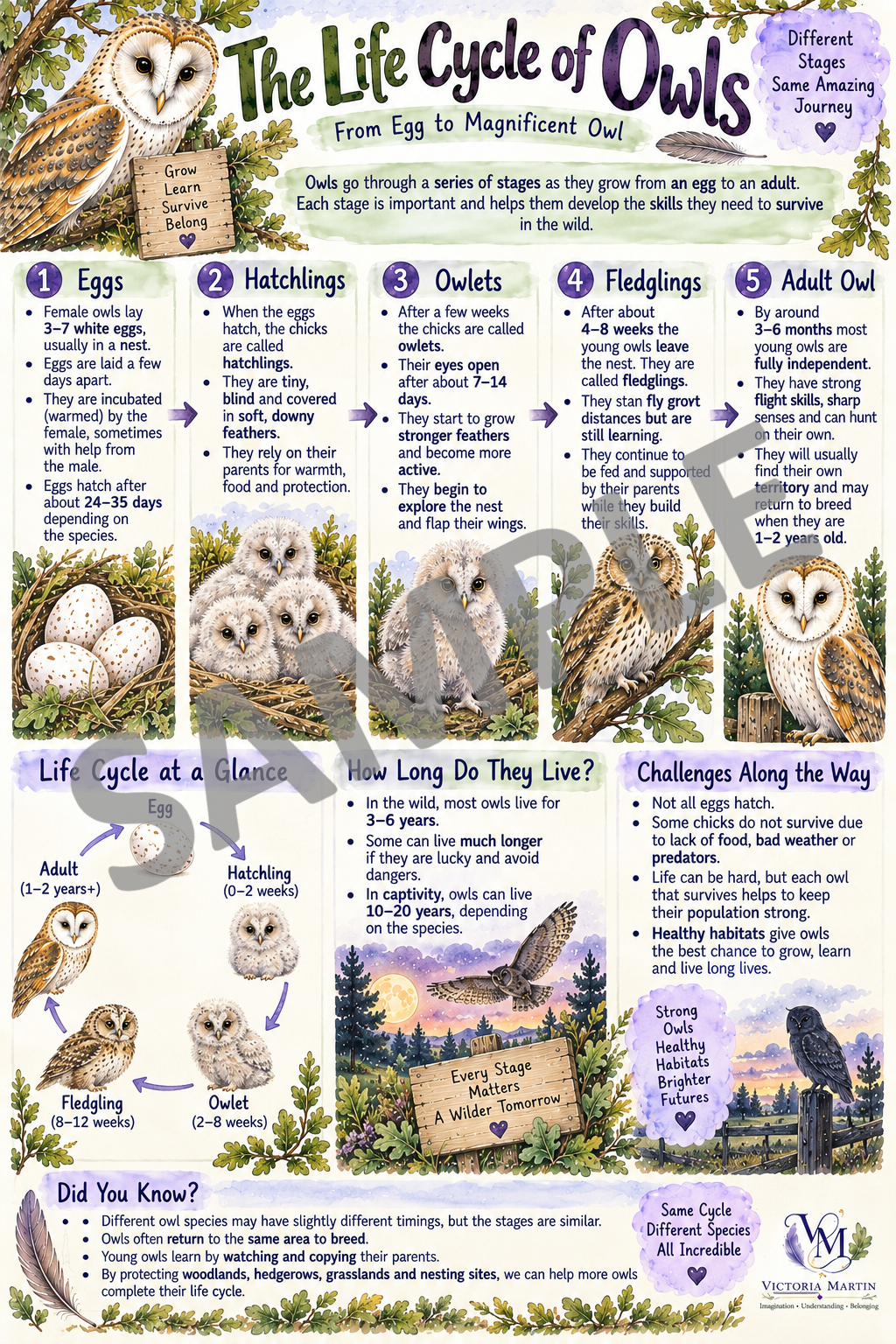
Owls reproduce by laying eggs, but their nesting habits vary considerably between species.
Tawny owls commonly use tree cavities and other sheltered sites, while barn owls may nest in tree hollows, barns, buildings and nest boxes.
Little owls also favour cavities, including holes in trees and buildings.
Short-eared owls are unusual among British owls because they generally nest on the ground, hiding their nests among vegetation in open habitats.
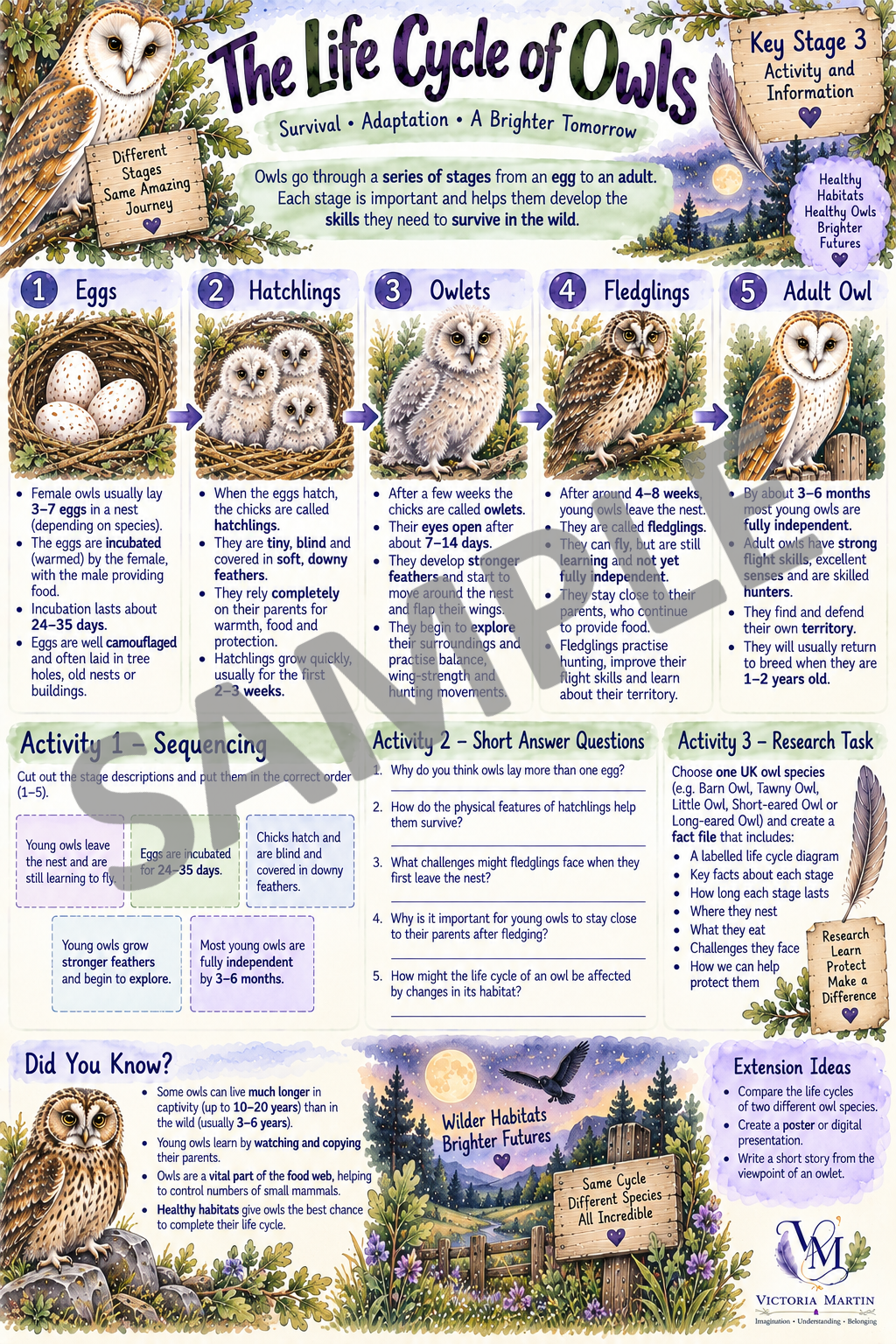
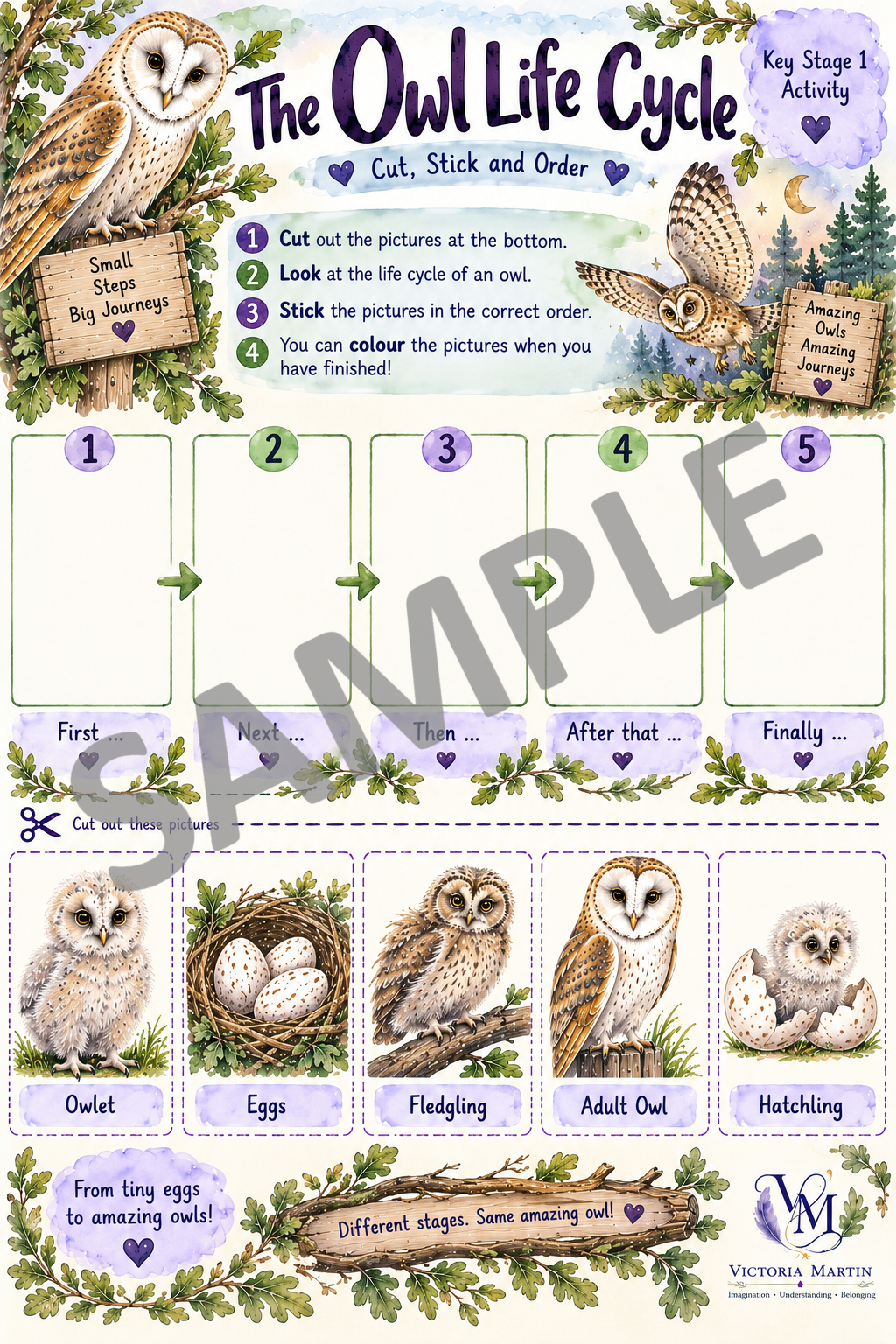
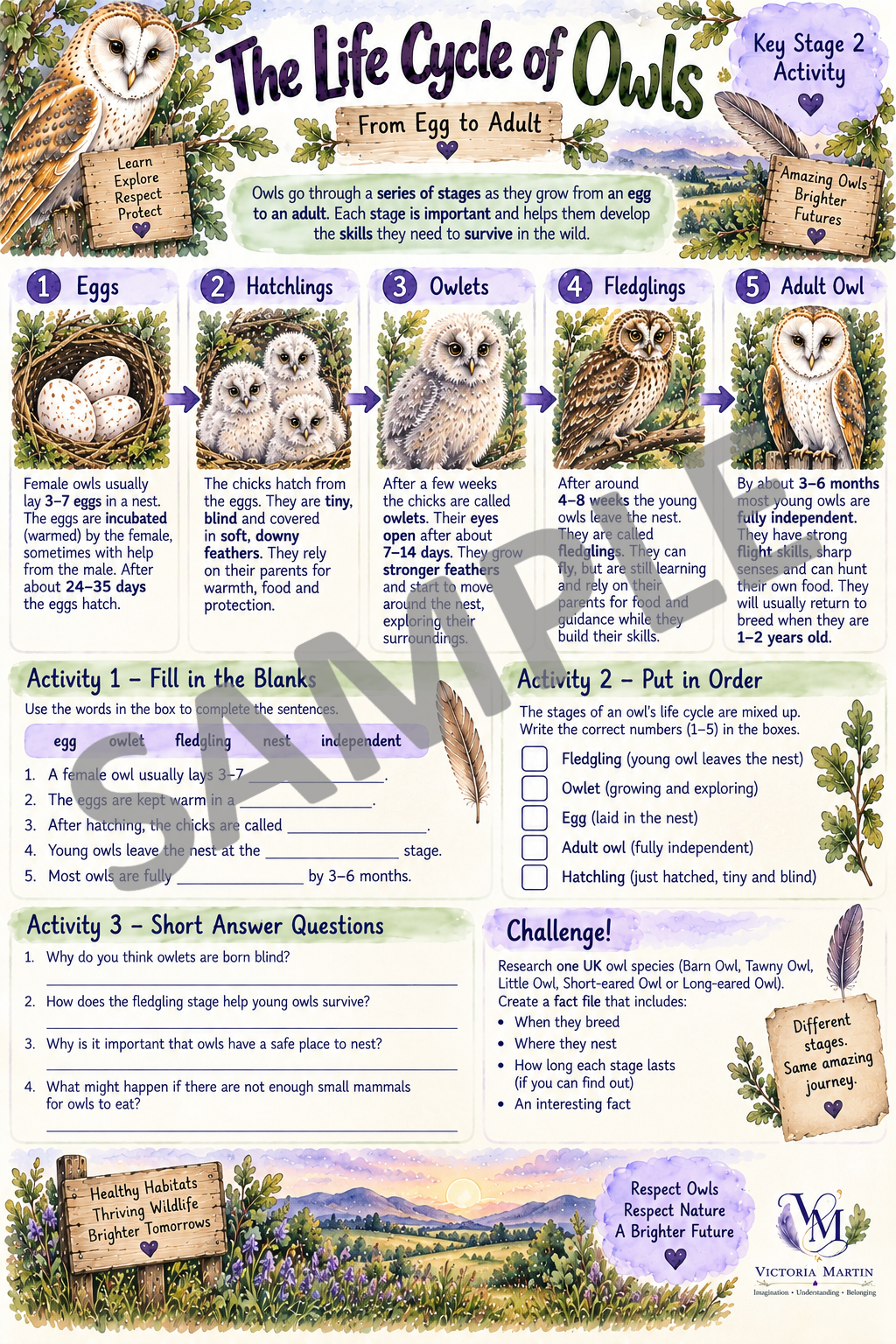
Baby owls are usually called owlets, although the term chicks is also correct.
Young owls depend upon their parents for food and protection while they grow and develop the skills needed to survive independently.
Owls Through the Seasons
Britain has resident owl populations throughout the year, although some species also receive migrants from elsewhere during autumn and winter.
Spring – Many owls are breeding or raising young, making suitable nesting sites and plentiful prey particularly important.
Summer – Young owls continue to grow and develop, eventually leaving their nests and becoming increasingly independent.
Autumn – Young birds may disperse into new areas, while adults continue defending or using established territories, depending on the species.
Winter – Resident owls continue hunting throughout the colder months, although weather and prey availability can make survival more challenging.
Some short-eared owls also arrive in Britain from other parts of Europe during autumn and winter, increasing the number that may be seen here during the colder part of the year.
Owls in Autumn
Autumn can be an interesting time to look and listen for British owls.
As evenings become longer, owl activity can become easier for people to notice, particularly around woodland edges and open countryside.
Young owls born earlier in the year may be dispersing and establishing themselves, while resident adults continue hunting within suitable habitats.
Autumn and winter can also bring additional short-eared owls to Britain from populations elsewhere in Europe.
Falling leaves can sometimes make woodland birds slightly easier to glimpse, although owls remain remarkably well camouflaged and often difficult to find.
Why Are Owls Important?
Owls are important predators within British ecosystems.
By feeding on animals such as voles, mice and other small mammals, they form part of the natural relationships between predators and prey.
Their survival depends upon healthy habitats containing suitable prey and nesting opportunities, meaning changes to landscapes can affect owl populations.
Owls themselves are also part of larger food webs and ecological communities, interacting with many other animals and habitats.
Protecting owls therefore involves protecting not only the birds themselves but also the habitats and food sources upon which they depend.
Protecting British Owls
Wild owls, like other wild birds in Britain, receive legal protection, including protection against intentionally killing, injuring or taking them.
Their eggs and active nests also receive legal protection, so nesting birds should always be left undisturbed.
Some species receive additional legal protection. In England, the barn owl is listed under Schedule 1 of the Wildlife and Countryside Act 1981, giving it additional protection against disturbance while nesting and protecting its dependent young from disturbance.
British owls can face pressures including habitat loss and changes in land management, as well as road collisions and reduced nesting opportunities.
Barn owls can be particularly vulnerable to road traffic, as their low hunting flight can bring them close to moving vehicles.
Protecting rough grassland, hedgerows and woodland, as well as suitable nesting sites, can help provide the habitats British owls need.
Helping Owls
One of the best ways to help owls is to support healthy habitats and abundant natural prey.
Maintaining hedgerows, rough grassland and woodland edges can provide habitat for the small mammals and other animals upon which many owls feed.
Old trees containing suitable cavities can provide valuable nesting and roosting opportunities, so retaining them where it is safe to do so can benefit owls and other wildlife.
Specially designed owl nest boxes can sometimes provide additional nesting opportunities, but they need to be appropriate for the species and positioned correctly.
Avoiding unnecessary disturbance around known nesting areas helps give adult owls and their young the space they need.
If you find an apparently injured owl or a young owl that seems to need help, it is best to seek appropriate wildlife rescue advice before attempting to intervene.
Owls in British Folklore
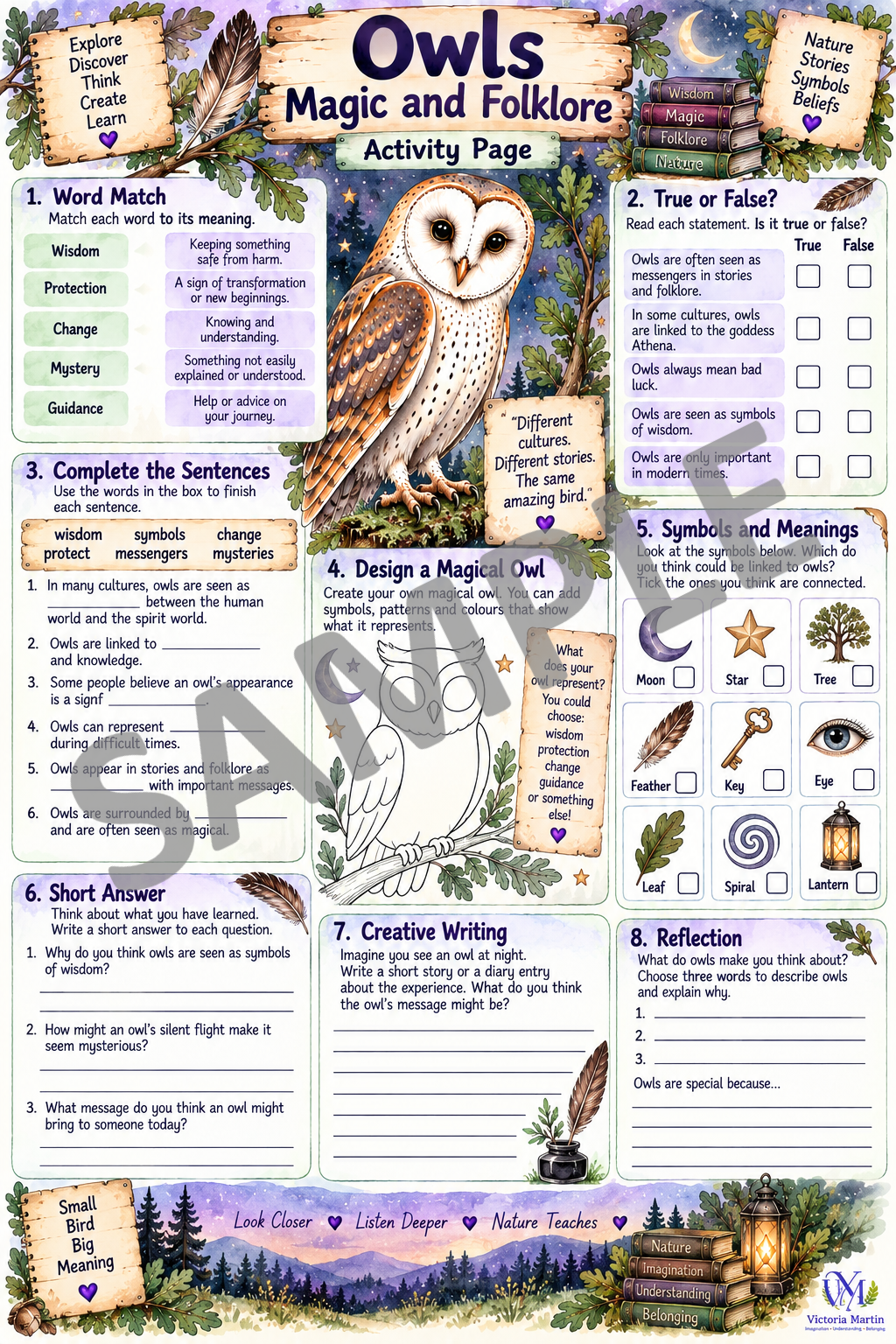
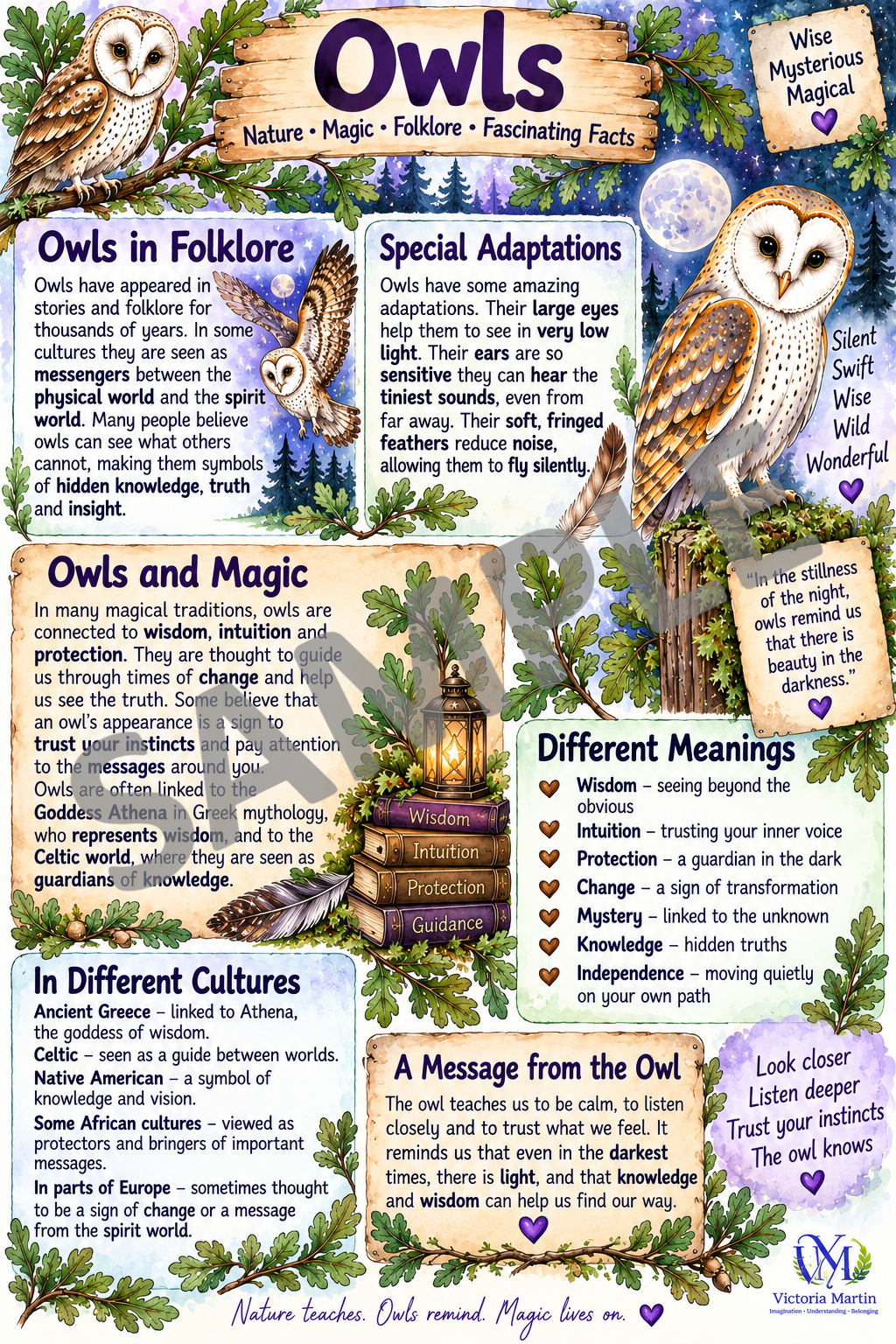
Owls have appeared in British stories and folklore for centuries, often associated with night, mystery and wisdom.
Their nocturnal behaviour, unusual calls and ability to appear almost silently have helped create many legends and superstitions.
Different traditions have viewed owls in very different ways, sometimes treating them as symbols of wisdom and at other times associating them with omens or the supernatural.
Today, owls remain popular characters in books, art and folklore, while their real-life biology is every bit as fascinating as the stories surrounding them.
Owl Facts
🦉 Britain has five regularly breeding owl species: the barn, tawny, little, long-eared and short-eared owl.
🌙 Not all owls are strictly nocturnal; some British species can be active during daylight or around dusk.
👀 Owls have forward-facing eyes that provide binocular vision and depth perception.
🔄 Owls cannot turn their heads completely around, but some can rotate them by up to about 270 degrees, giving them an extraordinary range of movement.
👂 An owl's facial disc can help direct sound towards its ears, helping it locate potential prey.
🪶 Specialised feathers help many owls achieve remarkably quiet flight, although their flight is not literally completely silent.
🐭 Many British owls feed heavily on small mammals, including voles, mice and shrews.
⚫ Owls can regurgitate pellets containing indigestible material, including bones, teeth and fur.
🌳 Different owls nest in tree cavities, buildings and other sheltered places, while short-eared owls usually nest on the ground.
👶 A young owl can be called an owlet or an owl chick.
☀️ Short-eared owls are frequently active during daylight, particularly in suitable open habitats.
📣 The familiar twit-twoo can be a calling exchange between tawny owls, rather than one owl making both sounds.
⚖️ Barn owls receive additional legal protection in England against certain disturbance at their nest and around dependent young.
Look Closely
As evening approaches, spend a little time looking and listening in a suitable natural space.
Can you hear an unusual call coming from the trees or countryside?
Can you spot a bird sitting quietly on a branch, fence post or other perch?
If you see an owl flying, does it appear to move quietly and smoothly across the landscape?
Can you spot an owl pellet on the ground without disturbing nearby birds or nests?
Pellets can contain bones, fur and other animal remains, so they should only be handled as part of an appropriate supervised activity, with thorough handwashing afterwards.
Owls can be difficult to find, but that is part of what makes encountering one so memorable. By watching quietly from a distance and protecting the places where they live, we can enjoy these remarkable birds while allowing them to remain wild and undisturbed.
Resources
Further Information
Owls in the UK (Full Guide with Pictures) | Birdfact
A Complete Guide to the Owls of the UK: Species, Habitats, and Behaviours - Birdwatching UK
How to identify owls | The Wildlife Trusts
The 6 Types Of Owls In The UK - Glenlivet Wildlife
Owl identification - what owl was that? - The Barn Owl Trust
Guide to Britain's owl species: where to see and common species found in the UK - Countryfile.com
British Owls — Owl Conservation Project
The NHBS Guide to UK Owl Identification
How to identify owls | Yorkshire Wildlife Trust
Owl Facts - Wildlife Aid Foundation
Barn Owl - British Birds - Woodland Trust
How to identify owls | Wildlife Trusts Wales
What's the most common owl in the UK? | Countryfile.com
Little Owl (Athene noctua) - British Birds - Woodland Trust