Pumpkins
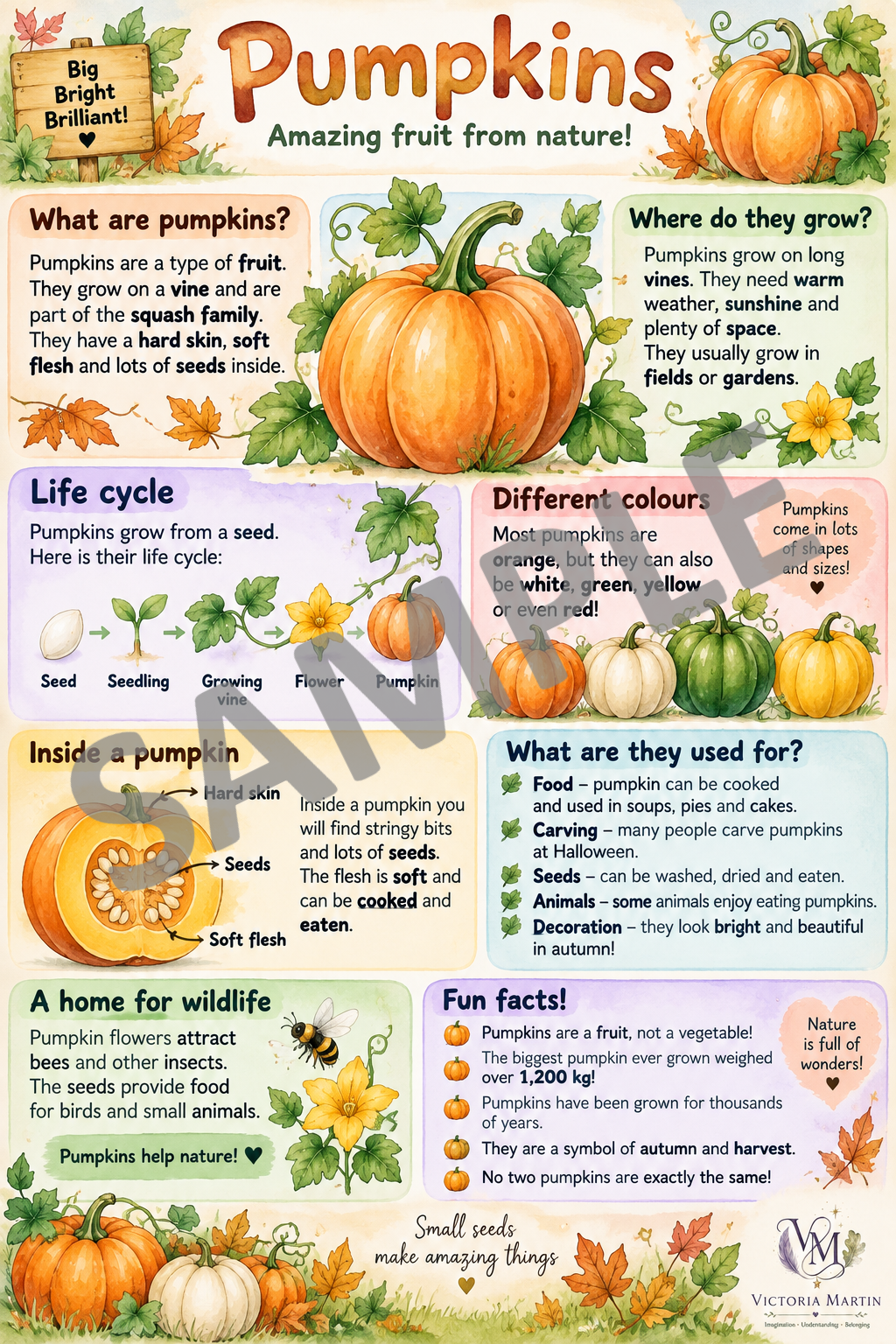
Big, small, round, bumpy, orange, green or even white, pumpkins are one of the most recognisable sights of an English autumn. They appear in gardens, allotments, farm shops and pumpkin patches as the days become shorter, and are now closely associated with harvest time and Halloween.
Although pumpkins grow successfully in England, they are not native British plants. Pumpkins belong to the genus Cucurbita, a group of plants originating in the Americas, where people have cultivated them for thousands of years. Today, many different varieties can be grown successfully in the English climate.
What Is a Pumpkin?
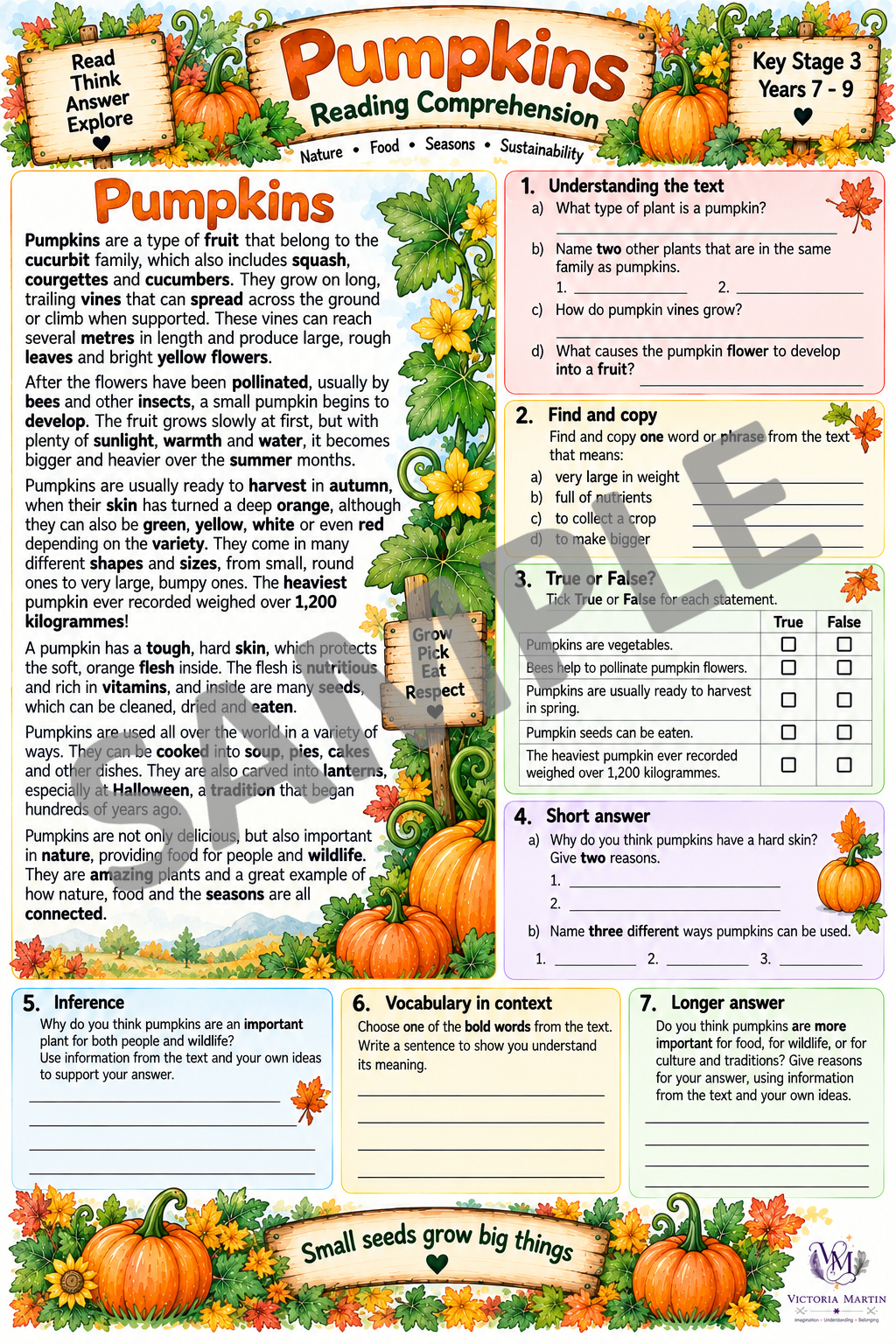
Pumpkins are members of the cucurbit family, alongside squashes, courgettes, cucumbers and melons. Most pumpkins grown in gardens belong to species including Cucurbita pepo and Cucurbita maxima.
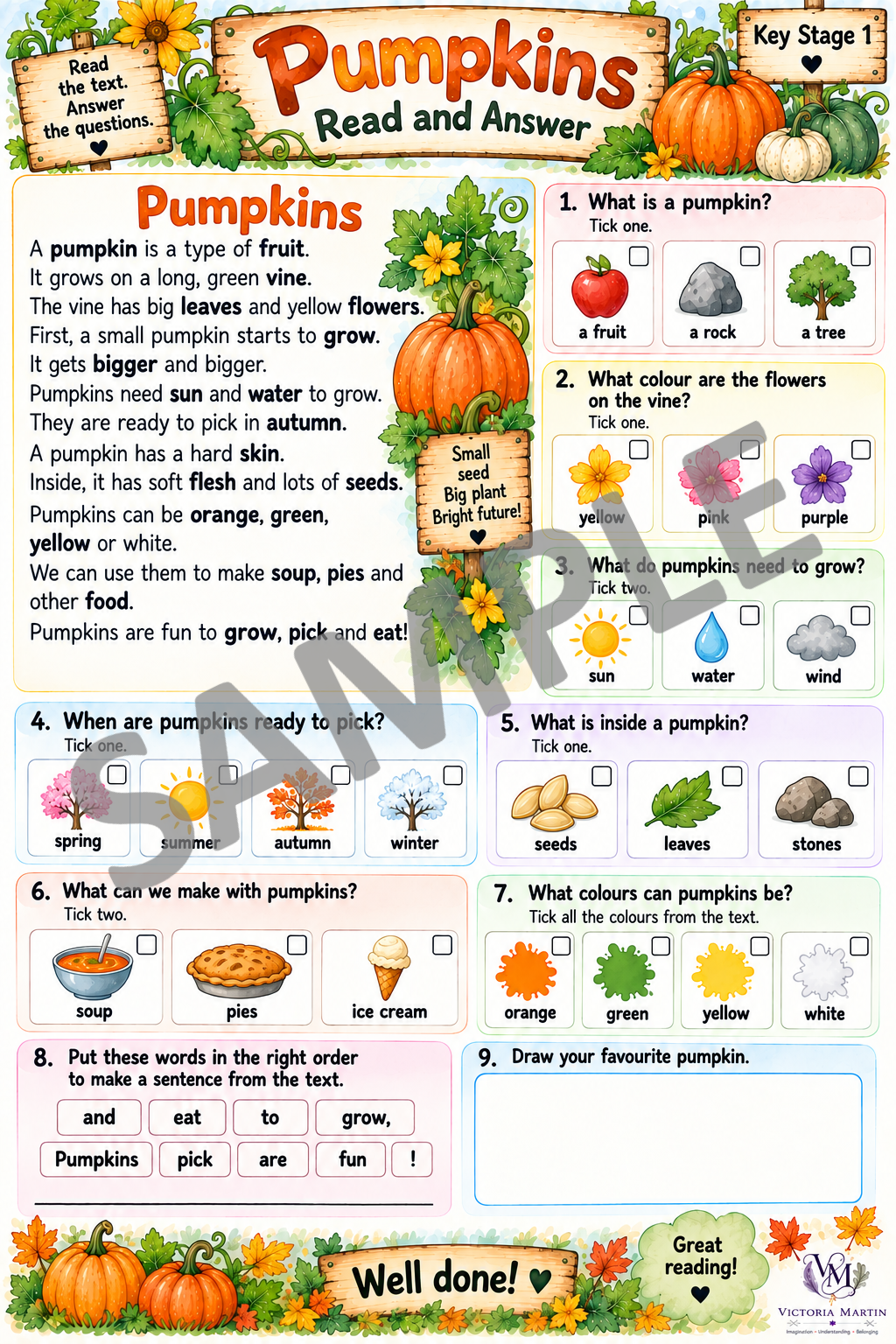
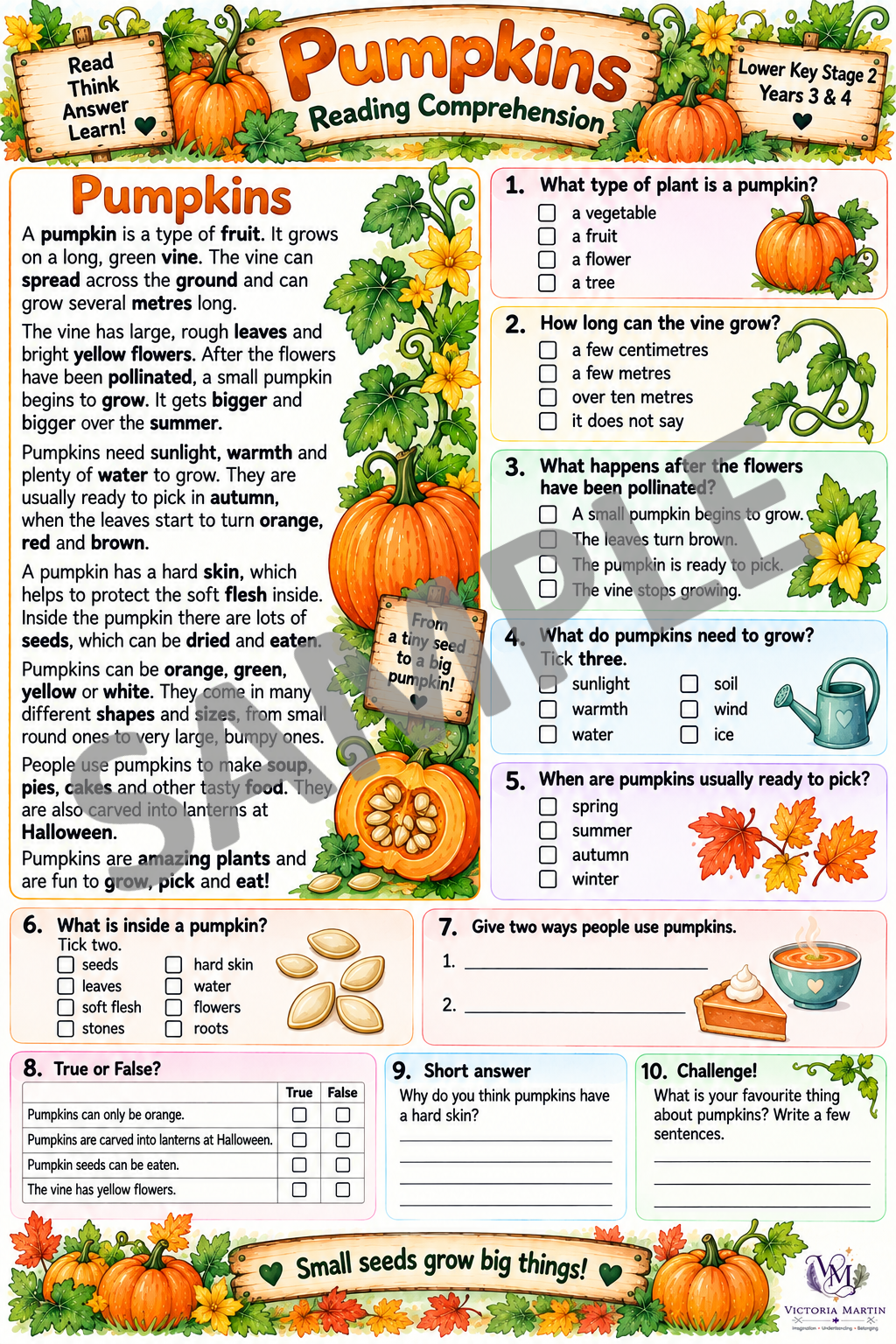
We often think of pumpkins as vegetables because they are grown in vegetable gardens and used in savoury cooking. Botanically, however, a pumpkin is a fruit because it develops from a flower and contains seeds.
Pumpkin plants produce large leaves, long stems and yellow flowers. Many varieties trail across the ground for several metres, although smaller bush varieties are available for gardens with less space.
Pumpkins Grown in England
There is no single traditional “English pumpkin”. Instead, gardeners and growers in England cultivate many different varieties.
Some commonly grown varieties include:
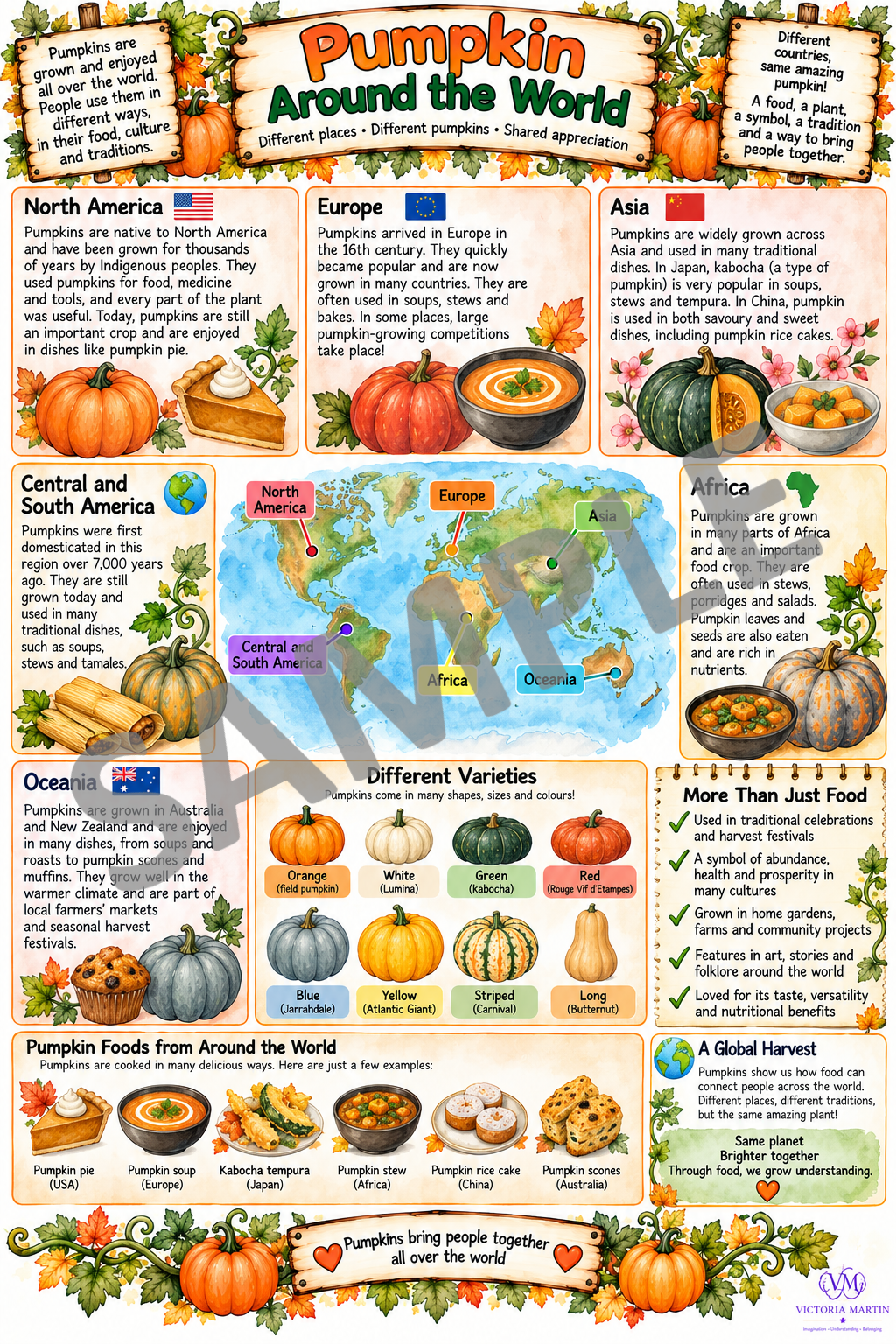
Jack O' Lantern – a classic orange pumpkin grown particularly for carving.
Hundredweight – a large pumpkin capable of producing very heavy fruits when given good growing conditions.
Atlantic Giant – famous for producing enormous pumpkins and often grown for giant-pumpkin competitions.
Jack Be Little – a tiny, bright-orange, ribbed pumpkin. Its compact fruits can be used for cooking or autumn decorations.
Big Max – a large orange variety that can be grown for both carving and eating.
Crown Prince – technically a winter squash rather than the classic orange pumpkin, but commonly grown alongside pumpkins in Britain. It has distinctive blue-grey skin and orange flesh.
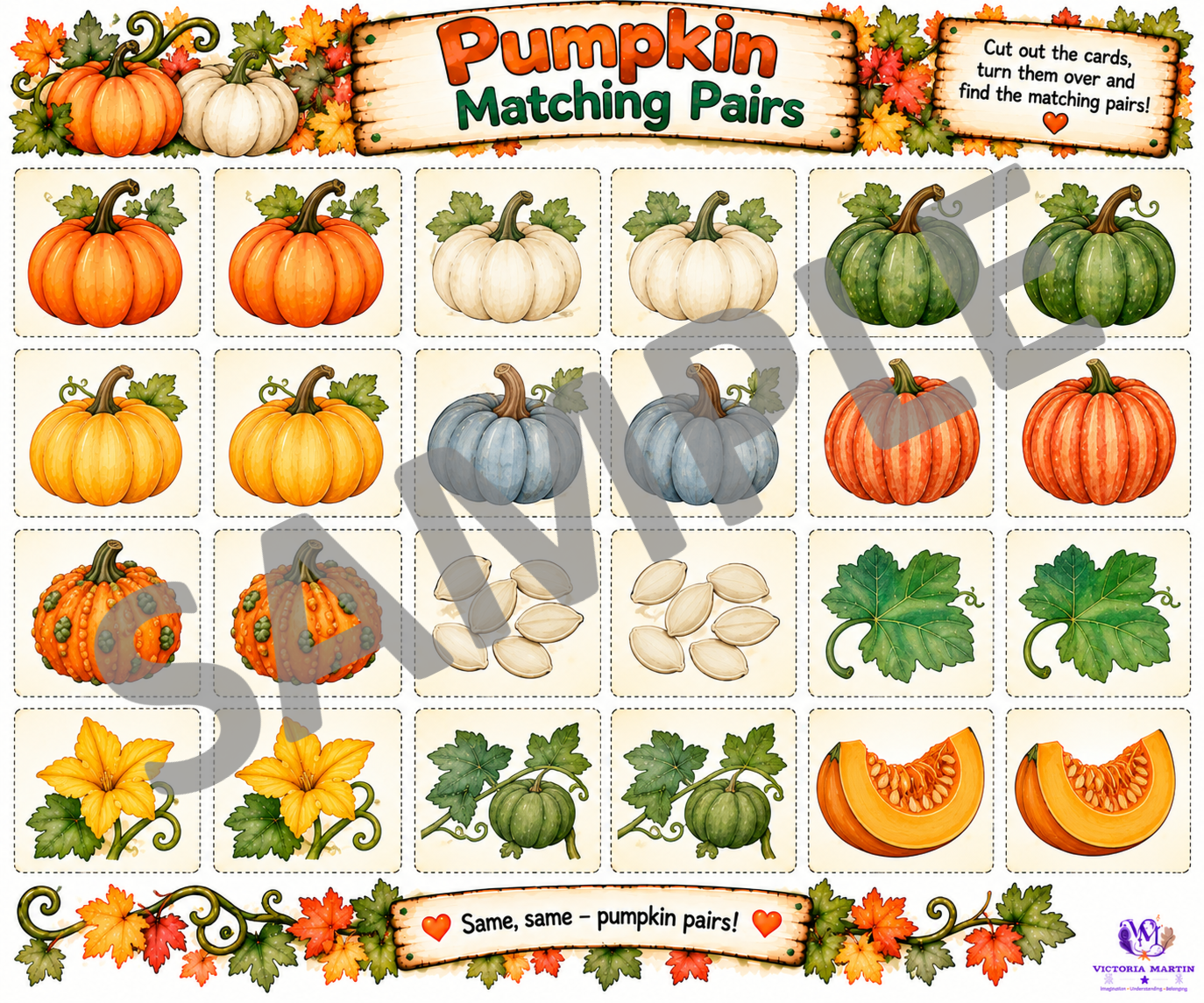
Pumpkins do not have to be orange. Depending on the variety, their skins may be green, yellow, cream, white, grey-blue or combinations of several colours.
How Do Pumpkins Grow?
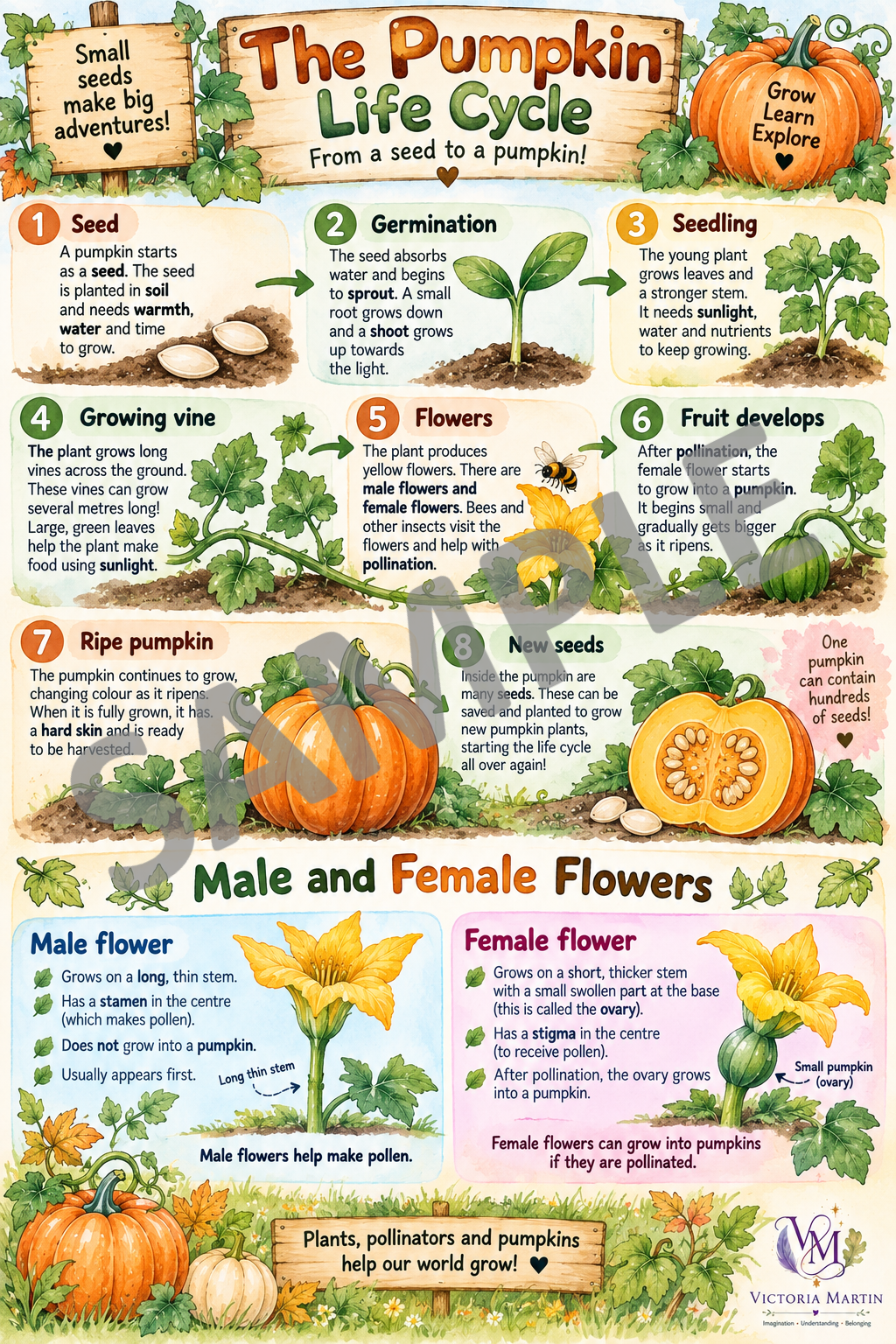
Pumpkins begin life as surprisingly large, flat seeds.
In England, seeds are usually sown indoors during April, where the young plants can remain protected from cold temperatures. Pumpkin plants are tender and can be damaged by frost, so they are normally planted outside once the danger of frost has passed, often around late May or early June.
Once established, a pumpkin plant can grow remarkably quickly.
Long stems travel across the ground and produce large leaves and flowers. Pumpkin plants produce separate male and female flowers on the same plant. Pollen needs to move from a male flower to a female flower for a pumpkin to begin developing.
Bees and other visiting insects can help carry this pollen between the flowers.
After successful pollination, the small swelling behind a female flower begins to grow. Over the following weeks, it can develop into a full-sized pumpkin.
Where Do Pumpkins Grow Best?
Pumpkins enjoy warmth and sunshine.
In an English garden, they do best in a sunny, sheltered position, protected as much as possible from cold winds. They prefer fertile soil that holds moisture while still allowing excess water to drain away.
Adding plenty of well-rotted organic matter or garden compost to the soil can provide the rich growing conditions pumpkin plants need.
They also need plenty of room. Some trailing varieties can spread for several metres, so they are particularly well suited to allotments, vegetable gardens and larger growing spaces. Smaller varieties can sometimes be grown in large containers.
Pumpkins are thirsty plants, especially when their fruits begin getting larger, and need regular watering during dry weather.
From Flower to Pumpkin
Look closely at a pumpkin plant in summer and you may notice that not every flower has a tiny pumpkin beneath it.
The male flowers grow on stalks and produce pollen. Female flowers have a small swollen section behind the flower that looks rather like a miniature pumpkin.
When pollen reaches a female flower and pollination is successful, this swelling develops into the fruit.
If pollination is unsuccessful, the tiny fruit may stop growing and eventually fall from the plant.
This makes pumpkin flowers an excellent place to observe the relationship between plants and pollinating insects.
Harvesting Pumpkins
Pumpkins need a relatively long, warm growing season, so gardeners usually leave the fruits on the plant throughout the summer and into autumn.
In England, pumpkins are generally harvested during autumn before the first frost.
A mature pumpkin develops a firm skin and its colour becomes characteristic of its variety. Gardeners usually cut the pumpkin from the plant while leaving a section of stalk attached.
Pumpkins intended for storage can then be allowed to cure, helping the outer skin to harden so that suitable varieties can be kept during the colder months.
Pumpkins and English Autumn Traditions
Today, pumpkins are strongly associated with Halloween in England, but the familiar carved pumpkin is actually a relatively recent addition to an older tradition.
Long before pumpkins became widely used here, people across the British Isles carved lanterns from turnips and other root vegetables. In 19th-century England, there are records of lanterns being made from turnips and mangelwurzels.
Related traditions were also found in Ireland, and Irish migrants carried the practice of carving lanterns to North America. There, pumpkins were readily available and much easier to hollow and carve than turnips. Pumpkin lanterns later became part of the modern Halloween celebrations that spread back across the Atlantic.
So although the glowing orange pumpkin now feels like a familiar part of an English October, the older tradition in the British Isles involved root vegetables rather than pumpkins.
More Than a Halloween Decoration
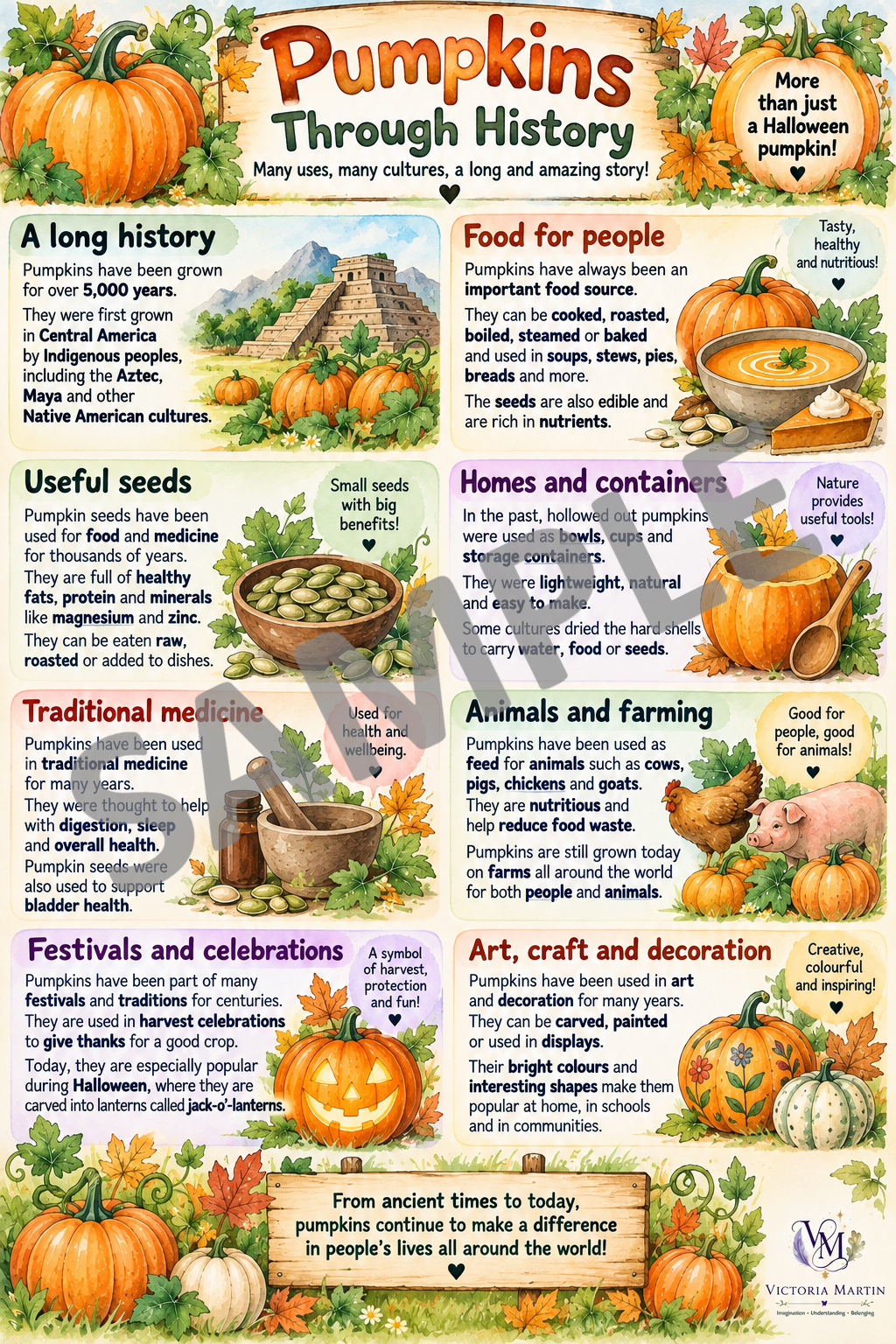
Pumpkins are edible as well as decorative.
Depending on the variety, the flesh can be used in soups, stews, curries, roasting and baking, while the seeds can also be roasted and eaten.
Some pumpkins have been bred primarily for their size or appearance and may not have the flavour or texture of varieties selected for eating, so choosing the right variety matters.
After Halloween, an unwanted pumpkin does not need to go into general waste. Unpainted pumpkin flesh can be composted or placed in the appropriate food-waste collection where this is available.
Pumpkin Facts
🎃 Pumpkins are fruits, even though we often cook with them as vegetables.
🌱 Pumpkins, courgettes and squashes all belong to the cucurbit family.
🌼 Pumpkin plants produce separate male and female flowers.
🐝 Bees and other insects can help pollinate pumpkin flowers.
☀️ Pumpkins grow best in a warm, sunny and sheltered position.
💧 Their large leaves and developing fruits mean pumpkin plants need plenty of water.
🌎 Pumpkins originated in the Americas, rather than Britain.
🍂 In England, pumpkins are usually harvested in autumn before the first frost.
🎃 Before pumpkin lanterns became popular, people in Britain traditionally carved turnips and other root vegetables.
🌱 Some pumpkin vines can spread for several metres, while compact varieties are better suited to smaller spaces.
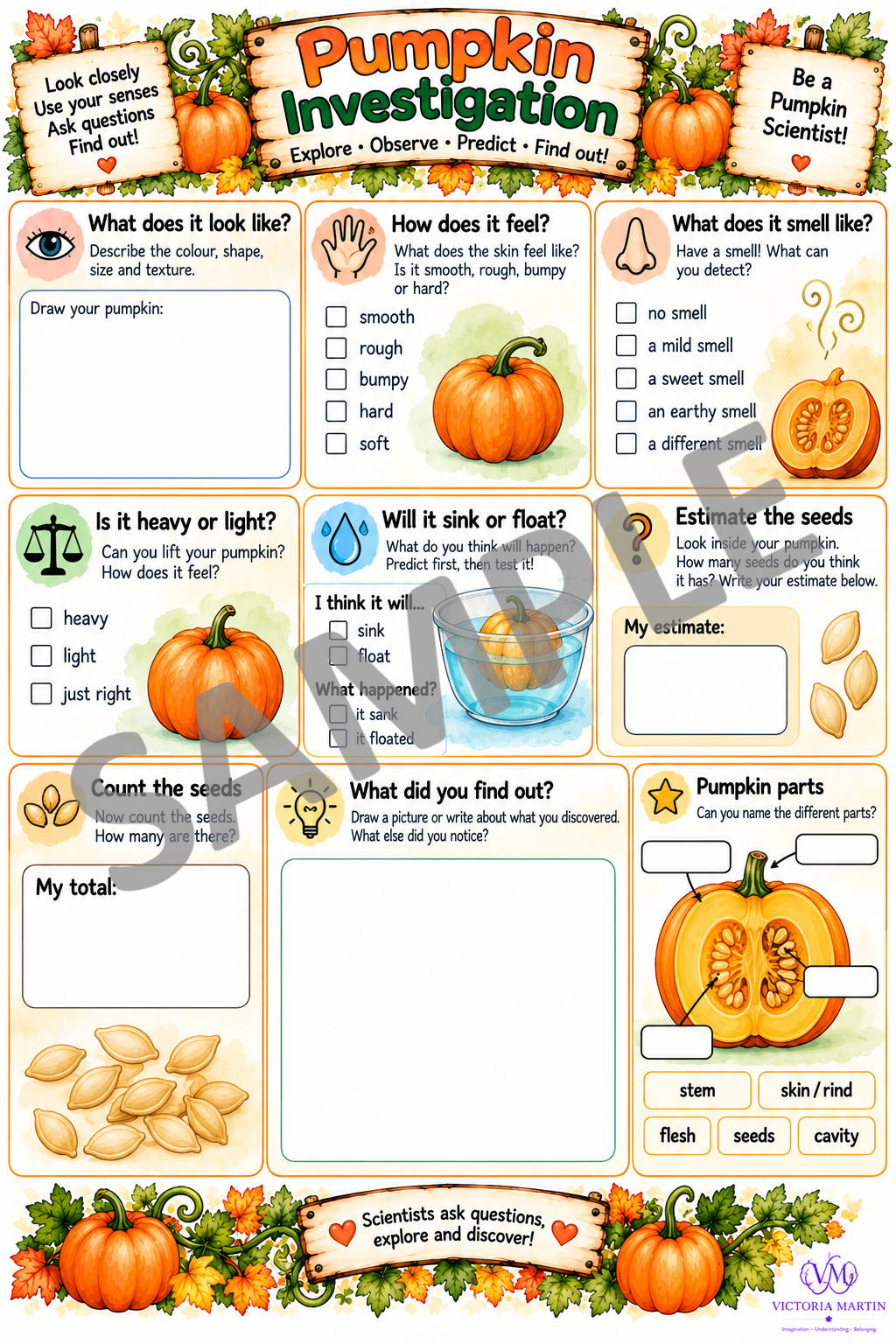
Look Closely
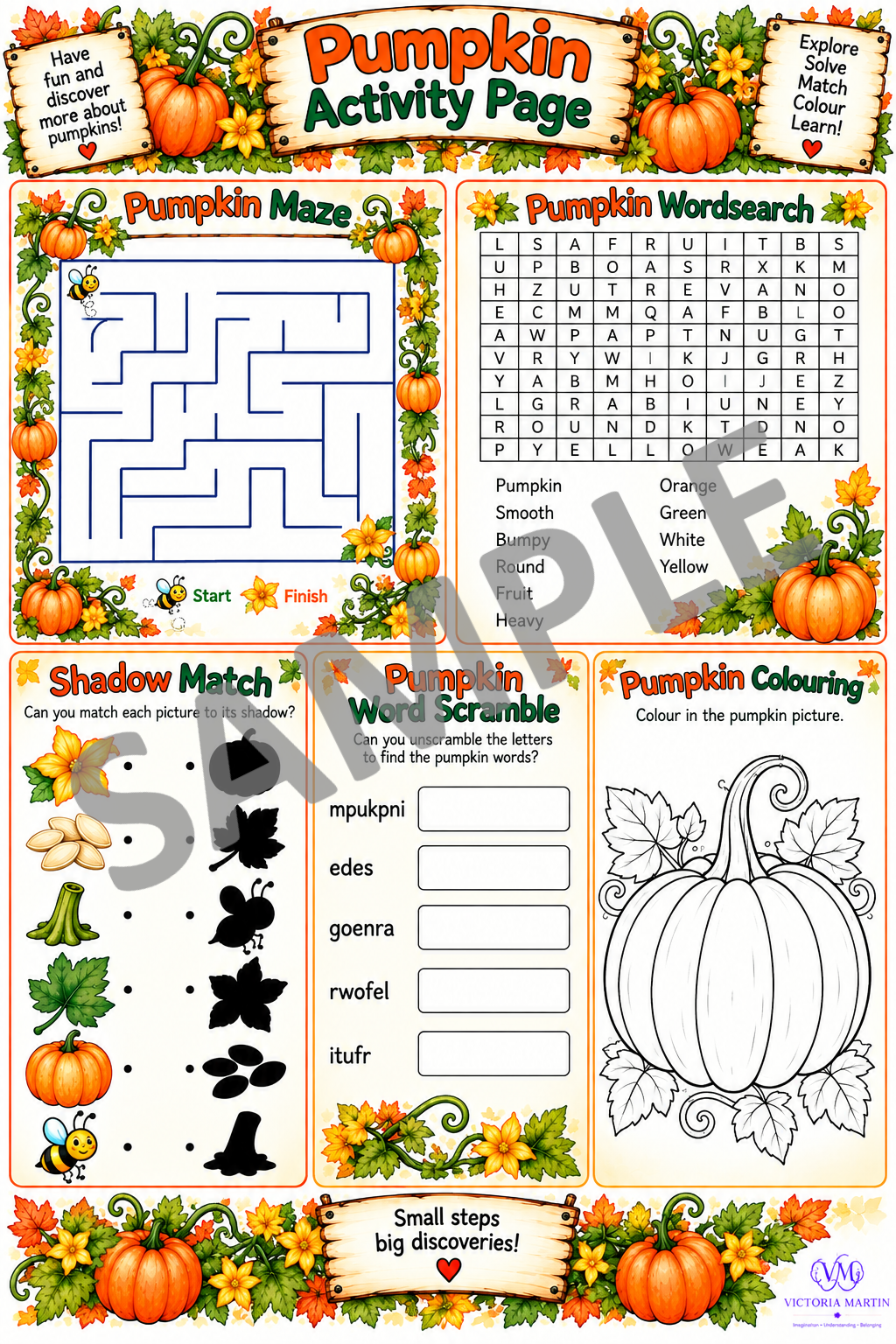
If you visit a pumpkin patch, allotment or garden this autumn, see how many differences you can spot.
Are all the pumpkins orange?
Can you find smooth and bumpy skins?
Which is the smallest pumpkin you can see?
Which is the largest?
Can you find the stalk where the pumpkin was attached to its plant?
Pumpkins are a wonderful reminder that autumn is not only a season of falling leaves – it is also a season of harvesting, seeds and preparing for the colder months ahead.