
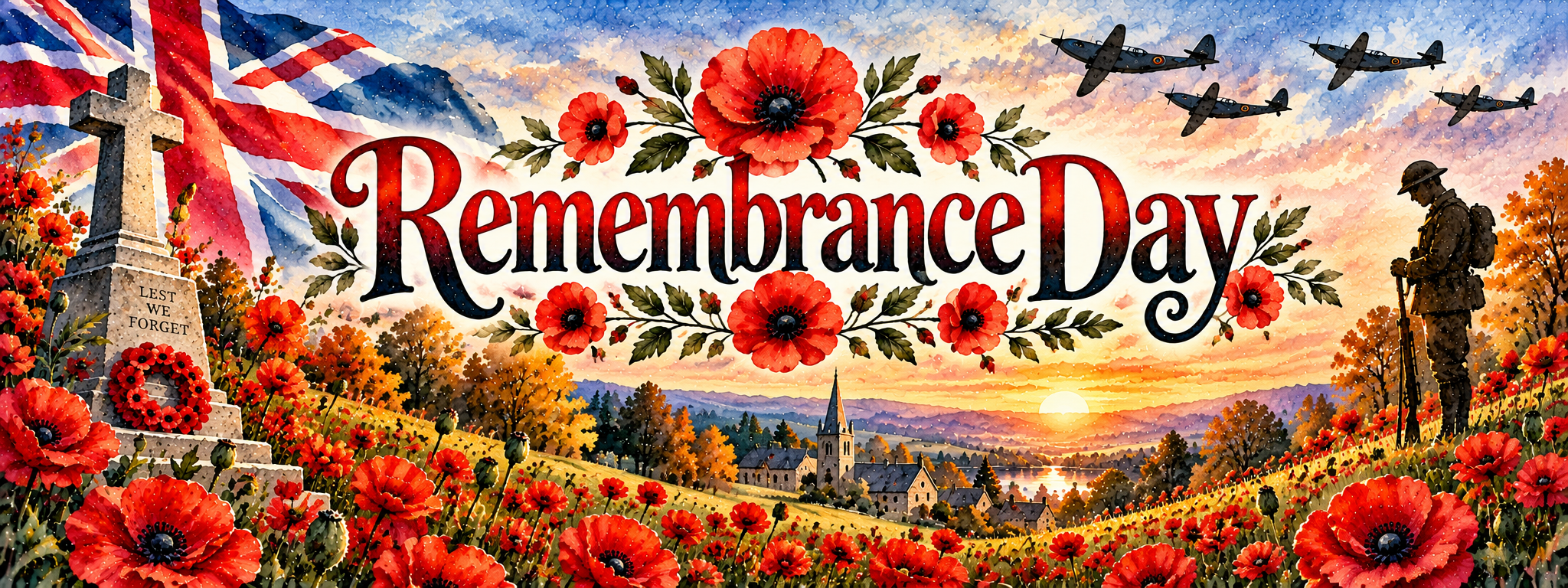
🌺 Remembrance Day & Remembrance Sunday
Remembering, Reflecting and Honouring Those Affected by War
Have you ever noticed people wearing red poppies, gathering around war memorials or standing quietly during a moment of remembrance?
These traditions are associated with Remembrance Day and Remembrance Sunday, two important occasions in the United Kingdom.
They provide opportunities to remember those who died, recognise the sacrifices of others and reflect on the effects of war and conflict.
Remembrance can also encourage us to think about peace, compassion and the importance of understanding one another.
🌺 What Is Remembrance Day?
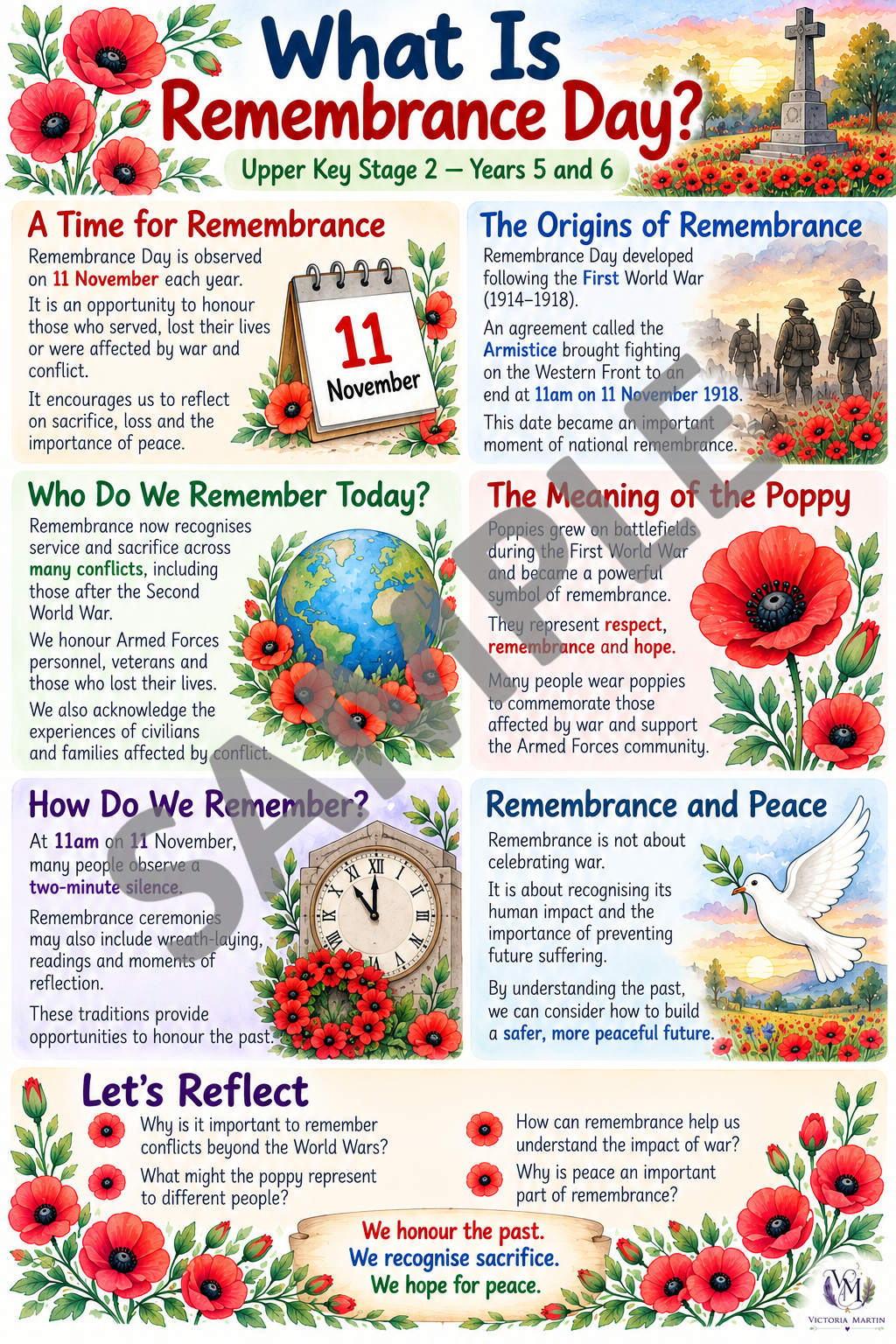
Remembrance Day, sometimes called Armistice Day, takes place every year on 11 November.
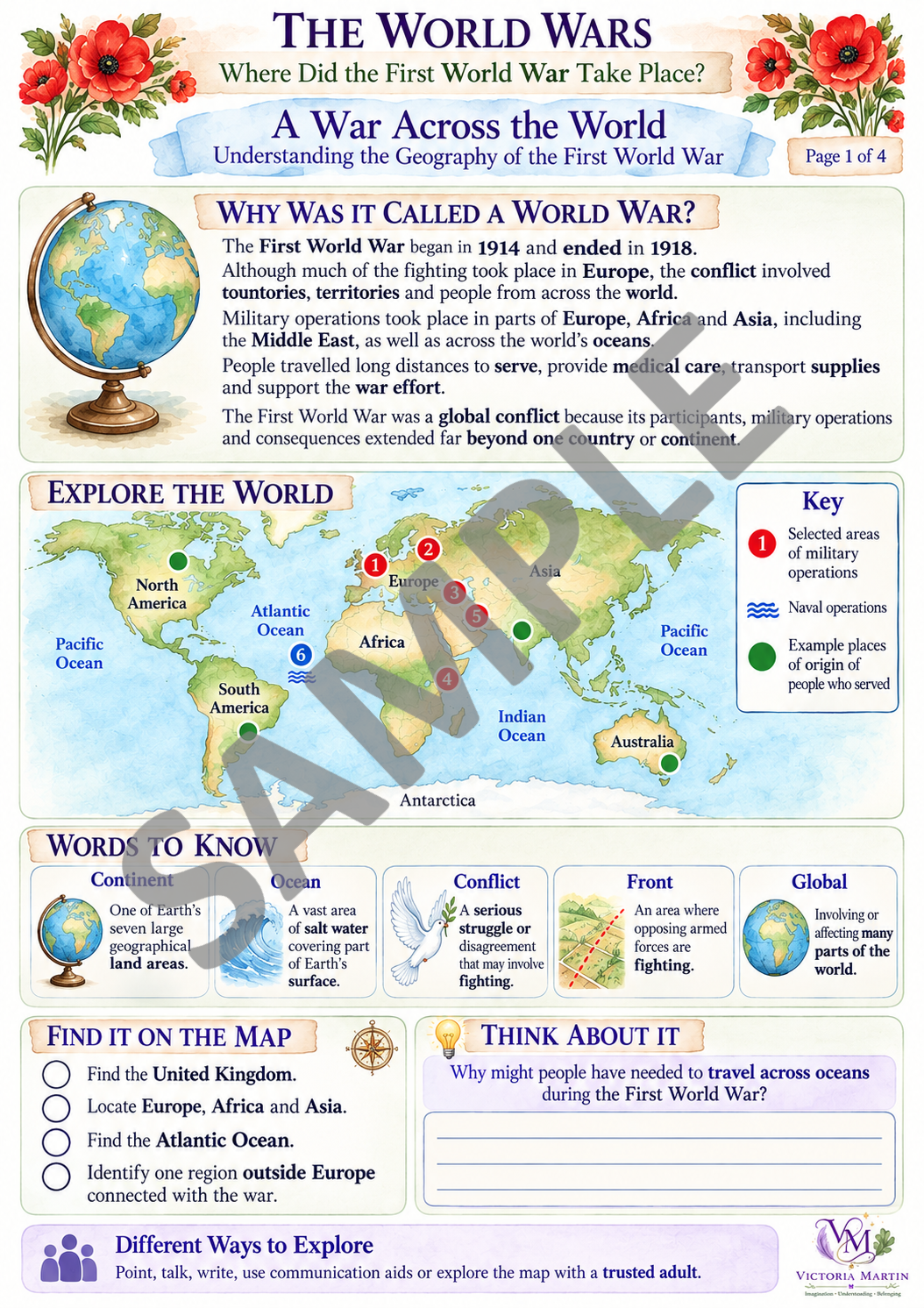
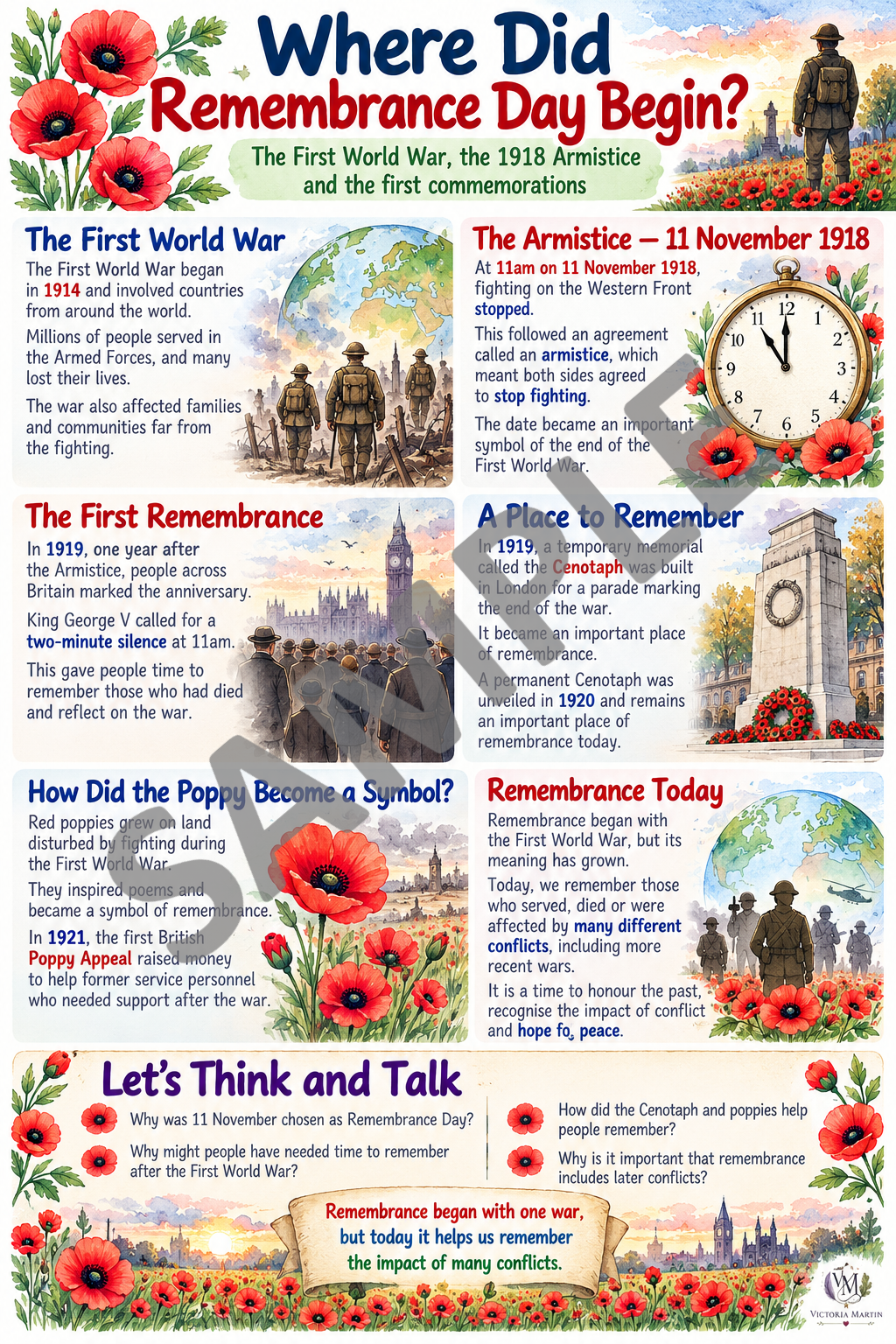
The date marks the armistice agreement that brought an end to fighting on the Western Front during the First World War in 1918.
The armistice came into effect at 11 am, on the eleventh day of the eleventh month.
The Armistice of 11 November 1918 was an agreement to stop the fighting, rather than a final peace treaty.
Although the fighting on the Western Front ended, the formal peace agreements were completed later, including the Treaty of Versailles in 1919.
Today, Remembrance Day honours members of the armed forces who died during conflicts, while also providing opportunities to remember civilians, families and communities affected by war.
📅 What Is Remembrance Sunday?
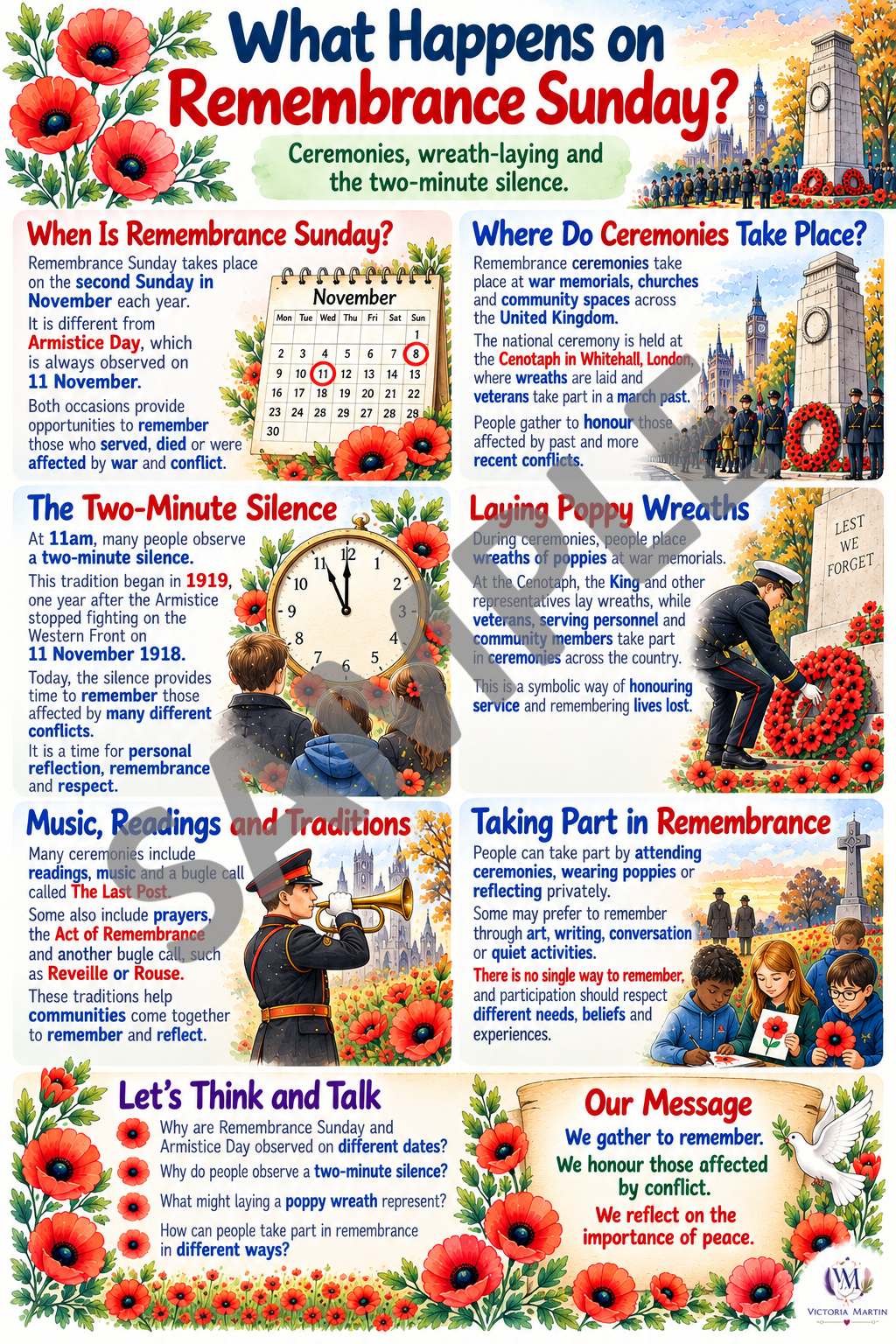
Remembrance Sunday takes place on the second Sunday in November each year.
Unlike Remembrance Day, which always falls on 11 November, the date of Remembrance Sunday changes from year to year.
In 2026, Remembrance Sunday falls on Sunday 8 November, while Remembrance Day takes place on Wednesday 11 November.
Across the UK, people gather at war memorials, churches, community spaces and public ceremonies to remember those affected by conflict.
Many services include wreath-laying, readings, music and a two-minute silence.
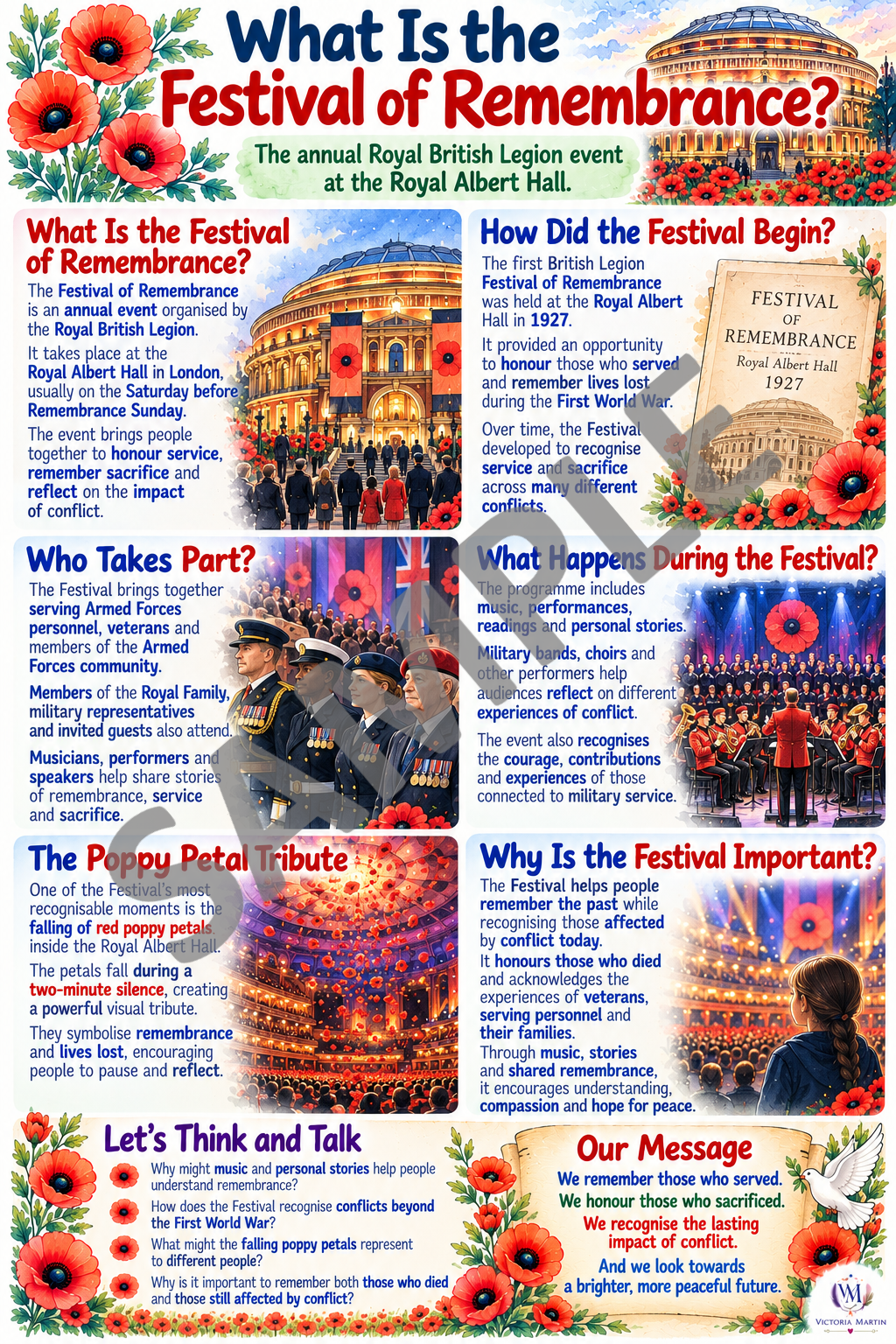
The national ceremony takes place at the Cenotaph in Whitehall, where members of the Royal Family, political representatives, veterans and others gather to pay their respects.
🕚 Why Do We Remember at 11 am?
The time of 11 am is significant because it marks the moment the 1918 armistice came into effect on the Western Front.
The first national two-minute silence took place in 1919, just one year after the Armistice.
Each year, many people observe a two-minute silence at 11 am on 11 November.
A two-minute silence is also observed during Remembrance Sunday services, usually at 11 am.
During this time, people may choose to stand quietly, think about those affected by war or reflect in their own way.
Some people remember family members, military personnel or people whose lives were changed by conflict.
Others use the silence to consider the importance of peace, kindness and preventing future suffering.
🌺 Why Do People Wear Red Poppies?
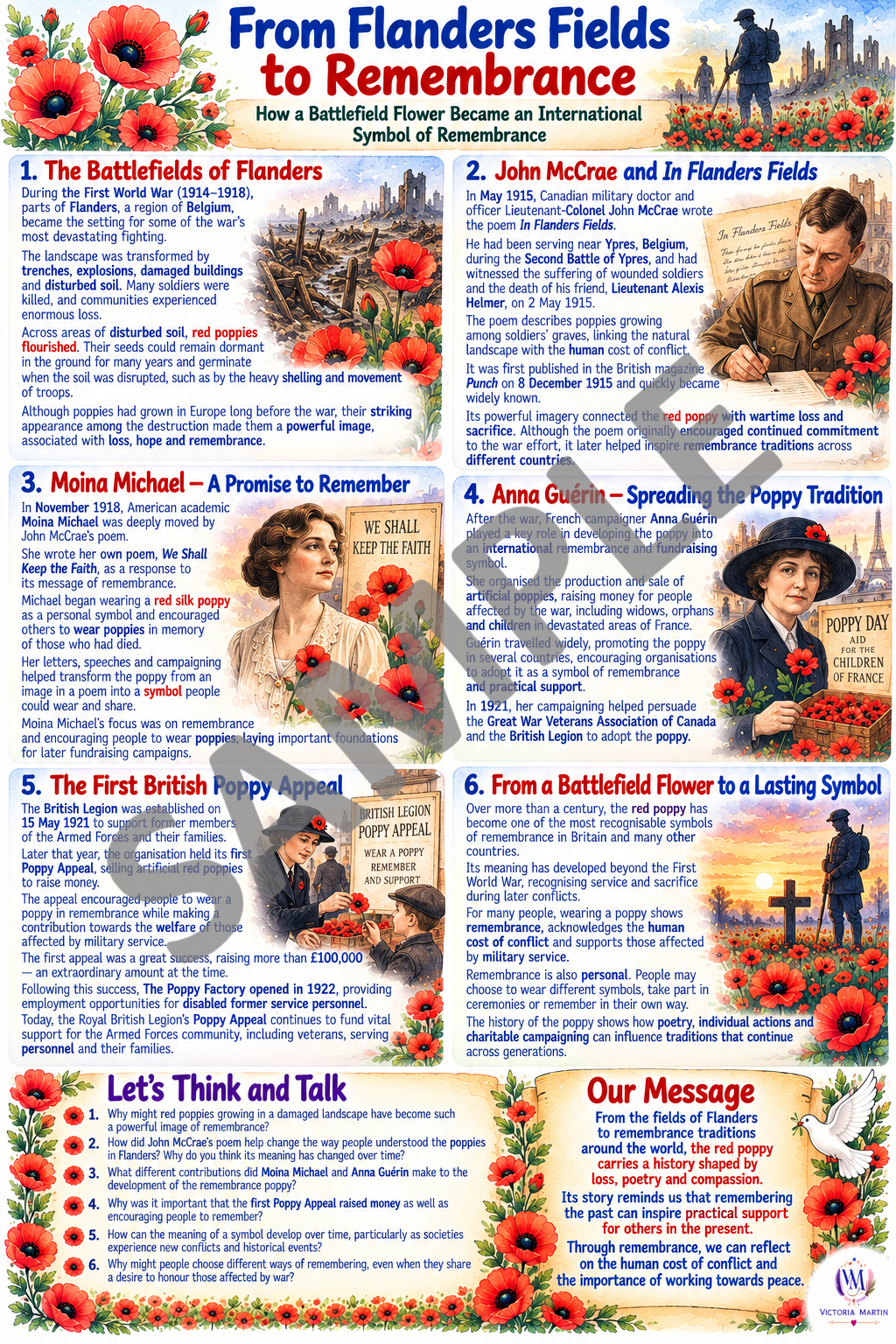
The red poppy is one of the most recognisable symbols of remembrance in the United Kingdom.
Its connection to remembrance developed after the First World War, when poppies became associated with the battlefields of northern France and Belgium.
The flower was made particularly famous by the poem In Flanders Fields, written by Canadian military doctor John McCrae in 1915.
Poppies grew in areas where the ground had been disturbed by fighting, becoming a powerful symbol of remembrance and loss.
Today, the Royal British Legion organises the annual Poppy Appeal, raising money to support serving and former members of the armed forces and their families.
Wearing a red poppy is a personal choice, and people may remember those affected by war in different ways.
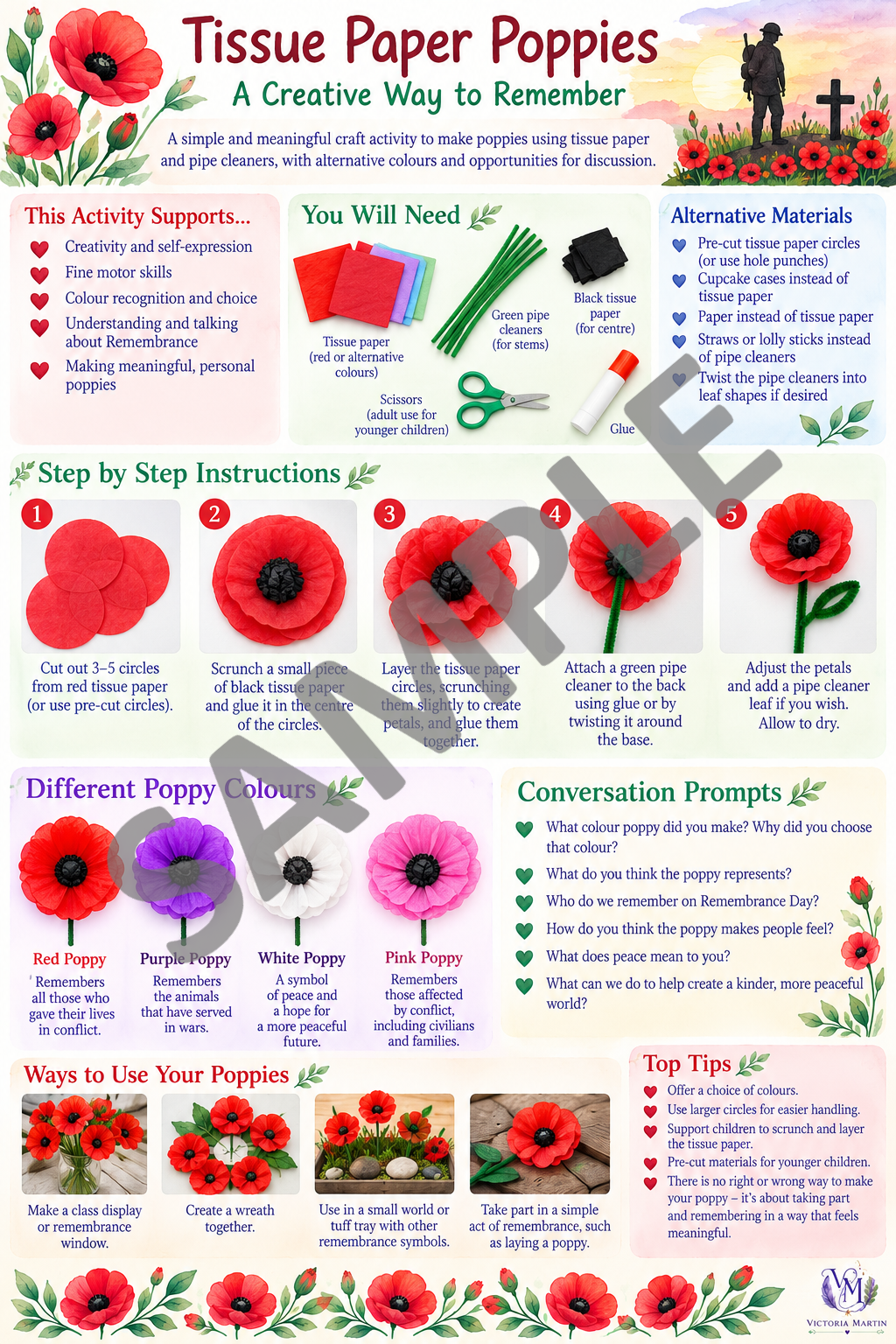
🎨 What Do Different Coloured Poppies Mean?
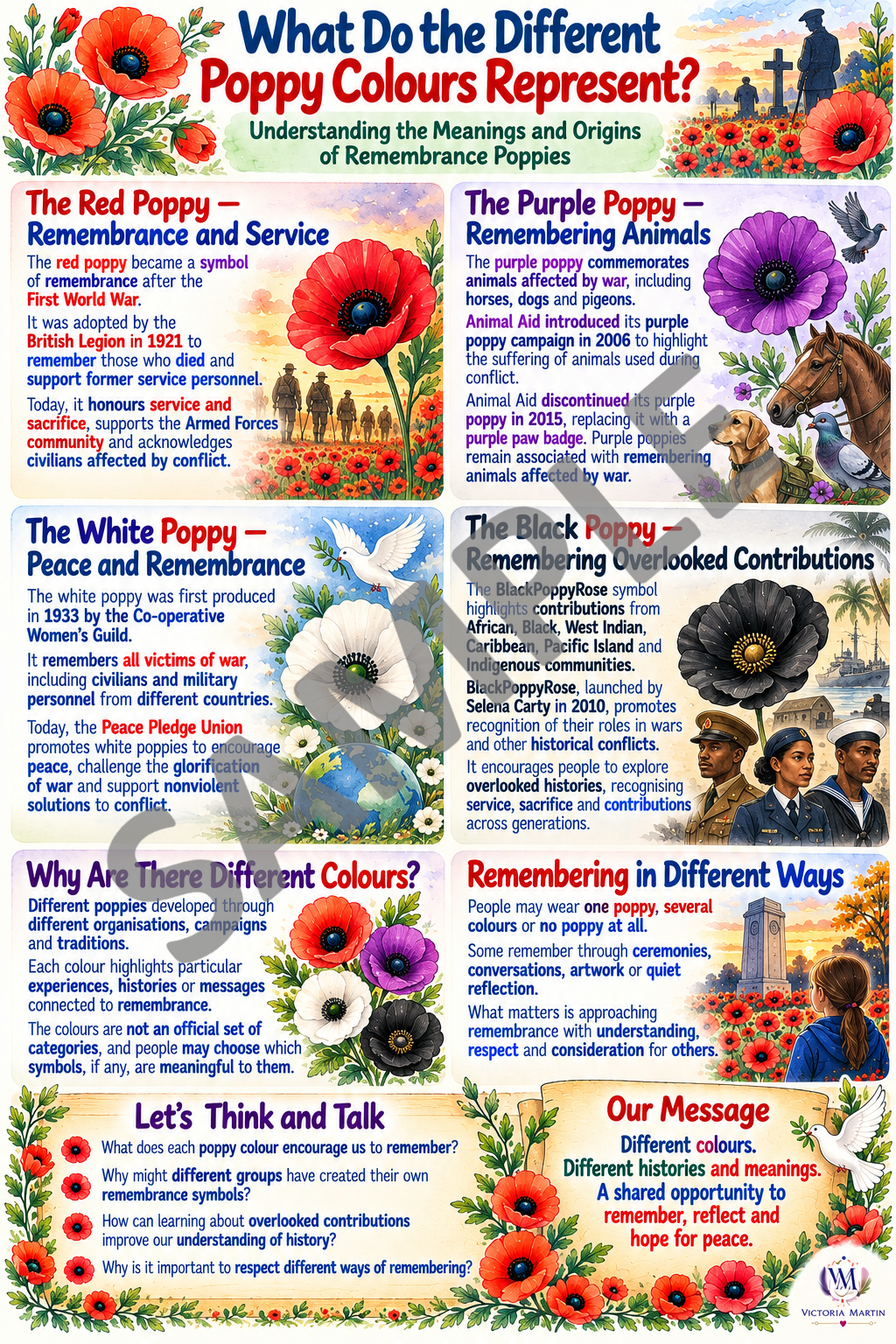
Although the red poppy is the most familiar remembrance symbol in Britain, other coloured poppies are also used to express different forms of remembrance.
🌺 Red Poppy — Remembrance and Support
The red poppy is associated with remembering those who served and died in war and supporting the armed forces community.
🤍 White Poppy — Peace and Remembrance
The white poppy, distributed by the Peace Pledge Union, represents remembrance of all victims of war, a commitment to peace and opposition to militarism.
💜 Purple Poppy — Remembering Animals
The purple poppy is used by some organisations and individuals to remember animals affected by war, including horses, dogs and other animals used during conflicts.
Animals such as horses, dogs and carrier pigeons played different roles during wartime, including transport, communication and rescue work.
🖤 Black Poppy — Remembering Historically Overlooked Contributions
The black poppy, particularly associated with the BlackPoppyRose initiative, recognises the service, contributions and experiences of people from African, Black, Caribbean and Pacific Island communities during wartime.
Different poppy colours have different histories, different organisations and different meanings, so they are not all part of the same official campaign.
People may choose to wear one poppy, several poppies or no poppy at all, depending on their personal beliefs and preferences.
🏛️ What Is the Cenotaph?
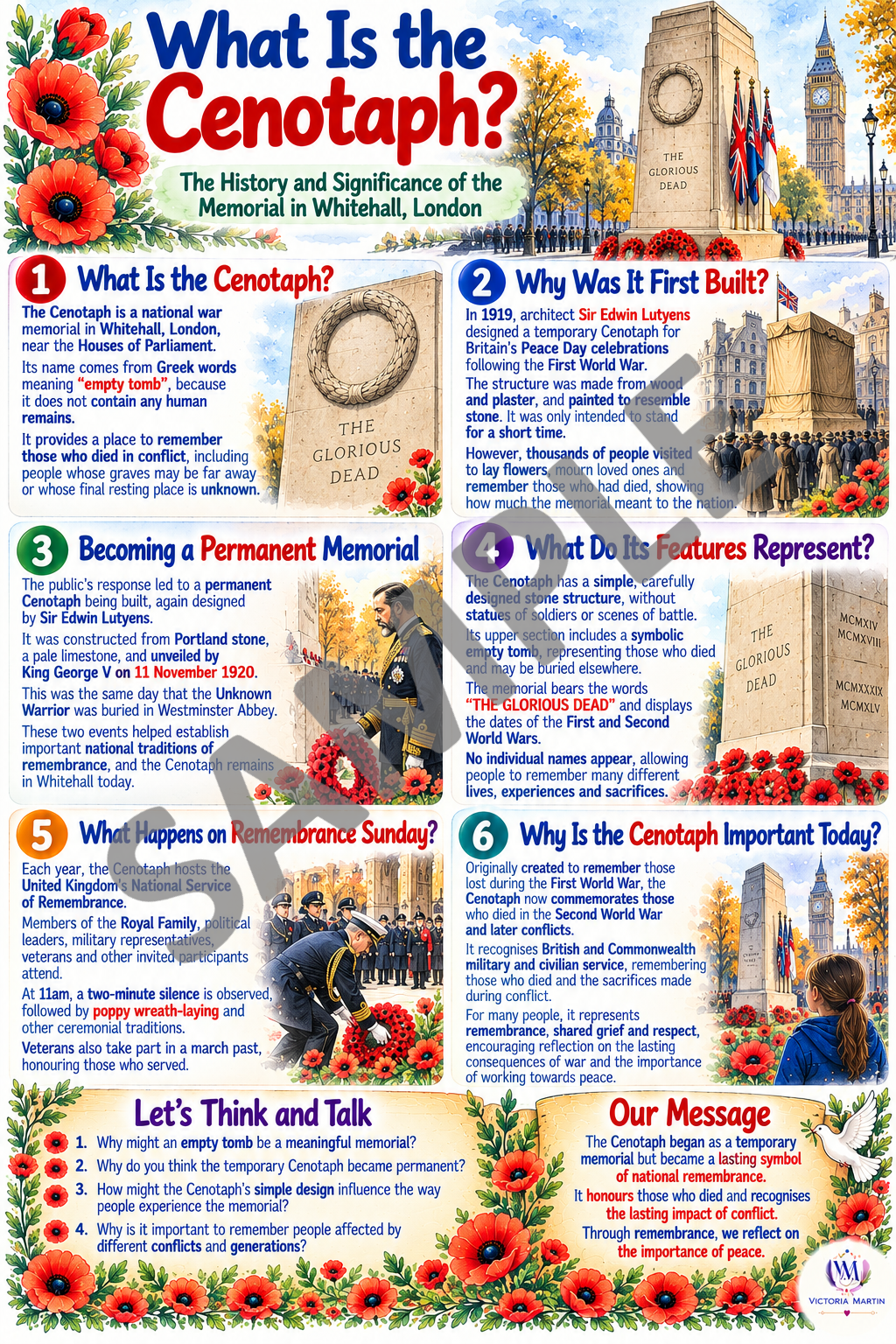
The Cenotaph is a famous war memorial located on Whitehall in central London.
The word cenotaph comes from Greek and means empty tomb, referring to a memorial that does not contain the body of the person or people being remembered.
The Cenotaph was designed by Sir Edwin Lutyens and became an important focus for national remembrance ceremonies after the First World War.
The first Cenotaph was a temporary structure built in 1919, before a permanent stone memorial was unveiled in 1920.
Each year, people gather there on Remembrance Sunday to lay wreaths, observe the silence and honour those who died.
However, remembrance is not limited to London, and many towns, villages and communities have their own memorials and traditions.
🎺 What Is the Last Post?
During many remembrance services, a short piece of music called The Last Post is played on a bugle or trumpet.
Originally used as a military signal, it later became associated with military funerals and ceremonies of remembrance.
The Last Post is often played during remembrance ceremonies, although its position within the service can vary.
At some ceremonies, The Last Post is played before the silence, followed afterwards by Reveille or Rouse.
During the national ceremony at the Cenotaph, The Last Post is sounded after the two-minute silence.
These musical traditions can carry meanings of remembrance, respect and the continuation of life.
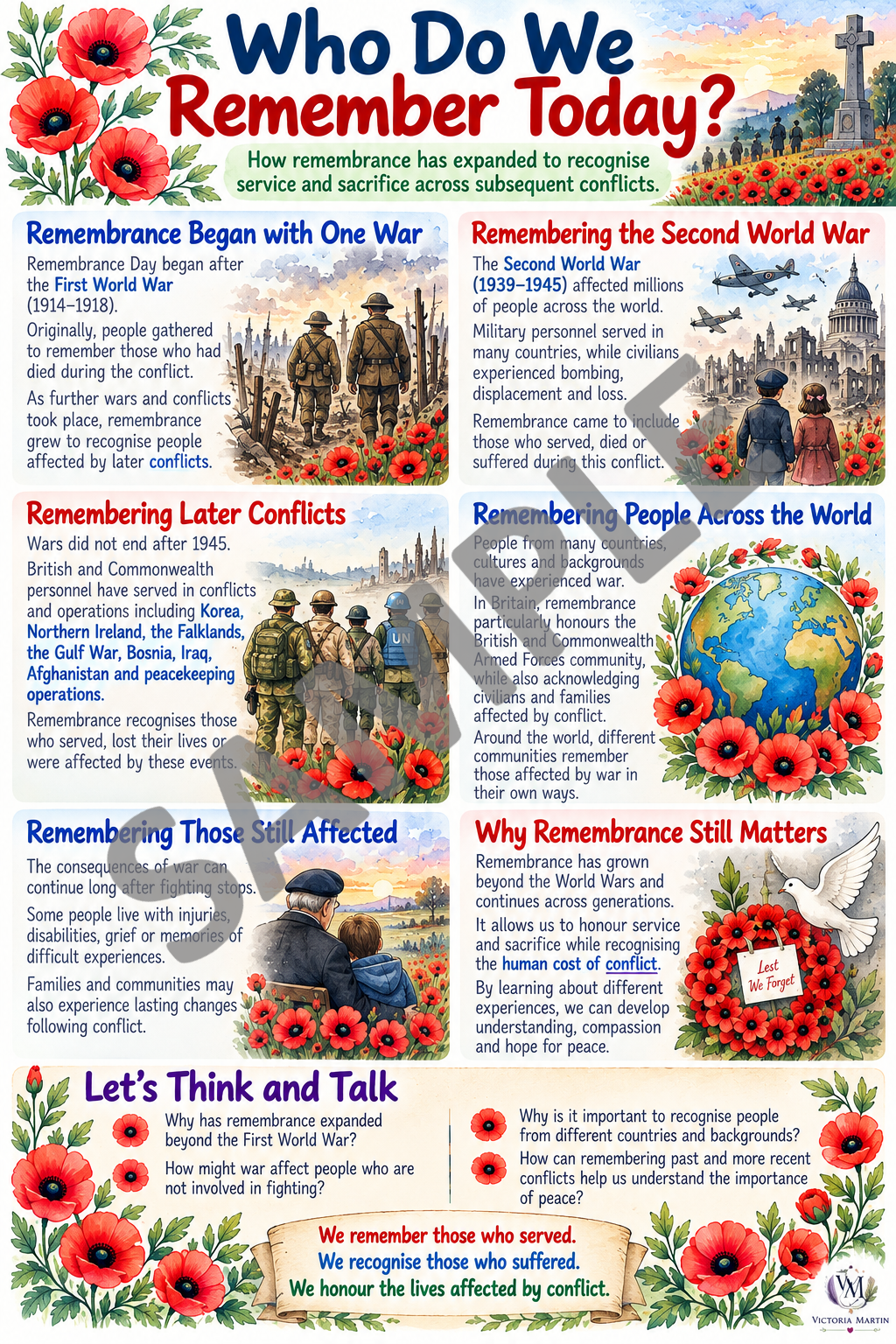
🕊️ Who Do We Remember?
Remembrance is often associated with soldiers, sailors, air personnel and others who served in the armed forces.
It also provides opportunities to remember civilians who died, families separated by conflict and communities whose lives were changed by war.
Remembrance can also recognise emergency service personnel, merchant seafarers and other civilians whose work and experiences were connected to conflict.
People may reflect on those who experienced injury, displacement, grief or lasting difficulties following conflict.
Remembrance can include people from different countries, different backgrounds and different generations.
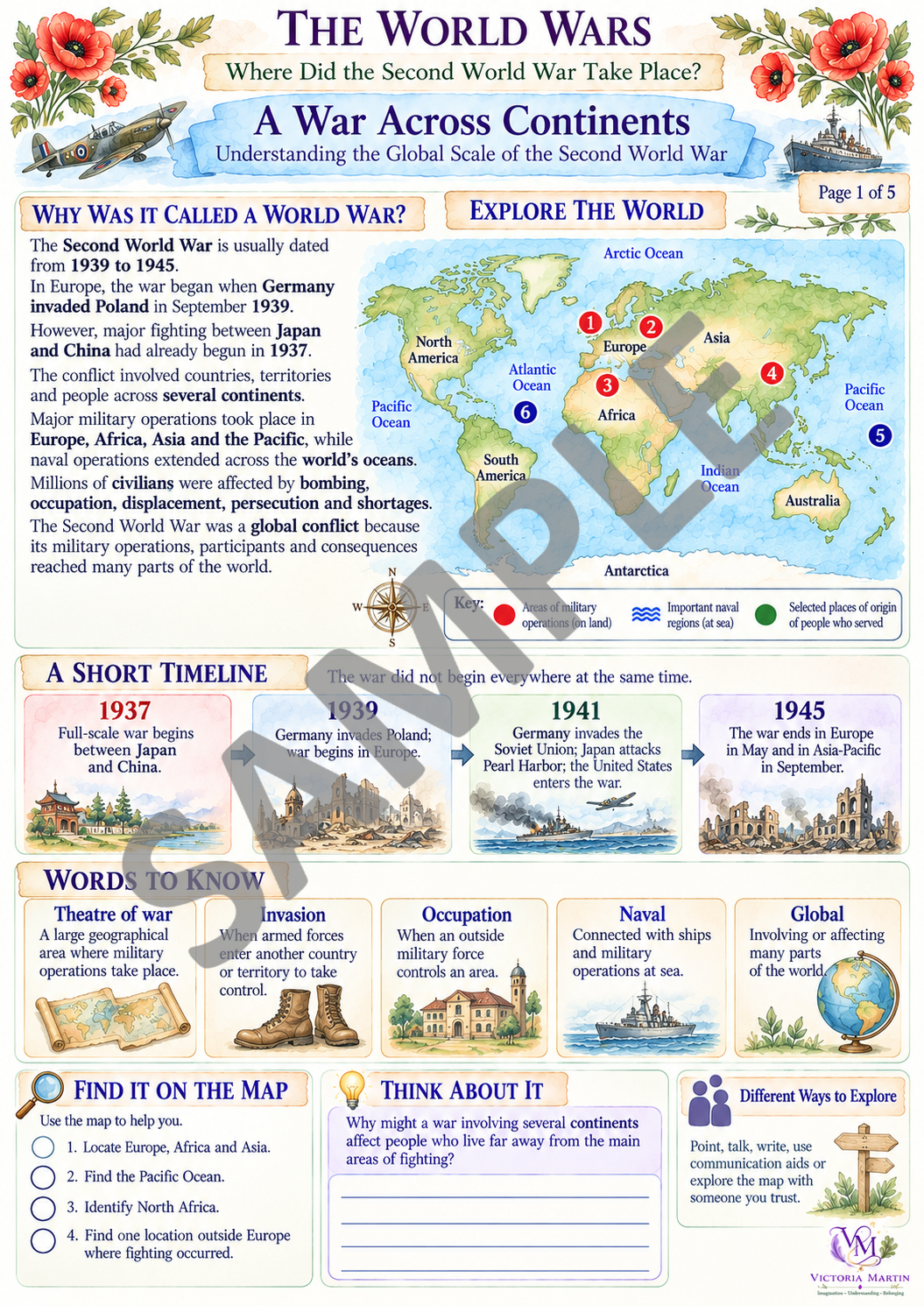
The First and Second World Wars involved people from many parts of the world, including Britain, Commonwealth countries and other nations.
Remembering these experiences helps us understand that war affects many people, its consequences can last for generations and every individual has a story.
🌍 Why Is Remembrance Important?
Remembrance helps us learn about historical events, the experiences of others and the lasting consequences of conflict.
It provides an opportunity to recognise courage, service, loss and human suffering.
Learning about the past can encourage thoughtful conversations about peace, responsibility and how communities support one another.
Different people may have different experiences, different beliefs and different ways of remembering, and these differences deserve respect.
🏫 How Do Schools and Communities Take Part?
Many schools mark Remembrance Day through assemblies, historical learning and creative activities.
Children might explore the meaning of poppies, war memorials and the two-minute silence.
Some communities organise remembrance parades, wreath-laying ceremonies and services at local memorials.
Others choose quieter activities such as reading stories, creating artwork or spending time reflecting together.
Participation can be adapted to suit different ages, individual needs and personal beliefs.
💜 Different Ways to Remember
Remembrance does not have to involve large gatherings, complete silence or formal ceremonies.
Some children may find unexpected loud sounds, crowded spaces or discussions about death and war difficult to manage.
Some ceremonies include bugle music, loud gun salutes or large gatherings, so explaining what will happen beforehand can help children feel prepared and supported.
Families and educators can offer quiet spaces, visual explanations and gentle opportunities for reflection.
A child might choose to draw a poppy, look at a photograph or listen to a short story about remembrance.
Others may prefer to sit with a trusted adult, hold a comforting object or participate for a shorter period.
A child who cannot remain silent, stand still or attend a ceremony can still take part in meaningful remembrance, thoughtful learning and respectful reflection.
The most important thing is to support understanding, choice and individual ways of participating.
✨ Did You Know?
The First World War armistice came into effect at 11 am on 11 November 1918, although peace agreements were signed later.
Remembrance Sunday always takes place on the second Sunday in November, while Remembrance Day is always on 11 November.
The red poppy became a symbol of remembrance after the First World War, partly through the influence of In Flanders Fields.
The Cenotaph in London is one of Britain's best-known war memorials, but local memorials can be found throughout the UK.
Although remembrance ceremonies often include military traditions, people can also reflect on civilian experiences, the impact of war and hopes for peace.
🌺 Look, Learn and Remember
You can explore remembrance by learning about local history, community memorials and the people whose lives were affected by conflict.
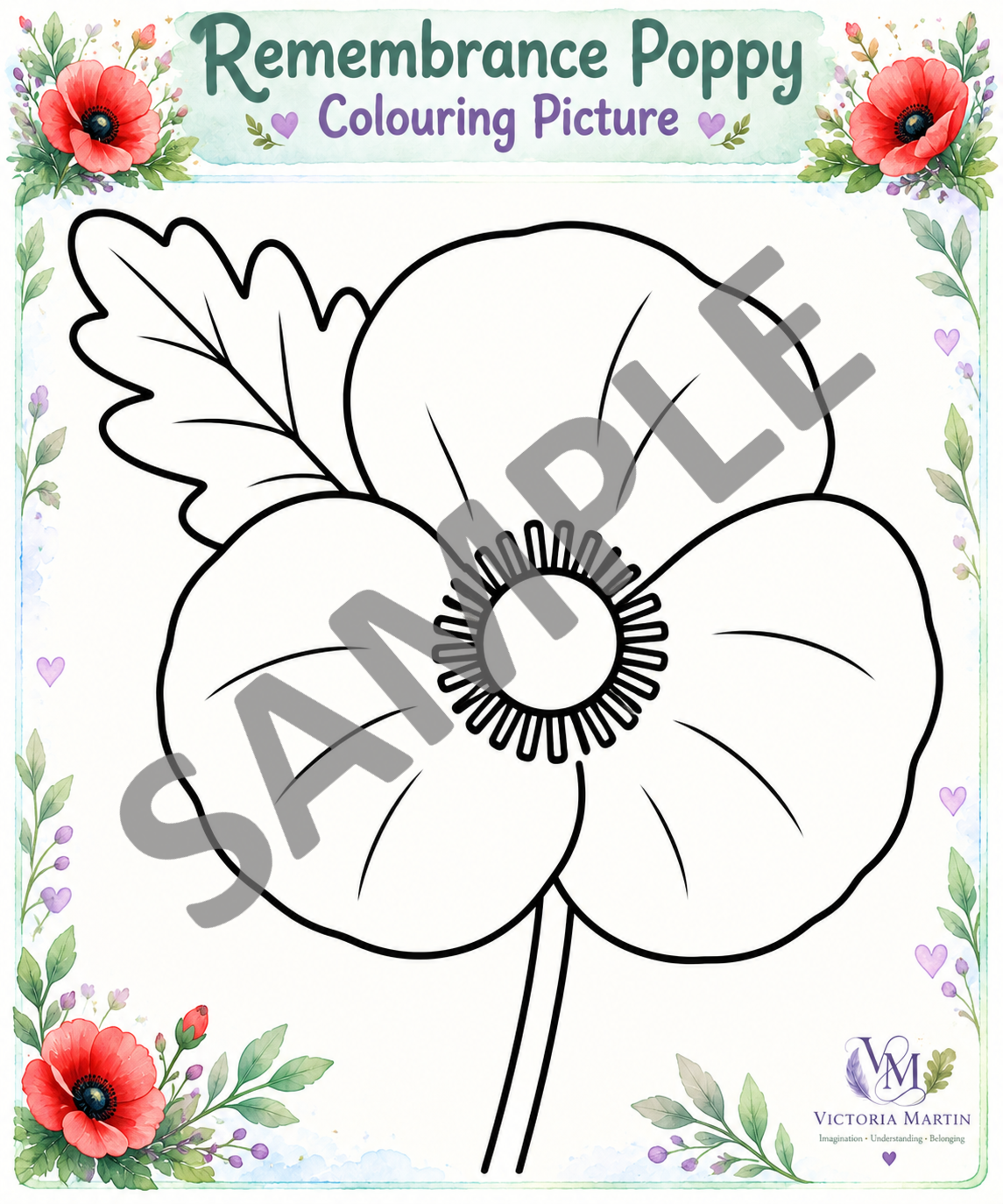
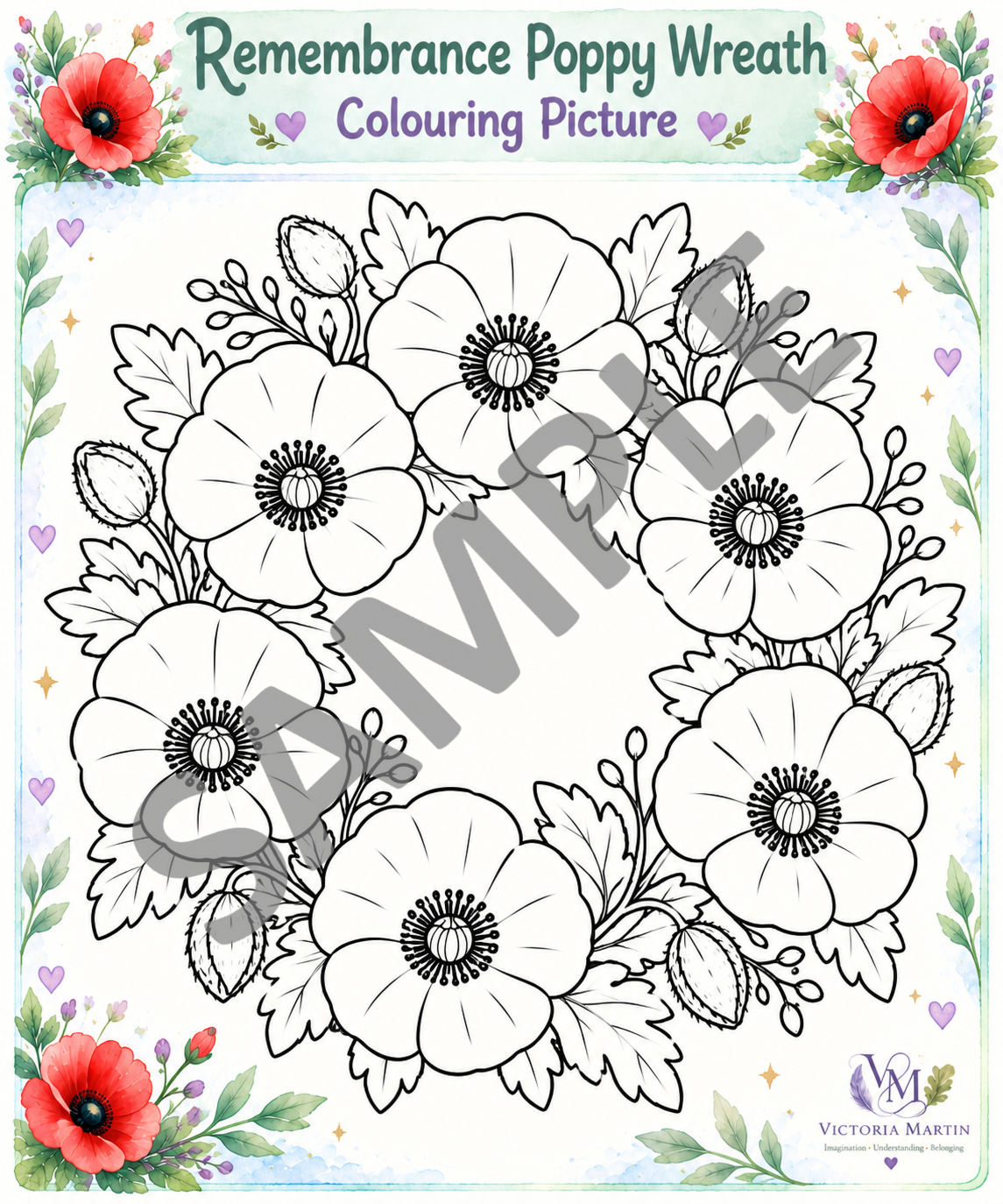
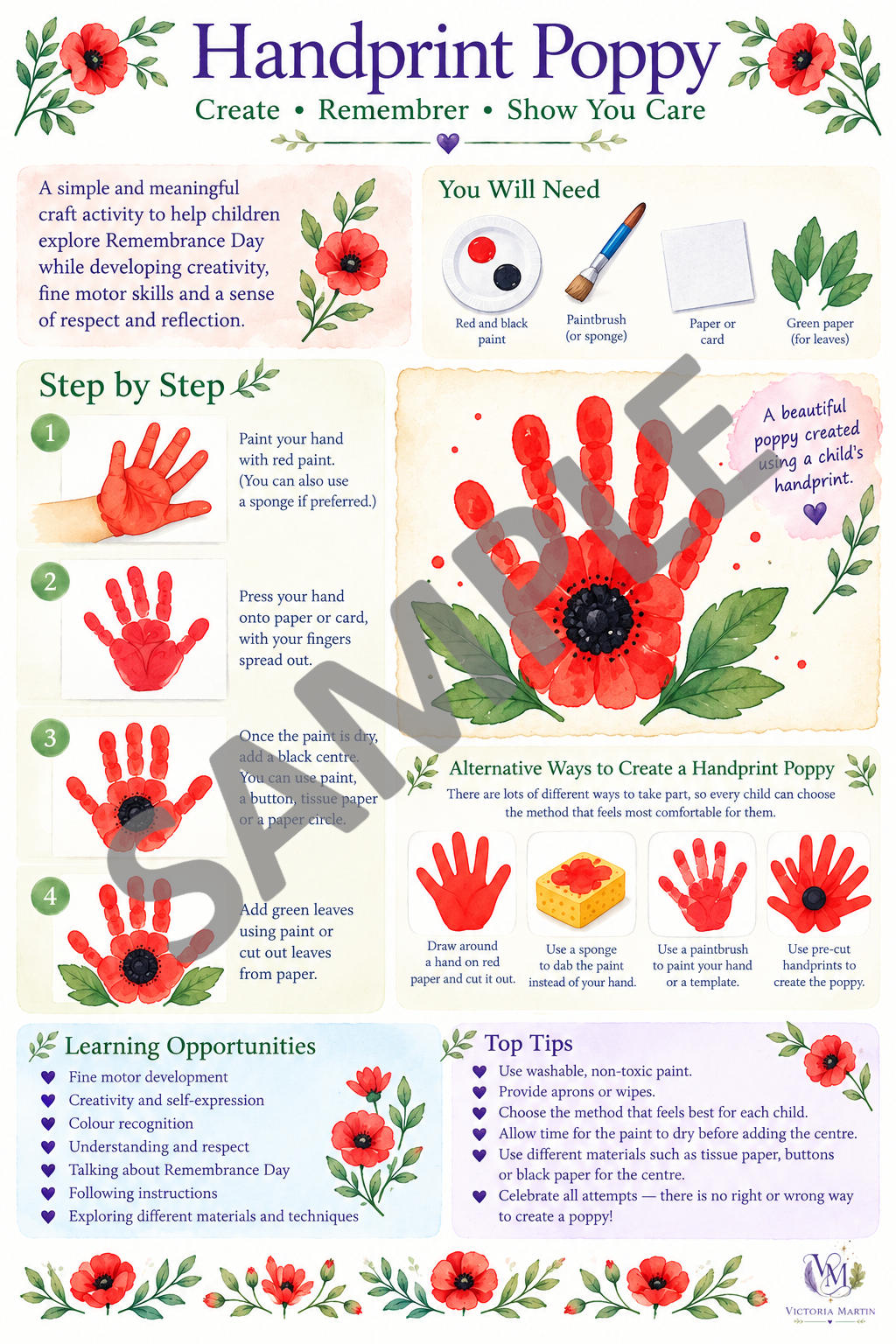
Try creating a paper poppy, designing a remembrance artwork or exploring the meaning of different remembrance symbols.
You might also visit a local war memorial, read an age-appropriate historical story or discover how your community marks Remembrance Sunday.
Remember that people have different experiences of war, different family histories and different ways of expressing remembrance.
Remembering the past, understanding its impact and showing compassion for others can help us reflect on the importance of peace.
Resources and Further Information
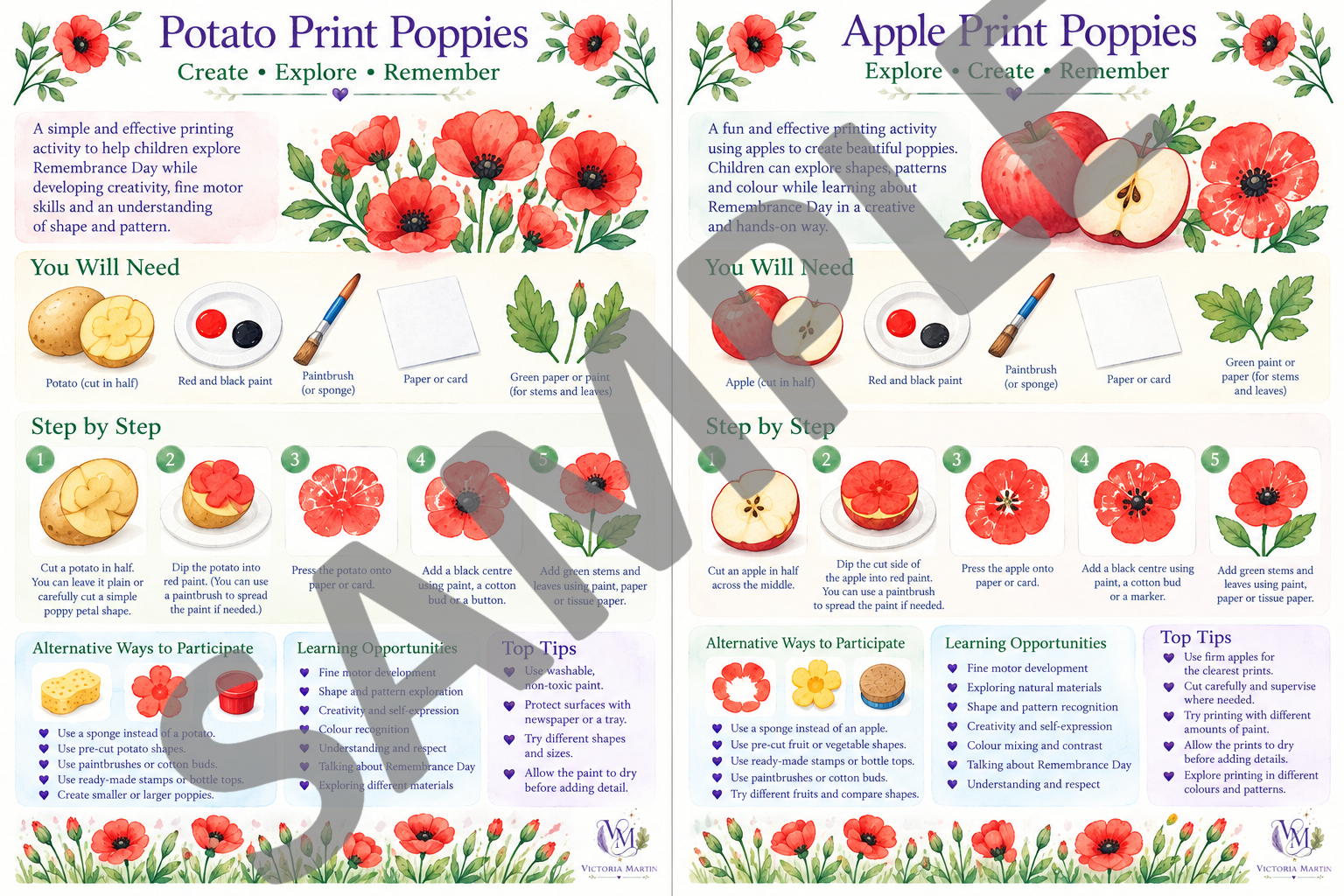
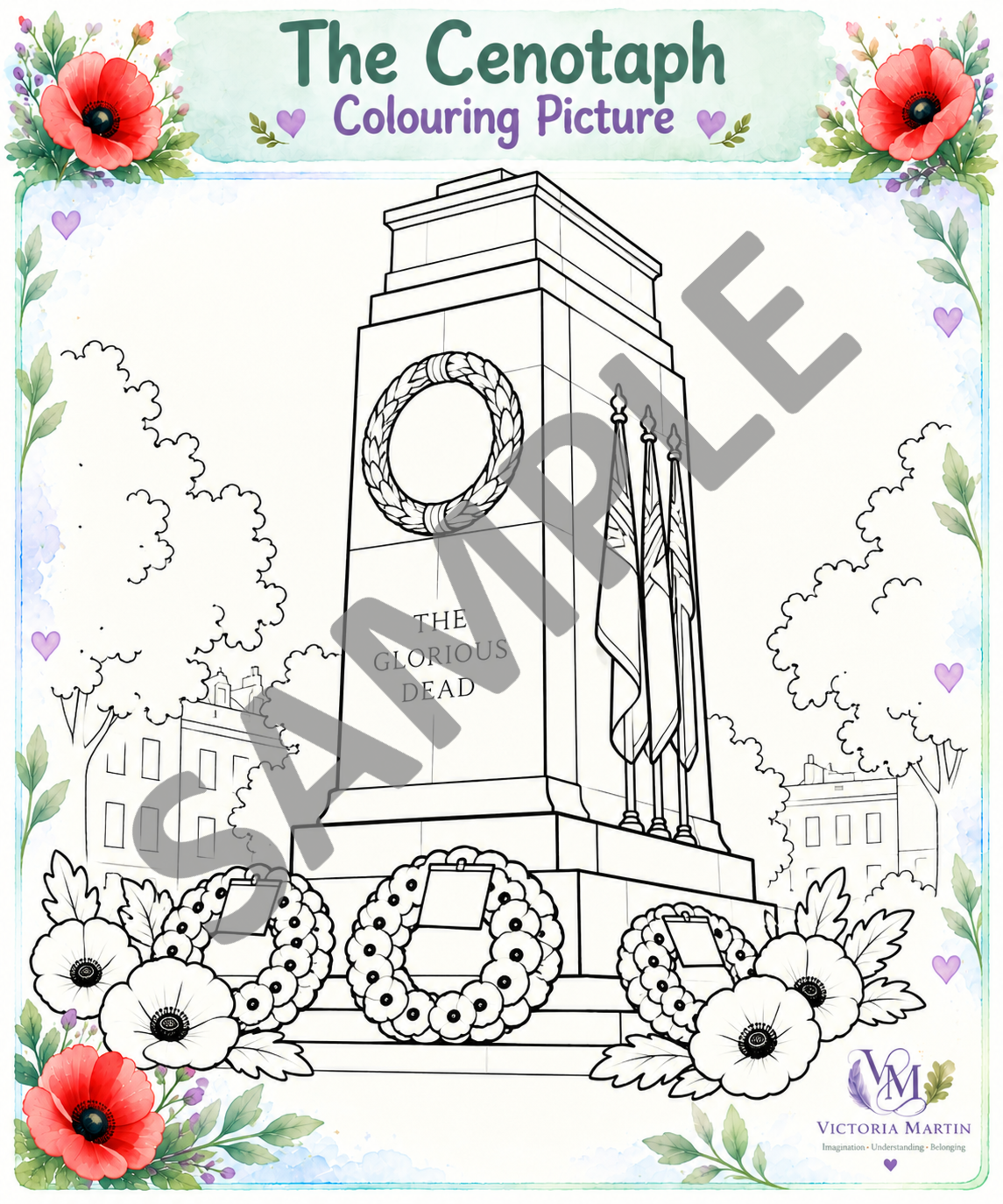
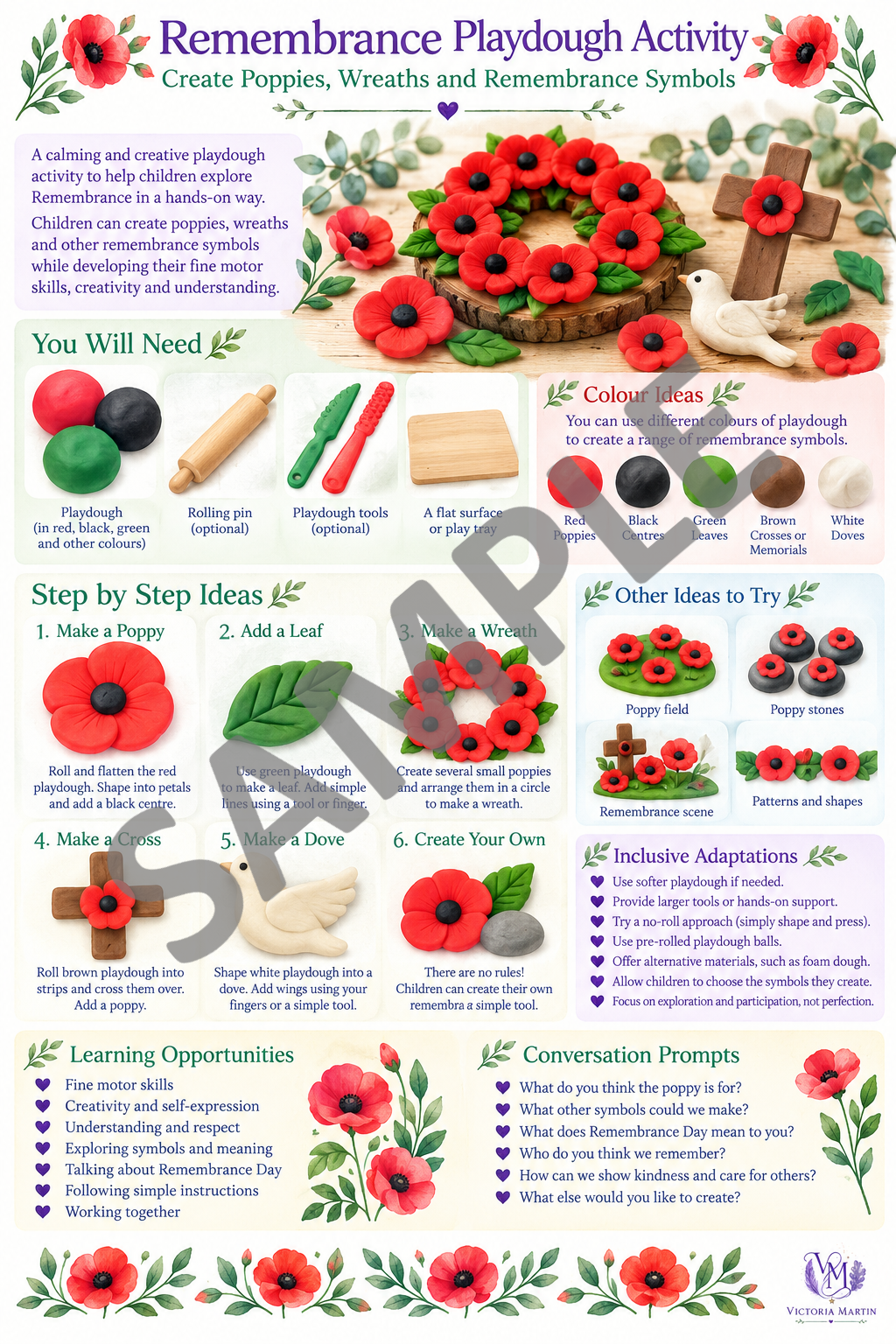
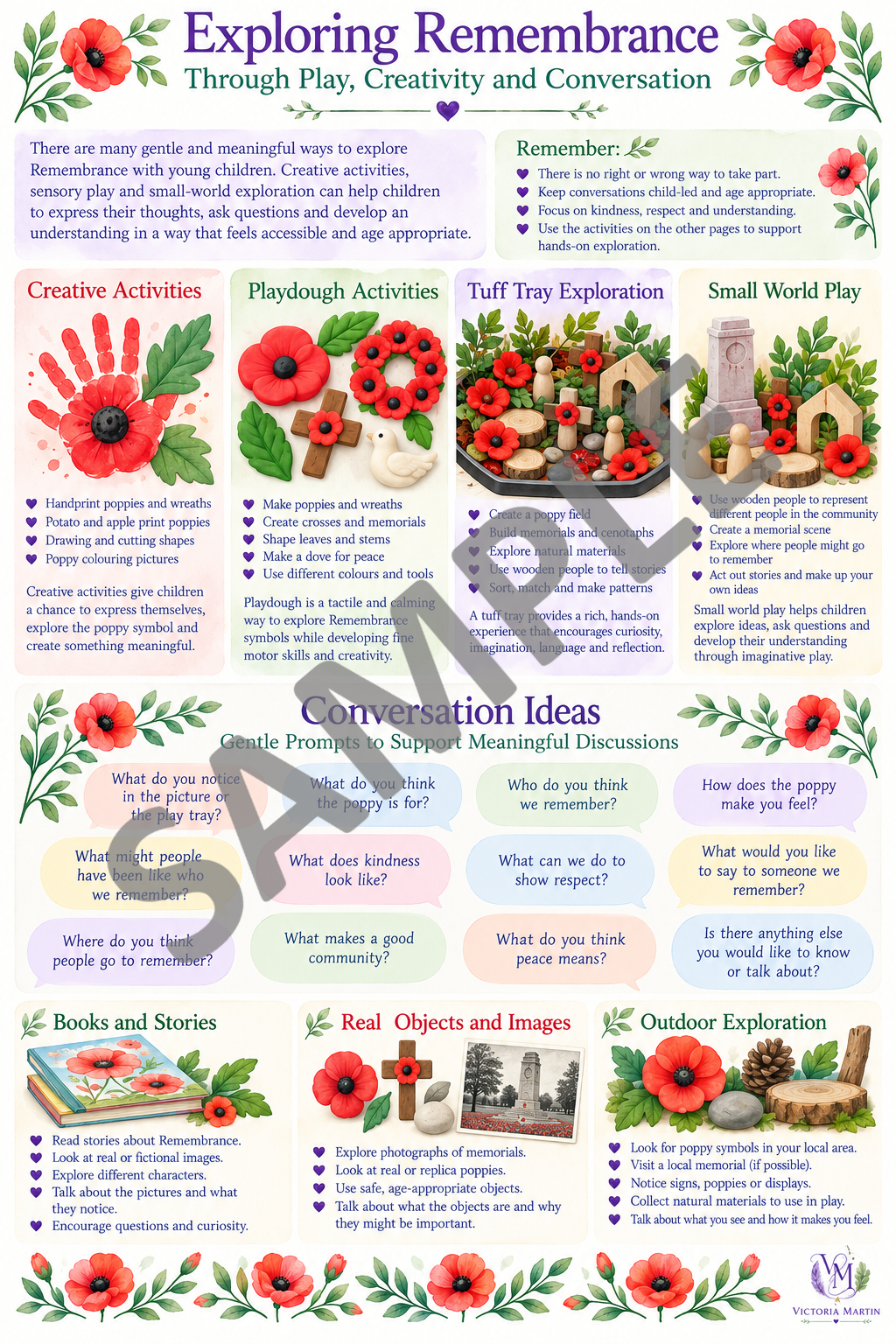
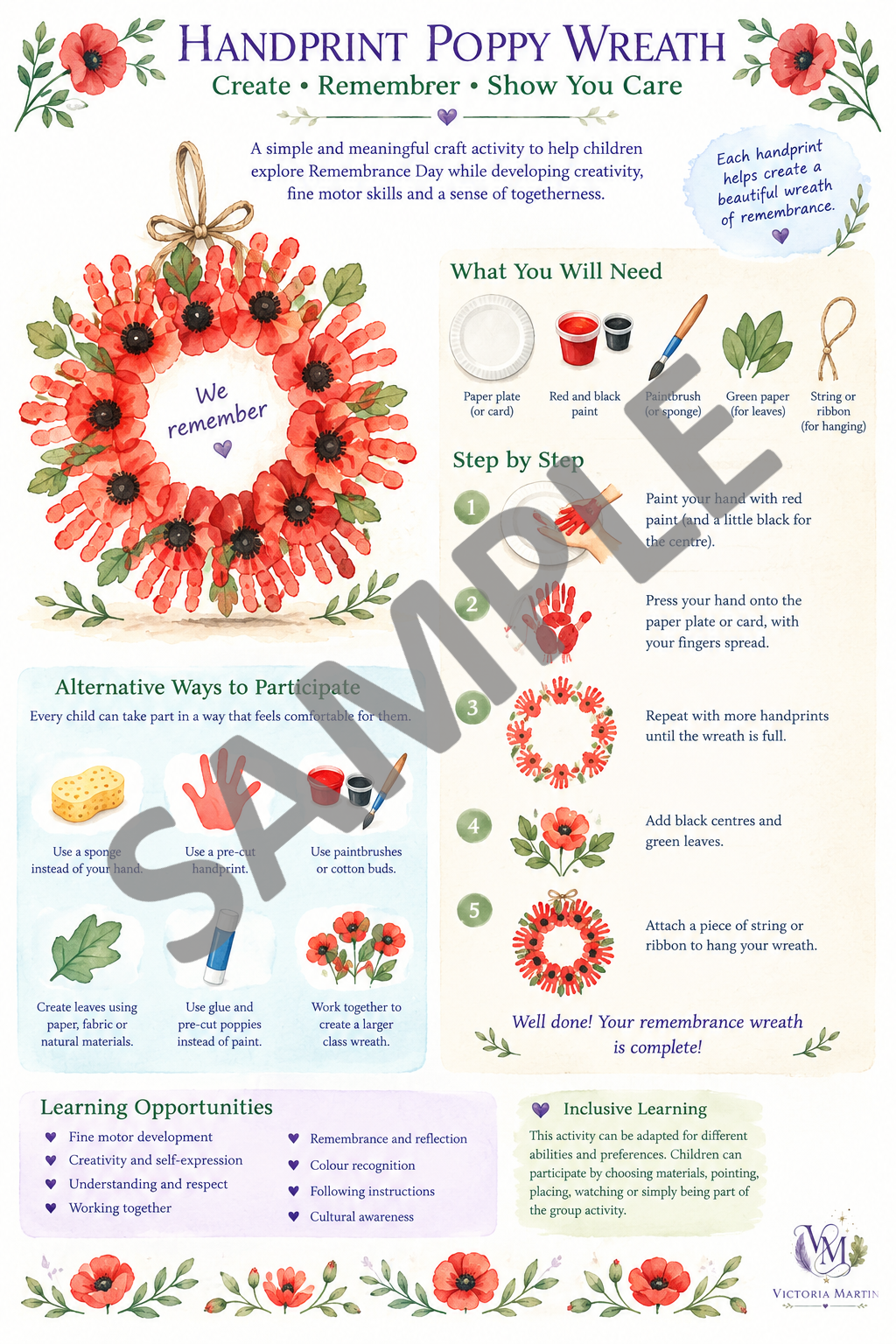
Tips on how to explore Remembrance through hands on crafts and activities. Just because it’s not a work sheet, doesn’t mean you can’t have meaningful discussion.
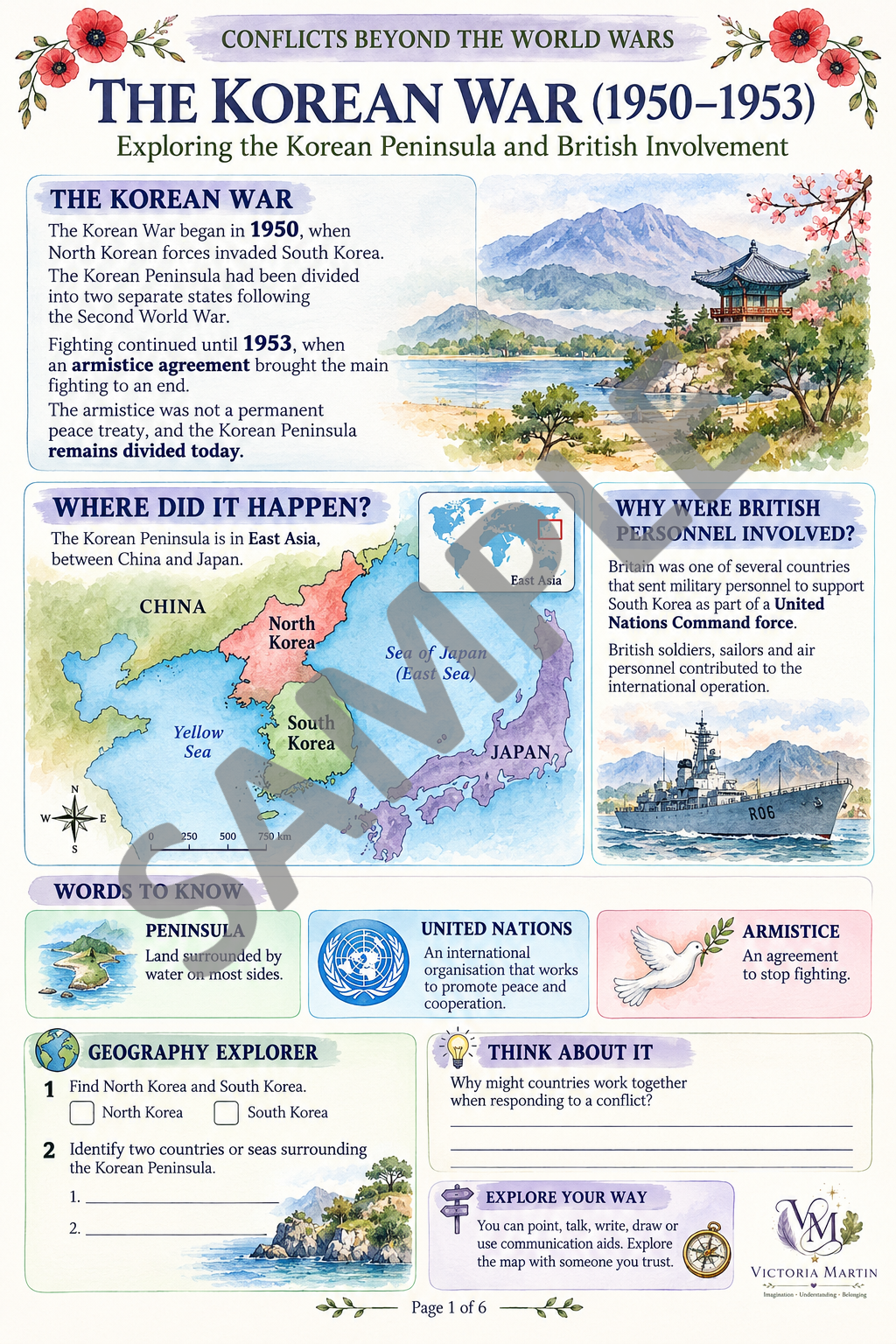
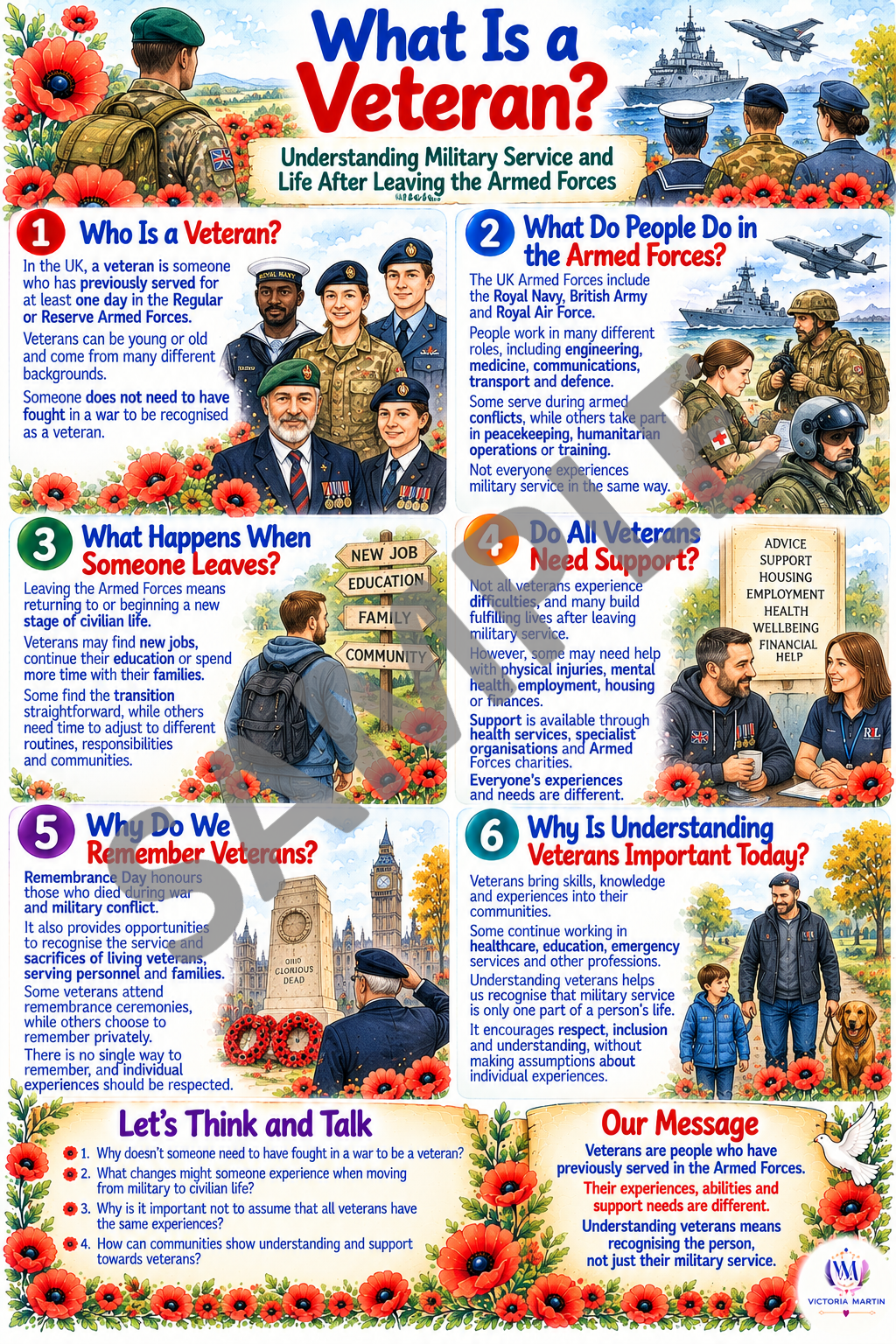
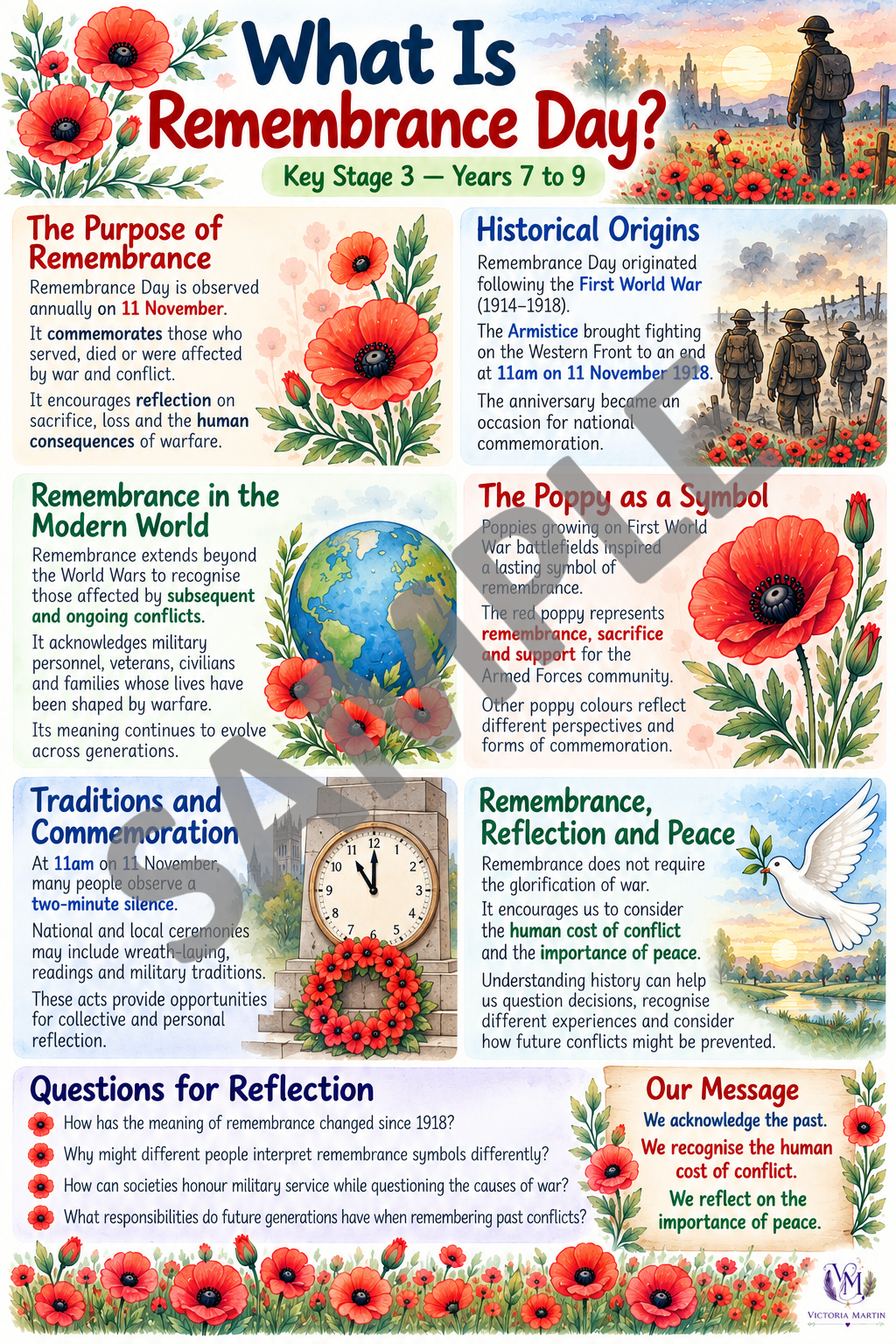
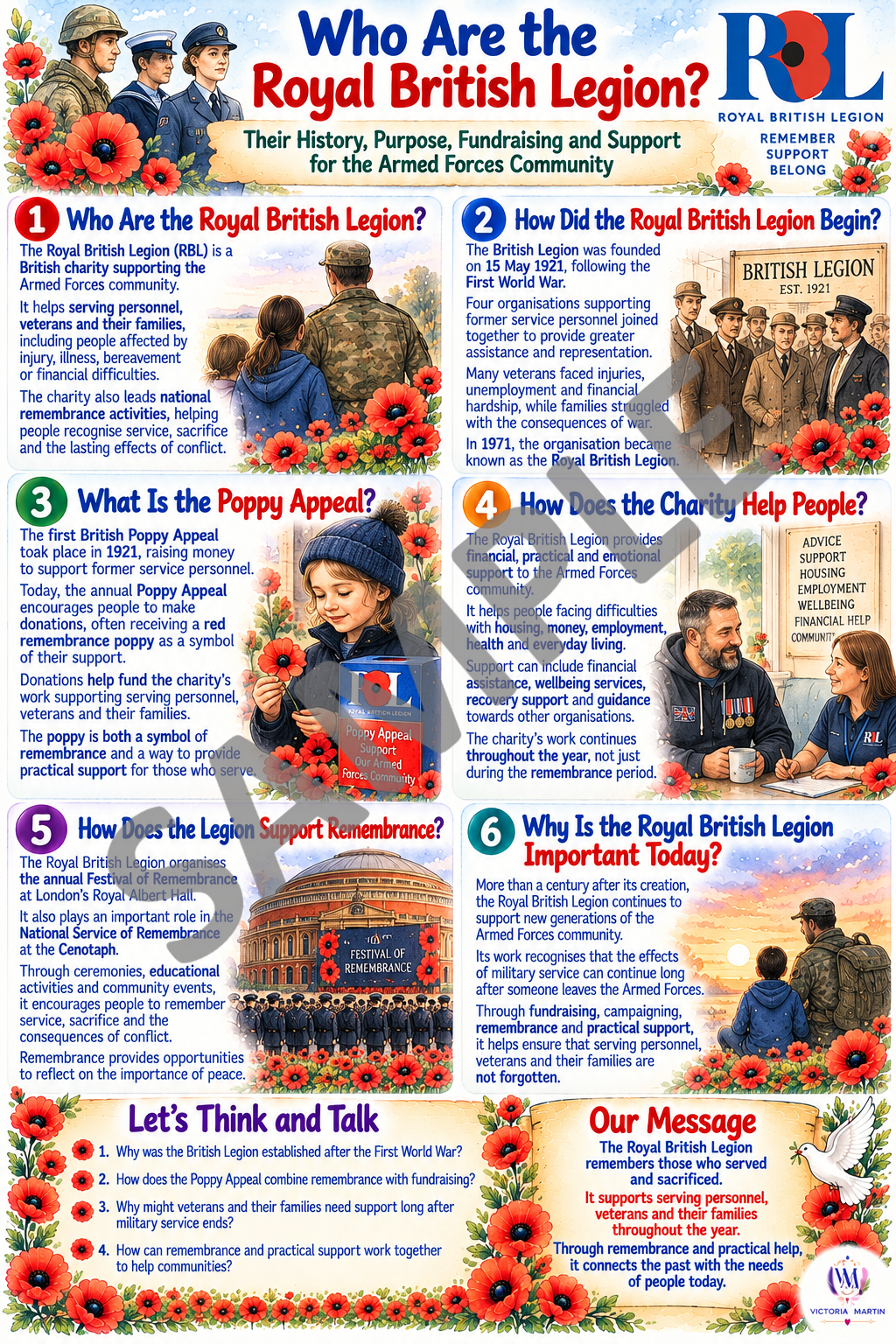
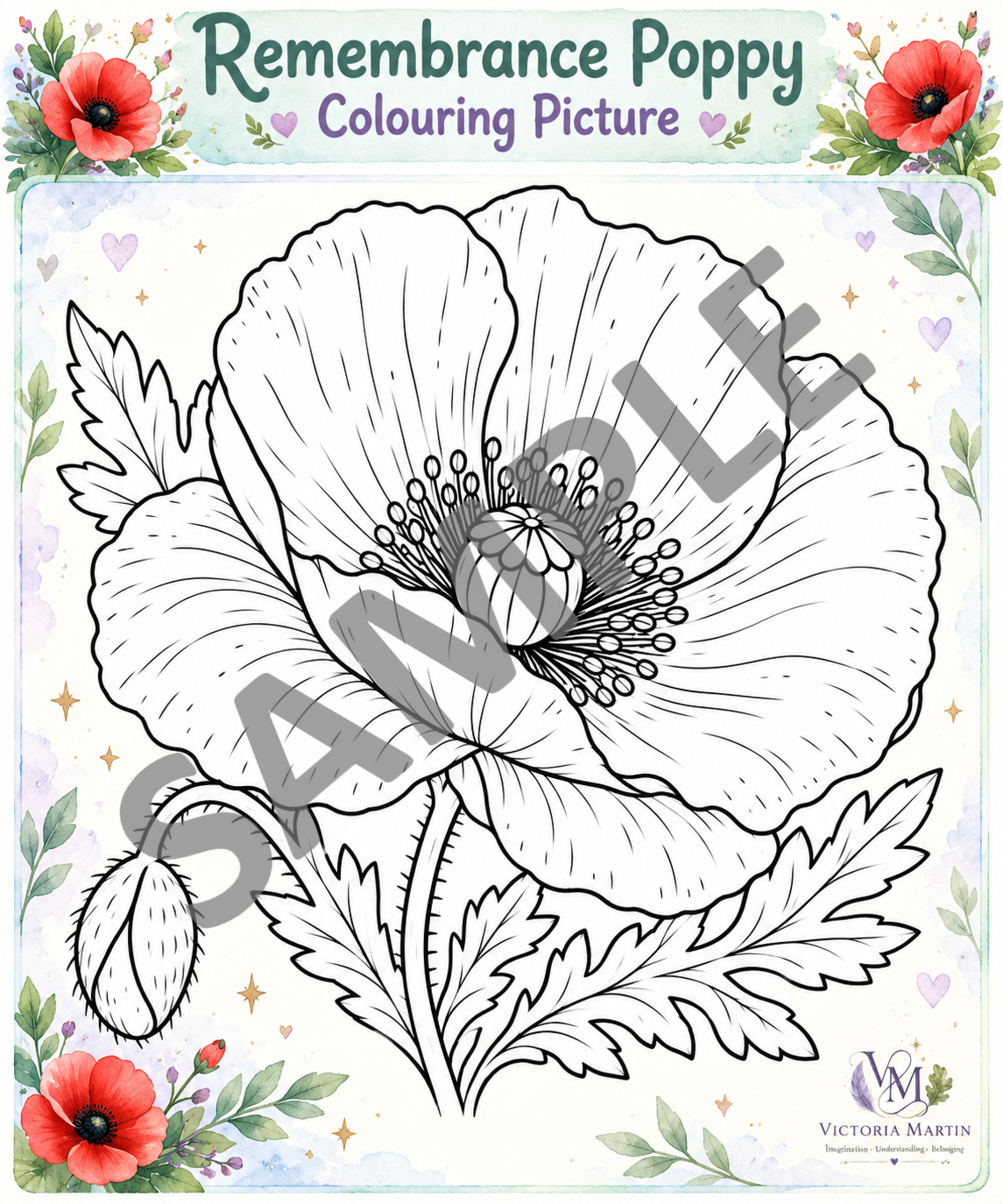
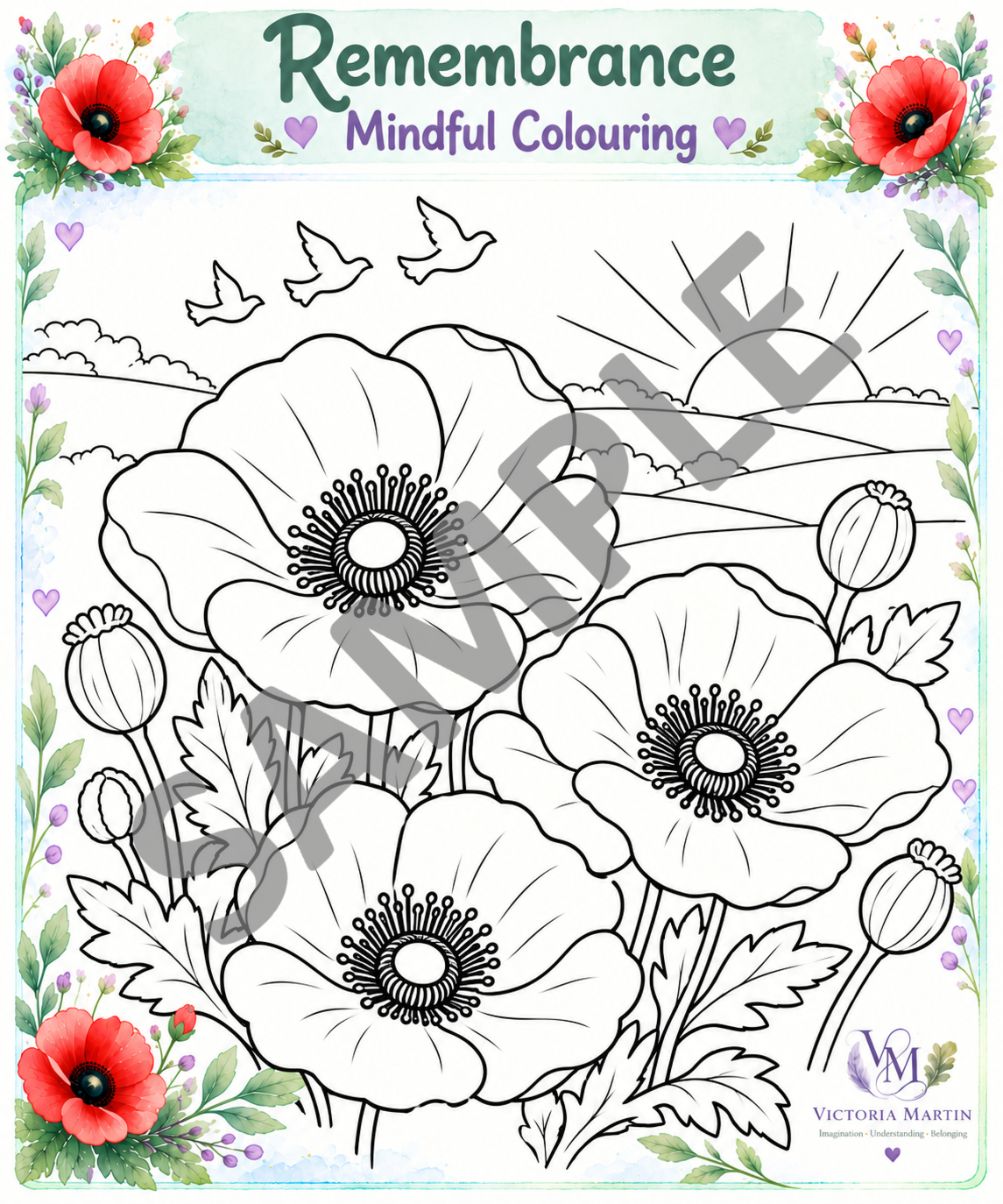
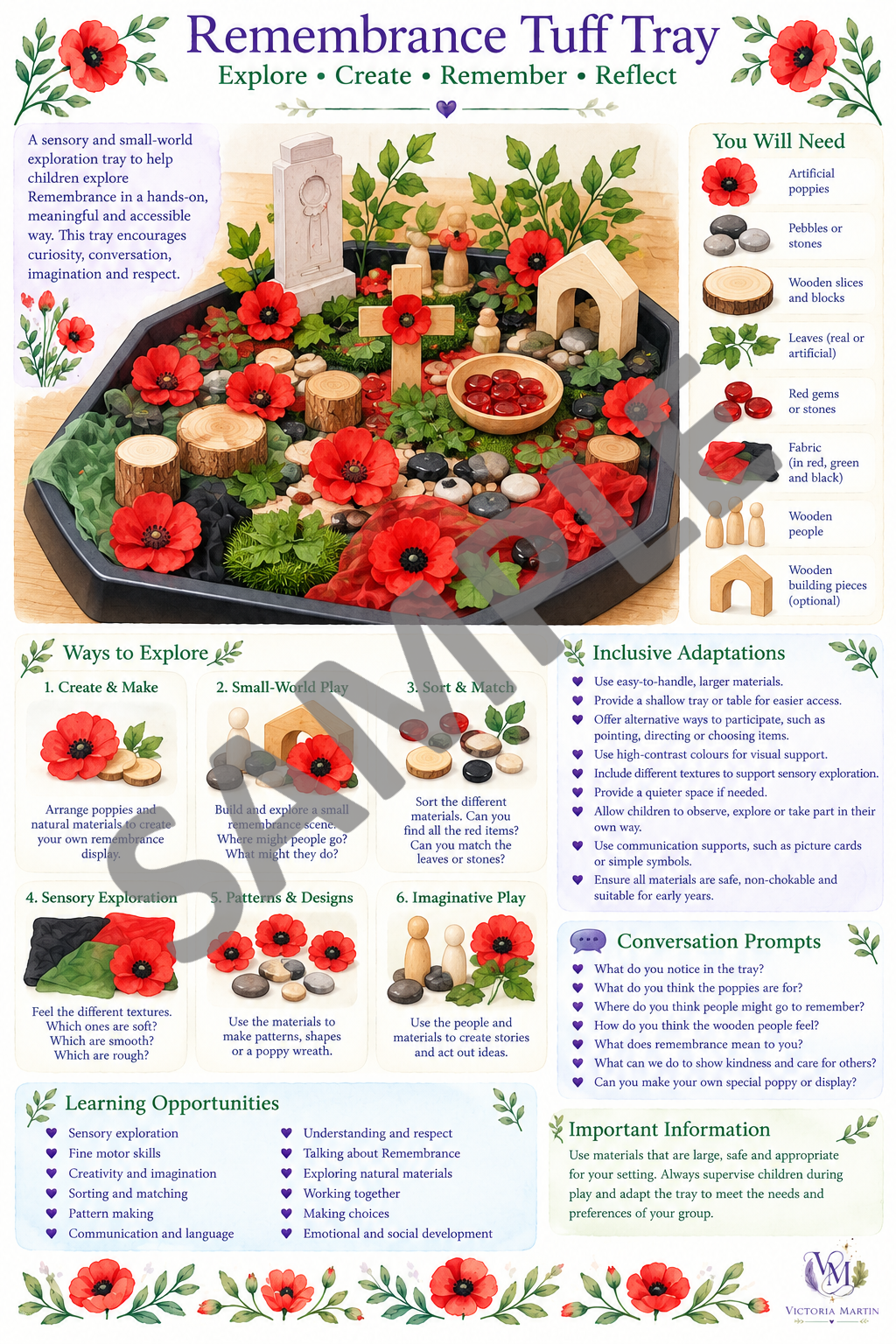
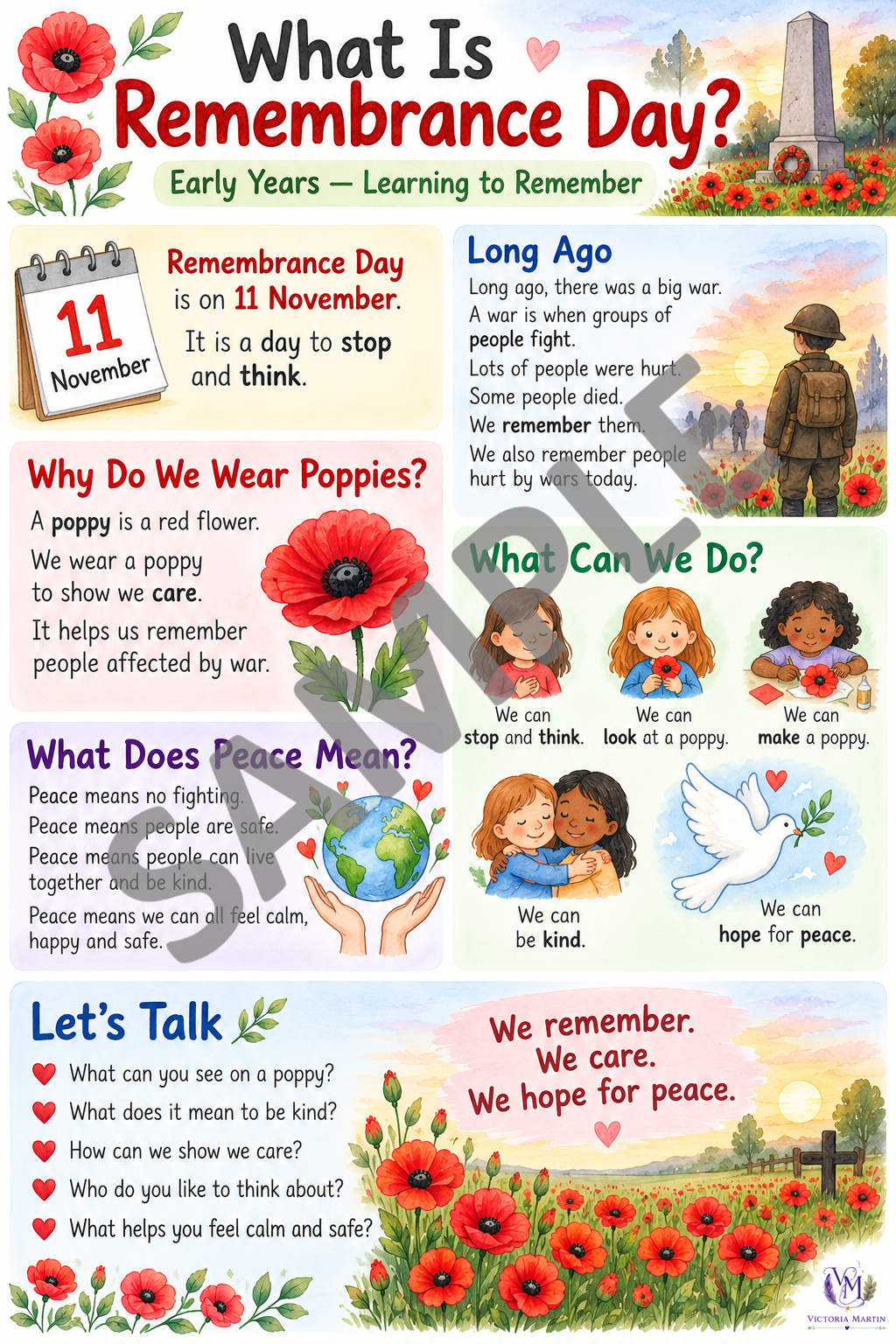
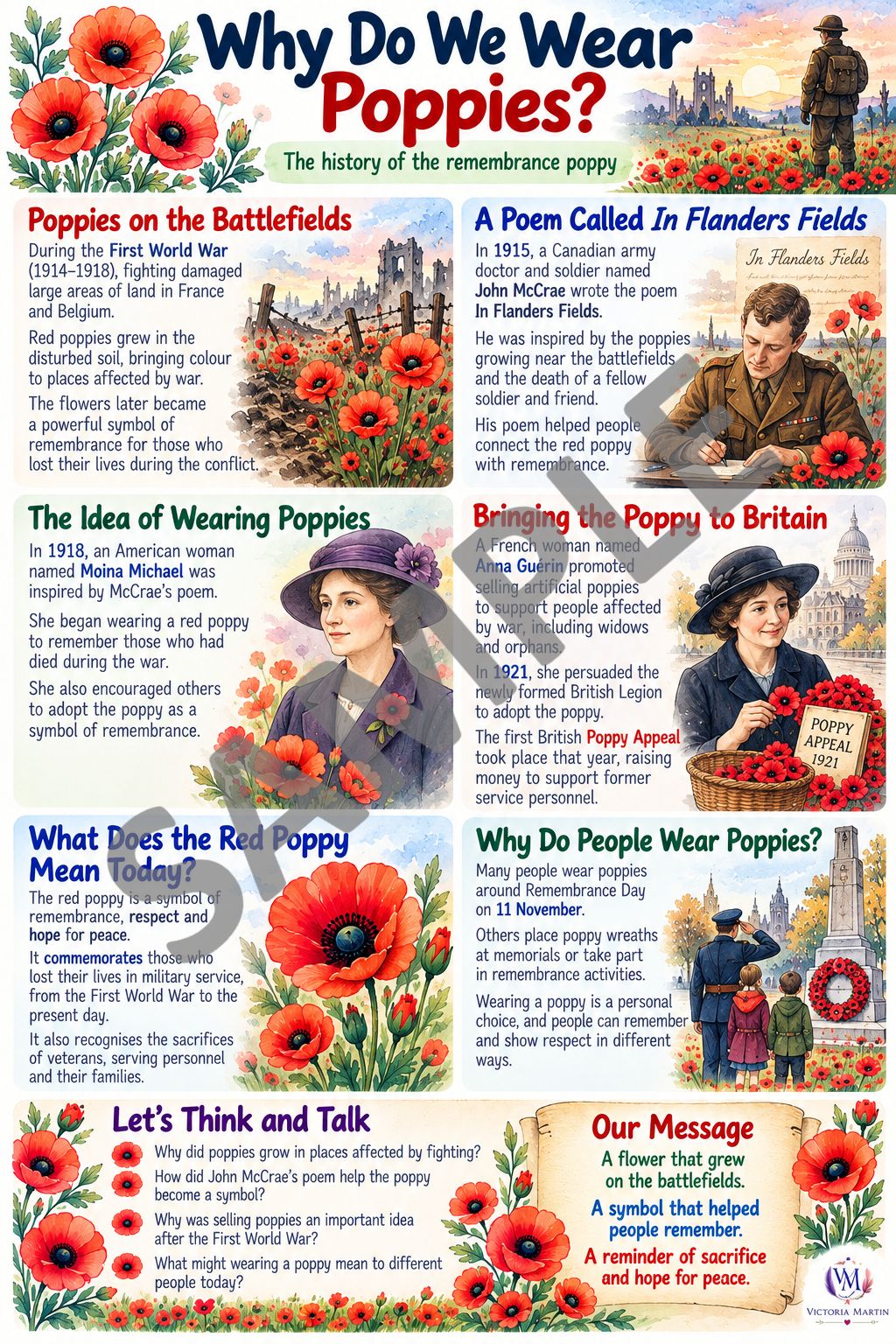
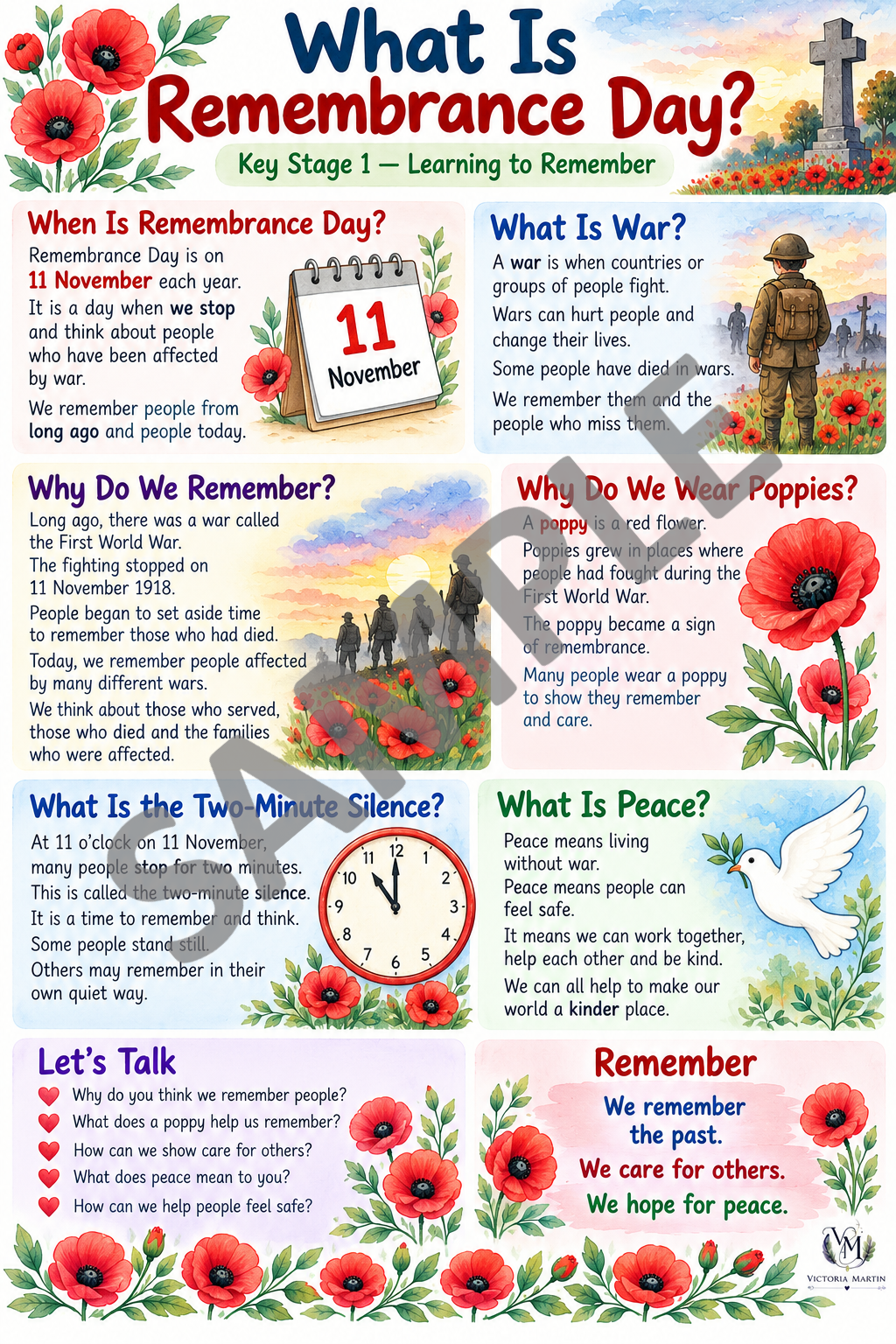
Same as From Flanders Field to Remembrance but aimed for the younger age group
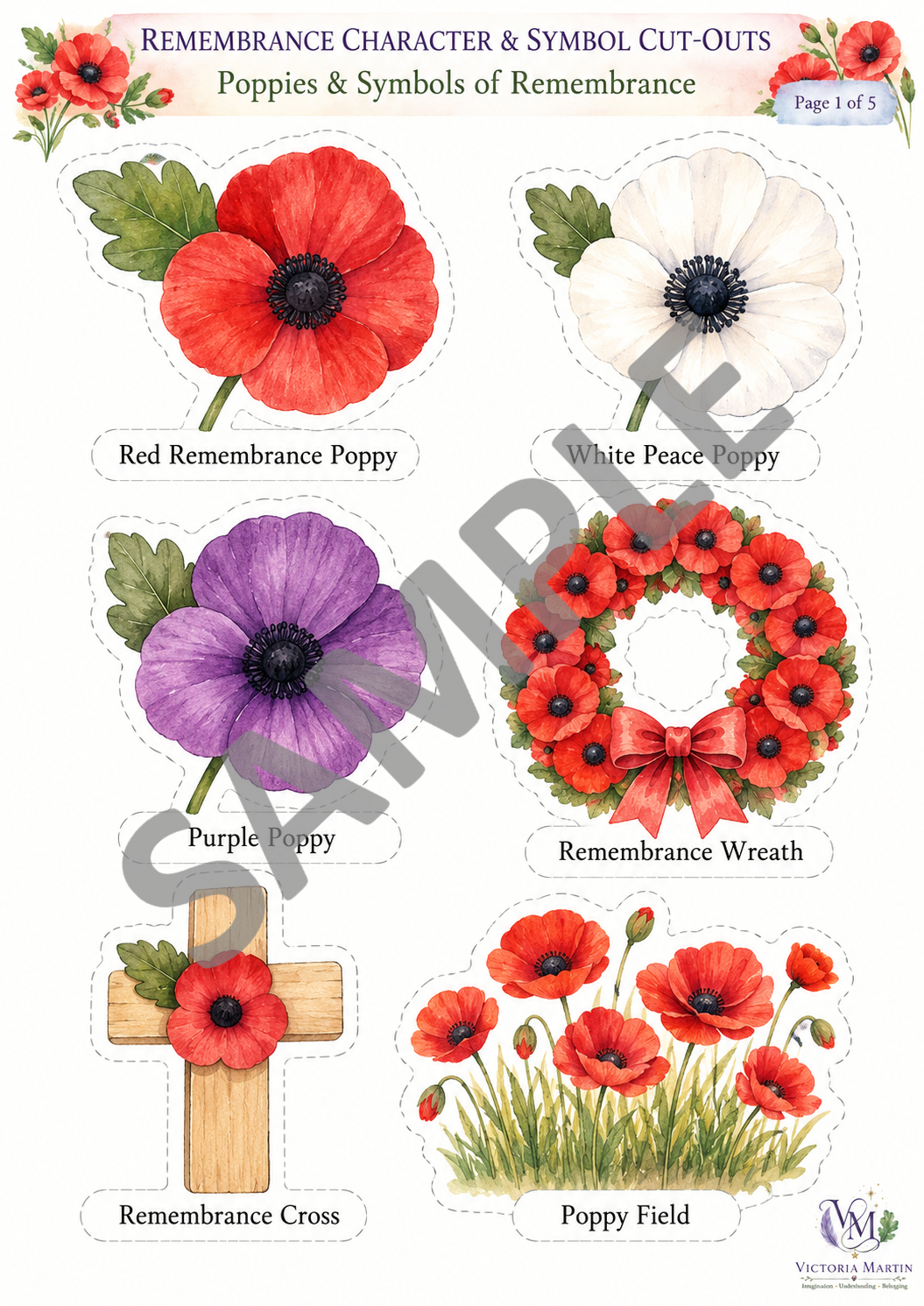
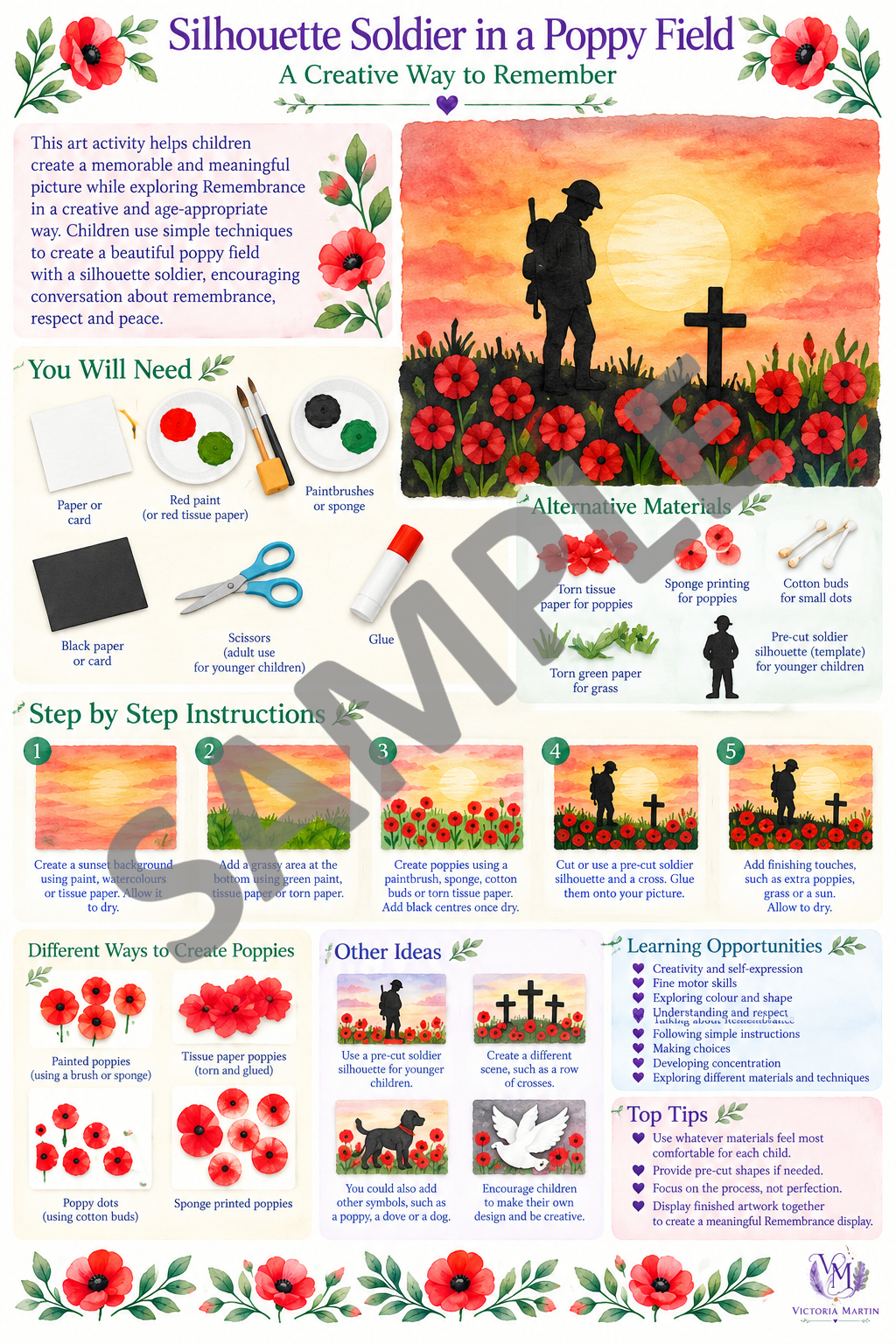
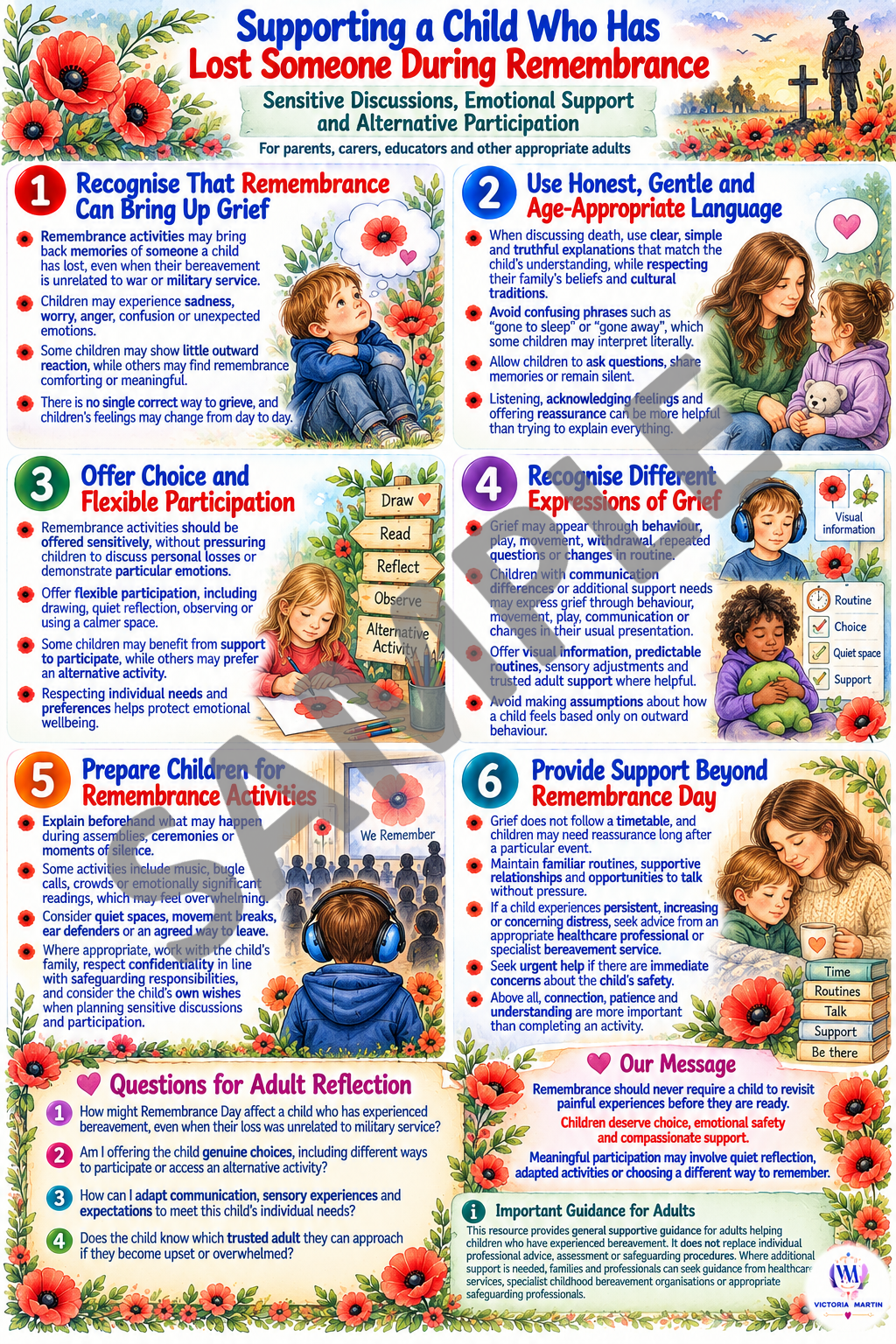
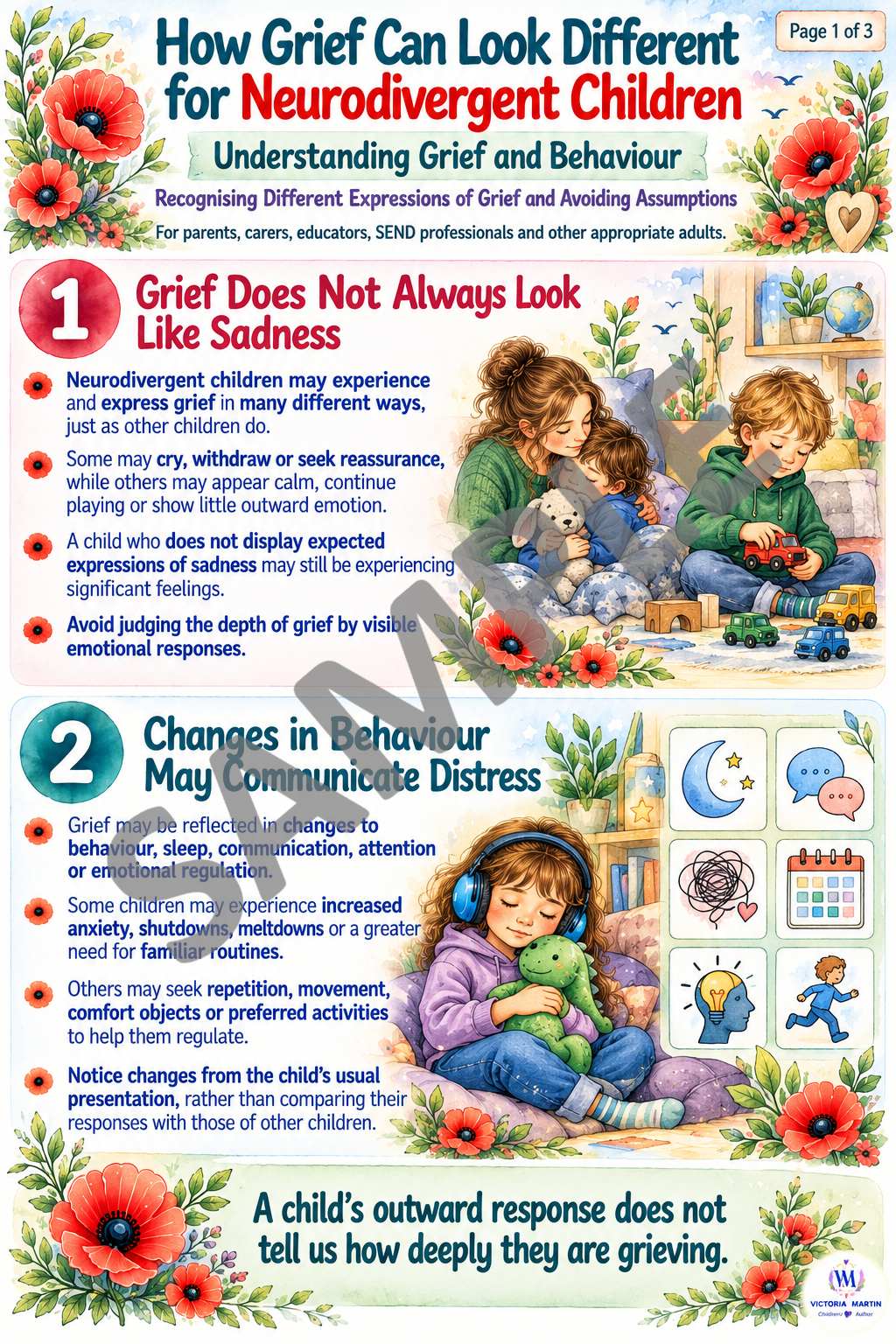
Recognising that a neurodivergent person may experience grief differently and show their grief differently to how we might expect
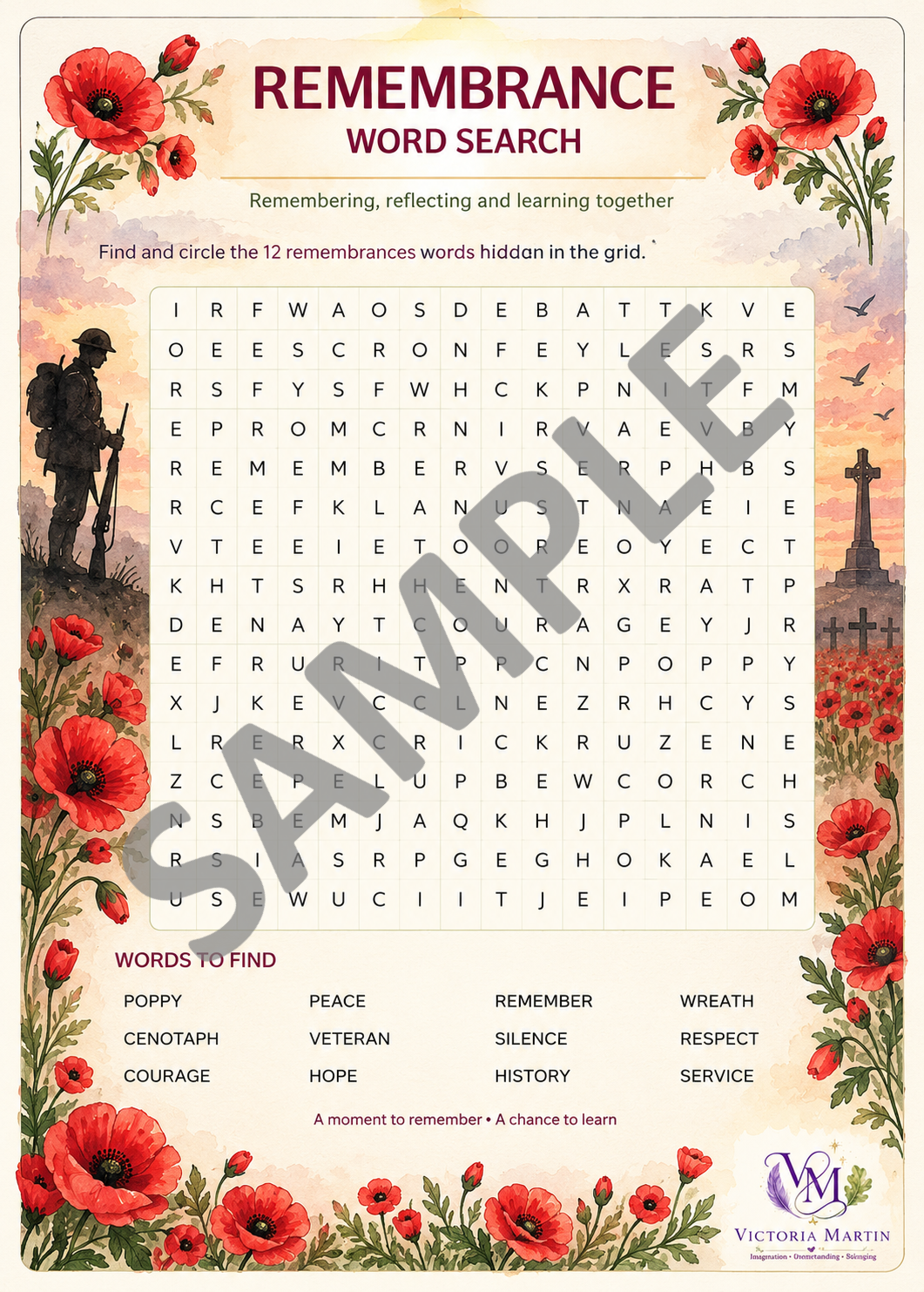
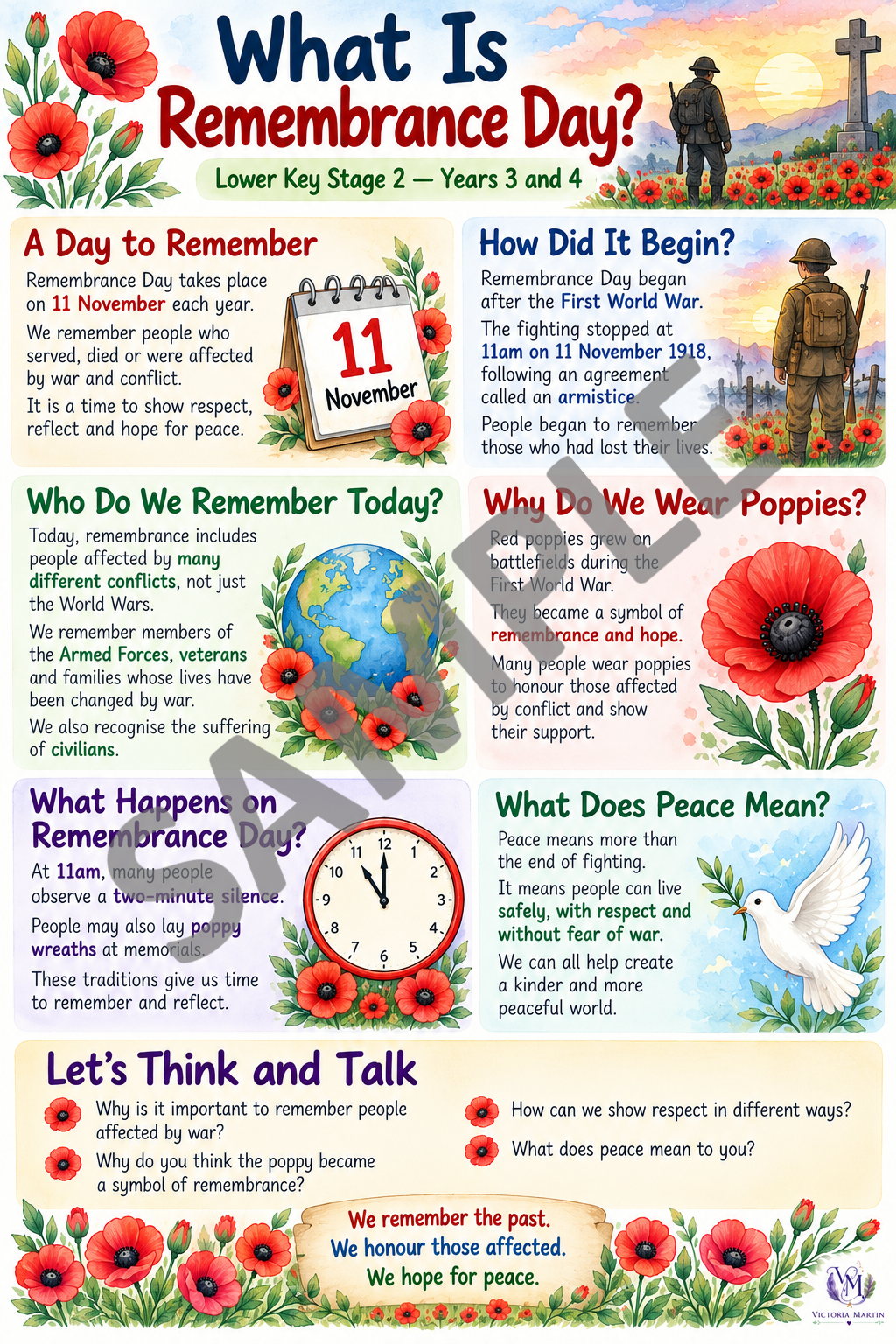
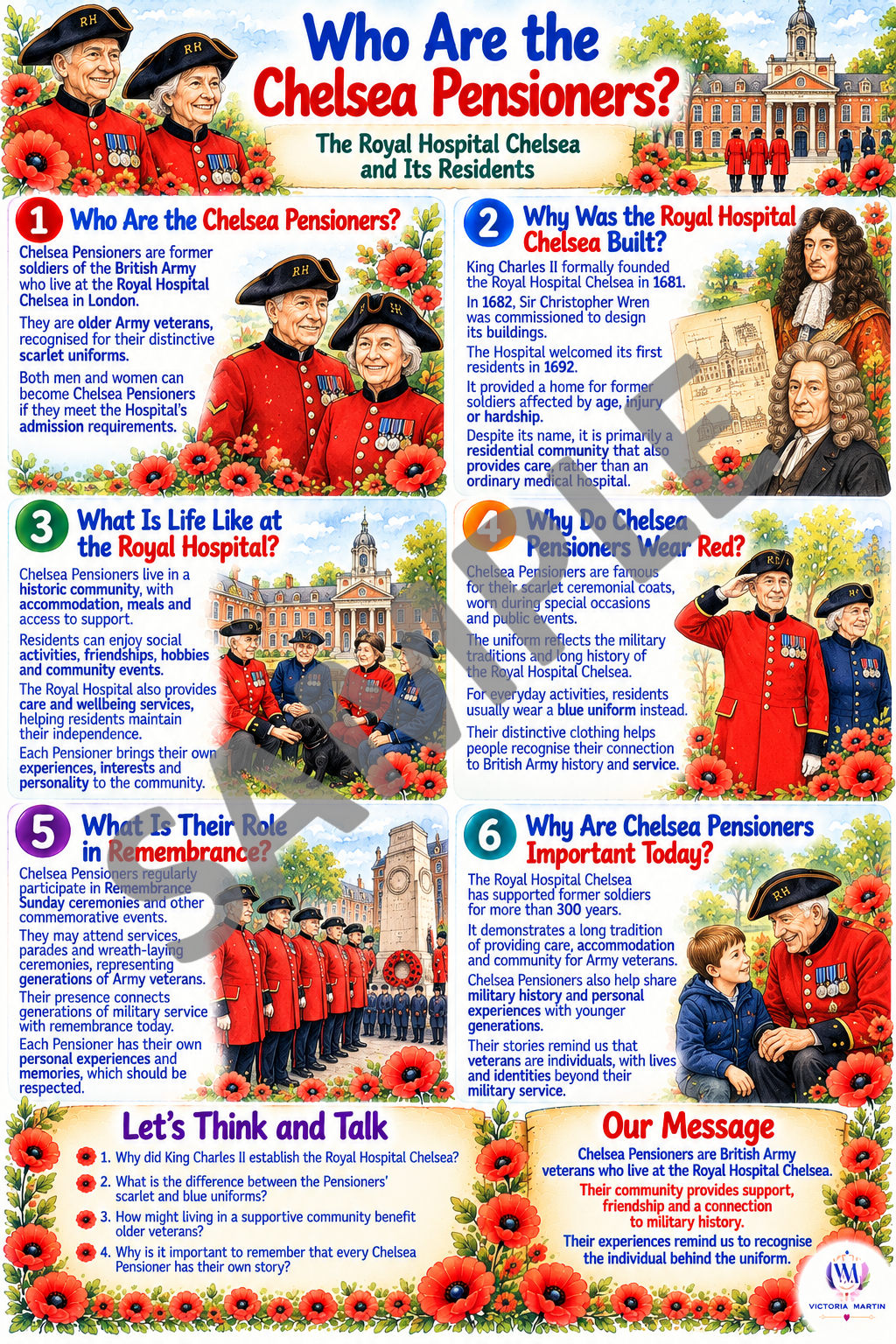
Further Information
Remembrance: What is it and why is it important? - BBC Newsround
Always Remembered - About Remembrance | Royal British Legion
Remembrance Day – what is it and how is it marked? - BBC Bitesize
Remembrance Sunday | Definition, History, & Facts | Britannica
Interesting Remembrance Day Facts to Discover - CWGC
Learn About Remembrance Day Which Was Known as Armistice Day - Forces War Records
Remembrance Day resources and activities | CWGC
The history of Remembrance Day | Sky HISTORY TV Channel
What is Remembrance Day? | KS1 Topic Pack | Ages 5-7 - BBC Bitesize
Remembrance events | Royal British Legion
What is Remembrance? | Army Cadets UK
Remembrance Day - Teaching Resources - BBC Teach
Remembrance poppy: Why do we wear poppies and what do they mean - BBC News
Why We Wear Poppies On Remembrance Day | Imperial War Museums
The Cenotaph | English Heritage
The London Cenotaph: Britain's National War Memorial | London Cenotaph
Home | Royal British Legion National Remembrance Gardens
YouTube
Beautiful animation sees war as experienced by animals | Poppies - BBC (great to help kids keep quiet/quieter during the 2 minute silence)
What is Remembrance Day? | Newsround
Learn about Remembrance Day | CBeebies
Remembrance Sunday service at the Cenotaph | Sky News coverage (2 hours long)
King Charles marks Remembrance Sunday at Cenotaph | BBC News
People and Services
England's First Aid Charity | St John Ambulance - Helped as civilians during the war
St John during the Second World War - Museum of the Order of St John
Royal Air Force | Ready to Fly and Fight
What is the Merchant Navy? | Royal Museums Greenwich
The Chelsea Pensioners | Royal Hospital Chelsea
Who We Are | Armed Forces Charity | Royal British Legion
The Humanitarian Front: The Role of the Red Cross in World War I · Writesides of History
The Red Cross in the Second World War