
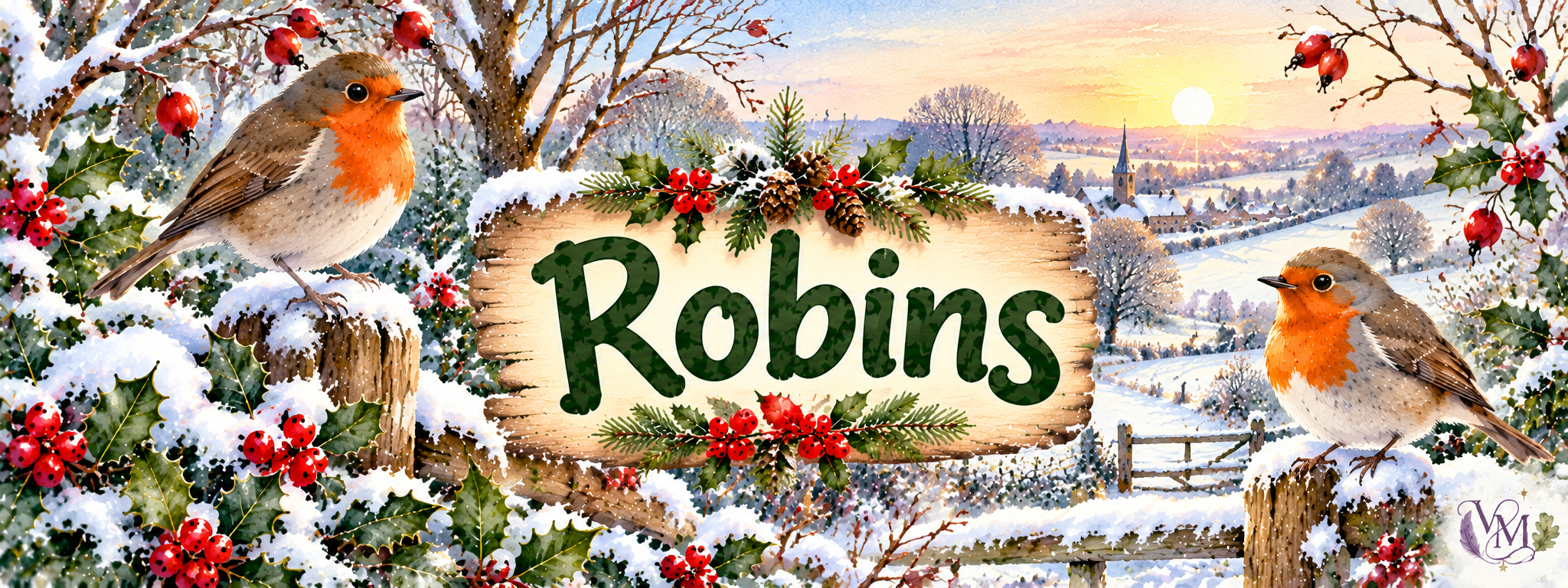
🐦 Robins – Britain's Familiar Red-Breasted Bird
Discovering the European Robin
The European robin (Erithacus rubecula) is one of Britain's most recognisable and much-loved garden birds, known for its bright orange-red breast, distinctive appearance and beautiful birdsong.
Robins can be spotted throughout the year in gardens, parks, woodlands and hedgerows, but they are particularly noticeable during the colder winter months, when their colourful feathers stand out against frosty landscapes.
Although robins are often associated with Christmas cards and winter decorations, they are wild birds with fascinating behaviours, important roles in local ecosystems and interesting adaptations that help them survive throughout the seasons.
🌿 What Does a Robin Look Like?
European robins are small, round-bodied birds with brown upper feathers, pale underparts and a distinctive orange-red face and breast.
Both male and female robins look very similar, making them difficult to tell apart by appearance alone.
Young robins look quite different from adults, with speckled golden-brown feathers rather than the familiar orange-red breast, which develops as they mature.
Adult robins are approximately 12–14 centimetres long, making them small enough to move easily through bushes, branches and garden vegetation.
Despite their delicate appearance, robins are active, alert and surprisingly territorial, particularly when protecting their feeding areas and nesting spaces.
❄️ Why Do We See Robins in Winter?
Many British robins remain in the UK throughout winter, while some individuals migrate between regions or countries.
Britain also welcomes additional robins from northern and eastern Europe, which arrive to spend the colder winter months in areas where conditions may be more suitable.
During winter, robins spend much of their time searching for food, protecting territories and finding shelter from wind, rain and freezing temperatures.
Their feathers provide natural insulation by trapping air close to the body, helping them retain warmth during cold conditions.
Robins may appear rounder and fluffier in winter because they raise their feathers to trap additional insulating air.
Winter can be particularly challenging when frozen ground, snow and reduced insect activity make natural food sources harder to find.
🌟 Did You Know?
Robins are not just winter birds and can be spotted in British gardens throughout the year.
They may seem more noticeable during winter because their bright orange-red breasts stand out against bare branches, while their continued singing and territorial behaviour make them easier to hear and observe.
🪱 What Do Robins Eat?
Robins are omnivorous birds, feeding on a mixture of small animals and plant-based foods depending on the season.
Their natural diet includes earthworms, insects, spiders, small invertebrates, berries and some fruits, helping them obtain the energy and nutrients they need.
You might notice a robin following someone who is digging or gardening, because disturbed soil can reveal worms and other small creatures.
During winter, when insects become less available, robins may rely more heavily on berries, other available natural foods and suitable supplementary bird food.
If offering food to garden robins, choose appropriate bird food, such as mealworms, suitable seeds or small pieces of apple, and maintain clean feeding areas and fresh drinking water.
Avoid giving birds salty foods, mouldy leftovers or unsuitable processed foods, as these can be harmful to their health.
🎶 Why Do Robins Sing?
Robins are famous for their clear, melodic songs, which can sometimes be heard even during autumn and winter.
Unlike many other British songbirds, robins may sing throughout much of the year, using their voices to communicate and defend territories.
Both male and female robins can sing, particularly during autumn and winter, when they may defend separate feeding territories.
Their songs help warn other robins that an area is already occupied, helping them communicate territorial boundaries and sometimes reducing the need for physical confrontation.
Robins also produce short calls and alarm sounds, allowing them to communicate about potential threats and nearby activity.
Listening for birdsong can provide an enjoyable outdoor sensory experience, encouraging children to practise careful listening, observation and sound recognition.
🪺 Where Do Robins Build Their Nests?
Robins usually build cup-shaped nests in sheltered, concealed locations, often close to the ground, including hedges, ivy, tree roots and banks.
Their nests are typically made from dead leaves, moss, grass and other natural materials, with softer materials such as hair used to create a comfortable inner lining.
Robins sometimes choose unusual nesting places, including flowerpots, old boots, garden sheds and other sheltered structures.
The female robin usually builds the nest and incubates the eggs, while both parents help feed and care for the chicks.
Robins generally begin breeding in spring, although the exact timing depends on weather conditions and food availability.
Because robins can nest in unexpected places, it is important to check carefully before gardening, avoid disturbing active nests and allow birds to raise their young safely.
🎄 Why Are Robins Associated with Christmas?
Robins have become a familiar part of British Christmas traditions, appearing on greetings cards, decorations, wrapping paper and festive illustrations.
One popular historical explanation connects robins with Victorian postmen, who wore bright red uniforms and were sometimes nicknamed “robins” or “redbreasts”.
As Christmas cards became increasingly popular during the Victorian period, illustrations featuring red-breasted birds and seasonal greetings helped strengthen the robin's festive association.
However, the connection between robins and Christmas developed through cultural traditions, and the Victorian postman explanation is best understood as a popular historical account rather than a definitively proven origin.
Today, the robin is often used as a symbol of winter, comfort, familiarity and seasonal cheer, particularly in British festive imagery.
🌳 Why Are Robins Important?
Robins play an important role in British gardens, woodlands and wider ecosystems, contributing to the natural balance of local habitats.
By eating insects and other invertebrates, they form part of the food web and help influence populations of small creatures.
When feeding on berries and fruits, robins can also help disperse seeds, supporting the growth and regeneration of plants.
Robins themselves provide food for some larger predators, making them another important connection within woodland and garden ecosystems.
Protecting hedgerows, native plants, leaf litter and sheltered habitats helps provide the food and nesting opportunities robins need.
🔍 Robin Facts to Remember
🐦 Scientific name: Erithacus rubecula.
🌍 Where they live: Gardens, parks, woodlands and hedgerows across the UK.
🎨 Appearance: Brown feathers with a distinctive orange-red face and breast.
📏 Size: Approximately 12–14 cm long.
🪱 Diet: Worms, insects, spiders, berries and other suitable foods.
🎶 Birdsong: Both males and females can sing, including during autumn and winter.
❄️ Winter behaviour: Many remain in Britain, while others arrive from northern and eastern Europe.
🪺 Nesting: Cup-shaped nests in sheltered places, sometimes in unusual garden locations.
🎄 Cultural connection: A familiar symbol of British Christmas traditions.
💚 Exploring Robins Through Inclusive Learning
Learning about robins offers opportunities for nature exploration, seasonal discovery and sensory-friendly activities suitable for children with different interests, abilities and learning needs.
Children can explore the topic through photographs, illustrations, listening activities, creative projects and outdoor observations, without needing to touch wildlife or participate in lengthy activities.
Some children may enjoy watching birds from a window, while others prefer drawing, movement, storytelling or hands-on investigations.
There is no single correct way to participate, and activities can be adapted to support different communication styles, sensory preferences and developmental stages.
The aim is to encourage curiosity, understanding and appreciation of wildlife, while helping children develop respect for the natural world.
🌿 Explore Our Robin Resources
Discover a growing collection of free educational activities, creative resources and inclusive learning opportunities inspired by the European robin and its place in British nature.
From bird identification and seasonal investigations to creative exploration and sensory-friendly activities, our resources encourage children to observe, discover and learn at their own pace.
Every child deserves the opportunity to explore nature in a way that works for them.